Game review
Class of '09: Puzzle Showdown Review
5.5 / 10
- Developer
- SBN3
- Publisher
- SBN3
- Released
- 17 July 2026
- Platforms
- ["Windows", "Mac"]
- Genre
- Casual
A Visual Novel Series Swaps Its Genre and Splits Its Fanbase
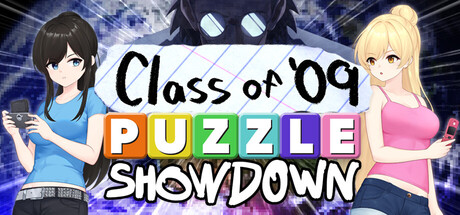
Class of '09: Puzzle Showdown released on July 17, 2026, as the fourth entry in SBN3's Class of '09 series, and it's the one that changed the formula entirely. Where the first three games were visual novels built around branching dialogue and character relationships, Puzzle Showdown is a competitive tile-matching puzzle game, structurally a clone of Pokémon Puzzle League and Tetris Attack, with the series' returning cast, voice actors, and dark comedic tone wrapped around it. At $19.99 with 340 reviews and a "Mixed" 58% score two months after launch, the reception has split almost exactly down the middle between puzzle-genre fans who recognize what it's doing and series fans who came expecting another visual novel.
For Panel de Pon Fans, a Faithful and Well-Built Clone
The most consistent praise across the positive half of the sample comes from reviewers with a history in the Panel de Pon/Tetris Attack/Pokémon Puzzle League lineage, who describe Puzzle Showdown as a genuinely well-built entry in a genre that hasn't gotten a proper modern successor in decades. Multiple reviewers single out the returning voice cast, including Stuart Zagnit reprising his Pokémon anime role for the antagonist, as a surprisingly high-effort touch, and the soundtrack draws specific, repeated praise, with one reviewer explicitly asking for a standalone release. For this slice of the audience, the humor and character writing, while thinner than the visual novels, still land, and the puzzle mechanics themselves are frequently called "easy to pick up, difficult to master" in exactly the way the genre's classics were.
Series Fans Feel Like They Bought the Wrong Game
The other half of the sample tells almost the opposite story. Reviewers who came to Class of '09 for its visual novel roots describe the shift to puzzle gameplay as a bait-and-switch, pointing to cutscenes that run only a few seconds long, dialogue reduced to brief exchanges between puzzle matches, and a framing story several reviewers call incoherent compared to the trilogy's more grounded plots. A recurring line across dozens of reviews is some version of "I wanted the visual novel, I got a mobile match-three game," and several reviewers explicitly recommend that longtime fans skip this entry and watch the cutscenes on video instead of buying it.
A Difficulty Curve the Sample Agrees Is Broken
Regardless of which side of the genre debate a reviewer falls on, there's remarkable agreement that the campaign's difficulty is poorly tuned. Reviewers on both the positive and negative side describe later stages, particularly the fourth and fifth of the game's six character campaigns, as swinging wildly between trivial wins and RNG-dependent losses where the AI opponent chains combos faster than a human can physically react. One reviewer cites achievement data showing that while most players finish the first campaign, only a small fraction ever complete the last one, a steep enough drop-off that even reviewers who otherwise recommend the game single it out as the clearest thing SBN3 should patch.
The Price Tag Is the Single Loudest Complaint
More than any individual mechanic, the $19.99 price is the recurring flashpoint in the negative reviews, with reviewers repeatedly comparing the amount of story content to the previous, cheaper visual novels and concluding this entry offers less for more money. Some of the sample's most detailed positive reviews push back directly on this framing, arguing that genre classics like Pokémon Puzzle League commanded similar prices decades ago with far less content overall, but that counterargument doesn't appear to be moving many reviewers. The price debate shows up in nearly every long-form review in the sample, positive or negative, making it the closest thing to a universal talking point the game has.
Multiplayer Exists, but Barely
Online multiplayer is advertised as a competitive feature, but the review sample describes it as functionally unfinished: no matchmaking, no lobby browser, and no way to find an opponent besides sharing a private room code or coordinating through the developer's Discord server. Several reviewers who otherwise enjoyed the single-player campaign specifically flag this as the feature they most want fixed, framing a real matchmaking system as the difference between a niche curiosity and a genuinely competitive PvP puzzle game.
Rough Edges That Compound the Bigger Complaints
Beyond the structural issues, the sample reports a steady stream of smaller technical problems: a missing in-campaign tutorial that forces new players to dig through a separate menu just to learn the controls, a reported Linux-native build with broken input handling, and scattered bugs around garbage-block timing and audio desync. None of these individually sink the game, but reviewers consistently describe them as the kind of rough edges that make an already divisive design decision feel less polished than it needed to be at launch.
Verdict
Class of '09: Puzzle Showdown is a competent, occasionally excellent clone of a beloved and underserved puzzle genre wearing the skin of a visual novel series that never asked for one, and the sharply split review score reflects exactly that mismatch rather than any single fatal flaw. If you came in cold as a fan of Tetris Attack or Pokémon Puzzle League, there's a genuinely solid competitive puzzle game here, once you fight through an unpatched difficulty spike and a nonexistent matchmaking system. If you came in as a Class of '09 fan expecting the next visual novel, the wiser move is to wait for a deep sale or watch the story beats secondhand rather than pay full price for a genre swap the game itself doesn't fully commit to supporting.
Screenshots
-
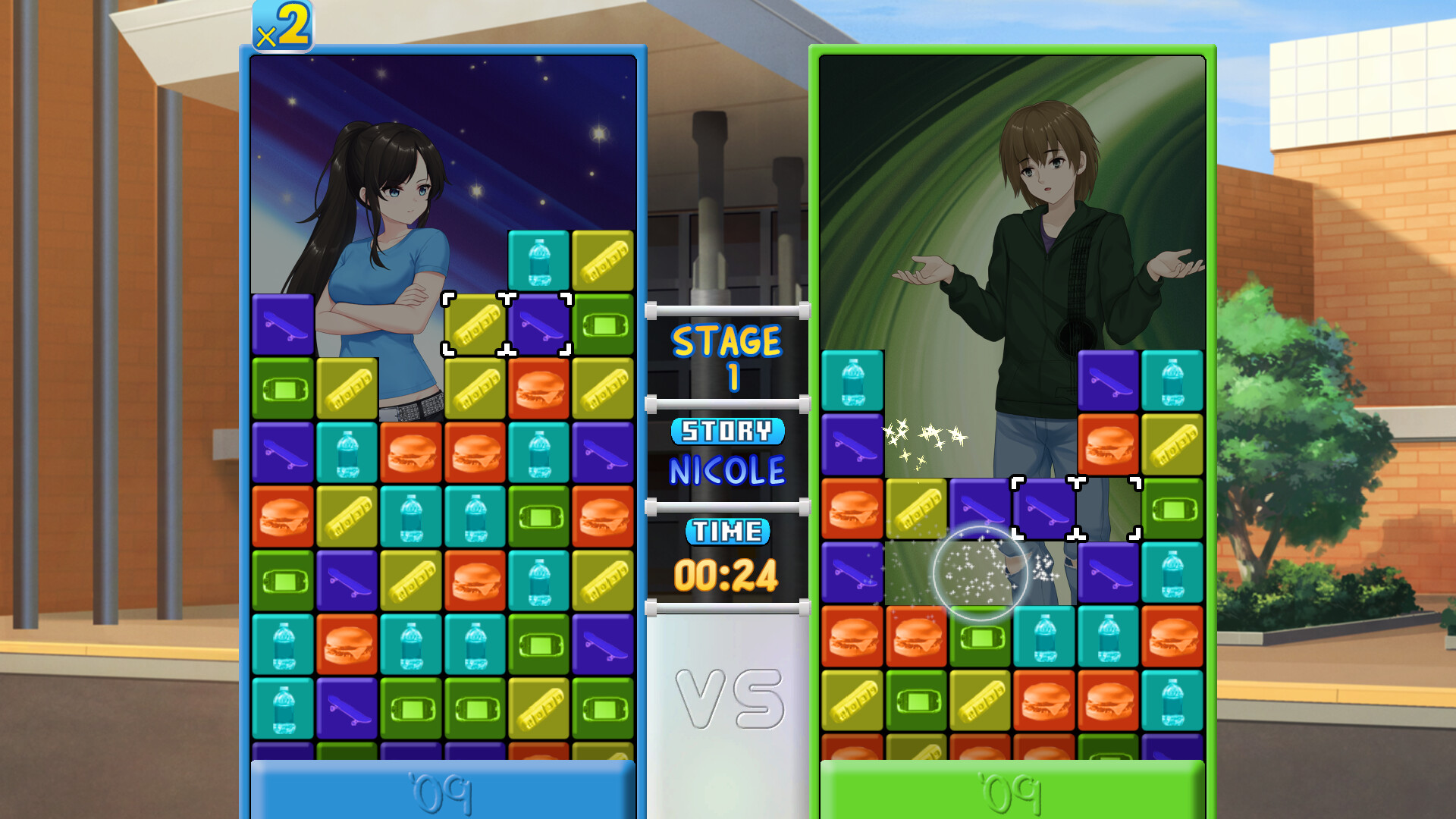
A head-to-head Stage 1 match in Nicole's story campaign, tile-matching icons against the clock while the story cast looks on.Image: SBN3 via Steam -
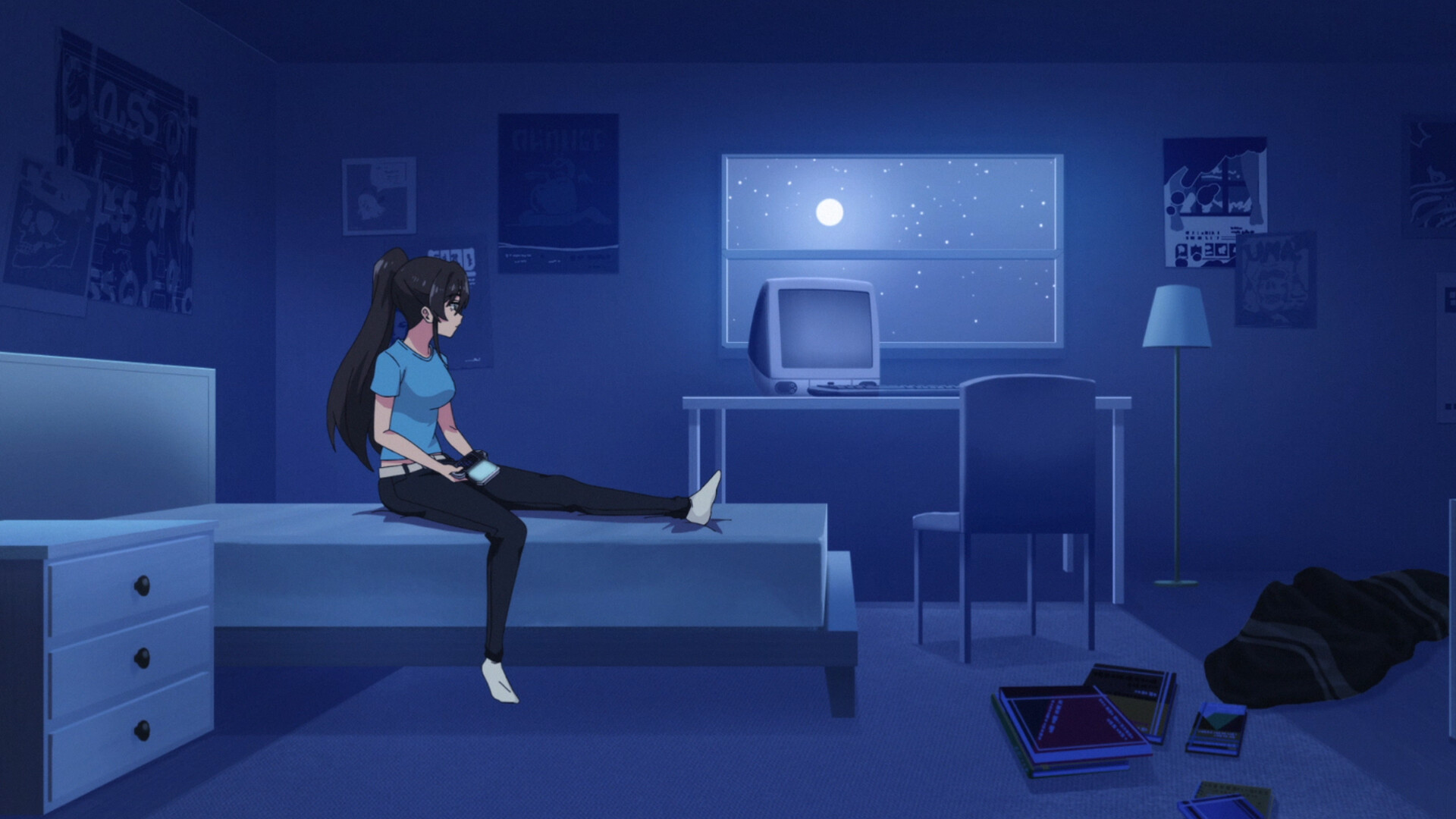
One of the game's animated cutscenes, the shorter, more sparing story beats that series fans say pale next to the trilogy's visual novels.Image: SBN3 via Steam -
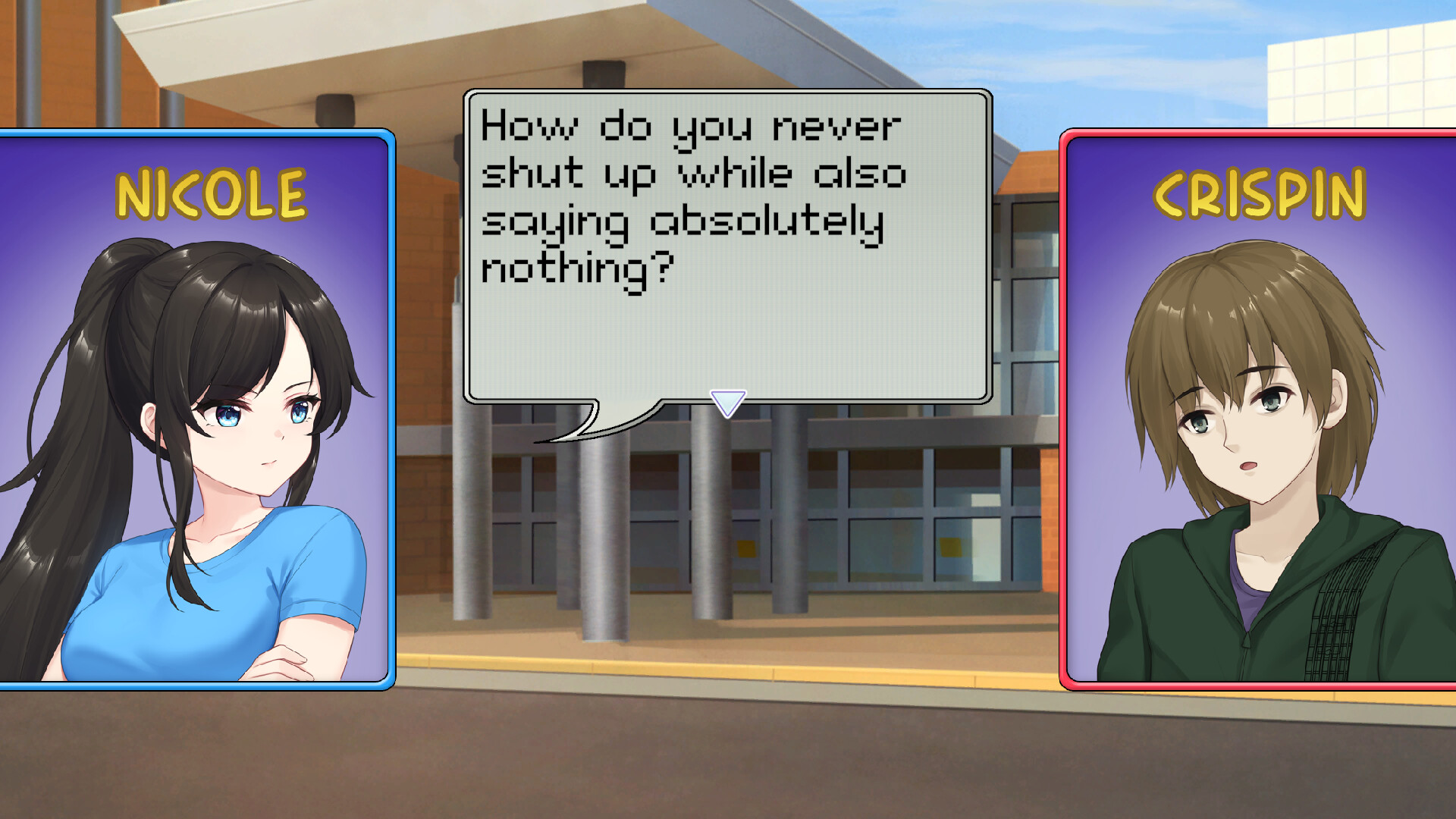
The trilogy's trademark barbed dialogue survives the genre switch, even if there's a lot less of it between puzzle matches.Image: SBN3 via Steam