Game review
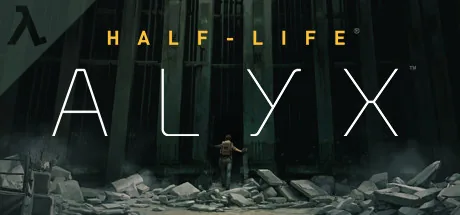
Half-Life: Alyx
9 / 10
- Developer
- Valve
- Publisher
- Valve
- Released
- 23 March 2020
- Platforms
- Windows (VR headset required)
- Genre
- VR Action-Adventure
- Monetisation
- One-time purchase. No DLC beyond a soundtrack.
- Players
- Single-player
The short version
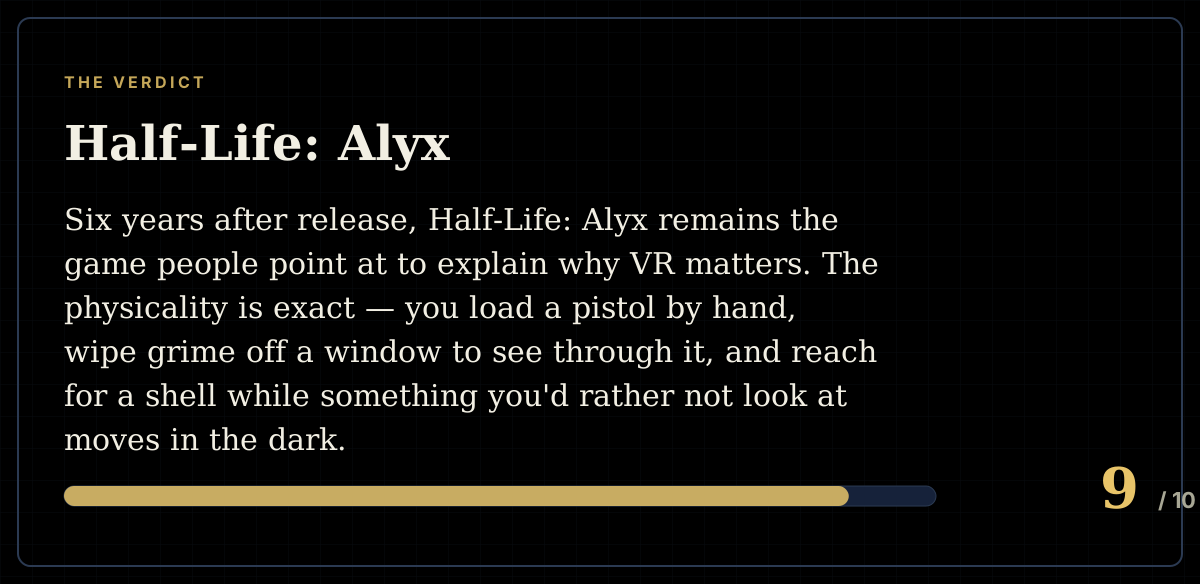
Six years after release, Half-Life: Alyx remains the game people point at to explain why VR matters. The physicality is exact — you load a pistol by hand, wipe grime off a window to see through it, and reach for a shell while something you'd rather not look at moves in the dark. It's **98.3% positive across 104,862 reviews**, and 96 of its last 100.
The caveats are all about access rather than quality. It requires a VR headset, costs NZ$85.99 and has never been discounted. Crashes appear in 30 of the 100 most-helpful negatives, though dating them shows a hardware-specific trickle rather than a current problem. And its second most-upvoted criticism is a left-handed player explaining that the left-handed mode doesn't really work.
Biggest strengths
- The most convincing physical interaction in any game — everything invites being handled
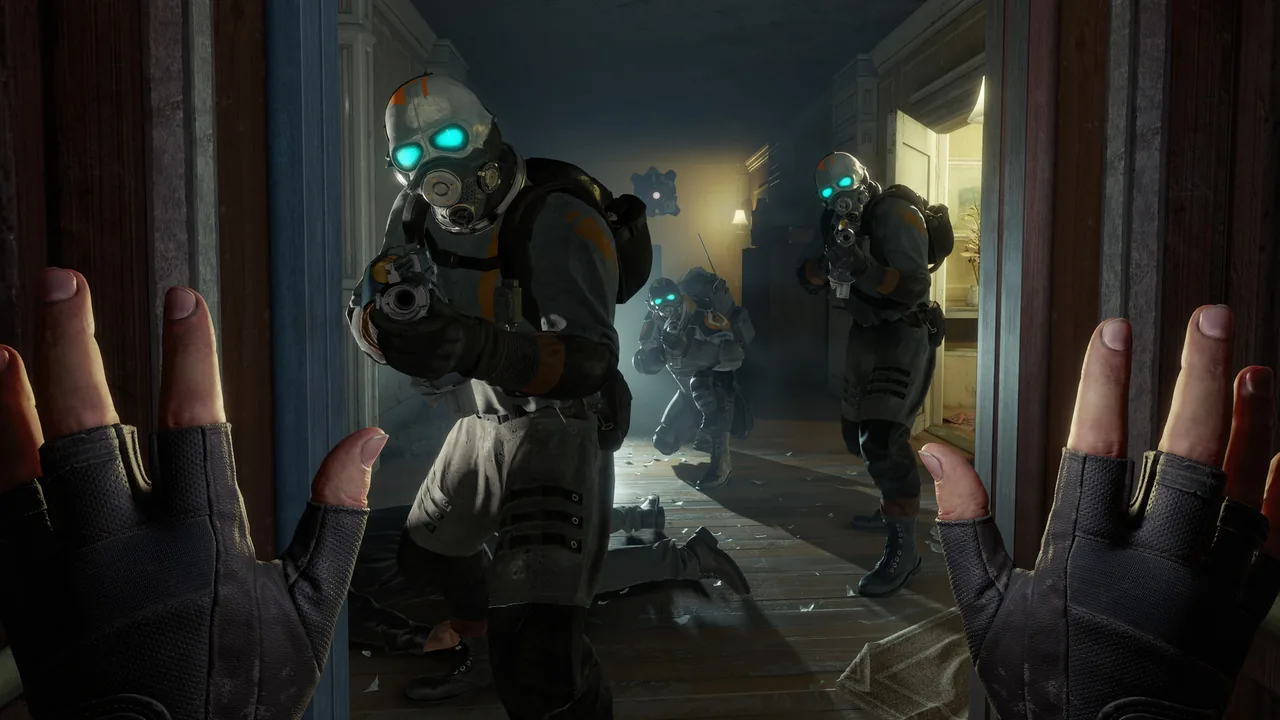
- Sound design that does more work than most games' entire horror toolkits
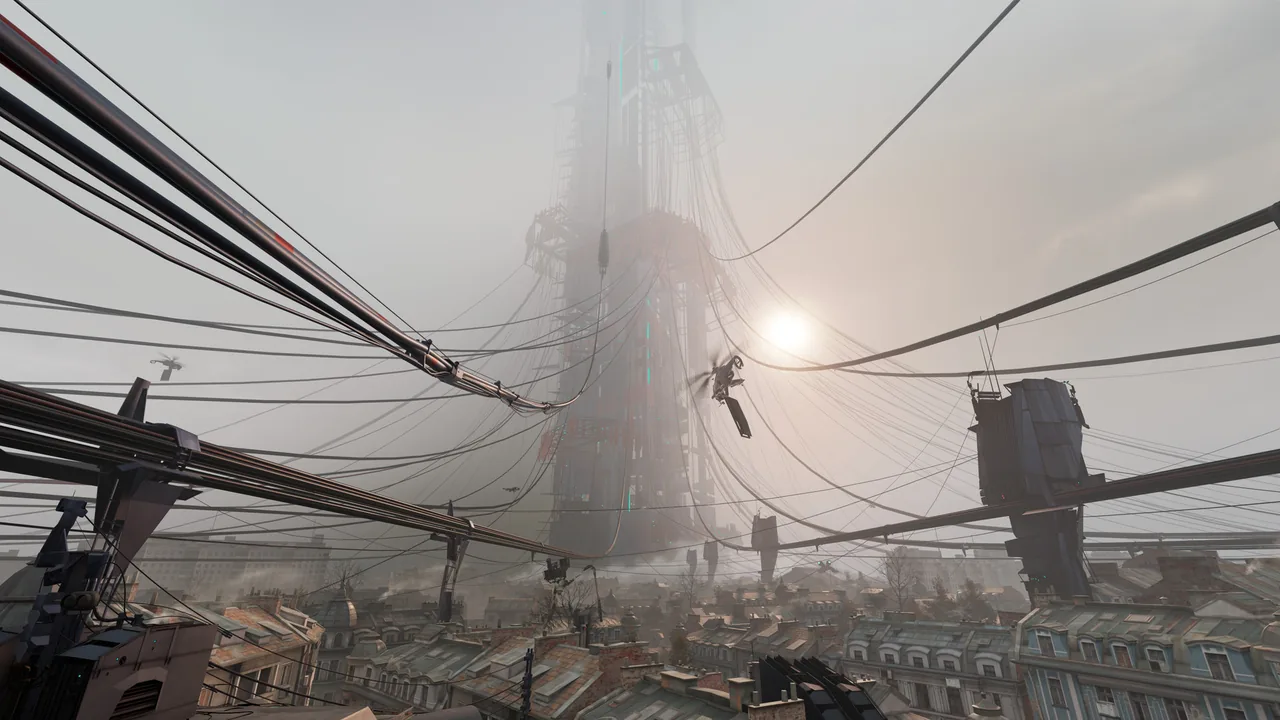
- Genuinely beautiful, and it still looks current six years on
Biggest weaknesses
- VR only, at NZ$85.99, and it has never gone on sale
- Left-handed support is reportedly poorly implemented — the second-highest-voted complaint
- Crash reports recur across years, often tied to specific GPUs or link setups
Who it's for: Anyone who already owns a headset — this is the reason to own one. Everyone else should read the access section below before spending anything.
Our recommendation: If you have VR, buy it; there is no better argument for the hardware. If you don't, a headset plus this game is a serious outlay for one twelve-hour campaign, and a well-known community mod that removes the VR requirement is worth researching first.
9 / 10
The most-upvoted negative review of Half-Life: Alyx, at 1,775 votes, opens with its own disclaimer:
DISCLAIMER: Not recommended in its current state for VR veterans looking for a fully immersive experience. The issues I will describe below are all fixable.
It was posted on 23 March 2020 — launch day. "Its current state" means the build that existed before a single patch, six years ago, and it is still the first criticism a shopper reads.
I keep finding this. In Slime Rancher the loudest negatives predate its 1.0 release by nine years. Steam's helpfulness ranking is cumulative and never resets, so the top of a beloved game's negative column is often a museum.
What it does that nothing else does
The physicality. You reload a pistol by ejecting the magazine with a thumb, grabbing a fresh one off your shoulder, and slapping it home — and after an hour your hands do it without consulting you. You rub grime off a window to see what's behind it. You pull a bottle off a shelf to check whether there's a shell hidden behind it, because there might be.
The gravity gloves turn Half-Life 2's signature toy into a gesture: flick your wrist at an object across the room and it leaps to your hand. It's the rare VR mechanic that feels invented rather than adapted.
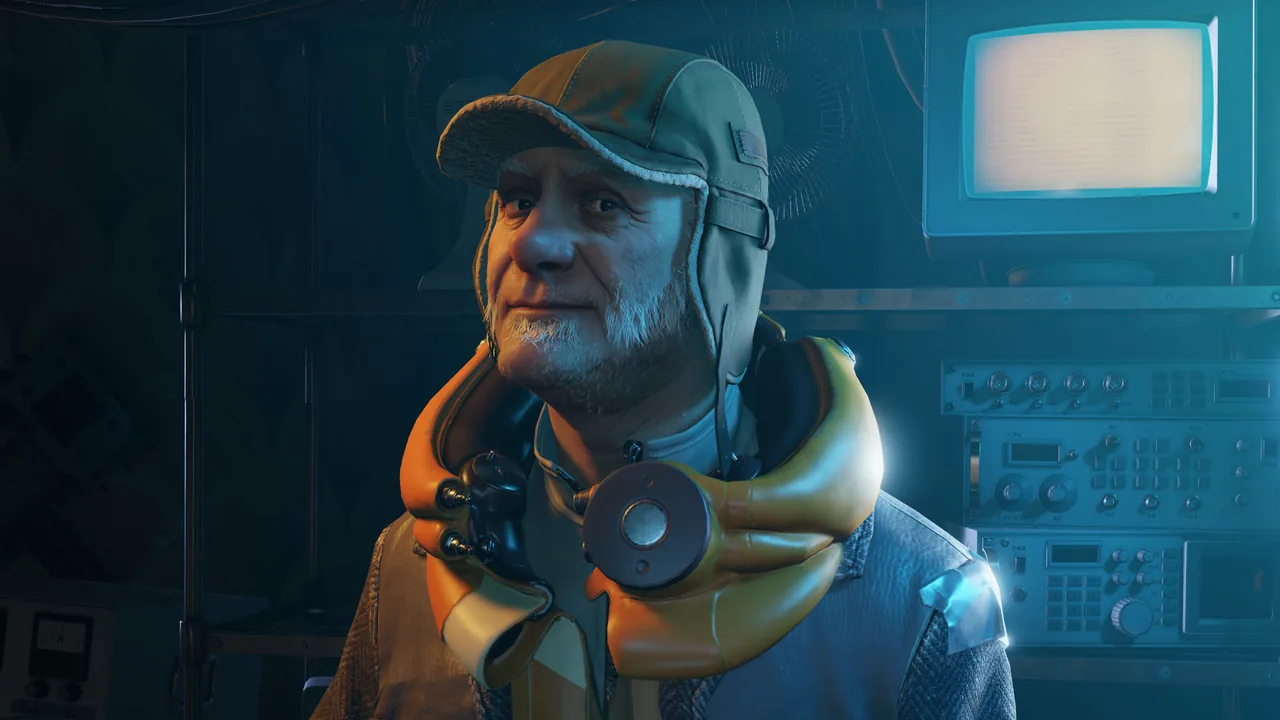
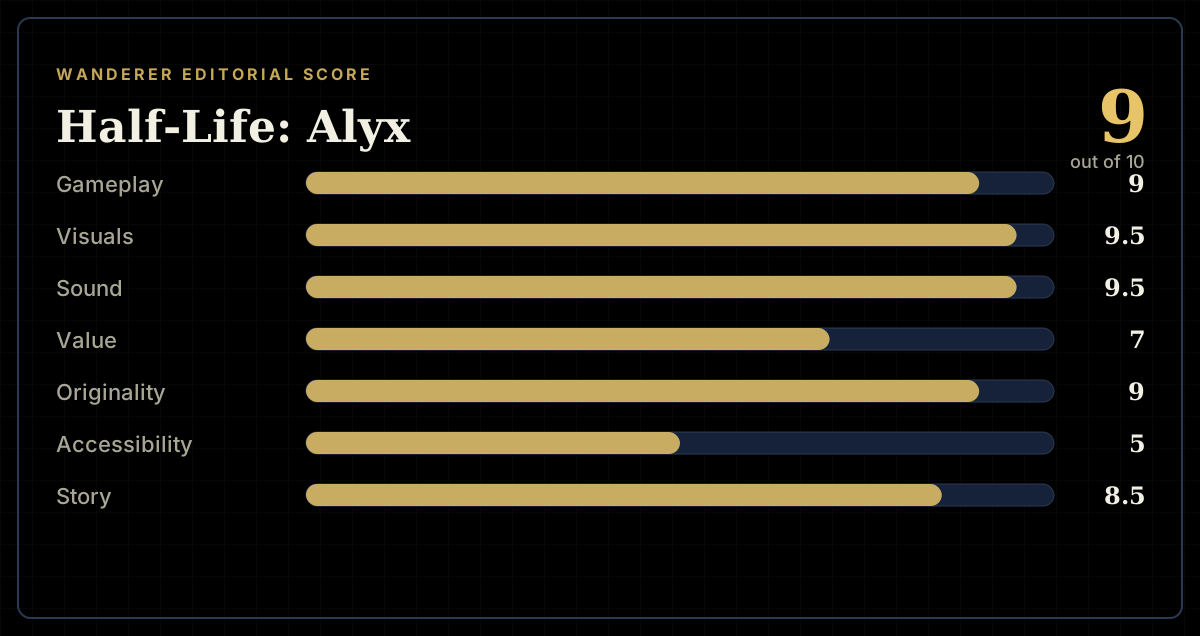
And the sound is extraordinary — a 9.5 that I'd argue for hard. Alyx is often a horror game that never quite admits it, and much of that comes from what you hear behind you in a space you have to physically turn your head to check. Russell, the voice in your ear for the entire runtime, is one of the best-written companions Valve has made, which is a high bar given Portal 2 sits at a 9.5 in this library.
The access problem, which is the whole review
This game requires a VR headset, costs NZ$85.99, and has never been discounted in my checking. That's the central buying consideration and it deserves to be stated plainly rather than buried under praise.
For someone who already owns a headset, this is the easiest recommendation on the platform — the software that justifies the hardware. For someone who doesn't, you are contemplating a headset plus NZ$85.99 for a twelve-hour single-player campaign.
There is a well-documented community mod that makes the game playable without VR, covered repeatedly in the gaming press since 2023 and reported to work even on Steam Deck. I haven't used it and it isn't Valve's, so I'd point you at it as something to research rather than endorse — but if the headset is the only barrier, it's the first thing to look into.
Accessibility scores a 5, and the left-handed issue is a real part of that. The second most-upvoted negative, at 180 votes, is a left-handed player explaining that enabling left-handed mode still requires rewiring their muscle memory to hold the weapon in the wrong hand. That's a design failure that a lot of reviews don't mention because it doesn't affect most players.
Motion sickness appears in only 6 of a hundred negatives and 2 of the last hundred reviews, which is low for VR — Valve's comfort options do their job — but it's non-zero and worth knowing if you're susceptible.
Crashes, dated
Crash appears in 30 of the 100 most-helpful negatives, which looks alarming. Dating them tells a more specific story: 2 in 2020, 3 in 2021, 9 in 2022, 4 in 2023, 8 in 2024, 4 in 2025, and none in the hundred most recent English reviews.
The recent ones are also notably hardware-specific — a December 2025 reviewer reports constant crashes on a Radeon 7900XTX, another reports trouble over Oculus Link. So this reads as a compatibility tail across particular GPU and headset combinations rather than a broken game. Worth checking your specific setup against the discussions; not a reason to avoid it.
The honest design criticism
Beyond access, two complaints recur among people who finished it.
It leads you by the hand. A 20-hour reviewer: "I feel like Valve is overdoing their 'subtle hints to guide the player'. I rarely felt like I had agency to take an alternate path or approach a problem in a different way." For a series built on environmental problem-solving, that's a fair charge, and puzzles appear in 20 of a hundred negatives largely on these grounds.
It front-loads. A 25-vote review: "Much like HL2, Alyx took the initiative of front loading the intro of the game as the best part." Several reviewers find the middle stretch repetitive before the finale recovers.
Negatives by year run 9, 19, 28, 16, 14, 10, 4 — peaking in 2022 and falling steadily since.
The verdict
Half-Life: Alyx earns a 9. It is the most persuasive demonstration of what virtual reality is for, made with a level of craft and confidence that six years have not dated, and free community campaigns have extended it well past its original length.
It isn't higher because access is a genuine mark against it rather than an excuse for it: hardware is required, the price has never moved, left-handed support is poor, and a hardware-specific crash tail persists. Those are real costs to real buyers.
If you own a headset and haven't played this, stop reading and go. If you don't, look into the NoVR mod before you look into a headset — and ignore the review at the top of the negative column, which is describing a game from 2020.
Pros and cons
Pros
- The most convincing physical interaction in any game — everything invites being handled
- Sound design that does more work than most games' entire horror toolkits
- Genuinely beautiful, and it still looks current six years on
- Strong writing and a companion in Russell who carries the whole runtime
- Free community campaigns via Workshop, including a four-hour original story mod
Cons
- VR only, at NZ$85.99, and it has never gone on sale
- Left-handed support is reportedly poorly implemented — the second-highest-voted complaint
- Crash reports recur across years, often tied to specific GPUs or link setups
- Guided to the point that some players never feel real agency in its puzzles
- Roughly twelve hours, front-loaded, with a back half several reviewers find weaker
Screenshots
-
Half-Life: AlyxImage: Valve via Steam -
Half-Life: AlyxImage: Valve via Steam -
Half-Life: AlyxImage: Valve via Steam -
How the review scores each part of the gameWanderer Editorial -
The short versionWanderer Editorial