
Game review
Moonlight Dialogue Review
7 / 10
- Developer
- N'Tale
- Publisher
- N'Tale
- Released
- 27 June 2026
- Platforms
- ["Windows"]
- Genre
- Simulation
A Mobile Otome, Transplanted to Steam
Moonlight Dialogue is an otome visual novel built around a chat-and-phone-call interface, in which you play the "Finder" at a moonlit counseling center, listening to troubled visitors, falling for them, and untangling the secrets behind their recurring nightmares. It launched into Steam Early Access on June 27, 2026, ported from an existing mobile release, and its review sample so far is tiny — just three reviews, all positive — but each one is long, detailed, and written by someone clearly invested in the game's routes and characters rather than skimming for a quick verdict.
Built for a Screen You Hold, Not One You Sit Back From
Every screenshot on the store page is presented in portrait orientation, and the game's own description confirms it's designed to be played that way even on a desktop monitor — a deliberate choice that preserves the phone-call and chat-message framing of its mobile origin rather than reformatting it into a traditional landscape visual novel. One reviewer, approaching it fresh without having played the mobile version, describes the format favorably, comparing the atmosphere to the chat-sim classic Mystic Messenger while specifically praising Moonlight Dialogue for not forcing players to check in at scheduled real-time intervals the way that genre often does — you can move through a route at your own pace instead of waiting on a timer.
Two Routes Live in Early Access, With More Promised
At this stage, the Early Access build offers two datable characters in full — Jiwon, a warm but fragile hospital intern, and Sooha, a playful drummer — with five more names listed on the store page as future additions. Reviewers confirm the current build supports over 15 endings for Jiwon alone (including 11 distinct bad endings) and 16 for Sooha, which is a substantial amount of branching content for two characters, and speaks to a structure built for replay rather than a single linear read-through. One reviewer notes they were ten hours in and had only reached a single ending, which sets real expectations about pacing: this is a slow-burn game, not a two-hour visual novel.
The Writing Leans Into Psychological Weight, Not Just Romance
What separates the reviews here from typical dating-sim feedback is how much attention they give to tone rather than just character appeal. One reviewer describes Jiwon's route as pulling the player in "slow, sweet, a little mysterious," before a plot twist recontextualizes everything that came before it — the kind of reveal that reportedly makes a second playthrough worthwhile just to catch missed foreshadowing. That same reviewer flags that Jiwon's route swings into genuinely possessive, intense territory once his "true colors" show, explicitly warning that anyone expecting a purely soft, cozy romance should know this game leans into darker psychological undertones rather than staying uniformly gentle.
A Difficulty Curve Built Around Failing First
The most detailed review in the sample describes a rough, occasionally frustrating first attempt at Jiwon's route, repeatedly landing on the same "Distortion" bad ending despite trying different dialogue approaches, including deliberately working against the genre's usual advice to simply agree with a love interest. That reviewer eventually sought outside help to understand the choice logic, and while they didn't ultimately land a good ending on that route, they came away appreciating the game's other characters enough to keep playing rather than dropping it — a sign the writing and character work are carrying real weight even when a specific route's puzzle-like choice structure gets punishing.
Translation Roughness Is the Recurring Technical Complaint
The one consistent technical criticism across the sample is translation quality — sentences that occasionally don't parse cleanly or carry slightly awkward phrasing, likely a byproduct of the game's Korean origin and ongoing localization work during Early Access. No reviewer treats this as a dealbreaker, and it's framed more as an expected rough edge for a freshly ported Early Access title than a fundamental flaw, but it's worth flagging plainly for anyone sensitive to prose quality in a text-heavy genre where the writing is the entire product.
A Steady Stream of Early Access Updates
Since its June launch, the developer has kept up a visible cadence of patches and content drops — a full Sooha route update in August, a dev log update, and a September patch note — which is a reassuring sign for an Early Access otome game in a genre where abandoned or slow-drip character routes are a common complaint. For a $24 entry price with only two of seven advertised characters currently playable, that ongoing momentum matters more than usual: buyers here are explicitly betting on future content arriving on schedule.
A Genre Comparison Worth Taking Seriously
The Mystic Messenger comparison one reviewer draws isn't offered lightly — it's a specific, credible signal for anyone who has spent time with that genre and knows what separates a lazy imitation from a game that understands what made the format work. Removing the real-time chat-check requirement while keeping the phone-call presentation intact is a genuinely thoughtful adjustment for a Steam audience less willing to structure their day around checking a game, and it suggests the developer is adapting the mobile format deliberately rather than just porting it wholesale and hoping the interface translates.
Verdict
Moonlight Dialogue is a well-received but very early slice of what's clearly meant to be a much larger otome visual novel, and its tiny review sample is unusually detailed and consistent in praising the artwork, the phone-call framing borrowed from its mobile roots, and writing that's willing to get genuinely dark and psychological rather than staying safely sweet throughout. Rough translation passages and only two of seven promised characters being playable are real, current limitations, not hypothetical ones, and $24 is a meaningful ask for a fraction of the eventual game. For fans of chat-sim otome titles willing to accept Early Access growing pains, though, what's here already shows real narrative ambition worth following as it fills out.
Screenshots
-

The whole game is framed as a phone in your hand — even a route's most tender or dangerous moments arrive as calls and chat messages.Image: N'Tale via Steam -

Character art like this — warm, painterly, and clearly built for a phone screen first — is one of the few things every reviewer agrees the game gets right.Image: N'Tale via Steam -
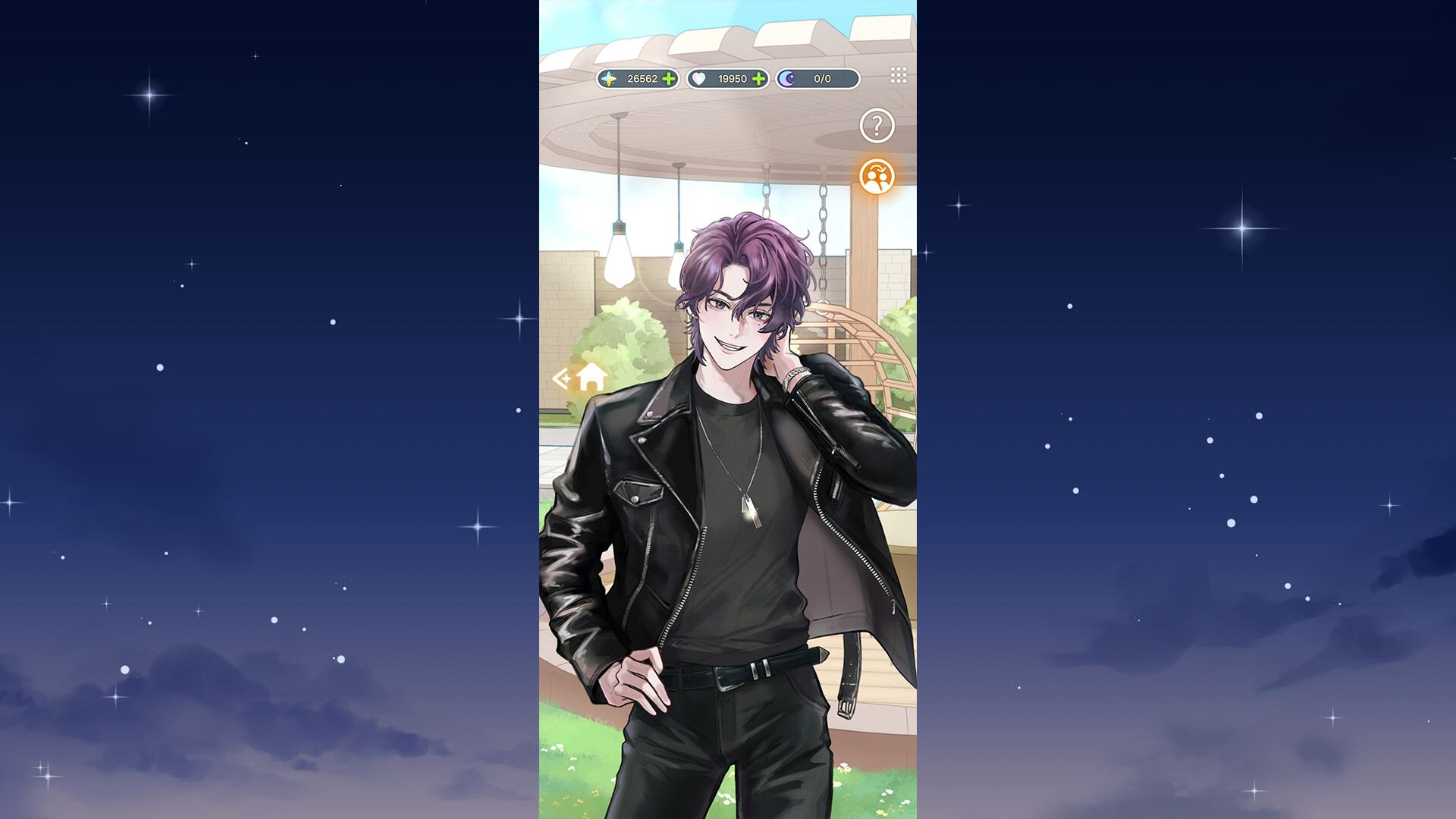
The currency bar along the top is a holdover from the game's mobile roots, tracking the same soft resources this Steam version doesn't charge extra for.Image: N'Tale via Steam