
Game review
Money for Girls: Amortized Review
8.6 / 10
- Developer
- Porpentine
- Publisher
- INNOCENT Interactive
- Released
- 24 August 2026
- Platforms
- ["Windows"]
- Genre
- Adventure
A Detective Story Wrapped Around a Predatory Loan
Money for Girls: Amortized casts you as a girl detective spending a sweltering summer trying to save her mother from a predatory loan while the town's most popular girl takes a disturbing, escalating interest in her. From publisher INNOCENT Interactive and writer Porpentine — known for boundary-pushing narrative work like With Those We Love Alive and Howling Dogs — it's a horror-romance visual novel that layers mystery-plot structure, dating-sim relationship management, and character-building customization into something that resists easy genre labeling. Steam's tags list Visual Novel, Horror, Dating Sim, Psychological Horror, and Gothic side by side, and the review pool suggests all of those are doing real work rather than being marketing flourishes bolted onto a conventional story.
The premise sounds almost like pulpy noir on paper — debt, blackmail, a mysterious rival — but the review pool consistently describes an experience defined less by its detective-story mechanics than by an unusually intense, specific emotional register. With 798 English-language reviews and a 99% positive score, this isn't a small cult curiosity; it's a genuine hit within its niche, and one of the strongest review pools this outlet has covered from a 2026 indie release of this size.
Character Creation as the Emotional Core
The game's most distinctive system is its sticker mechanic: players customize their detective with 16 traits — described in the store page as "sticky friends or marks of shame" — including things like OCD, Horse Girl, Endometriosis, and a mysterious trait called Boyborn, alongside seven unlockable outfits. Reviewers describe this customization layer as far more than cosmetic flavor; it's where the game's emotional specificity lives. "Being born as a female with HUGE menstrual pains I can relate SO MUCH with the feelings, writing and the visuals for the endometriosis 'perk.' It made me feel seen and so sad at the same time," one reviewer writes, framing the mechanic as something closer to represented lived experience than a stat modifier.
That specificity extends into gender identity and queerness as central, not peripheral, themes. Multiple reviewers describe building trans characters and finding the game's handling of that experience — including its darker, more uncomfortable moments — unexpectedly resonant rather than exploitative. One writes about the surreal thrill of being able to build a character who is "both trans AND a horse girl," while another calls the game "extremely unsettling and gay as hell" in the same breath as recommending it enthusiastically. The recurring pattern across the pool is players finding themselves reflected in traits and situations rarely depicted in games at all, let alone with this level of craft — and reacting to that recognition with a mixture of catharsis, discomfort, and gratitude that shows up again and again in the reviews' language.
Not a Game for Everyone, By Design
The reviews are unusually self-aware about who this game is and isn't for, often more so than the marketing itself. "Is it a game for me? Absolutely not, actually I'm probably the least qualified person to talk about a visual novel about queer girls," one reviewer writes, going on to recommend it anyway while being upfront about their outsider perspective on the material. Another puts it more bluntly: "A game for women with something really wrong with them. like really really wrong with them. other people could probably enjoy it too idk." This isn't reviewers being cagey or ironic — it's a consistent, deliberate signal that Money for Girls: Amortized is written from and for a very specific emotional and cultural space, one built around queer identity, chronic illness, body horror, and internet-native "girlfailure" self-deprecation, and that going in expecting a conventional dating sim or horror story will likely miss what makes it work.
The two negative reviews in the English-language pool both make a version of the same point from the outside of that target audience: the game's weirdness and unpleasantness "comes on way too strong," as one puts it, making it hard to connect with the writing despite acknowledging its craft. Another describes disjointed pacing between scenes and a protagonist who feels "off putting no matter what you choose." Both are honest, fair-minded criticisms rather than pans, and they point at a real tension in the design: a story this personal and tonally extreme is not built to be universally approachable, and reviewers who bounce off its specific sensibility do so for coherent, defensible reasons rather than because anything is technically broken.
Systems, Structure, and What You're Actually Doing
Underneath the emotional intensity, the mechanical shape of the game is a fairly traditional visual-novel/dating-sim hybrid: manage mood and hygiene stats or face consequences, pursue nonlinear and largely optional scenes across a summer timeline, and choose between "cold avarice" and "the warmth of love" — including a mechanic built around humiliating yourself for petty cash to pay down the loan at the story's center. Multiple "bad ends" are explicitly collectible in a gallery, encouraging replay to see the story's darker branches rather than treating failure states as something to avoid entirely. One reviewer specifically describes fully clearing the gallery, suggesting the completionist loop has real legs for players invested in seeing every branch.
Reviewers who approached the game as an experimental narrative piece rather than a mechanically deep dating sim tend to be the most satisfied, and that tracks with Porpentine's broader body of work — the choices and stat systems exist in service of the writing and tone rather than as a robust simulation layer in their own right. Anyone coming in expecting deep branching-path complexity on the level of a heavyweight visual novel may find the systems comparatively lean; anyone coming in for hand-drawn art, dense and specific prose, and a story willing to sit in genuinely uncomfortable emotional territory will likely find the $15 price a fair trade for a few hours of something they won't get anywhere else.
Verdict
Money for Girls: Amortized is a horror-romance visual novel that uses a predatory-loan detective plot as scaffolding for an unusually specific, unusually raw exploration of queerness, chronic illness, and self-image, delivered through a sticker-based character system that reviewers describe as genuinely representative rather than exploitative. It's not aiming for universal appeal, and the small handful of reviewers outside its target sensibility found the tone overwhelming rather than clarifying — a fair critique of a game built to hit hard rather than hit broadly. For the audience it's speaking to, though, the response has been close to overwhelming in the other direction, and the review pool backing that up is both large and remarkably consistent. Recommended without reservation for visual novel fans drawn to dark, personal, queer storytelling; go in aware that its intensity is the point, not a flaw to be tolerated.
Screenshots
-
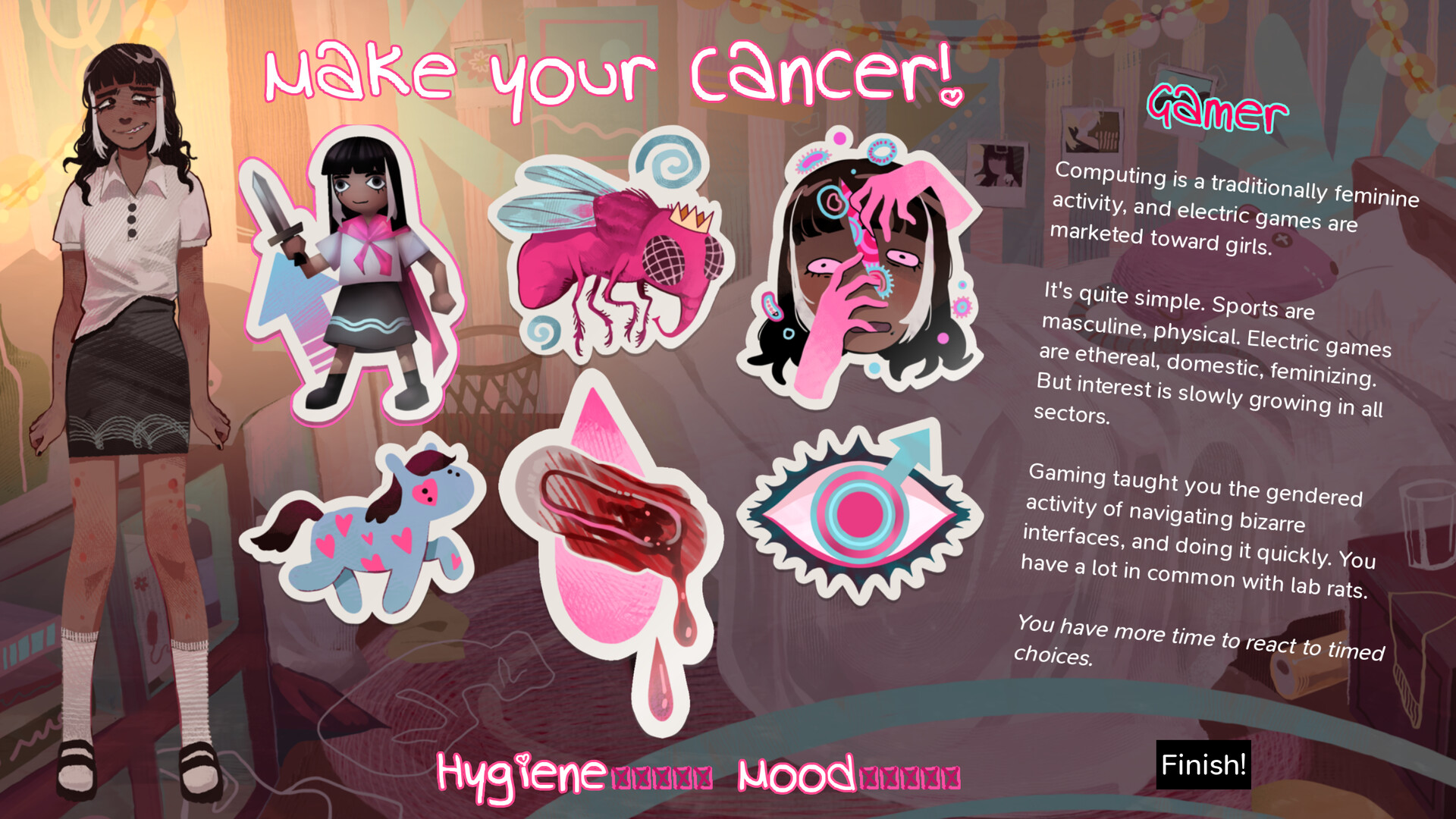
The sticker-based trait system, where players build their detective from traits like OCD, Horse Girl, and EndometriosisImage: INNOCENT Interactive via Steam -

The overworld hub, where each week's debt total and choice of activity frame the game's dating-sim structureImage: INNOCENT Interactive via Steam -
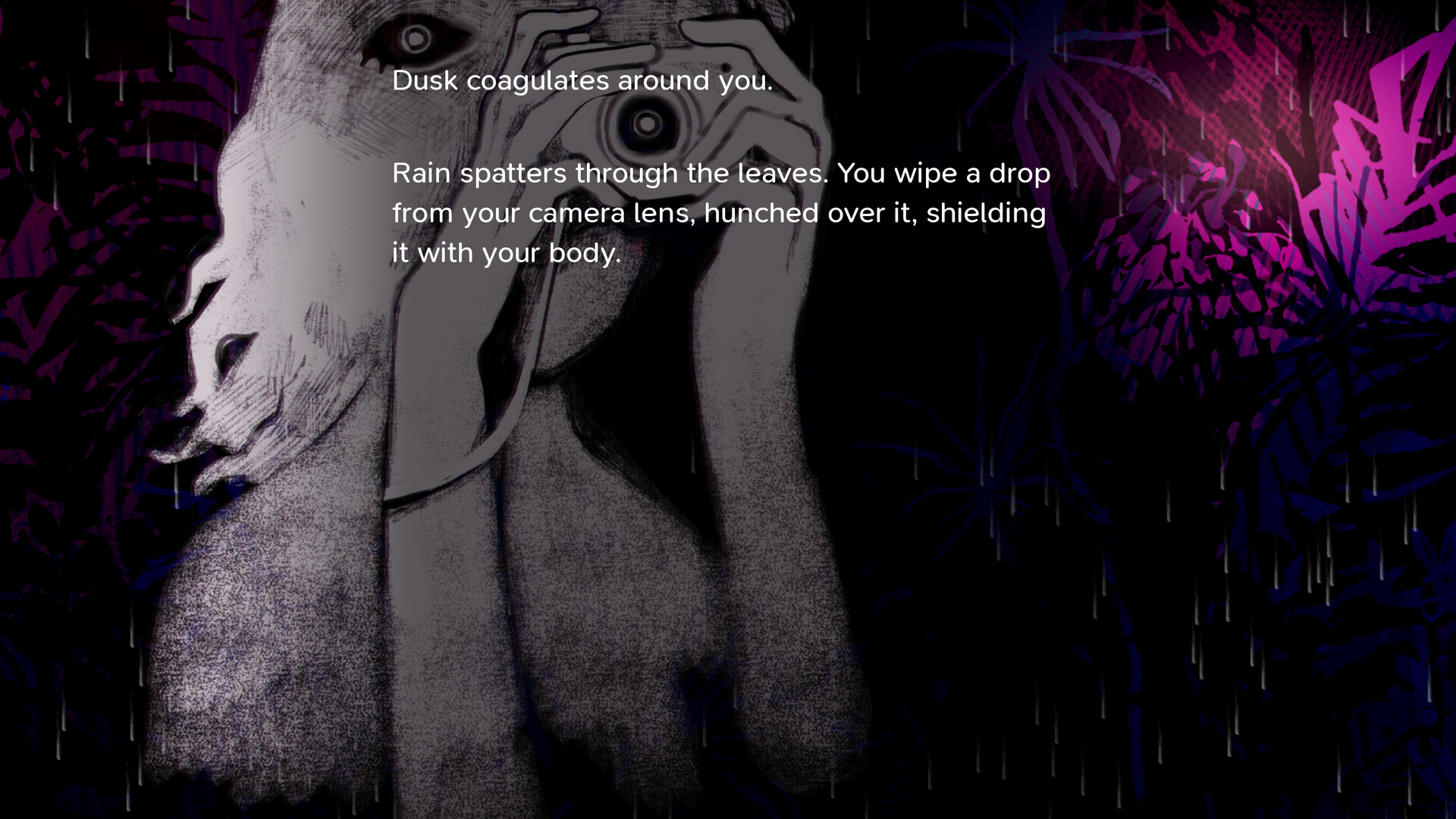
One of the game's darker, more atmospheric investigation scenesImage: INNOCENT Interactive via Steam