Game review
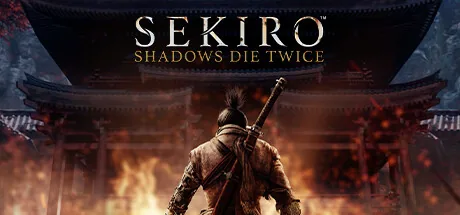
Sekiro: Shadows Die Twice
9 / 10
- Developer
- FromSoftware, Inc.
- Publisher
- FromSoftware, Inc. (Japan); Activision (worldwide, excluding Japan and Asia)
- Released
- 22 March 2019
- Platforms
- Windows, PlayStation 4, Xbox One
- Genre
- Action Adventure
- Monetisation
- Premium, one-off purchase; no paid DLC
- Players
- Single-player only, no co-op or PvP
The short version
Sekiro strips out everything FromSoftware normally lets you lean on — stat builds, co-op summons, a dozen viable weapon loadouts — and replaces it with one system, the deflection and posture fight, that has to carry the entire game. It does, spectacularly, right up until the handful of bosses where the system simply doesn't click for a given player, and there is no lever in the options menu to pull instead. The resurrection mechanic reshapes risk in a way none of the studio's other games attempt, the prosthetic arm gives just enough tactical variety to keep fights honest, and the whole thing plays like a studio testing how far a single brilliant idea can be pushed before it needs a difficulty slider. It never needed one more than a handful of times, and that's still a handful too many for some players.
Biggest strengths
- The deflection and posture system turns nearly every fight into a readable rhythm duel instead of a stat check
- Resurrection lets you bait an enemy's finishing blow and punish it, changing the basic risk calculus of every encounter
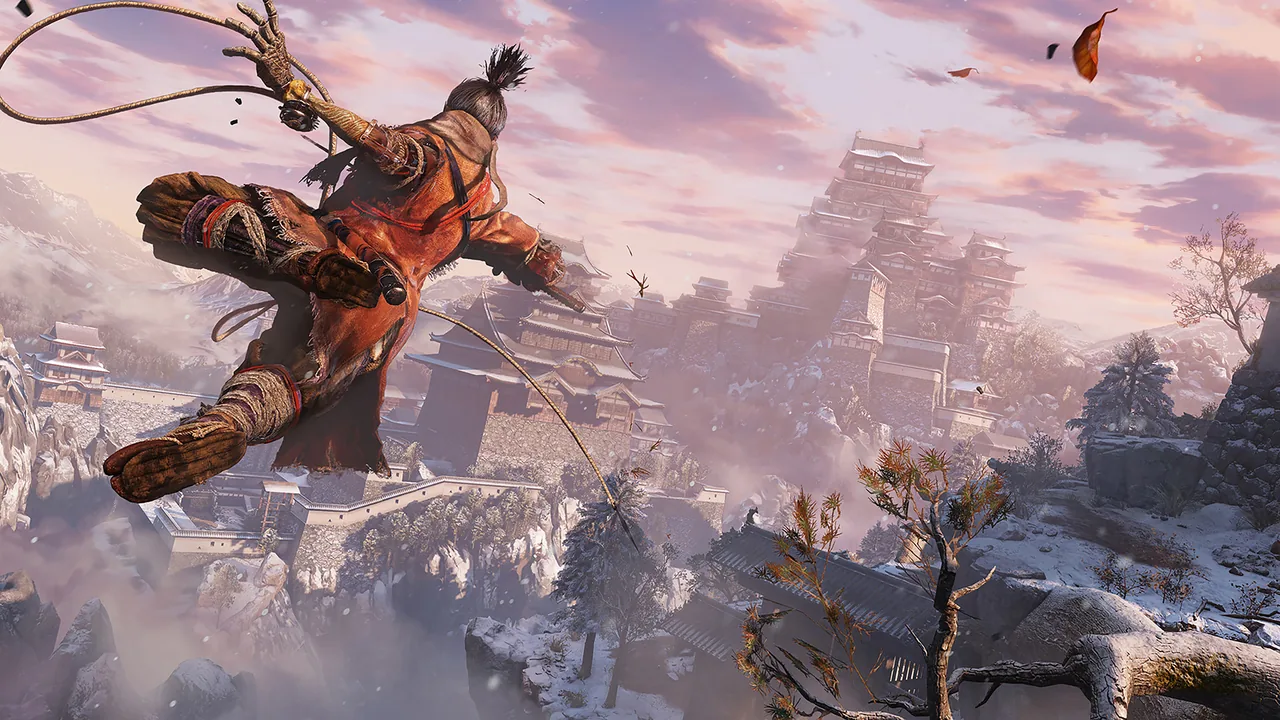
- The grappling hook and verticality make traversal and stealth positioning feel genuinely different from the rest of the genre
Biggest weaknesses
- There is no stat-build freedom, no covenant systems and no co-op or PvP, so a bad matchup with the combat has nowhere else to go
- A short list of specific bosses form a genuine skill wall with zero in-game mitigation and no accessibility options to soften them
- Stealth, so central in the opening hours, becomes close to irrelevant once late-game enemies and bosses stop respecting it
Who it's for: Action game players who want combat built around real-time skill rather than gear checks, and who are willing to accept that a wall in this game gets climbed by getting better, not by going somewhere else to level up first.
Our recommendation: Buy it if the idea of a boss fight as a rhythm-reading duel appeals more than the idea of theorycrafting a build to get past one. Skip it, or at least wait for a deep sale, if the phrase "no difficulty options" makes you tired rather than curious.
9 / 10
Every other FromSoftware game since Demon's Souls asks the same underlying question: how do you want to build your character? Sekiro is the one time the studio answered "you don't." There's no class selection, no stat allocation beyond a small handful of vitality and posture upgrades, no weapon variety to speak of — one sword, one set of prosthetic tools, one skill tree that every player eventually climbs most of. What's left after all of that gets stripped away is the purest version of FromSoftware's combat philosophy the studio has ever shipped: you don't get stronger, you get better. That's either the most exciting sentence in action gaming or a hard pass, depending entirely on what you want from a fight, and Sekiro is confident enough in its answer to never hedge.
Deflection is the whole game
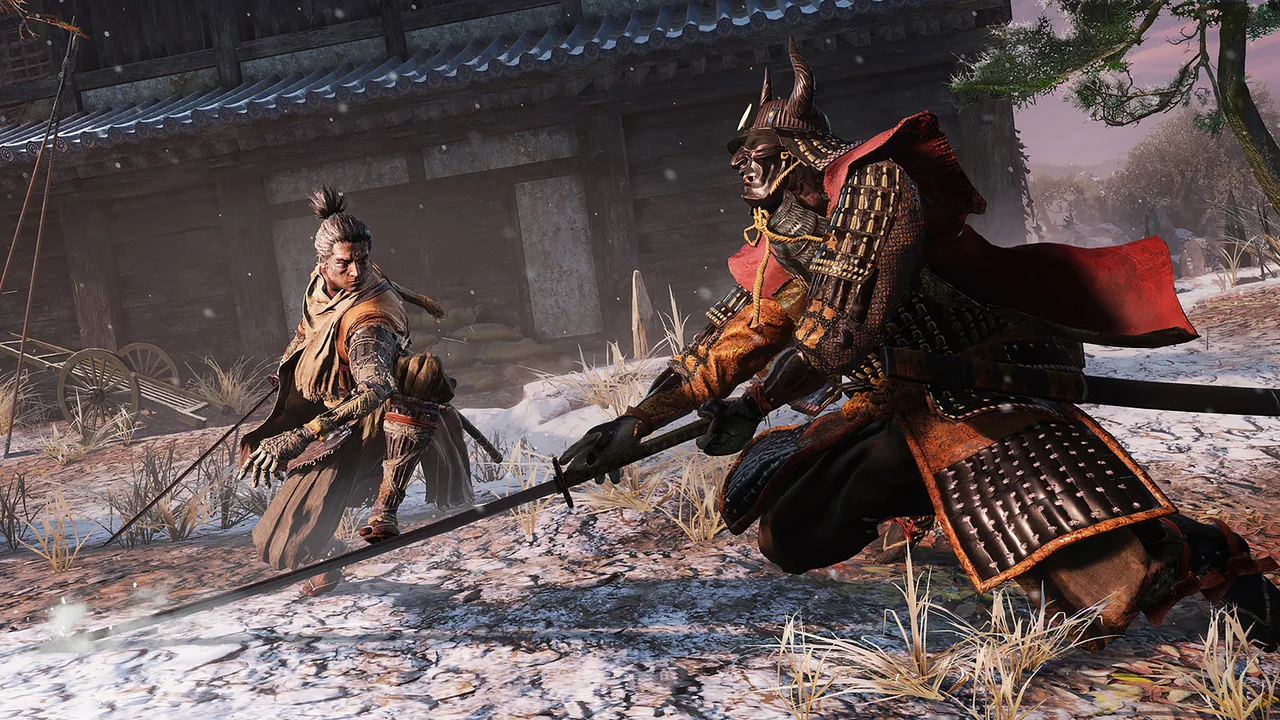
Where Dark Souls and Bloodborne measure a fight in health bars, Sekiro measures it in posture — a second gauge that fills as a target absorbs blocked or deflected hits, and that empties an opening for a lethal Shinobi Deathblow once it's full. The tool for filling it is deflection: a tight-timing block that, done right, staggers the attacker rather than the defender. Get the timing wrong and you're still blocking, still taking posture damage yourself, still in the fight — which is the detail that makes the system work as well as it does. Sekiro isn't a parry-or-die game in the way some of its imitators have become; deflection is forgiving enough to reward approximate timing while still making perfect timing feel unmistakably better. Over a long fight that difference compounds into exactly the kind of skill expression the genre's fans want, and it's the reason the moment-to-moment swordplay here gets talked about as some of the best combat FromSoftware has ever built, full stop.
The posture model does something else, too, that the health-bar approach never could: it makes aggression the correct default strategy against most enemies, including bosses, in a series previously defined by patient turtling. Chip away at health from a safe distance in Sekiro and you'll lose the war of attrition, because posture recovers when a target isn't under active pressure. Staying in an opponent's face, trading blows, deflecting relentlessly — that's the winning read, and it inverts the caution that Dark Souls trained an entire generation of players into. It's the single clearest sign of a developer building a genuinely new combat identity rather than iterating on the old one, and it's why lumping Sekiro in with "Soulslikes" undersells what it's actually doing.
One build, several tools
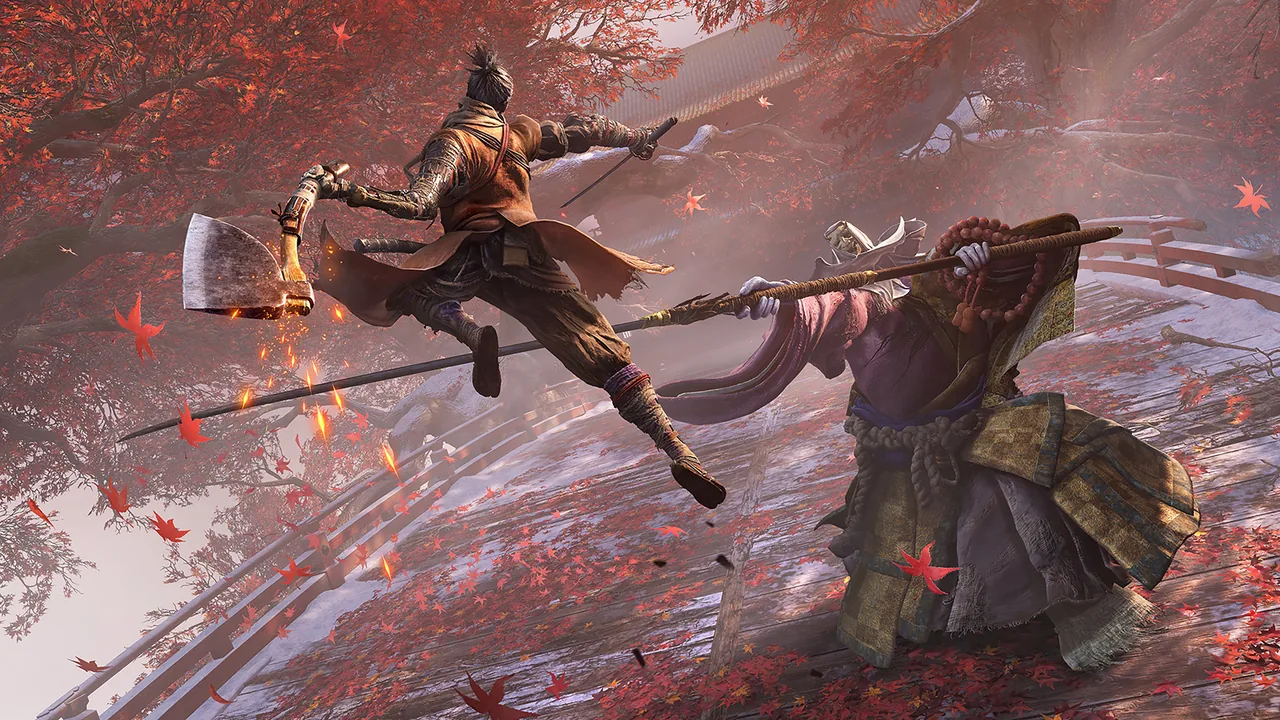
The absence of stat-build variety is the trade FromSoftware made to get that combat, and it's worth being honest about what it costs. There's no strength build, no dex build, no int/faith hybrid, nothing to theorycraft around — Wolf is Wolf in every playthrough, wielding the same katana with the same base moveset from the tutorial to the credits. What variety exists lives in two smaller systems instead: the prosthetic arm, which swaps between tools like the Firecracker, the Loaded Axe and the Spear across a fight to answer specific enemy types, and combat arts, equippable skills that add options like the Mortal Draw or Ichimonji without ever replacing the core deflection loop underneath them. It's a real layer of tactical decision-making, and a well-chosen prosthetic can turn an unfavourable matchup — an enemy that shrugs off deflection, or one that punishes melee range — into a manageable one. But it's a layer bolted onto a fixed frame, not the freedom to reshape the frame itself, and players coming from Elden Ring's Ashes of War or Dark Souls' catalogue of viable weapon types will feel the difference immediately. Sekiro isn't trying to be those games. It's worth saying plainly anyway: if character-build experimentation is what you actually want from an action RPG, this isn't the FromSoftware game that gives it to you.
Dying twice, on purpose
The resurrection mechanic that gives the game its name is the other structural idea doing heavy lifting, and it's a genuinely clever piece of risk design. Wolf can revive once on the spot after a killing blow, at partial health, and the game builds real tactical value around when to use it — baiting an enemy's finisher, reviving mid-swing, and turning what looked like a death into a free hit is a signature Sekiro moment once you've internalised the timing. It also means death carries a different weight than in the studio's other games: losing your first life is a checkpoint, not a run-ender, which nudges the whole game toward more aggressive play than a single fragile health bar would allow. The cost is Dragonrot, a spreading affliction that death inflicts on nearby NPCs and that can quietly lock questlines out from under a player who never gets a clear in-fiction signal it's happening. It's a real system with real consequences, and also the kind of thing that sends players to a wiki mid-playthrough rather than discovering it through the world itself — a very FromSoftware trade-off, for better and worse.
Stealth and verticality, then neither
The opening hours sell Sekiro hard on stealth and vertical traversal, and both are genuinely excellent while the game lets them matter. The grappling hook turns Ashina's rooftops, cliffs and temple beams into a real third dimension most action games don't bother building, and a well-planned sneak approach — picking off patrols one at a time, dropping in for a stealth deathblow on a target that would otherwise take half its posture bar to crack open — feels like a different, quieter kind of mastery than the deflection duels. The trouble is that this system has an expiration date the game never advertises. Minibosses and story bosses are largely immune to stealth deathblows beyond a single opening one at best, and by the midgame most meaningful encounters are pure posture duels regardless of how carefully you approached them. Verticality survives longer as a traversal tool than stealth does as a combat one, but the game that spends its first few hours teaching you to read rooftops and plan silent approaches quietly stops asking you to by the second half. It's not a bug exactly — bosses being immune to one-shots is defensible design — but it does mean one of the game's headline pitches has a much shorter shelf life than its marketing suggests.
Boss design at its most exacting
Where Sekiro doesn't compromise is boss design, and this is where the single-build philosophy pays off hardest. Every major encounter is built entirely around testing deflection timing and posture management against a specific, memorised pattern, with none of the "come back over- levelled" escape valve Dark Souls and Elden Ring both offer. That's a deliberate, defensible choice — it keeps every fight a pure skill check rather than a gear check — and it produces some of the most precisely choreographed boss fights the genre has ever seen, Genichiro and Isshin chief among them, each escalating through multiple readable phases that reward exactly the kind of practice the deflection system was built to reward. It's also the design decision most directly responsible for Sekiro's reputation as brutally, uncompromisingly hard, in a way that's different in kind from "under-levelled Dark Souls." There is no build to respec into, no summon to call, no covenant item to make a fight easier. A small number of specific encounters — the kind that show up constantly in player discussion — sit at a difficulty spike that either breaks for a given player after enough attempts or simply doesn't, and there's no accessibility option, no easier mode, nothing in the settings menu to lean on instead. That's not a flaw exactly so much as a design philosophy taken to its logical, uncompromising end, but it's worth being clear-eyed about what it means for anyone who bounces hard off precision-timing combat: this game genuinely will not meet you partway.
Ashina, told through architecture
Sengoku-era Japan reimagined with a supernatural undercurrent gives Sekiro a visual identity distinct from the grimdark European fantasy of Dark Souls or the Victorian gothic of Bloodborne, and it's a better fit for the grappling-hook verticality than either of those settings would have been — temple rooftops, castle ramparts and misty gorges give the traversal tool constant new shapes to work with. The world isn't open in the Elden Ring sense; it's a series of large, densely interconnected regions gated by story progress and the occasional locked shortcut, closer in structure to Dark Souls' looping level design than to a true sandbox. That structure suits the game it's serving. Sekiro was never trying to give you somewhere else to go when a boss is beating you; it's testing whether you can beat the boss.
Performance, controls and what's missing from the settings menu
On PC the game runs a well-optimised, if visually modest, Havok-and-in-house engine build with a solid framerate on modern hardware and full controller support that most players will prefer to mouse and keyboard, given how much of the combat depends on directional timing. It's stable, which matters more here than in most games — a hitch during a deflection window in a game built entirely around deflection windows would be unforgivable, and Sekiro largely avoids that trap. What's genuinely absent, and worth flagging directly, is any accessibility support for the combat's demanding timing requirements: no assist mode, no adjustable difficulty, no way to widen a deflection window for a player who needs it. That's a real gap by 2026 standards, and one the game has never patched in.
The GOTY update and what buying it today gets you
The version sold on Steam today is listed as the Game of the Year Edition, and it's worth being precise about what that means: this isn't a separate release or a repackaged remaster sitting alongside an older version — it's the same product, at the same appid, updated in place with a free patch after the game's initial run of Game of the Year wins. Anyone buying Sekiro now gets the original campaign plus that update's additions: Gauntlets of Strength, a set of tougher rematch gauntlets against specific bosses back to back for cosmetic rewards, remixed encounters for players who've already cleared the base game once, and additional outfits and extras for completionists. None of it is sold separately, and there's no earlier, lesser version still on sale next to it — one purchase, one build, whatever FromSoftware has patched into it since 2019. That single-SKU simplicity is a small mercy compared to some of the studio's other storefront listings.
Sekiro's stack of Game of the Year wins from 2019 wasn't a fluke or a slow news year — it was recognition that a developer known for a specific, imitated formula had built something meaningfully different on the same fundamental confidence in tight, punishing, readable combat. That the finished product also carries real, specific weaknesses doesn't undercut that argument; it's exactly the kind of trade-off a studio makes when it commits fully to one idea instead of hedging across several.
Value
At full price this sits in line with FromSoftware's other premium releases, and unlike Dark Souls III or Elden Ring, there's no expansion to budget for afterward — what you see on the store page is the entire game, GOTY content included, with nothing held back for later DLC. Length is shorter than Elden Ring by a wide margin and roughly comparable to a single Dark Souls entry, but replay value comes from mastering the same fights better on a second run rather than from build variety, so how much extra time you get out of it depends heavily on whether that appeals. For the specific audience this game is built for, full price is easy to justify. For everyone else, it's worth reading the cons list twice before buying.
Final verdict
Sekiro succeeds by refusing to be everything FromSoftware's other games are. No build variety, no co-op, no accessibility net — just one exceptionally well-tuned combat system asked to carry the entire experience, and it does, right up until it meets the small number of players it simply isn't built to reach. The deflection and posture duel is genuinely among the best real-time combat systems in the genre; the resurrection mechanic reshapes risk in a way nothing else in the studio's catalogue attempts; the prosthetic tools give a fixed build real tactical range. Against that: no accessibility options for a game that demands split-second timing, a stealth system that quietly retires itself by the midgame, and a handful of specific bosses that will simply end some players' runs with no in-game lever to pull instead.
Nine reflects a genuine high point in action game design that loses half a point for how sharply its philosophy — improve or don't pass — cuts off the players it doesn't work for, with no accessibility settings offered as a bridge. That's the score of a game that knows exactly what it is and refuses to soften it, not a hedge.
Price checked 30 July 2026.
Readers who want FromSoftware's build-variety side of the ledger rather than its single-path side should look at our Elden Ring review, where the same studio goes the opposite direction entirely. Players who'd rather their progress kept accruing quietly while they're away from the keyboard, without a posture bar involved at all, might prefer what Wanderer does instead.
Pros and cons
Pros
- The deflection and posture system turns nearly every fight into a readable rhythm duel instead of a stat check
- Resurrection lets you bait an enemy's finishing blow and punish it, changing the basic risk calculus of every encounter
- The grappling hook and verticality make traversal and stealth positioning feel genuinely different from the rest of the genre
- Prosthetic tools and combat arts give the single fixed build real tactical range without needing stat allocation to deliver it
- Boss design is some of the most precisely tuned in the genre, with attack patterns built to be learned rather than out-levelled
- The GOTY update's Gauntlets of Strength and remixed boss encounters give committed players extra high-difficulty content at no extra cost
Cons
- There is no stat-build freedom, no covenant systems and no co-op or PvP, so a bad matchup with the combat has nowhere else to go
- A short list of specific bosses form a genuine skill wall with zero in-game mitigation and no accessibility options to soften them
- Stealth, so central in the opening hours, becomes close to irrelevant once late-game enemies and bosses stop respecting it
- Posture and deflection either click for a given player within the first few hours or they don't, and the game offers no alternative approach when they don't
- Dragonrot's death penalty affects NPC questlines in ways that are easy to trigger accidentally and awkward to track without outside help
Screenshots
-
Sekiro™: Shadows Die Twice - GOTY EditionImage: Activision via Steam -
Sekiro™: Shadows Die Twice - GOTY EditionImage: Activision via Steam -
Sekiro™: Shadows Die Twice - GOTY EditionImage: Activision via Steam -
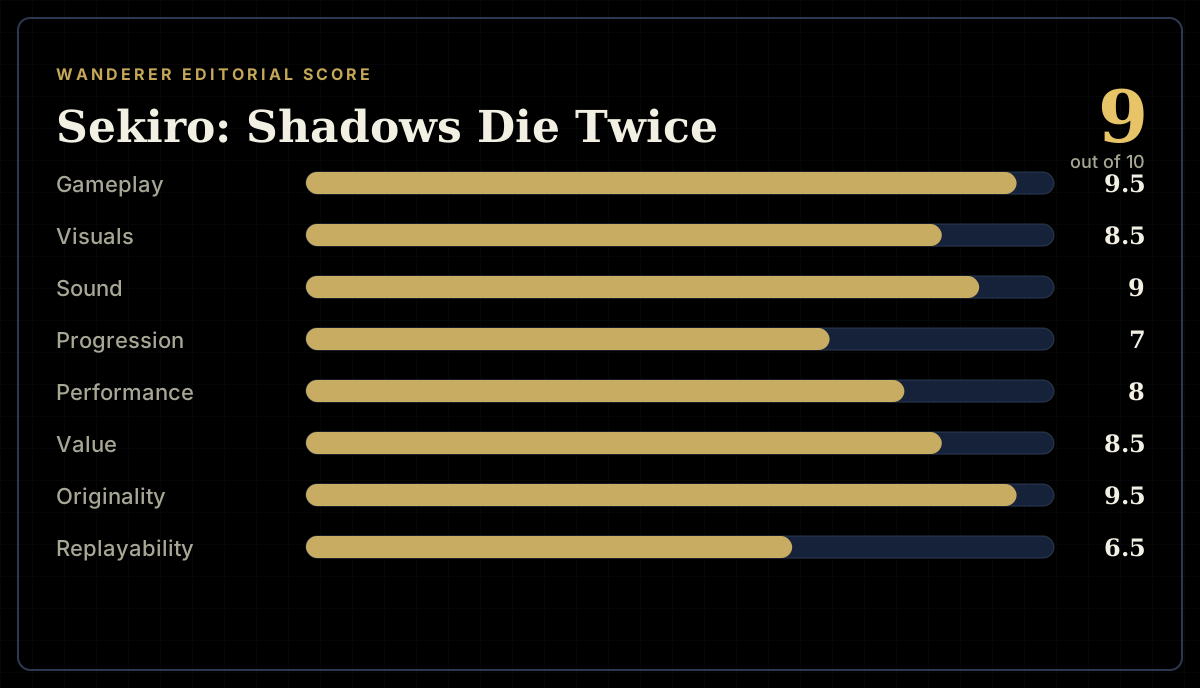
How the review scores each part of the gameWanderer Editorial -
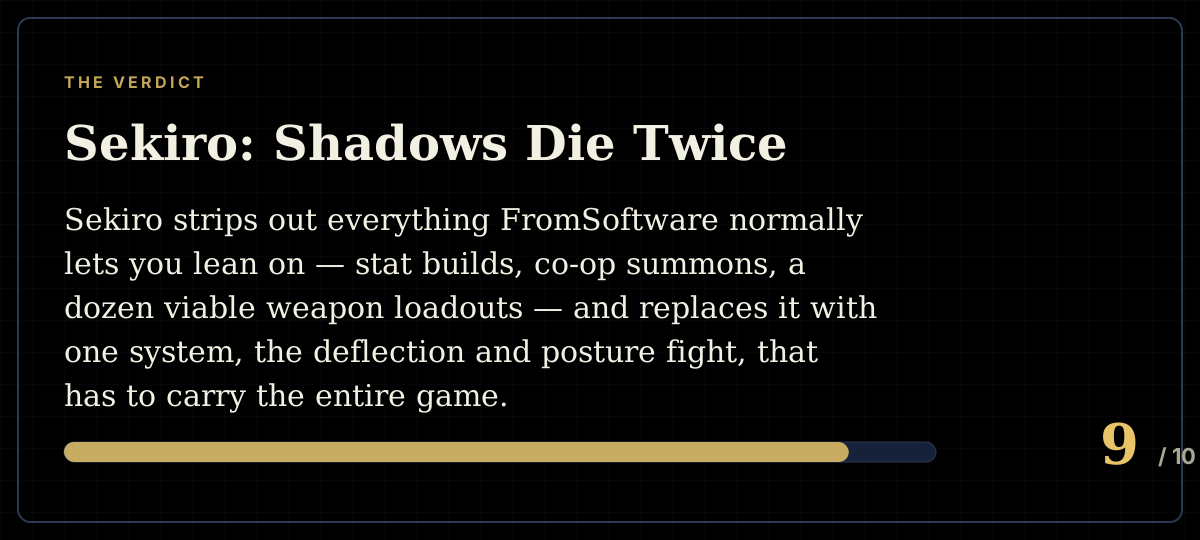
The short versionWanderer Editorial