
Game review
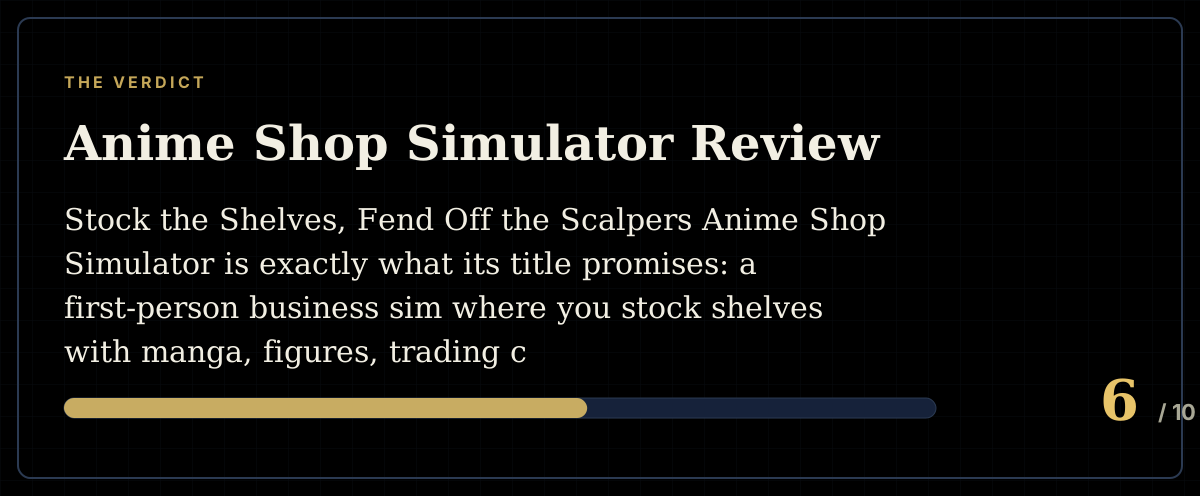
Anime Shop Simulator Review
6 / 10
- Developer
- One More Time
- Publisher
- One More Time / Polnoch
- Released
- 11 September 2026
- Platforms
- ["Windows"]
- Genre
- Simulation
Stock the Shelves, Fend Off the Scalpers
Anime Shop Simulator is exactly what its title promises: a first-person business sim where you stock shelves with manga, figures, trading cards, and assorted collectibles, then keep the register moving while customers browse, buy, and occasionally try to walk out with something they didn't pay for. It launched after a long public run as a wishlisted demo, and reviewers who followed that build-up describe genuine excitement for the full release — one of the very first reviews posted calls it a game "we have waited for so long," and the review pool's early tone leans distinctly celebratory rather than cautious.
The core loop will be instantly familiar to anyone who's played TCG Card Shop Simulator or its many genre siblings: unpack deliveries, price and shelve inventory, ring up customers, catch shoplifters, and reinvest profits into upgrades and new stock lines. What sets it apart on paper is native up-to-four-player co-op, letting friends split duties across the register, stockroom, and shop floor simultaneously rather than taking turns in a single-player loop.
Chaos Multiplies With Every Added Player
Co-op is where the review pool's enthusiasm concentrates most consistently. Reviewers describe assigning informal roles among friends — one on interior design, one managing the stockroom, others dueling at in-store card tables — and multiple reviews specifically praise the game's built-in nonsense factor: a baseball bat that's ostensibly there for stopping shoplifters doubles, in practice, as a tool for enforcing "company policy" on slacking teammates. One reviewer frames solo play as calm and methodical by contrast — "just organize manga and figures at your own pace" — while co-op turns into what they call "a literal warzone," and both modes get genuine praise from different corners of the review pool depending on what players are looking for.
Progression and economy draw more mixed reactions. Several reviewers flag steep early costs, most pointedly shelving upgrades that one review calls "nuts" relative to early income, and multiple reviews describe the pre-employee stretch of the game as a tedious sprint between storage and shelves with little time for anything else, since a single customer can spend over a thousand dollars in one visit and empty a shelf in seconds. Reviewers who pushed past that early crunch and unlocked hired help report the pacing settling into something considerably more manageable, with one 20-hour player specifically noting that several early complaints had already been patched out within the game's first few days.
A Familiar Formula That Draws Direct Comparisons
The most consistent critical thread in the negative reviews isn't a specific bug but a comparison: a meaningful share of critical reviewers describe Anime Shop Simulator as a close, less polished cousin of TCG Card Shop Simulator, with one calling it "TCG simulator without soul" and another describing it more bluntly as a "cheap copy" that adds an anime skin without adding enough of its own identity underneath. Complaints along these lines focus on flat character models, unremarkable card artwork for a game built around anime aesthetics, and pack-opening that several reviewers feel should be a bigger, more satisfying centerpiece than it currently is. It's a comparison that shows up often enough across the negative half of the pool to read as a real structural concern rather than a handful of outliers, even though plenty of positive reviewers are perfectly happy playing what amounts to a reskinned, co-op-focused take on a genre they already enjoy.
A separate, more serious cluster of complaints concerns undisclosed AI-generated content — several reviewers say specific in-game assets, including collectible keychains, appear to be AI-generated without being labeled as such, and cite that discovery directly as their reason for refunding. A smaller number of reviewers report unusually high CPU or GPU load and heat output relative to far more demanding games running on the same hardware, with a few going so far as to jokingly (and not so jokingly) compare the resource usage to cryptocurrency mining software. Neither complaint is universal across the pool, but both appear with enough independent detail from different reviewers to be worth flagging rather than dismissing as isolated reports.
Adult-Adjacent Content Alongside the Shopkeeping
A final recurring thread, mentioned by multiple reviewers without prompting, is that the shop's customer base and item catalog lean into fan-service-style content more explicitly than a typical business sim — reviewers reference a body-scanning security feature that renders customers' clothing transparently, and openly note that a share of the audience is here specifically for that content alongside the collectible-shop fantasy. It's presented with a wink by the game itself rather than hidden, and reviewers who mention it do so matter-of-factly rather than as a complaint, but it's a meaningfully different tone than most shelf-stocking sims and worth knowing going in. A smaller number of reviewers separately report motion sickness from the game's narrow field of view and choppy movement, with at least one asking for an adjustable FOV slider as a priority fix.
Verdict
Anime Shop Simulator delivers exactly the chaotic, collectible-shop co-op experience its review pool was clearly hoping for, and the four-player mode in particular earns real, specific praise for turning a familiar genre template into something genuinely funny to play with friends. Where it struggles is in standing apart from the genre leader it's most directly compared to — thinner art direction, an underbaked early economy, and credible, repeated reports of undisclosed AI-generated assets and unusually heavy system load all chip away at a launch that a meaningful slice of its own audience calls undercooked. It's a reasonable pickup at $14.99 for a group of friends specifically chasing this exact genre, but newcomers to shop sims, or anyone put off by AI-content concerns, have better-regarded alternatives to consider first.
Pros:
- Native four-player co-op turns a familiar shop-sim loop into genuinely chaotic, funny group play
- Solo mode offers a calmer, methodical pace for players who prefer it
- Several early-access-era complaints were already patched within days of launch
- Deep item catalog spanning manga, figures, and trading cards for genre fans
- Low barrier to entry for anyone who already enjoys the collectible-shop-sim genre
Cons:
- Widely compared unfavorably to TCG Card Shop Simulator, with less distinct art direction
- Multiple credible reports of undisclosed AI-generated in-game assets
- Some reviewers report unusually high CPU/GPU load and heat for the game's visual complexity
- Steep early shelving costs and a tedious pre-employee grind frustrate several reviewers
- Narrow field of view causes motion sickness for a handful of players
Screenshots
-
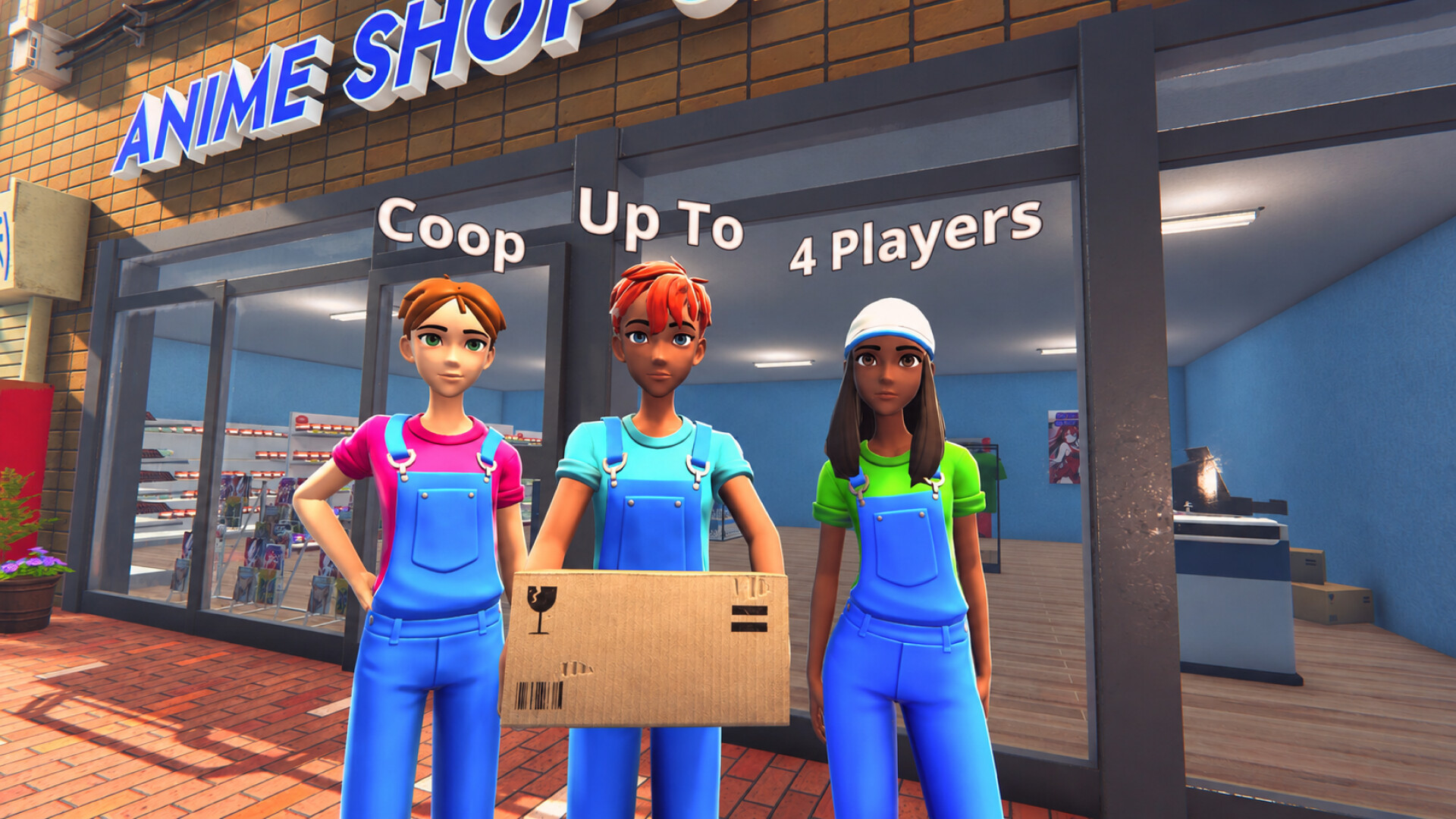
Up to four players can staff the shop together, splitting duties across the register, stockroom, and shop floorImage: One More Time via Steam -
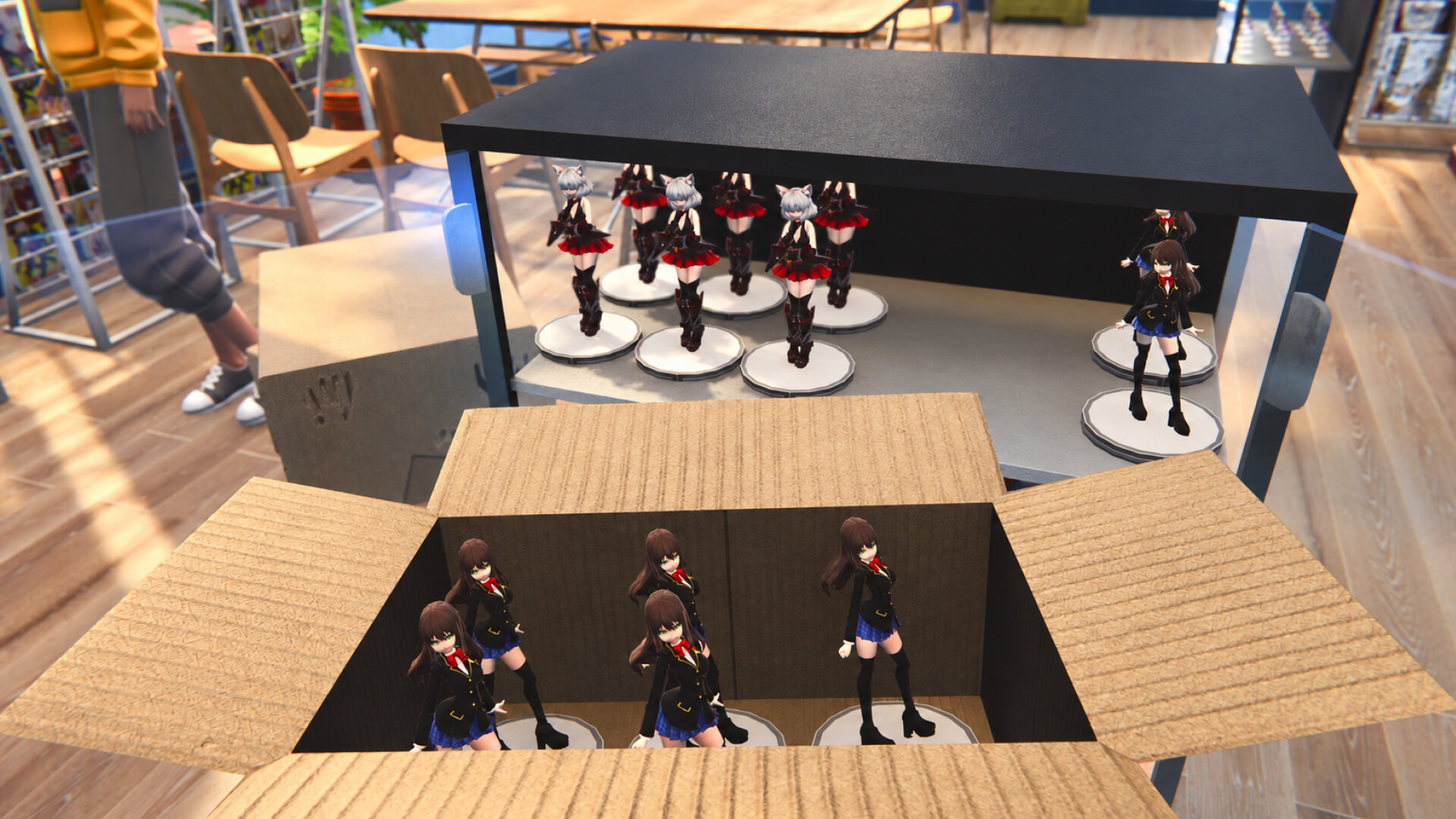
Unpacking deliveries and shelving collectible figures makes up much of the core stocking loopImage: One More Time via Steam -
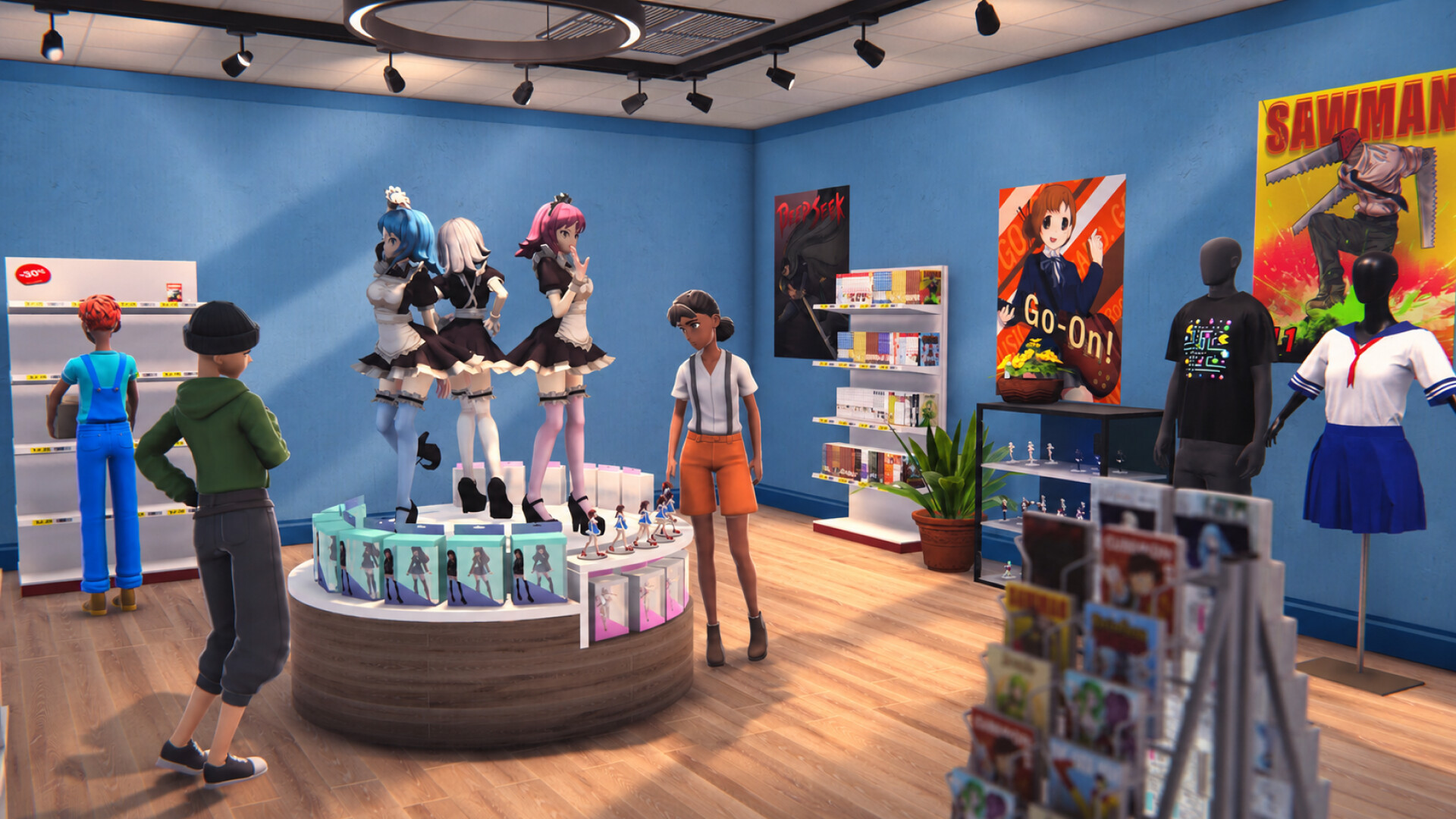
The shop catalog spans manga, posters, apparel, and figures across densely packed shelvingImage: One More Time via Steam -
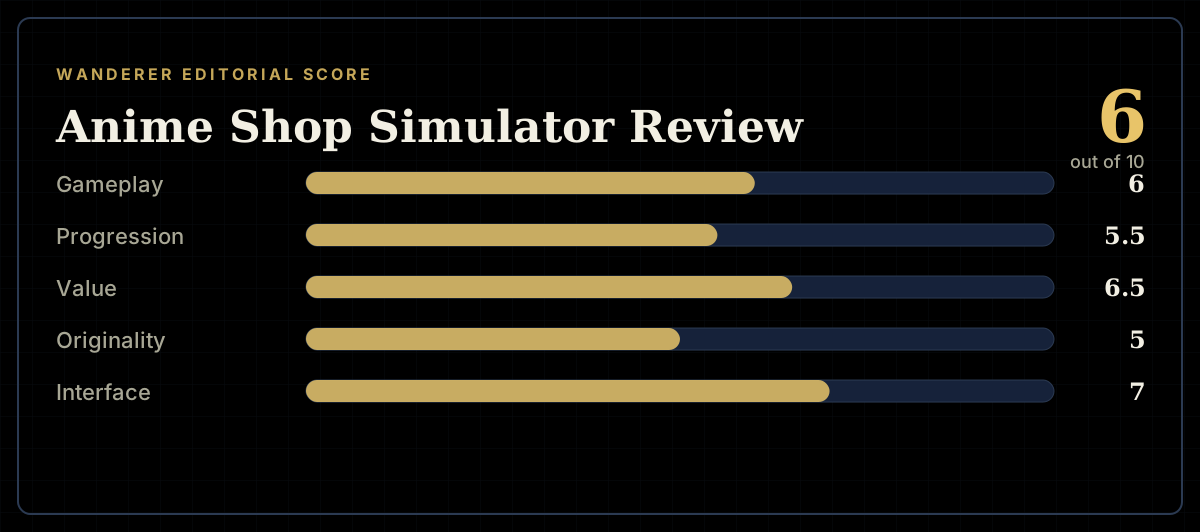
How the review scores each part of the gameWanderer Editorial -
The short versionWanderer Editorial