Game review
Medieval Juice Crafter Review
6.4 / 10
- Developer
- Timeless Rush
- Publisher
- GrabTheGames, Gamersky Games
- Released
- 15 September 2026
- Platforms
- ["Windows"]
- Genre
- Simulation
Cocktails, But It's the Dark Ages
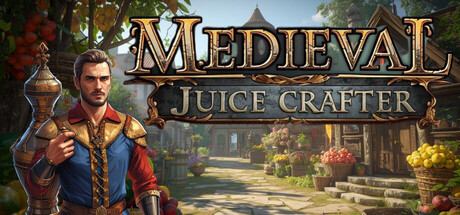
Medieval Juice Crafter's pitch is a small joke dressed up as a full business simulator: what if you ran a specialty juice bar, but you had to do it with medieval technology, medieval ingredients, and medieval customers who have never heard of a smoothie. One player sums up the appeal better than any marketing copy could: modern society is full of places to get a cocktail in any flavor imaginable, but the game asks you to imagine how genuinely difficult that business would have been to run eight hundred years ago, then lets you find out. It's a silly premise executed with more sincerity than you'd expect, and that sincerity carries a lot of the experience.
The loop itself is straightforward juice-shop management wrapped around real production-chain depth. You mix recipes from ingredients you source and grow, sell the results to villagers with individual tastes and complaints, and reinvest profits into new machines, additional properties, and hired workers to expand beyond a single stall. It's less a cooking game than a supply-chain optimization game with a fruit-juice skin, and reviewers who lean into that framing get the most out of it.
A Surprisingly Deep Crafting Loop
Where Medieval Juice Crafter earns its strongest praise is in how much genuine depth is hiding underneath the cozy medieval-market aesthetic. Players describe real engagement with figuring out optimal recipes for specific customer buffs, weighing ingredient costs against selling price, and deciding when it makes sense to rent a new workshop in a different village versus expanding the one you've already got running. That's a meaningfully more involved economic loop than most cozy shop-sims bother building, and it's the reason multiple reviewers describe the game as more absorbing than its cute presentation suggests.
The co-op mode adds a second layer entirely. Up to two players can split shop duties in real time, and while several reviewers say the solo experience is perfectly chill and manageable on its own, more than one specifically calls out two-player co-op as where the game actually clicks — dividing sourcing, brewing, and customer service between two people turns a relatively sedate management loop into something closer to a coordinated, slightly frantic team effort. You can also swap between solo and co-op freely rather than committing to one mode for a whole save, which removes a friction point a lot of similar games don't bother addressing.
Rough Edges Under the Charm
The game is not without real technical and design problems. Performance is a recurring complaint, with at least one player specifically requesting a refund because the game proved too demanding for their GPU despite the modest, stylized visuals on display — a mismatch between visual ambition and actual hardware requirements that suggests the game isn't as optimized as its scope implies. Controls and camera sensitivity also draw criticism, with one reviewer describing jarringly high default mouse sensitivity at the start of the game and animations that feel stiff relative to the rest of the presentation.
There's also a disclosed, and somewhat divisive, use of AI-generated content in the game's voice lines, which the store page flags and which several players comment on directly. Reactions split along predictable lines: some players say they don't mind developers using the technology in principle but find the specific execution here cheesy, repetitive, and poorly integrated, with one describing a bugged mail-notification sound effect that looped for roughly two hours straight until they had to mute the game's audio entirely. Another reviewer, comparing the loop unfavorably to the drug-dealing sim Schedule I, says the AI voice work is distracting enough that "this thing just screams AI to me" even accounting for the disclosure already telling them so. It's a small piece of the whole game, but it's the single most consistently mentioned negative across the review pool.
Finding Its Audience
Despite the rough patches, the response to Medieval Juice Crafter skews strongly positive, and the reasons given track closely with what the genre's existing fans tend to want: a management loop with enough numbers to actually optimize, a co-op option that meaningfully changes how the game plays rather than just adding a second cursor, and a theme distinctive enough to stand out in a genre crowded with coffee shops and flower stores. At $11.99, it's priced modestly enough that the performance hiccups and rough voice-line integration read as forgivable launch-week issues rather than dealbreakers for most of the audience that's tried it so far, though the GPU-demand complaints are worth taking seriously if your hardware is on the older side.
Verdict
Medieval Juice Crafter takes a thin joke premise and builds a genuinely engaging supply-chain management game underneath it, with enough recipe and logistics depth to reward players who like optimizing a business rather than just decorating one. The co-op mode is a real strength rather than a bullet-point feature, letting two players split the workload in a way that changes the texture of play rather than just doubling the clicking. Set against that is a game that's more demanding on hardware than its visuals justify, stiff default controls, and voice-line AI content that a vocal share of players find actively grating rather than charming. If the premise and the co-op angle appeal to you, there's a genuinely well-built management sim in here worth the modest asking price; just go in expecting some jank to smooth over as the game gets patched.
Pros:
- Genuinely deep recipe and supply-chain optimization loop
- Co-op mode meaningfully changes how the game plays, not just a bolt-on
- Distinctive medieval-juice-bar theme stands out in a crowded genre
- Flexible solo/co-op switching without committing a whole save
- Modest, approachable price point for the amount of systems on offer
Cons:
- Performance demands feel mismatched with the game's modest visuals
- Jarring default mouse sensitivity and stiff animations
- AI-generated voice lines draw consistent, specific player criticism
- At least one reported audio bug looping sound effects for extended periods
- Interface and onboarding could use more polish for new players
Screenshots
-
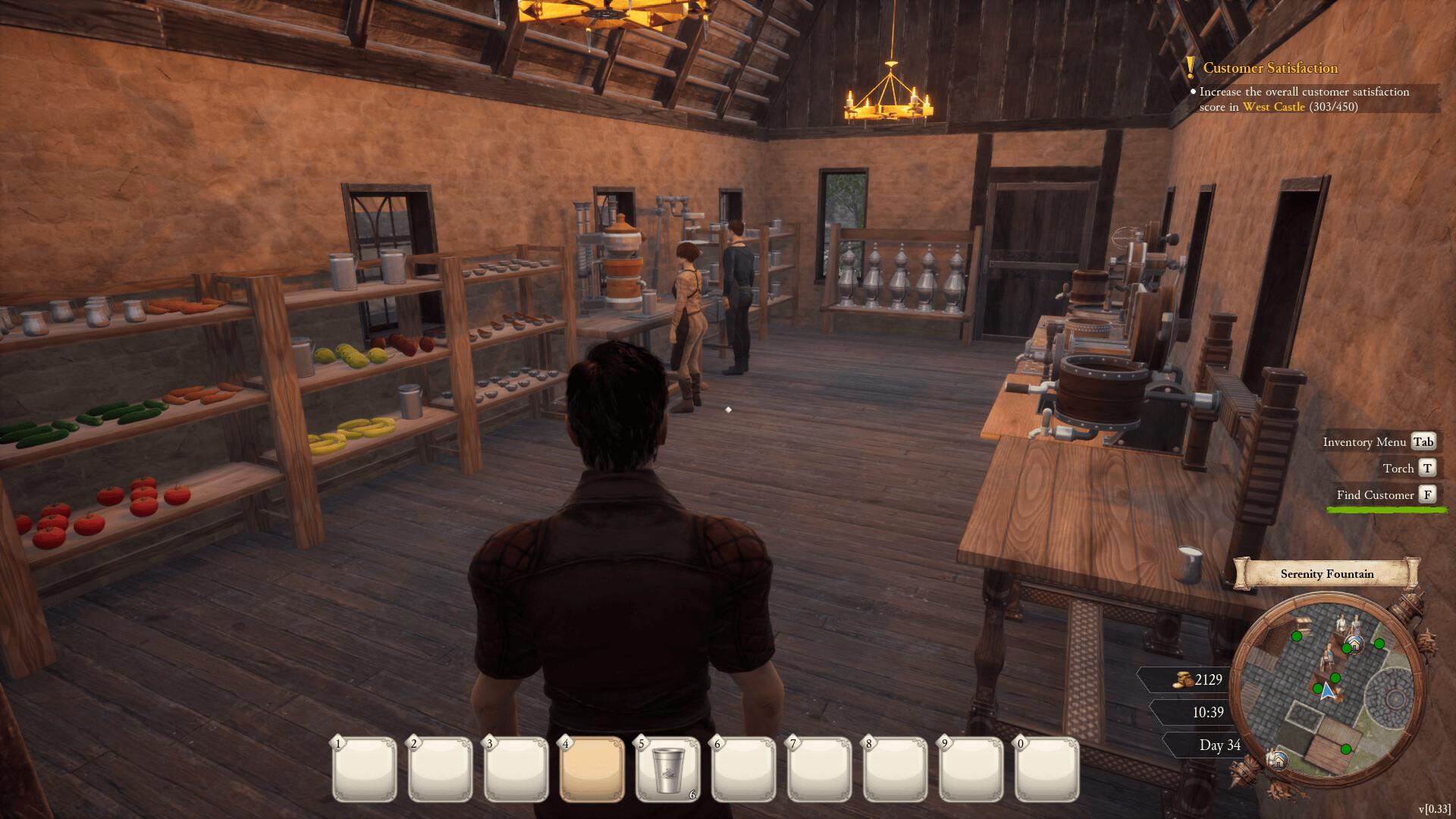
Ingredient shelves and crafting stations fill out each workshop as the business expandsImage: GrabTheGames via Steam -

Villages like Lakeside Village give the shop-crafting loop a lived-in medieval backdropImage: GrabTheGames via Steam -
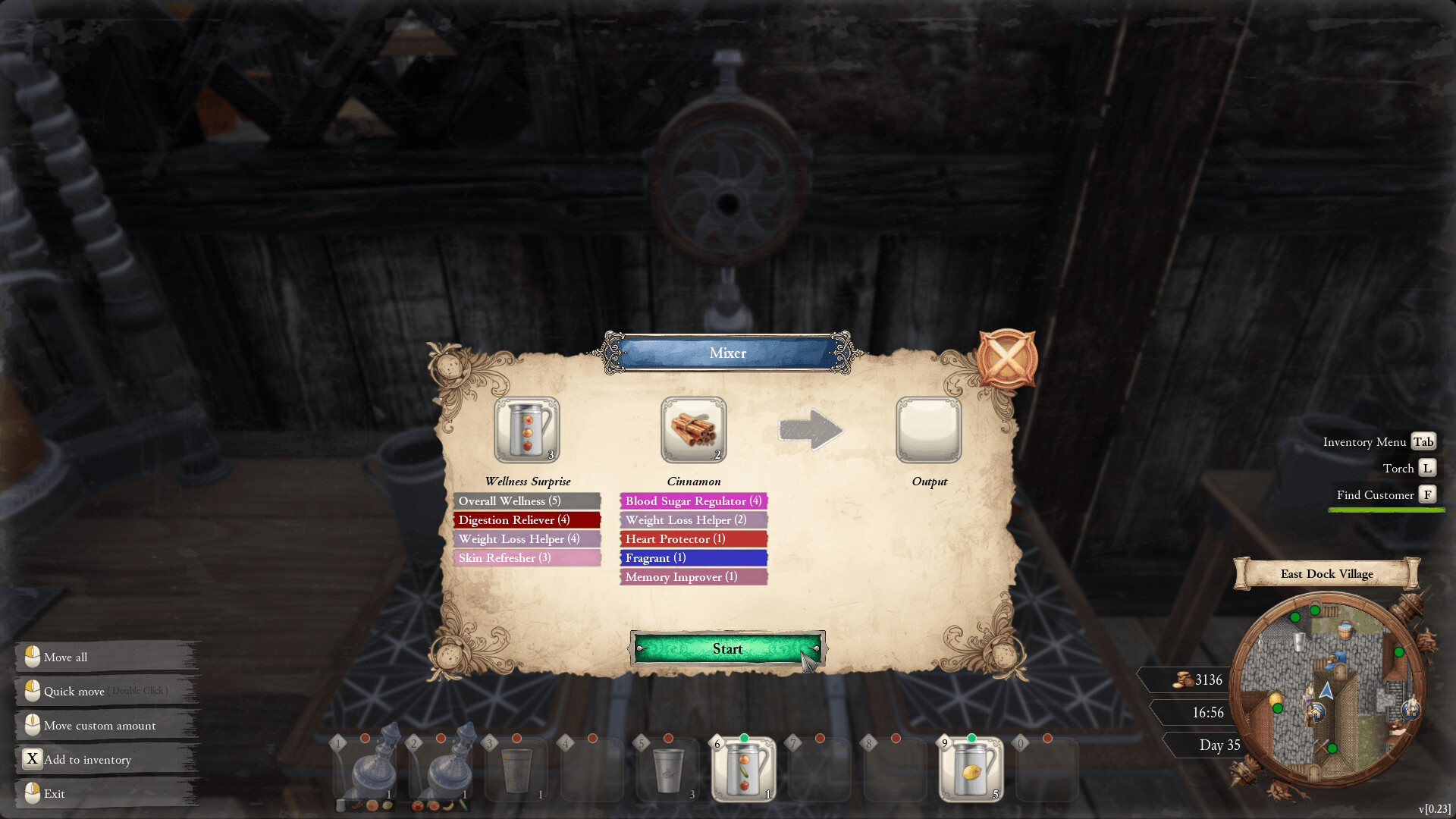
The mixer screen is where the recipe-optimization depth actually livesImage: GrabTheGames via Steam -
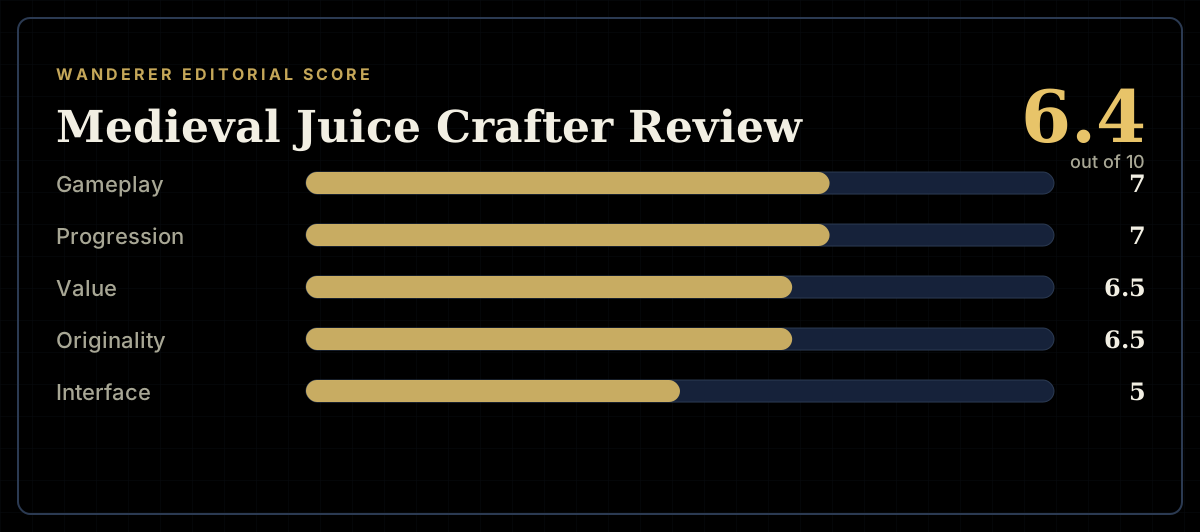
How the review scores each part of the gameWanderer Editorial -
The short versionWanderer Editorial