
Game review
Astro Colony
6 / 10
- Developer
- Terad Games
- Publisher
- Terad Games
- Released
- 2 June 2026
- Platforms
- [Windows]
- Genre
- Simulation
- Monetisation
- Paid
- Players
- Single-player, Co-op
The short version
Astro Colony, developed and published by solo/small studio Terad Games, is a first-person factory-automation sim that reimagines the Factorio/Satisfactory formula in zero gravity, where players build a mobile space platform, dock asteroids and planetoids onto it, and automate resource chains across an expanding universe. It left Early Access for a full 1.0 release on 2 June 2026 at NZ$28.99. Reception sits at Very Positive across 1,518 English-language reviews (84.6% positive), and this review draws on a 200-review sample skewed slightly more critical than that full aggregate. Most reviewers are won over by the game's genuinely fresh premise and an exceptionally responsive solo developer, but a large, detailed minority reports broken multiplayer synchronisation, a clunky building interface, and a tech tree many call illogically paced for a game that has now shipped as a finished product.
Biggest strengths
- The core premise, docking asteroids and planetoids onto a mobile space platform and flying the whole assembly through an expanding universe, is repeatedly praised as a genuinely fresh twist on a crowded genre
- Solo developer Terad Games draws consistent, specific praise for extraordinary responsiveness, reviewers describe bugs fixed within hours of being reported and multiple patches shipped in a single day
- The overall loop is widely described as relaxing and addictive, with no storage or building limits that reviewers say encourage experimentation over rigid optimisation
Biggest weaknesses
- Multiplayer is the single most consistent complaint across the sample, with reviewers describing frequent desyncs, bots turning into humans, vanishing inventory items, and positional glitches that in some cases require a full restart to resolve
- The building interface draws repeated frustration for lacking a move or copy tool, meaning any misplaced structure must be deconstructed, which functions as an outright deletion rather than a way to relocate it
- Several reviewers call the tech tree illogically paced, citing examples like basic stairs requiring an engineering lab or solar power sitting deep in a tree most players reach only after other, more essential technologies
Who it's for: Automation-genre fans who enjoyed Satisfactory, Factorio, or Raft and want a fresh zero-gravity spin on the formula, and who are willing to play mostly solo given multiplayer's rough state.
Our recommendation: A genuinely inventive factory sim held back by multiplayer bugs and interface friction that feel more like Early Access carryover than a finished 1.0; strong value for solo players, riskier for anyone buying specifically to play with friends.
6 / 10
A Factory-Automation Sim Set Loose in Zero Gravity
Astro Colony, developed and published by solo/small studio Terad Games, takes the now-familiar Factorio-and-Satisfactory formula of mining resources and building automated production chains and reframes it entirely in zero gravity. Rather than settling on a fixed plot of land, players start with a bare mobile platform floating in space, catch and harvest passing asteroids by hand, and gradually dock larger planetoids onto the platform itself, turning the whole assembly into a sprawling, flyable factory that can be piloted from resource cluster to resource cluster across an expanding universe. The game left Early Access for a full 1.0 release on 2 June 2026 at NZ$28.99, following several years of public development that began with a Kickstarter campaign. Reception sits at Very Positive across 1,518 English-language reviews (84.6% positive). This review draws on a 200-review sample split evenly across two pulls of the full pool, and it's worth noting upfront that this sample runs slightly more critical (around 72% positive) than the full aggregate, a gap that likely reflects how vocal the game's detailed multiplayer complaints tend to be relative to shorter, purely positive reviews. Even accounting for that skew, the overall picture that emerges is consistent: a genuinely inventive, well-loved concept from a hard-working solo developer, still visibly carrying rough edges that many reviewers feel shouldn't still be present in a game that has now shipped as 1.0.
A Genuinely Fresh Premise, Carried by an Exceptional Solo Developer
What separates Astro Colony from the crowded field of Factorio-likes is, almost unanimously, its setting and its central structural conceit. Reviewers repeatedly describe the game as "Satisfactory in space" or, just as often, a cross between Satisfactory and Raft, since the mobile platform you build and expand doubles as your traversal vehicle, catching resource-rich asteroids and planetoids and permanently bolting them onto your growing structure rather than leaving them behind. That framing, several reviewers note, solves one of the genre's oldest frustrations, running out of easily accessible nearby resources, by making expansion and relocation a core, intentional part of the loop rather than a late-game chore. The zero-gravity building itself draws specific praise too: without the constraints of a fixed ground plane, players describe constructing sprawling three-dimensional factory structures that would be awkward or impossible in a conventional factory sim, and the absence of any storage or carrying limits is repeatedly credited with encouraging experimentation rather than rigid, spreadsheet-driven optimisation. Once players push past the early hours, where the pace is slower and the interface less intuitive, the automation and logic-block systems draw consistent praise for real depth, letting dedicated players build genuinely sophisticated sorting and production networks well beyond simple point-to-point conveyor lines. Underpinning nearly all of this praise is an unusually strong, specific throughline about the developer: reviewer after reviewer singles out Terad Games by name for extraordinary responsiveness, describing bugs reported at 1am fixed and patched by the following afternoon, multiple updates shipped in the first few hours after a content drop, and direct, helpful engagement on the game's Discord server. Several reviewers explicitly credit this responsiveness as the reason they're willing to overlook the game's rougher edges, framing their recommendation as much an endorsement of the developer's trajectory as of the current build. A number of longtime players who backed the game's original Kickstarter or followed it since early Early Access describe a clear, steady improvement over several years of development, and multiple reviewers explicitly say they expect the game to keep getting better given that track record. The comparisons reviewers reach for extend well beyond Satisfactory and Raft, too: several invoke Dyson Sphere Program, Space Engineers, and even RimWorld-style colonist management to describe the mix of automation, exploration, and light crew care, and more than one reviewer specifically calls out the game as a rare example in the genre that's approachable enough to enjoy with family or younger players, citing its non-violent tone and forgiving pacing. Performance draws scattered but generally positive comment as well, with several reviewers noting smooth frame rates even in sprawling, densely built bases, though a handful report slowdown or crashes once a base grows large enough to include many moving parts and automated units at once.
Multiplayer's Persistent Desync Problem
If there is one issue that cuts across this entire sample, appearing constantly in both glowing five-star reviews and detailed negative ones, it's multiplayer stability. Reviewers who play primarily solo report a comparatively smooth, if still occasionally buggy, experience, but the moment co-op enters the picture, complaints become sharp and specific. The most commonly cited problem is desynchronisation between clients: one player sees a conveyor belt as full while their co-op partner on the same network sees it as empty, items appear in one player's inventory but can't be used until they relog, and in more severe cases, logistics bots visibly turn into human colonists, vanish entirely, or simply stop appearing in tracking lists altogether. Several reviewers describe positional desync specifically, where a player's location or a structure's placement diverges between clients, sometimes requiring a full game restart to resolve, and at least one detailed review reports repeated crashes tied specifically to co-op sessions that don't occur in single-player. This isn't a fringe complaint restricted to a handful of unlucky players: it recurs across dozens of reviews in this sample, spanning a wide range of total playtimes, and several reviewers who otherwise clearly love the game explicitly frame their thumbs-up as conditional, recommending the game for solo play while actively warning prospective co-op buyers to wait for further patches. A smaller number of reviews describe attempting to set up a dedicated multiplayer server and finding the process poorly documented, particularly on Linux, where at least one reviewer describes having to improvise a working configuration without any official guidance. One particularly concrete example illustrates the scale of the problem: a reviewer with over 150 hours logged describes playing in the same room as their spouse, on comparable but not identical hardware, and watching the two clients disagree constantly about basic game state, one seeing a conveyor belt as full, the other as empty, forcing a relog every thirty minutes or so just to keep playing together. It's a genuinely two-sided situation worth stating plainly: this review can't independently verify how widespread the issue is beyond what's reported, but the volume, consistency, and specificity of these multiplayer complaints, from reviewers who are otherwise clearly fans of the game and log substantial playtime before writing them, makes it the single clearest piece of advice for a prospective buyer evaluating Astro Colony specifically for co-op play. Worth noting too is that this isn't a complaint limited to negative reviews: several reviewers who still recommend the game describe the exact same desync problems, framing their thumbs-up as an endorsement of the solo experience and the developer's trajectory rather than of multiplayer as it currently stands.
Clunky Building Tools and a Tech Tree Reviewers Call Illogical
Beyond multiplayer, this sample surfaces a consistent, specific cluster of complaints about how the game handles day-to-day construction and progression, concerns detailed and numerous enough that they appear to represent more than isolated frustration. The most frequently cited interface complaint is the lack of any way to move or copy an already-placed structure: deconstructing a building functions as an outright deletion rather than picking it up to relocate, meaning a single misplaced machine in a dense factory layout can mean tearing down and rebuilding significant sections of a production line. Several reviewers extend this complaint to belt and cable placement more broadly, noting that common shapes like an L-shaped conveyor run require multiple separate placement actions rather than a single fluid drag, a workflow they contrast unfavourably with genre peers like Factorio and Satisfactory. A separate, equally common thread concerns the pacing and internal logic of the tech tree: multiple reviewers specifically cite basic stairs requiring a mid-tier engineering lab to unlock, and solar power, a staple early-game technology in most automation games, sitting unusually deep in the tree behind other, less essential unlocks. A few reviewers go further, describing hand-mining tools that remain more efficient than early automated drills, undermining the incentive to actually build the automation the genre is built around. On the environmental side, several reviewers note that hazards like meteor storms and oxygen depletion carry essentially no real consequence, respawning players instantly and without meaningful penalty, which a number of reviewers say saps tension from what could otherwise be a genuinely tense late-game. A handful of reviewers also flag the store page's controller support listing as misleading, describing partial, largely unusable controller input with no ability to remap buttons, worth noting specifically for Steam Deck players who might otherwise take that listing at face value. A further, more technical complaint recurs among reviewers with genre experience specifically: production buildings have no way to cap their output or set an overflow route, so machines keep consuming input resources even once their output storage is full or a downstream line has backed up, a basic feature several reviewers call table stakes for a game built around automation. Late-game pacing draws its own specific criticism too, with more than one reviewer describing a point where further progress requires leaving the game running in the background for real-time hours or days to accumulate enough resources, a design choice a few reviewers say saps momentum right when a factory sim should be at its most engaging. Perhaps the most pointed version of this cluster of complaints comes from reviewers who suspect the 1.0 label was applied for its own sake: at least one reviewer explicitly says the game feels like it was "pushed to 1.0 to escape the Early Access tag" rather than because its systems were genuinely ready, and recommends prospective buyers check the game's discussion forums for its current stability before purchasing rather than trusting the full-release label on its own. None of these complaints individually describe the game as broken, and many of the same reviewers raising them still recommend the game overall, but taken together they paint a picture, echoed by more than one reviewer explicitly, of a game that reached its 1.0 label before its interface and progression pacing had fully caught up to the ambition of its central concept.
Verdict
Astro Colony earns its Very Positive standing on the strength of a genuinely distinctive idea, well-loved among reviewers, and an unusually dedicated solo developer whose visible, rapid responsiveness has clearly built real goodwill within its community over several years of development. Turning a mobile factory platform loose in zero gravity, docking asteroids and planetoids onto it as it grows, gives a crowded genre real novelty, and for solo players willing to accept some rough edges, it's a relaxing, frequently addictive way to spend dozens of hours. But this is a review of a shipped 1.0, not an Early Access build, and a large, detailed portion of this sample makes clear that the game's multiplayer stability, building interface, and tech tree pacing still feel unfinished by that standard, particularly for anyone buying specifically to play with friends. At NZ$28.99, it remains a reasonable, even generous value for solo automation fans drawn to its premise, but co-op buyers should go in expecting genuine friction rather than the polished finished product its full-release label might suggest. Given how much of this sample's most detailed praise centres on the developer's track record rather than the current build's polish, Astro Colony reads less like a finished destination and more like a promising, still-evolving project that happened to cross the 1.0 threshold along the way, worth buying today for what it already offers, and worth watching closely for where a genuinely dedicated solo developer takes it next.
Pros and cons
Pros
- The core premise, docking asteroids and planetoids onto a mobile space platform and flying the whole assembly through an expanding universe, is repeatedly praised as a genuinely fresh twist on a crowded genre
- Solo developer Terad Games draws consistent, specific praise for extraordinary responsiveness, reviewers describe bugs fixed within hours of being reported and multiple patches shipped in a single day
- The overall loop is widely described as relaxing and addictive, with no storage or building limits that reviewers say encourage experimentation over rigid optimisation
- At NZ$28.99, most reviewers, even critical ones, consider the game solid value given its scope and the amount of content already present
- Once players push past the early learning curve, the automation and logic-block systems draw praise for depth and flexibility, letting players build sorting and production systems well beyond simple belt lines
Cons
- Multiplayer is the single most consistent complaint across the sample, with reviewers describing frequent desyncs, bots turning into humans, vanishing inventory items, and positional glitches that in some cases require a full restart to resolve
- The building interface draws repeated frustration for lacking a move or copy tool, meaning any misplaced structure must be deconstructed, which functions as an outright deletion rather than a way to relocate it
- Several reviewers call the tech tree illogically paced, citing examples like basic stairs requiring an engineering lab or solar power sitting deep in a tree most players reach only after other, more essential technologies
- Environmental hazards like meteor storms and oxygen loss are widely described as toothless, with several reviewers wishing the game offered more genuine challenge or stakes in its second half
- The store page's controller support tag is called misleading by more than one reviewer, who describe partial or unusable controller input with no way to remap buttons
Screenshots
-
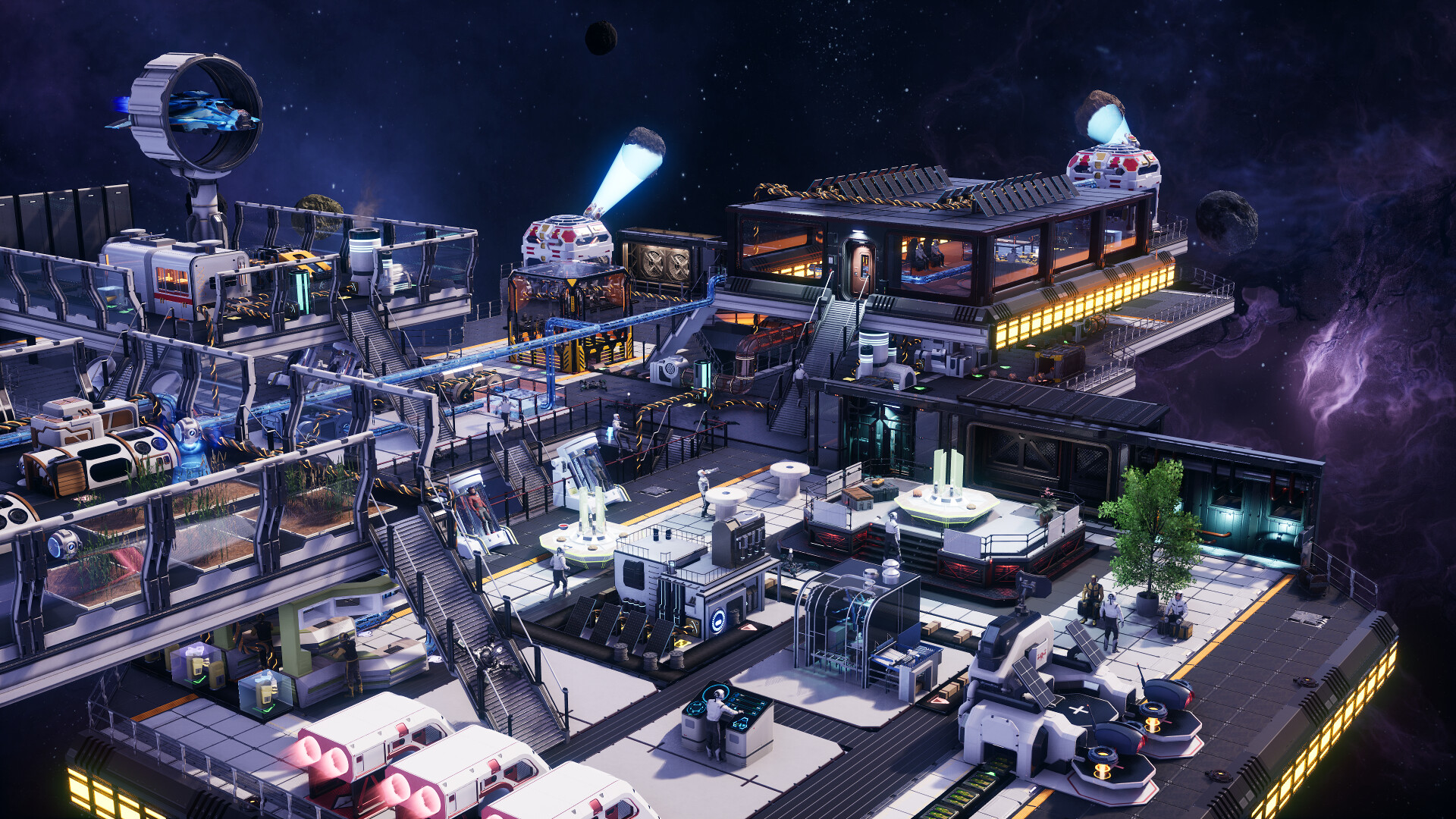
The zero-gravity base building reviewers say lets factories sprawl in three dimensionsTerad Games -
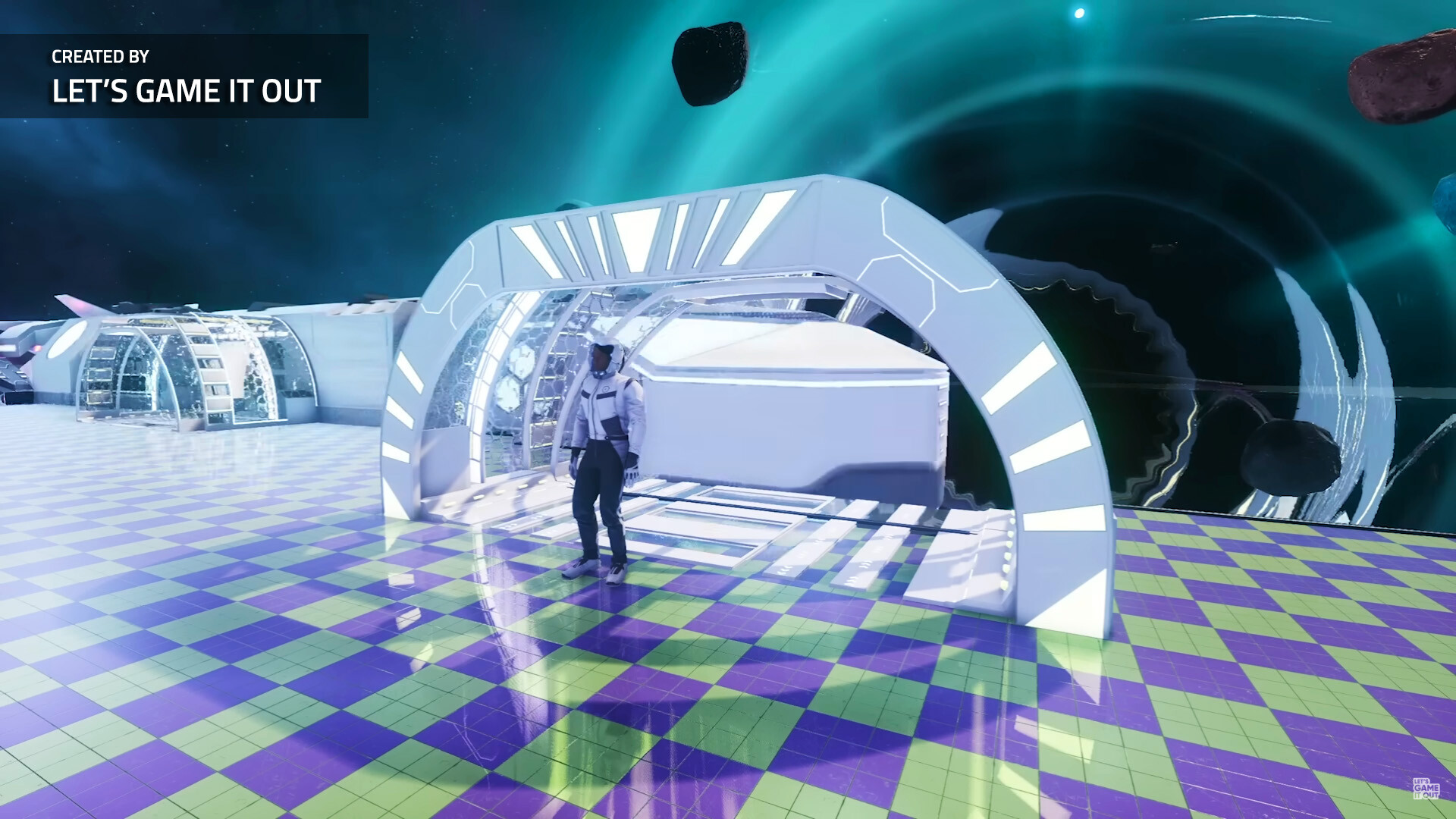
A promotional shot capturing the game's striking, otherworldly art directionLet's Game It Out -
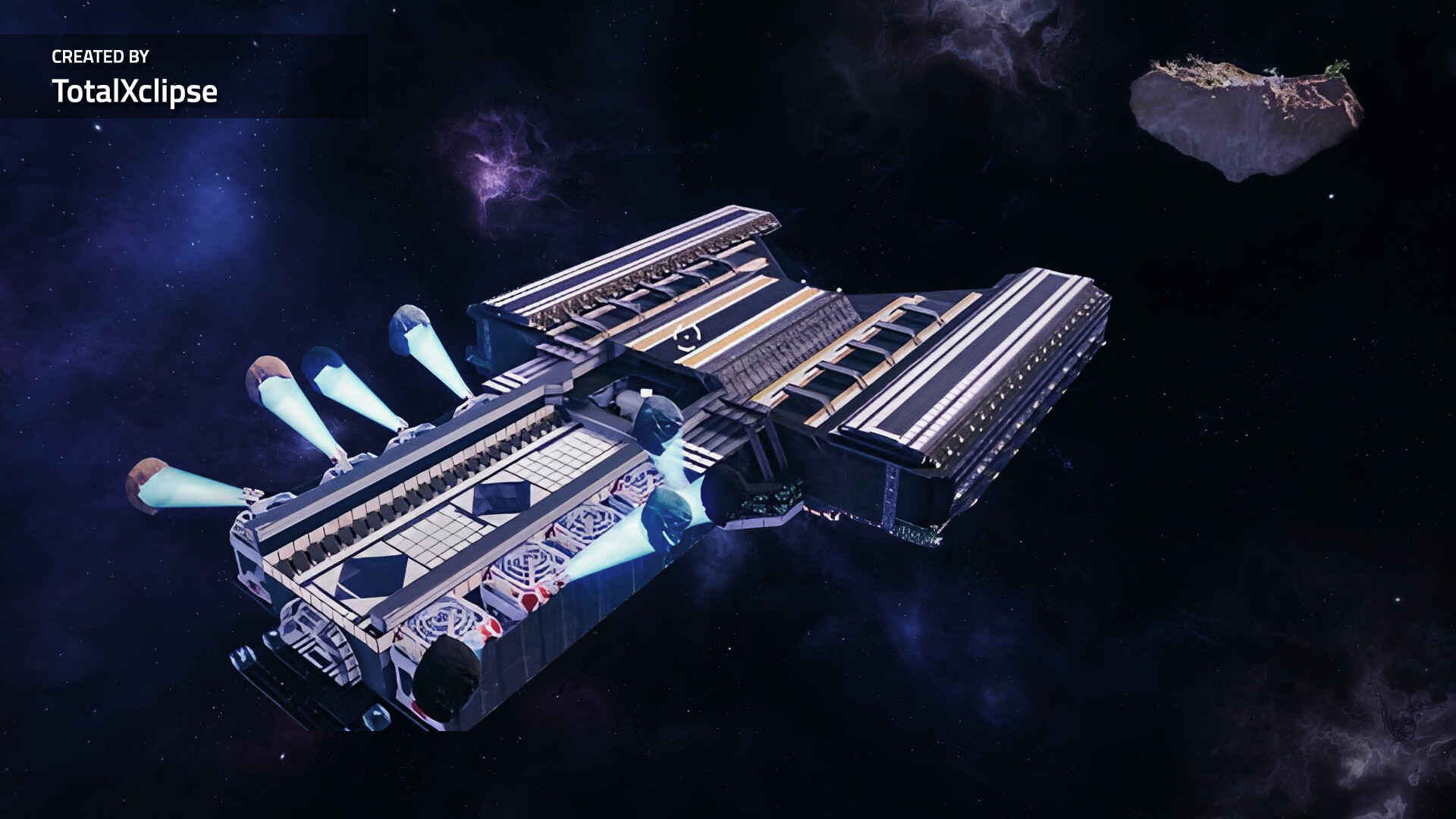
The mobile platform players fly between resource clusters, docking asteroids and planetoids as they goTotalXclipse -
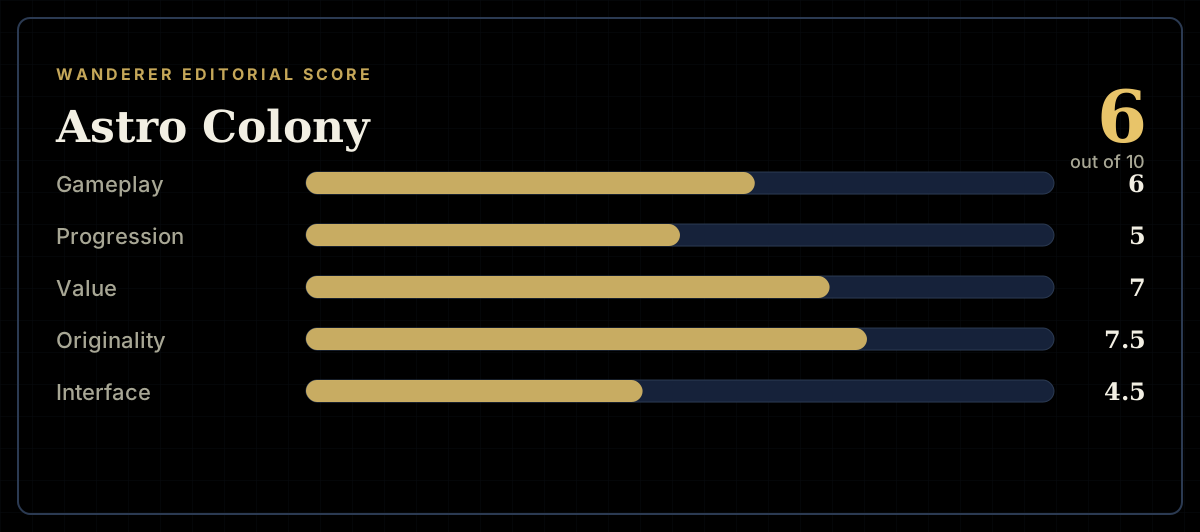
How the review scores each part of the gameWanderer Editorial -
The short versionWanderer Editorial