Game review
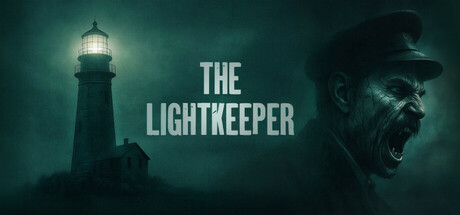
The Lightkeeper
4.7 / 10
- Developer
- Darkphobia Games
- Publisher
- Darkphobia Games
- Released
- 7 September 2025
- Platforms
- [Windows]
- Genre
- Adventure
- Monetisation
- Paid
- Players
- Single-player only
The short version
The Lightkeeper wants to be an atmospheric, cinematic horror short set on a haunted lighthouse island in 1925, and in its best moments — sound design, framing, lighting — it earns that ambition. Too much of the surrounding experience undercuts it: imprecise interaction points, a UI that breaks in small but persistent ways, and a widely reported reliance on AI-generated voice acting and visual assets that many reviewers felt was under-disclosed at launch. Worth a cheap, one-sitting horror night for some; a hard pass for players who weigh those concerns heavily.
Biggest strengths
- Genuinely striking cinematography, lighting, and art direction in its cutscenes, singled out by nearly every reviewer regardless of their overall verdict
- Strong, immersive sound design — wind, waves, creaking wood — that does a lot of the atmospheric heavy lifting
- A short, focused runtime of roughly 1.5 to 3 hours with three different endings for players who want to see more than one outcome
Biggest weaknesses
- Widespread reports of AI-generated voice acting, artwork, and cutscene elements, which many reviewers felt was not adequately disclosed on the store page at launch
- Interaction points and clickable objects are frequently described as imprecise, leading to periods of pixel-hunting with no hints
- UI and technical issues are commonly reported, including broken sound controls, non-functioning achievements, and players getting stuck in menu screens
Who it's for: Horror fans chasing a short, moody one-sitting experience who care more about atmosphere than mechanical depth, and who aren't put off by a developer whose use of AI-generated assets has been a recurring point of controversy across its catalogue.
Our recommendation: Mixed
4.7 / 10
A Haunted Lighthouse, Beautifully Framed
The Lightkeeper casts players as Arthur, a World War I veteran sent in 1925 to relieve the previous keeper of a remote island lighthouse, only to find something has gone badly wrong with the men he's replacing before he's even set foot inside. It's a premise that leans openly on familiar touchstones — reviewers reach for comparisons to The Lighthouse, the Robert Eggers film, almost reflexively — and the game commits fully to the mood that comparison implies. Cinematography is, by a wide margin, the aspect every reviewer in the sample agrees on, whether they end up recommending the game or not: symbolic, carefully framed cutscenes, moody period-appropriate lighting, and sound design that layers creaking wood, distant gulls, and ocean wind into something genuinely immersive with headphones on in a dark room, as more than one reviewer specifically recommends experiencing it.
The moment-to-moment structure is a short walking simulator with light task-based objectives — explore the island, carry out small duties as the new keeper, and piece together what happened to the men before you through environmental storytelling and scripted encounters. Early warning signs arrive quickly, with one reviewer noting that the unease sets in "at the latest when the first dead bird appears." For players who click with the pacing, the experience is often described as a genuinely effective, compact horror short, generous with well-placed jump scares and building toward three distinct endings depending on choices made along the way. Several short, enthusiastic reviews back this up without much elaboration — reactions like "this game was CINEMA," "excellent horror... thriller," and a description of the trip as "worthy for a one-night stand" all point to the same audience finding exactly the quick, atmospheric scare they came for.
A Real, Widely Reported AI-Asset Controversy
The single most consistent and contentious thread running through the negative reviews in the sample concerns the game's asset pipeline. Multiple reviewers independently report identifiable signs of AI-generated content: a detailed early review describes noticing "a soulless, horribly delivered AI voice" reading misspelled dialogue over otherwise beautiful cutscenes, and flags that Steam's disclosure requirements around AI-generated content weren't being met on the store page at the time. Others point to visual inconsistencies as evidence of the same issue — a character shown with anatomically incorrect details in one cutscene, mismatched or era-inappropriate imagery scattered through the environment, and animation glitches consistent with AI-generated or poorly composited assets rather than hand-crafted work.
It's not a universally accepted read of the game — several of the more positive reviews in the sample either don't mention AI at all or explicitly praise the voice acting as genuinely well done, suggesting the situation may have shifted over time. One detailed review notes that the developer responded to complaints by swapping in real voice acting after launch, while adding that other players continued to report AI-generated voices persisting regardless. Whatever the current state, it's clearly been a live and significant issue for a meaningful share of the game's audience, and worth knowing about before buying regardless of which side of that debate a given playthrough lands on.
Interaction Friction and Rough Technical Edges
Separately from the asset debate, a cluster of more conventional complaints shows up often enough to be a real pattern. Interaction points for objects the story requires you to click are frequently described as unforgiving — one detailed review describes being stuck for roughly ten minutes at a stretch simply trying to find the exact spot the game wanted clicked, with no hint system to fall back on. UI problems come up repeatedly too: broken sound sliders, non-functioning Steam achievements, and at least one report of getting stuck inside an inventory menu badly enough to require a forced restart. None of these issues are dealbreakers on their own, but stacked against a game already asking players to trust its craftsmanship, they chip away at the goodwill the strongest cutscenes build. A related complaint that surfaces more than once is length padding: one reviewer specifically calls out unskippable cutscenes as a way of pushing the runtime past the two-hour mark, a criticism that lands harder for a game already thin on interactive content to fill that time with.
A Short, Divisive Experience from a Repeat-Offender Developer
Several reviewers who'd played the developer's earlier horror titles — including Graveyard Shift, Homeless, and Amenti — describe The Lightkeeper as continuing a familiar pattern from that catalogue: striking presentation undercut by rushed execution, asset reuse, and the same AI-related concerns raised again here. That context matters for anyone weighing whether to buy in: this isn't necessarily an isolated stumble but, by several accounts, part of a broader release pattern from the same studio. At the same time, the majority-positive score reflects a real audience that's happy to take the game for what it is — a cheap, atmospheric, one-night horror experience best enjoyed without digging too deep into how it was made.
Verdict
The Lightkeeper delivers real atmosphere and some genuinely well-composed horror cinematography in a tight one-to-three-hour package, and for players chasing exactly that kind of short, spooky evening, it can land well. But the AI-asset controversy documented across a significant portion of its reviews, paired with recurring interaction and UI friction, makes this a much easier recommendation on a deep discount than at full price, and one worth going in aware of rather than blind.
Pros and cons
Pros
- Genuinely striking cinematography, lighting, and art direction in its cutscenes, singled out by nearly every reviewer regardless of their overall verdict
- Strong, immersive sound design — wind, waves, creaking wood — that does a lot of the atmospheric heavy lifting
- A short, focused runtime of roughly 1.5 to 3 hours with three different endings for players who want to see more than one outcome
- Effective, well-placed jump scares for players seeking exactly that kind of horror beat
Cons
- Widespread reports of AI-generated voice acting, artwork, and cutscene elements, which many reviewers felt was not adequately disclosed on the store page at launch
- Interaction points and clickable objects are frequently described as imprecise, leading to periods of pixel-hunting with no hints
- UI and technical issues are commonly reported, including broken sound controls, non-functioning achievements, and players getting stuck in menu screens
- Puzzle content is minimal to nonexistent, and the story is widely described as strong early on but thinning out toward the end
- Multiple reviewers note a pattern of similar complaints (AI assets, asset reuse, short unpolished releases) across the developer's other recent horror titles
Screenshots
-
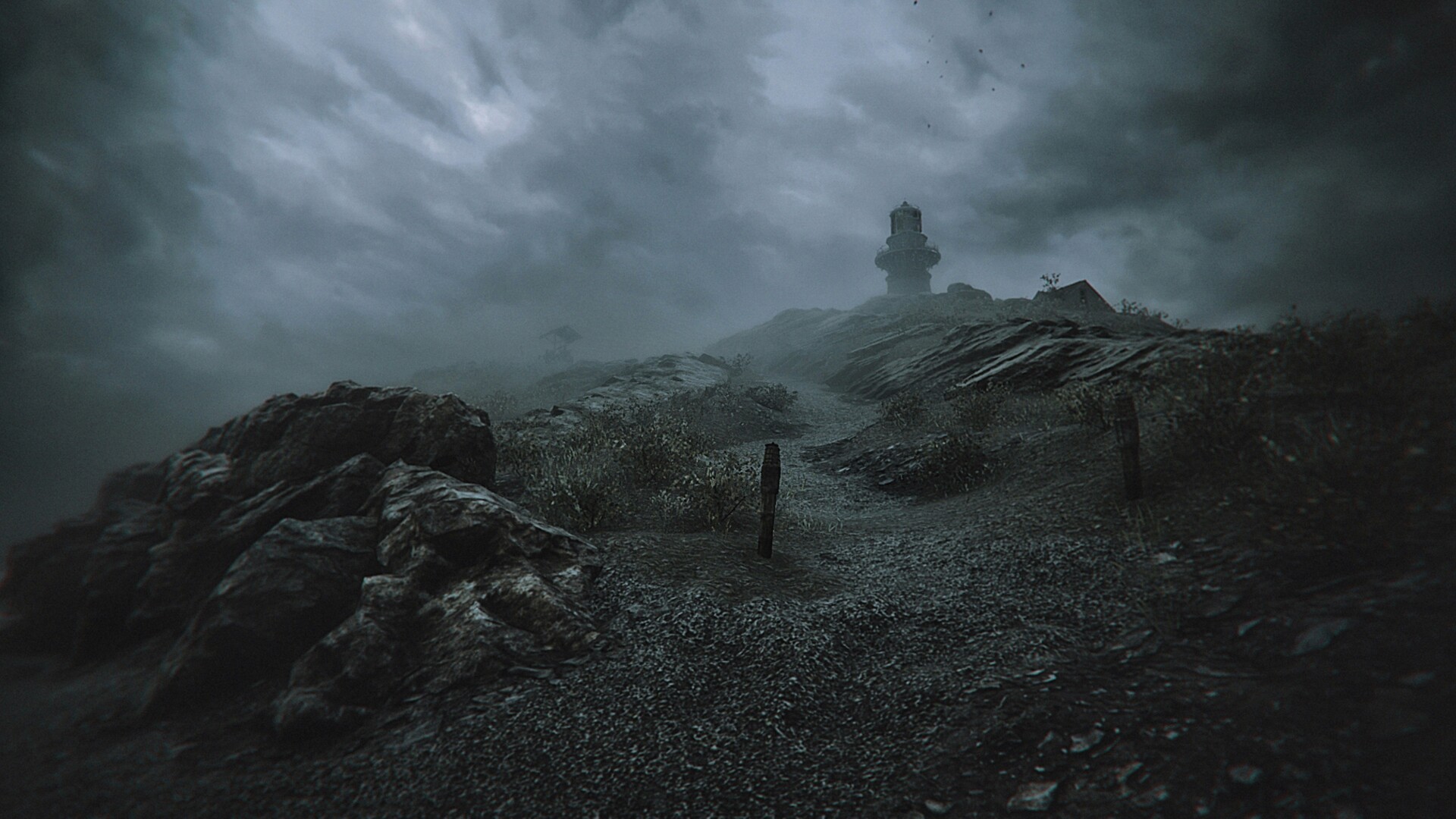
The walk up to the lighthouse sets the tone early, with fog, wind, and distant birds doing much of the atmospheric workDarkphobia Games -
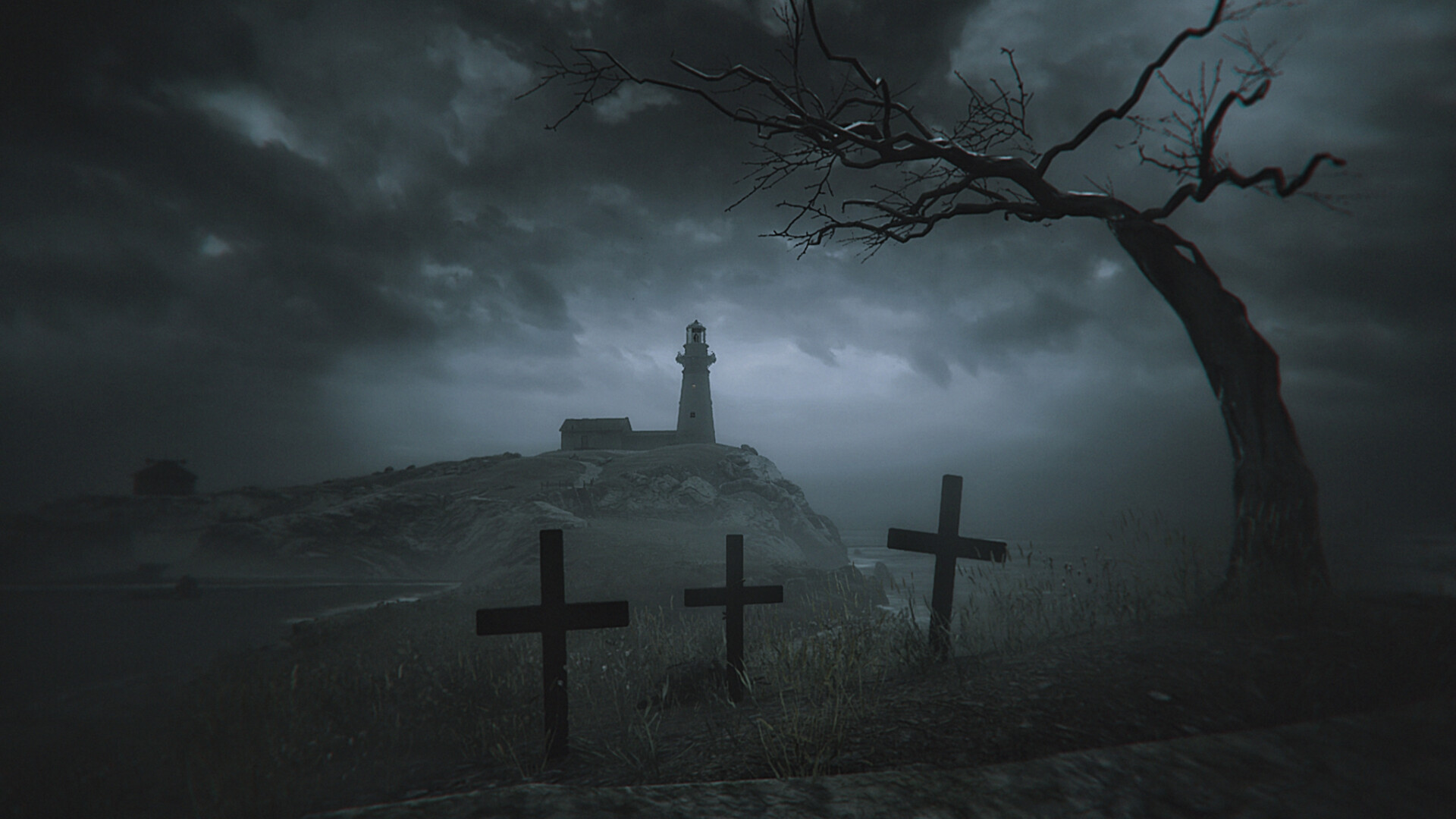
A graveyard overlooking the island hints at the fate of the keepers who came before ArthurDarkphobia Games -
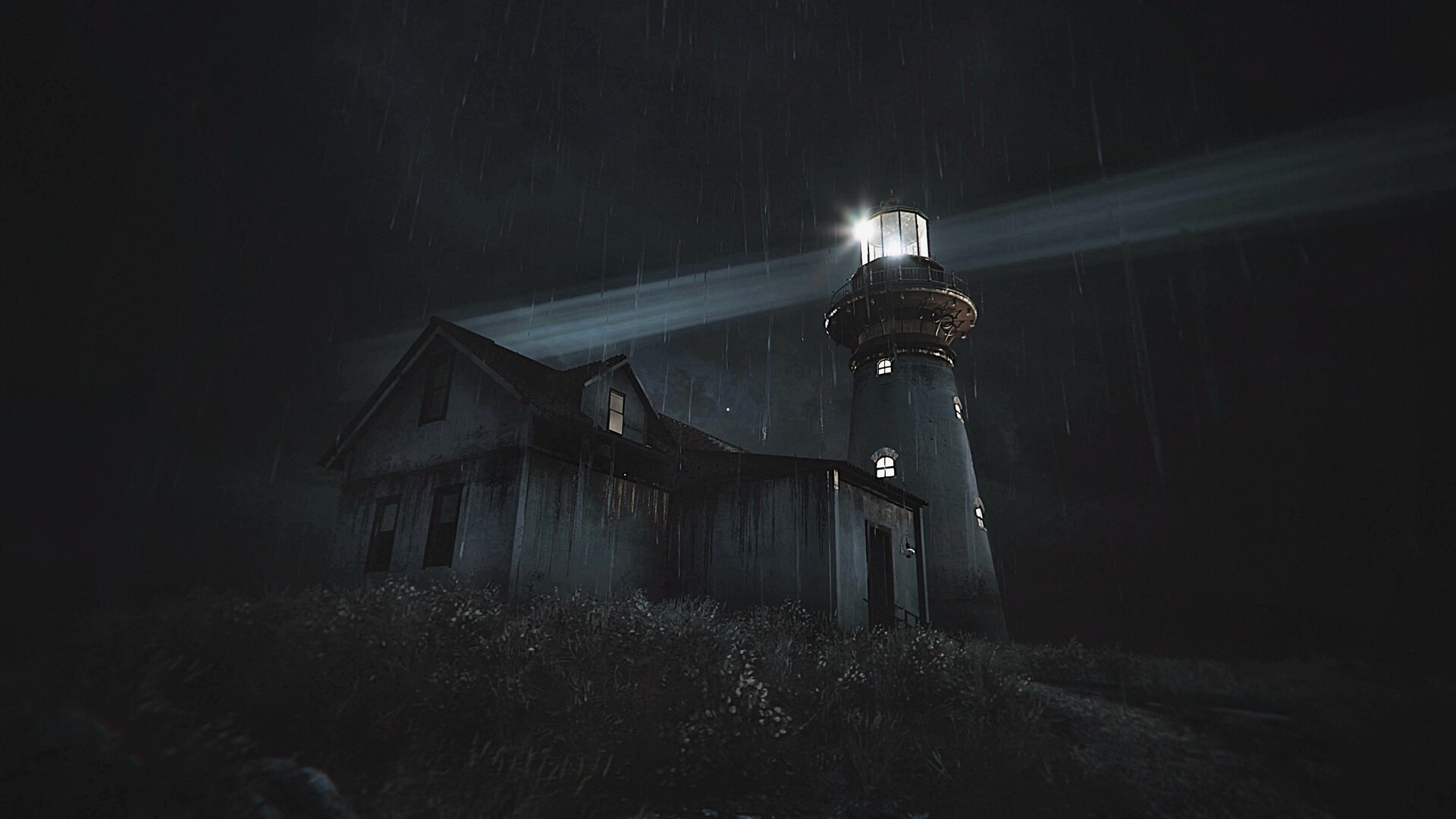
The lighthouse itself, lit and sweeping the darkness, is the game's most consistently praised visual centrepieceDarkphobia Games -
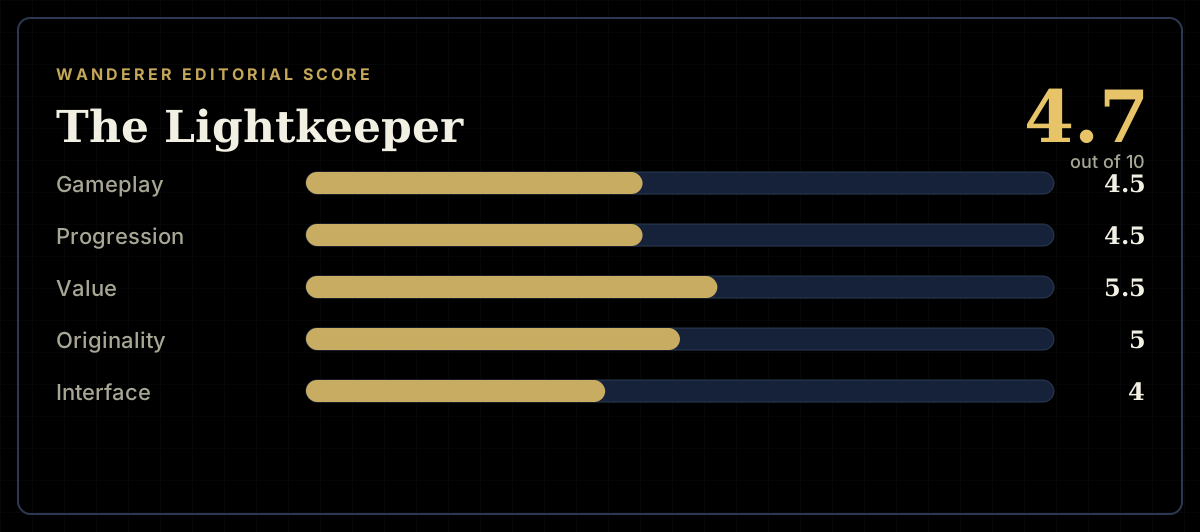
How the review scores each part of the gameWanderer Editorial -
The short versionWanderer Editorial