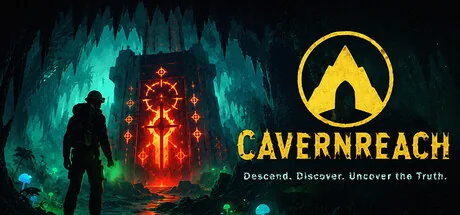
Game review
Cavernreach
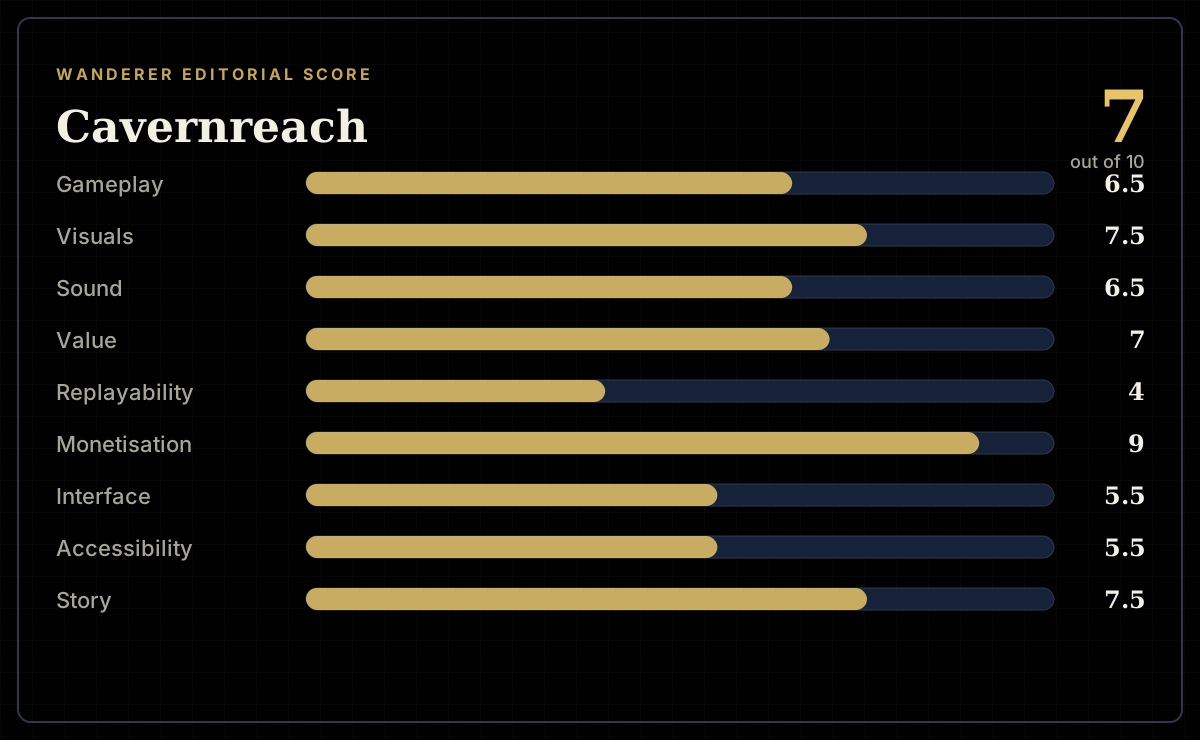
7 / 10
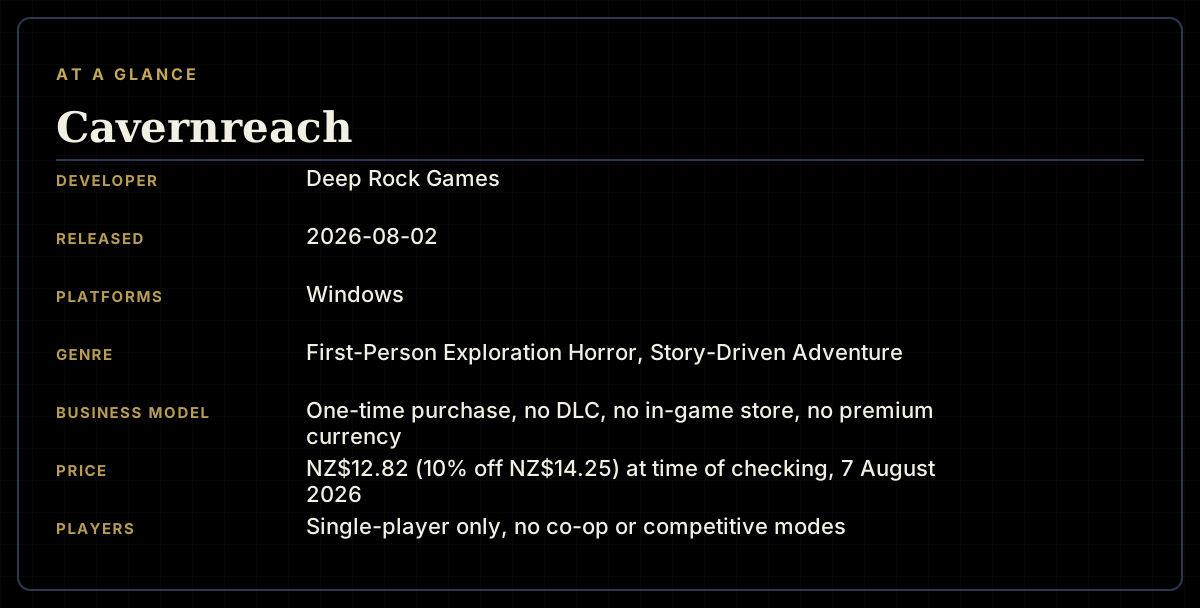
- Developer
- Deep Rock Games
- Publisher
- Deep Rock Games
- Released
- 2 August 2026
- Platforms
- Windows
- Genre
- First-Person Exploration Horror, Story-Driven Adventure
- Monetisation
- One-time purchase, no DLC, no in-game store, no premium currency
- Players
- Single-player only, no co-op or competitive modes
The short version
Cavernreach sends a contracted caver named Grant to survey a newly discovered cave system and find two missing explorers, and it means that setup literally: there's no map, no objective marker, and no waypoint arrow. Progress comes from paying attention to what the game shows you and remembering how you got there, and the one thing the game is unambiguous about in its own store description is that this is by design, not an oversight. The developer's own patch history shows an economy layer of buying and selling gear was cut before launch for being "tedious and useless," which says more about the finished game's focus than any marketing line could — this is a mood piece and a mystery, not a survival-crafting loop, whatever a title with "Deep Rock" in its developer name might suggest to a passer-by. It's a linear, several-hours story with no reason to run it twice, built entirely by one person over roughly eighteen months, and five days after launch there is exactly one public review to weigh against everything else here.
Biggest strengths
- The developer's own pre-launch patch notes describe cutting a buying-and-selling progression system for being tedious and useless, a rare public admission that a bigger, more conventional game got trimmed down to what actually served the mood
- The AI Generated Content Disclosure on the store page is specific rather than boilerplate, naming music, audio and promotional art as the only AI-assisted elements and stating that anything used for testing was replaced before release
- Environments are built and lit around individual named locations — a still underground lake in the Cathedral Dome Cavern, old lava tubes from a period of volcanic activity — each with its own described soundtrack rather than one looping ambient bed
Biggest weaknesses
- There is no map or objective marker, and while a TAB-activated hint system was added late in development to help players who get lost, the developer's own notes describe it as a fade-in text nudge rather than a real navigation aid
- Available in English only, with no other language support listed on the store page
- No controller support appears in Steam's controller-support data, unusual for a slow, exploration-first game that would otherwise suit a pad
Who it's for: Players who like walking-sim horror and mystery — Firewatch, Dear Esther, The Beginner's Guide territory — and who won't mind the game withholding a map on purpose. Not for anyone who wants combat, crafting, or a reason to replay.
Our recommendation: At NZ$12.82 for a one-time purchase with no DLC and no in-game store, Cavernreach asks a fair, modest price for what looks like a several-hour narrative descent. The premise and the atmosphere it's built to support are genuinely appealing if you like this specific niche; just go in knowing the evidence for how well it lands is still extremely thin.
7 / 10
The most important thing to know about Cavernreach going in is what it isn't. Its developer is called Deep Rock Games, and its title practically begs to be filed next to a certain co-op mining shooter, but there's no resemblance beyond the name. There's no drilling, no resource hauling, no upgrade ladder, and — as of a patch note posted a few months before launch — there used to be, and the developer cut it. Cavernreach is a first-person walking-sim mystery about a caver named Grant, sent to survey a newly discovered system and find two colleagues who went in before him and didn't come out. What he finds down there is not what the job description promised.
No map, on purpose
Steam's own store description is unusually direct about the design philosophy here: "Cavernreach is a paced, exploration-driven experience with minimal guidance. There are no objective markers or maps. Progress comes from observation, memory, and curiosity." That's not a hedge, it's the pitch. You climb down on ropes, crawl through tight squeezes, swim flooded sumps, and are expected to remember the shape of the cave well enough to find your way both forward and, sometimes, back. It's the kind of design decision that will read as either the whole appeal or a dealbreaker depending on the player, and the developer clearly knows it cuts both ways — a pre-release patch added a TAB-activated hint system specifically for players who lose track of what to do next, described in the patch notes as a text popup that "will appear and slowly fade out to help guide you when you need help." That's a concession, not a reversal: you still have to know where you're going, the game just promises to remind you what you're looking for once in a while.
The same patch tuned crawling and swimming speed after players found both too slow, particularly swimming, which suggests a developer paying attention to friction rather than assuming atmosphere excuses tedium. Those are small, specific fixes, and specific fixes close to launch are usually a better sign than a long, vague list of "polish."
The system that got cut
The single most telling fact in Cavernreach's whole development history isn't in the finished game at all. An April 2026 demo update patch note describes "a complete overhaul... to get rid of bloat, a useless system for buying and selling to progress, that ended up being very tedious and useless." Read plainly, that means Cavernreach at some point had exactly the kind of gathering-and-progression loop its developer's studio name might lead a shopper to expect, and the person making it decided, mid-development, that it didn't belong. What shipped instead is a tighter, more linear experience built around exploration and story beats rather than systems. It's a useful data point for judging the finished product: this isn't a survival-crafting game with the crafting stripped for time, it's a narrative game that briefly detoured toward one and then corrected course. Whether that correction was the right call is a matter of taste, but it wasn't an accident, and it says the developer was willing to cut something rather than ship it half-baked.
A mystery that isn't really about the missing cavers
Cavernreach's marketing copy builds from a fairly ordinary premise — survey a cave, find two missing people — and escalates it across several stages: strange symbols, evidence that someone or something got there first, and eventually "an impossible discovery, whose existence defies explanation." The store page is coy about specifics, which is the right call for a mystery, but the shape of the escalation (missing-persons case into something considerably stranger) sits comfortably next to games like Firewatch or The Beginner's Guide, walking sims that use a mundane job as the door into something more personal or more unsettling. The user tags Steam has recorded for Cavernreach back that reading up: Psychological Horror, Story Rich, Dialogue Heavy, and Mystery all sit alongside Exploration and Walking Simulator, with nothing resembling Survival, Crafting or Mining anywhere on the list.
The one public review currently attached to the store page, from a player with 206 minutes logged, calls it "one of the best story rich adventure horror games" they've played, while noting they kept getting lost "on their own accord" — which tracks with a game that removed its map on purpose. It's a single data point and should be weighed as exactly that, but it's a specific, playtime-backed account rather than a one-line thumbs-up, and it corroborates the tone the store page and the developer's own dev logs describe.
Built by one person, and it shows in both directions
Cavernreach's developer logs are candid about being a solo project — "As a solo dev, I'm doing my very best to make sure the game is worth it," reads one from mid-2025, alongside a description of hand-modelling the game's lava tube network and its Cathedral Dome Cavern, a location described as built around "a still, underground lake and massive stone formations" with its own ambient soundtrack of "soft, droning tones and haunting vocal harmonies." That kind of attention to a single set-piece is exactly what a solo project can afford to spend time on, in a way a larger studio working to a schedule often can't.
It's also, inevitably, where a solo scope shows its limits. The store page's AI Generated Content Disclosure is more specific than most: "Cavernreach contains very limited AI-assisted content, including some music/audio assets and promotional artwork. All gameplay, environments, programming, story content, voice acting, level design, and game implementation were created by the developer. Any AI-assisted assets used during development for testing or reference purposes have been replaced, recreated, or removed from the full release where applicable." That's a clearer, narrower disclosure than the vague catch-all language most stores get, and it's worth taking at face value rather than treating as spin — a solo developer naming exactly which categories of asset were touched, and stating the rest was hand-built, is a stronger position than either silence or a blanket denial would be.
Set against that: portraits, a feature the developer built and then disabled for the full release, according to a note at the top of the store page, because they "just didn't fit right in the UI or match the style of the game well enough." Small, but it's the kind of visible seam a bigger team with more art resource might have caught before it shipped as a build-time toggle rather than a cut feature.
What you're actually buying, and how little track record backs it
Cavernreach is Windows-only, with no macOS or Linux build, no controller support listed anywhere in Steam's data, and English as the only supported language. None of that is unusual for a solo debut, but it does narrow who this is actually playable for. The accessibility sheet has real, if modest, substance: custom volume controls and a mode playable without timed input are both present, which matters in a horror-adjacent game that could otherwise have leaned on jump-scare reflex tests.
The bigger caveat is simply how early this is. Five days after release, Steam's review sample sits at exactly one, and a same-day check of the current-player-count API returned zero. The global achievement statistics tell the same story from a different angle: the opening achievement sits at 100%, and almost everything after it is flat at 20%, with two achievements still at 0%, which is what a handful of early players' progress looks like rather than a meaningful completion curve. None of that is a mark against the game itself — a new solo release looks exactly like this in its first week — but it means there's no independent track record yet at any real volume, and anyone buying now is closer to an early adopter than a late one.
Final verdict
Cavernreach earns a 7 for a genuinely distinctive idea, executed with more self-awareness than a solo debut usually gets credit for: a developer who cut an entire progression system for being tedious, tuned movement speeds after specific feedback, and wrote an AI disclosure precise enough to actually mean something. It doesn't score higher because the deliberate absence of a map will frustrate as many players as it rewards, the structure is linear with nothing to bring you back a second time, and — five days old — there simply isn't enough of a public track record yet to say with confidence how it holds up once more people have played it. If unmarked cave exploration and a slow-burn mystery sound appealing at a fair, one-time price, this is worth the descent. If you want systems, replay value, or the mining game its developer's name might suggest, look elsewhere.
Pros and cons
Pros
- The developer's own pre-launch patch notes describe cutting a buying-and-selling progression system for being tedious and useless, a rare public admission that a bigger, more conventional game got trimmed down to what actually served the mood
- The AI Generated Content Disclosure on the store page is specific rather than boilerplate, naming music, audio and promotional art as the only AI-assisted elements and stating that anything used for testing was replaced before release
- Environments are built and lit around individual named locations — a still underground lake in the Cathedral Dome Cavern, old lava tubes from a period of volcanic activity — each with its own described soundtrack rather than one looping ambient bed
- Monetisation is as clean as it gets on Steam: a single purchase, no DLC, no in-game store, and no premium currency of any kind
- Custom volume controls and a mode playable without timed input are both listed among the store's accessibility categories
Cons
- There is no map or objective marker, and while a TAB-activated hint system was added late in development to help players who get lost, the developer's own notes describe it as a fade-in text nudge rather than a real navigation aid
- Available in English only, with no other language support listed on the store page
- No controller support appears in Steam's controller-support data, unusual for a slow, exploration-first game that would otherwise suit a pad
- Five days after release, the public review sample is exactly one review, and the global achievement percentages are built on a player pool small enough that most non-starting achievements sit at a flat 20%
- The structure is linear and single-playthrough by design, with no map variation or branching to reward a second run once the mystery is solved
Screenshots
-
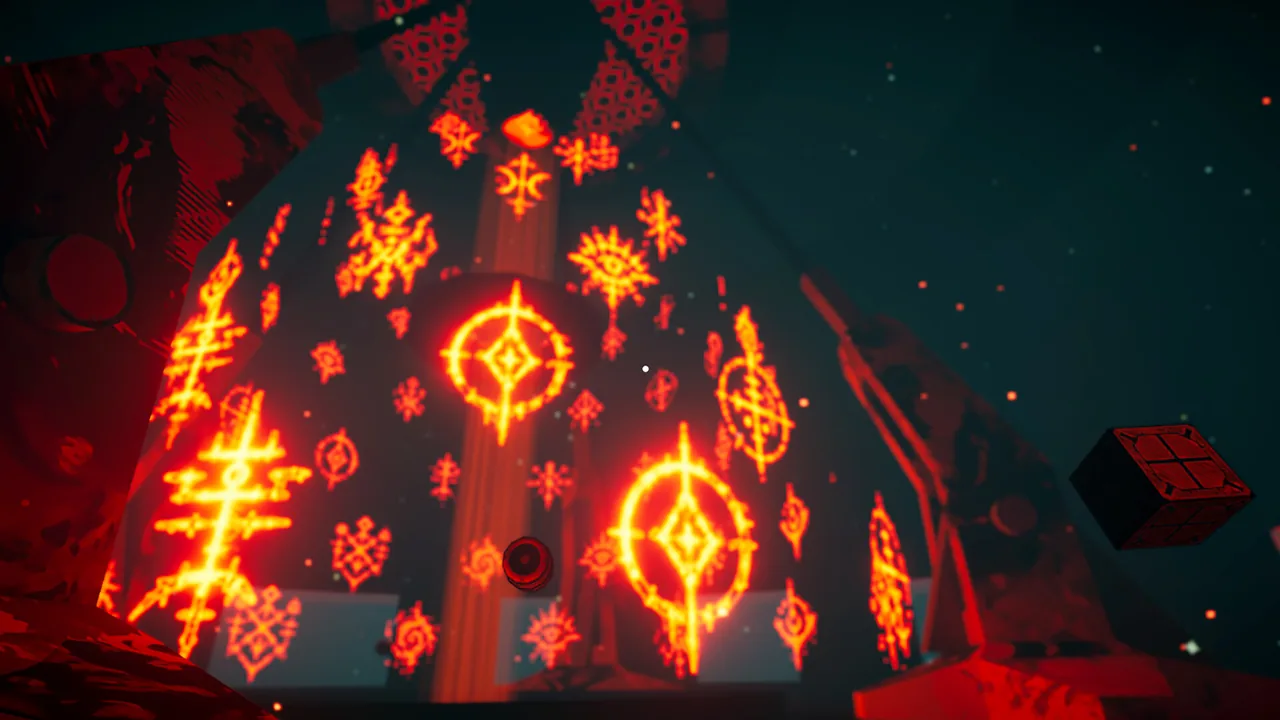
CavernreachImage: Deep Rock Games via Steam -
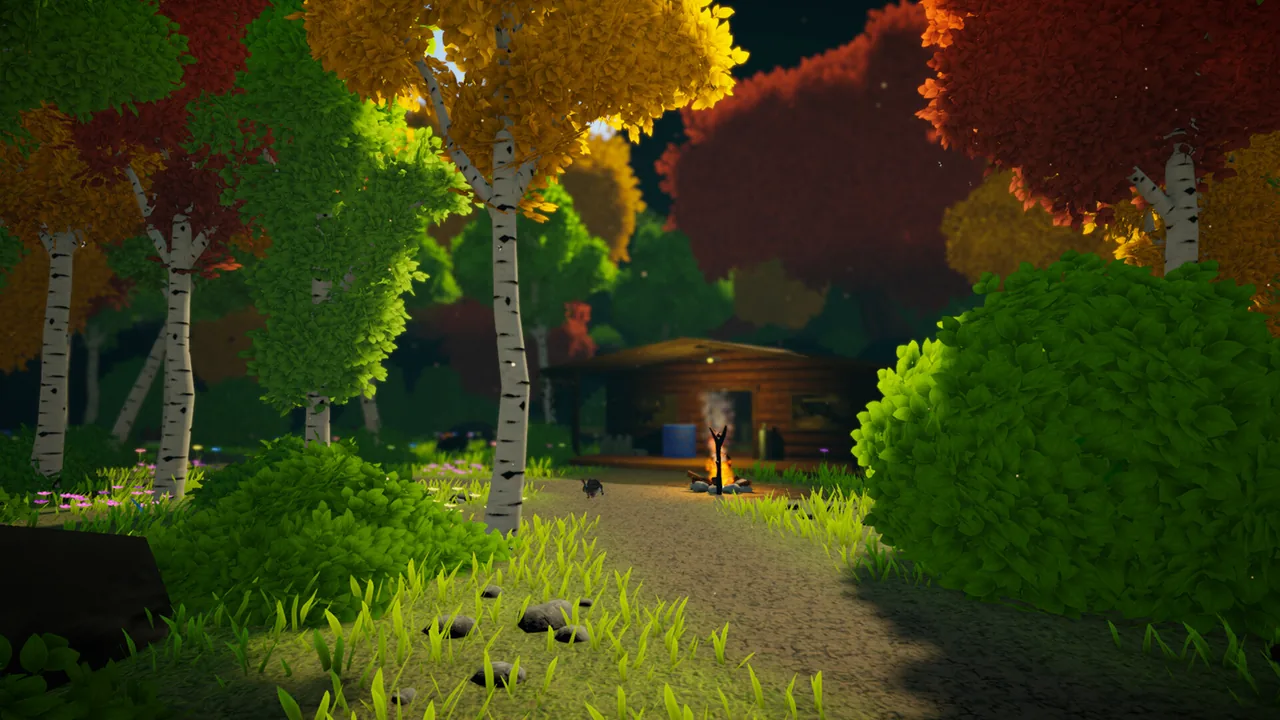
CavernreachImage: Deep Rock Games via Steam -
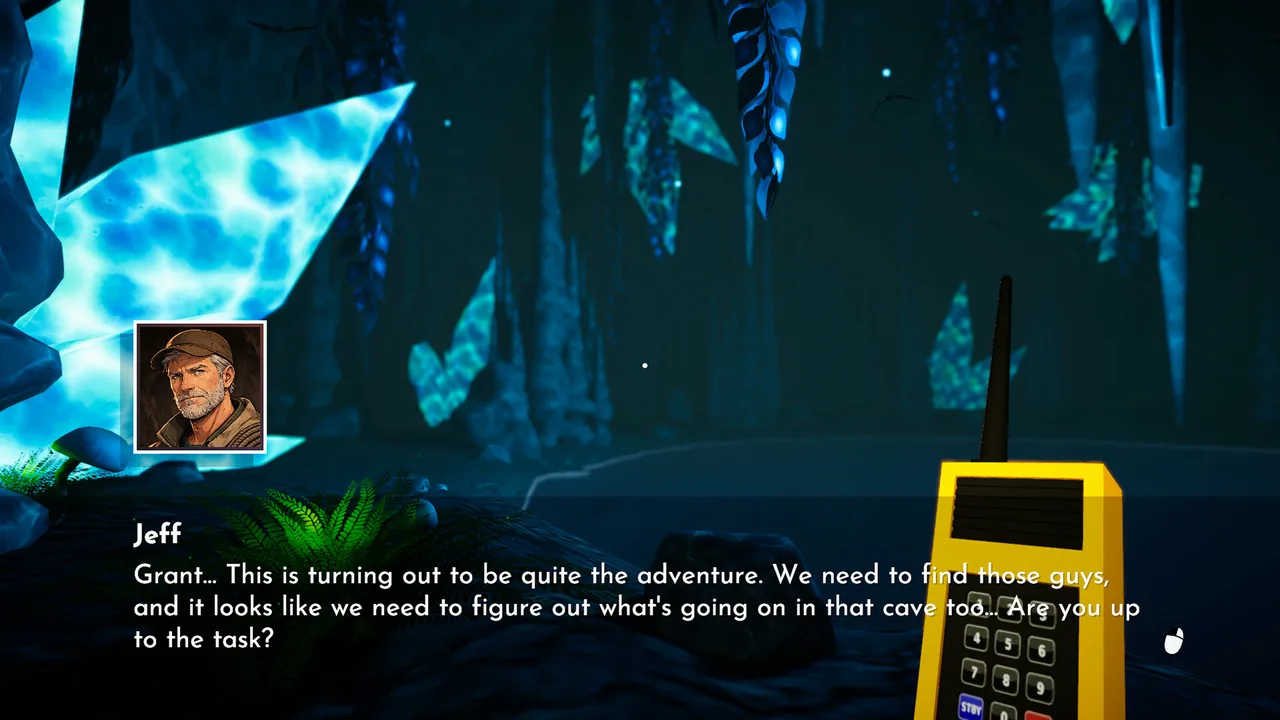
CavernreachImage: Deep Rock Games via Steam -
How the review scores each part of the gameWanderer Editorial -
The game at a glanceWanderer Editorial -
The short versionWanderer Editorial