Game review
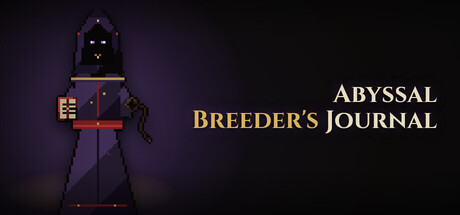
Abyssal Breeder's Journal Review
6.5 / 10
- Developer
- sasoriken-games
- Publisher
- sasoriken-games
- Released
- 27 August 2026
- Platforms
- ["Windows", "Linux"]
- Genre
- RPG
A Twenty-Sixth Consecutive Launch Without a Single Review
Abyssal Breeder's Journal released on Steam on 27 August 2026 and has zero user reviews at the time of writing, extending this stretch's run of unreviewed launches to twenty-six. That's a genuine surprise for a game this mechanically ambitious — a text-and-pixel monster-breeding sim with a dual-track inheritance system, TRPG-style card combat, and an entire second strategic layer running above the dungeon is a considerably deeper pitch than most titles in this run, and one that dark-fantasy creature-breeding fans would ordinarily seek out quickly. This review is built entirely from the developer's own store page description, not from verified play.
Hatch, Train, and Let Go
The core loop casts the player as "the mastermind" at the bottom of a dungeon, hatching larvae and raising them through training sessions built around a drawn hand of cards, described explicitly as "TRPG-style." Rather than a single meter climbing toward a finished creature, the game frames every generation as a roughly 10-15 minute cycle with a defined endpoint: when a creature's lifespan runs out, the player must choose to deploy it to fight on the surface or station it as a domain guardian, and either way, "you never see that individual again." That's an unusually blunt design commitment for a genre that normally lets players hoard and coddle favourites indefinitely — forcing permanent loss of the individual creature, with only its stats and traits surviving into the next generation, puts real emotional and strategic weight on a decision most creature-collectors never have to make.
Madness, Morale, and a Bet Every Turn
Training runs on a tension between two competing meters, Madness and Morale, described as "a real tradeoff, not a meter you can ignore." Pushing Madness high unlocks mutation routes and access to a bloodier card pool, but risks a creature refusing orders or an experiment backfiring outright; keeping Morale high instead grants training bonuses, giving the player a genuine push-your-luck choice on nearly every card played rather than a simple stat-optimization puzzle. That's a distinctive spin on monster-training mechanics — most breeding sims let stats climb in a straight line toward a target build, but layering a volatile psychological-state system on top means every session becomes a series of small bets between raw power and reliable control, with the deck itself described as skewing "bloodier" the further Madness climbs.
Whether that tension actually stays interesting across dozens of generations, rather than collapsing into a single dominant strategy (always push Madness, or always play safe for Morale) once a player learns the system, is the kind of long-term balance question only extended play could answer. A "persistent Grimoire" letting players build a training deck across generations, rather than resetting each time, suggests the developer is aware that repeat-play depth needs its own progression layer distinct from the creatures themselves.
Two Bloodlines, Deliberately Designed
The most structurally unusual feature is a fully split inheritance system: a shipped-out creature's final stats distill into "Factors," while whatever "Traits" it was born with or grew into stay on an entirely separate track. Breeding the next larva means choosing up to three Factors and any Traits to carry forward, on top of a fresh random trait for the newborn — explicitly framed by the store page as "less 'hope for a good roll' and more 'design the bloodline you're after.'" That's a meaningfully more deliberate take on generational breeding than the genre's usual random-inheritance-plus-reroll model, and it puts real strategic weight on which individual creatures a player retires versus sends to die anonymously in a raid, since only shipped or stationed creatures feed the Factor and Trait pools forward. A quietly compounding "Ancestral Boon" — a permanent starting-stat bump that grows with every individual ever shipped or stationed — is a smart touch that ensures no generation is entirely wasted, even ones that don't produce a usable final build.
A Second Game Above the Dungeon
Beyond the breeding loop, a full strategic layer runs on the surface: creatures can raid, sabotage, or "burn cities" to expand territory, guardians defend the domain against real-time siege counterattacks, prisoners can be taken and disposed of, souls can be spent at a black market, and cross-breeding multiple bloodlines is teased as unlocking "mythic hybrids no bestiary has ever recorded." That's a substantial amount of promised systemic breadth layered on top of an already unusual core loop, and the store page frames it as a two-way feedback system — surface actions shape underground threats, and vice versa — rather than a disconnected side mode. With no stamina system and generations designed to run back-to-back in one sitting, the structure seems built for players who want to chain many short, decisive cycles rather than grind a single long session. At NZ$12.49 with no discount at the time of writing, and no in-app-purchase category listed on the store page, the entire breeding-and-conquest loop appears to run on in-game systems only.
Verdict
Abyssal Breeder's Journal is one of the more mechanically ambitious titles in this entire zero-review stretch: a dual-track Factor-and-Trait inheritance system, a genuine push-your-luck Madness-versus-Morale training tension, and a full surface-side conquest layer feeding back into the underground breeding loop. Its biggest open question isn't whether the ideas are interesting on paper — they clearly are — but whether that much systemic ambition holds together in practice across dozens of short generations without one system (most likely the surface conquest layer) ending up thinner than the breeding core it's built around. A month without a single review is a genuine puzzle for a pitch this distinctive, and this assessment rests entirely on the developer's own description rather than anyone's actual playthrough.
Screenshots
-
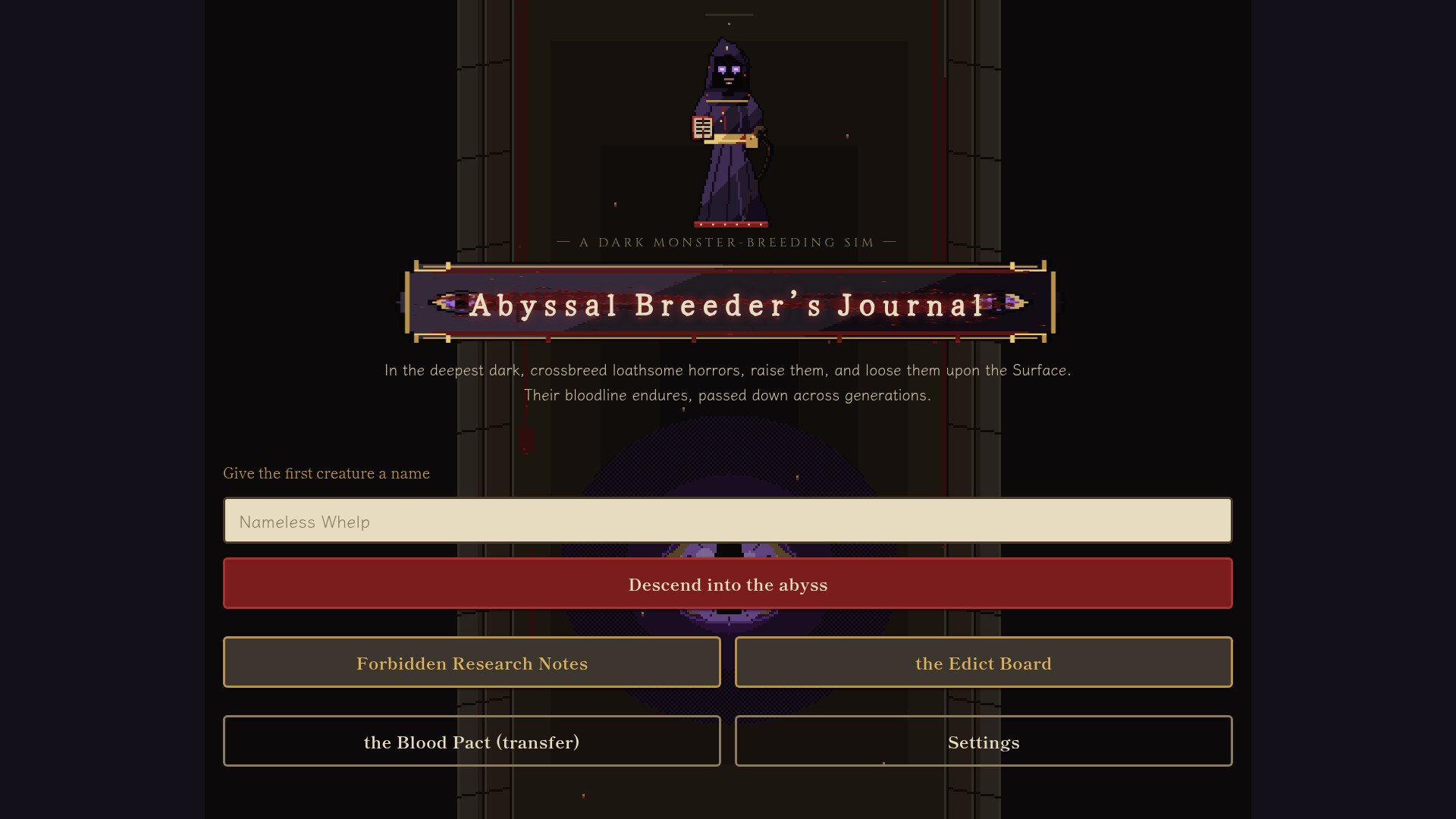
The opening screen, where the very first creature of a new bloodline is named before the descent beginsImage: sasoriken-games via Steam -
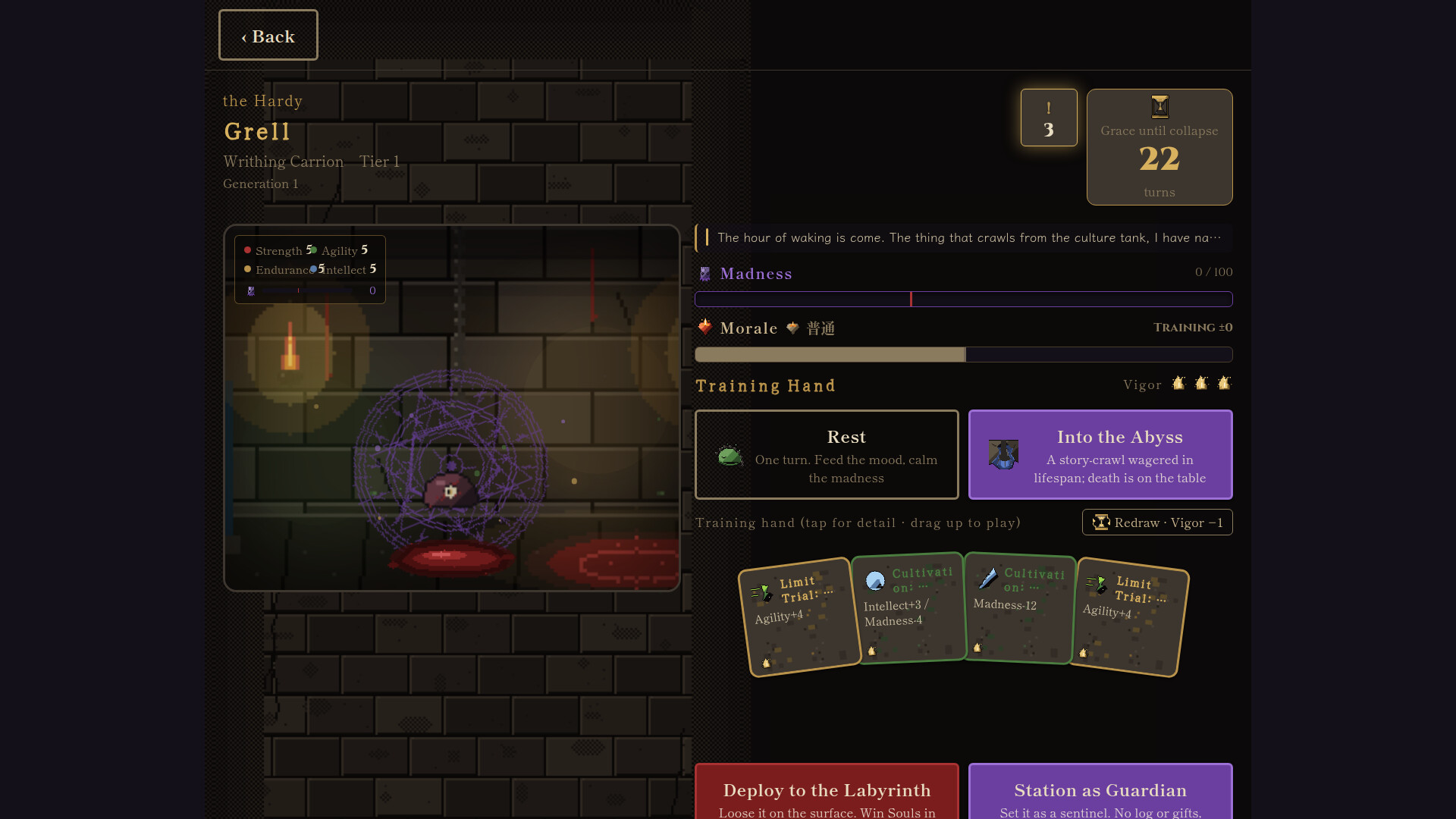
The training-hand screen, weighing calmer Rest cards against riskier Madness-raising options before the creature's lifespan runs outImage: sasoriken-games via Steam -
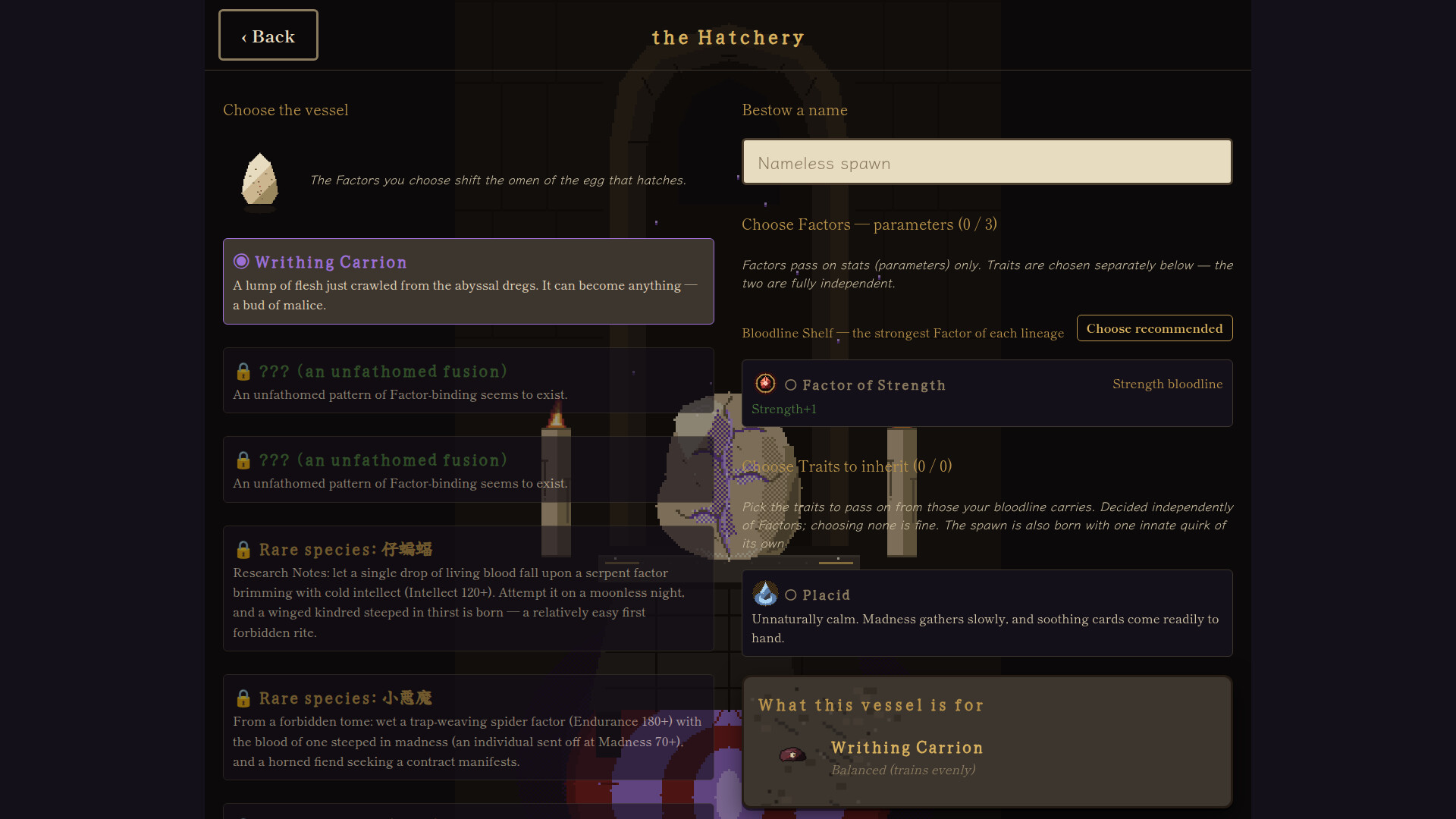
The Hatchery, where up to three inherited Factors and any carried-over Traits are chosen independently for the next generation's eggImage: sasoriken-games via Steam