
Game review
And who is the maiden?
5.5 / 10
- Developer
- Cipi Games
- Publisher
- Cipi Games
- Released
- 18 September 2026
- Platforms
- Windows, Mac, Linux
- Genre
- RPG
A Thirty-Sixth Consecutive Launch Without a Single Review
And who is the maiden? went up on Steam on 18 September 2026 and has attracted no user reviews at all so far — not one, on either side of the ledger. That absence of a review history matters more here than on most launches this cycle, because this is a narrative-driven mystery game built almost entirely around choices and their consequences; without any player feedback to check against, there is no way to confirm from outside sources whether the branching structure the developer describes actually delivers meaningfully different outcomes, or whether it's mostly cosmetic variation dressed up as elevenfold replayability. Everything that follows comes from the store page's own description and screenshots, not from any played session.
A Slavic Ballad Turned Investigation
The premise is drawn directly from "Świtezianka," a 19th-century ballad by Adam Mickiewicz about a hunter, a lake, and a maiden whose identity is left deliberately unresolved — the developer quotes the poem's final lines on the store page as the game's explicit inspiration. The story itself is credited as an adaptation of "A kto dziewczyna?" by Adam Wołoszczuk, a finalist at Quentin 2019, a competition specifically for RPG scenario writing, which is a more concrete provenance claim than most small narrative RPGs offer. Players arrive in the village of Sielany as travelers shortly after a young man has vanished, ostensibly, and take on the role of investigators rather than combatants: most of the game is described as walking between fixed locations — a manor, an inn, a dock, a wild shore, and a handful of places the village would rather visitors avoided — gathering testimonies and contradictions into a notebook.
Six Archetypes, Three Companions, and Dice Against Your Strengths
The RPG framing comes through in party composition and resolution mechanics rather than combat. Players pick three companions from six stated archetypes, each contributing different strengths, and when an investigation moment turns risky, the game resolves it as a dice trial weighted against the party's stats, with a single chance to push back using a resource the store page calls Will if the roll goes badly. That's a lean system by RPG standards — there's no described levelling, equipment, or skill tree — but it is a genuine mechanical layer sitting underneath the investigation loop, closer to a tabletop-style skill-check structure than a pure visual novel's binary dialogue choices. The choice of six archetypes for only three party slots also means that no single playthrough can see everyone's strengths at once, which is presumably deliberate: it turns the initial party pick into a real strategic trade-off between covering more investigative ground and stacking strengths for the trials the player expects to face, rather than a purely cosmetic roster decision. The eleven endings are framed as depending on three variables: which companions were brought along, what the player came to believe over the course of the investigation, and how the entity that eventually rises from the lake was treated in the final confrontation.
A Short Runtime by Design, Not by Omission
The developer is upfront that a single playthrough runs 30 to 40 minutes, explicitly framing the game as "meant to be replayed rather than padded out" — an unusually direct statement of scope for a narrative RPG, and one that reframes the eleven endings as the actual content offer rather than a marketing bullet point bolted onto a longer game. Whether that structure holds up in practice — whether a second or third run genuinely surfaces new testimony and different confrontations rather than the same scenes with a different final slide — is exactly the kind of claim that a healthy base of user reviews would normally help verify, and there simply isn't one yet here. Local Steam achievements are tied to the eleven endings, which at least gives replay attempts a visible marker of progress even before a player has any external sense of how distinct each ending actually is from the others.
A Notable Disclosure About the Art and Music
One detail worth flagging plainly: the developer states directly on the store page that the game's art and music were AI-generated, while adding that "I spent a lot of time getting them to actually feel like one consistent place rather than a pile of generated images." That's a rare degree of up-front transparency for a solo indie release, and it's a legitimate factor for a buyer weighing whether the presentation will hold together, or whether it will show the seams that AI-generated art assets sometimes carry into finished games — inconsistent character likenesses across scenes, environments that don't quite cohere as one place. The systems and UI, by the developer's own account, were built by hand rather than generated. Notably, none of the three screenshots released with the store page actually show that UI in action — all three are static, woodcut-style illustrations of locations and characters, consistent in tone with the moody title art, rather than captures of the notebook interface, the dice-trial screen, or the dialogue system described in the feature list. That's not unusual for an atmosphere-first narrative game, but it does mean the interface itself remains entirely unverified going in. At NZ$4.79 with a 15% discount live at the time of writing, the price is modest enough that the AI-art disclosure reads more like honesty about production constraints than an attempt to obscure them.
Verdict
And who is the maiden? is a short, dice-resolved investigation RPG built around a genuine piece of Slavic folklore, offering three-companion parties, stat-weighted trials, and eleven stated endings across a deliberately brief 30-to-40-minute runtime. Its premise has more literary grounding than most small narrative RPGs bother with, and the developer's own disclosure that its art and music are AI-generated is a refreshingly direct piece of honesty rather than something buried in fine print. At the time of writing it carries zero user reviews on Steam, so its central promise — that multiple playthroughs meaningfully diverge rather than repeat with new dressing — remains unverified by anyone outside the developer.
Screenshots
-
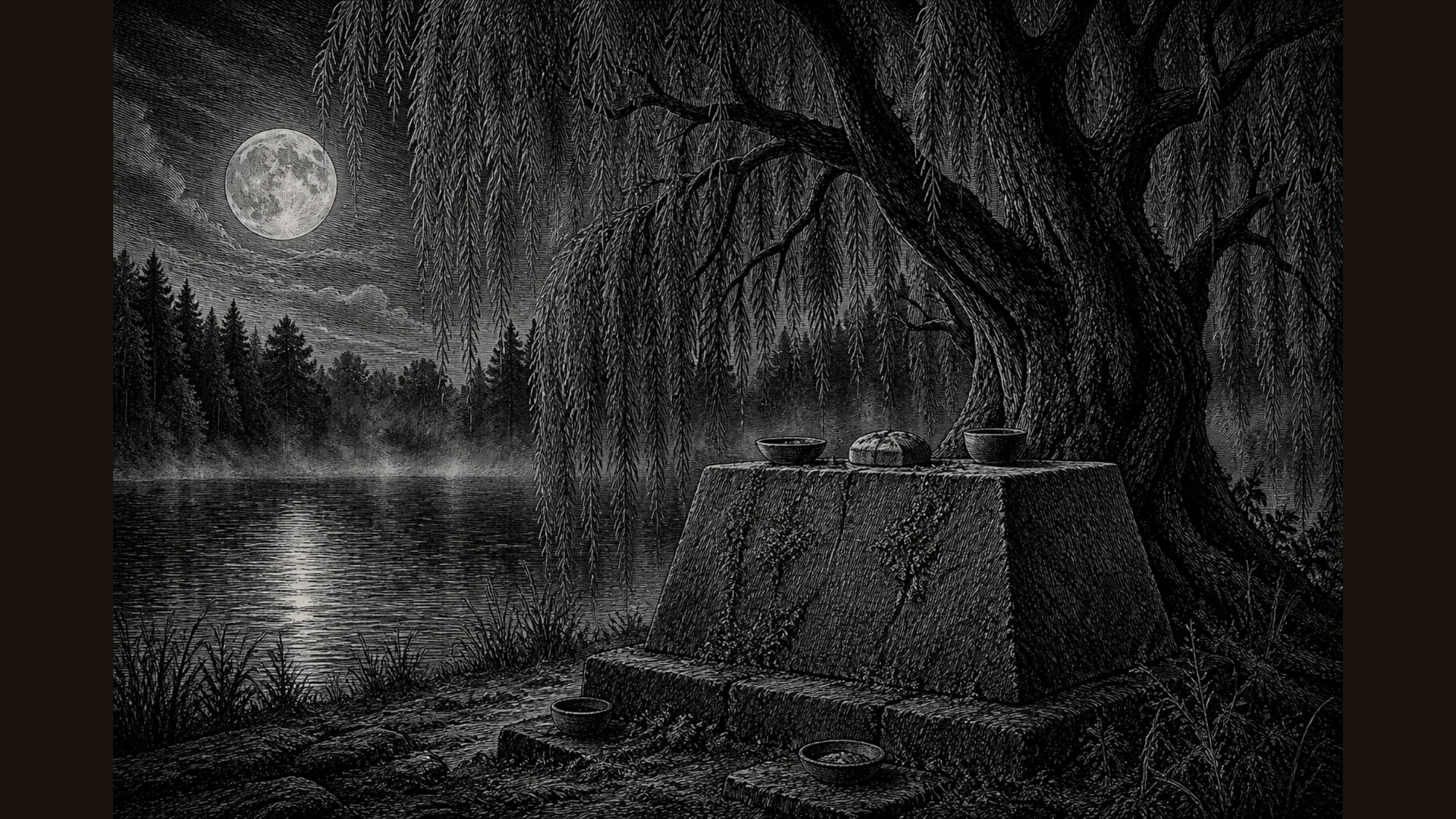
One of several static illustrated scenes used to set locations — here, an altar-like stone structure by the lakeshore, rendered in the game's consistent engraving-style art.Steam store page -
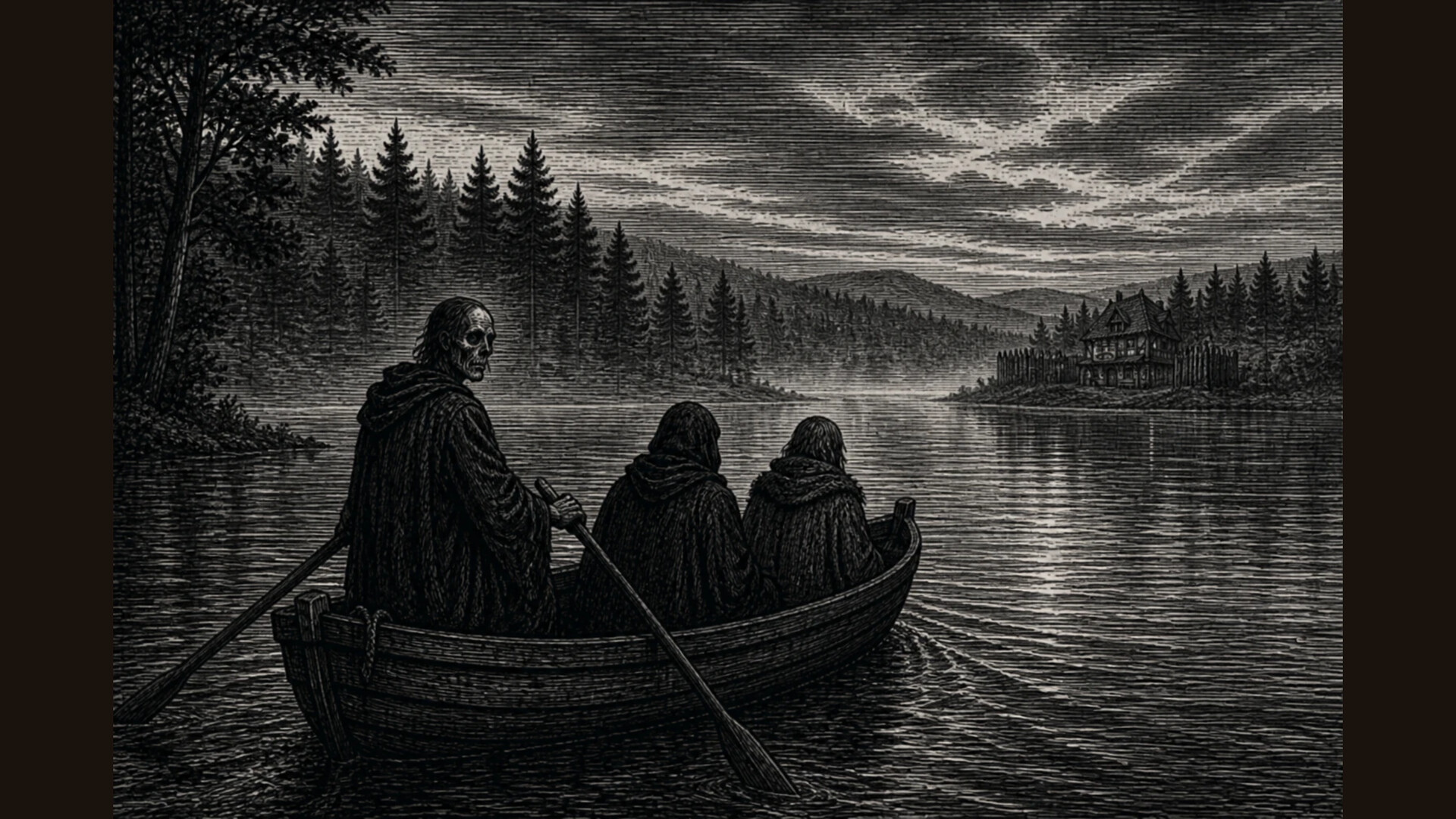
The player's three-companion party arrives by boat at the village of Sielany, shown here in the same woodcut illustration style as the title art.Steam store page -

The maiden of the title, depicted rising from the water — none of the game's three released screenshots show any in-game UI, dialogue box, notebook, or dice-trial screen.Steam store page