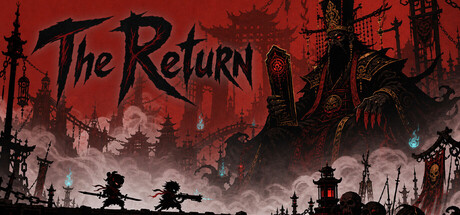
Game review
The Return
6.5 / 10
- Developer
- YIN WEN CE
- Publisher
- YIN WEN CE
- Released
- 15 September 2026
- Platforms
- Windows
- Genre
- RPG
A Forty-Second Consecutive Launch Without a Single Review
The Return entered Early Access on Steam on 15 September 2026 with content through what the store page calls "Chapter 7," and at the time of writing it has zero user reviews. That absence is worth flagging clearly for a roguelite specifically, since this genre lives or dies on run-to-run build variety and balance — exactly the kind of thing dozens of hours of player feedback normally surfaces quickly, and which a single developer's own playtesting can only approximate.
A Chinese-Mythology Underworld, Eighteen Layers Deep
The premise draws directly on the traditional Chinese concept of Diyu, the eighteen layers of the underworld, reframing the setting as a place ordinary people are unjustly imprisoned and forced to fight their way back out of. The pitch text is unusually blunt about its themes: the "spiritual essence" players collect from defeating enemies is explicitly described as refined from living people who "should never have died," and the loot the player finds is framed as "Remnants of the Fallen" — power borrowed from rebels, wrongly-killed victims, and fallen warriors who came before. That's a more morally weighted framing than most roguelites bother with, turning the genre's usual resource-collection loop into a specific narrative point about complicity in an unjust system, rather than treating "essence" and "remnants" as flavourless currency names. Whether the writing sustains that weight across a full run, or whether it fades into background texture once combat routines take over, isn't something the store page's pitch text alone can confirm. The framing device of stumbling on a camp of other trapped, living people early in the escape is also a notable structural choice: it suggests the underworld will function as a persistent hub populated by returning or recurring NPCs rather than a fully procedural gauntlet with no fixed landmarks, which would give repeated runs somewhere consistent to return to between attempts — a detail the pitch text implies but doesn't spell out mechanically. Screenshots of the underworld itself back the punishment framing up visually rather than just in text: one shows the player's small silhouetted character standing beside a lit brazier in a chamber strung with hanging meat hooks and dangling chains, the kind of imagery that reads as a torture chamber or slaughterhouse rather than a generic dungeon corridor, which suits Diyu's reputation as a place of punishment rather than mere danger.
Skills, Artifacts, and Attribute Builds Across a Run
Mechanically, The Return follows the now-familiar roguelite formula of choosing a starting character, then accumulating skills, artifacts, and attribute upgrades over the course of a run to form a build unique to that attempt — a structure indebted to the genre's biggest successes without claiming to reinvent it. What differentiates one run-based action roguelite from another is usually in the specifics of how those systems interact, and the store page's promise of "artifact synergy" suggests at least some designed interplay between items rather than a pile of independent stat boosts, though no concrete artifact names, skill examples, or synergy combinations are given on the store page to verify how deep that system currently runs at Chapter 7. Screenshots fill in some of that gap directly: combat plays out in real time rather than through a menu, with a six-slot ability hotbar mapped to keyboard letters, a directional sword-swing attack that lands with visible pop-up damage numbers, and a separate six-slot equipment row for rings, boots, armour, and similar gear that each display a "max level" label in Chinese script once fully upgraded — concrete, working evidence of the promised attribute-and-artifact build system, even if only two or four of those six slots are filled in the earlier screenshots and all six are filled by the time the player reaches a large, named boss with its own 1500-point health bar. That boss encounter is itself a useful data point: a fireball-flinging enemy chained to an overhead rig, with its name displayed only in Chinese characters despite the surrounding interface being in English, is a much more concrete localisation gap than the isolated phrase noted on the store page below. The Early Access roadmap is stated plainly: new chapters or characters roughly every three to six weeks, working toward completing all eighteen layers of hell, alongside continuous rebalancing of "numerical balance, control feel, combat performance, and overall content volume" — specific enough categories of ongoing work to suggest active, considered development rather than a vague promise to "add more content later." Reaching seven chapters out of an eventual eighteen at the current Early Access build suggests the game is already roughly a third of the way through its planned scope by chapter count, though chapter length and difficulty are unlikely to scale linearly, and the store page gives no estimate of how many hours a full clear of the current build takes or how "character" additions differ mechanically from new playable heroes versus cosmetic variants of the same starting kit.
A Roguelite Built for a Global Audience From Day One
One detail worth noting for a solo-developer Early Access project: The Return already supports twelve languages at launch, including English, French, German, Spanish, Russian, Japanese, both Simplified and Traditional Chinese, Portuguese, and Korean — a genuinely broad localisation effort for a Chapter 7 Early Access build, and one that should help the game reach review-generating players well beyond a single-language market faster than most solo projects manage. That breadth does carry a small quality-control risk worth flagging plainly: the store page's own English text includes at least one passage where an untranslated Chinese phrase slipped through into the middle of an English sentence, a minor but visible sign that the localisation pass, however broad, may not be fully proofread yet. The gap isn't confined to the store page, either — a boss name and the "max level" equipment labels shown in actual gameplay screenshots also appear only in Chinese script, which suggests the twelve-language localisation currently covers menus and store text more thoroughly than every piece of in-game UI.
A Low Asking Price With No Extras
At NZ$7.89 with no discount, The Return sits at the low end of Early Access roguelite pricing, with nothing in the store page's category or feature listing suggesting any in-app purchases, DLC, or additional monetisation beyond the base price — a straightforward, low-risk pitch for a genre where players often expect a game to grow substantially in scope over its Early Access lifespan for no extra cost. Windows-only support and camera-comfort and custom-volume-control accessibility options round out a modest but sensible technical baseline for a solo-developer side-scrolling action game, though there's no stated minimum system requirement or performance target given on the store page to judge how demanding the combat and room-generation systems actually are.
Verdict
The Return pairs a genuinely distinctive narrative hook — the eighteen layers of the Chinese underworld reframed as an unjust prison system, with loot explicitly tied to the fates of the dead — with a familiar skills-artifacts-attributes roguelite structure, all at a low price with broad day-one localisation and a specific, dated content roadmap. Screenshots confirm the core action-combat and equipment-upgrade loop is real and working — six-slot hotbars, max-level gear, and a proper named boss fight with a chains-and-fireballs attack pattern — though those same screenshots also surface a concrete, in-game example of the localisation gap already visible on the store page. It launched into Early Access on 15 September 2026 with zero user reviews so far, so how deep the artifact synergies actually run at Chapter 7, and whether the game's moral framing carries through the whole experience rather than fading into standard roguelite grinding, remain unverified by anyone outside the studio.
Screenshots
-
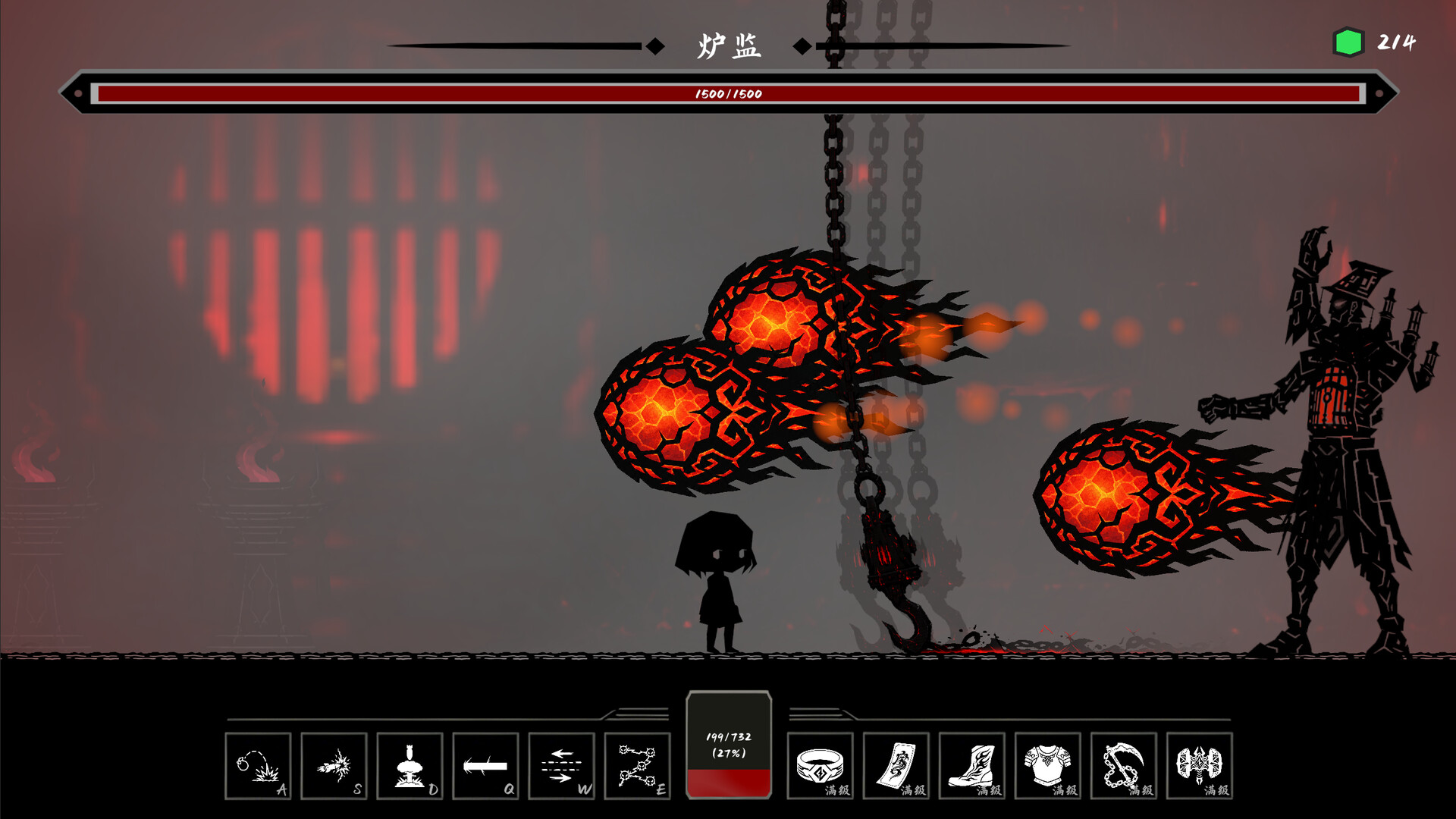
A named boss encounter with a full health bar and chain-and-fireball attack pattern, though the boss's name and the equipment slots' max-level labels appear only in untranslated Chinese text despite the store page's English listing.Steam store page -
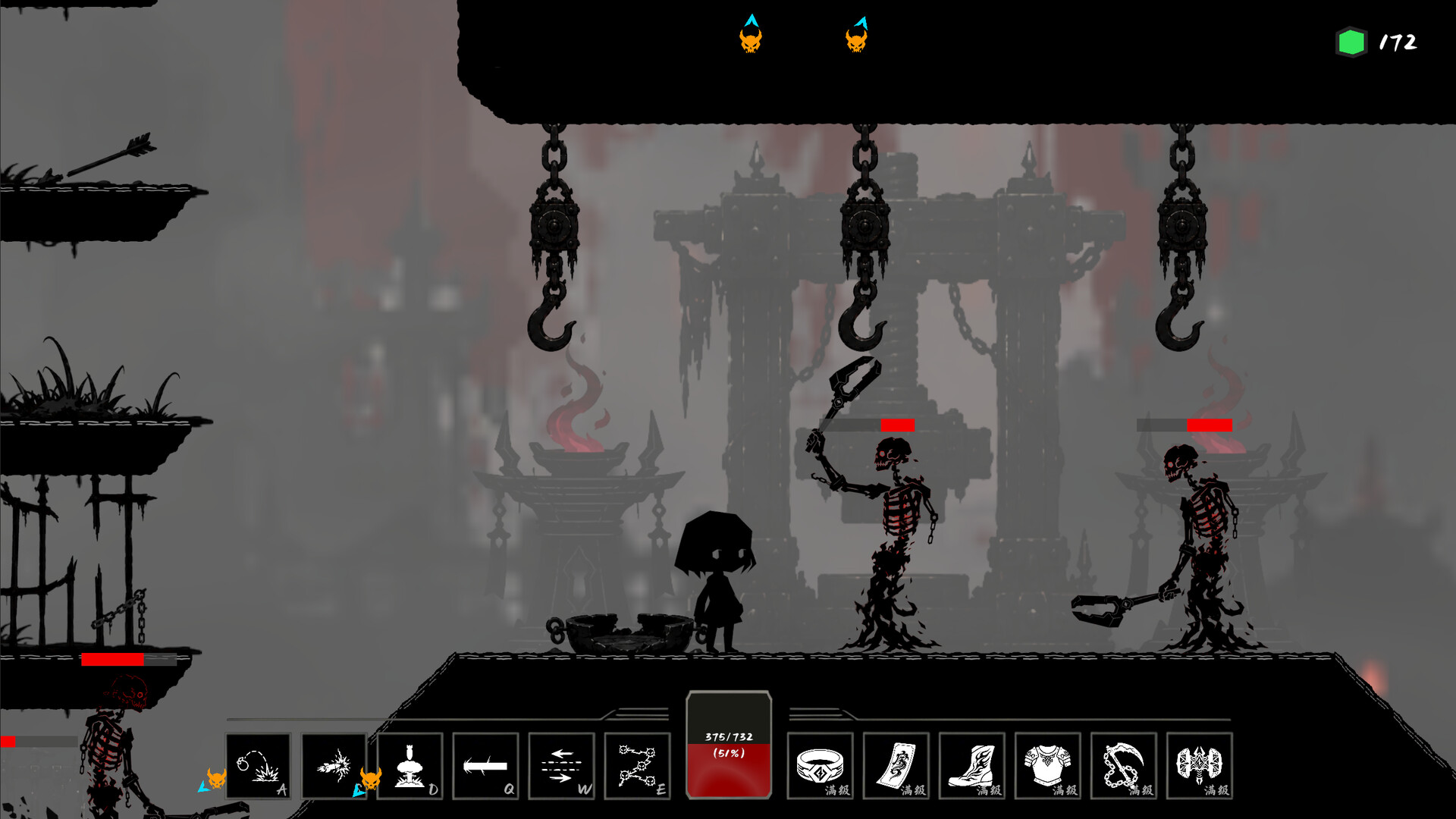
Environment art matches the underworld's punishment imagery directly — hooks, chains, and a furnace brazier — while two more equipment slots have since filled with max-level gear partway through the run.Steam store page -
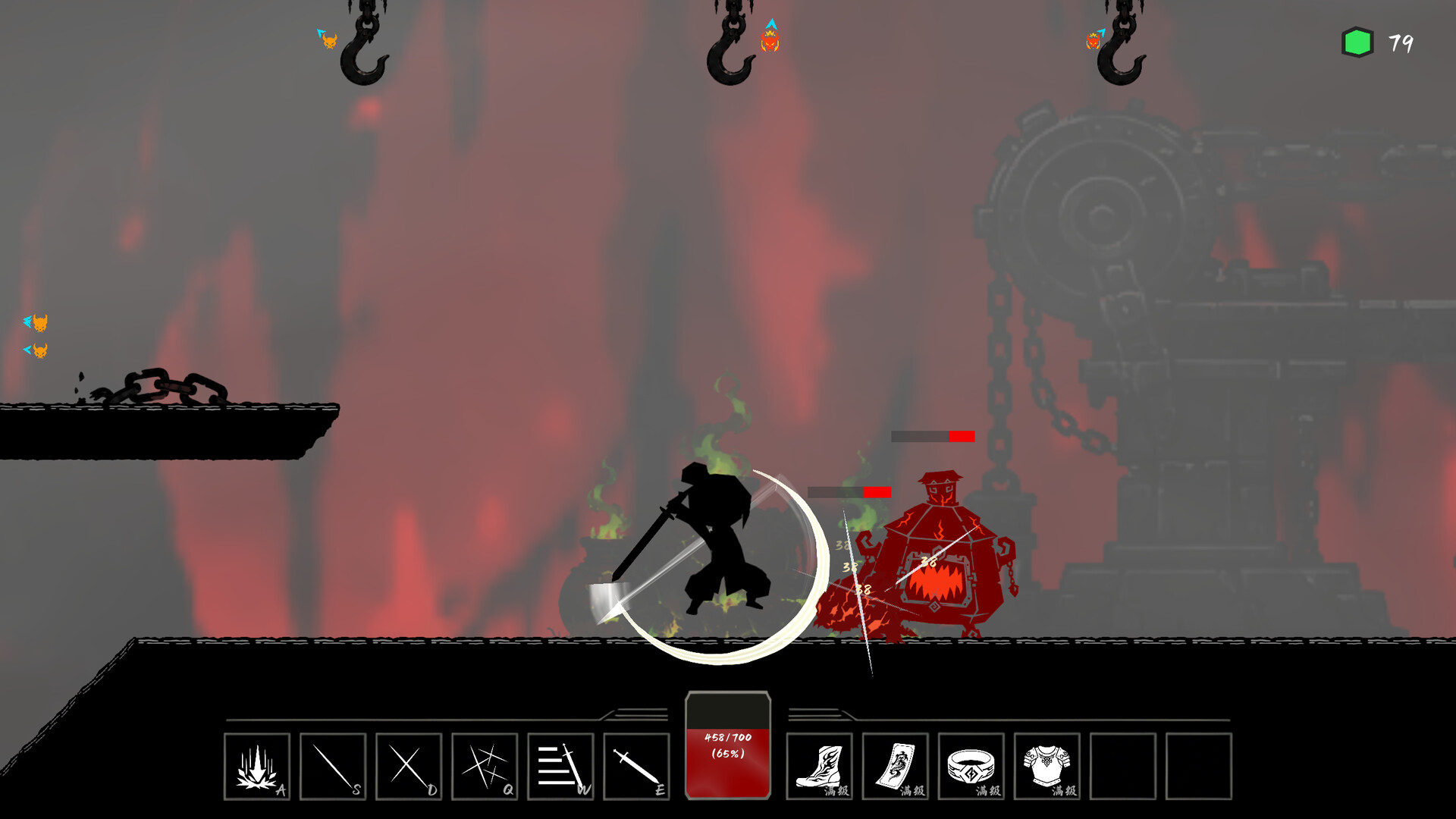
Combat plays out in real time with a directional sword swing and pop-up damage numbers rather than a turn-based menu, and only four of six equipment slots are filled here, suggesting this shot comes from earlier in a run than the boss fight.Steam store page