
Game review
MergeCaster
6.5 / 10
- Developer
- Shingan_Games
- Publisher
- Shingan_Games
- Released
- 8 September 2026
- Platforms
- Windows
- Genre
- RPG
A Forty-Eighth Consecutive Launch Without a Single Review
MergeCaster entered Early Access on Steam on 8 September 2026, and at the time of writing has zero user reviews. That's a notable gap for a roguelike puzzle hybrid, since this genre lives almost entirely on whether its core loop — merging elemental panels to trigger skills, wave after wave — stays interesting once the novelty of the concept wears off, and that's exactly the kind of long-session judgment that normally needs a crowd of players to settle.
Merge Puzzles as the Combat System, Not a Side Activity
The pitch is a genuinely distinctive combination: a turn-based, no-time-pressure merge puzzle standing in for the entire combat system, rather than sitting alongside a separate battle screen the way most merge games treat their puzzle mechanic as a resource-generation layer. Panels can be merged not just with identical types but across different elemental types, and whichever combination survives to the end of a turn determines which skills fire — with multiple skills able to trigger simultaneously if the right elements are present. That's a meaningfully deeper design space than a typical match-based mobile merge game, since it turns board management into the actual tactical decision rather than a means to an end, and removing time pressure from the merging itself suggests the developer wants players thinking several moves ahead rather than reacting under a clock. Screenshots confirm the merge grid sits directly between the player and enemy HP bars rather than feeding some separate battle resolution screen, and a wave showing three enemies with independently tracked health at once gives the ability to trigger multiple skills from a single merge a concrete tactical reason to matter, rather than being a flourish that rarely comes up.
A Wave-and-Shop Structure Borrowed From Deckbuilding Roguelikes
Structurally, the game proceeds in discrete waves, with each cleared wave opening a shop where rewards earned from that wave can be spent on new skills — a familiar roguelike deckbuilder rhythm applied to a board-merging combat system instead of a card-based one. Winning the game means clearing every wave in a single run, which frames the whole experience around escalating difficulty and skill-set optimisation rather than a persistent open-ended grind. The store page's own framing — describing the player as customizing a "deck" and growing stronger "as a MergeCaster" while defending against monsters that specifically advance at night — gives the wave structure a light narrative frame without over-explaining it, which suits a puzzle-first design that doesn't want story beats getting in the way of board management. What's not stated is whether runs persist any character growth between attempts the way most roguelikes offer meta-progression, or whether each run starts from a completely blank slate — a distinction that matters a great deal for how forgiving repeated failure feels, and one that only extended play could confirm. That ambiguity is worth flagging specifically because it's the detail that determines whether the RPG label fits comfortably: a roguelike deckbuilder with no persistent growth between runs leans closer to a pure strategy puzzle, while unlockable skills or elements that carry forward would give it the kind of long-arc character investment the genre tag implies. A screenshot of the between-wave shop shows named skill cards for sale with individual gold costs and a lock icon beside each one, which suggests at least a run-level reroll-and-lock system for curating the merge pool wave to wave, similar to the shop phases in card-based roguelike deckbuilders — though whether any of those purchased skills or their gold carry over once a run actually ends is still not something the store page or screenshots confirm.
Early Access Scope for a Tightly Focused Mechanic
As an Early Access release, MergeCaster is betting almost entirely on one core mechanical idea rather than a broad feature set, and the store page doesn't promise a roadmap of planned additions the way many Early Access RPGs do — there's no mention of new elements, skill trees, or additional wave types beyond what's already playable. That's a reasonable scope for a solo or small-team developer to commit to polishing rather than overextending, though it also means the long-term ceiling of the game depends heavily on how much variety a handful of elemental panel types and their skill combinations can sustain across repeated runs. Categories list "Playable at Your Own Pace" and "Playable without Timed Input" alongside a Mouse Only option, both of which reinforce the no-time-pressure merging as a deliberate accessibility choice rather than an afterthought. One oddity worth flagging: the listed minimum system requirement calls for 16GB of RAM, an unusually steep floor for what reads as a 2D panel-merging puzzle game, and the store page doesn't specify processor or graphics requirements at all, leaving an unusual gap in the technical picture that only hands-on testing could clarify.
A Low Entry Price With No Stated Additional Monetisation
At NZ$5.19 with no discount, the price is modest even by Early Access puzzle-roguelike standards, and there's nothing on the store page suggesting in-app purchases, premium currencies, or a live-service layer bolted onto the wave-clearing loop — a meaningful point of contrast against how much of the broader merge-game category on mobile platforms is built around monetised board space or energy timers. Japanese and English are the only listed supported languages, suggesting a Japan-based developer targeting an initial dual-market release rather than a broad simultaneous global launch, though every screenshot on the store page shows Japanese-only UI text, including the skill cards and shop labels, which leaves it unclear how complete the English localisation actually is at this point in Early Access. Single-player only, with no achievements, cloud saves, or controller support listed, keeps the technical footprint minimal, consistent with an Early Access build still finding its final shape.
Verdict
MergeCaster stakes its entire pitch on a single distinctive idea — using no-time-pressure elemental panel merging as the actual combat resolution mechanic, wrapped in a wave-and-shop roguelike structure — at a low Early Access price with no stated additional monetisation. Screenshots confirm the loop is genuinely built: multi-enemy waves with independent HP bars, a shop with lockable skill purchases between waves, and a merge grid sitting directly in the combat screen rather than feeding an abstracted damage number elsewhere. Whether combining panels across different element types generates enough tactical depth to stay engaging across many runs, and whether the wave difficulty curve is tuned to reward the deliberate, unhurried merging the design encourages, are exactly the kind of questions extended play would normally answer through player consensus. It entered Early Access on 8 September 2026 with zero user reviews so far, so how well the core loop holds up, how complete the English localisation is behind those Japanese-only screenshots, and what the eventual Early Access roadmap adds beyond the current single mechanic, remain unverified by anyone outside the studio.
Screenshots
-
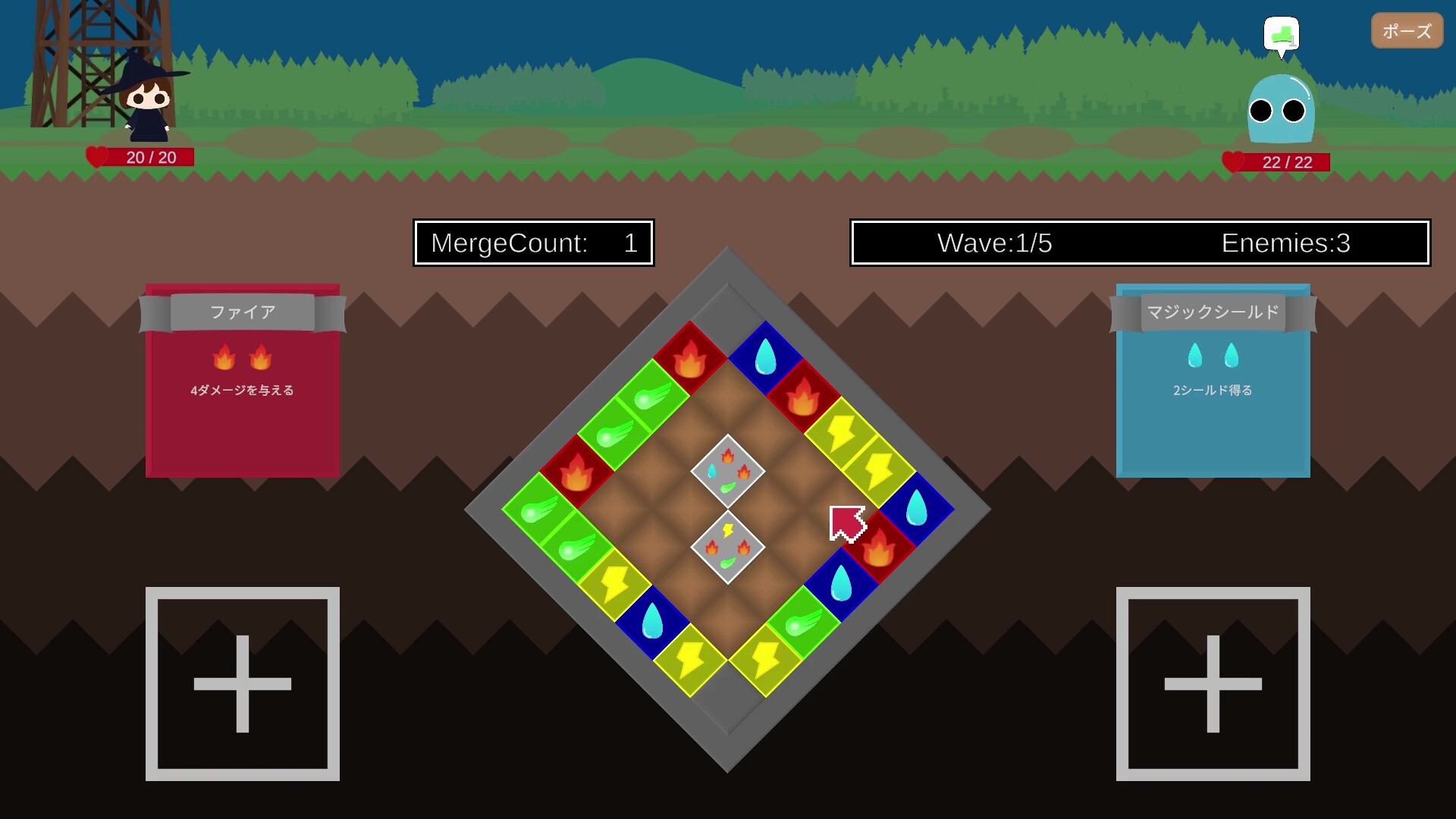
The diamond-shaped merge grid sits directly between player and enemy HP bars, with skill cards labelled in Japanese confirming panel merging drives combat resolution directly rather than feeding a separate battle system.Steam store page -
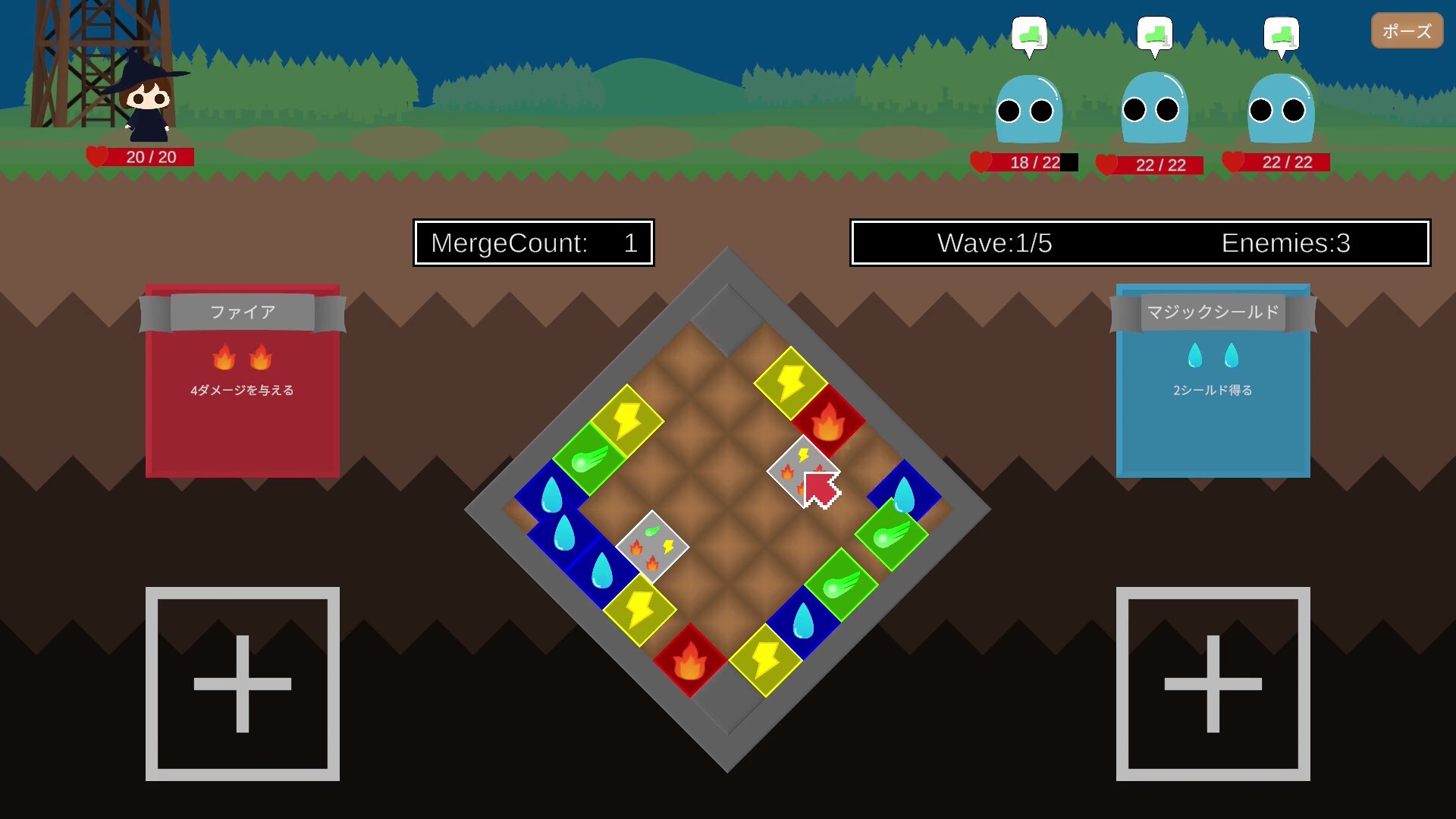
Multiple enemies with independently tracked HP bars confirm waves can throw more than one threat at once, giving the merge grid's simultaneous multi-skill activation a genuine tactical reason to exist.Steam store page -
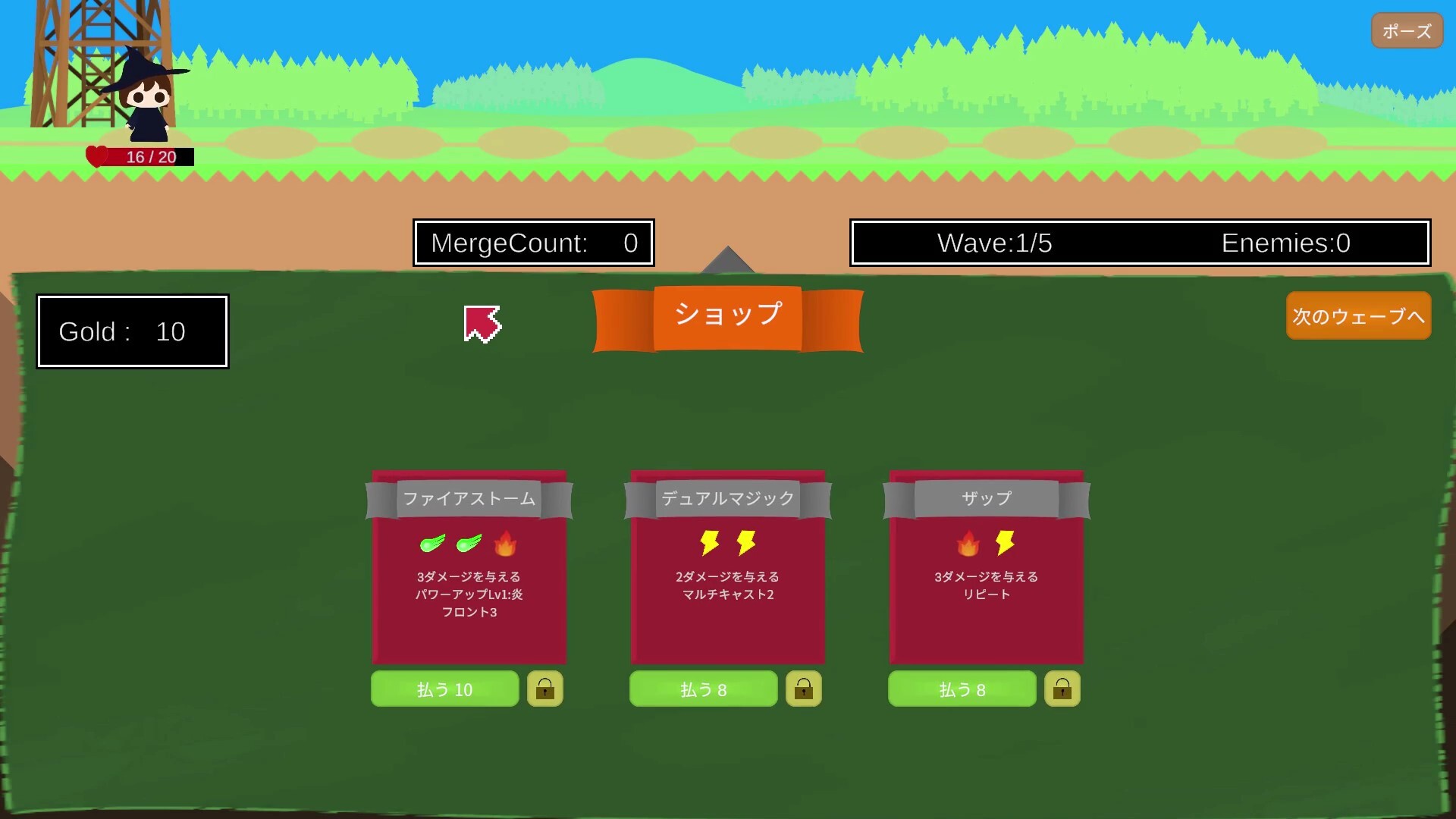
The shop's lock icons next to each purchasable skill suggest a reroll-and-lock system familiar from card-based roguelikes, adapted here to curating which elemental skills enter the merge pool.Steam store page