
Game review
Rune Coliseum
5 / 10
- Developer
- Rafale Software
- Publisher
- Rafale Software
- Released
- 23 September 2024
- Platforms
- Windows
- Genre
- Deckbuilding tactics roguelite
- Monetisation
- One-time purchase, no DLC or microtransactions during Early Access
- Players
- Single-player only
The short version
Rune Coliseum puts players in the sandals of an ancient gladiator, building a combat deck and reading enemy telegraphs on a timeline to survive escalating coliseum fights, in a mix its own fans describe as somewhere between Slay the Spire and Darkest Dungeon. This review's sample finds real enthusiasm for that original combat concept, tempered throughout by consistently poor English translation and confusing tooltips, and — in the most recent reviews — a specific, sharply divisive reaction to a major "V5" overhaul that a substantial number of longtime players say fundamentally changed, and worsened, the game they originally supported.
Biggest strengths
- The core combat concept — building a deck of timed attacks and reading enemy move telegraphs on a shared timeline — earns specific, repeated praise as a genuinely original take on the deckbuilder genre, distinct from more conventional turn-based systems
- Steam's own partner-events feed documents an extraordinarily dense, sustained Early Access development cadence, with 74 posts spanning multiple major version lines and near-continuous patch notes since launch
- Several reviewers who stuck with the game through its roughest edges describe the underlying gameplay as genuinely fun once its mechanics click, with one calling it "cool game, innovative, refreshing and fun"
Biggest weaknesses
- A persistent, specific complaint across both positive and negative reviews describes the English translation and tutorial as confusing to the point of making core mechanics genuinely hard to learn, with several reviewers independently guessing that some text appears to be machine-translated
- A large, specific negative-review theme describes a major "V5" update as having fundamentally converted the game from "a dynamic roguelite deckbuilder with interesting unlocks" into what one longtime reviewer calls "a confusing card battle management sim," with permanent hero unlocks replaced by a disposable-unit system several reviewers dislike
- Multiple reviewers describe a specific mechanical failure in the game's central attack-preview and telegraphing system, reporting that predicted outcomes do not reliably match what actually happens in combat
Who it's for: Early Access enthusiasts and genre fans specifically drawn to Darkest-Dungeon-style timing-based combat who are willing to tolerate rough translation and ongoing systemic change; not a fit for players wanting a stable, clearly explained experience today.
Our recommendation: Worth watching rather than buying immediately for most players — genre fans comfortable supporting active Early Access development may enjoy the core combat concept now, but should go in expecting a confusing tutorial and the possibility of further large-scale system changes before 1.0.
5 / 10
Rune Coliseum asks players to build a deck of timed combat moves and survive a series of gladiator duels by reading enemy attacks telegraphed along a shared timeline — a genre mashup one reviewer sums up neatly as "Swords & Sandals mixed with Slay the Spire." This review's sample finds a genuinely original idea at the center of the game, wrapped in an Early Access experience whose execution has drawn real, specific frustration from a meaningful share of its own supporters.
A genuinely original combat hook
Reviewers across the sample single out the same thing as the game's real draw: a timing-and-telegraph combat system that feels distinct from typical deckbuilder fare. "The idea of the game looks fun," one negative-leaning reviewer concedes even while ultimately disappointed, while a more enthusiastic reviewer calls it "cool game, innovative, refreshing and fun," detailing "tactical battles with positioning and timing being the key." That combination of card-based preparation with real-time-feeling duels is consistently described as the game's most distinctive, worthwhile idea, even by reviewers who go on to catalogue serious problems elsewhere.
A persistent, specific translation problem
The single most repeated complaint in this review's sample, appearing in both positive and negative reviews alike, concerns the English localisation. "The tutorial is not very clear... The sophistication + lack of instruction/proper English makes it near unplayable," one reviewer writes. A positive reviewer makes the same point from the other side of the recommendation line: "the translation of some parts is missing or incomprehensible, for example, charge or duel stance, what do they do, what is the difference between them? I have no idea." A third guesses at the cause directly: "it feels like the English version just got auto translated by ai." That this exact complaint recurs independently across reviewers who otherwise disagree on the game's overall quality suggests it's a genuine, structural barrier rather than a one-off frustration.
A major overhaul that split the playerbase
The most serious complaint in this review's negative sample concerns a large-scale system change reviewers refer to as the "V5" update. "The update... completely changed how the game plays. It was a dynamic roguelite deckbuilder with interesting unlocks, now it's a confusing card battle management sim," one longtime reviewer with over 1,900 minutes logged writes, adding that permanent hero progression was replaced with disposable, expendable units. Another reviewer frames the same change even more bluntly: "New update is a disaster... they decided 'hey how about we turn this into a whole different game'?" A third, more measured reviewer captures the split directly: "Play this game. Marry this game... Nevermind, with v5 turning the game into a game that feels nothing like the one I fell in love with. Would recommend a divorce." This is a large-scale, specific redesign complaint rather than a vague quality gripe, and Steam's own partner-events feed confirms both its scale and the developer's direct engagement with the backlash, including a post titled "Communication Regarding the Current Status of V5."
Mechanical and technical rough edges
Beyond translation and the V5 controversy, several reviewers raise specific mechanical complaints, including a broken attack-preview system: "attacks that should hit, do not connect and the ones that shouldn't, do... the result might as well be random," one reviewer reports. Others cite steep, seemingly inconsistent damage spikes and stark balance gaps between clearly dominant and clearly useless equipment. A smaller number of reviewers separately report crashes, poor framerate, and visual bugs in the tutorial sequence.
What the update record confirms
The partner-events feed leaves little doubt this is an actively, even relentlessly, developed Early Access project — 74 documented posts span version lines from the initial EA_V1.0 release through the current EA-V5 line, with patches arriving on a near-weekly cadence throughout. That level of sustained investment supports reviewer descriptions of the V5 overhaul as a genuine, deliberate redesign choice by an engaged team rather than neglect, even where a substantial share of the playerbase disagrees with the direction that redesign took.
Achievement data and a note on price
Steam's own completion figures show a fairly typical curve for the genre, from 60.7% for the most-earned achievement down to 4.6% for the rarest, which is broadly consistent with reviewer descriptions of a demanding, occasionally punishing run structure once players get past the confusing opening hours. Worth flagging separately: at NZ$27.49, this sits well above many comparable Early Access deckbuilders, a price point several reviewers explicitly weigh against the game's current rough state — value, on balance, feels tied more to a willingness to support ongoing development than to what the build delivers today. That distinction matters most for anyone weighing this purchase specifically: reviewers who frame their recommendation around "supporting the developer" are making a meaningfully different case than reviewers evaluating the current build as a finished product, and this review's sample suggests both framings are legitimate depending on what a given buyer wants out of an Early Access purchase.
Final verdict
Rune Coliseum pairs a genuinely original combat idea with an Early Access execution that this review's sample finds seriously undercut by persistent translation problems and, more recently, a major system overhaul that has visibly divided its own supporters. The developer's documented, near-constant patch cadence and direct communication about the V5 controversy are real points in its favour, but the current state described across this review's sample is one of real, specific rough edges rather than simple Early Access polish gaps. Genre enthusiasts willing to tolerate confusing tooltips and ongoing systemic change may find the core idea worth supporting now; everyone else is better served waiting to see how the V5 backlash resolves.
Pros and cons
Pros
- The core combat concept — building a deck of timed attacks and reading enemy move telegraphs on a shared timeline — earns specific, repeated praise as a genuinely original take on the deckbuilder genre, distinct from more conventional turn-based systems
- Steam's own partner-events feed documents an extraordinarily dense, sustained Early Access development cadence, with 74 posts spanning multiple major version lines and near-continuous patch notes since launch
- Several reviewers who stuck with the game through its roughest edges describe the underlying gameplay as genuinely fun once its mechanics click, with one calling it "cool game, innovative, refreshing and fun"
- The developers posted a direct, dedicated "Communication Regarding the Current Status of V5" update addressing the community reaction to the overhaul, a concrete sign of active engagement with player feedback rather than silence
- Character progression includes permanent unlocks and multiple playable characters with distinct playstyles, giving genre fans real build variety to explore within a single system
Cons
- A persistent, specific complaint across both positive and negative reviews describes the English translation and tutorial as confusing to the point of making core mechanics genuinely hard to learn, with several reviewers independently guessing that some text appears to be machine-translated
- A large, specific negative-review theme describes a major "V5" update as having fundamentally converted the game from "a dynamic roguelite deckbuilder with interesting unlocks" into what one longtime reviewer calls "a confusing card battle management sim," with permanent hero unlocks replaced by a disposable-unit system several reviewers dislike
- Multiple reviewers describe a specific mechanical failure in the game's central attack-preview and telegraphing system, reporting that predicted outcomes do not reliably match what actually happens in combat
- Reviewers report significant balance issues, including some enemies dealing damage spikes described as "200+ on turn 1," and some cards or gear described as comically weak compared to clearly dominant alternatives
- Multiple reviewers separately report technical problems including crashes, poor framerate, and tutorial sequences that visually bug out or become unreadable
Screenshots
-

Rune ColiseumImage: Rafale Software via Steam -

Rune ColiseumImage: Rafale Software via Steam -

Rune ColiseumImage: Rafale Software via Steam -
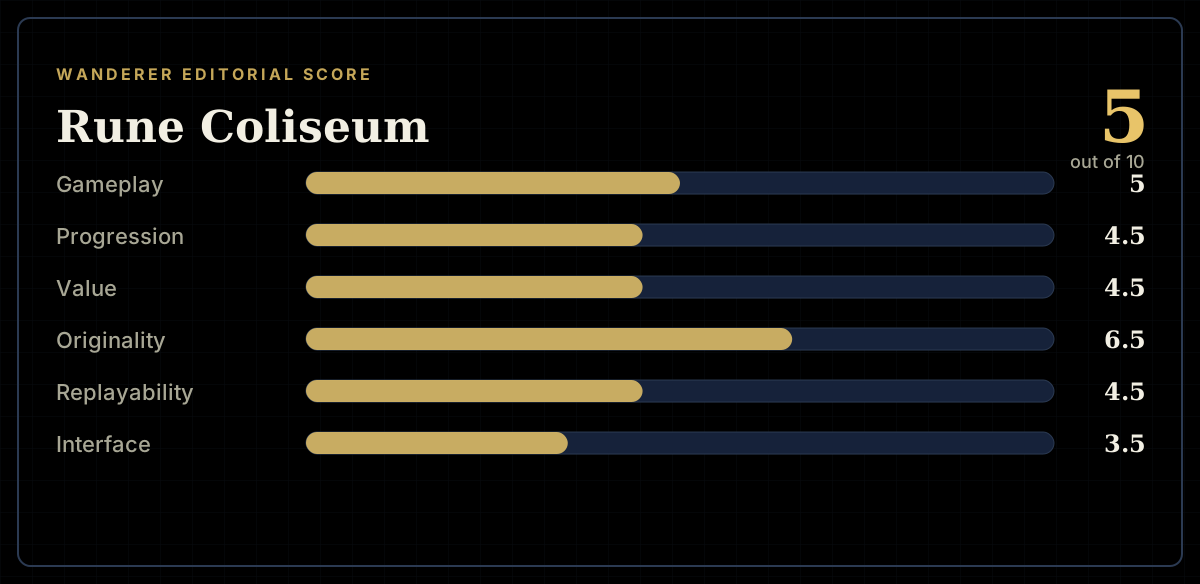
How the review scores each part of the gameWanderer Editorial -
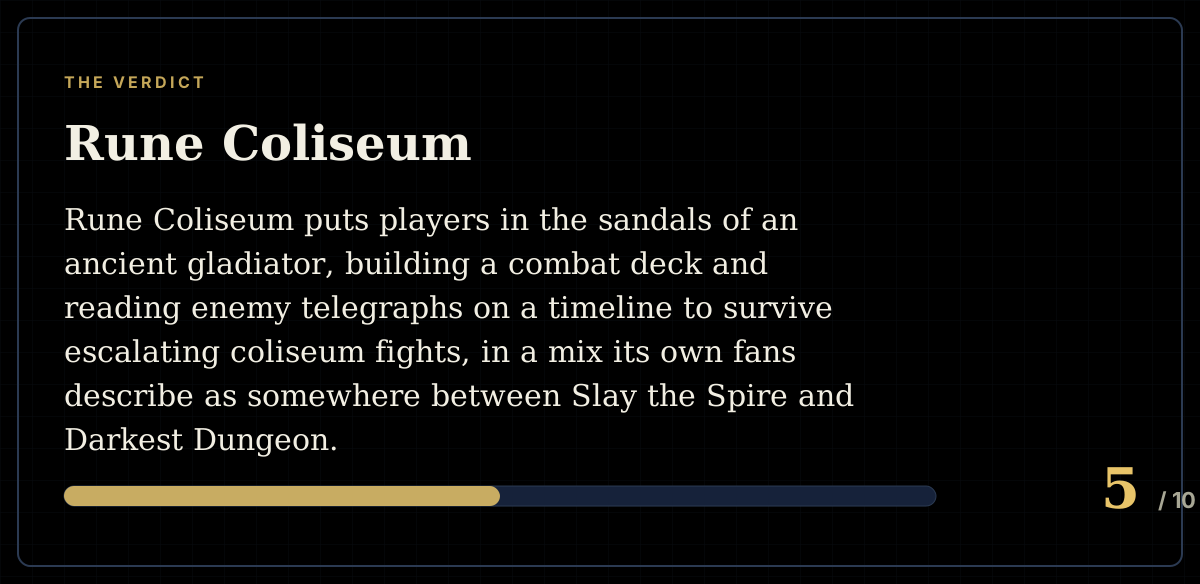
The short versionWanderer Editorial