Game review
10,000,000
6.5 / 10
- Developer
- EightyEightGames
- Publisher
- EightyEightGames
- Released
- 15 January 2013
- Platforms
- Windows, macOS
- Genre
- Match-3 RPG
- Monetisation
- One-time premium purchase; no DLC, no in-app purchases on the PC release
- Players
- Single-player only; no online, co-op or PvP modes
The short version
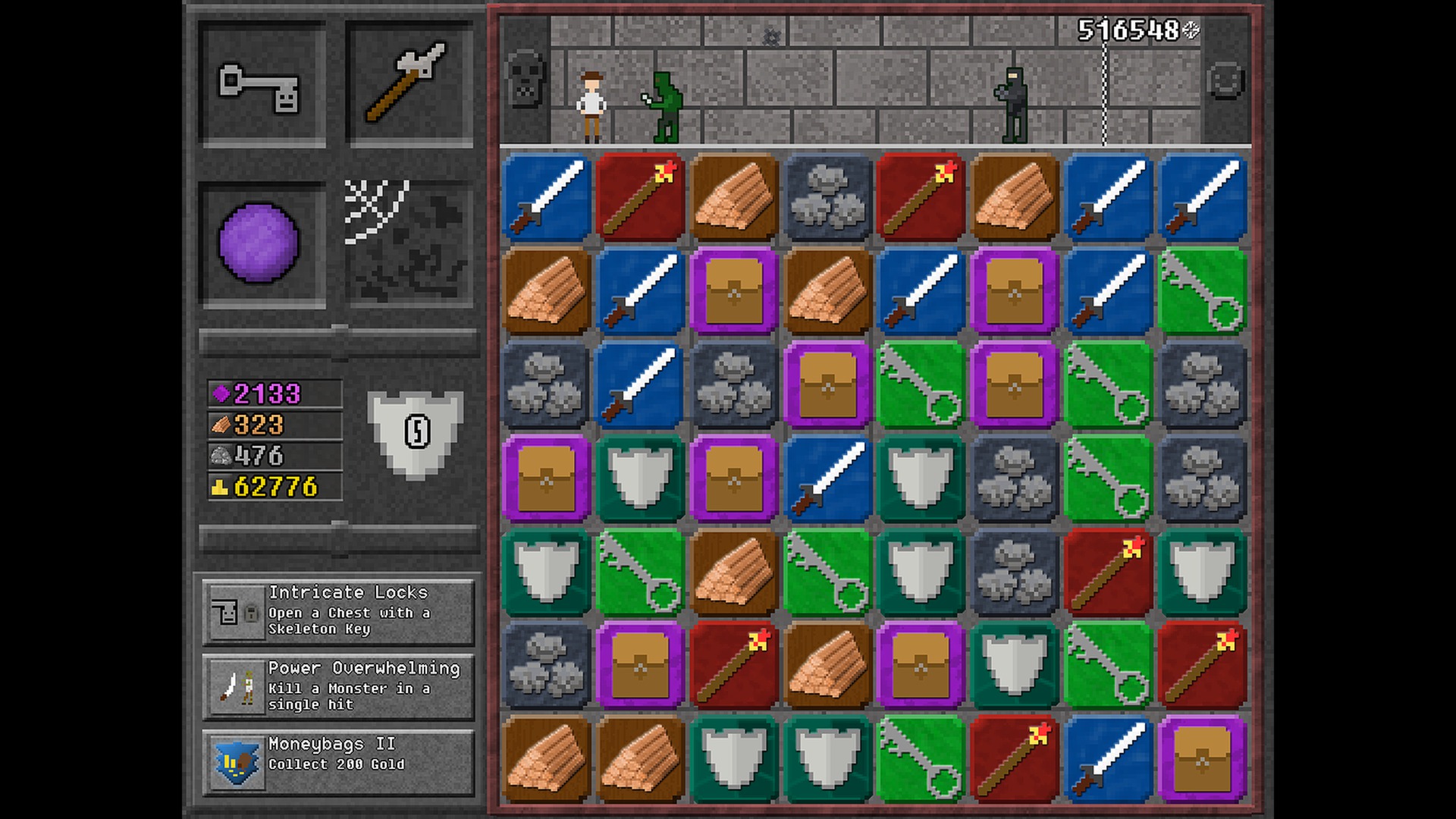
10,000,000 takes a Bejeweled-style match-3 board and turns each swipe into an action a dungeon-crawling character performs in real time above it — matching swords to attack, keys to unlock doors, wood and stone to fund a home-base upgrade system between runs. It's a genuinely distinctive mashup that reviewers, including a wave of newer players discovered through streamers years after release, consistently praise for its "just one more run" pull and its retro chiptune presentation.
A real, independently corroborated critical thread argues the puzzle side leans too heavily on what tiles the board happens to generate rather than deliberate strategy, especially as difficulty rises — several reviewers describe fast, less considered matching outperforming careful planning, which cuts against the tactical depth the RPG systems otherwise promise.
Biggest strengths
- A genuinely inventive structural mashup — match-3 puzzling directly tied to real-time dungeon-crawling actions — that reviewers consistently say has no close equivalent elsewhere in the genre
- Real RPG progression underneath the puzzle layer: equipment upgrades, skills, and a home-base building system that persists and improves between runs
- Well-regarded retro chiptune music and pixel art that reviewers cite specifically as part of the game's charm rather than an afterthought
Biggest weaknesses
- A specific, independently corroborated complaint that high-difficulty outcomes rely heavily on what tiles the board happens to generate, with multiple reviewers arguing fast, less deliberate matching beats careful planning — a tension with the tactical depth the RPG systems otherwise suggest
- Several reviewers describe the tutorial and in-game guidance as minimal, with key information flashing by too quickly to properly absorb before play begins
- A recurring late-game friction point: some currencies become largely useless once their associated upgrades are maxed out, leaving players with resources they can no longer meaningfully spend
Who it's for: Match-3 fans looking for a genre twist with real (if light) RPG progression, and anyone who enjoys short, replayable "one more run" games. Less suited to players who want match-3 puzzling to reward careful planning over fast reflexes, or who dislike a system that leans on randomness at higher difficulty.
Our recommendation: An easy, cheap recommendation for match-3 fans wanting something with more structure than usual — just accept going in that speed and luck matter as much as, or more than, careful tile selection once things get harder.
6.5 / 10
10,000,000's pitch sounds almost too simple to work at first glance, and yet it clearly does: take a standard match-3 board, and make every swipe correspond to a real action a character performs in a scrolling dungeon above it — matching swords to swing at monsters, keys to pop locks, food to heal, wood and stone to fund upgrades back at a home base between runs. It shouldn't hang together as cleanly as it does, and more than a decade after its original 2013 release, reviewers — including a wave who found it fresh through streaming discovery rather than at launch — consistently describe it as exactly the kind of inventive genre mashup that earns its Very Positive score honestly.
A genre mashup that actually works
What reviewers praise most specifically is how directly the puzzle and RPG halves feed each other: matching enough sword tiles in a row does real, escalating damage; a locked chest genuinely requires racing to match enough key tiles before time runs out; and the resources gathered along the way feed a real, persistent home-base upgrade system that carries meaningfully between runs. One detailed review sums up the appeal precisely — "all the features actually mold together quite well to create a strange but fun experience" — and the retro chiptune soundtrack and pixel art draw consistent, specific praise as part of that overall charm rather than being treated as incidental packaging.
The luck-versus-skill tension
Set against that praise is a real, independently corroborated critical thread worth taking seriously. Multiple separate reviewers make essentially the same argument: as difficulty rises, outcomes depend more on what tiles the board happens to generate than on deliberate, considered play. "It annoyingly relies on luck and what tiles the game decides to generate more than anything else," one review states plainly; a separate reviewer goes further, arguing that "finding matches as fast as possible is a better strategy than carefully picking out the ones that will actually help you in a given scenario" — a direct claim that speed beats strategy, which cuts against the tactical depth the game's RPG-adjacent systems otherwise imply. This isn't one frustrated player's account; it recurs closely enough across independent reviews to treat as an accurate description of how the puzzle scales at higher difficulty, not a matter of one player's bad luck.
Friction in the late game
A smaller but recurring complaint concerns the back half of a playthrough specifically: once a player has maxed out the upgrades tied to a given resource, that currency becomes effectively useless, with nothing left to spend it on — a specific structural gap several reviewers flag independently as deflating momentum right when a run should be building toward its climax. Combined with reviewers' consistent notes that the in-game tutorial and contextual help move past too quickly to properly absorb, newer players face a real early learning curve without much in-game support to smooth it.
The meta-layer that gives runs a reason to matter
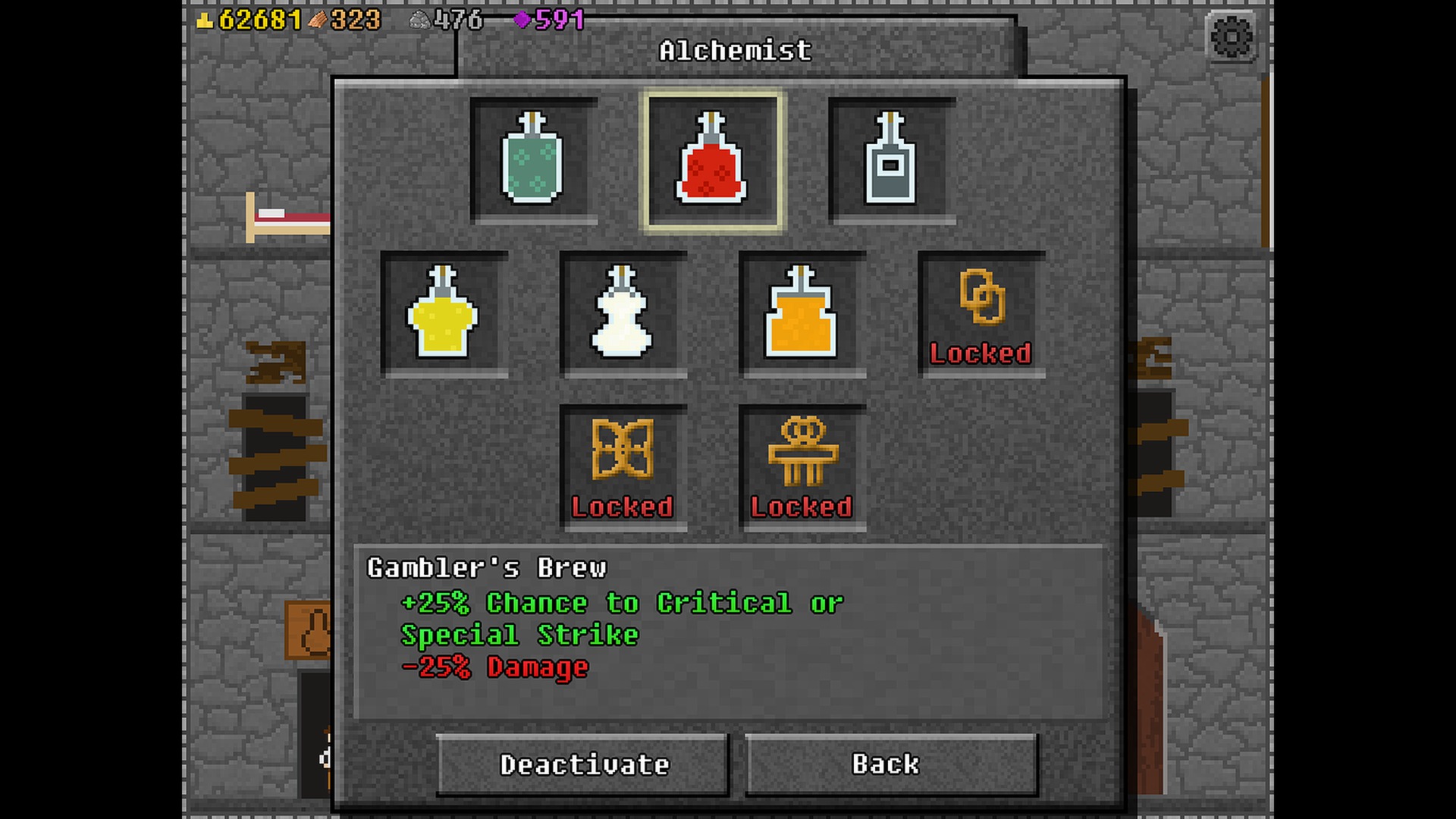
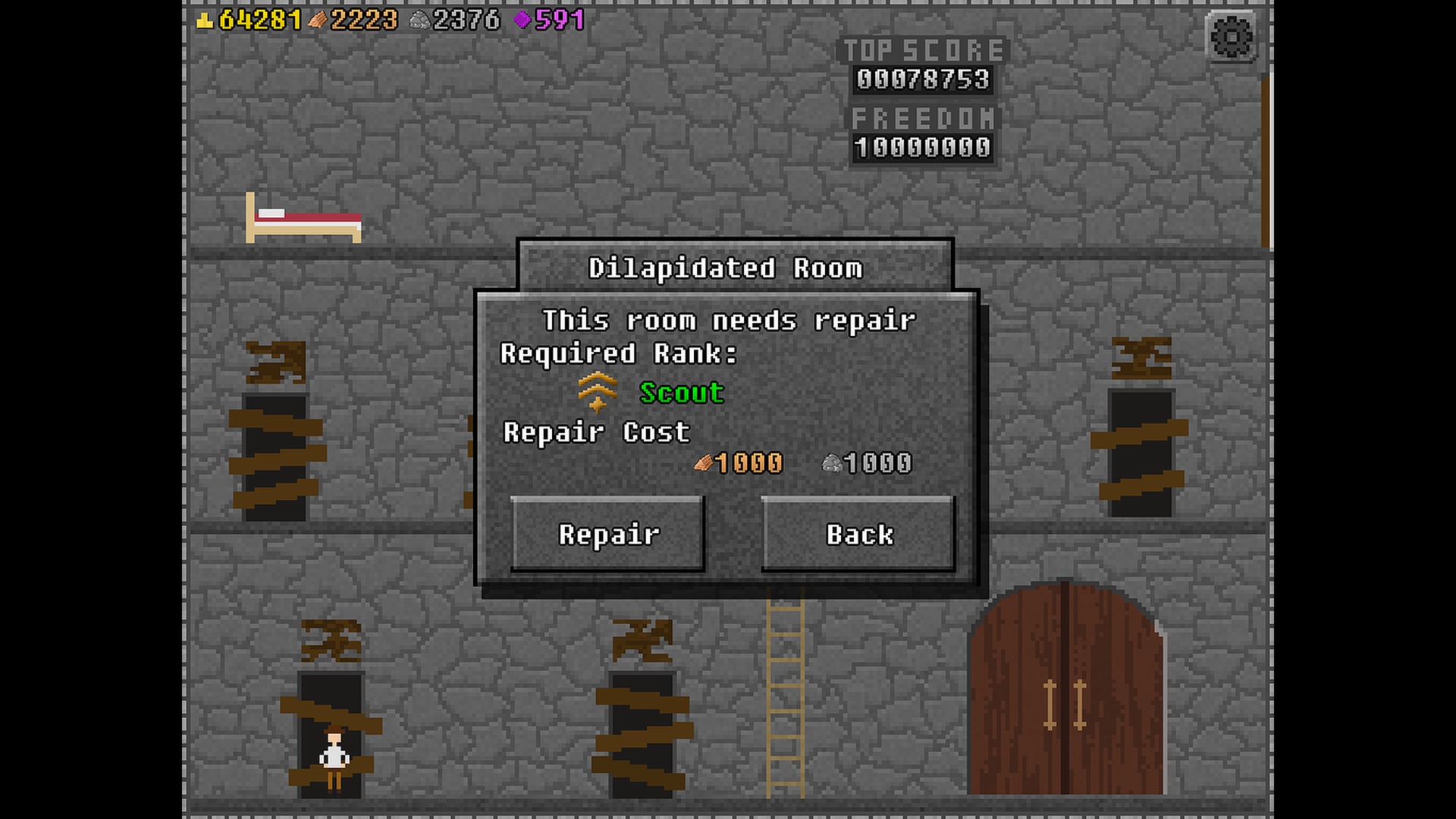
What separates 10,000,000 from a pure high-score puzzle game is its home-base layer: wood and stone gathered mid-run fund persistent upgrades to buildings back at the player's base, which in turn unlock new equipment, skills and starting bonuses for the next attempt. Reviewers describe this as the thing that turns an otherwise disposable puzzle loop into something with real forward momentum — a bad run still feeds the next one, softening the sting of the very randomness some reviewers otherwise criticize. It's a modest system by RPG standards, but it's specific and well-integrated enough that several reviewers cite it directly as the reason the game held their attention past a first sitting, rather than the puzzle mechanics alone.
A second life through streaming
Worth noting on its own: several reviewers specifically credit discovering 10,000,000 years after release through a streamer (Jerma985 comes up by name more than once), rather than through any official marketing push. That's a genuinely organic rediscovery story for a decade-old mobile port, and it speaks to how well the core hook still lands with an audience encountering it completely fresh, with no nostalgia doing any of the work.
What the completion data shows
Steam's achievement data offers a useful, moderate check on how the difficulty curve actually plays out. The easiest tracked milestone sits at a healthy 76.3%, and the decline from there is gradual rather than a hard cliff, bottoming out around 7.6% for the deepest tracked goal. That's a notably gentler curve than several other games covered by this fleet, consistent with reviewers' account of a short, fundamentally approachable game rather than one gated by a punishing wall — which helps contextualize the luck-versus-skill complaint above. The randomness reviewers describe appears to affect how smoothly or impressively a run goes rather than whether most players can finish the game at all, a meaningfully softer version of the "RNG problem" than games where entire runs become genuinely unwinnable.
Where it lands
10,000,000 earns its reputation as a clever, well-executed genre mashup, and its cheap price and short runtime make it an easy recommendation with little real risk attached. The well-corroborated complaint that randomness increasingly outweighs strategy at higher difficulty, alongside real late-game currency and onboarding friction, are worth knowing about honestly rather than treating this as a flawless cult classic — but for the price and the time investment involved, it remains a genuinely inventive way to spend a handful of hours.
Pros and cons
Pros
- A genuinely inventive structural mashup — match-3 puzzling directly tied to real-time dungeon-crawling actions — that reviewers consistently say has no close equivalent elsewhere in the genre
- Real RPG progression underneath the puzzle layer: equipment upgrades, skills, and a home-base building system that persists and improves between runs
- Well-regarded retro chiptune music and pixel art that reviewers cite specifically as part of the game's charm rather than an afterthought
- Extremely cheap and short enough to complete in a handful of hours, making it an easy, low-risk purchase reviewers describe as exceeding their expectations for the price
- Found a genuine second wind years after release through streaming discovery (multiple reviewers specifically mention finding the game through streamer Jerma985), a real, organic audience the developer didn't have to manufacture
Cons
- A specific, independently corroborated complaint that high-difficulty outcomes rely heavily on what tiles the board happens to generate, with multiple reviewers arguing fast, less deliberate matching beats careful planning — a tension with the tactical depth the RPG systems otherwise suggest
- Several reviewers describe the tutorial and in-game guidance as minimal, with key information flashing by too quickly to properly absorb before play begins
- A recurring late-game friction point: some currencies become largely useless once their associated upgrades are maxed out, leaving players with resources they can no longer meaningfully spend
- The core loop is acknowledged by its own fans as fundamentally repetitive by design — a "skinner box," as one reviewer bluntly puts it — which some find genuinely relaxing in short sessions and others find hollow over longer play
- This is an acknowledged mobile port, and while reviewers say it's been adapted well for PC, it doesn't offer the deeper systems a purpose-built PC RPG in this vein might
Screenshots
-
10,000,000Image: EightyEightGames via Steam -
10,000,000Image: EightyEightGames via Steam -
10,000,000Image: EightyEightGames via Steam -
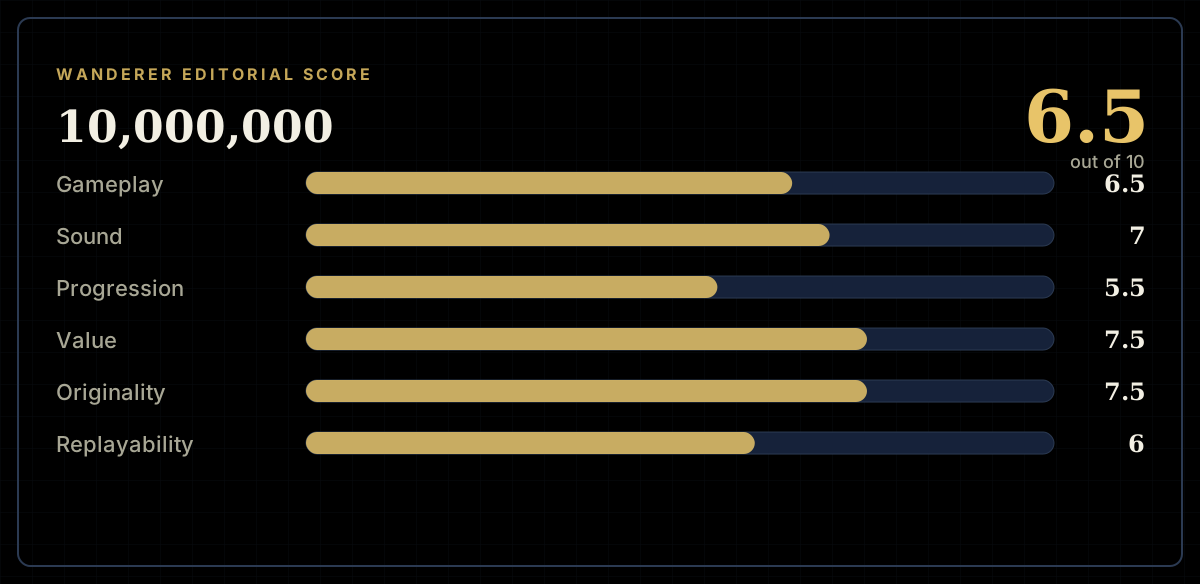
How the review scores each part of the gameWanderer Editorial -
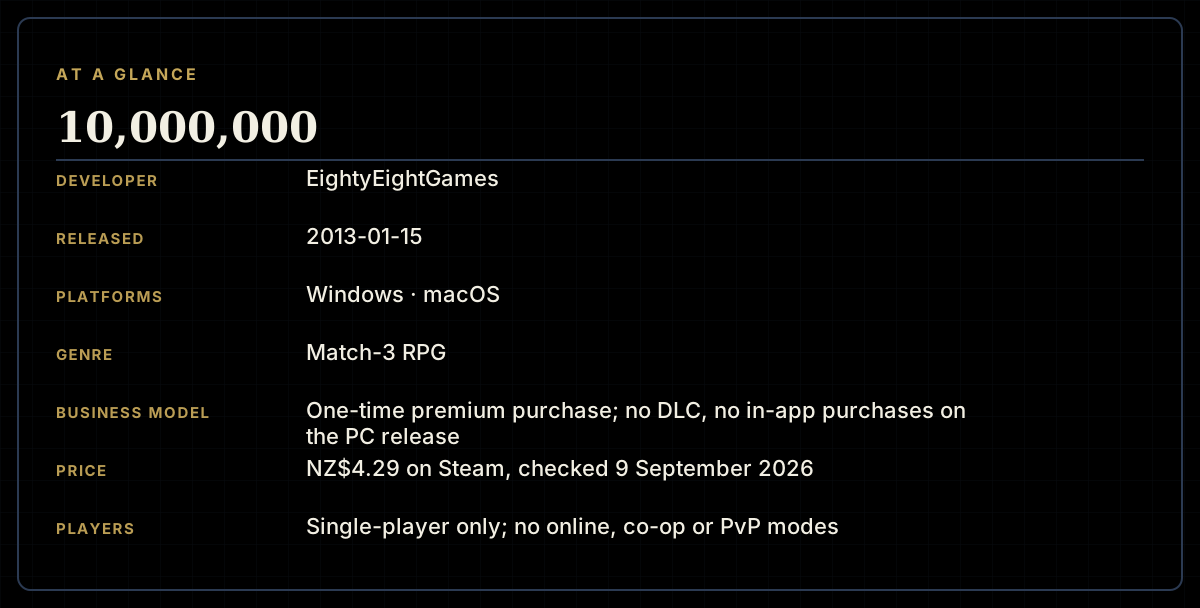
The specsWanderer Editorial -
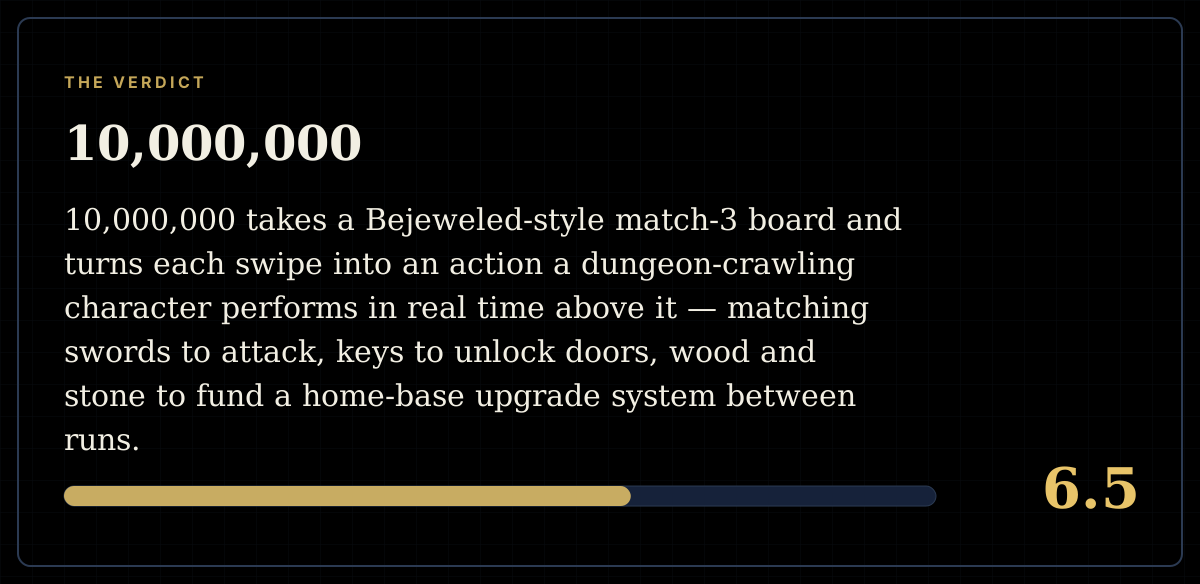
The short versionWanderer Editorial