Game review
Legend of Grimrock
8 / 10
- Developer
- Almost Human Games
- Publisher
- Almost Human Games
- Released
- 11 April 2012
- Platforms
- Windows, macOS, Linux
- Genre
- Dungeon Crawler RPG
- Monetisation
- One-time premium purchase; no DLC, no in-app purchases
- Players
- Single-player only; no online, co-op or PvP modes
The short version
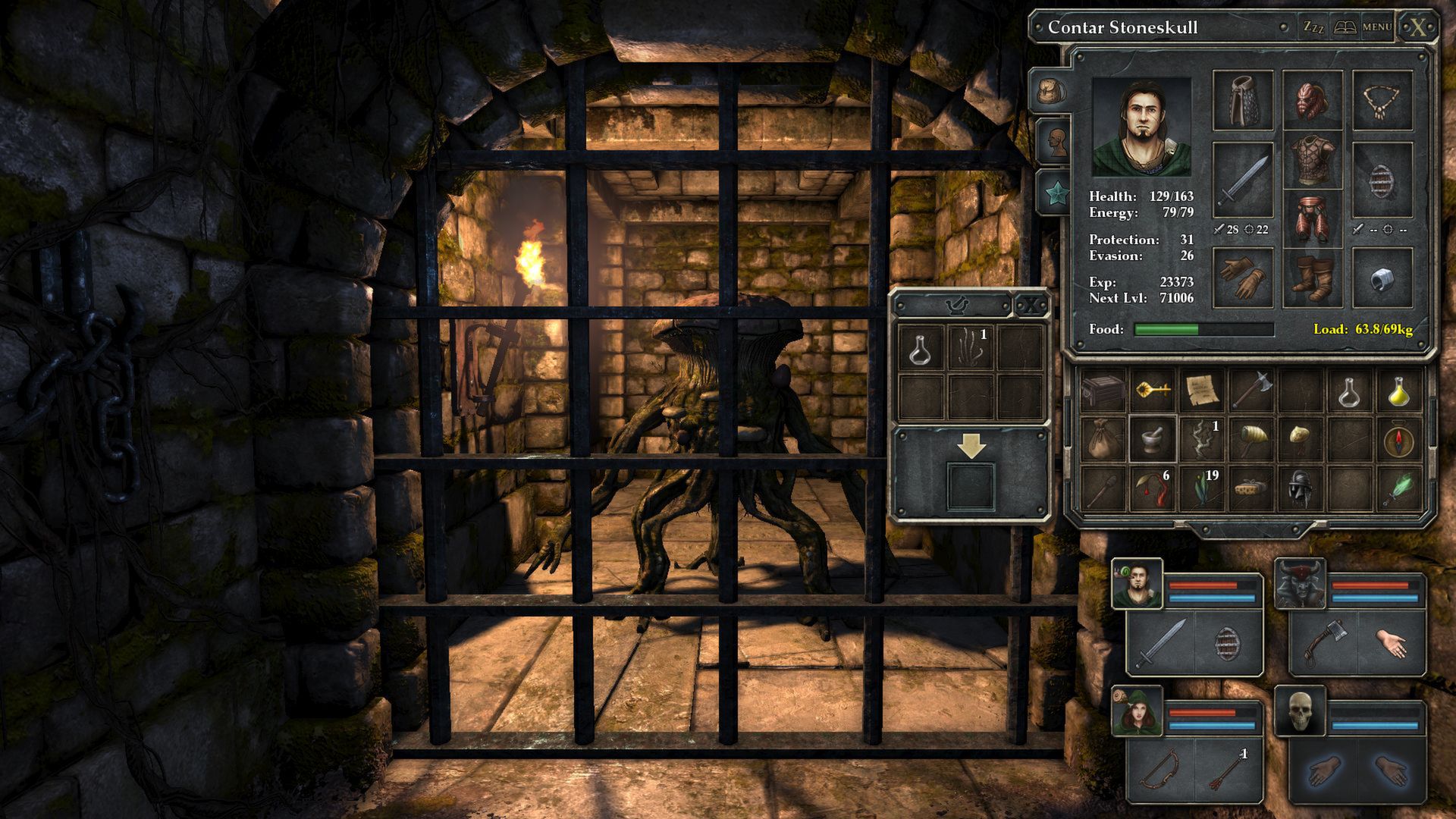
Legend of Grimrock revives the grid-based, first-person dungeon crawler format of Dungeon Master and Eye of the Beholder almost note for note: four convicts thrown into a mountain's depths, mapping their own way through tile-based corridors, unforgiving puzzles, and genuinely punishing combat encounters. Reviewers consistently credit it with helping bring an entire dormant subgenre back to relevance, and its atmosphere, puzzle design and old-school difficulty are praised with real specificity rather than generic nostalgia.
A real, detailed critical minority — often genre veterans with decades of history in exactly this style of game — makes a specific case against one core decision: real-time combat. Multiple reviewers describe fights devolving into a frantic scramble to click every available action rather than the careful, turn-based tactical analysis the genre's classics were built around. It's a legitimate design disagreement rather than a flaw in execution, and worth knowing which side of that debate you're likely to land on before buying.
Biggest strengths
- A meticulously crafted revival of the grid-based dungeon crawler, widely credited by reviewers with reigniting commercial interest in a subgenre that had been dormant for years
- Genuinely challenging, fair puzzle design that multiple reviewers compare favorably to first-person Zelda-style environmental logic rather than arbitrary difficulty
- A strong, consistently praised sense of atmosphere and dread, backed by well-regarded sound design and music
Biggest weaknesses
- A specific, detailed and recurring critique from reviewers with real history in the genre's classics: real-time combat is described as turning tactical encounters into a frantic "click everything" scramble rather than the careful, considered decision-making Dungeon Master and Eye of the Beholder built their reputations on
- The narrative is intentionally minimal, which several reviewers note explicitly as a deliberate throwback rather than a shortcoming, but it does mean players expecting a strong story-driven RPG will find little here
- Achievement data confirms a genuinely steep difficulty ceiling — full-game hard-mode completion and full-secret discovery both sit under 4% of the tracked playerbase, useful context for anyone expecting a gentler modern pace
Who it's for: Fans of old-school, unforgiving dungeon crawlers who want genuine puzzle-solving and mapping challenge without hand-holding. Less suited to players who specifically want turn-based tactical combat in the Dungeon Master/Eye of the Beholder tradition, or anyone put off by real punishing difficulty.
Our recommendation: An easy recommendation for anyone nostalgic for the genre's golden age or curious what all the fuss was about — just go in aware that its real-time combat is a deliberate, debated choice, not an oversight.
8 / 10
Before Legend of Grimrock, the grid-based, first-person dungeon crawler — the format Dungeon Master and Eye of the Beholder built their reputations on decades earlier — had been commercially dormant for years. Almost Human Games' pitch was almost defiantly old-fashioned: four convicts, a 2x2 party formation, hand-drawn maps, and a mountain full of unforgiving puzzles and monsters, built with just enough modern polish to feel current without changing the format's fundamentals. Reviewers don't just enjoy the result — several explicitly credit it with proving there was still a real audience for this exact style of game, with one pointing directly to Ubisoft's later Might & Magic X: Legacy as evidence the genre's commercial revival traces back to this specific release.
A faithful, meticulously built throwback
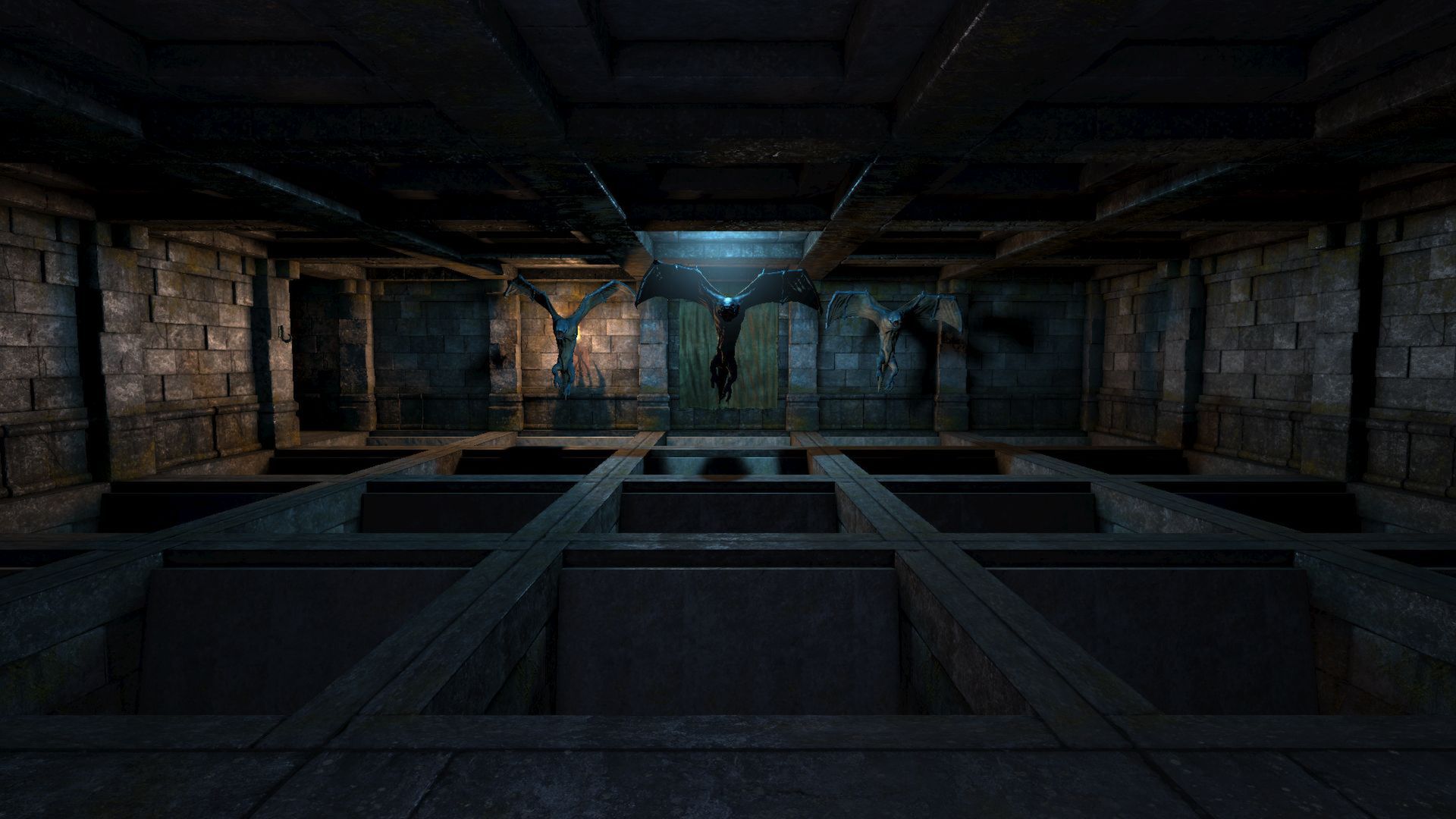
What earns Legend of Grimrock its reputation is how specifically its praise is worded rather than just generic nostalgia. Reviewers repeatedly single out the puzzle design as fair but genuinely demanding, several comparing the environmental logic favorably to first-person Zelda rather than arbitrary old-school obtuseness. The atmosphere and sound design draw consistent, specific praise for building real dread as the party descends deeper into the mountain, and multiple reviewers note approvingly that the game offers no hand-holding at all — you're dropped in and expected to map, explore and survive largely on your own instincts, exactly as the genre's classics did.
The real-time combat debate
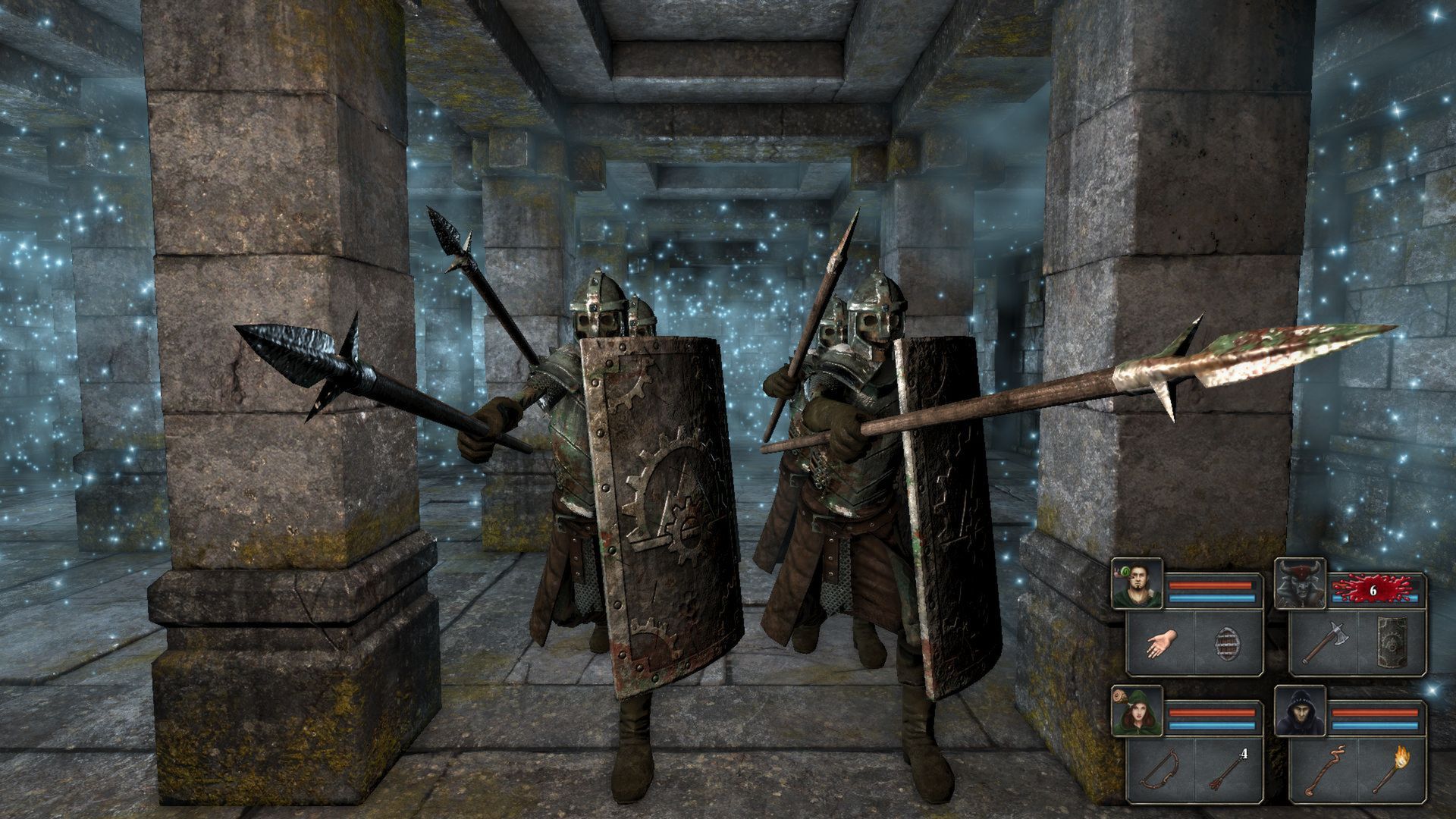
Set against that praise is a real, detailed critical minority making a specific, well-informed argument rather than a vague complaint. Written by reviewers who identify themselves as longstanding fans of exactly the games Grimrock is reviving — Lands of Lore, Eye of the Beholder, Xeen — the core objection is combat: rather than the turn-based, carefully considered tactical decisions those classics were built around, Grimrock uses real-time combat, which one detailed review describes as devolving into a scramble to "CLICK ALL THE THINGS," leaving the player feeling cheated by fast-moving encounters rather than tested by them. A second, separately written critical review makes essentially the same case more bluntly, arguing the game "falls short of its predecessors" specifically because "there is no time to make a proper analysis of the situation" mid-fight the way the genre's turn-based originals allowed.
This is worth taking seriously as a legitimate design disagreement rather than dismissing it as one camp simply preferring the old way for its own sake. The reviewers making this argument aren't complaining that the game is too hard — several explicitly praise the game's difficulty elsewhere in the same reviews — they're arguing that real-time pacing specifically undercuts the kind of deliberate, tactical thinking the genre's puzzle-and-combat design otherwise seems built to reward. It's a genuine tension in the game's core design, not a bug, and it's the single most-argued point across this review sample by a wide margin.
Difficulty that holds up under scrutiny
Steam's own achievement data backs up just how punishing this game actually is by design. While early-game milestones sit at a healthy 40-65% of the tracked playerbase, full completion on hard difficulty sits at just 2.4%, and finding every secret in the game sits at 2%. That's a genuinely steep curve even by old-school standards, and it corroborates reviewers' accounts of a game that takes its "no hand-holding" ethos seriously enough that most players who buy it never see everything it has to offer — which, per the reviews praising that exact quality, appears to be entirely intentional rather than an oversight.
A small team, a focused release, and a real legacy
Legend of Grimrock's own post-launch history is sparse by design — an OS/Linux compatibility pass in 2015 and little else beyond that, reflecting a small, focused studio rather than an ongoing live-service commitment. The developer went on to release a well-regarded direct sequel, Legend of Grimrock 2, in 2014, continuing the same format rather than pivoting away from it. For a genre revival this influential, that's a modest but coherent aftermath: one focused, meticulously crafted game, a direct sequel building on the same idea, and a documented ripple effect on the wider genre that reviewers point to explicitly rather than merely implying.
A minimal story reviewers treat as correct, not lacking
Unlike most modern RPGs, Legend of Grimrock spends almost no time on narrative — the four convicts' backstory and the mountain's history are conveyed mostly through environmental notes and item descriptions rather than any dialogue system or cutscenes. Several reviewers flag this explicitly, and the framing is consistently the same: this is a deliberate throwback to how the genre's originals worked, not a missing feature. One detailed review describes the game as "a certain game of twenty years ago, dressed in modern clothes," specifically praising the choice to "leave completely untouched the core of the game, using new technology only where it is necessary." For players coming from modern, story-forward RPGs, that minimalism is worth setting expectations around directly — this is a game about mapping, puzzle-solving and survival first, with narrative functioning as background texture rather than a driving pull.
Where it lands
Legend of Grimrock succeeds at exactly what it set out to do: prove a decades-dormant genre still had real commercial and creative life in it, executed with a level of atmosphere and puzzle-design craft that earns its Very Positive reputation honestly. The real-time combat debate among its most knowledgeable critics is legitimate and worth weighing before buying, but it's a matter of design philosophy rather than a flaw in execution, and the achievement data confirms the game's punishing difficulty is exactly the throwback experience it promises rather than an accident.
Pros and cons
Pros
- A meticulously crafted revival of the grid-based dungeon crawler, widely credited by reviewers with reigniting commercial interest in a subgenre that had been dormant for years
- Genuinely challenging, fair puzzle design that multiple reviewers compare favorably to first-person Zelda-style environmental logic rather than arbitrary difficulty
- A strong, consistently praised sense of atmosphere and dread, backed by well-regarded sound design and music
- Real, punishing old-school difficulty that rewards careful resource management and mapping, confirmed by achievement data showing very few players complete the game on hard difficulty or find every secret
- No hand-holding or excessive tutorializing — reviewers describe being able to jump straight in and start genuinely exploring from the first few minutes
Cons
- A specific, detailed and recurring critique from reviewers with real history in the genre's classics: real-time combat is described as turning tactical encounters into a frantic "click everything" scramble rather than the careful, considered decision-making Dungeon Master and Eye of the Beholder built their reputations on
- The narrative is intentionally minimal, which several reviewers note explicitly as a deliberate throwback rather than a shortcoming, but it does mean players expecting a strong story-driven RPG will find little here
- Achievement data confirms a genuinely steep difficulty ceiling — full-game hard-mode completion and full-secret discovery both sit under 4% of the tracked playerbase, useful context for anyone expecting a gentler modern pace
- A sparse post-launch update history (an OS/Linux compatibility pass in 2015, little else) reflects a small, focused team rather than an ongoing live-service game, worth knowing for anyone expecting continued content
Screenshots
-
Legend of GrimrockImage: Almost Human Games via Steam -
Legend of GrimrockImage: Almost Human Games via Steam -
Legend of GrimrockImage: Almost Human Games via Steam -
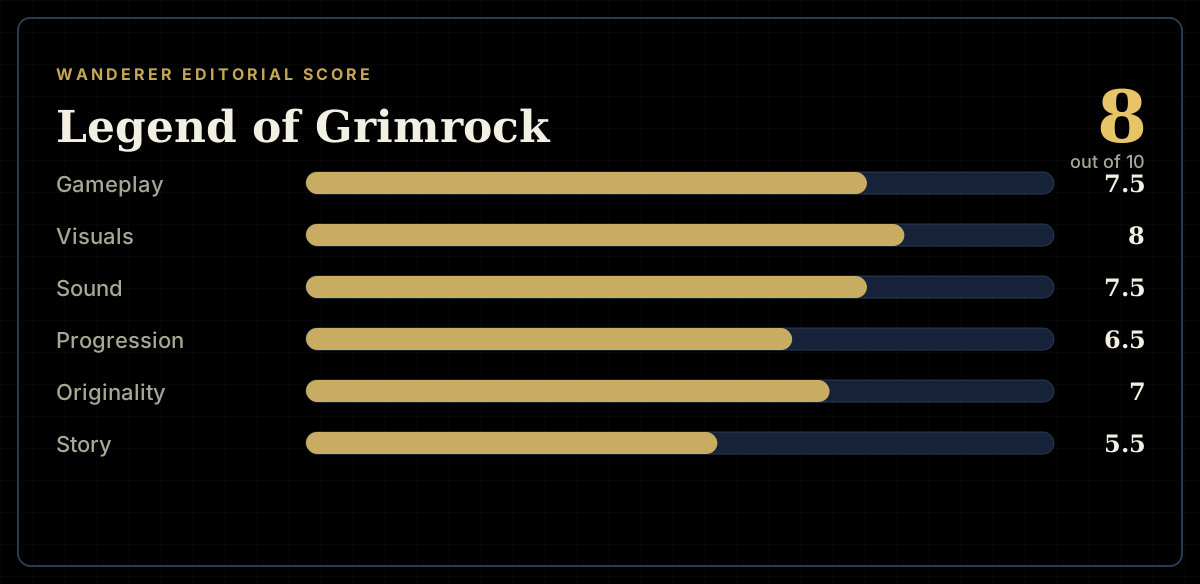
How the review scores each part of the gameWanderer Editorial -
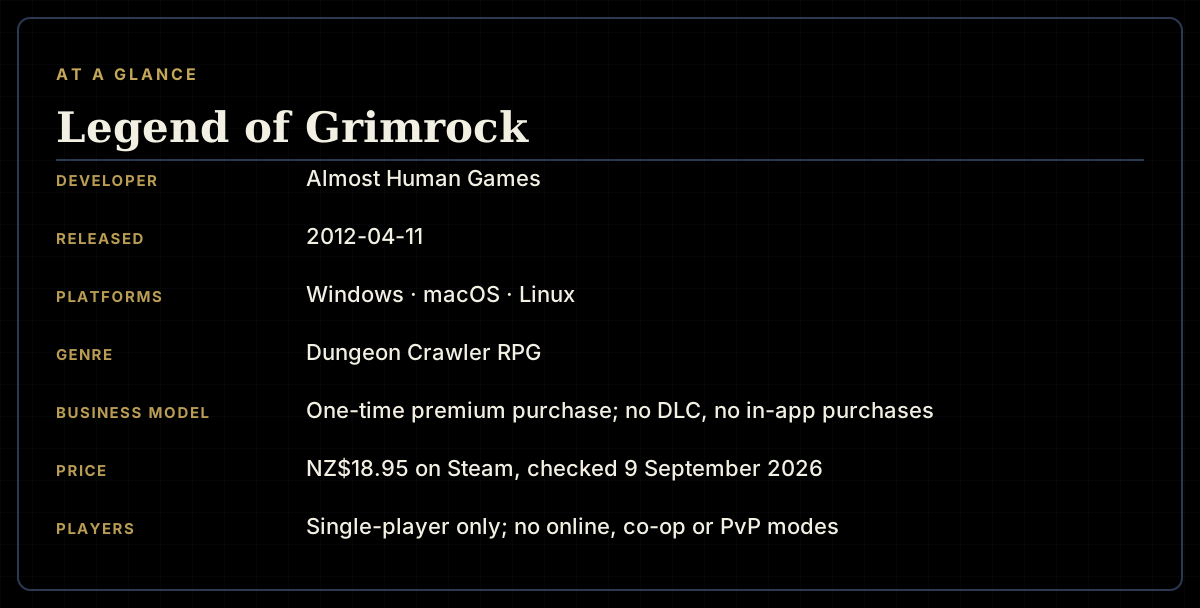
The specsWanderer Editorial -
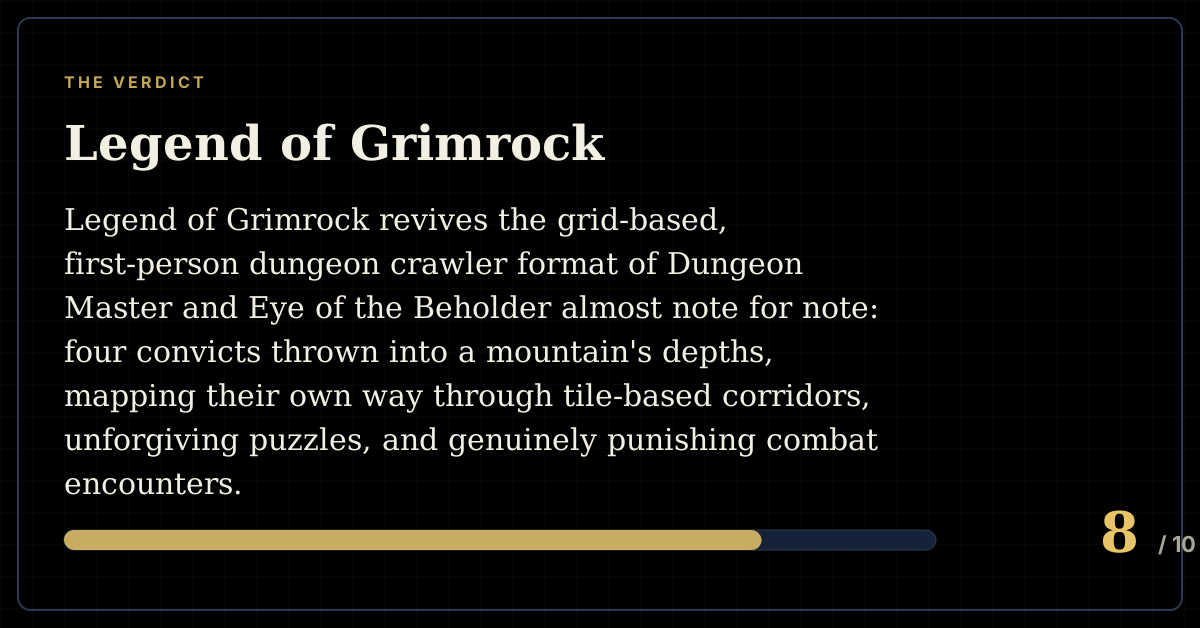
The short versionWanderer Editorial