Game review
Abyss Bistro
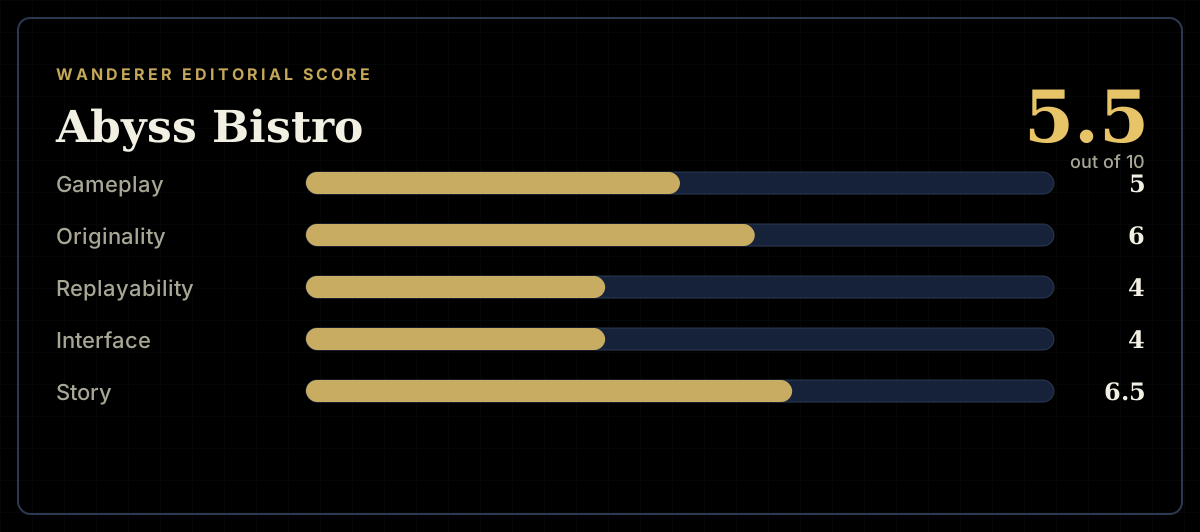
5.5 / 10
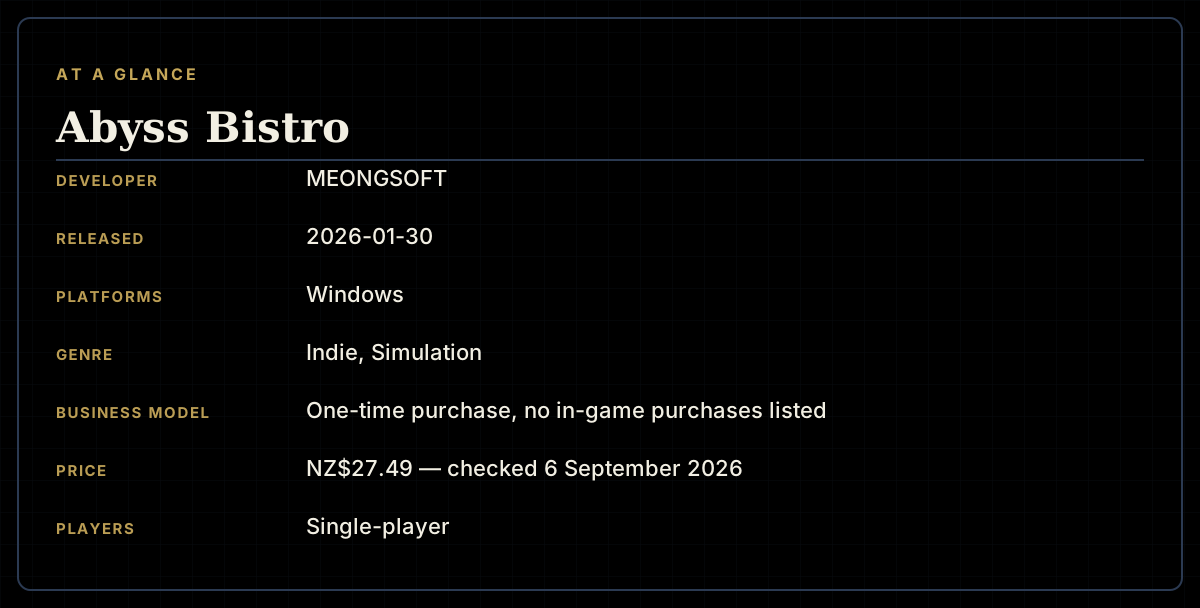
- Developer
- MEONGSOFT
- Publisher
- MEONGSOFT
- Released
- 30 January 2026
- Platforms
- Windows
- Genre
- Indie, Simulation
- Monetisation
- One-time purchase, no in-game purchases listed
- Players
- Single-player
The short version
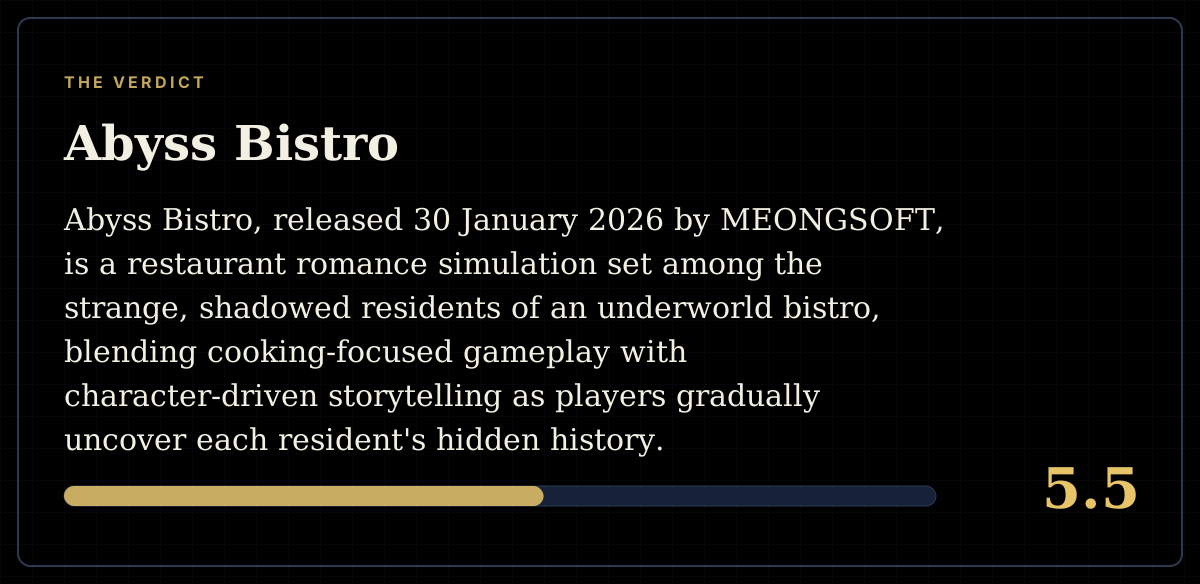
Abyss Bistro, released 30 January 2026 by MEONGSOFT, is a restaurant romance simulation set among the strange, shadowed residents of an underworld bistro, blending cooking-focused gameplay with character-driven storytelling as players gradually uncover each resident's hidden history. It sits Positive with a small, entirely favourable sample of 7 reviews, and reading through all of them turns up a consistent, specific pattern rather than uncritical praise. Every reviewer in this sample praises the art, music and character writing as genuine strengths, with more than one comparing the concept favourably to a specific blend of cooking-game mechanics and otome-style character writing. Set against that praise, the same reviewers independently and repeatedly flag the core gameplay loop as overlong and repetitive, with several specifically citing a 30-in-game-day structure that outlasts the restocking-and-serving mechanics' ability to stay engaging. Multiple reviewers separately note the game markets itself with dating-sim framing that the actual romance content doesn't fully deliver on, and rough, occasionally unclear translation recurs across several accounts.
Biggest strengths
- Character writing and design draw consistent, specific praise across every reviewer in this sample, with multiple reviewers describing the cast as genuinely intriguing and well realised
- Art and music direction draw enthusiastic, repeated praise, with reviewers specifically calling the visual presentation beautiful and the overall aesthetic a strong hook independent of any gameplay complaints
- The specific hybrid concept of cooking-game mechanics combined with narrative, otome-adjacent character writing draws praise as a distinctive combination reviewers say they hadn't encountered in quite this form elsewhere
Biggest weaknesses
- Multiple reviewers independently flag the core gameplay loop as overlong, specifically citing a 30-in-game-day structure that outlasts the restocking-and-serving mechanics' ability to stay engaging, with more than one suggesting a shorter 15-to-20-day structure would have suited the content better
- Several reviewers report the actual romance content falls short of what the game's dating-sim framing and marketing implies, with one detailed reviewer specifically stating they wouldn't call it a dating sim given how little of the promised romance is actually present
- Rough or unclear translation recurs across multiple reviews, with reviewers describing noticeable typos and odd phrasing throughout the game's text despite otherwise praising the underlying writing quality
Who it's for: Fans of character-driven cooking sims and narrative-focused indie games who value strong art and writing over deep romantic content or an especially varied core gameplay loop.
Our recommendation: Worth it for the art, music and character writing if that's specifically what draws you in; go in with tempered expectations about romance depth and be prepared for the core restocking-and-serving loop to feel repetitive well before the full 30-day structure concludes.
5.5 / 10
Introduction
Abyss Bistro, released 30 January 2026 by MEONGSOFT, sets players in charge of a restaurant serving the strange, shadowed residents of an underworld bistro, gradually uncovering each character's hidden history through cooking-focused gameplay and character-driven storytelling. It sits Positive with a small, entirely favourable sample of 7 reviews, and reading through every one of them reveals something more specific and useful than uncritical praise: a consistent, self-aware pattern of genuine strengths paired with equally genuine, specifically named limitations.
Genuinely strong writing, art and character design
The clearest, most consistent praise across this small sample concerns presentation and writing. Every reviewer specifically praises the art and music, with more than one describing the visual direction as beautiful independent of any other complaints they raise. Character writing draws its own consistent, enthusiastic praise, with reviewers describing the cast as genuinely intriguing and well realised. More than one reviewer specifically frames the game's hybrid concept — cooking-sim mechanics fused with otome-adjacent character writing — as a distinctive combination they hadn't encountered in quite this form elsewhere, comparing it directly to a blend of Battle Chef Brigade's cooking gameplay and traditional otome romance structure.
A core loop that outlasts its own content
Set against that praise, this sample's most consistent, specific complaint concerns pacing. Multiple reviewers independently flag the game's 30-in-game-day structure as simply too long for what the restocking-and-serving core loop can sustain, with more than one suggesting a shorter 15-to-20-day structure would have suited the actual content better. This isn't a vague "it gets repetitive" complaint — reviewers specifically connect the fatigue to structural pacing, noting most of the meaningful character interaction happens outside the restaurant loop entirely, on designated days off, leaving the in-restaurant portion feeling like a repeated chore between the story beats players actually came for.
Romance content that doesn't match its own marketing
A separate, specific complaint concerns the gap between the game's dating-sim framing and what it actually delivers. Multiple reviewers report the romance content falls short of expectations set by that framing, with one detailed reviewer stating directly they wouldn't classify it as a dating sim given how little of the promised romantic content is actually present relative to the genre label attached to it. This review treats this as a specific, checkable marketing-expectations gap rather than a complaint about the writing quality itself, since the same reviewers making this point still separately praise the character writing on its own terms.
Rough localisation and missing onboarding
Beyond structural and content complaints, this review found repeated, smaller technical issues. Rough or unclear translation recurs across multiple reviews, with reviewers describing noticeable typos and odd phrasing throughout the game's text despite otherwise praising the underlying writing. At least one detailed reviewer separately reports a lack of adequate tutorials, leaving core systems unclear at the outset, and specifically criticises a sliding minigame mechanic as difficult to execute consistently, requiring precise timing and ingredient anticipation that proved frustrating rather than skillfully challenging.
Reading a small, unanimous sample with appropriate care
With only seven reviews, all positive, this review treats this score as an early snapshot rather than a settled verdict, and would revisit it as more players weigh in. That said, the specific complaints documented above carry real weight despite the small sample size, precisely because they're volunteered by reviewers who are, in every case, still recommending the game overall. A cluster of critical, structurally specific complaints appearing consistently within an otherwise uniformly positive sample is a more informative signal than either extreme alone — it suggests this game's actual strengths and actual weaknesses are both genuine and stable enough that seven independent players landed on nearly identical observations without prompting each other. This review expects the broader pattern described here — strong writing and presentation wrapped around an overlong, romance-light core loop — to hold up reasonably well as the review base grows, though the specific numbers here should be treated as provisional.
Where the game's two halves pull in different directions
It's worth naming directly what this review sees as the central tension running through every account in this sample: Abyss Bistro reads as a narrative game wearing a management-sim structure it doesn't fully need. The parts every reviewer praises — character writing, art, the slow reveal of each resident's hidden story — happen primarily outside the restaurant loop, on designated days off, while the restaurant loop itself is the part every reviewer separately flags as repetitive and overlong. That's a structural mismatch between where the game's actual appeal lives and how much of the total playtime is spent servicing a secondary system built to house it. A future patch or sequel that either meaningfully deepened the restaurant mechanics or simply reduced their footprint relative to the character content would likely resolve the majority of this sample's complaints at once, since none of them target the writing or art directly.
Final Verdict
Abyss Bistro succeeds specifically at what every reviewer in this small sample consistently praises: genuinely strong art, music and character writing built around a distinctive cooking-sim-meets-otome concept. What holds this score down is an equally consistent set of specific complaints from those same reviewers — an overlong core loop that outlasts its own content, romance content that undersells its own dating-sim framing, and rough localisation throughout. Worth it for players specifically drawn to strong narrative writing and art who can tolerate a repetitive restaurant loop stretched across more in-game days than the content comfortably supports.
Pros and cons
Pros
- Character writing and design draw consistent, specific praise across every reviewer in this sample, with multiple reviewers describing the cast as genuinely intriguing and well realised
- Art and music direction draw enthusiastic, repeated praise, with reviewers specifically calling the visual presentation beautiful and the overall aesthetic a strong hook independent of any gameplay complaints
- The specific hybrid concept of cooking-game mechanics combined with narrative, otome-adjacent character writing draws praise as a distinctive combination reviewers say they hadn't encountered in quite this form elsewhere
- Several reviewers explicitly state they still recommend the game despite its flaws, citing the writing and characters as strong enough on their own to carry the experience through its more repetitive stretches
Cons
- Multiple reviewers independently flag the core gameplay loop as overlong, specifically citing a 30-in-game-day structure that outlasts the restocking-and-serving mechanics' ability to stay engaging, with more than one suggesting a shorter 15-to-20-day structure would have suited the content better
- Several reviewers report the actual romance content falls short of what the game's dating-sim framing and marketing implies, with one detailed reviewer specifically stating they wouldn't call it a dating sim given how little of the promised romance is actually present
- Rough or unclear translation recurs across multiple reviews, with reviewers describing noticeable typos and odd phrasing throughout the game's text despite otherwise praising the underlying writing quality
- At least one detailed reviewer reports a lack of adequate tutorials, leaving core systems unclear at the outset, and separately notes the cooking gameplay becomes boring once a player has already reached one of the game's endings
- A specific minigame involving a sliding mechanic draws pointed criticism from at least one reviewer as difficult to execute consistently, requiring precise timing and ingredient anticipation that some reviewers found frustrating rather than skillfully challenging
Screenshots
-
Abyss BistroImage: MEONGSOFT via Steam -

Abyss BistroImage: MEONGSOFT via Steam -
Abyss BistroImage: MEONGSOFT via Steam -
How the review scores each part of the gameWanderer Editorial -
The essentials at a glanceWanderer Editorial -
The short versionWanderer Editorial