
Game review
Pixel Cafe
7 / 10
- Developer
- Baltoro Games
- Publisher
- Baltoro Games
- Released
- 30 November 2023
- Platforms
- Windows
- Genre
- Simulation, Time Management, Narrative
- Monetisation
- One-time purchase. No advertisements, no microtransactions.
- Players
- Single-player
The short version
Pixel Cafe pairs a fast, demanding time-management cooking loop — juggling multiple counters, recipes and impatient customers across escalating "day" and much harder "nightmare" night shifts — with a genuinely well-regarded coming-of-age story about the transition from adolescence into adulthood. Released 30 November 2023 by Baltoro Games, it sits Very Positive with English-speaking players, 93.6% across 393 reviews, and multiple reviewers specifically praise the writing as unexpectedly strong for the genre, woven into the gameplay at a pace that respects both halves of the experience. Working against a higher score are three specific, repeated complaints: mouse controls several reviewers say the drag-and-drop mechanics weren't really built for, a slide into repetitive station variety in the back half of the campaign, and difficulty swings some reviewers call artificial rather than earned, particularly on the hardest "nightmare" night levels.
Biggest strengths
- Multiple reviewers single out the story as unusually well written for the genre, describing an emotionally resonant coming-of-age narrative about the transition from adolescence to adulthood that stayed with them well after finishing
- The core time-management loop — juggling multiple counters, recipes and orders under time pressure — is repeatedly praised as satisfying and genuinely challenging, drawing favourable comparisons to Diner Dash and Cook, Serve, Delicious
- The pixel art presentation and soundtrack draw consistent praise across nearly the entire review sample, including from reviewers who are otherwise critical of the difficulty balance
Biggest weaknesses
- Multiple reviewers report the mouse-based drag-and-drop controls feel imprecise, with items sometimes requiring repeated attempts to register correctly — a specific, mechanical complaint rather than a general difficulty gripe, and one that leads several reviewers to recommend a controller instead
- The back half of the campaign is repeatedly described as repetitive, with no meaningfully new stations or mechanics introduced despite new restaurant themes, leaving some reviewers feeling the core loop wears thin well before the story concludes
- Several reviewers describe a jarring tonal mismatch between the fast, arcade-paced gameplay and a story some call genuinely "depressing," arguing the two halves don't always sit comfortably together moment to moment
Who it's for: Fans of Diner Dash-style time-management cooking games looking for real narrative depth alongside the arcade challenge, ideally playing with a controller rather than a mouse.
Our recommendation: A strong pick for genre fans prepared for a genuine, sometimes punishing difficulty curve; play with a controller if you have one, and go in for the story as much as the gameplay.
7 / 10
Introduction
Genuinely, most time-management cooking games are content to be pure mechanical challenge dressed up with only the thinnest narrative wrapper imaginable. Pixel Cafe, from Baltoro Games, aims noticeably higher: a genuine coming-of-age story about growing from adolescence into adulthood, delivered in careful doses between fast, demanding restaurant-service levels. Released 30 November 2023, it sits Very Positive with English-speaking players, 93.6% across a full sample of 393 reviews, and the reception draws on real, tangible strengths in both halves of that unusual pairing — though not entirely without friction between the two.
A story genre fans didn't expect
The single most consistently surprising praise in this review's sample concerns the writing. Multiple reviewers explicitly note they usually skip dialogue in games like this, only to find themselves engaged throughout — one describes the story as relating "to most people in the world" navigating the specific struggles of that transition into adulthood, crediting the developers with carefully pacing story beats so as to avoid ever overwhelming the underlying gameplay. That's a genuinely notable achievement for a genre where narrative is often an afterthought, and it's a large part of what pushes this review's overall score above where the mechanical complaints alone would land it.
A kitchen built for a controller
Set against that praise, the most specific and reproducible technical complaint concerns input method. Several reviewers report that dragging ingredients and dishes with a mouse feels noticeably imprecise, with items sometimes requiring repeated attempts before the game registers the action correctly — a mechanical issue distinct from the game's intended difficulty, and one more than one reviewer explicitly blames for frustration that has nothing to do with the actual cooking challenge. The game's own store listing recommends a controller, and reviewers who followed that advice report a smoother experience than those who stuck with mouse and keyboard, which is worth knowing before choosing how to play.
Escalating difficulty, and where some feel it turns artificial
Pixel Cafe earns real, repeated comparisons to genre benchmarks like Diner Dash and Cook, Serve, Delicious for its escalating challenge, and several reviewers frame the difficulty spikes on its hardest "nightmare" night levels as the whole appeal — one calls it "the dark souls of cooking management games" as a genuine compliment. Others draw a sharper line between fair and unfair difficulty: one detailed review specifically criticises a mechanic where the coffee machine breaks down repeatedly during hard-mode shifts, forcing a separate repair minigame that interrupts the core service loop rather than testing it, calling this artificial padding rather than an earned challenge. A related, broader complaint concerns pacing rather than difficulty design specifically: more than one reviewer reports the back half of the campaign introducing new restaurant themes without meaningfully new stations or mechanics to go with them, leaving the core loop feeling repetitive well before the story concludes.
Two audiences reading the same difficulty differently
One of the more useful things this review's research turned up is how differently reviewers frame the exact same design choices depending on what they came looking for. A reviewer who specifically identifies as a fan of the genre argues directly against the negative reviews, writing that the repetitiveness, the difficulty swings and the game's length — all cited elsewhere as flaws — are "PROS, not CONS" for anyone who already loves Diner Dash or Cook, Serve, Delicious and wants more of exactly that. A separate, more measured review that reached 100% completion on the original difficulty lands somewhere in between: praising the presentation and the way the story grew on them unexpectedly, while still flagging the same repetitive station variety and unclear scoring system as genuine, unresolved shortcomings rather than features to be reframed. Read together, these accounts suggest the "flaws" critics describe are real and specific, but whether they sink the game for a given player depends heavily on how much appetite that player already has for the genre's traditionally punishing difficulty curves.
What a night shift actually demands
For readers deciding whether this challenge level appeals to them, it's worth describing what a late-game "nightmare" shift actually involves, since several reviewers use it as their central example either way. By the second restaurant, players are managing three separate counters and around fifteen distinct recipes simultaneously, timing every order against a shrinking service window while avoiding wasted food. Night shifts raise the stakes further, with one detailed positive review describing having to replay individual levels five or six times to earn a full three-cup rating — difficulty they specifically call satisfying once mastered, in contrast to the coffee-machine repair minigame criticised elsewhere as unearned padding rather than a genuine test of the same core skills.
Final Verdict
Pixel Cafe succeeds at something genuinely difficult: marrying a fast, demanding arcade cooking loop to a story reviewers consistently describe as unexpectedly well-written and emotionally resonant. Real friction shows up in the details — mouse controls that several reviewers say weren't built for the game's precision demands, a back half that leans on repetition rather than new mechanics, and specific hard-mode design choices some call artificial rather than fair. None of that outweighs what this library's research found to be a genuinely distinctive combination for the genre. Recommended for time-management fans prepared for a real, escalating challenge, ideally played with a controller in hand rather than a mouse, and with realistic expectations about the back-half repetition several reviewers describe in detail.
Pros and cons
Pros
- Multiple reviewers single out the story as unusually well written for the genre, describing an emotionally resonant coming-of-age narrative about the transition from adolescence to adulthood that stayed with them well after finishing
- The core time-management loop — juggling multiple counters, recipes and orders under time pressure — is repeatedly praised as satisfying and genuinely challenging, drawing favourable comparisons to Diner Dash and Cook, Serve, Delicious
- The pixel art presentation and soundtrack draw consistent praise across nearly the entire review sample, including from reviewers who are otherwise critical of the difficulty balance
- "Nightmare" night-shift levels give dedicated players a real, escalating challenge to chase for full completion, with Steam's own achievement data showing a healthy, gradual difficulty taper rather than an impossible wall
Cons
- Multiple reviewers report the mouse-based drag-and-drop controls feel imprecise, with items sometimes requiring repeated attempts to register correctly — a specific, mechanical complaint rather than a general difficulty gripe, and one that leads several reviewers to recommend a controller instead
- The back half of the campaign is repeatedly described as repetitive, with no meaningfully new stations or mechanics introduced despite new restaurant themes, leaving some reviewers feeling the core loop wears thin well before the story concludes
- Several reviewers describe a jarring tonal mismatch between the fast, arcade-paced gameplay and a story some call genuinely "depressing," arguing the two halves don't always sit comfortably together moment to moment
- At least one detailed reviewer specifically criticises certain hard-mode mechanics, such as a coffee machine that breaks down repeatedly and forces a separate repair minigame, as artificial difficulty padding rather than a fair test of the core skills
- The scoring system used to rate performance on each level is described by more than one reviewer as unclear, with no in-game explanation of how star or cup ratings are actually calculated
Screenshots
-

Pixel CafeImage: Baltoro Games via Steam -

Pixel CafeImage: Baltoro Games via Steam -

Pixel CafeImage: Baltoro Games via Steam -
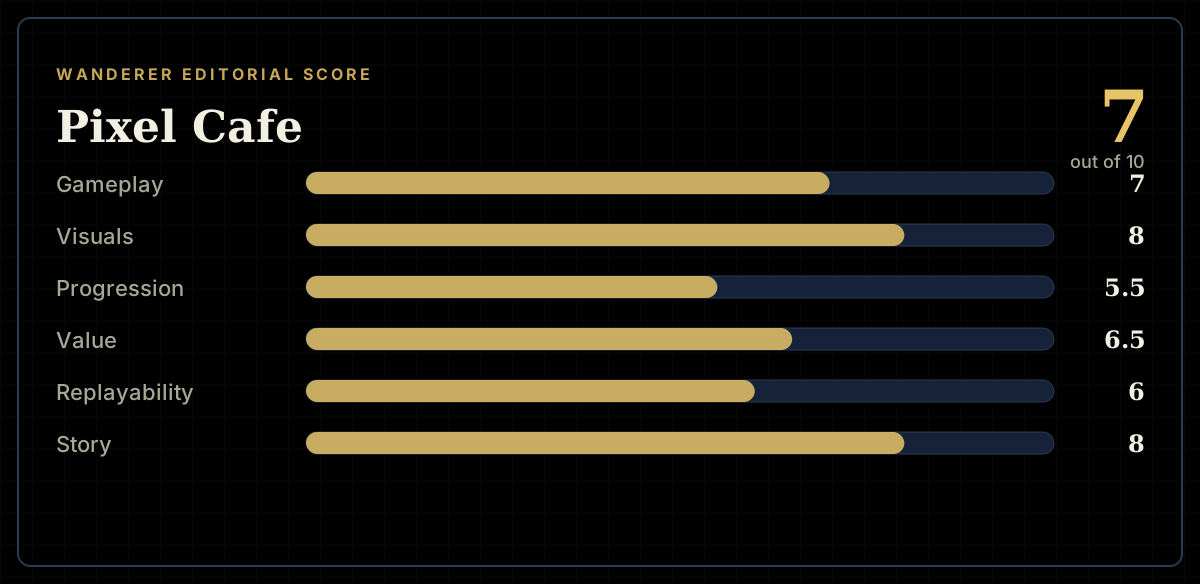
How the review scores each part of the gameWanderer Editorial -
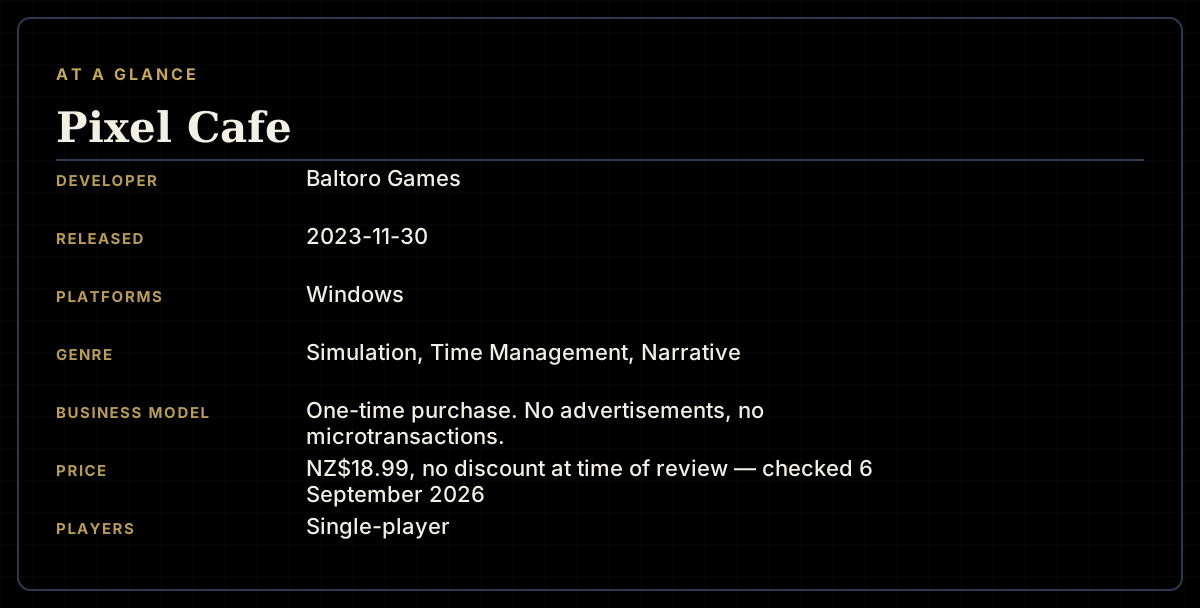
The essentials at a glanceWanderer Editorial -
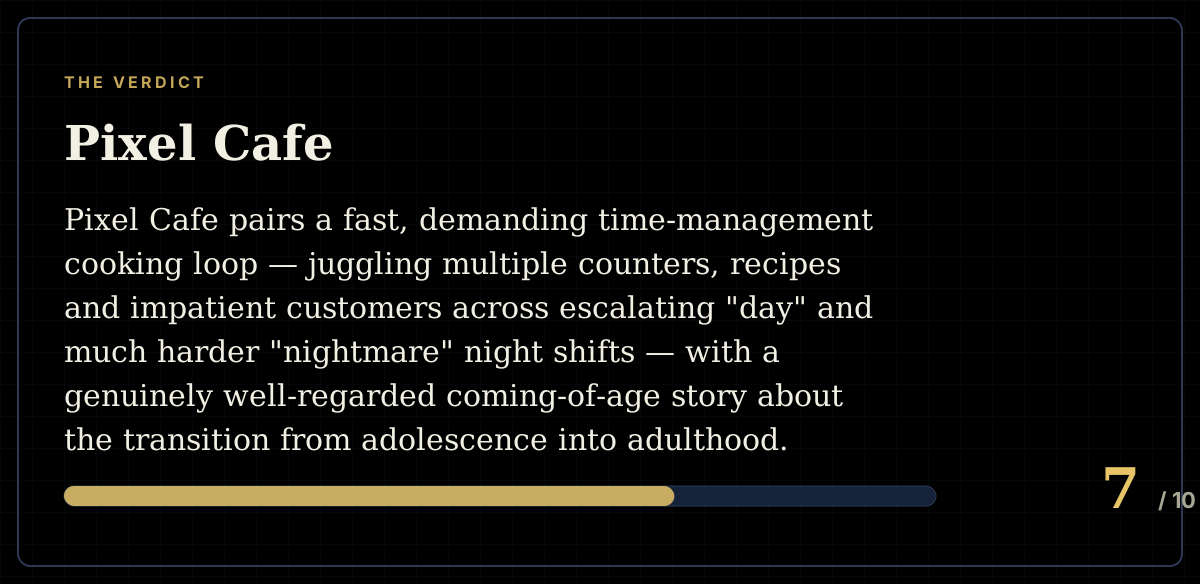
The short versionWanderer Editorial