Game review
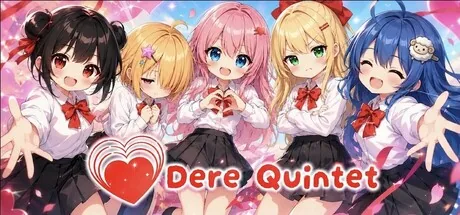
Dere Quintet
7 / 10
- Developer
- TBF
- Publisher
- TLS
- Released
- 5 August 2026
- Platforms
- Windows, macOS, Linux
- Genre
- Visual Novel
- Monetisation
- Free to play. No in-app purchases, no DLC and no price tier of any kind found on the storefront listing.
- Players
- Single-player only
The short version
Dere Quintet is a free high-school romantic comedy visual novel built around five endings and, unusually for the genre, two playable perspectives — the new transfer student chasing one of four classmates, or "Ship-kun," the class matchmaker's own boyfriend, trying to pair up everyone else. It's fully voiced in English, German and Simplified Chinese, ships with 27 achievements tied to genuine content rather than busywork, and asks for precisely nothing in return.
It's the third consecutive free release from the same small studio, following a directly positive predecessor, and that history matters more than usual here because the game itself is only two days old with a review count you could count on both hands. What's verifiable at launch is a clean, well-produced, unusually accessible dating sim with a business model that genuinely has nothing to hide.
Biggest strengths
- Genuinely free with no in-app purchases, no DLC and no premium currency anywhere on the storefront listing
- Two distinct playable perspectives — courting a classmate directly, or matchmaking as Ship-kun — give the five endings more structural variety than a standard single-route VN
- Fully voiced dialogue in English, German and Simplified Chinese is well above what most free visual novels budget for
Biggest weaknesses
- Steam's "RPG" genre tag oversells the game; there are no stats, builds or mechanical progression system to speak of, just branching dialogue and route selection
- The review corpus is a handful of reviews from the game's first 48 hours, so almost nothing about long-term reception, bug reports or pacing complaints exists yet
- The developers' own AI Generated Content Disclosure covers "language support, art and music support," worth knowing going in if that's a dealbreaker for you
Who it's for: Visual novel and dating-sim readers who want a short, funny, low-stakes romance story and appreciate not being asked to pay for any of it. Less suited to anyone looking for the genre's longer, denser character writing, or anyone who reads "RPG" in the Steam tags and expects stats, builds or combat.
Our recommendation: It costs nothing and asks for nothing, which alone makes it worth the download for genre fans. Go in expecting a light, comedic visual novel rather than the RPG its own storefront tags promise, and treat the launch review score as a snapshot rather than a verdict — there simply isn't a crowd yet.
7 / 10
Free-to-play has trained visual novel and dating-sim fans to read the phrase as a threat rather than a promise. Somewhere behind the opening menu there's usually a gem shop, a stamina timer, or a "true ending" quietly fenced off behind a season pass. Dere Quintet doesn't do any of that. It's a short, voiced, fully-featured romantic comedy that costs nothing to download and, as far as the storefront discloses, has nothing left to sell you once you have it. That alone is worth leading with, because it's rarer than it should be — and because it's the thing this genre's readers get burned by most often.
What it actually is
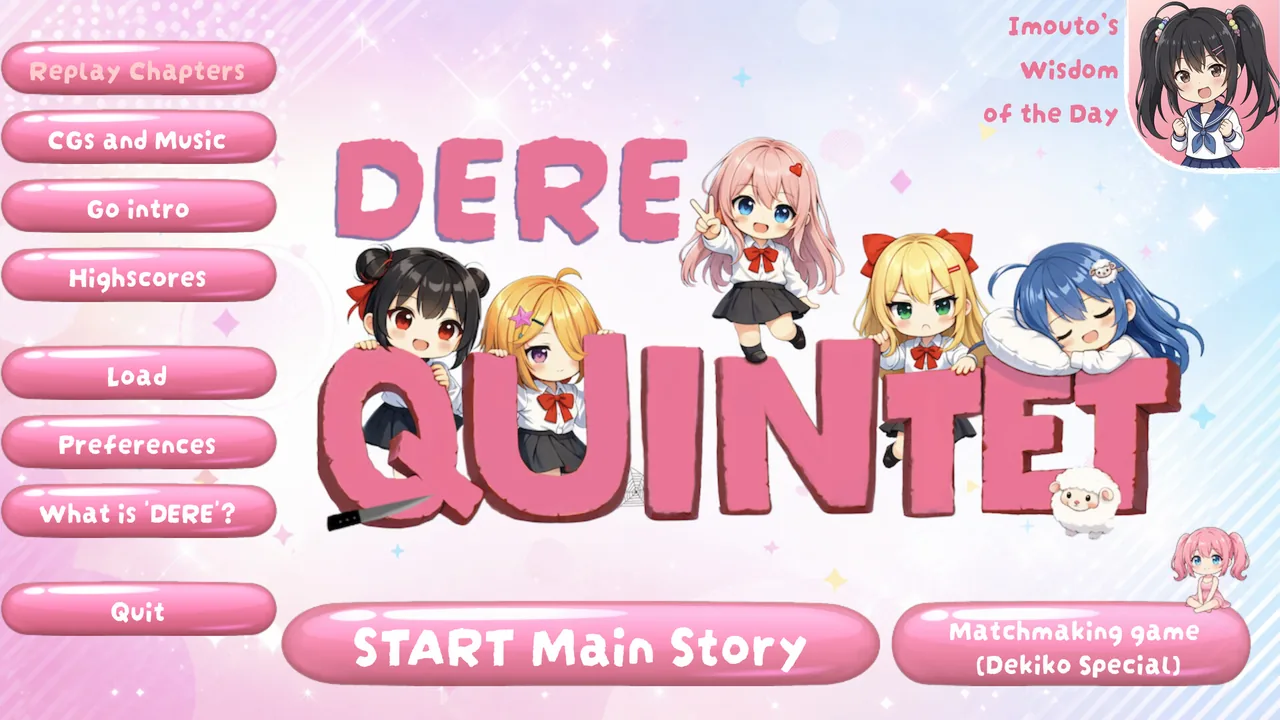
Dere Quintet drops you into Sakura High's most chaotic homeroom, freshly reshuffled to include the Secret Sakura Society, a student club whose entire mission is matchmaking every classmate whether they've asked for it or not. The setup is deliberately slight — the store page calls its own tone "as serious as cotton candy," and it means it. You're not here for a dense visual novel with dozens of hours of branching lore; you're here for a handful of stress-free hours, five different endings, and a closing song for each one.
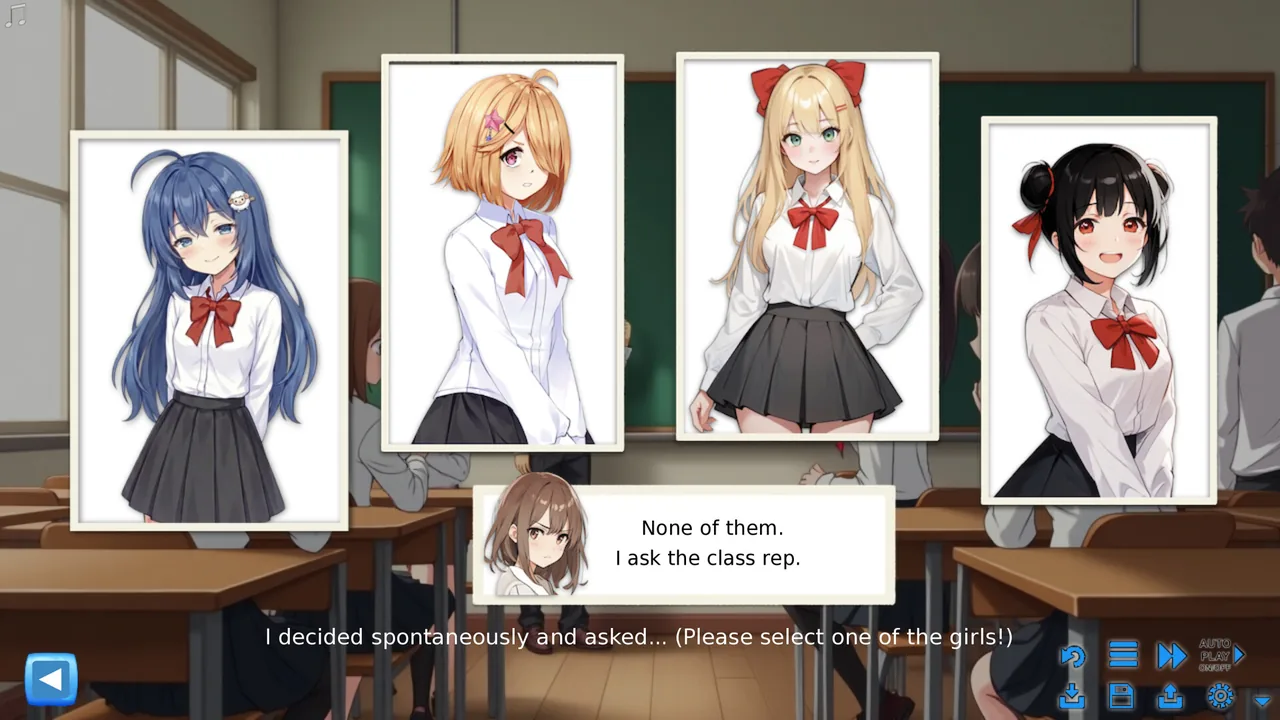
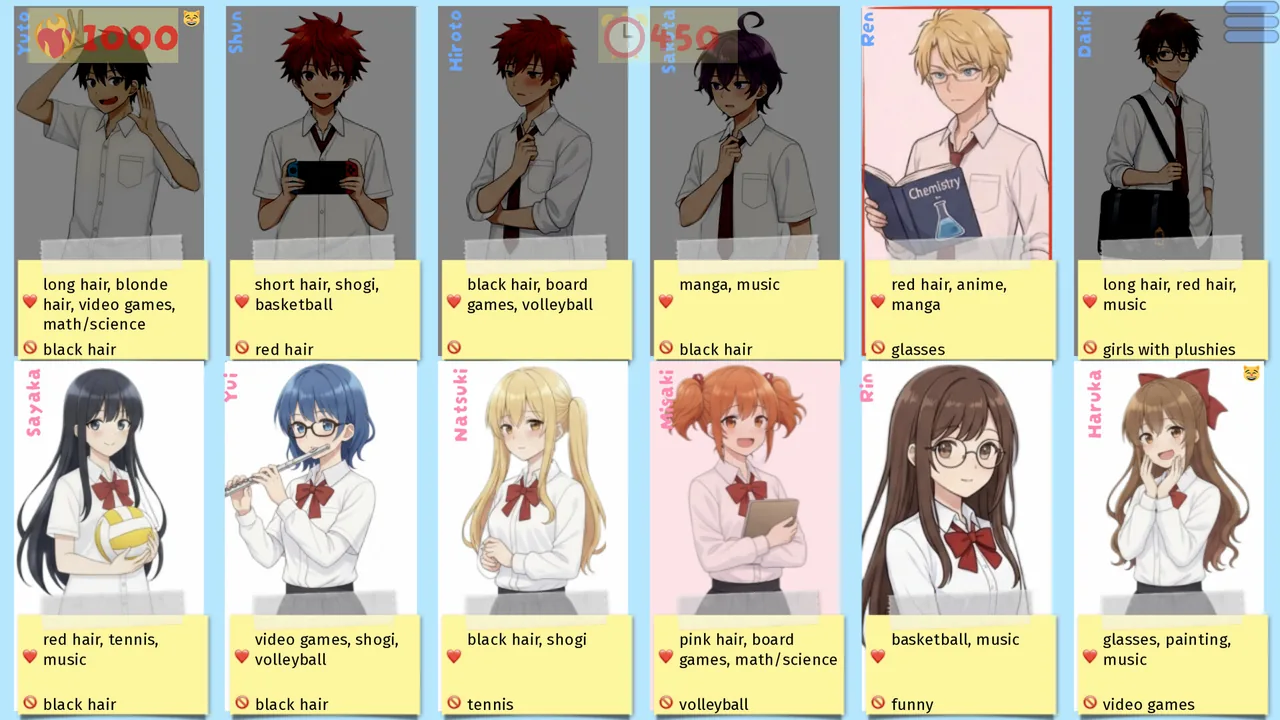
What separates it from the crowded "capture the school beauty" template is a structural choice the storefront's own achievement list confirms: you can play the usual role, the new transfer student pursuing one of four distinct classmates, or you can play as "Ship-kun," the already-taken boyfriend of Society president Dekiko, whose job is matchmaking everyone else rather than romancing anyone himself. That's a genuinely different lens on the same cast and the same school year, and it turns "five endings" into something closer to two different games sharing one setting rather than five palette-swapped playthroughs of the same story.
The five routes themselves aren't a mystery, either — Steam's own achievement list names them directly: Tsundere, Kuudere, Yandere and Nemuidere routes for the four classmates, plus "Dekiko Forever" for the matchmaker path. The store description's own character teasers (an "Ice Queen," a "Biting Beauty," a "Girl of Doom") map onto three of those archetypes without much disguise. If you know the genre's shorthand, you know roughly what you're getting from each girl before you pick a route, which is either comforting or a little too familiar depending on how many of these you've played before.
The writing and the routes
This is comedy-first, romance-second design, and the game is honest about that from its own storefront blurb rather than oversell it as prestige drama. The premise — a chaotic homeroom, a meddling matchmaking club, a protagonist whose little sister is unhelpfully invested in his love life — is stock high-school-VN furniture, and Dere Quintet doesn't pretend otherwise. What it does instead is lean into pace: short scenes, quick escalation between comic setups and payoffs, and a structure clearly built around finishing a route in a sitting or two rather than settling in for a week.
The content advisory on the store page is equally modest in scale: a kissing scene and what's described as "a hypnosis mishap scene," both flagged plainly rather than buried. Nothing here suggests the game is chasing shock value or leaning on fan-service as a selling point beyond what the genre normally trades in. That's consistent with the tone the marketing sets — light, silly, low-stakes — and it means the game mostly succeeds or fails on whether its jokes land for you, not on anything more contentious.
Where it's harder to judge with confidence is depth. Five routes told at comedy pace, in a game whose own pitch is "a few stress-free hours," aren't likely to carry the kind of long-form character writing that the genre's best entries build their reputations on. Nothing available about the game contradicts that reading, and nothing confirms it either — this is a launch-week release with a review sample too small to have surfaced pacing or writing complaints yet, so treat "the comedy is light and the routes are short" as the honest expectation rather than a settled criticism.
Production values above its price point
For a game that costs precisely nothing, Dere Quintet's production values stand out. Full voice acting across three languages — English, German and Simplified Chinese, per the storefront's language table — is a genuine step above what most free visual novels budget for; plenty of paid entries in this genre ship with partial voice work or none at all. Five separate closing songs, one per ending, is the kind of detail that signals a team treating the free release as a real product rather than a loss leader.
The accessibility list is unusually thorough for the genre, too: adjustable difficulty, a mouse-only control scheme, an option to play without timed input, save-anytime, custom volume controls and colour alternatives are all listed as supported features. Whatever the interactive segments turn out to be beyond straightforward dialogue branching, the game is clearly built so that they don't become a barrier to finishing a route, which is exactly the right instinct for a comedy VN whose whole appeal is being easy to sit down with.
The one caveat worth stating plainly, because the developers state it themselves: Dere Quintet carries a Steam AI Generated Content Disclosure. The developers' own wording, quoted directly from the store page, describes the game as using AI for "language support, art and music support." That's a narrower claim than "AI-generated," and it reads more like translation and production assistance than a wholesale substitute for the art and music team — but it's on the record, it's relevant to a visual-and-audio-heavy genre, and readers who weigh that kind of disclosure heavily should know it's there before downloading rather than after.
Is "RPG" the right label?
Steam's own genre tags list this as Casual, RPG and Free To Play, and the RPG tag doesn't hold up against what the storefront's feature list actually describes. There's no character build, no stat progression, no inventory or combat system anywhere in the categories Steam lists for the game — just single-player, achievements, save-anytime and a set of accessibility toggles. This reads as a visual novel with dating-sim structure, full stop, and the RPG tag is more likely a discoverability choice than an honest description of what you're playing. It's a small thing, but it's the kind of expectation-setting gap that can sour a first impression for someone who clicks in expecting builds and gets branching dialogue instead. Go in knowing that, and the mismatch disappears.
The business model, which is the actual headline
This is the part that matters most for Wanderer's readers, because free-to-play is exactly where this audience gets burned. Dere Quintet's storefront listing shows no price tier, no listed DLC and no in-app purchase category anywhere in its feature list — which, on Steam, is normally a visible flag when a game sells anything at all. Between that and the complete absence of any purchase panel promoting extra content, the honest read is that there's simply nothing to buy. No route is fenced off behind payment as far as any available information shows, no premium currency gates the faster path to an ending, and no "definitive edition" waits on the horizon to resell you content that should have shipped free.
That's worth grading on its own, separate from how good the writing turns out to be, because it's the opposite of the genre's worst habits. Mobile-adjacent dating sims and gacha-flavoured romance games routinely gate content, character routes or even basic quality-of-life behind spending, and Dere Quintet's business model — as far as anything on its storefront discloses — is simply "here it is." That deserves real credit, not a footnote.
A studio with a track record, not a first attempt
The most useful context for judging a two-day-old game with three reviews is the developer's own history, and it's a stronger signal than usual here. TBF and TLS have shipped this exact formula twice before: The Last Secret in August 2022, which settled at Very Positive on Steam, and Dere Quartet in March 2025 — the direct predecessor this game's own name announces — which sits at Positive with roughly nine in ten reviews favourable. Both are free releases from the same small team, and both built a genuine, non-trivial audience without changing the pricing model that Dere Quintet now continues. The step from Quartet to Quintet is the roster growing from four classmates to five, plus the addition of the dual-perspective Ship-kun route — an expansion of the same idea rather than a reinvention of it.
That matters because Dere Quintet's own review sample, at time of writing, is three reviews: two positive English write-ups from players a little over an hour in, both saying broadly the same thing — surprisingly polished for a free title, cute characters, worth checking out, too early to judge the full story. A third, in German, is also positive and specifically mentions the AI disclosure without treating it as disqualifying. None of that is a verdict on its own; it's day-two noise from a small, self-selected group. What it does line up with, though, is a developer who has twice before shipped this same kind of game to a genuinely satisfied audience without walking back the free pricing that got them there.
Final verdict
Dere Quintet earns real credit in the two areas that matter most for a review written this close to launch: it's completely honest about its business model, asking for nothing at all where so much of its genre asks for quite a lot, and it's built with more craft — full trilingual voice acting, a genuinely useful accessibility suite, a structurally distinct second playable route — than a free game strictly needs to include. Its writing is unashamedly light rather than ambitious, its archetypes lean on the genre's well-worn shorthand rather than subverting it, and the RPG label on its own storefront page oversells what's actually here.
Rate it as what's verifiable now: a well-produced, completely non-predatory free visual novel from a studio with two prior releases that both earned their positive reception, arriving with too small a crowd yet to confirm much beyond that. Seven feels right — solid, worth the zero-cost download for genre fans, held back from higher only by its own modest ambitions and the honest limits of reviewing something two days old. If Dere Quartet's trajectory is any guide, this is a score more likely to hold up or improve than collapse once more players have had a chance to finish all five endings.
Price and monetisation checked 7 August 2026.
If you'd rather your progression stayed entirely free without hunting through a storefront listing to confirm it, Wanderer doesn't have a purchase panel to check in the first place.
Pros and cons
Pros
- Genuinely free with no in-app purchases, no DLC and no premium currency anywhere on the storefront listing
- Two distinct playable perspectives — courting a classmate directly, or matchmaking as Ship-kun — give the five endings more structural variety than a standard single-route VN
- Fully voiced dialogue in English, German and Simplified Chinese is well above what most free visual novels budget for
- A genuinely thorough accessibility set: adjustable difficulty, a mouse-only control option, a toggle for timed input, save-anytime and colour alternatives
- Comes from a developer with two prior free releases that both landed positively with players, not a first-time studio testing the format
Cons
- Steam's "RPG" genre tag oversells the game; there are no stats, builds or mechanical progression system to speak of, just branching dialogue and route selection
- The review corpus is a handful of reviews from the game's first 48 hours, so almost nothing about long-term reception, bug reports or pacing complaints exists yet
- The developers' own AI Generated Content Disclosure covers "language support, art and music support," worth knowing going in if that's a dealbreaker for you
- The five heroines lean on familiar archetype shorthand (an Ice Queen, a "Biting Beauty," a yandere) rather than doing much to subvert the tropes it's built from
Screenshots
-
Dere QuintetImage: TLS via Steam -
Dere QuintetImage: TLS via Steam -
Dere QuintetImage: TLS via Steam -
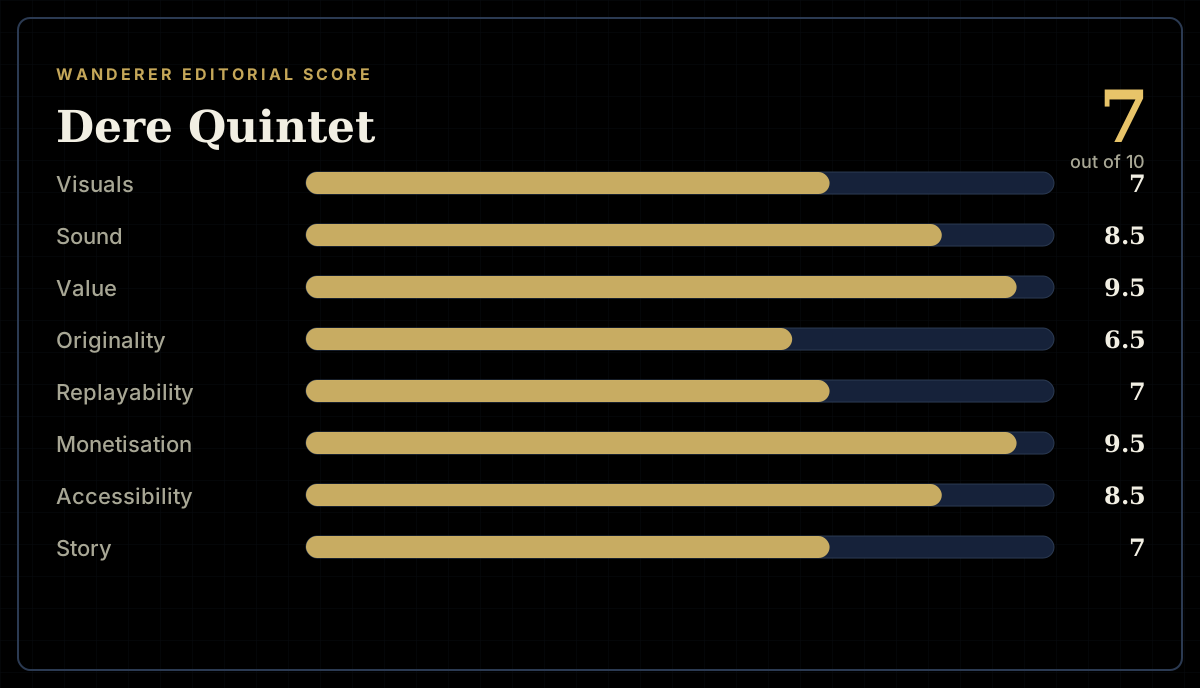
How the review scores each part of the gameWanderer Editorial -
The short versionWanderer Editorial