
Game review
Age of Rivals
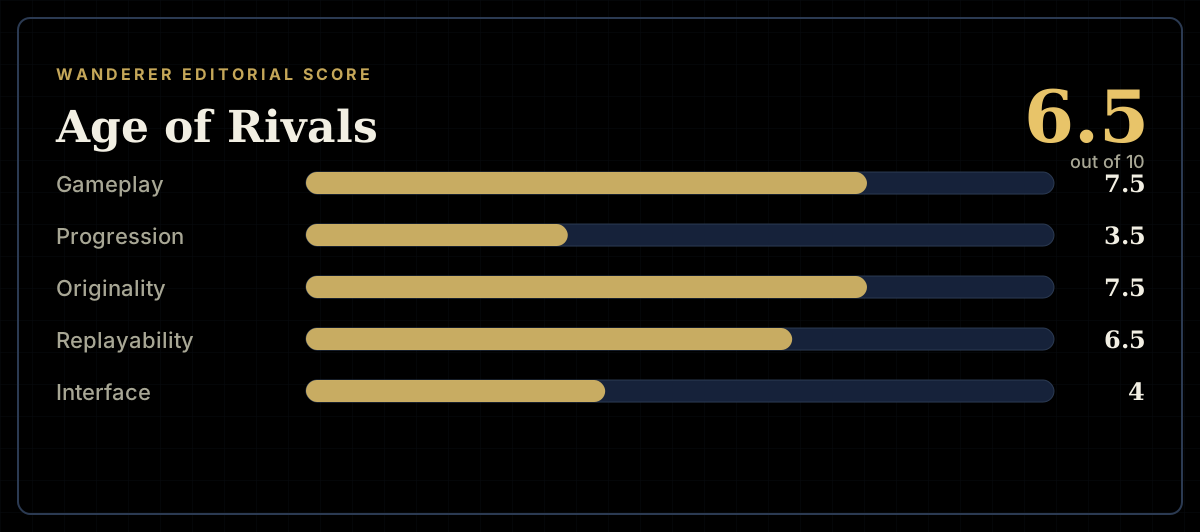
6.5 / 10
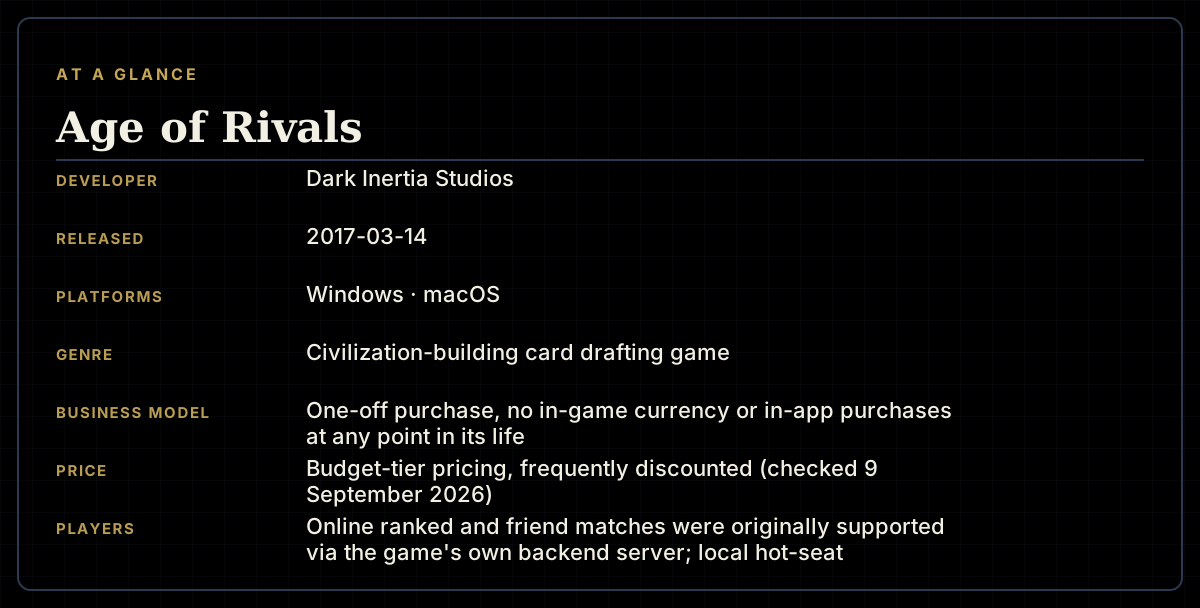
- Developer
- Dark Inertia Studios
- Publisher
- Roboto Games
- Released
- 14 March 2017
- Platforms
- Windows, macOS
- Genre
- Civilization-building card drafting game
- Monetisation
- One-off purchase, no in-game currency or in-app purchases at any point in its life
- Players
- Online ranked and friend matches were originally supported via the game's own backend server; local hot-seat multiplayer was added in 2018 and remains functional
The short version
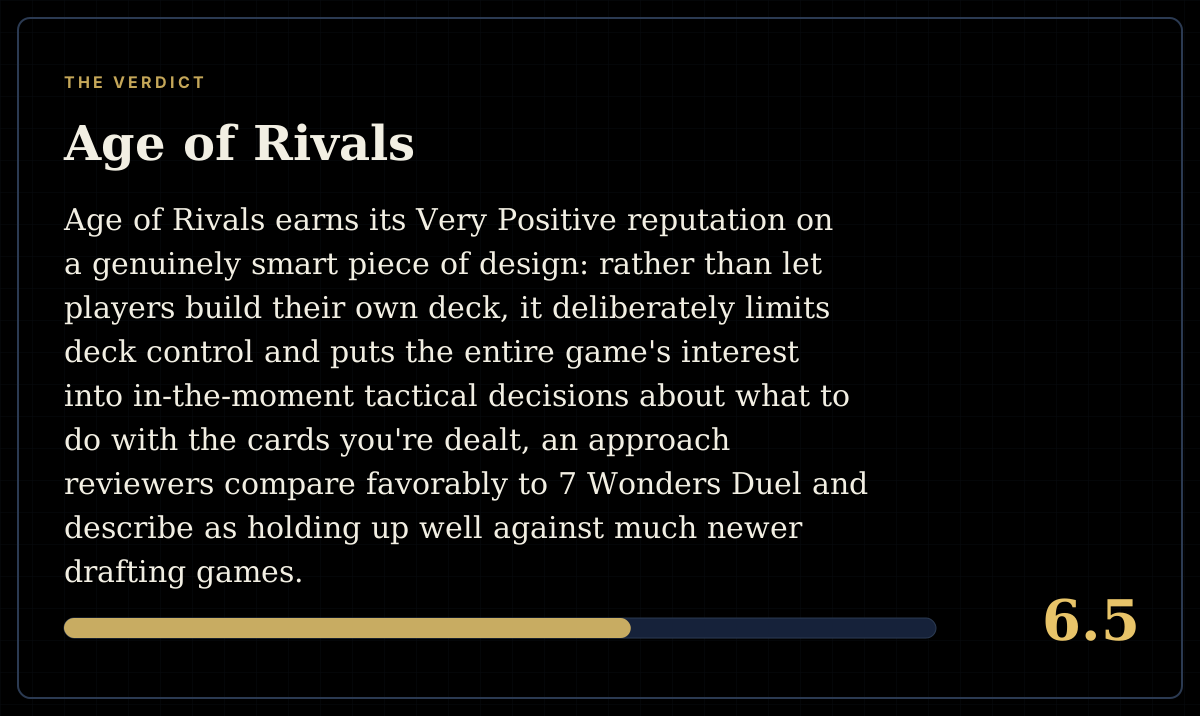
Age of Rivals earns its Very Positive reputation on a genuinely smart piece of design: rather than let players build their own deck, it deliberately limits deck control and puts the entire game's interest into in-the-moment tactical decisions about what to do with the cards you're dealt, an approach reviewers compare favorably to 7 Wonders Duel and describe as holding up well against much newer drafting games. That design earned real, lasting affection, including from players who followed it over from a free browser original years before this Steam release. What the review sample makes clear, and what's specific and checkable enough to state plainly, is that the game's original progression system — unlocking new cards by playing, a system multiple reviewers specifically praised as fairer than typical CCGs — depends on a backend server that has since gone dark, and the game now ships everyone every card unlocked by default rather than fixing or replacing that system. A separate, specific crash bug causing the game to stop opening entirely after roughly an hour of play compounds the technical picture. The developer has since moved on to a full sequel, meaning neither issue is likely to be addressed in this original game going forward.
Biggest strengths
- A genuinely distinctive "anti-deckbuilding" design that deliberately limits player control over their deck to keep every match focused on tactical, in-the-moment decisions rather than deck optimization
- Reviewers with deep experience in the drafting-game genre compare it favorably to 7 Wonders Duel and describe it as holding up well against far more recent competitors
- No in-app purchases or monetisation of any kind, a design choice several reviewers credit directly for keeping the original card-unlock system fair before it stopped functioning
Biggest weaknesses
- The game's backend server, which originally handled online matchmaking and gated card unlocks behind play, has gone dark; the practical result is that all cards now come unlocked by default, which multiple reviewers say removes the sense of progression the design was built around and one reviewer calls a mislabeling of the game's own "deck building" premise
- A specific, repeated crash bug causes the game to stop opening entirely after roughly an hour of continuous play for some users, reported independently by more than one long-term player
- Several reviewers describe the game's randomness as excessive, citing specific cards (a first-round "trade capital" play named directly) that can create unbeatable positions before a match has meaningfully begun
Who it's for: Fans of tight, tactical card-drafting games who want something closer to a two-player board game than a traditional CCG, and anyone specifically nostalgic for the Kongregate browser original. Less suited to anyone specifically drawn to the deck-unlock progression the game was originally built around, since that system no longer functions as designed.
Our recommendation: Still worth playing for the core design, which remains genuinely excellent — just go in aware that progression is effectively gone (everything is unlocked from the start) and that a real, unresolved crash bug affects some players after extended sessions.
6.5 / 10
Age of Rivals pitches itself as "a 10 minute version" of the classic 10-hour civilization-building strategy game, played out entirely through cards representing pyramids, war elephants, spies, and merchants. Released in March 2017 by Dark Inertia Studios following an earlier free run on Kongregate, it built a small but devoted audience — 83% positive across 175 English reviews — around a genuinely thoughtful piece of design. Nearly a decade on, that design still earns real praise from its reviewers. What's changed in the meantime, confirmed directly and specifically by more than one player, is that a system the design depended on no longer works the way it was built to.
A deliberately "anti-deckbuilding" idea that still lands
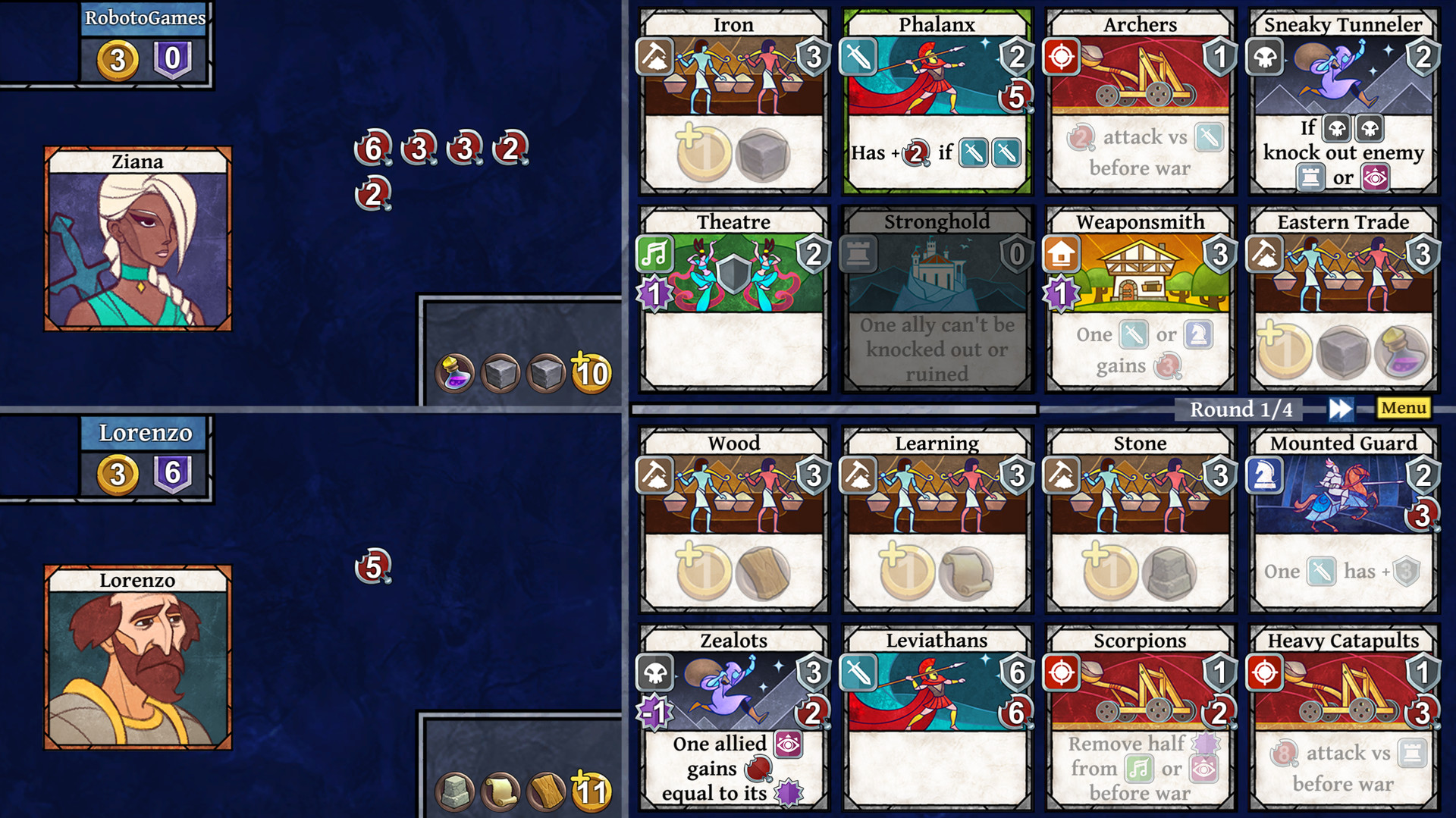
The core hook is a real inversion of typical card-game design: rather than letting players build and optimize a deck ahead of time, Age of Rivals deliberately limits deck control, forcing every decision into the moment. The store page frames this directly as "the anti-deck building CCG," arguing that minimal control "encourages endless variety in each game and puts the focus on in-the-moment tactical decision-making." Reviewers with real genre expertise back this up: one calls it "a very clean drafting game that feels like a 2-player version of 7 Wonders," praising how it "balances strategic decisions and tactical decisions." Another, more detailed review credits "a clever economic system that favors making use of discounts from resources over a flat increase in income" alongside "an excellent four-round system that allows for both rushing and long-term strategies." That's specific, informed praise from reviewers who clearly understand the genre they're comparing it against, not generic enthusiasm.
A progression system that quietly stopped working
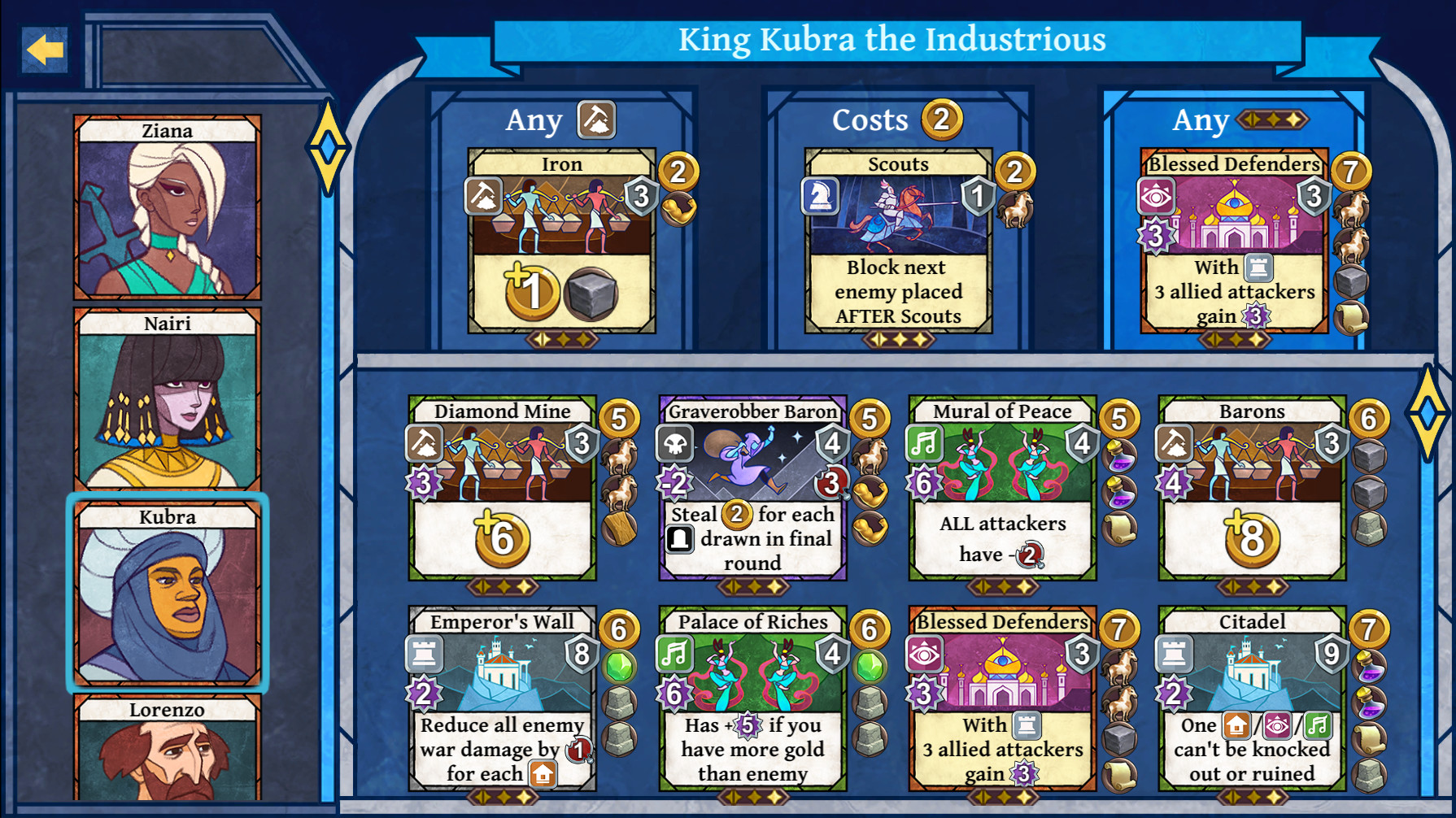
The single most important, checkable fact about the game today concerns its original card-unlock system. Age of Rivals launched with cards unlocking gradually as players won matches — a design several reviewers specifically praised over typical CCGs precisely because, with no in-app purchases anywhere in the game, there was no incentive for the developer to slow that unlocking down artificially. That system depended on a backend server, and multiple independent reviewers confirm it has since gone dark: "The backend server for this game is down and all cards are given as unlocks by default," one writes, adding pointedly that "with everything unlocked and no way to construct decks, there is literally no deck building in this game and it's mislabeled as such." A second reviewer confirms the same fact more simply: "The backend has been shutdown, so everything is unlocked now. You may prefer this, I do not." This isn't speculation or a matter of differing taste — it's the same specific technical fact, independently confirmed by more than one player, about a core system the original design was built around no longer functioning as intended.
A separate, real crash bug
Distinct from the backend issue, more than one long-term player reports the same specific technical failure: the game simply stops opening after roughly an hour of continuous play. One reviewer with nearly 200 hours logged writes with real sadness: "i've played this game for nearly 200 hours. would have played for hundreds more... but... the game has stopped opening. i can't play it anymore." A second reviewer independently corroborates the same pattern: "the Steam version keeps freezing and crashing for me after playing for ~1 hour each time." Two players, describing the same specific failure mode with the same rough time-to-crash, is strong enough agreement to treat as an accurate account of the current state of the Steam build rather than an isolated hardware issue.
A developer who moved on, honestly
The partner-events history explains why neither issue is likely to be fixed: after a real, active support cycle through 2017 (balance updates, an offline-play mode, usability improvements) and occasional attention through 2022, the solo developer went quiet for roughly three years before returning in 2025 specifically to announce Bannerlands, a full spiritual sequel now in public demo as of early 2026. The announcement post is warm and direct about the original: "Thank you for playing Age of Rivals and for your continued support!" — a clean, honest handoff rather than a silent abandonment, even though it means the original's backend and crash issues are now permanently someone else's problem, or no one's.
Randomness that divides even its fans
A smaller, ongoing point of disagreement concerns how much luck governs individual matches. Several reviewers who otherwise love the design still flag specific balance concerns, one naming a particular first-round play directly: "some cards are just unbeatable (like trade capital at end of first round)," while another describes a related frustration with cards carrying over between rounds unpredictably, noting that "if it happens to pick the ones with synergies, congratulations" — implying the reverse is just as likely and just as unearned. Neither complaint is universal; many of the game's most enthusiastic reviewers specifically praise the tension between randomness and skill as the whole appeal. But it's worth noting as a real, recurring seam in an otherwise well-regarded design, distinct from either of the two technical problems documented above.
Verdict
Age of Rivals remains a genuinely smart, well-regarded piece of card-game design nearly a decade after release, and reviewers with real genre expertise still rate its tactical drafting favorably against much newer competition. What a prospective buyer needs to know plainly is that the progression system the design was originally built around no longer functions — the backend that gated card unlocks is confirmed dark, and everything now comes unlocked by default — and a real, independently corroborated crash bug affects extended play sessions for at least some users. The core game underneath both problems is still worth experiencing; just know you're getting the fully unlocked version whether you want the unlock journey or not.
Sources: Steam store page and appdetails API (release date, pricing, platform data); Steam's aggregate review data (query_summary totals, English-language sample); individually read user reviews, both positive and negative, sorted by helpfulness and recency; Steam's global achievement statistics API (confirmed no achievement schema exists); Dark Inertia Studios' own partner-events history, spanning launch in March 2017 through the 2025-2026 announcement and demo releases for the sequel, Bannerlands.
Pros and cons
Pros
- A genuinely distinctive "anti-deckbuilding" design that deliberately limits player control over their deck to keep every match focused on tactical, in-the-moment decisions rather than deck optimization
- Reviewers with deep experience in the drafting-game genre compare it favorably to 7 Wonders Duel and describe it as holding up well against far more recent competitors
- No in-app purchases or monetisation of any kind, a design choice several reviewers credit directly for keeping the original card-unlock system fair before it stopped functioning
- Twelve distinct characters and hundreds of cards provide real build and strategic variety across matches despite the limited deck control
- Local hot-seat multiplayer, added via a 2018 update, still works for players wanting to play against a friend on the same machine
Cons
- The game's backend server, which originally handled online matchmaking and gated card unlocks behind play, has gone dark; the practical result is that all cards now come unlocked by default, which multiple reviewers say removes the sense of progression the design was built around and one reviewer calls a mislabeling of the game's own "deck building" premise
- A specific, repeated crash bug causes the game to stop opening entirely after roughly an hour of continuous play for some users, reported independently by more than one long-term player
- Several reviewers describe the game's randomness as excessive, citing specific cards (a first-round "trade capital" play named directly) that can create unbeatable positions before a match has meaningfully begun
- No achievement schema exists at all, leaving no objective data source to independently gauge how far the playerbase typically progresses
- The developer has since moved development attention fully to a sequel (Bannerlands), meaning neither the crash bug nor the dead backend are likely to see a fix in this original game
Screenshots
-
Age of RivalsImage: Roboto Games via Steam -
Age of RivalsImage: Roboto Games via Steam -
Age of RivalsImage: Roboto Games via Steam -
How the review scores each part of the gameWanderer Editorial -
The specsWanderer Editorial -
The short versionWanderer Editorial