
Game review
Roman Wars: Deck Building Game
6.8 / 10
- Developer
- Aleksandr Zhukov
- Publisher
- Aleksandr Zhukov
- Released
- 9 December 2021
- Platforms
- Windows
- Genre
- Deckbuilding Strategy
- Monetisation
- Premium, one-time purchase
- Players
- Single-player only
The short version
Roman Wars fuses tabletop deckbuilding with a light tower-defence structure: across ten missions you buy cards to grow your base and army from the same shared pool, and every scenario hands you a different win condition to solve with it. It plays less like the evolving, carry-your-deck-forward campaigns the genre is known for and more like a series of single-sitting Dominion puzzles wearing a Roman skin — which isn't what every deckbuilder fan will expect, but is a fair trade for a game asking under five dollars.
What holds it back from a stronger score is scope rather than execution. Ten missions and ten enemies is the entire package, several of those missions lean hard enough on card draw that reviewers flag genuine luck swings, and once you've solved a scenario's puzzle there isn't a second layer — a meta-progression track, a new game plus, an evolving deck — pulling you back into it.
Biggest strengths
- Each of the ten missions reuses the same card pool but sets a different win condition, so the buy order that worked in one scenario can be actively wrong in the next
- A destroyed structure still returns its upgraded version once it cycles back through your deck, rewarding players who read the rules rather than react on instinct
- A free demo covering the first two missions gives an honest preview before spending anything
Biggest weaknesses
- Ten missions is the whole game — there's no evolving deck or campaign layer once you've solved each scenario's puzzle
- Several missions are heavily luck-dependent; even reviewers who enjoyed the game single out draw variance as a real source of frustration
- Presentation is plain 2D card art with little animation to carry the slower stretches
Who it's for: Fans of solitaire-style deckbuilders (think a single-player Dominion) who enjoy treating each scenario as its own optimization puzzle, rather than players looking for a deck that grows and carries across a longer campaign.
Our recommendation: Try the two-mission free demo first — it's an accurate slice of the whole game — then buy if the puzzle-per-scenario structure appeals. At NZ$4.49 the downside of guessing wrong is small.
6.8 / 10
Introduction
Deckbuilding games on Steam tend to split into two families: the campaign kind, where a single deck grows and mutates across dozens of runs (Slay the Spire's roguelite descendants), and the tabletop kind, where the point is solving a fresh scenario with cards you buy from a shared, un-evolving market — Dominion is the reference case everyone in that second camp gets compared to, favourably or not. Roman Wars, a solo project from developer Aleksandr Zhukov released in December 2021, sits firmly in the second camp and doesn't pretend otherwise: ten missions, each one a fresh deck built from the same pool of Roman-themed cards, each one asking a different question about how to spend your first ten turns.
The community's own vote-weighted Steam tags back that framing up cleanly — Deckbuilding, Card Battler and Turn-Based Tactics sit ahead of Board Game and Card Game, well ahead of the broader Strategy tag the storefront leads with. This is a card game that borrows tower-defence framing (you're building and upgrading a base while fending off attackers) more than it borrows the run-based structure most PC deckbuilders default to.
The core loop
Every mission opens with the same starting deck and the same market of buyable cards — gold production, military units, base structures, support effects — and closes the moment you either meet that scenario's win condition or run out of turns trying. The strategic question isn't "what goes in my deck by the end of the run," because there is no end-of-run deck to carry forward; it's "in what order do I spend my limited early gold, this specific mission, against this specific threat." One Steam reviewer who came in expecting an evolving deck (comparing it to System Crash or Cardpocalypse) described being surprised to find something closer to "a single-player Dominion" instead — not a complaint exactly, more a recalibration of what kind of deckbuilder this actually is.
That structure rewards a specific kind of player: the type who enjoys treating each scenario as its own economics puzzle rather than wanting momentum to carry between them. A structure that gets destroyed mid-mission doesn't just vanish from your options — it returns to your deck in its upgraded form once it cycles back around, which the same reviewer flagged as a genuinely useful tip worth knowing rather than something you'd naturally discover. Small mechanical details like that are where the design shows its board-game roots most clearly: it expects you to read the card text, not just react to what's in your hand.
Missions and difficulty
Ten missions and ten enemy types is the entire scope of the base game — suppressing a riot, running a sortie, fending off a gold-thief and seven others, according to the storefront's own feature list. Reviewers who worked through several of them describe real variety in what each one asks for: whether to prioritise gold production or immediate military strength changes mission to mission, and one reviewer explicitly recommends reading each mission's briefing carefully before committing to an opening strategy, because the "right" first few purchases genuinely differ from scenario to scenario.
The difficulty curve is steep by the reviewers' own account. One describes the final mission's gold requirement as "absolute brutality," still unclear on exactly how they cleared it even with bonus cards unlocked from earlier wins. Steam's global achievement data is consistent with that: 71.1% of trackers have won at least one mission, but that falls to 37.5% for winning every mission, and to single digits — 8.6% — for the very last unlock. The sample here is small enough that the curve isn't perfectly smooth (the tenth-level milestone sits slightly above several earlier ones), which is normal noise on a tracked population this size rather than a meaningful signal, but the overall shape — a steep drop after the first handful of wins — lines up with what the reviews describe.
Luck and design tension
The one consistent critique, even from reviewers who otherwise enjoyed the game, is variance. "Very luck based in some missions" is how one puts it, alongside genuine enthusiasm for the rest of the package. That's the natural friction point of this kind of design: a shared, shuffled card market means a mission can occasionally hinge on whether the card you need shows up in time, rather than purely on the order you chose to buy things. It doesn't come up as a dominant complaint in the small sample available, but it's the recurring caveat attached to otherwise positive reviews, which is usually the more trustworthy kind of criticism to weight.
Presentation
Visually this is a modest, functional card game — 2D art, a Roman aesthetic on the base game, and an alternate Cats theme that reskins the entire ten-mission set rather than just swapping a few icons. That alternate theme is worth calling out specifically: it's a genuine second pass at the same content, not a token cosmetic toggle, and it gives players who've cleared the base campaign an actual reason to run it again with a different coat of paint. Beyond that, don't expect animation or spectacle to carry the slower turns — the game's identity is entirely in its card math, not its visual presentation.
Reception
Roman Wars' Steam review count is thin enough to read in full: three reviews total, and all three are positive. That's not enough of a sample to treat as statistically meaningful, but it's worth reading closely rather than dismissing, and the pattern across all three is consistent rather than contradictory — "fun for an evening," "well worth the low price," and a recommendation to read each mission's briefing carefully before committing to a strategy. One reviewer also notes the game runs fine on Linux via Proton despite the storefront only listing Windows support, which is a useful data point for anyone on that platform weighing the purchase.
Value
At NZ$4.49 with a free demo covering the first two missions, the asking price is low enough that the financial risk of bouncing off the game's puzzle-not-campaign structure is close to zero. Content is genuinely light in absolute terms — ten missions, ten enemies, one bonus-card unlock track — and once you've solved each scenario there's no further layer pulling you back in beyond the Cats reskin. For what it costs, that's a fair trade rather than a shortfall; it just means the ceiling on how much play this offers is honestly low.
6.8 out of 10. Roman Wars is a small, honestly scoped solitaire deckbuilder that does what it sets out to do — hand you ten distinct card-buying puzzles wrapped in a Roman theme, at a price that makes trying it close to risk-free. It won't satisfy anyone hoping for a deck that grows across a longer campaign, and its own fans flag real luck swings in some missions, but for the narrower audience it's actually built for, it delivers a few honest evenings of play for less than the price of a coffee.
Pros and cons
Pros
- Each of the ten missions reuses the same card pool but sets a different win condition, so the buy order that worked in one scenario can be actively wrong in the next
- A destroyed structure still returns its upgraded version once it cycles back through your deck, rewarding players who read the rules rather than react on instinct
- A free demo covering the first two missions gives an honest preview before spending anything
- The alternate Cats theme is a full second coat of paint over the same ten missions, not just a recolour, giving completionists a reason to run them again
- NZ$4.49 with the demo attached removes almost all of the financial risk of trying it
Cons
- Ten missions is the whole game — there's no evolving deck or campaign layer once you've solved each scenario's puzzle
- Several missions are heavily luck-dependent; even reviewers who enjoyed the game single out draw variance as a real source of frustration
- Presentation is plain 2D card art with little animation to carry the slower stretches
- No official Mac or Linux build, and no listed controller support, on a game whose UI would likely suit a controller poorly regardless
Screenshots
-
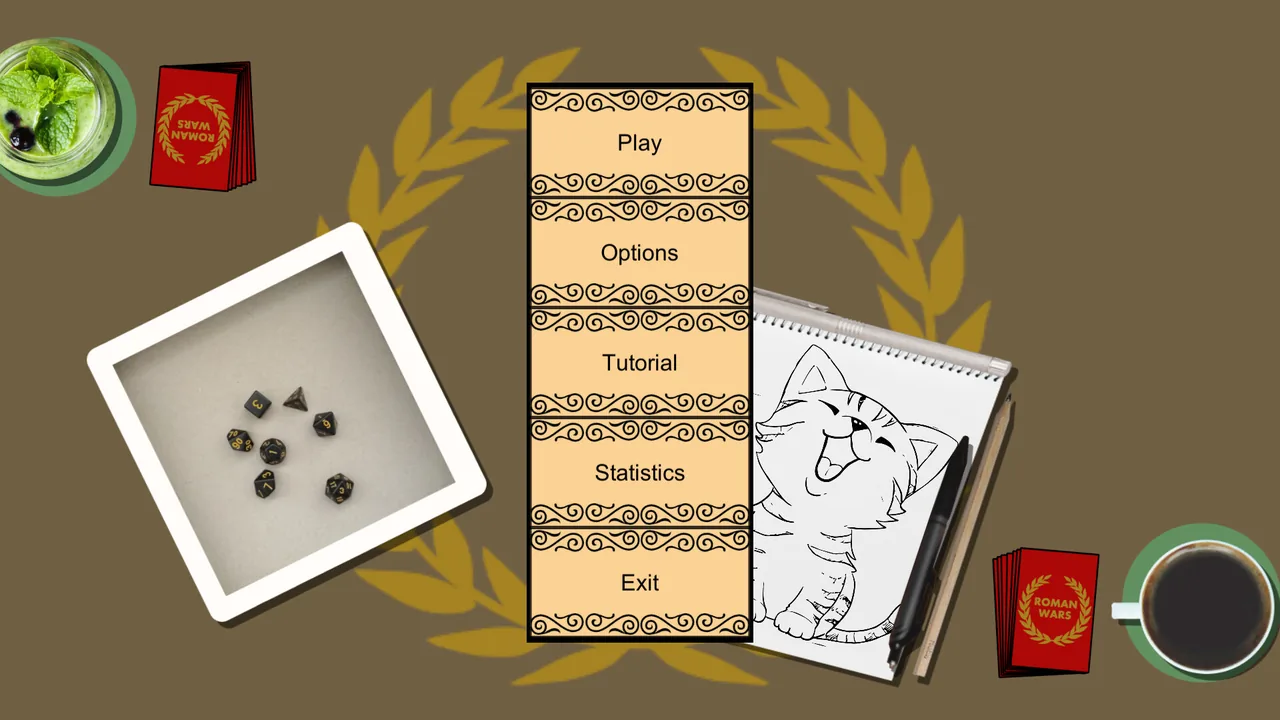
Roman Wars: Deck Building GameImage: Aleksandr Zhukov via Steam -
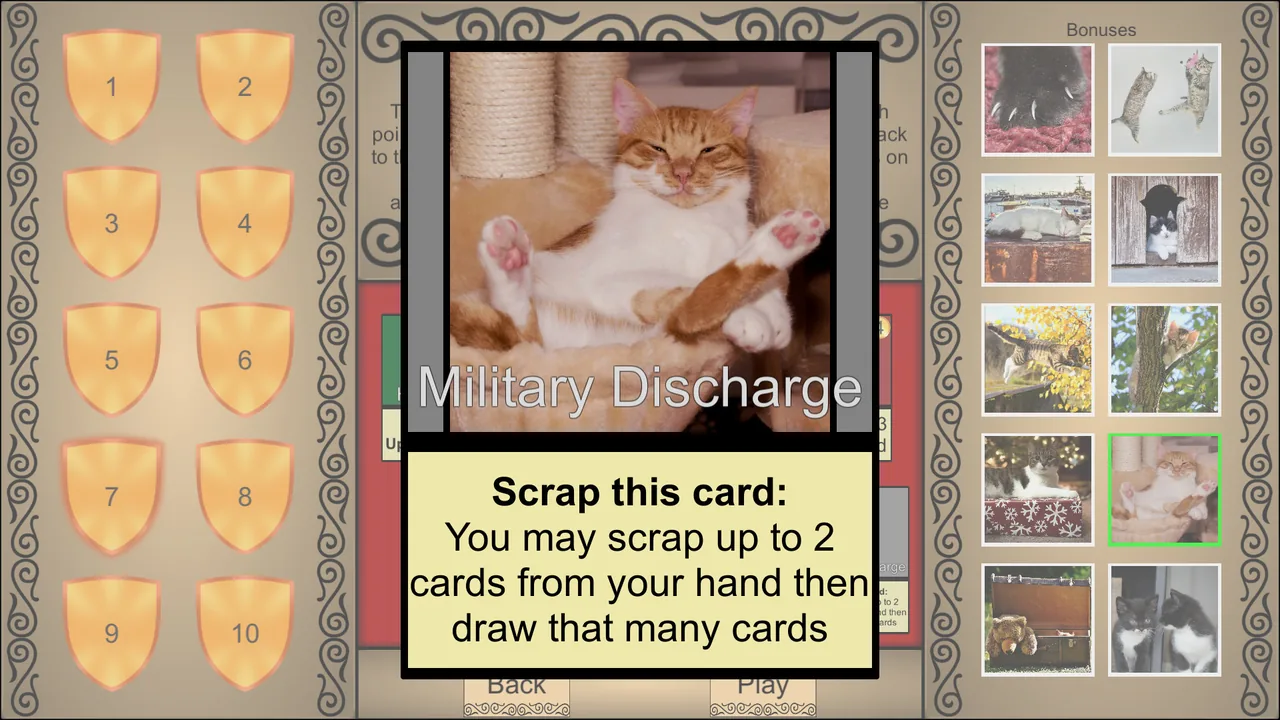
Roman Wars: Deck Building GameImage: Aleksandr Zhukov via Steam -
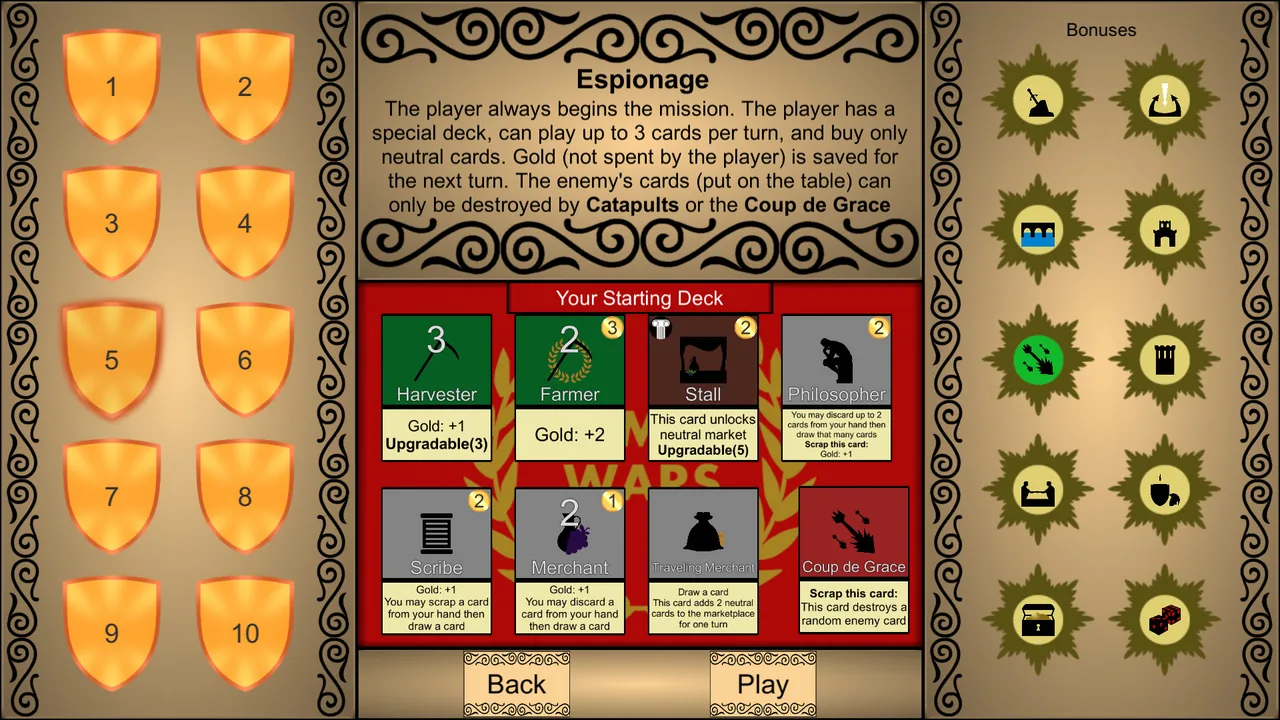
Roman Wars: Deck Building GameImage: Aleksandr Zhukov via Steam -
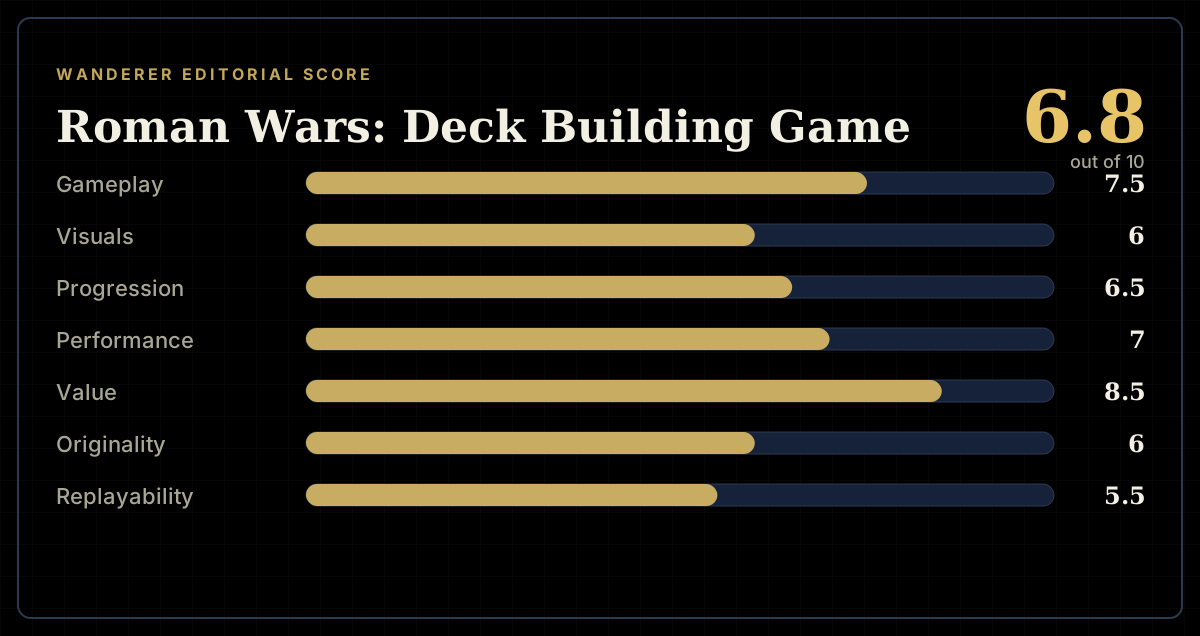
How the review scores each part of the gameWanderer Editorial -
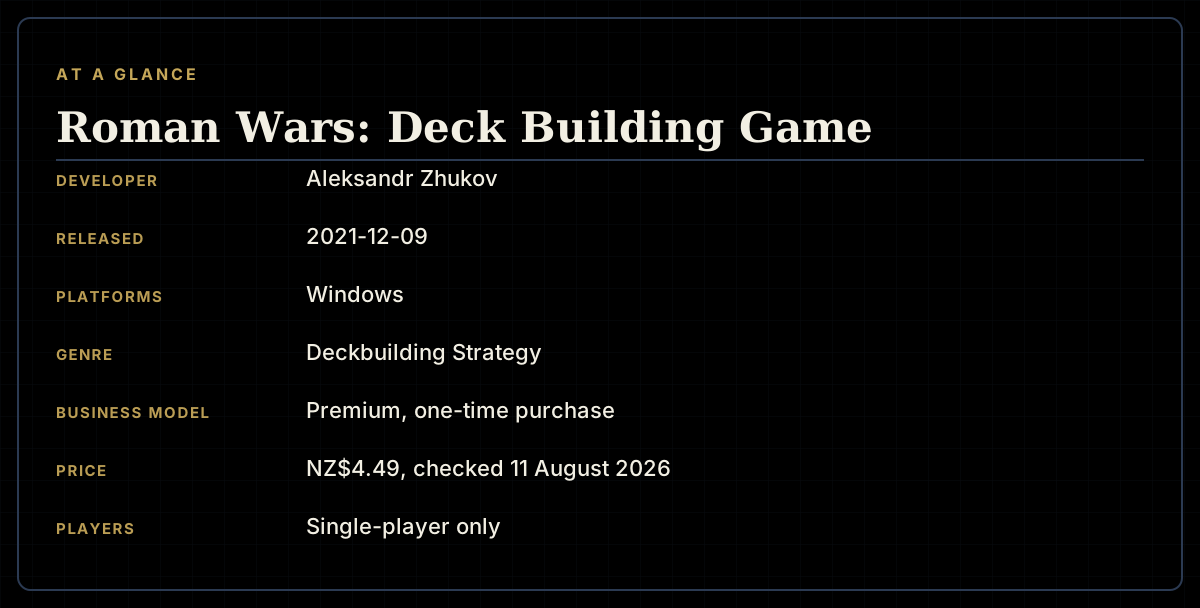
The essentials at a glanceWanderer Editorial -
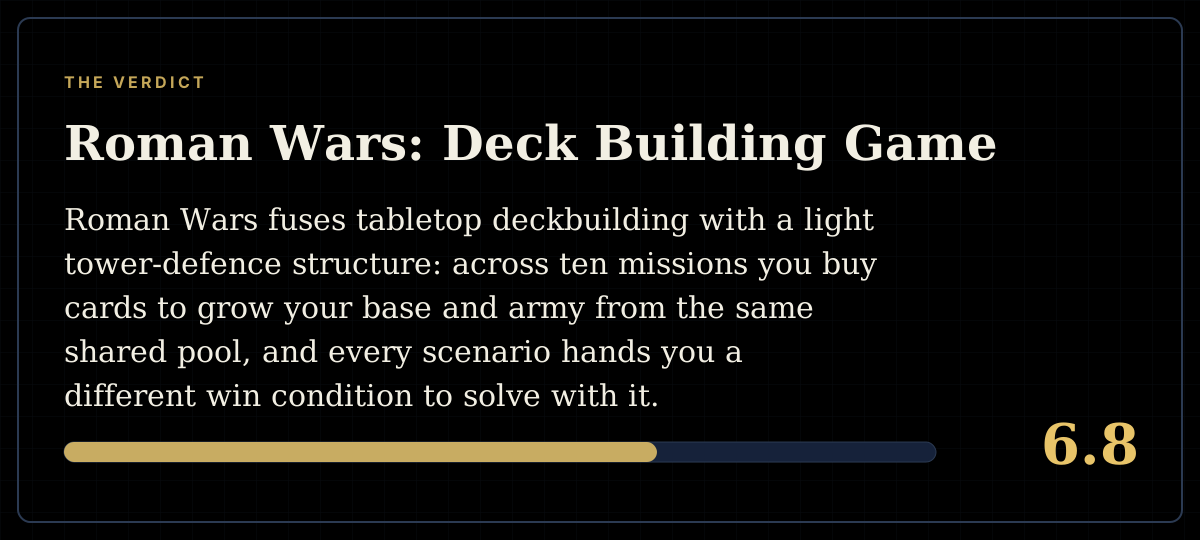
The short versionWanderer Editorial