Game review
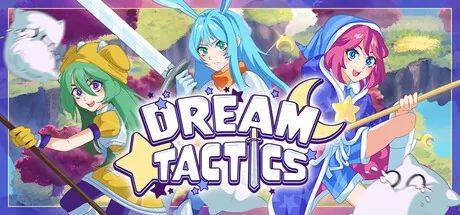
Dream Tactics
7.5 / 10
- Developer
- Spectra Entertainment Inc.
- Publisher
- indie.io
- Released
- 15 April 2024
- Platforms
- Windows
- Genre
- Tactical RPG, Strategy, Fantasy
- Monetisation
- One-time purchase, no DLC, no in-app purchases
- Players
- Single-player only
The short version
Dream Tactics sends a party of GBA-styled heroes and their card-based skill decks against an army of hostile pillows to save a collapsing Dream World. Made by Spectra Entertainment Inc. and published by indie.io on 15 April 2024, it sits at Very Positive across a substantial 688 English-language reviews, holding at 90% among the most recent 100 with no sign of decline. This review's full read of all 27 negative reviews finds real, specific and largely consistent complaints — a mid-game combat pace that drags under repeated enemy reinforcement waves, a difficulty curve several reviewers describe as backwards, and a lack of traditional auto-save that produced real, credible lost-progress reports — set against genuine, well-documented developer responsiveness to exactly these complaints.
Biggest strengths
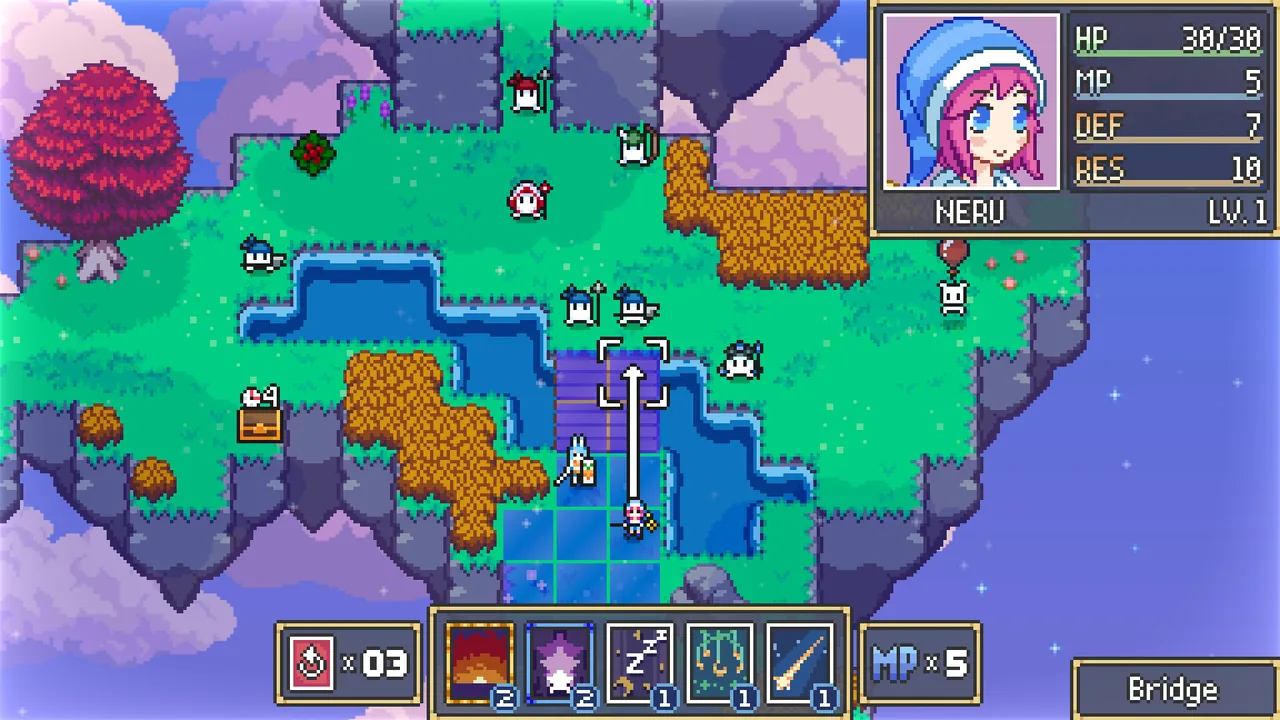
- A distinctive, well-executed GBA-era pixel art style that draws consistent, strong praise even from this game's harshest critics
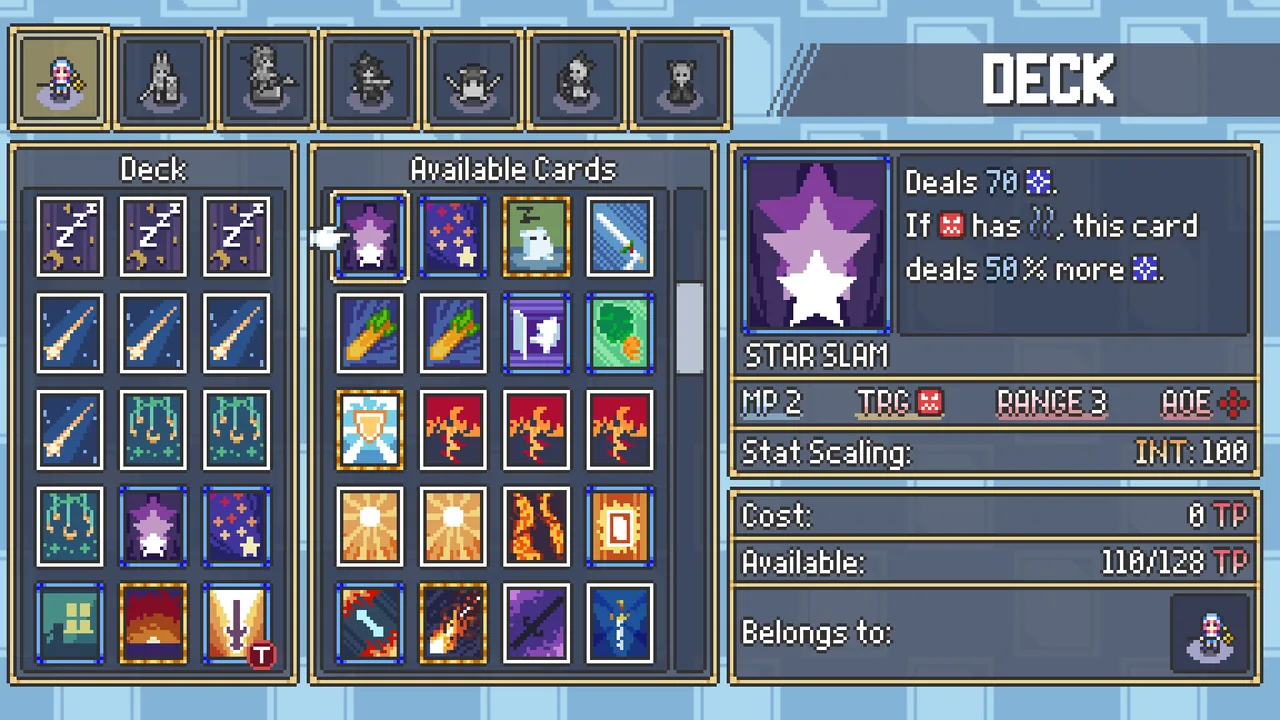
- A genuinely inventive card-based skill system that gives party building real depth, with several reviewers specifically praising the freedom to create unique playstyles
- Documented, substantial developer responsiveness to community feedback, including an entire new epilogue added a month after launch specifically because many players found the original ending unsatisfying, and a new Nightmare difficulty tier added that November
Biggest weaknesses
- A specific, repeated complaint concerns mid-to-late game combat pacing, with multiple detailed reviews describing battles that drag on for many turns under waves of enemy reinforcements, turning tactical decision-making into a war of attrition
- Several reviewers independently describe a backwards difficulty curve — easy at first, then punishing later, with one explicitly calling it "a traditional RPG reverse difficulty curve" — and Steam's own achievement data shows a steep drop from 39.2% for the first boss to 15.1% for the second
- At least two detailed reviews report the game crashing during long battles with no reliable in-combat save, resulting in real lost progress; a December 2024 patch added a tutorial explaining the save system but did not change in-combat save behaviour according to its own patch notes
Who it's for: Tactics RPG fans nostalgic for Game Boy Advance-era strategy games who want a genuinely deep card-based build system; players sensitive to lost-progress bugs or backloaded difficulty spikes should read the specific caveats below before diving in.
Our recommendation: One of 2024's better-reviewed indie tactics RPGs, with a distinctive and well-loved presentation and card system, let down by real pacing and save-reliability issues in the back half that a genuinely responsive developer has been chipping away at since launch.
7.5 / 10
Introduction
Dream Tactics wraps a genuinely inventive card-based skill system in a loving recreation of Game Boy Advance-era strategy RPGs, sending a reluctant hero and a growing party against an army of hostile pillows threatening to collapse the Dream World entirely. Made by Spectra Entertainment Inc. and published by indie.io on 15 April 2024, it has built a large and consistently enthusiastic audience — Very Positive across 688 English-language reviews, holding steady at 90% among the most recent 100. This review reads all 27 of that sample's negative reviews in full, and what emerges is a specific, repeated pattern of complaints about the game's middle stretch, set against genuinely substantial developer follow-through on exactly those issues.
A distinctive style, and a card system with real teeth
The presentation draws near-universal praise. Even reviewers who ultimately can't recommend the game concede the art direction lands — "it's cool because it reminds me of a GBA game and really hits the art direction of that era," one writes, despite listing several other frustrations. The card-based skill system earns its own credit for depth: rather than a fixed class-and-ability structure, players build decks that shape how each character actually plays, and several reviewers specifically praise the freedom this gives to experiment with unusual builds. One positive comparison sums up the tone well: "Imagine if Midnight Suns respected limited movement, and was about 8-bit anime girls."
Where the middle stretch drags
The clearest, most-repeated criticism in the negative sample concerns pacing once the story moves past its opening hours. "The combat starting getting boring about halfway in since there are just far too many mobs," one detailed review reports, describing "literal turns of nothing on the field" while waiting out enemy reinforcement waves that arrived for a fourth time in a single battle. A separate reviewer makes a related but distinct point about difficulty: "it seems like enemy resistance and def is too strong. You just get overwhelmed" even on medium difficulty by the mid-game. A third names the pattern precisely: "the game has a traditional RPG reverse difficulty curve" — easy early, punishing later — a complaint corroborated independently by Steam's own achievement data, which shows completion falling from 39.2% for the game's first boss to just 15.1% for its second, and down to 9.7% for finishing the game outright.
Real save concerns, and a developer that responds
A more serious, specific complaint concerns reliability during long battles. "Game crashes so frequently, and there is no auto-save during long battle," one detailed review reports. "The suspend save also cause crash sometime, force the long battle to restart at the beginning." Another, more bluntly, calls it "unacceptable that in 2024 a game releases without an auto-save feature," reporting lost progress on multiple occasions. It's worth being precise about the current state of this: a December 2024 patch added a new in-game tutorial specifically explaining how saving works after the first battle in the Dew Meadows, but its own patch notes state plainly "this update will not affect in-combat saves" — meaning the underlying save behaviour these reviewers describe wasn't restructured, only better explained. Buyers concerned about long-battle save reliability should weigh that distinction rather than assume the complaint is fully resolved.
What is unambiguous is that the developer has continued engaging with feedback well past launch. A month after release, the team wrote and shipped an entirely new epilogue specifically because, in their own words, "one aspect of the game—the ending—did not meet the expectations of many of our players" — a direct, documented answer to exactly the kind of "shallow, disappointing ending" complaint that appears independently in this review's negative sample. That November, a new Nightmare difficulty tier and a Standard/Hardcore mode split gave players more granular control over the exact difficulty curve several reviews found frustrating, alongside specific enemy rebalancing in named early battles.
Final Verdict
Dream Tactics earns its Very Positive reputation honestly: a distinctive art style, a genuinely deep card-based build system, and a developer that has kept responding to specific, named community complaints well past launch, including rewriting its own ending. What holds it back from the top of the scale is equally specific — a mid-game stretch several detailed reviewers independently describe as bloated with reinforcement waves, a difficulty curve that gets harder rather than easier as systems open up, and save reliability during long battles that a December 2024 patch explained better without structurally changing. For tactics RPG fans drawn to its GBA-era presentation and card-building depth, it remains an easy recommendation — just go in aware the back half asks more patience than the opening hours promise.
Pros and cons
Pros
- A distinctive, well-executed GBA-era pixel art style that draws consistent, strong praise even from this game's harshest critics
- A genuinely inventive card-based skill system that gives party building real depth, with several reviewers specifically praising the freedom to create unique playstyles
- Documented, substantial developer responsiveness to community feedback, including an entire new epilogue added a month after launch specifically because many players found the original ending unsatisfying, and a new Nightmare difficulty tier added that November
- A charming, self-aware story and dialogue that several reviewers describe as goofy in a good way, wrapped around a simple but effective "reluctant hero" premise
Cons
- A specific, repeated complaint concerns mid-to-late game combat pacing, with multiple detailed reviews describing battles that drag on for many turns under waves of enemy reinforcements, turning tactical decision-making into a war of attrition
- Several reviewers independently describe a backwards difficulty curve — easy at first, then punishing later, with one explicitly calling it "a traditional RPG reverse difficulty curve" — and Steam's own achievement data shows a steep drop from 39.2% for the first boss to 15.1% for the second
- At least two detailed reviews report the game crashing during long battles with no reliable in-combat save, resulting in real lost progress; a December 2024 patch added a tutorial explaining the save system but did not change in-combat save behaviour according to its own patch notes
- The card and equipment system becomes genuinely difficult to manage by the late game according to one detailed review, with build synergies specific enough that rebuilding a party composition becomes a significant undertaking
Screenshots
-
Dream TacticsImage: indie.io via Steam -
Dream TacticsImage: indie.io via Steam -
Dream TacticsImage: indie.io via Steam -
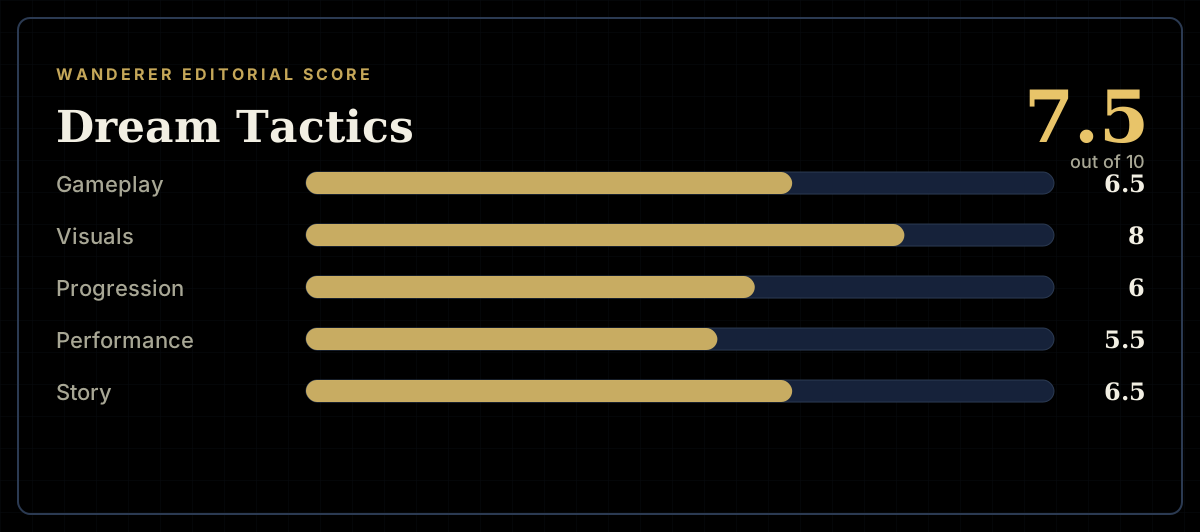
How the review scores each part of the gameWanderer Editorial -
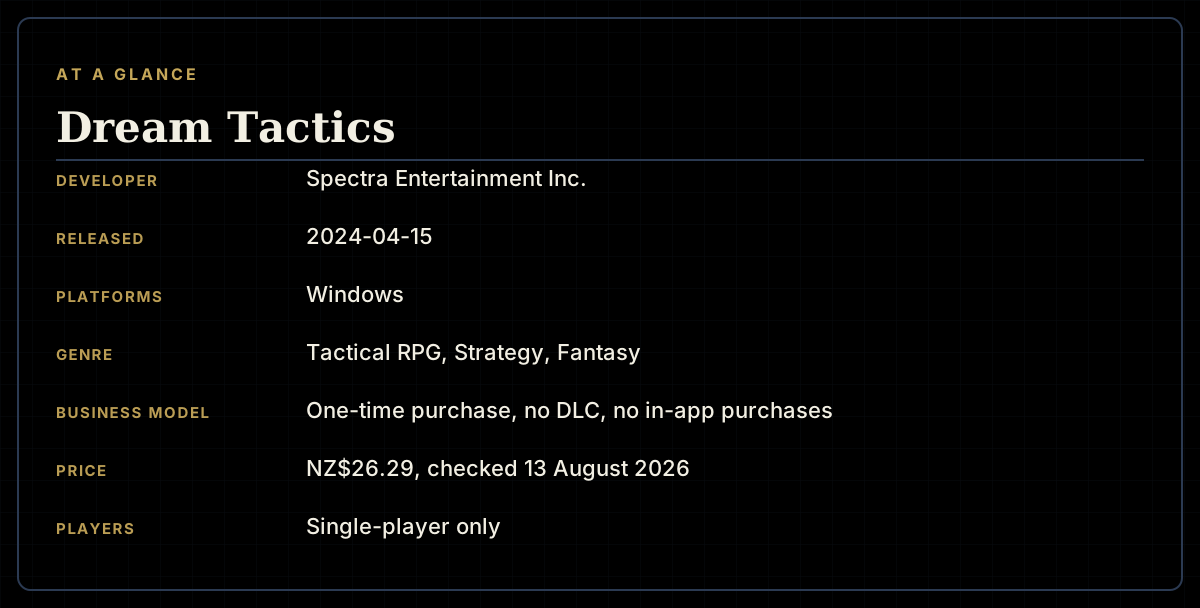
The essentials at a glanceWanderer Editorial -
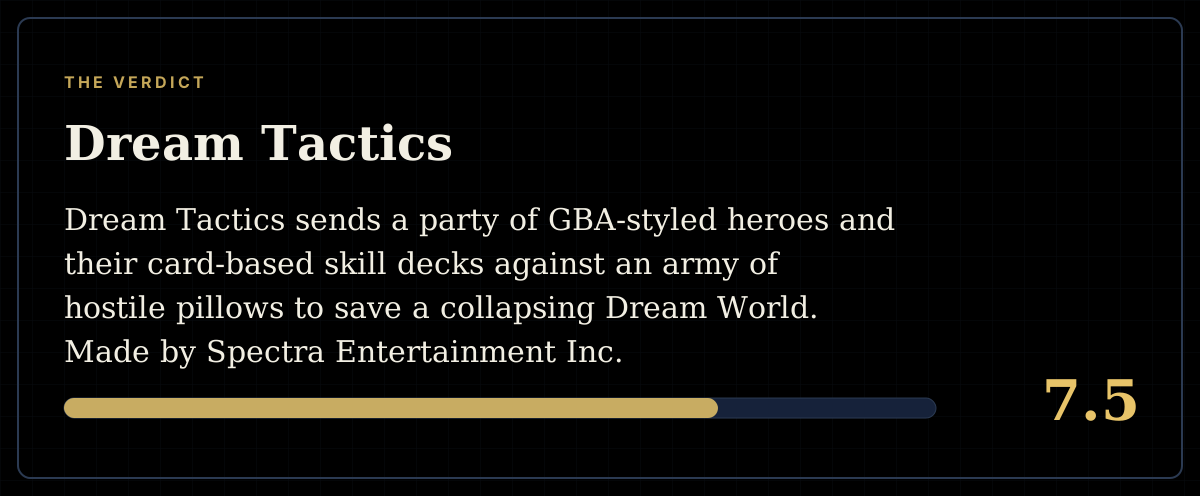
The short versionWanderer Editorial