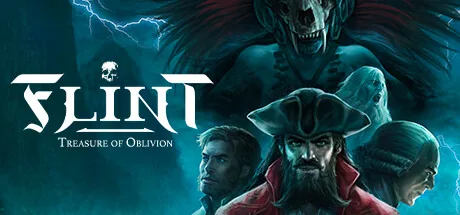
Game review
Flint: Treasure of Oblivion
5.5 / 10
- Developer
- Savage Level
- Publisher
- Microids
- Released
- 17 December 2024
- Platforms
- Windows
- Genre
- Tactical RPG, Adventure, Pirate
- Monetisation
- One-time purchase, no in-game store
- Players
- Single-player only
The short version
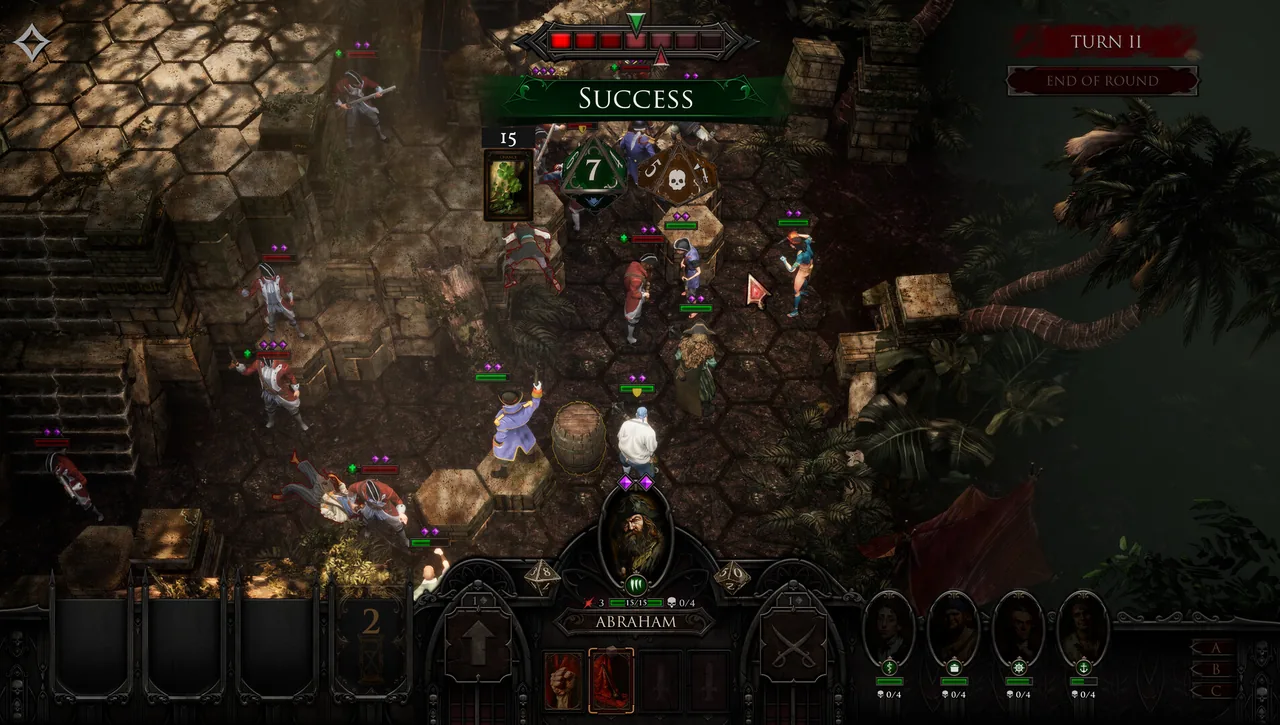
Flint: Treasure of Oblivion tells a comic-book-styled pirate story through real-time exploration and turn-based combat that blends dice rolling with deckbuilding mechanics. Developed by Savage Level and published by Microids, it released on 17 December 2024. Its 46 English-language Steam reviews sit at Mixed, roughly 47.8%, and reading the full available sample of 24 negatives and 22 positives finds a genuinely revealing pattern: reviewers who bounced off the combat system within the first hour describe it as an unexplained, clunky mess, while reviewers with significantly longer playtimes — who engaged with the game's own repeated instruction prompts — largely came around to it, on top of a shared, cross-cutting complaint that the campaign is short, linear and, disappointingly for a pirate game, contains no ship battles at all.
Biggest strengths
- Art direction and comic-book-style presentation draw consistent, strong praise across nearly the entire sample, including from reviewers who otherwise recommend against buying
- Story and character writing earn genuine credit, with several reviewers specifically praising a diverse cast and an engaging pirate narrative, at least until a late shift in tone some found disappointing
- Reviewers who invested significantly more time — several logging 500 to 900-plus minutes — largely report the combat system clicks once understood, with one specifically crediting it as well designed "once you read the instructions"
Biggest weaknesses
- The most consistent complaint concerns an unclear, poorly onboarded combat and movement system, with several reviewers reporting confusion about walkable terrain, equipment icons and core dice mechanics that the game's own tutorial evidently didn't communicate clearly enough for a meaningful share of players
- The campaign is short and notably linear, with only five chapters and multiple reviewers reporting completion in roughly 10 hours, some spending two or more of those hours simply struggling to navigate the opening town
- Despite the pirate premise, there are no ship-to-ship battles, which multiple reviewers flag as a disappointing, conspicuous absence for the genre
Who it's for: Turn-based tactics fans with patience for an unconventional dice-and-deckbuilding combat system and a genuine willingness to read in-game tutorials; a poor fit for anyone wanting to jump straight into combat without engaging with its unusual mechanics first.
Our recommendation: A visually striking, story-driven pirate RPG whose combat system is more coherent than its harshest reviews suggest, provided you actually engage with its tutorial — even then, expect a short, linear campaign light on the swashbuckling spectacle its premise promises.
5.5 / 10
Introduction
Flint: Treasure of Oblivion tells a comic-book-styled story of golden-age piracy, blending real-time exploration with turn-based tactical combat built around dice rolls and a deckbuilding layer. Savage Level developed it and Microids published it on 17 December 2024. Reading the full available sample — 24 negative reviews and 22 positive, all 46 that exist in English — turns up something more interesting than a simple thumbs-up-or-down split: a pattern in the data itself about who ended up liking it.
A pattern worth reading in the numbers
Look closely at playtime across this review's two samples and a clear shape emerges. Several of the most-upvoted negative reviews come from players with 30 to 360 minutes logged — under an hour to six hours — describing confusion, clunky controls and unclear mechanics. The positive sample skews markedly longer, with multiple detailed reviews logging 500 to nearly 1,000 minutes, and several of those reviewers make the same specific point independently: the game's own loading screens repeatedly say "please read the instructions," and reviewers who did so report the combat clicking into place. One wrote plainly, "I've read a few other reviews and I'm not sure I understand the issues people are having... it IS a little clunky if you just jump in and face roll it — but if you READ THE INSTRUCTIONS" it works. Another agreed almost word for word: "a lot of the criticism on the reviews is from people that didn't do what the game asks us to do at every loading screen." That's not a dismissal of the criticism — genuinely poor onboarding is a real design failure regardless of whether a fix exists — but it's a meaningfully different diagnosis than "the combat is broken," and worth reporting as its own finding.
What both sides agree on
Independent of that split, several complaints appear consistently across reviewers regardless of how much time they spent with the game. The campaign is short and linear — only five chapters, completable in roughly 10 hours by most accounts — and at least one reviewer described spending over two of those hours simply trying to navigate the opening town before the story properly began. More pointedly, for a game built entirely around a pirate premise, there are no ship-to-ship battles at all, an absence multiple reviewers single out as a real, specific disappointment rather than a vague sense the game lacks content. Difficulty balance draws its own shared criticism as inverted: reviewers on both sides of the recommendation split describe a punishing opening stretch giving way to a late game several call "laughably" easy well before the credits.
Presentation that both sides credit
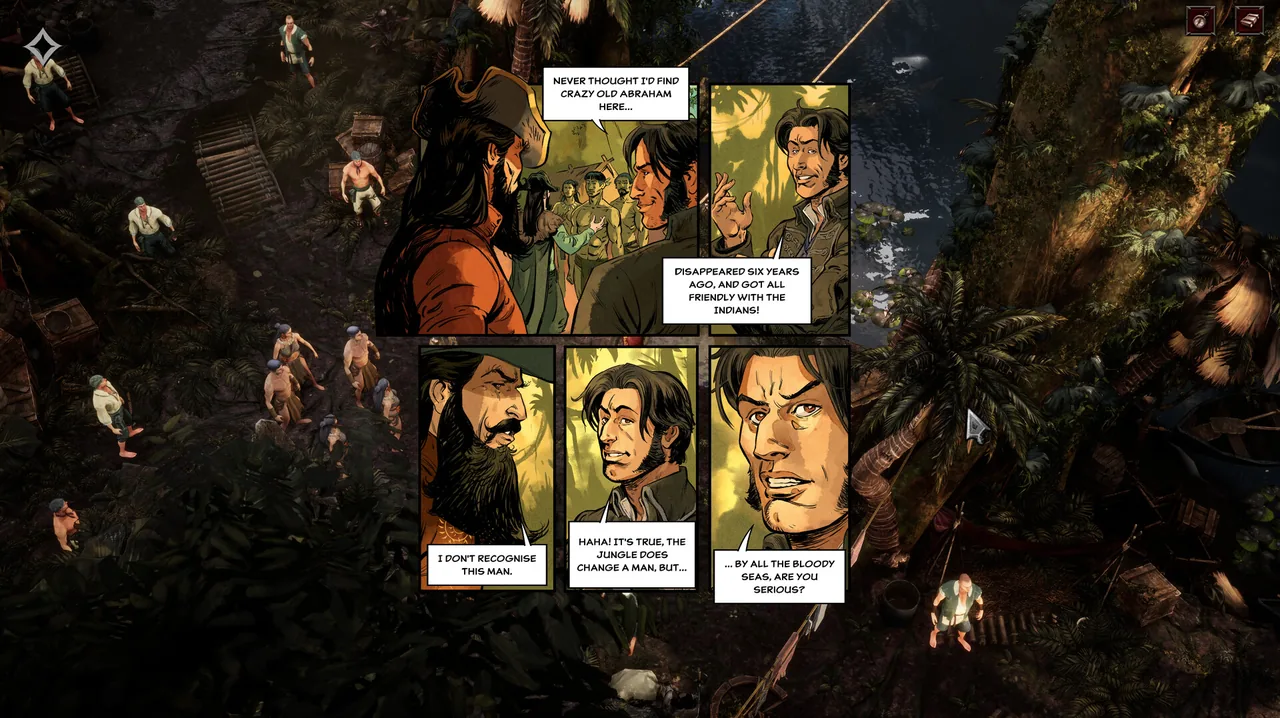
Whatever else divides this review's sample, the game's visual presentation doesn't. Comic-book-style art and environment design draw consistent, genuine praise from reviewers regardless of their overall verdict, and story and character writing earn real credit too — several reviewers specifically praise a diverse cast and an engaging pirate narrative, though at least one detailed review flagged disappointment when the story shifts into supernatural territory late on, feeling it undercut the grounded pirate tone that had drawn them in. Steam Deck performance is separately confirmed as solid by reviewers on both sides.
Final Verdict
Flint: Treasure of Oblivion is a harder game to score than its Mixed badge alone suggests, because this review's full sample reveals a real, measurable split between players who engaged with its unconventional tutorial and those who didn't — and the loudest early complaints skew toward the latter group. That doesn't erase the onboarding failure itself, which is a genuine design problem regardless of the fix being available, and it doesn't address the campaign's short length, linear structure, inverted difficulty curve or conspicuous absence of ship combat in a pirate game. For a reader willing to actually read the tutorial prompts the game keeps offering, there's a more coherent tactical RPG here than the negative reviews alone would suggest — just a shorter, more linear one than its premise might lead you to expect.
Pros and cons
Pros
- Art direction and comic-book-style presentation draw consistent, strong praise across nearly the entire sample, including from reviewers who otherwise recommend against buying
- Story and character writing earn genuine credit, with several reviewers specifically praising a diverse cast and an engaging pirate narrative, at least until a late shift in tone some found disappointing
- Reviewers who invested significantly more time — several logging 500 to 900-plus minutes — largely report the combat system clicks once understood, with one specifically crediting it as well designed "once you read the instructions"
- Steam Deck performance is specifically confirmed as solid by multiple reviewers on both sides of the recommendation split
Cons
- The most consistent complaint concerns an unclear, poorly onboarded combat and movement system, with several reviewers reporting confusion about walkable terrain, equipment icons and core dice mechanics that the game's own tutorial evidently didn't communicate clearly enough for a meaningful share of players
- The campaign is short and notably linear, with only five chapters and multiple reviewers reporting completion in roughly 10 hours, some spending two or more of those hours simply struggling to navigate the opening town
- Despite the pirate premise, there are no ship-to-ship battles, which multiple reviewers flag as a disappointing, conspicuous absence for the genre
- Difficulty balance draws specific criticism as inverted, with several reviewers describing a punishing opening followed by a late game that becomes trivially easy well before the story concludes
Screenshots
-
Flint: Treasure of OblivionImage: Microids via Steam -
Flint: Treasure of OblivionImage: Microids via Steam -
Flint: Treasure of OblivionImage: Microids via Steam -
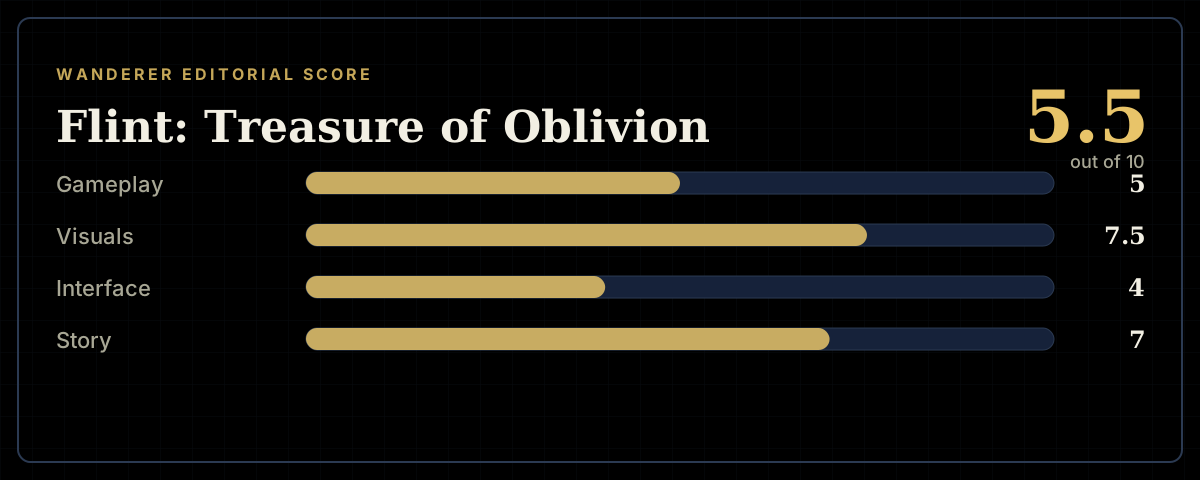
How the review scores each part of the gameWanderer Editorial -
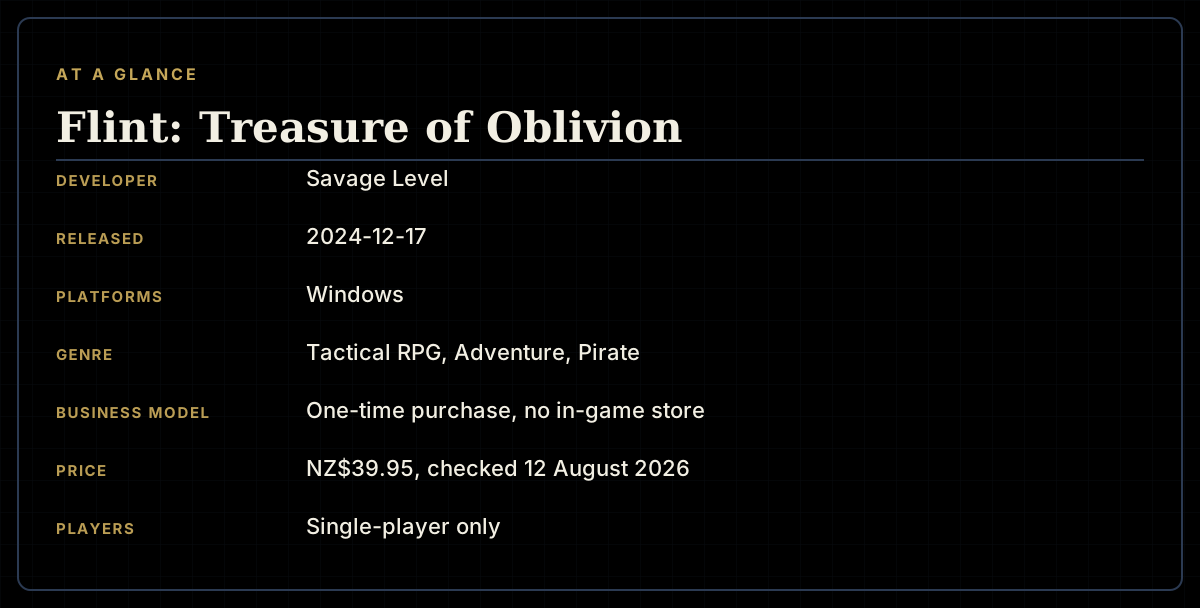
The essentials at a glanceWanderer Editorial -
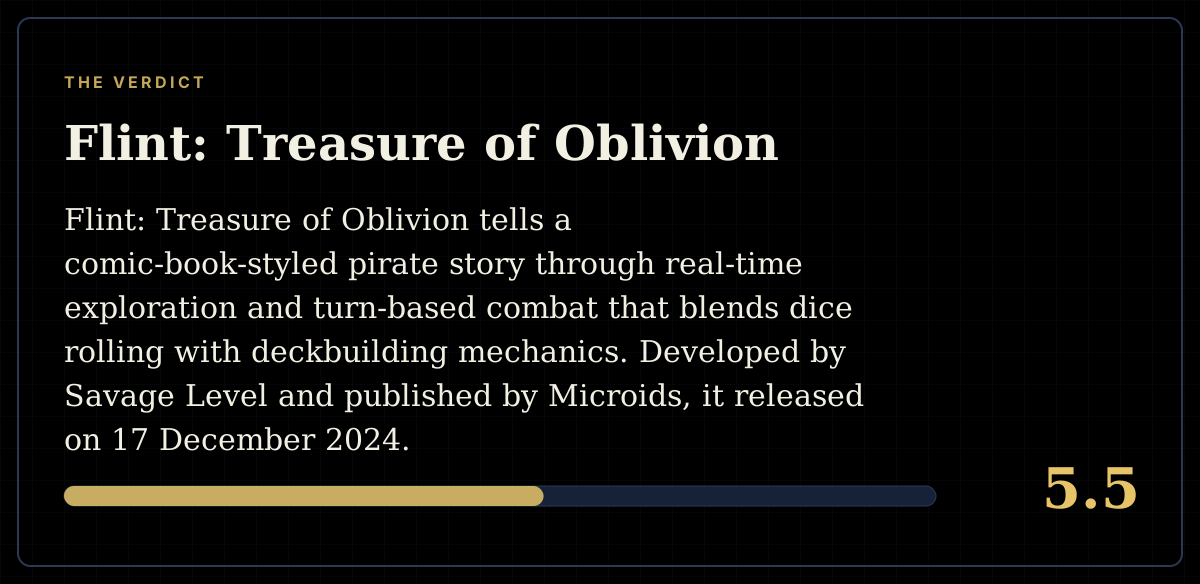
The short versionWanderer Editorial