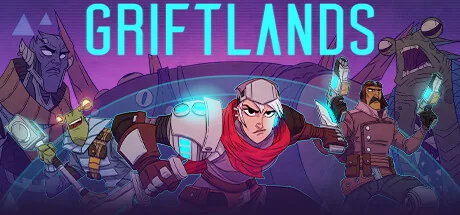
Game review
Griftlands
7 / 10
- Developer
- Klei Entertainment
- Publisher
- Klei Entertainment
- Released
- 1 June 2021
- Platforms
- Windows, macOS, Linux
- Genre
- Deck-Building Roguelite
- Monetisation
- Premium, one-off purchase — no in-game purchases
- Players
- Single-player
The short version
Griftlands takes the deck-building roguelite formula Klei helped popularise and layers a second card system on top — negotiation battles alongside combat ones — wrapped around genuine narrative choice that shapes who you fight, befriend or betray across three distinct campaigns. Reviewers consistently praise the writing, art and world as some of Klei's best.
The honest, recurring criticism is more specific: a thoughtful minority of reviewers, including fans of Slay the Spire and Monster Train, describe the actual card mechanics as shallower than the genre's best, with each character's deck converging on a fairly obvious meta and dialogue that becomes repetitive across the multiple runs a roguelite structure normally rewards.
Biggest strengths
- Genuine narrative choice with real consequences for which factions and characters you side with across three distinct playable campaigns
- A second, distinct card system for negotiation and persuasion sits alongside combat, a real point of difference from most deck-building roguelites
- Klei's writing, art and world-building are consistently praised as some of the studio's strongest, giving runs genuine narrative texture
Biggest weaknesses
- A consistent, thoughtful minority of reviewers describe the underlying card mechanics as shallower than genre leaders like Slay the Spire, with each deck converging on a fairly obvious optimal strategy
- Dialogue and narrative beats can become repetitive across the multiple runs a roguelite structure normally encourages, undercutting one of the game's core strengths on replay
- Some reviewers describe feeling like they experienced a different, less compelling game than the enthusiastic majority, without being able to pin down exactly why it didn't click
Who it's for: Deck-building roguelite fans who want real narrative weight and choice alongside the card combat — go in aware that the cards themselves draw more mixed reactions than the writing and world around them.
Our recommendation: Worth playing for Klei's writing and world-building, which are genuinely strong, and for the novelty of a second, distinct card system built around negotiation. Temper expectations for how deep the actual deck-building holds up across repeated runs compared to genre leaders.
7 / 10
Klei Entertainment built a reputation on distinctive, mechanically confident games, and Griftlands applies that reputation to the deck-building roguelite genre with a genuine twist: alongside the usual combat card battles, you negotiate and persuade using a second, separate deck, and both systems feed into a branching story with real narrative consequences across three distinct playable characters. The reception is broadly enthusiastic, and where it isn't, the criticism is specific enough to take seriously rather than dismiss.
A world worth grifting through
What draws the most consistent, near-universal praise is Griftlands' writing and presentation. Choices about which factions to side with, which characters to befriend or betray, and how you approach the game's central conflicts carry genuine weight, and Klei's art and dialogue give the world a texture that's rare even among story-focused roguelites. The negotiation card system — persuading rather than simply defeating opponents — is a real structural point of difference from the genre's usual combat-only focus, giving Griftlands an identity distinct from Slay the Spire and its many imitators.
Where a thoughtful minority pushes back
The recurring, more specific criticism concerns what's underneath that presentation. A consistent share of reviewers, including some who came in as fans of Slay the Spire and Monster Train, describe the actual card mechanics as shallower than the genre's strongest entries — each character's deck tends to converge on a fairly obvious optimal strategy rather than supporting the kind of build diversity top-tier deckbuilders reward. A related complaint concerns replayability specifically: the branching narrative that makes a first run compelling can become repetitive across the additional runs a roguelite structure is normally built to encourage, since much of the dialogue repeats rather than varying meaningfully. Several reviewers frame this honestly as a game they wanted to love more than they actually did, without being able to fully explain the gap.
Final verdict
Griftlands succeeds clearly at what Klei is best known for — confident writing, distinctive art, and a world worth spending time in — and adds a genuinely novel negotiation card system most competitors don't attempt. It settles at 7 rather than higher because a consistent, thoughtful minority make a fair case that the card mechanics themselves don't hold up to the genre's best over repeated play, and that the narrative repetition across runs works against the roguelite structure it's built on. Play it for the writing and the world; go in with tempered expectations for how deep the cards themselves will reward mastery.
Price and review data checked 5 August 2026.
If you'd rather your choices shaped a persistent world you return to rather than resetting each run, Wanderer keeps its own consequences carrying forward continuously.
Pros and cons
Pros
- Genuine narrative choice with real consequences for which factions and characters you side with across three distinct playable campaigns
- A second, distinct card system for negotiation and persuasion sits alongside combat, a real point of difference from most deck-building roguelites
- Klei's writing, art and world-building are consistently praised as some of the studio's strongest, giving runs genuine narrative texture
- Full release after roughly two years in Early Access, with community feedback visibly reflected in post-launch updates
Cons
- A consistent, thoughtful minority of reviewers describe the underlying card mechanics as shallower than genre leaders like Slay the Spire, with each deck converging on a fairly obvious optimal strategy
- Dialogue and narrative beats can become repetitive across the multiple runs a roguelite structure normally encourages, undercutting one of the game's core strengths on replay
- Some reviewers describe feeling like they experienced a different, less compelling game than the enthusiastic majority, without being able to pin down exactly why it didn't click
- The persuasion card system, while distinctive, isn't universally seen as differentiated enough in practice from the combat system it runs alongside
Screenshots
-
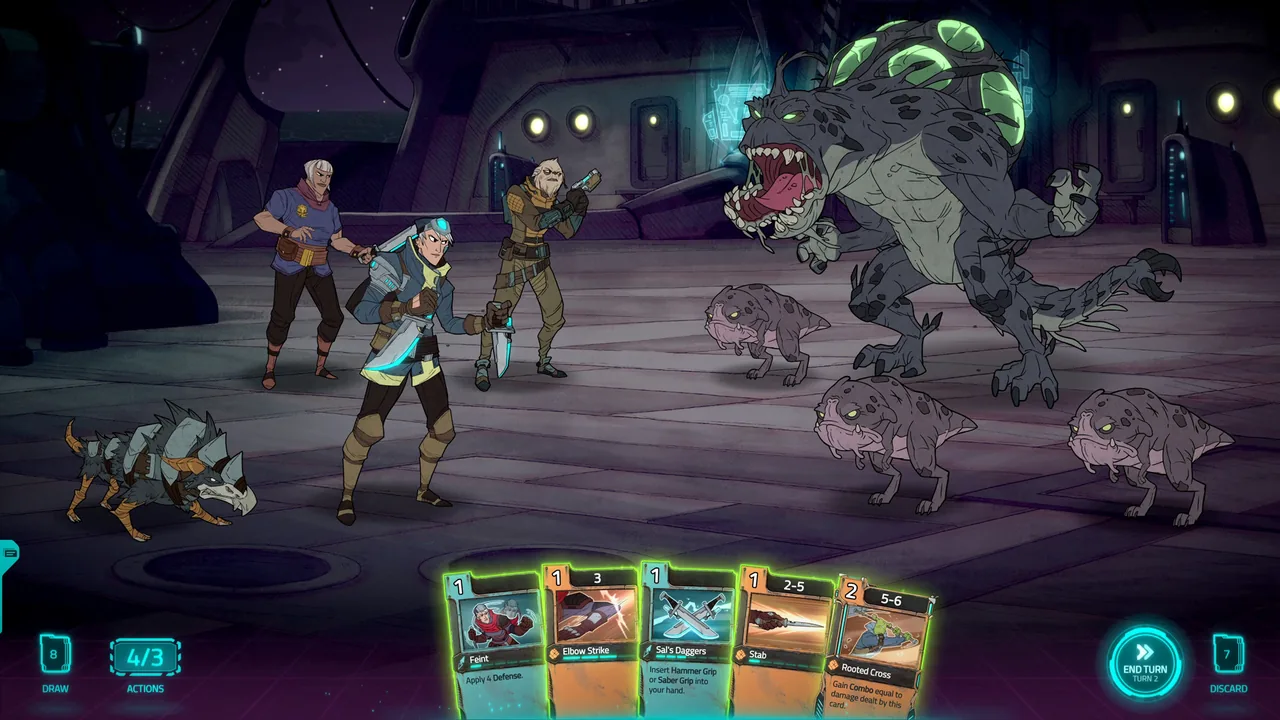
GriftlandsImage: Klei Entertainment via Steam -
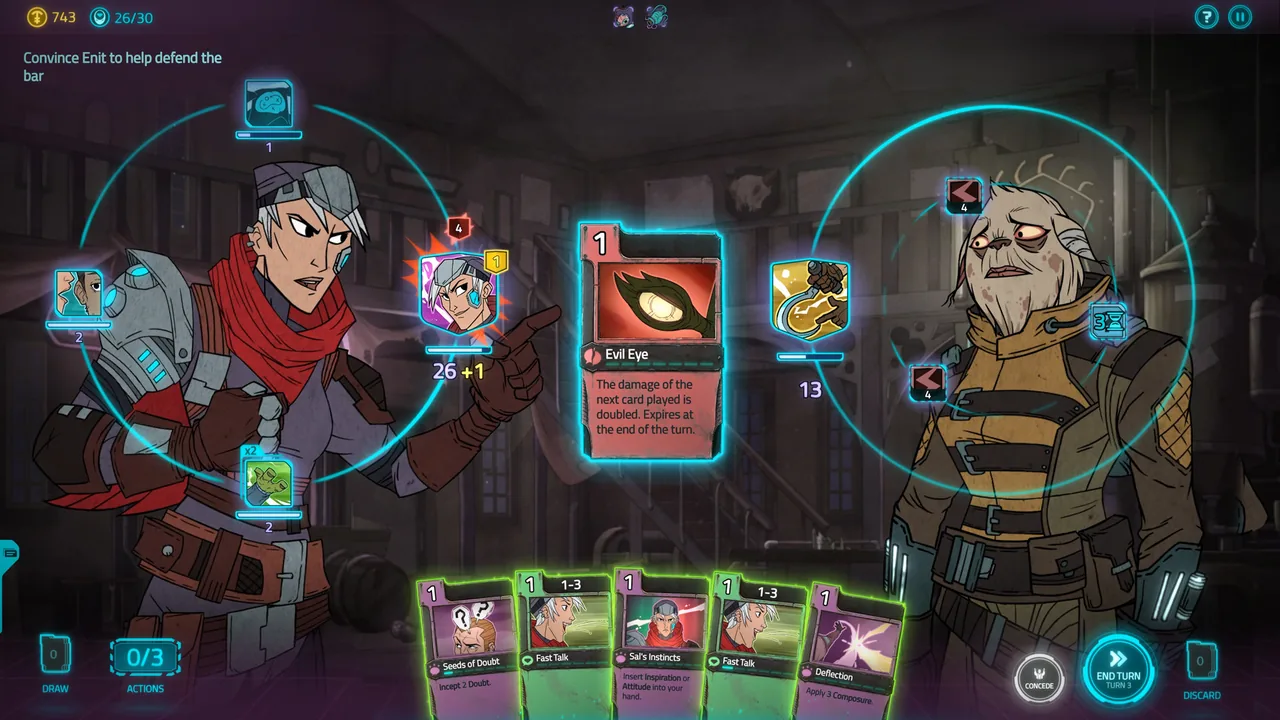
GriftlandsImage: Klei Entertainment via Steam -
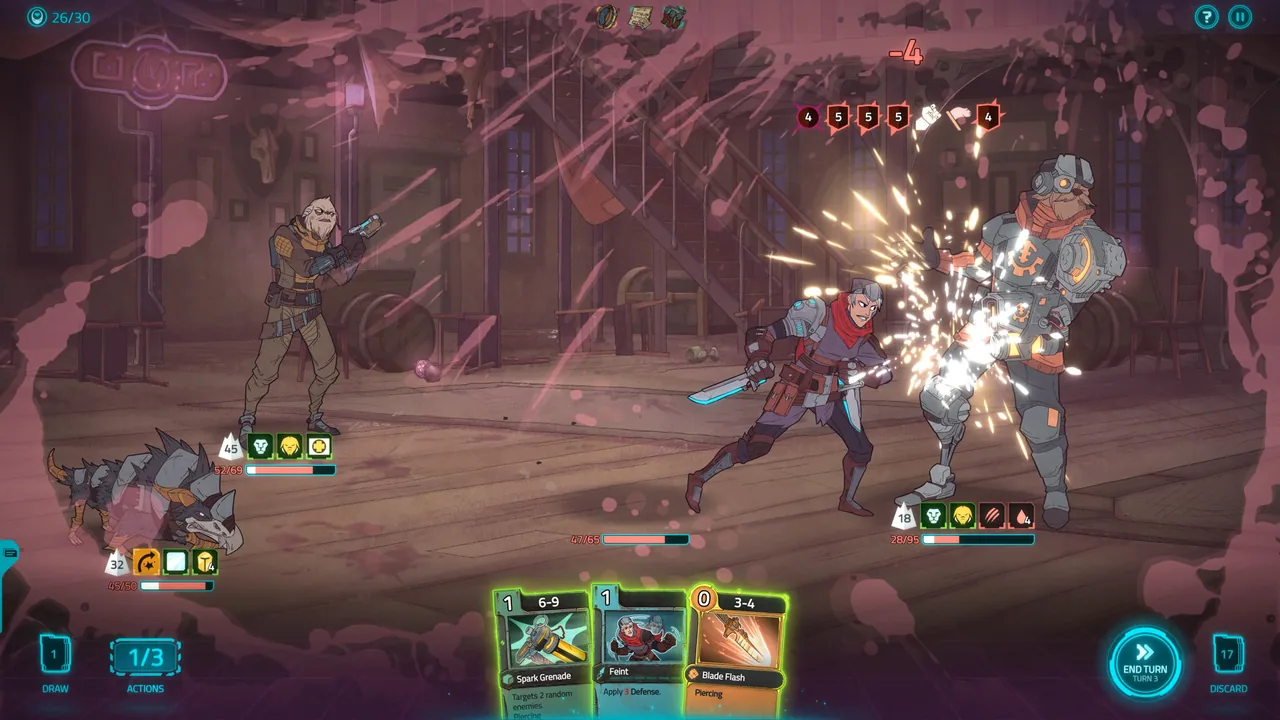
GriftlandsImage: Klei Entertainment via Steam -
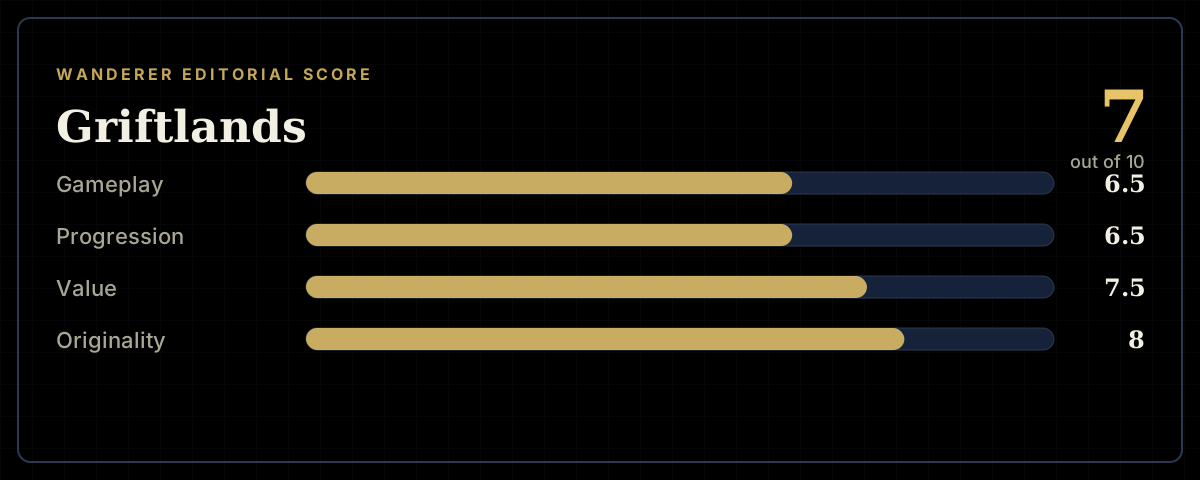
How the review scores each part of the gameWanderer Editorial -
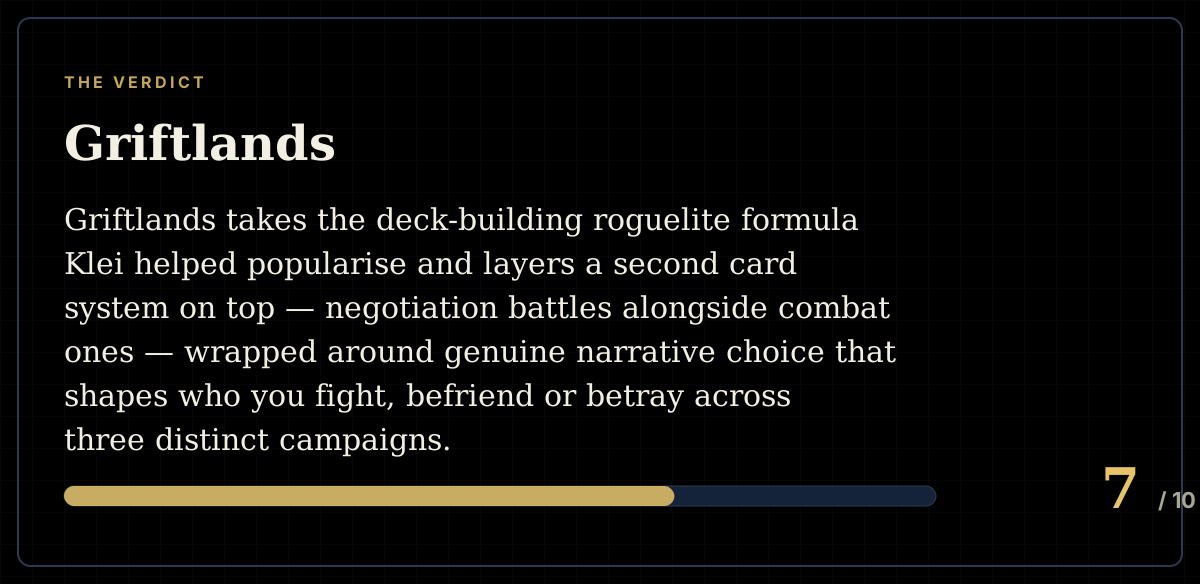
The short versionWanderer Editorial