
Game review
Isle of Swaps
6.5 / 10
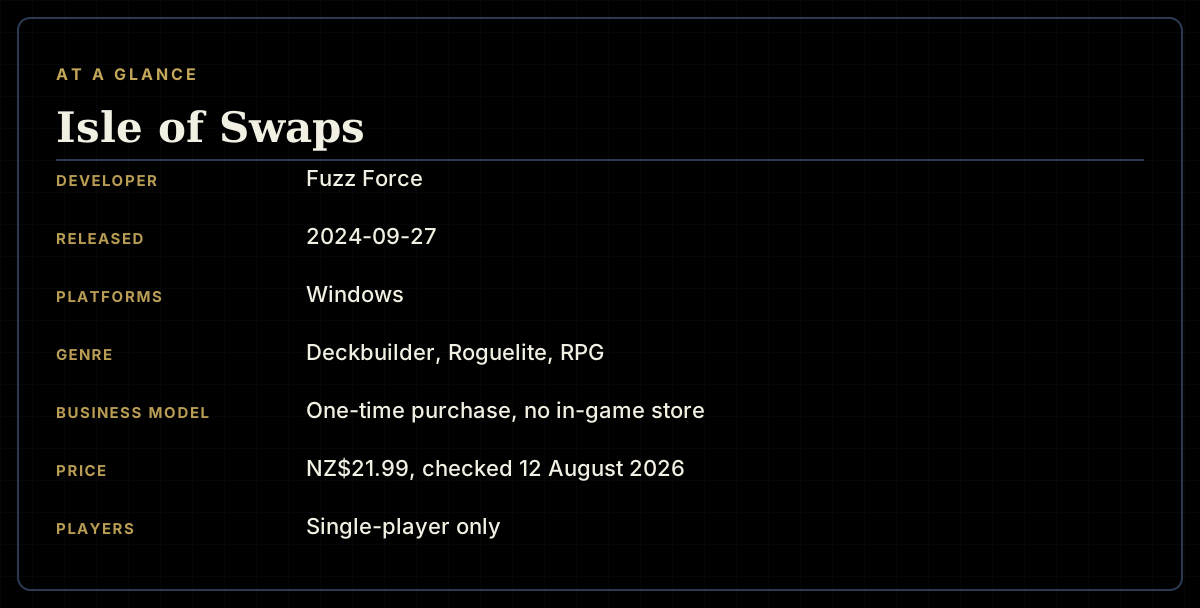
- Developer
- Fuzz Force
- Publisher
- Fuzz Force
- Released
- 27 September 2024
- Platforms
- Windows
- Genre
- Deckbuilder, Roguelite, RPG
- Monetisation
- One-time purchase, no in-game store
- Players
- Single-player only
The short version
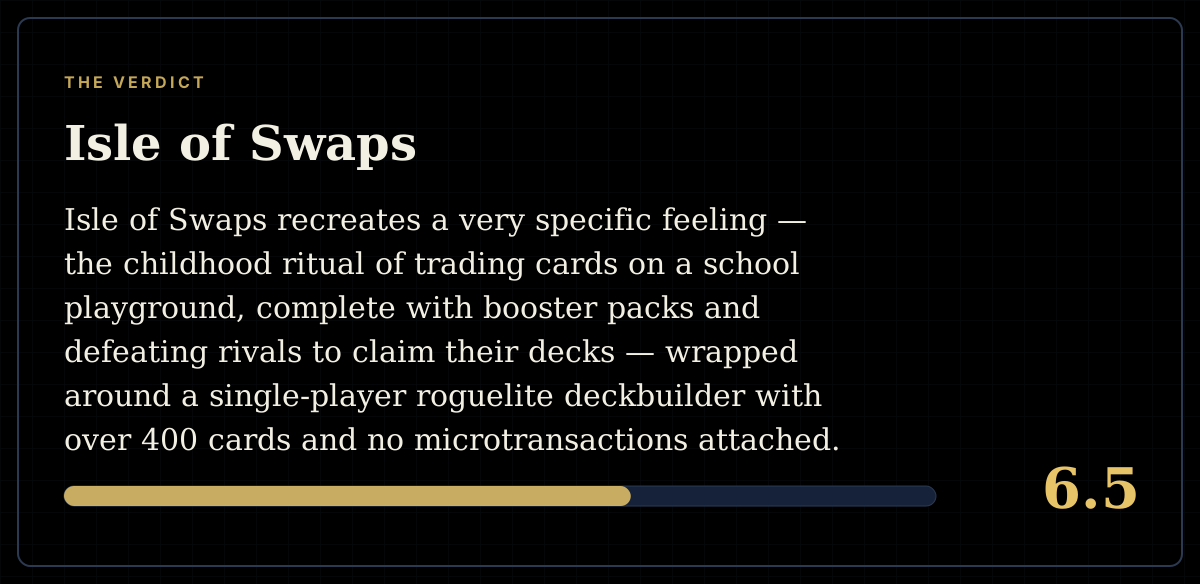
Isle of Swaps recreates a very specific feeling — the childhood ritual of trading cards on a school playground, complete with booster packs and defeating rivals to claim their decks — wrapped around a single-player roguelite deckbuilder with over 400 cards and no microtransactions attached. Developed and self-published by Fuzz Force, it released on 27 September 2024. Its 100 English-language Steam reviews sit at Very Positive, roughly 91%, and this review reads all 9 available negative reviews alongside the top positives to find a genuinely nostalgic, distinctive hidden gem whose real design flaws — unfair-feeling difficulty scaling and a card-loss penalty that punishes losing exactly when a player can least afford it — recur consistently enough to be worth taking seriously.
Biggest strengths
- The game draws widespread, specific praise for authentically capturing the nostalgic feeling of trading cards as a child, with reviewers repeatedly invoking Pokemon and Magic: The Gathering as reference points it earns rather than merely imitates
- Over 400 cards ship with zero microtransactions, which multiple reviewers single out specifically and favourably, contrasting it with the monetisation typical of real-world TCGs and their digital adaptations
- Multiple reviewers call it a "hidden gem," praising distinct playable characters, strong art direction and two game modes that complement each other well
Biggest weaknesses
- The most consistent, serious complaint concerns difficulty scaling that several reviewers describe as unfair rather than challenging, with enemies reported to have roughly double the player's HP and damage output by the game's second area
- A card-loss penalty for losing battles draws pointed criticism as a design trap: losing a card on defeat makes future attempts harder rather than giving a struggling player room to recover, which one reviewer specifically flagged as counterproductive
- A "forced boss battle" mechanic compounds the above for some players, removing the option to grind easier fights and build up a stronger deck before a required difficult encounter
Who it's for: Fans of Pokemon or Magic: The Gathering's trading-card fantasy who want that experience without multiplayer pressure or microtransactions; a poor fit for anyone sensitive to steep, possibly unfair difficulty spikes in a card-battler.
Our recommendation: A genuinely charming, distinctive hidden gem for TCG nostalgia, worth playing despite real difficulty-balance complaints that a patch could meaningfully improve.
6.5 / 10
Introduction
Isle of Swaps builds its entire pitch around a very specific, deliberately targeted nostalgia: the feeling of trading cards with classmates on a school playground, complete with booster packs, thin starting collections that grow over time, and the thrill of defeating a rival to claim cards from their deck. Fuzz Force developed and self-published it, releasing on 27 September 2024. Reading all 9 available English-language negative reviews alongside the top positives, out of a Very Positive corpus (roughly 91% across 100 reviews), finds a game that earns its nostalgic pitch honestly while carrying real, specific balance problems worth knowing about before buying.
A trading-card fantasy that earns its comparisons
Reviewers reach for genre touchstones deliberately and specifically when describing what Isle of Swaps gets right. One detailed review, having played the pre-release playtest extensively, called it a fit for anyone who "like[s] pokemon/Magic style TCG but don't want to get into multiplayer games" specifically to avoid microtransactions. Another framed the appeal precisely: "that trading card game that was popular at school but you only got one or two packs of cards a week" — not Slay the Spire's escalating power fantasy, but a slower, more collection-focused loop. Multiple reviewers specifically and favourably note the game ships over 400 cards with zero microtransactions attached, a genuine point of contrast with how most real-world and digital TCGs monetise card collection. Several reviewers independently call it a "hidden gem," and Steam Deck performance draws specific confirmation as excellent from at least one detailed review.
Difficulty that several reviewers call unfair, not just hard
The most serious, recurring complaint in this small negative sample concerns how the game scales its challenge. Multiple reviewers independently report enemies with roughly double the player's HP and damage by the game's second area, one asking directly: "What is the player to do in this scenario?" after describing enemy monsters with double stats and constant field healing on top. That's a specific, reproducible complaint rather than generic difficulty grumbling, and it appears across reviewers with real playtime rather than drive-by frustration.
Compounding this is a design choice several reviewers single out by name: losing a battle costs the player a card from their deck, which weakens exactly the collection a struggling player needs to recover. One reviewer put the core problem precisely: "If I couldn't beat it at my best, how is punishing me going to help?" A related "forced boss battle" mechanic removes the option to grind easier encounters first, trapping some players in a spiral where losses make future attempts harder rather than offering a path to improve. This is the kind of design tension worth flagging plainly — it's not that the game is too hard, reviewers argue, it's that losing makes the next attempt harder rather than teaching a lesson the player can act on.
Interface friction
A smaller, more technical thread concerns the user interface. One reviewer reported a bug that froze the game while dragging cards during a session they'd otherwise enjoyed for 15 hours. Another described the card-collection browsing screen as feeling "built for a mobile device" rather than PC, with the interface reportedly locking up periodically during longer sessions.
Final Verdict
Isle of Swaps succeeds at something genuinely specific and well-executed: recreating the particular joy of childhood card trading without the multiplayer pressure or monetisation that usually comes attached to that fantasy, and its "hidden gem" reputation among reviewers is earned rather than overstated. Where it falls short of a stronger score is difficulty balance that a real, consistent share of reviewers describe as unfair rather than merely challenging, compounded by a card-loss penalty that punishes struggling players precisely when they can least afford it. For TCG nostalgia specifically, this is a strong, distinctive recommendation; go in aware that the difficulty curve may need a patch or two before it feels fair rather than punishing.
Pros and cons
Pros
- The game draws widespread, specific praise for authentically capturing the nostalgic feeling of trading cards as a child, with reviewers repeatedly invoking Pokemon and Magic: The Gathering as reference points it earns rather than merely imitates
- Over 400 cards ship with zero microtransactions, which multiple reviewers single out specifically and favourably, contrasting it with the monetisation typical of real-world TCGs and their digital adaptations
- Multiple reviewers call it a "hidden gem," praising distinct playable characters, strong art direction and two game modes that complement each other well
- Steam Deck compatibility is specifically confirmed as excellent by at least one reviewer, making it a strong fit for handheld card-game sessions
Cons
- The most consistent, serious complaint concerns difficulty scaling that several reviewers describe as unfair rather than challenging, with enemies reported to have roughly double the player's HP and damage output by the game's second area
- A card-loss penalty for losing battles draws pointed criticism as a design trap: losing a card on defeat makes future attempts harder rather than giving a struggling player room to recover, which one reviewer specifically flagged as counterproductive
- A "forced boss battle" mechanic compounds the above for some players, removing the option to grind easier fights and build up a stronger deck before a required difficult encounter
- UI issues recur across the sample, including a reported freeze bug while dragging cards and a card-collection browsing interface multiple reviewers describe as feeling designed for mobile rather than PC
Screenshots
-
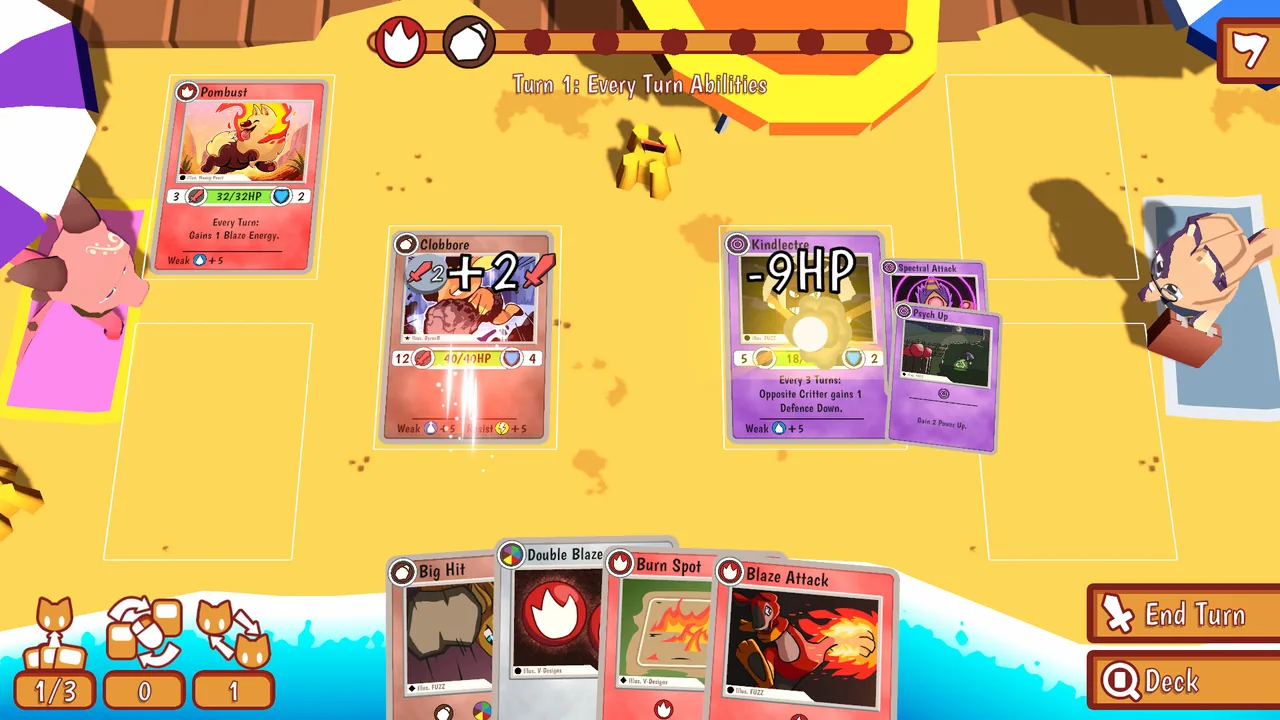
Isle of SwapsImage: Fuzz Force via Steam -
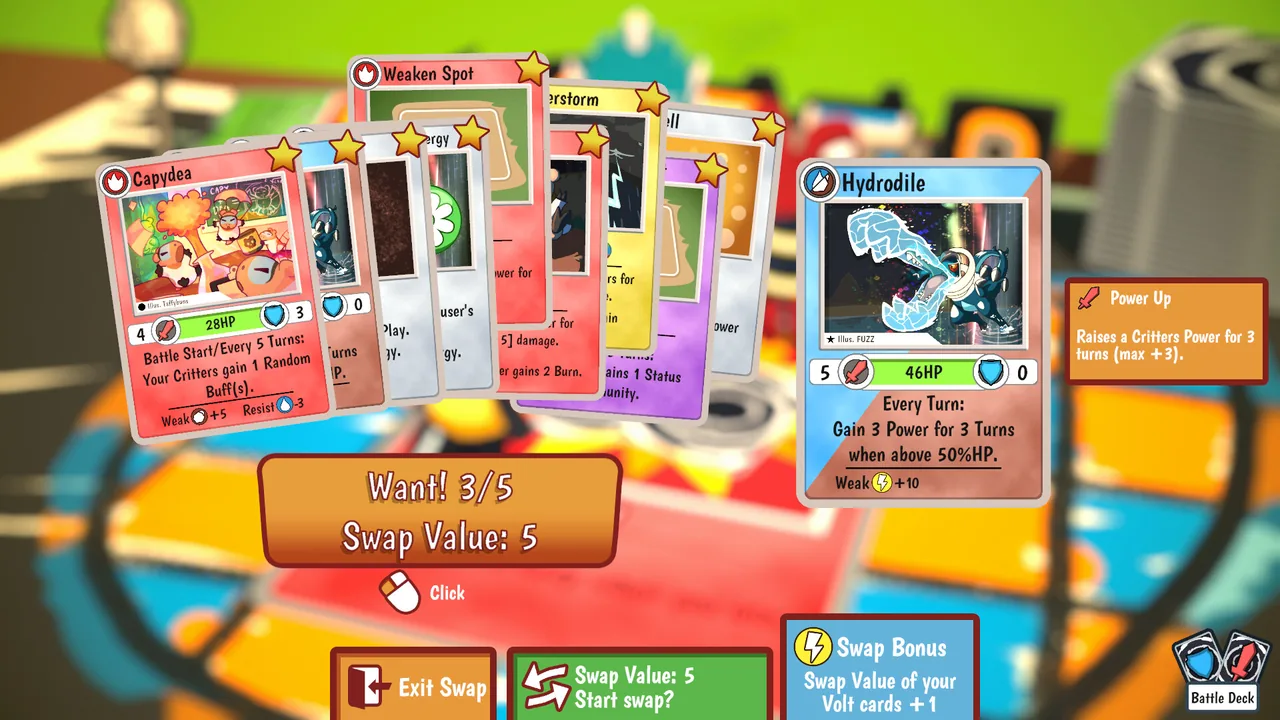
Isle of SwapsImage: Fuzz Force via Steam -
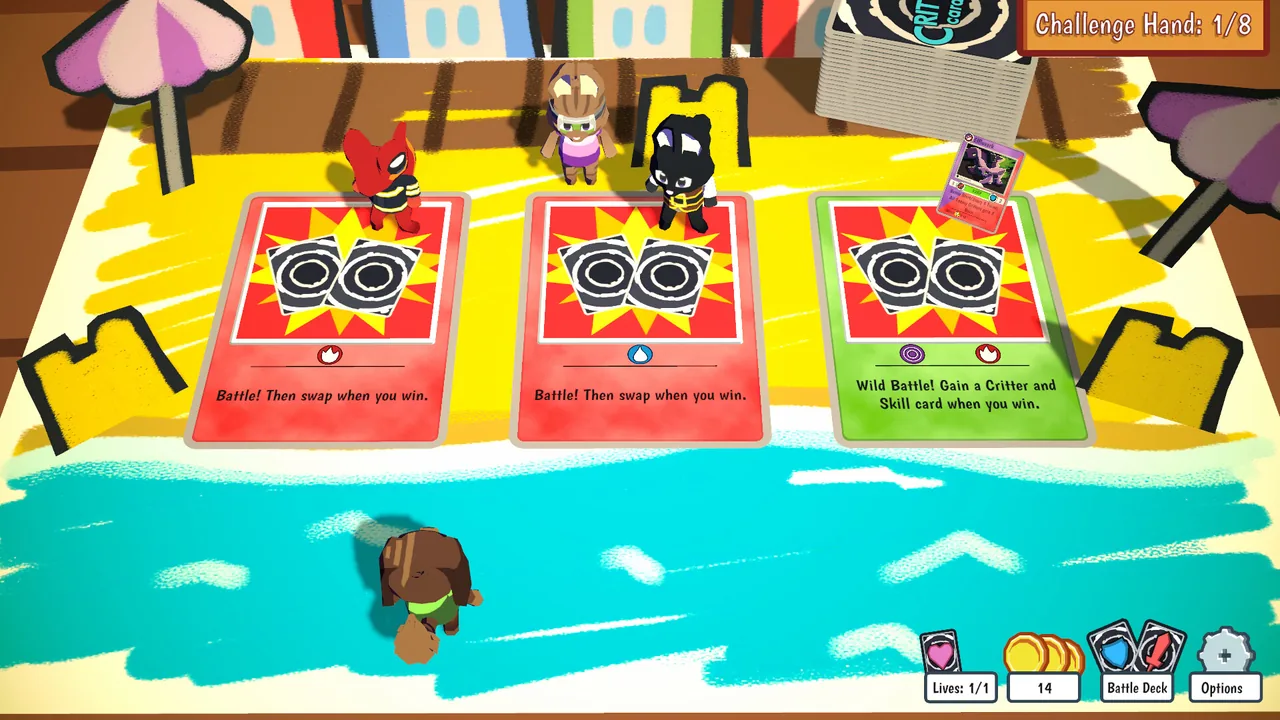
Isle of SwapsImage: Fuzz Force via Steam -
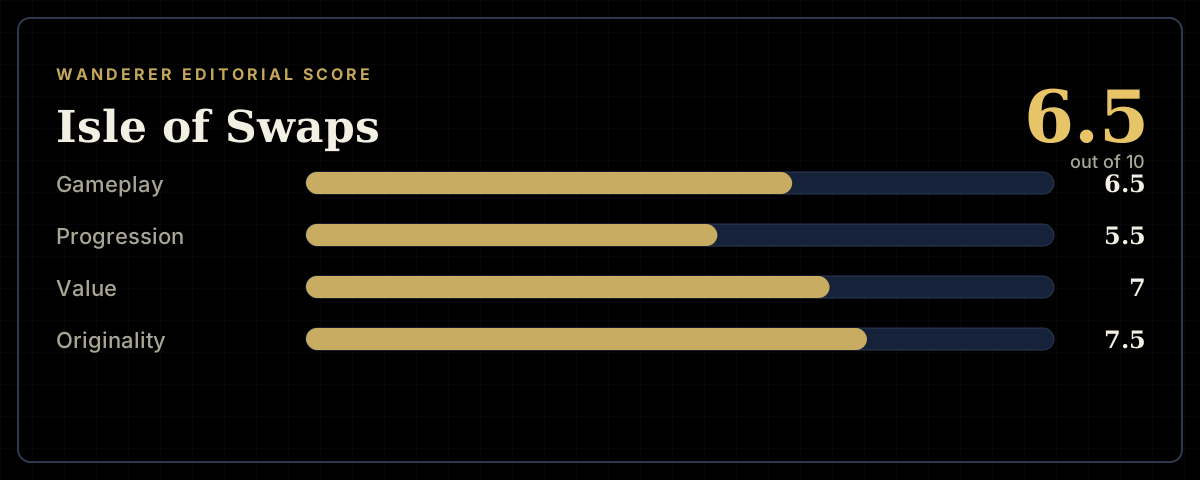
How the review scores each part of the gameWanderer Editorial -
The essentials at a glanceWanderer Editorial -
The short versionWanderer Editorial