Game review
Ballionaire
6.5 / 10
- Developer
- newobject
- Publisher
- Raw Fury
- Released
- 10 December 2024
- Platforms
- Windows
- Genre
- Roguelike, Deckbuilding, Physics Puzzle
- Monetisation
- One-time purchase, no DLC or in-game currency
The short version
Ballionaire, from developer newobject and publisher Raw Fury, drops a ball onto a pachinko-style board full of triggers and boons, chasing physics-driven combos to satisfy three demanding "Elders" before climbing to the next difficulty tier. Released 10 December 2024, it launched to a Very Positive 86.1% across 1,959 English reviews and has held onto that lifetime badge, but a 100-review recent sample tells a sharper story: only 66% positive. Reading the full negative sample and dating it by quarter turns up a specific, credible cause rather than a vague decline — a growing pool of 145-plus triggers and 55-plus boons that, by a large share of the game's own players' account, has made combos harder to assemble reliably rather than richer to discover, and that problem gets worse, not better, the more of the game you unlock.
Biggest strengths
- A genuinely satisfying physics-driven core loop — dropping a ball to bonk triggers and chain combos draws consistent praise even from critical reviewers
- A distinctive presentation and framing (the self-declared "autobonker" genre) across multiple board layouts — Pyramid, Danger Wheel, Pinball, and more — that keeps the early hours varied
- Full controller support and Steam Workshop integration for community-made content
Biggest weaknesses
- 40 of the 100 most-helpful English negative reviews raise randomness or luck directly, and the specific complaint — not enough redundancy to reliably assemble a working combo from 145-plus triggers — appears across the game's three highest-voted negatives (286, 236, and 207 votes)
- One of those top reviews argues the meta-progression system actively works against players: unlocking more items at higher difficulty dilutes the pool further, making runs harder rather than more rewarding
- Recent-review sentiment (66% of the last 100 English reviews) sits twenty points below the lifetime badge, and the drop is concentrated in the months after launch (35 of 100 negatives land in Q1 2025 alone) rather than fading with time
Who it's for: Fans of physics-driven roguelikes and deckbuilders (Peggle, Peglin, Balatro) who enjoy theorycrafting builds and don't mind a game whose difficulty curve currently outpaces its own tools for controlling luck; a weaker pick for anyone specifically chasing the higher difficulty tiers, where several of the game's own high-playtime critics report the unlock system working against them.
Our recommendation: A charming, well-presented physics roguelike worth its price for a satisfying first run or two, but approach the deeper difficulty tiers and full item unlock with tempered expectations — the game's own players consistently report diminishing returns there, and development has been quiet since April 2025.
6.5 / 10
Introduction
Ballionaire wants to be pachinko's answer to Balatro: drop a ball onto a physics-driven board, bonk it off triggers to earn money and spawn more balls, and draft new boons and triggers each round to build toward an "outrageous" scoring combo. Developer newobject and publisher Raw Fury call it the first "autobonker," and the pitch landed — the game released on 10 December 2024 to a Very Positive 86.1% across 1,959 English reviews. That lifetime figure hasn't collapsed, but it is no longer the whole story. A 100-review sample of the game's most recent English feedback runs just 66% positive, a twenty-point gap this review's full read of the negative sample traces to one specific, well-documented mechanical problem rather than a vague loss of interest.
Bonking your way to a satisfying opening
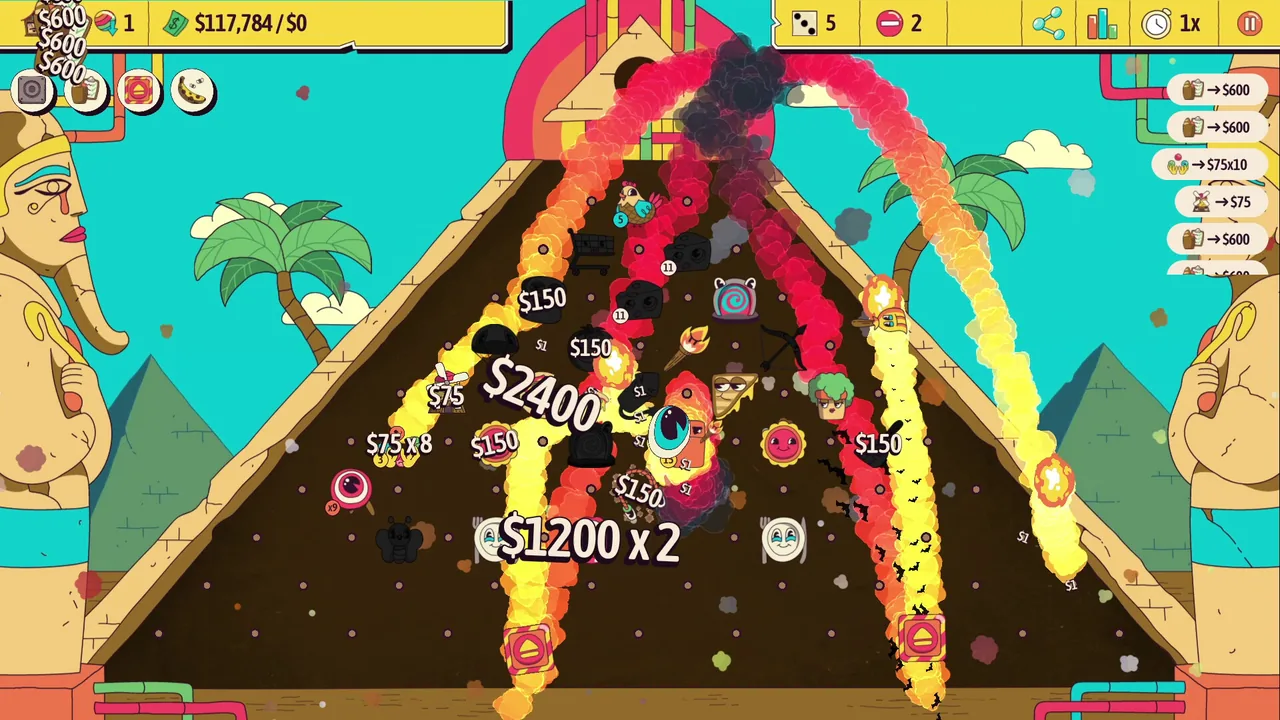
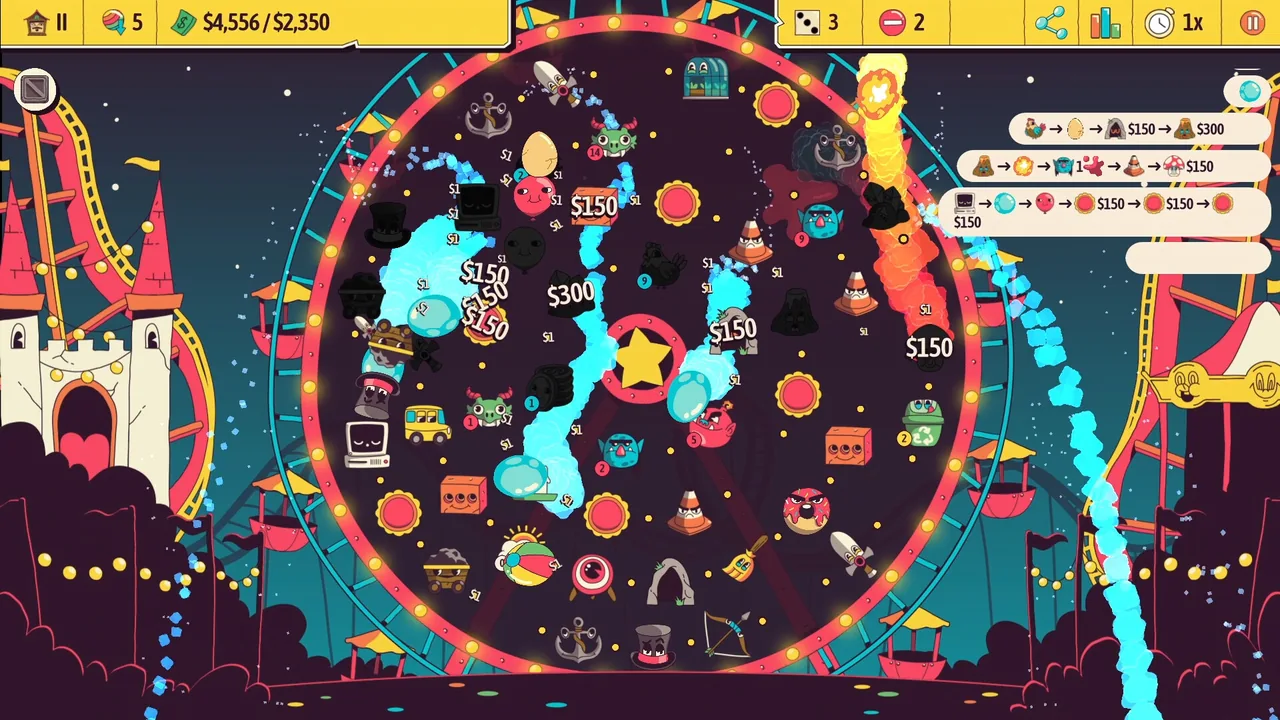
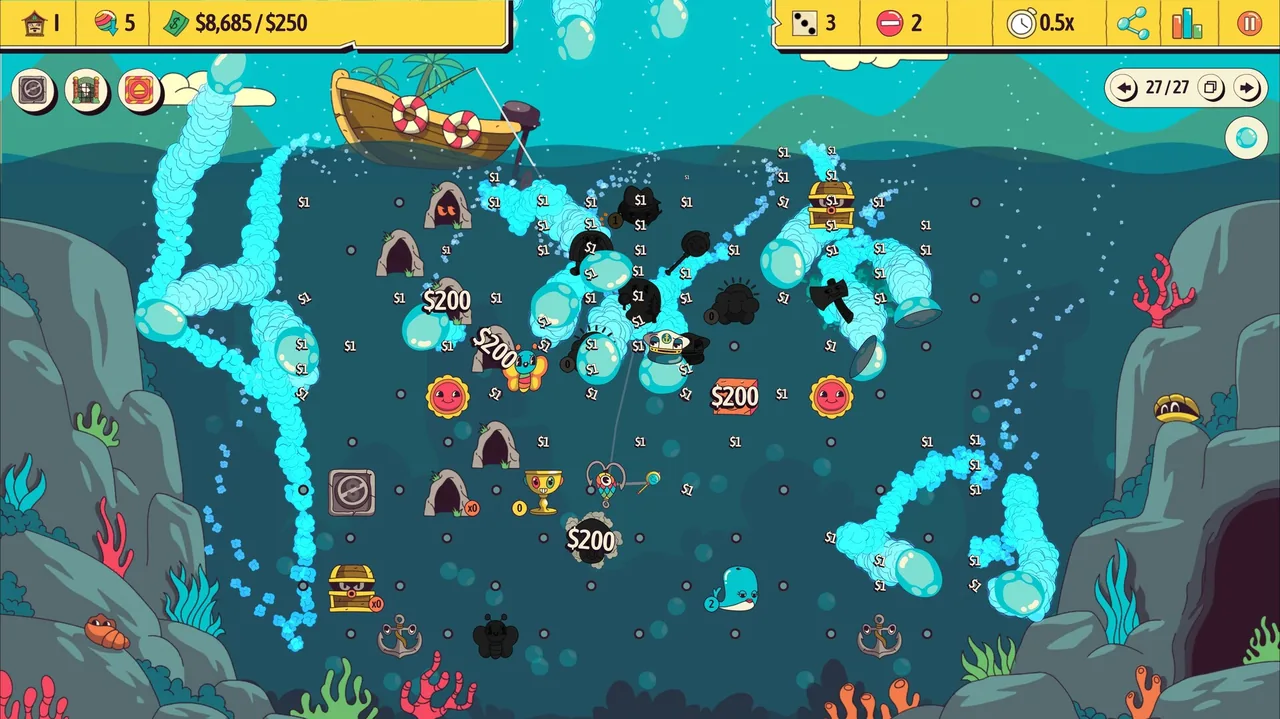
The core physics loop is the game's clearest strength, and almost nobody disputes it — including reviewers giving the game a thumbs-down. Community tag votes confirm the genre blend Ballionaire is chasing: Roguelike, Deckbuilding, Pinball, Physics, and Auto Battler sit together on its own store page. Dropping a ball, watching it cascade through triggers, and chaining an unexpected combo has the same kinetic, satisfying feedback loop that made Peggle a genre unto itself, and Ballionaire adds real variety on top of it — multiple distinct boards (a Pyramid layout, a spinning Danger Wheel, a straight Pinball table) each demand a different approach to the same basic toolkit. Full controller support and Steam Workshop integration round out a genuinely well-produced package for its price. For a first run or two, the reception is almost universal: this is a clever, likeable idea, well executed.
Where the pool works against you
The trouble starts, according to Ballionaire's own critical reviewers, exactly where the game asks players to go deeper. The three highest-voted negative reviews in the full sample — 286, 236, and 207 votes respectively — independently describe the same specific failure: with 145-plus triggers and 55-plus boons in the pool, a run offers "no redundancy" to reliably assemble the two or three pieces a working combo actually needs, turning theorycrafting into pure luck. The 236-vote review goes further, making an argument about the game's own incentive structure that is hard to read as anything but a design flaw: unlocking additional items through meta-progression, the system the game is explicitly built around, makes the higher difficulty tiers harder rather than more interesting, because every new unlock dilutes the odds of drawing what a build actually needs. Reviewers reach for the genre's best-known names to make the comparison concrete — "unlike Balatro," "I liked Luck be a Landlord because it allowed you to strategically influence the RNG, but this game doesn't deliver anything close to that experience" — and the diagnostic question those comparisons point to is the one this library has learned to ask of every randomised builder: what can the player actually do to hunt for the pieces they want? Ballionaire's answer, per its own players, is a pre-run ban list for items you already know don't work — a coarse, static filter rather than the in-run rerolls, targeted removals, or guaranteed synergy tools that Balatro and Slay the Spire use to keep a growing card pool from becoming a liability.
Dated, not fading
This isn't a slow erosion of goodwill so much as a concentrated event. Bucketing the negative sample by quarter shows 35 of 100 landing in the first three months of 2025 alone — the window right after the initial post-launch rush, when players had time to push into the higher difficulties and meta-progression the top reviews describe. Steam's own community-announcement feed corroborates the timeline from the other direction: substantive patches ran through early 2025, including a "Spring Content Update" and Patch Notes 1.2.1 in April, and essentially everything posted since has been seasonal sale promotion or an awards-vote reminder rather than a content or balance change. One 18-vote review from May 2026 states the practical consequence plainly: "No update in over a year, would not recommend buying this game unless the developers return to it." Steam's achievement data is consistent with a difficulty wall rather than a broken game — a solid 62.8% of players have beaten the first board, but the achievement for reaching Ballionaire status itself, the game's actual win-state across all three Elders, sits at just 6.2%.
Final Verdict
Ballionaire earns its warm reception honestly for what it gets right: a satisfying physics loop, attractive presentation, and a real sense of invention in how it blends pachinko with roguelike drafting. Where it falls short is exactly where its own most detailed critics say it does — a card pool that has grown without the selection tools to match, so the parts of the game meant to reward long-term investment currently punish it instead, and content support has been quiet for well over a year while that problem sits unaddressed. Buy it for a fun, inventive weekend at the lower difficulty tiers; go in with tempered expectations about chasing the harder ones until the developers revisit the pool.
Pros and cons
Pros
- A genuinely satisfying physics-driven core loop — dropping a ball to bonk triggers and chain combos draws consistent praise even from critical reviewers
- A distinctive presentation and framing (the self-declared "autobonker" genre) across multiple board layouts — Pyramid, Danger Wheel, Pinball, and more — that keeps the early hours varied
- Full controller support and Steam Workshop integration for community-made content
- A strong opening reception that a majority of players, even now, still rate positively — this is a real decline, not a collapse
Cons
- 40 of the 100 most-helpful English negative reviews raise randomness or luck directly, and the specific complaint — not enough redundancy to reliably assemble a working combo from 145-plus triggers — appears across the game's three highest-voted negatives (286, 236, and 207 votes)
- One of those top reviews argues the meta-progression system actively works against players: unlocking more items at higher difficulty dilutes the pool further, making runs harder rather than more rewarding
- Recent-review sentiment (66% of the last 100 English reviews) sits twenty points below the lifetime badge, and the drop is concentrated in the months after launch (35 of 100 negatives land in Q1 2025 alone) rather than fading with time
- Steam's own announcement feed shows no substantive content patch since April 2025's "Spring Content Update" — everything posted since has been sale and award-vote promotion, which matches a May 2026 review's complaint that the game has gone quiet for over a year
Screenshots
-
BallionaireImage: Raw Fury via Steam -
BallionaireImage: Raw Fury via Steam -
BallionaireImage: Raw Fury via Steam -
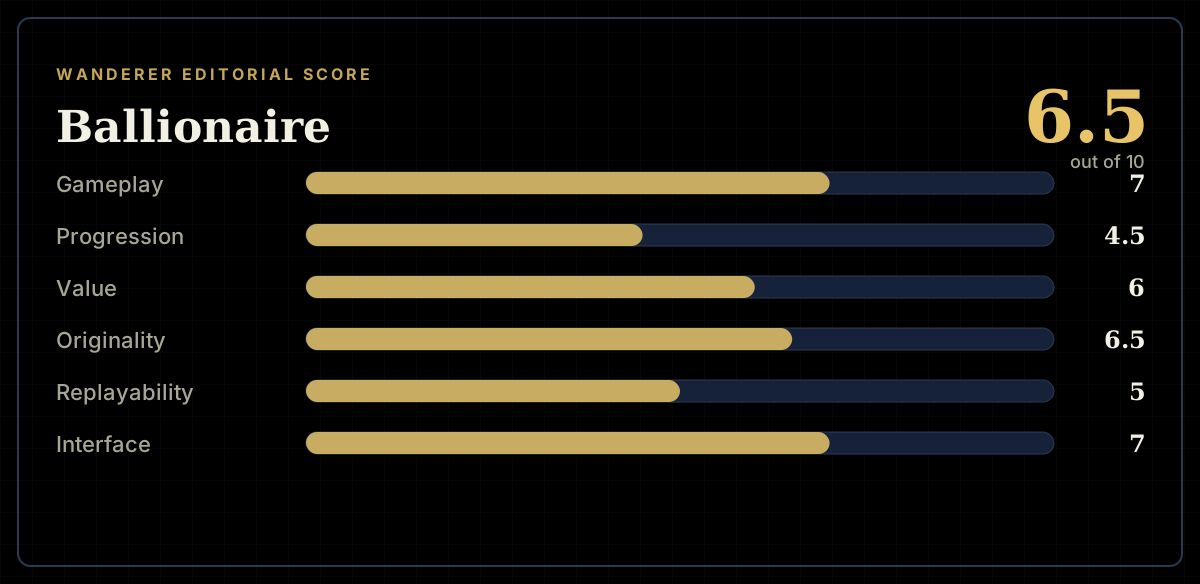
How the review scores each part of the gameWanderer Editorial -
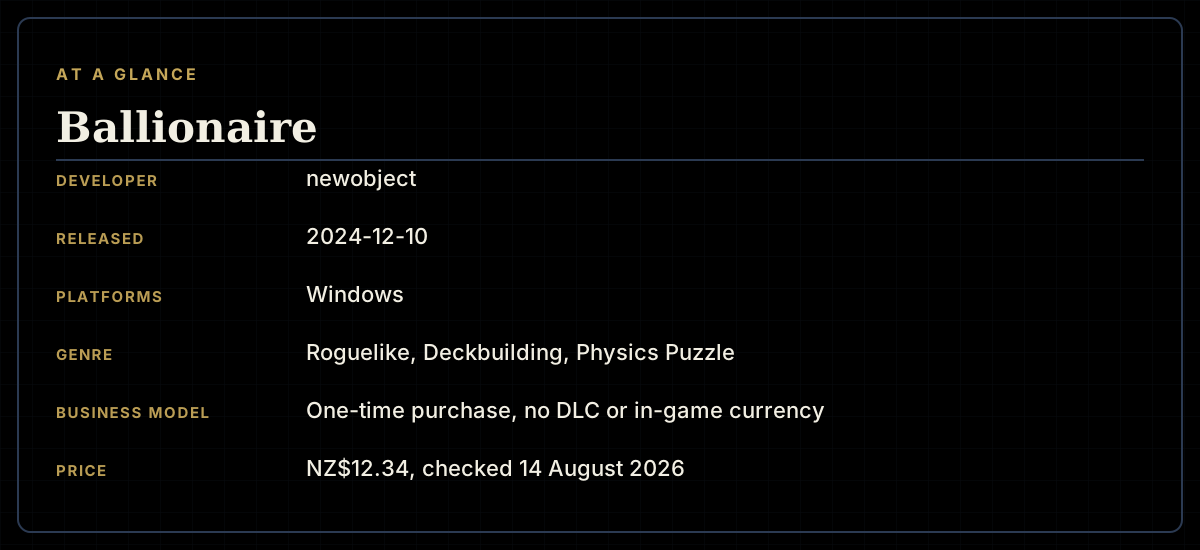
The essentials at a glanceWanderer Editorial -
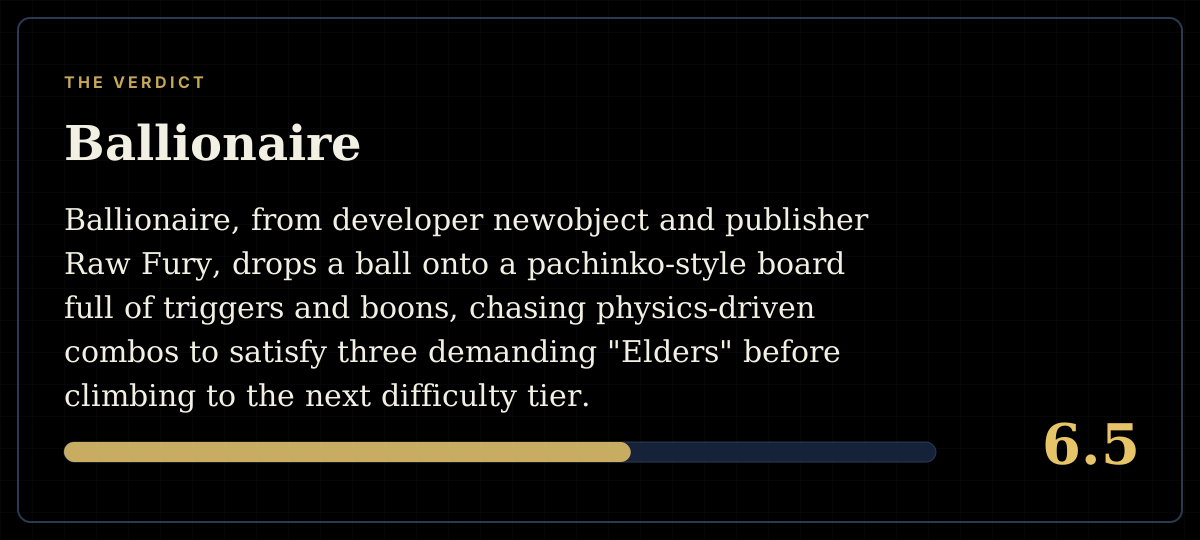
The short versionWanderer Editorial