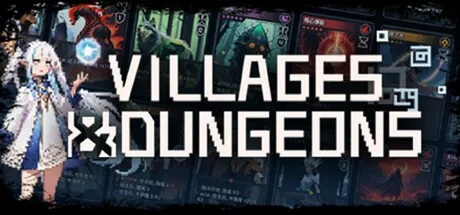
Game review
Villages & Dungeons
6.5 / 10
- Developer
- CaCaFrog Studio
- Publisher
- Morax Games
- Released
- 19 May 2025
- Platforms
- Windows, macOS
- Genre
- Deckbuilding Roguelite
- Monetisation
- One-off purchase at NZ$10.49. No microtransactions. Recurring free "Chaos Draft" seasonal content has shipped roughly monthly since launch.
- Players
- Single-player only
The short version
Villages & Dungeons builds every run around a deliberately stripped-down structure: one core card that represents your fighter, plus four support cards that shape how it fights, drawn from a pool of more than 300 across five elemental types. It's pitched as a "strategy deck building card game," but a large share of its reviews spend their opening lines correcting that framing instead: "this game is mainly an AUTO BATTLER," reads one of the most-voted reviews on the game. "Calling it a 'strategy deck building card game' is a bit misleading." Reviewers who adjust for that -- closer to a compact Teamfight Tactics crossed with a Slay the Spire run structure than to a traditional deckbuilder -- consistently describe something genuinely addictive underneath, built and sustained by what several reviews describe as a solo developer or very small team.
What sets this review apart from most of its genre peers is a controversy that shows up with unusual consistency across the entire review history: the game's art and music are AI-generated, a fact the developer discloses directly on the store page rather than obscures. "The game uses AI to generate image and audio resources, thereby providing a rich array of playable content," reads the disclosure in full. Reception to that choice splits sharply -- some reviewers call it a dealbreaker outright, while others, including several recommending the game, argue the results don't read as the "AI slop" the technique's reputation implies.
Biggest strengths
- A genuinely deep, addictive run-to-run loop once its auto-battler-with-deckbuilding identity is understood on its own terms, with more than 300 cards across five elements to build around
- Sustained, near-monthly "Chaos Draft" seasonal content updates and patches from launch through August 2026, a genuinely committed post-launch cadence for a solo or small-team project
- At least one detailed review documents specific progression and balance complaints from earlier in the game's history being addressed in later updates, evidence the developer is actively responding to feedback rather than shipping and moving on
Biggest weaknesses
- The game's own marketing as a "strategy deck building card game" draws repeated, detailed pushback from reviewers who found the reality closer to an auto-battler with light deckbuilding, a genre-expectation mismatch worth knowing before buying
- AI-generated art and music are a prevalent, specific and disclosed complaint across the review history, with some reviewers -- including a few recommending the game overall -- calling it a serious concern regardless of the disclosure's honesty
- No in-game tutorial as of the reviews sampled, with reviewers describing being handed a wall of card-mechanic text with no guided introduction to core systems like fusing or elites
Who it's for: Fans of compact, run-based deckbuilders and auto-battlers who want deep build variety in short sessions, and players who are specifically unbothered by disclosed AI-generated art and music. Not for anyone who considers AI-generated assets a hard dealbreaker regardless of execution quality, or players who want a robust tutorial before being handed the game's full card-interaction vocabulary.
Our recommendation: A genuinely engaging, well-supported roguelite for its price, with the caveat that its AI-generated presentation is disclosed, prevalent, and worth deciding on for yourself before buying rather than discovering afterward. If that's not a concern, the sustained update cadence and depth of the card system make it a reasonable pick even outside a sale.
6.5 / 10
Villages & Dungeons opens with a promise its own marketing doesn't quite keep. It's billed as a "strategy deck building card game" built around a "1+4" system -- one core card representing your fighter, four support cards shaping how it fights -- drawn from a pool the store page puts at over 300 across five elements. What a striking number of its reviews arrive to correct, though, is the "deckbuilding" half of that pitch. "This game is mainly an AUTO BATTLER," reads one of the most-voted reviews on the game, going on to describe cards that function less like a hand you play and more like passive stat modifiers resolving automatically. Reviewers who go in expecting Slay the Spire- style active decision-making during combat describe frustration; reviewers who recalibrate toward something closer to a compact autochess crossed with roguelike run structure describe the game as genuinely, repeatedly addictive. Both readings show up constantly across 225 English-language reviews that land, on balance, Very Positive.
Simple on the surface, deep once it clicks
The "1+4" minimalism is a real design choice, not a limitation the developer stumbled into, and reviewers who spend real time with it describe surprising depth underneath the small card count. One detailed Chinese-language review -- unusually thorough even by this game's standards -- credits the system with borrowing the "bond" logic of autochess games, where combining specific elemental synergies across your five cards produces build identities that feel meaningfully different from run to run, while conceding the five-card ceiling can feel restrictive compared to genre peers with larger hand sizes. English-language reviews land in similar territory from the other direction: "its more deep and complex than everything you encountered before, much more deep than StS," reads one, name-checking Slay the Spire directly as the bar being cleared. Multiple reviewers independently credit the game to a solo developer, and the praise consistently frames the depth-for-its-scope achievement as impressive specifically because of that scale -- "Solo Devs somehow make better games than big studios," reads one, only half joking.
The friction that shows up even among reviewers who like the game concentrates on onboarding and interface rather than the core system itself. There's no in-game tutorial in the version most reviewers describe, and the game instead hands new players a dense card-mechanics text box with no guided introduction to systems like card fusing or elite encounters. "The tutorial doesn't exist," reads one review that otherwise recommends the game, calling it a flaw that "HAS TO BE FIXED." UI friction compounds it for some -- one reviewer describes the default interaction on each dungeon room being to leave it rather than interact with it, adding unnecessary clicks to what should be a fast loop.
The AI question, addressed rather than avoided
The complaint that appears with the most consistency across Villages & Dungeons' entire review history, from launch week through mid-2026, is that its art and music are AI-generated. This isn't speculation reviewers are inferring from a hunch -- the developer discloses it directly on the store page, in a statement that reads in full: "The game uses AI to generate image and audio resources, thereby providing a rich array of playable content." Several negative reviews argue that disclosure undersells the scale of what's actually AI-made: "we're not talking about a use of AI that's limited to a couple bits of assets and resources here, the entire content is AI generated!!" reads one, naming specific tools it believes were used for the art and music. This review can't independently verify which specific tools were used, but the underlying fact of AI-generated presentation is confirmed directly by the developer's own disclosure, not merely alleged by reviewers.
What's notable is that reaction to this disclosed choice doesn't split cleanly along recommend/don't- recommend lines. Several reviewers who ultimately recommend the game address the AI question head-on rather than avoiding it: "it's by no means 'AI slop,'" reads one, calling the art "unique" and the music "amazing." Another goes further: "one of the few (only?) games with AI art that actually seems charming, consistent, AND well designed from a gameplay perspective." Set against that, other reviewers treat the same disclosed fact as a hard dealbreaker regardless of execution quality -- "AI slop, game sucks big time," reads one blunt dismissal. Both camps are responding to the same disclosed reality; they simply weigh it differently, and that's a genuinely useful thing for a buyer to know going in rather than discover after purchase.
Real support, real friction, in roughly equal measure
Where Villages & Dungeons distinguishes itself from some of its genre peers is the consistency of its post-launch support. The Steam news feed shows near-monthly "Chaos Draft" seasonal content updates running from late 2025 through August 2026, alongside regular patch notes addressing balance and bug reports -- a genuinely sustained cadence for a project this size. One reviewer, returning to write an updated assessment, specifically credits that ongoing work: "a lot of the game design/progression bugs mentioned in older negative comments also seem to have been addressed," they write, pointing to changes in how early progression is gated as a direct example. That's a meaningfully different trajectory from a debut that ships once and goes quiet.
It hasn't resolved every structural complaint, though. A daily cap on the number of runs available draws specific frustration from players who paid up front rather than expecting a free-to-play session limit: "you can only play 5 runs every day for a game you paid for," reads one review, unimpressed. RNG-driven frustration is a recurring theme too, particularly around the game's ranked draft mode, which more than one reviewer describes as feeling decided by luck of the draw rather than skill once the stakes are highest.
A well-supported game worth deciding on for yourself
At NZ$10.49, most reviewers -- including many with real complaints about onboarding, RNG or the AI question -- still land on recommending Villages & Dungeons for the amount of build variety and ongoing content on offer. It's not the deckbuilder its marketing suggests, and its AI-generated presentation is real, disclosed, and genuinely divisive rather than a settled non-issue.
6.5 out of 10. Villages & Dungeons delivers a compact, genuinely addictive roguelike loop with more strategic depth than its minimalist card count initially suggests, backed by an unusually committed year-plus of post-launch content from what reviewers describe as a very small team. What holds it back is a real gap between its "strategy deckbuilder" marketing and its actual identity as an auto-battler, rough onboarding, and a disclosed AI-art and AI-music approach that a meaningful share of its own audience treats as a genuine dealbreaker rather than a footnote. Worth trying for the price if the AI question doesn't rule it out for you outright -- just go in knowing what you're buying on both counts.
Pros and cons
Pros
- A genuinely deep, addictive run-to-run loop once its auto-battler-with-deckbuilding identity is understood on its own terms, with more than 300 cards across five elements to build around
- Sustained, near-monthly "Chaos Draft" seasonal content updates and patches from launch through August 2026, a genuinely committed post-launch cadence for a solo or small-team project
- At least one detailed review documents specific progression and balance complaints from earlier in the game's history being addressed in later updates, evidence the developer is actively responding to feedback rather than shipping and moving on
- Open, specific AI Generated Content Disclosure on the store page rather than a vague or hidden one, giving buyers a clear, verifiable statement to evaluate rather than having to guess
- Cheap at NZ$10.49 relative to the amount of build variety and ongoing content reviewers describe
Cons
- The game's own marketing as a "strategy deck building card game" draws repeated, detailed pushback from reviewers who found the reality closer to an auto-battler with light deckbuilding, a genre-expectation mismatch worth knowing before buying
- AI-generated art and music are a prevalent, specific and disclosed complaint across the review history, with some reviewers -- including a few recommending the game overall -- calling it a serious concern regardless of the disclosure's honesty
- No in-game tutorial as of the reviews sampled, with reviewers describing being handed a wall of card-mechanic text with no guided introduction to core systems like fusing or elites
- A daily cap on the number of runs limits how much of the game can be played in a single sitting, a specific structural complaint from reviewers who bought the game outright rather than a free-to-play title
- Heavy reliance on RNG draws frequent complaints about runs feeling decided by draft luck rather than skill, particularly in the game's ranked draft mode
Screenshots
-
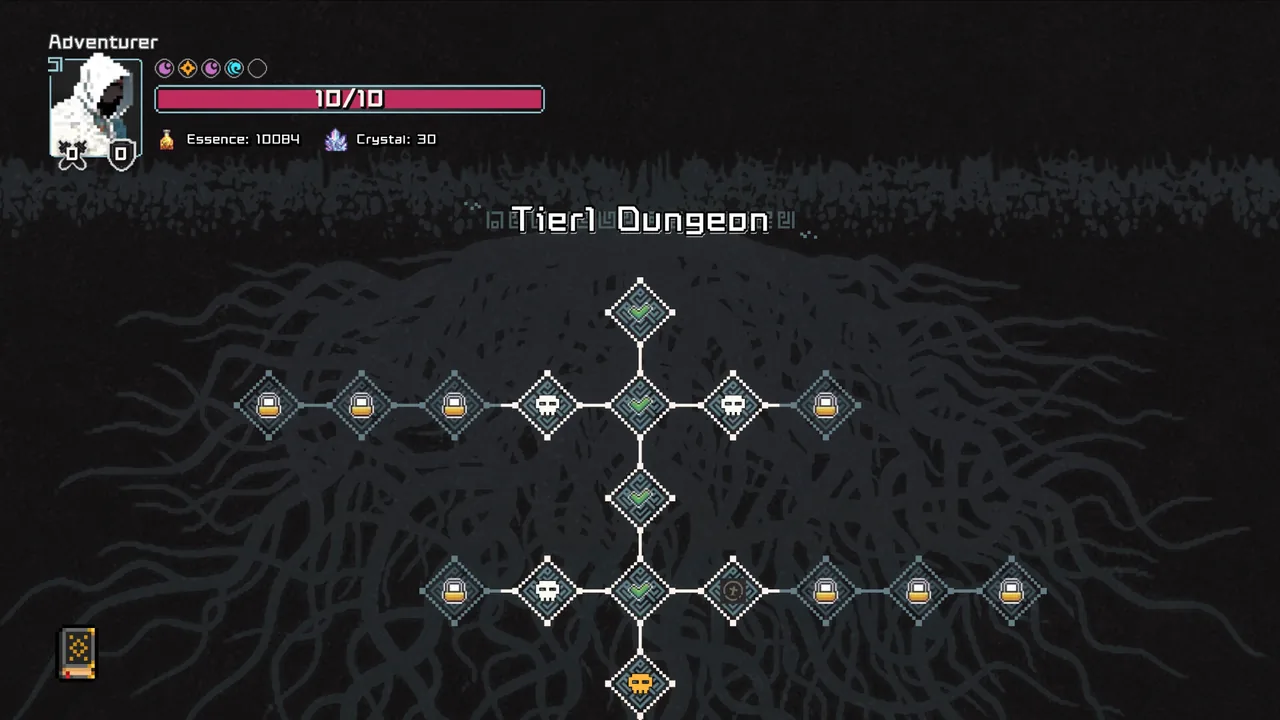
Villages & DungeonsImage: Morax Games via Steam -
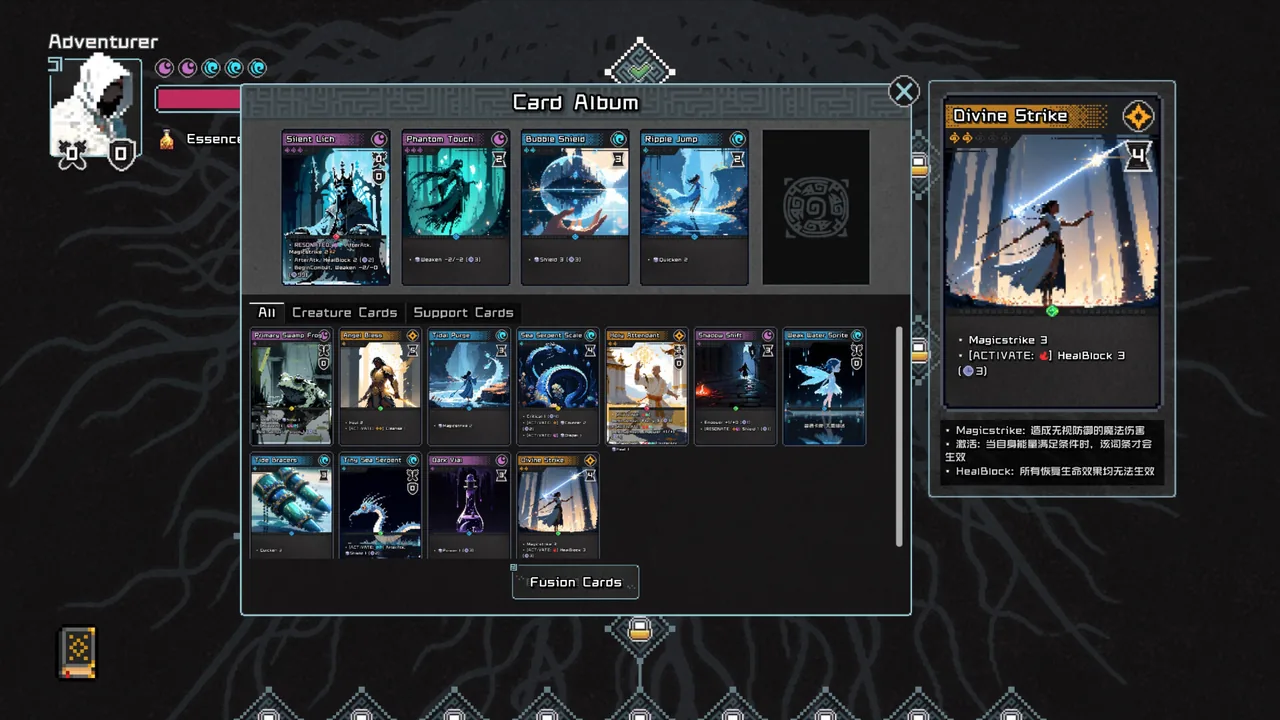
Villages & DungeonsImage: Morax Games via Steam -
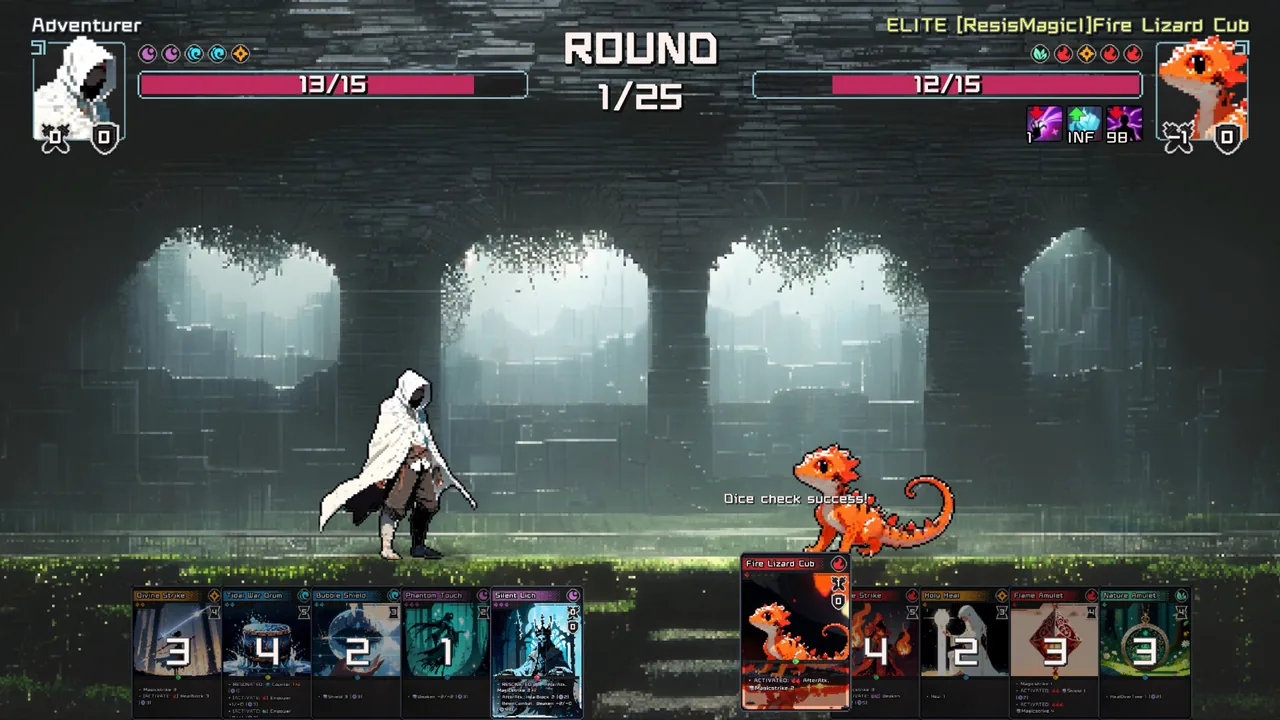
Villages & DungeonsImage: Morax Games via Steam -
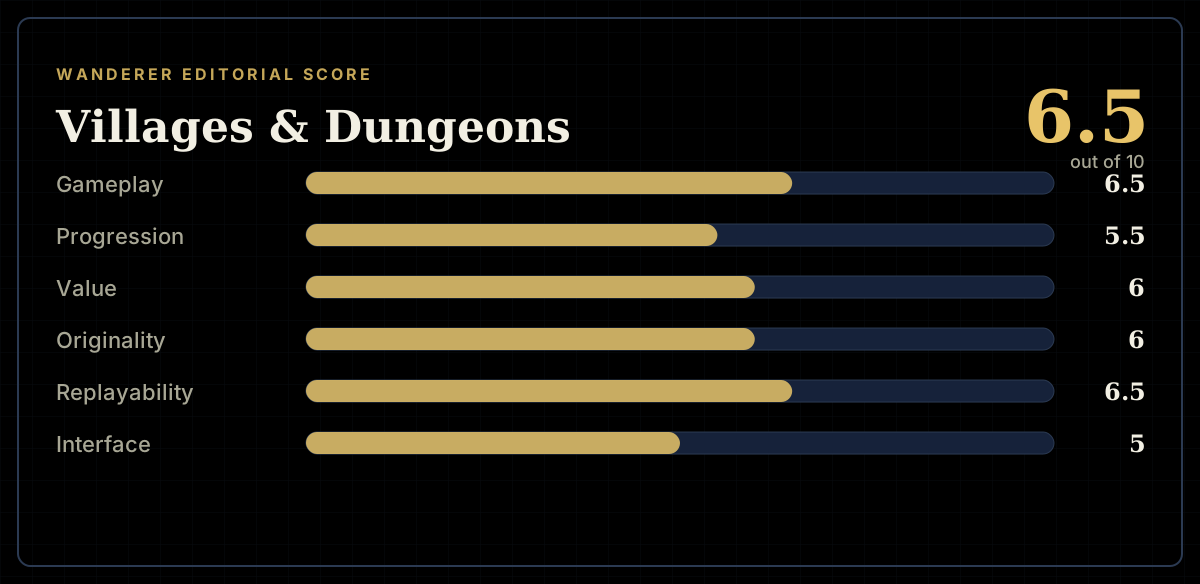
How the review scores each part of the gameWanderer Editorial -
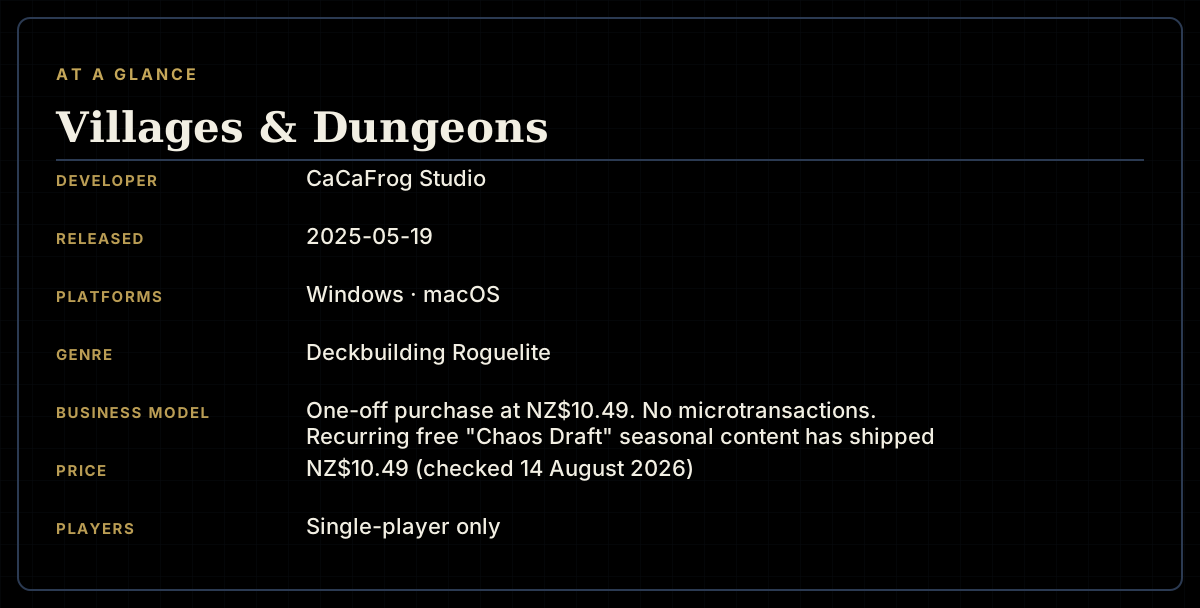
The essentialsWanderer Editorial -
The short versionWanderer Editorial