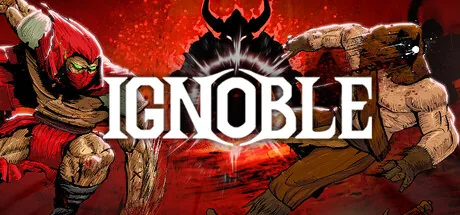
Game review
IGNOBLE
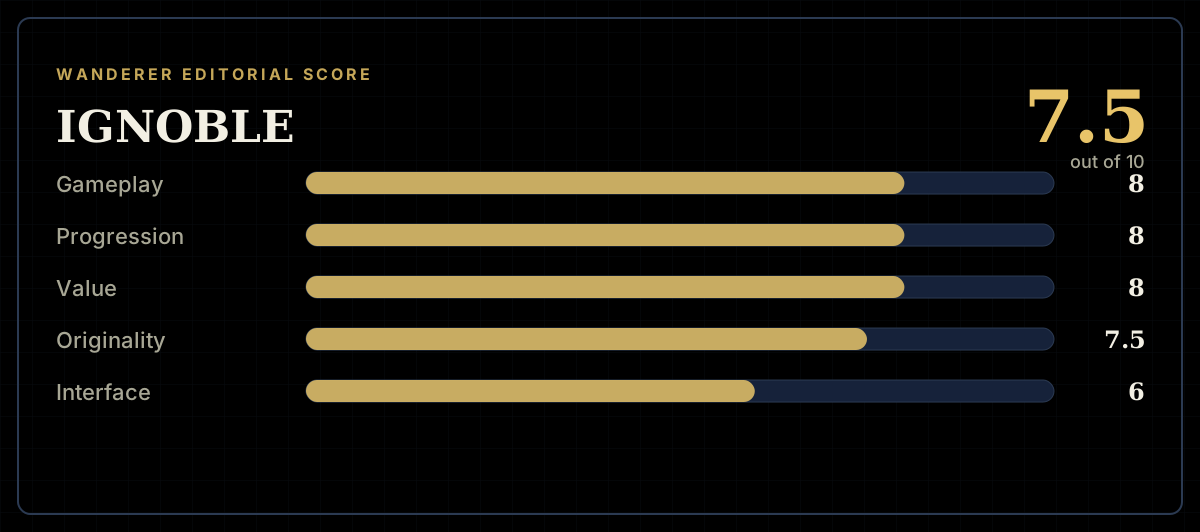
7.5 / 10
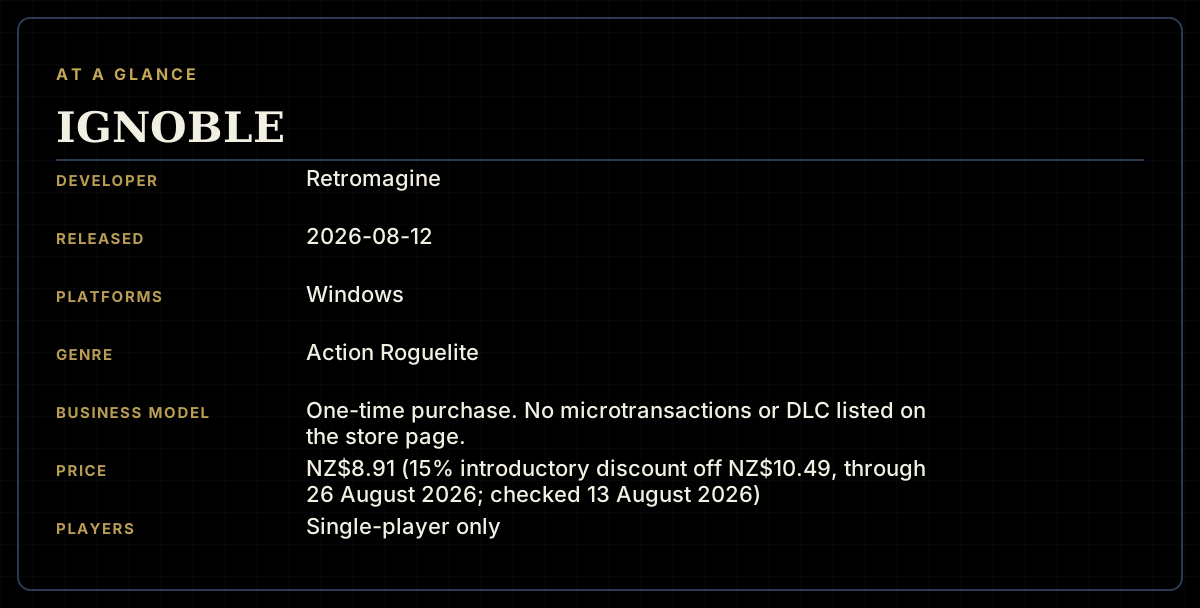
- Developer
- Retromagine
- Publisher
- Retromagine, Gamersky Games
- Released
- 12 August 2026
- Platforms
- Windows
- Genre
- Action Roguelite
- Monetisation
- One-time purchase. No microtransactions or DLC listed on the store page.
- Players
- Single-player only
The short version
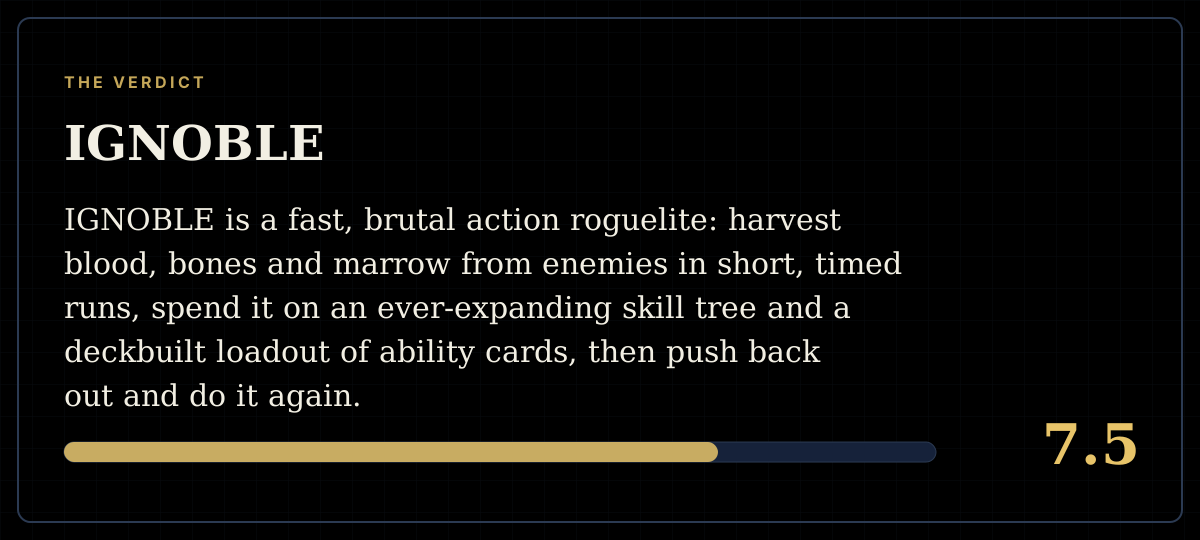
IGNOBLE is a fast, brutal action roguelite: harvest blood, bones and marrow from enemies in short, timed runs, spend it on an ever-expanding skill tree and a deckbuilt loadout of ability cards, then push back out and do it again. Released 12 August 2026 by Retromagine, it opened to a strong, if very fresh, Mostly Positive reception -- 16 of 18 English reviews recommend it within a day of launch, several calling it one of the best incrementals of the year.
The genuine friction point, raised specifically by both of the game's negative English reviews, is the label itself: the store page calls IGNOBLE an "incremental," but it demands constant, precise real-time movement and combat rather than the hands-off automation that word usually promises -- "you have to move to the enemies... if you are not hitting anyone you lose 5-10% health per second," reads one, calling it "NOT an idle incremental as the store page says."
Biggest strengths
- A genuinely addictive run-based loop that multiple reviewers, some just hours into launch day, describe as one of the best incrementals of 2026, with a specific warning to set aside "a solid 2-3 hours" for a first session
- Real, felt build variety through an expanding skill tree and deckbuilt ability cards, with one reviewer specifically praising that prestiging (defeating a stage boss) carries no skill reset, removing a common genre frustration
- Confirmed strong Steam Deck performance from multiple independent reviewers, notable for a fresh indie release rather than one with dedicated console-porting resources
Biggest weaknesses
- The "incremental" label on the store page is directly disputed by both available negative reviews, which describe demanding, punishing real-time combat -- constant movement, rapid health loss for inaction, two-hit enemy kills -- rather than idle or passive automation
- One negative review dismisses the combat itself as derivative, comparing it unfavourably to "free armor games flash games from 2009," a sharper aesthetic complaint than the labelling issue
- A steep early difficulty curve that at least one reviewer calls "very brutal to the player," intentional as a genre trope but a real barrier for anyone expecting a gentler idle-adjacent on-ramp
Who it's for: Fans of fast, punishing run-based roguelites -- Vampire Survivors' pacing crossed with a meta-progression skill tree and deckbuilding -- who don't mind precise, demanding real-time combat. Not for anyone shopping specifically for a passive, hands-off idle game; despite the labelling, this is an active-combat game with incremental meta-progression layered on top, not an idle one.
Our recommendation: A strong pickup at NZ$8.91 for action-roguelite fans specifically, and confirmed to run well on Steam Deck by multiple early reviewers -- but idle-game shoppers drawn in by the store page's "incremental" label should know upfront that this asks for real, precise, moment-to-moment play rather than letting a build run itself.
7.5 / 10
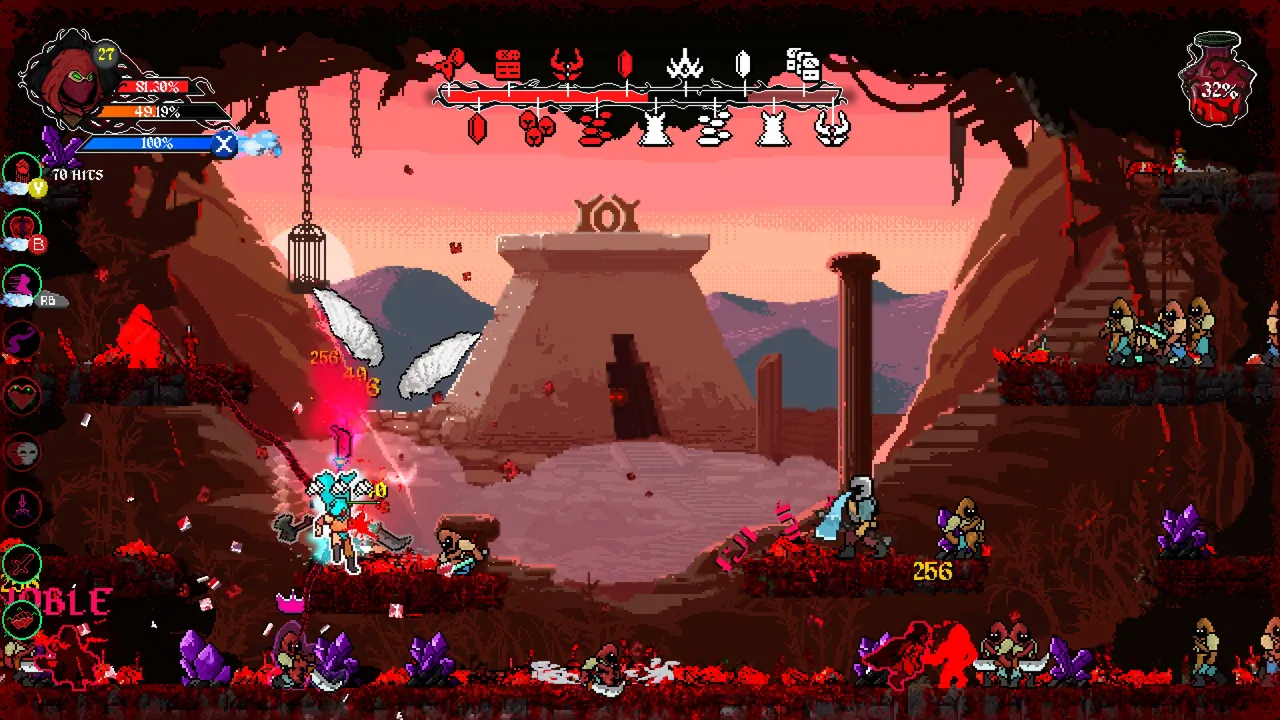
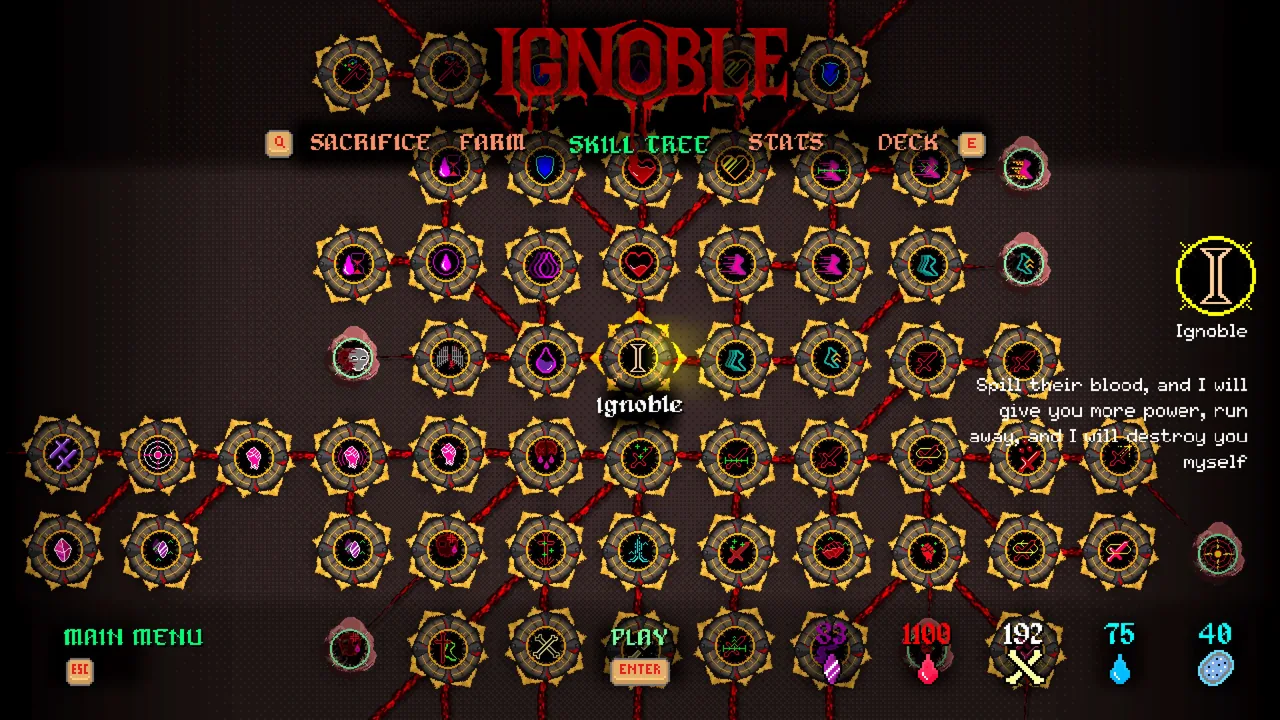
IGNOBLE wants you dead, fast, and coming back for another run anyway. Enemies exist to be "harvested for blood and bones," per the store page's own blunt phrasing; you spend that haul on an "ever-expanding skill tree" of forbidden powers and a deckbuilt loadout of ability cards, then push back out to do it again, faster and stronger, before the clock runs out. Retromagine released it 12 August 2026 for NZ$8.91 with an introductory discount (checked 13 August 2026), following an earlier demo during Steam Next Fest, and inside its first 24 hours it had already gathered 18 reviews -- 16 positive -- an unusually fast, decisive opening for a fresh indie roguelite.
A genuinely addictive loop, according to day-one players
The praise arriving in IGNOBLE's first day is specific and enthusiastic rather than generic launch excitement. "This is one of my favorite incrementals of 2026," reads the most-voted review, adding a practical warning: "Make sure you have a solid 2-3 hours available for the first time you play it -- you will have a very hard time stopping." Multiple reviewers echo the same "one more run" pull: "the skill tree and steady progression always give me a one-more-run feel," reads another, praising the loop as "surprisingly relaxing despite all the blood and chaos." A reviewer who had been following the project since an earlier demo put actual numbers on it: "The game was released 10 hours ago and I have 7 hours in it. Beat it, almost all upgrades are unlocked" -- the kind of immediate, sustained engagement that's hard to fake in a review section this fresh.
A specific, well-liked design decision gets called out directly: prestiging just requires defeating a stage's boss, "there's no skill reset at all," removing a common source of roguelite fatigue where meta-progression resets punish players for trying to advance. Several reviewers also independently confirm strong Steam Deck performance -- "this should come preinstalled on every Steam Deck," reads one, while another notes the control scheme, which uses no mouse at all, works better than it initially seems. For a day-one indie release, that's a meaningfully positive signal about technical polish most fresh launches this size don't manage.
A label that two reviewers say doesn't match the game
The clearest, most specific criticism in IGNOBLE's early reviews isn't about difficulty or content -- it's about what the game claims to be. Steam categorises it, and the store page itself describes it, as an incremental, a word this readership associates with automation and hands-off progression. Both available negative reviews push back on that framing directly and in concrete detail. "This is NOT an idle incremental as the store page says," reads one, "you have to move to the enemies that slowly try to move away from the screen, because if you are not hitting anyone you lose like 5-10% health per second without any grace period but also enemies always 2shot you." That's a specific, falsifiable complaint about active demands the "incremental" label doesn't prepare a buyer for, and it's worth taking at face value: IGNOBLE is a real-time action roguelite with incremental meta-progression layered on top, not a game you can leave running while you do something else.
The second negative review is shorter and more dismissive of the moment-to-moment combat itself rather than the labelling: "pretty ass, low diffed by free armor games flash games from 2009" -- a harsher aesthetic judgment that reads as a minority view against the enthusiasm elsewhere, but a useful data point that the combat isn't universally landing even among players willing to try it. Notably, one of the more measured positive reviews makes a similar observation without treating it as a flaw: "Very brutal to the player, but that's a genre trope and obviously intentional, not a downside." Both framings are legitimate; which one a given buyer lands on depends heavily on whether they came in expecting a punishing action roguelite or a gentler idle game, which is exactly why the labelling complaint matters as much as it does.
The achievement data backs up the difficulty read: while early milestones sit near-universal (100% for a first upgrade, over 90% for reaching level 5), late-game goals -- 500 kills in a single run, fully unlocking the deck, defeating the final boss -- are already down in the low single digits within a day of launch, a steeper curve than a comparable early achievement snapshot usually shows this soon.
7.5 out of 10. IGNOBLE is a fast, confidently made action roguelite with a genuinely addictive loop, real build variety through its skill tree and deckbuilding, and unusually solid Steam Deck performance for a day-one indie release -- credible reasons behind its strong opening reception. But its own store-page "incremental" label oversells how passive it actually is, and buyers coming from this genre's more hands-off corner should know they're getting demanding, precise real-time combat rather than a build that plays itself. At NZ$8.91, a strong pick for action-roguelite fans specifically; a more qualified one for anyone shopping the word "incremental" at face value.
Pros and cons
Pros
- A genuinely addictive run-based loop that multiple reviewers, some just hours into launch day, describe as one of the best incrementals of 2026, with a specific warning to set aside "a solid 2-3 hours" for a first session
- Real, felt build variety through an expanding skill tree and deckbuilt ability cards, with one reviewer specifically praising that prestiging (defeating a stage boss) carries no skill reset, removing a common genre frustration
- Confirmed strong Steam Deck performance from multiple independent reviewers, notable for a fresh indie release rather than one with dedicated console-porting resources
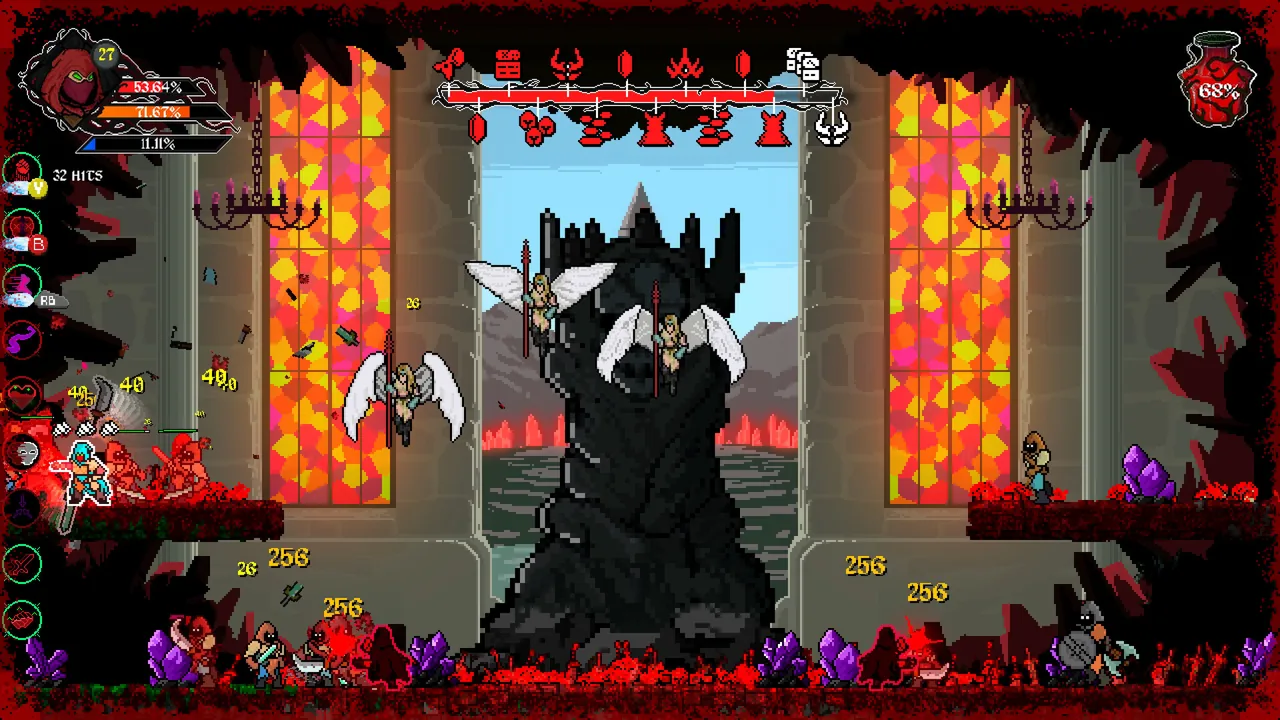
- Polished, retro-inflected pixel art and a soundtrack reviewers single out by name ("music? slaps"), giving the harvesting/combat loop real audiovisual identity
Cons
- The "incremental" label on the store page is directly disputed by both available negative reviews, which describe demanding, punishing real-time combat -- constant movement, rapid health loss for inaction, two-hit enemy kills -- rather than idle or passive automation
- One negative review dismisses the combat itself as derivative, comparing it unfavourably to "free armor games flash games from 2009," a sharper aesthetic complaint than the labelling issue
- A steep early difficulty curve that at least one reviewer calls "very brutal to the player," intentional as a genre trope but a real barrier for anyone expecting a gentler idle-adjacent on-ramp
- Achievement data shows late-game challenges (500 kills in a single run, full deck unlock, the final boss defeats) sitting in the low single digits within a day of launch, suggesting real difficulty spikes past the opening hours rather than a smooth curve throughout
Screenshots
-
IGNOBLEImage: Retromagine via Steam -
IGNOBLEImage: Retromagine via Steam -
IGNOBLEImage: Retromagine via Steam -
How the review scores each part of the gameWanderer Editorial -
The essentialsWanderer Editorial -
The short versionWanderer Editorial