
Game review
Hell Maiden
7.5 / 10
- Developer
- AstralShift
- Publisher
- AstralShift
- Released
- 16 July 2026
- Platforms
- Windows
- Genre
- Horde Survival / Deckbuilder
- Monetisation
- One-time purchase, no in-game spending of any kind. Full voice acting in English and European Portuguese; no separate deluxe edition or season pass. Listed at NZ$15.75 with no discount — checked 4 August 2026.
- Players
- Single-player only
The short version
AstralShift have taken the Divine Comedy, cast Dante as an amnesiac young woman climbing back out of Hell, and built a horde-survival deckbuilder underneath her. The presentation is the best this genre has ever had — an animated opening scored by Mili, hand-drawn demons, ultimate attacks that cut to full animation. The card system is real and shipped, not promised. What lets it down is the fight underneath: hitstun on every contact, a dash that catches on scenery, weapons that range from excellent to useless, and a second circle so much harder than the first that the achievement data shows most players never get through it. Seven hotfixes in thirteen days say the studio knows.
Biggest strengths
- The art, animation and music are in a different class from the rest of the genre — the Mili opening theme is cited by reviewers as worth the price on its own
- Deck-building is properly implemented, not gestured at, Spirit Cards, Weapon Cards and Mod Cards combining into builds you assemble rather than accept
- A real story with voice acting, rescued Poets of Limbo who each unlock five abilities, and bosses whose signature attacks you take into your own deck
Biggest weaknesses
- The second circle, Lust, is a difficulty cliff rather than a curve — teleporting succubi with homing projectiles that outrun your maximum movement speed, and the achievement data backs it up
- No opacity setting for your own spell effects, so a strong build can hide the red floor telegraphs that tell you where the danger is
- Experience orbs only drop after an enemy's death animation finishes, which in a genre built on constant movement means levels you earned and never collected
Who it's for: Survivors-like players who want story, art and a genuine build system rather than another field of numbers, and anyone who'd play a Divine Comedy sequel where Dante is a magical girl. Not for players allergic to difficulty spikes, and not for anyone who needs a finished game.
Our recommendation: Buy it if the presentation is the draw — at this price the opening cinematic and the first circle alone are worth it, and the deck system is deeper than most of its rivals manage at 1.0. Go in expecting to hit a wall at Lust, the second circle, and to grind Wails for a while before it gives way. Two of nine circles exist today, so if you want a complete run through Hell, wishlist and check back after Gluttony lands.
7.5 / 10
Dante Alighieri wrote himself into his own poem, walked through nine circles of Hell, climbed a mountain and reached Paradiso. Hell Maiden begins after all that, with Dante back at the bottom, her memories gone, no explanation offered — and reimagined as a young woman with a sword and a deck of cards.
It should be ridiculous. It absolutely is not. AstralShift are the small Portuguese studio behind Little Goody Two Shoes and Pocket Mirror, and what they've always been able to do is make a game look and sound more expensive than it is. Here they've pointed that at a genre that has never particularly cared how it looked, and the result is the most striking survivors-like anyone has shipped.
Then you reach the second circle, and the review gets complicated.
The one that shipped its cards
I filed a review of Hand of Fate: Hordes this week — another deckbuilder-crossed-with-bullet-heaven, launched into Early Access six days after this one, whose deck-building layer is still on the roadmap. That contrast is the fastest way to explain what Hell Maiden gets right.
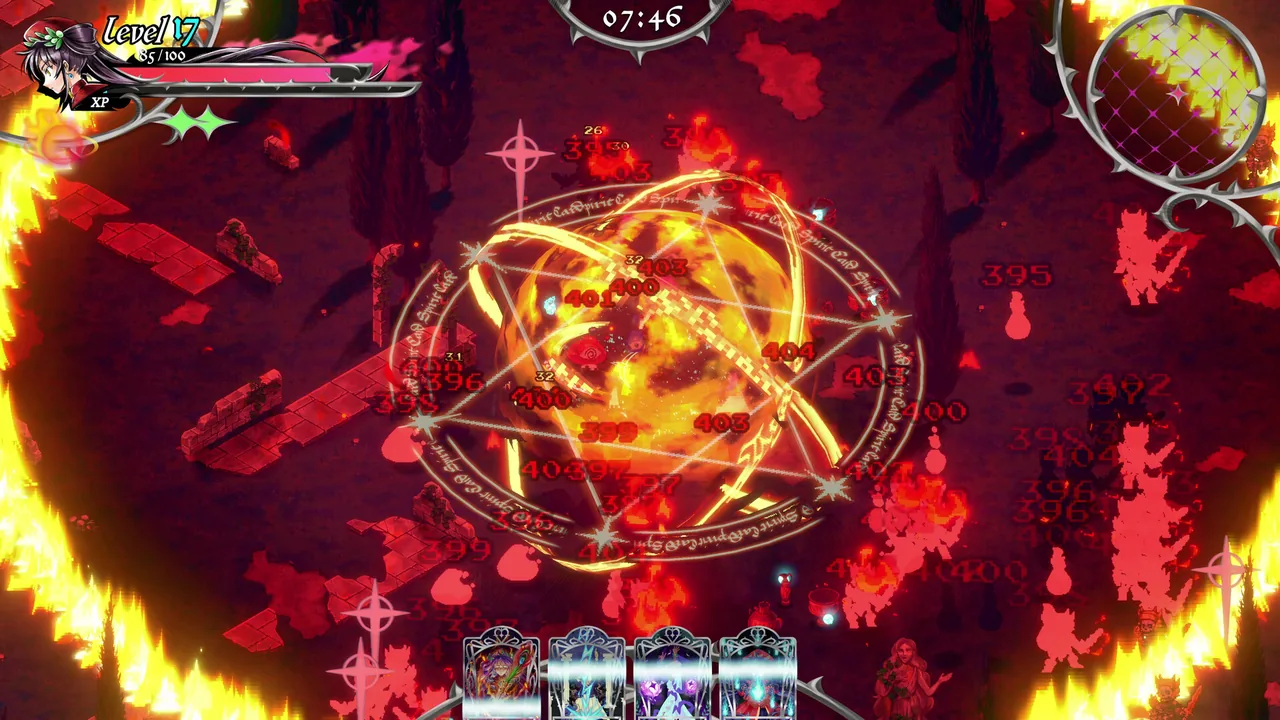
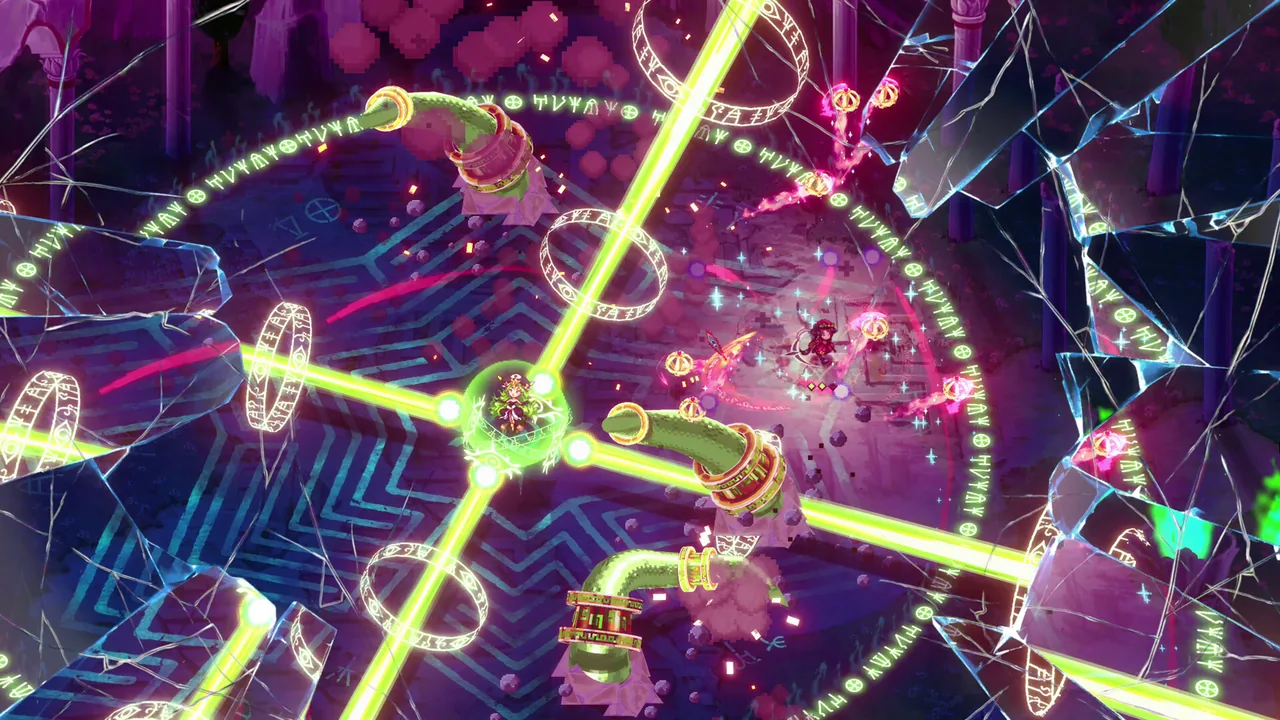
The cards here are the game. Weapon Cards are what you swing. Mod Cards attach to them and change what they do. Spirit Cards layer on abilities, bonuses and status effects, and you're editing that hand as a run progresses rather than accepting a slot machine's offerings. Bosses hand over their signature attacks when they die, which is a much better idea than it sounds — a boss that spent three minutes teaching you to fear a move becomes a boss whose move you now own.
Around that sits the structure that makes it more than a wave-clearer. Each circle has quests, challenges and Poets of Limbo to rescue. Find Homer, Ovid, Horace or Lucan and you unlock five new abilities apiece; kill a boss and you get two more. That's a progression spine tied to exploring the map rather than to a shop menu, and it's the single best decision in the game. Compare it to Vampire Survivors, where the map is a treadmill with a timer: here you're looking for someone.
The best-looking game in a genre that doesn't try
The presentation deserves its own section because it's carrying so much of the score.
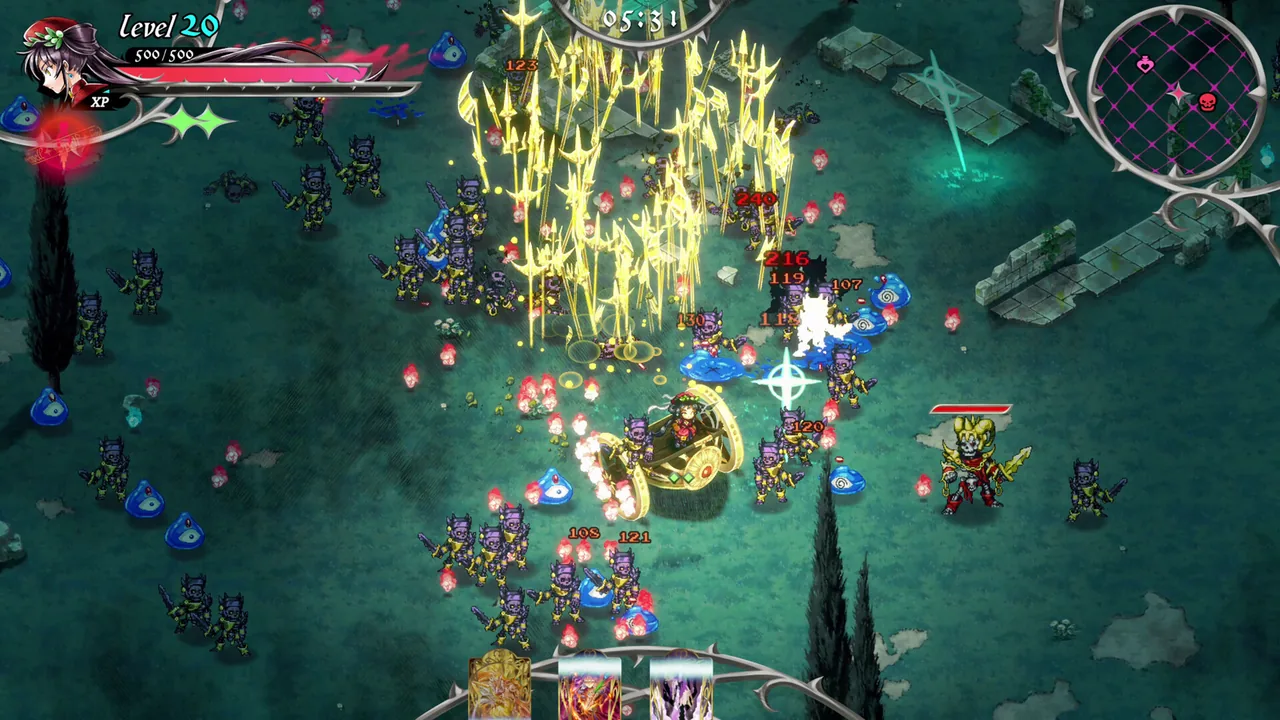
There's an animated opening, scored by Mili — the Japanese band whose work runs through Ender Lilies, Library of Ruina and Limbus Company — and reviewers keep saying, without much exaggeration, that the intro alone justifies the purchase. Ultimate attacks cut away to full animation. The demons are hand-drawn and specific rather than recoloured sprites. There's voice acting, in English and in European Portuguese, in a genre where voice acting means a grunt on level-up.
Underneath the anime gloss the writing is doing real work too. Virgil guides, Beatrice protects, and the mystery of why Dante was thrown back out of Paradiso is enough of a hook that players are finishing circles to see the next scene. Nobody plays Brotato for the plot. People are playing this one for it.
The catch is that all that visual richness is fighting the genre's core requirement — you need to see the floor. There's no opacity slider for your own effects, so the better your build gets, the more thoroughly your own spells paint over the red telegraphs that tell you where you're about to be hit. That's a solvable problem and an obvious one, and it's the most common complaint from players who otherwise love the game.
Lust
Here's the number. The achievement for clearing Limbo, the first circle, sits at 86%. The achievement tied to the succubi of the second circle sits at 14%.
That's not a difficulty curve, it's a cliff face, and the reviews describe it in near-identical terms whether they're positive or negative. The succubi teleport frequently, fire homing projectiles that travel faster than you can move, and keep doing it in an enclosed arena. Several players report maxing movement speed in the meta progression and still being outrun. The consensus workaround is one specific ability, which is the clearest possible sign that an encounter isn't tuned — when a horde-survival game has a correct answer, it has stopped being a build game.
What makes this more frustrating than it needs to be is that the first circle is arguably too gentle. Multiple players describe Limbo as a game with no close calls followed by a game with nothing but. The distance between those two experiences is where this game is currently losing people, and the achievement tail confirms it — the deep-progression achievements sit in the single digits.
The grind sharpens it. Wails, the permanent upgrade currency, accumulate slowly enough that players describe running the first circle dozens of times to prepare for the second. That's a defensible design if the repetition is fun, and for the first several hours it is. It stops being defensible when it's the only route past a spike that shouldn't be there.
Friction you can feel
The moment-to-moment combat is the weakest part, and it's mostly small things stacking.
Every hit staggers you. The dash catches on scenery — small rocks and terrain edges that don't read as obstacles — and getting stuck for half a second in a bullet heaven is how you die. Experience orbs don't drop until an enemy's death animation completes, so in a game that requires constant movement you routinely walk away from levels you earned. Weapon balance is wide: some are excellent, several are dead weight, and the builds most players settle on converge fast on melee sweeps, projectile count and crit.
And there's a genuinely sloppy one hiding in the card system. Stacking cards applies undisclosed diminishing returns — two cards reading +2 projectiles give you +3, two reading +30% weaken give you +50% — with nothing in the interface saying so. In a deckbuilder, where the entire pleasure is predicting what your combination will do, hidden maths isn't a balance decision. It's a broken promise. Slay the Spire never once made you guess whether the numbers on the card were the numbers.
A studio that is visibly working
Launch was rough — crashes, hard locks on alt-tab, quest events lost to build bugs. Almost all of that has been chased down in public. Seven hotfixes landed in the first thirteen days, each with a specific changelog: the frozen boss tentacle in Limbo, the level-up card menu, the restoration of events players had missed, and a decision to stop the game pausing on alt-tab entirely because the pause was destabilising Unity systems underneath it.
That last one is the kind of fix that tells you a team is reading its own crash reports rather than its review score. The developers' letter two days after launch was similarly unusual — specific about bug channels, honest that Early Access would be bumpy, and candid enough to name the publishing partner helping them handle feedback from players in Asia.
None of this makes the second circle easier today. It does change what you're buying: not a finished game, but one being worked on quickly and openly, with two of nine circles in place and Gluttony promised before the year is out.
The score
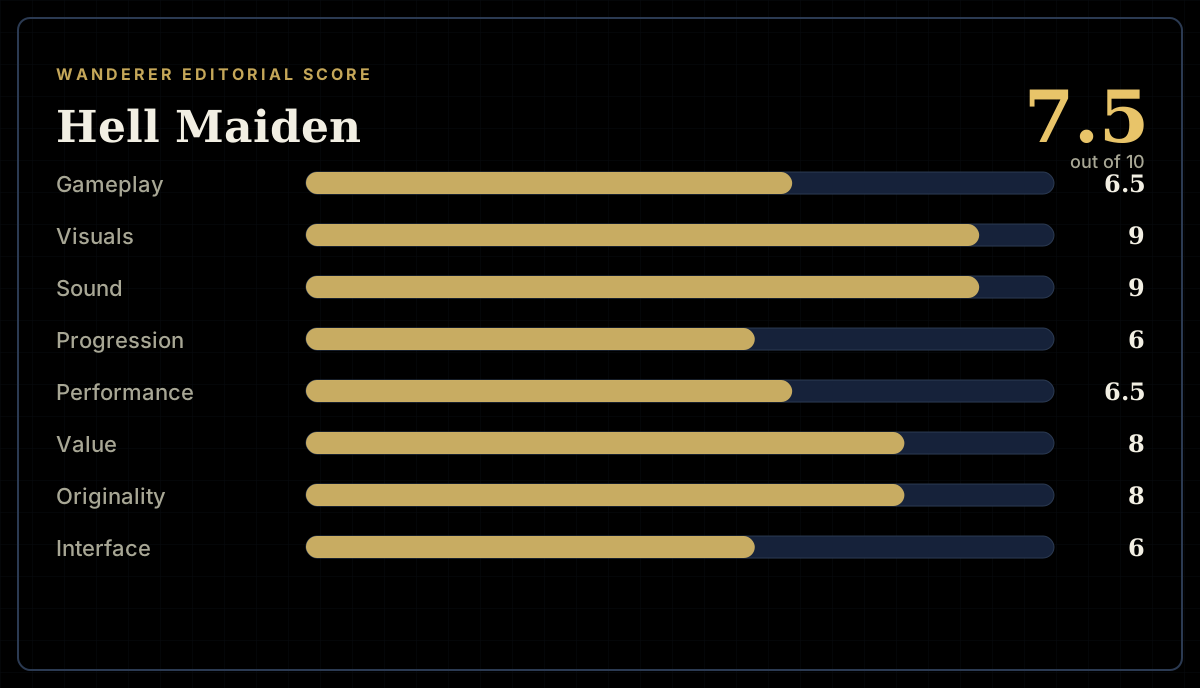
7.5 out of 10. Rated 7.5 out of 10.
The parts of this game that are good are very good, and several of them are things the genre has never had. It's the best-presented survivors-like ever made, its deck-building is a real system rather than a marketing word, and at around fifteen dollars with no monetisation attached it's generous even in its current two-circle state. Nine out of ten players who bought it are recommending it, and having read every English complaint filed against it, most of those complaints come from people who clearly want it to be better rather than people who regret the purchase.
What holds it at 7.5 is that the fighting — the thing you spend the most time doing — is the least finished part. The stagger, the snagging dash, the uncollected orbs and the dead-weight weapons are all fixable, and the difficulty cliff at Lust is a tuning pass rather than a redesign. If those land before Gluttony does, this score goes up. Ask me again when the third circle opens.
If you want the presentation and the story, buy it now; you'll get your money's worth before you ever reach the wall. If you want a tight bullet heaven above all else, Halls of Torment is still the better-tuned game, and it isn't close.
And if the appeal of the Poets of Limbo is that your progress is attached to people you found and places you explored rather than to a percentage in a menu — that's the same instinct Wanderer is built on, and it survives you closing the tab.
Pros and cons
Pros
- The art, animation and music are in a different class from the rest of the genre — the Mili opening theme is cited by reviewers as worth the price on its own
- Deck-building is properly implemented, not gestured at, Spirit Cards, Weapon Cards and Mod Cards combining into builds you assemble rather than accept
- A real story with voice acting, rescued Poets of Limbo who each unlock five abilities, and bosses whose signature attacks you take into your own deck
- Genuinely generous for the money — 72 achievements, two full circles with quests and challenges, no monetisation of any kind
- Patch cadence is relentless and specific: seven hotfixes in the first thirteen days, several aimed squarely at the complaints in the launch reviews
Cons
- The second circle, Lust, is a difficulty cliff rather than a curve — teleporting succubi with homing projectiles that outrun your maximum movement speed, and the achievement data backs it up
- No opacity setting for your own spell effects, so a strong build can hide the red floor telegraphs that tell you where the danger is
- Experience orbs only drop after an enemy's death animation finishes, which in a genre built on constant movement means levels you earned and never collected
- Weapon balance is wide open — several weapons are effectively unusable, and most builds converge on the same melee-sweep-and-crit answer
- Card stacking uses undisclosed diminishing returns, so two +2 projectile cards give +3 rather than +4 and nothing in the interface explains it
- Hitstun on every contact plus a dash that snags on small scenery makes movement feel heavier than the genre expects
Screenshots
-
Hell MaidenImage: AstralShift via Steam -
Hell MaidenImage: AstralShift via Steam -
Hell MaidenImage: AstralShift via Steam -
How the review scores each part of the gameWanderer Editorial -
The short versionWanderer Editorial