Game review
Heretic's Fork
7 / 10
- Developer
- 9FingerGames
- Publisher
- Ravenage Games
- Released
- 13 September 2023
- Platforms
- Windows, PlayStation, Xbox, Nintendo Switch
- Genre
- Tower Defense Roguelite Deckbuilder
- Monetisation
- One-time premium purchase; no ads or in-game store found
- Players
- Single-player only; no online, co-op or PvP modes
The short version
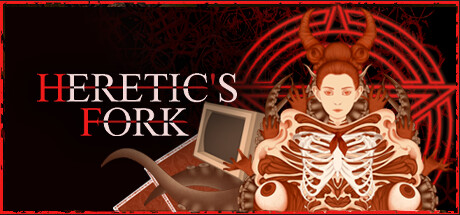
Heretic's Fork casts you as a low-level manager in Hell's bureaucracy, tasked with catching escaping sinners using an immobile tower defense layer built from a deckbuilding card system, wrapped in a striking metal-album art style and darksynth soundtrack reviewers consistently single out as the game's most distinctive asset. It's a genuinely unusual hybrid, and the developer's visible, near-constant communication with its community over more than two years of updates draws real, repeated praise.
The recurring criticism is about depth rather than presentation: a significant number of reviewers describe discovering, often within a few hours, that stacking a single damage type on a single tower structure dominates every other strategy, leaving little real decision-making once that pattern is found. The developer directly acknowledged this exact complaint by name in two separate 2023 patches aimed at build variety and "collection bloat" — yet current global achievement data shows single-damage-type wins remain extremely common, suggesting the underlying balance problem persists even after real, good-faith attempts to fix it.
Biggest strengths
- A genuinely distinctive dark-fantasy, punk-metal art style and darksynth soundtrack that reviewers consistently call the game's standout feature
- An unusual, well-executed hybrid of tower defense, deckbuilding and auto-battler mechanics that reviewers describe as immediately hooking even in just a few hours
- An exceptionally communicative developer, with reviewers repeatedly praising direct responses on the discussion boards and a steady, multi-year stream of content and balance updates
Biggest weaknesses
- A significant number of reviewers report discovering that stacking one damage type on one tower dominates every other strategy, and achievement data confirms single-damage-type wins remain extremely common even after balance patches aimed at fixing exactly this
- Multiple reviewers describe the core gameplay loop as shallow with real downtime, with at least one detailed account calling long stretches of a run "soul-crushingly boring" despite loving the game's presentation and concept
- No controller support on PC is confirmed by multiple reviewers, ruling out comfortable Steam Deck play despite the game's handheld-friendly pacing
Who it's for: Fans of tower defense and deckbuilding hybrids who value strong art direction and don't mind a shallower strategic ceiling once the dominant build is found. Less suited to anyone wanting deep, ever-shifting build variety across many runs, or Steam Deck players needing controller support.
Our recommendation: Worth it at a moderate price for the art, music and concept alone, but go in with realistic expectations about strategic depth — most reviewers who bounce off it do so once they find the one build that works and realize little else compares.
7 / 10
Hell, it turns out, has a bureaucracy, and Heretic's Fork casts you as one of its low-level managers, tasked with using immobile towers and a deckbuilding card system to stop escaping sinners before they reach the surface. It's a genuinely unusual combination of tower defense, deckbuilding and auto-battler mechanics, wrapped in a striking dark-fantasy, punk-metal art style that reviewers consistently single out as the game's most immediately distinctive asset, backed by a darksynth and metal soundtrack that draws equally consistent praise.
A distinctive hybrid, well presented
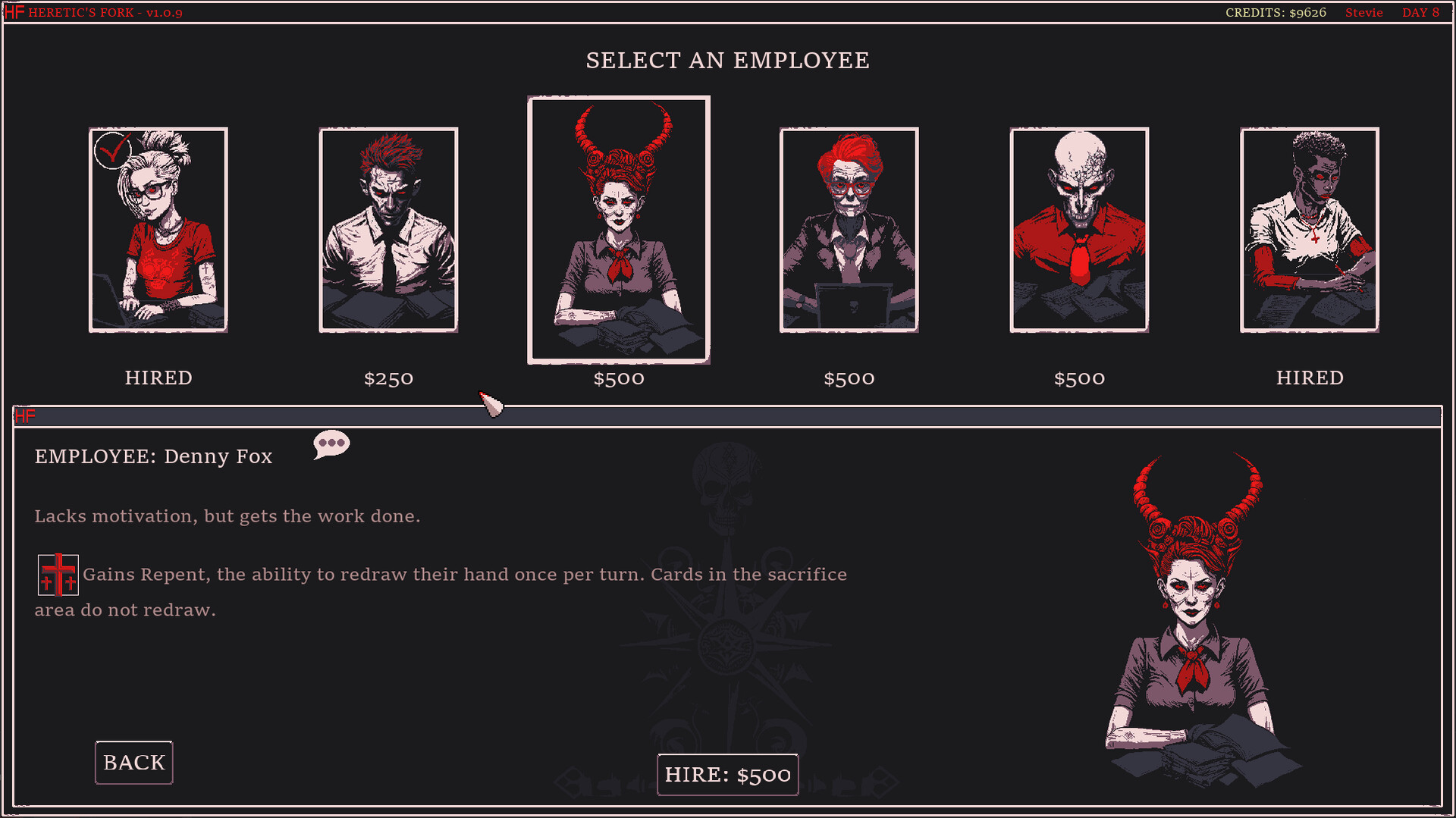
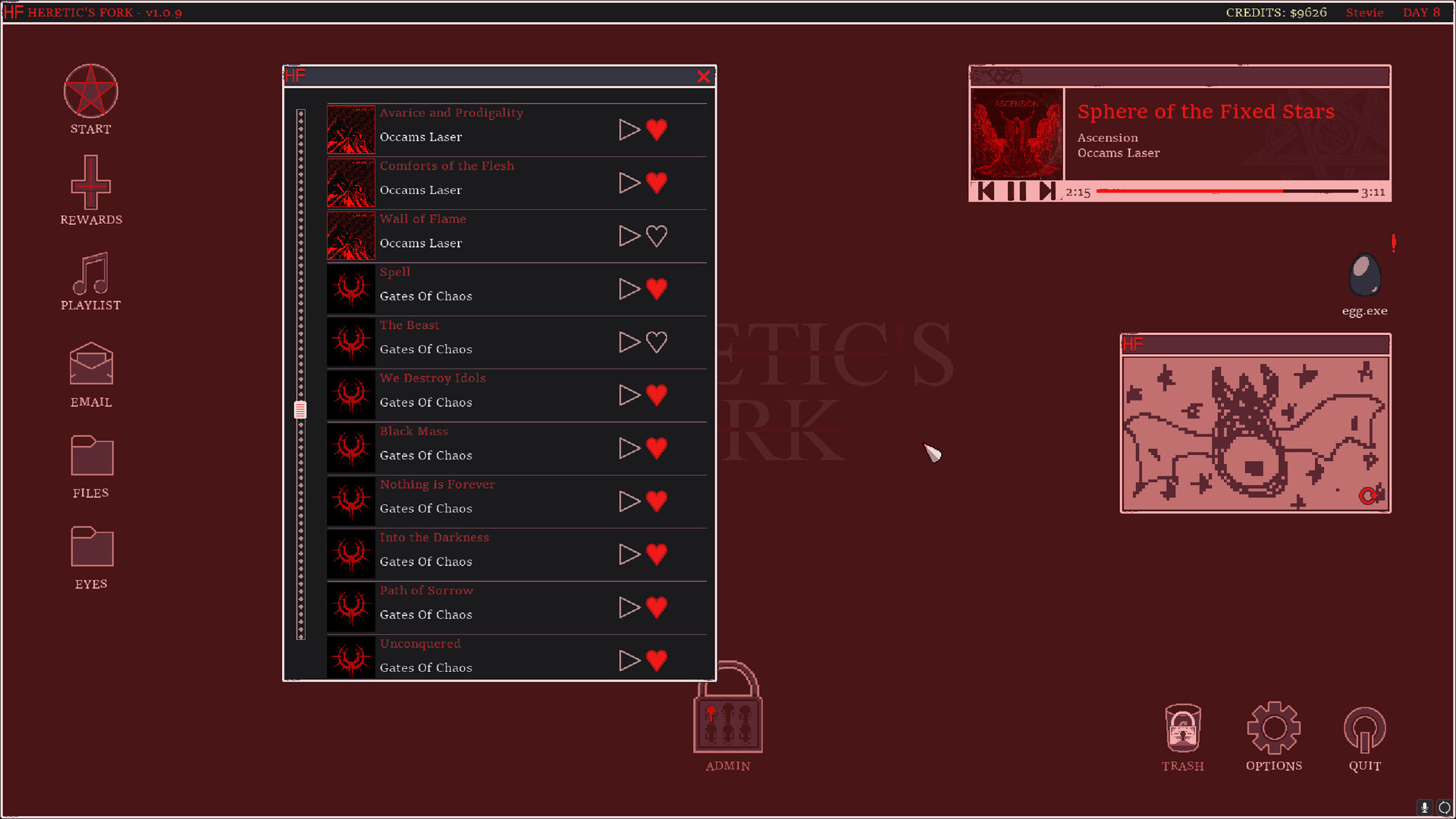
Reviewers describe the concept — a low-level Hell official managing card-driven towers against waves of escaping sinners, complete with between-run desktop events and demonic tamagotchi-style distractions — as a clear labor of love, and the presentation backs that up. Five playable characters bring genuinely different passives and playstyles rather than reskinned stat blocks, and a card pool exceeding 250 entries gives the deckbuilding side of the loop real surface-level variety. Reviewers new to the concept describe getting hooked within a few hours purely on novelty and presentation, a genuine achievement for a hybrid this specific.
A build-variety problem the developer named directly
Set against that presentation, this review's research turned up a consistent, specific complaint: a significant number of reviewers report discovering that stacking a single damage type across a single tower structure dominates every other strategic option, reducing the actual decision-making in a run to identifying which of a handful of viable combinations to commit to before autopiloting the rest. Multiple reviewers describe this discovery happening within just a handful of hours, after which experimentation with other builds feels punished rather than rewarded, since unlocking additional cards simply dilutes the pool with situational or outright weak options rather than expanding meaningful choice.
To the developer's real credit, this wasn't left unaddressed. Within weeks of each other in September 2023, 9FingerGames shipped both the Synergy Update, explicitly stating "the path to victory often involves funneling one structure type" as a named problem it aimed to fix by adding build-rewarding cards and letting players choose starting structures to reduce early RNG, and the Collection Bloat Update, which directly reworked how card choices scale with collection size so growing a deck doesn't automatically dilute it. Both are genuine, specific, good-faith responses to exactly the complaints reviewers raised, rather than vague "balance improvements."
What the achievement data says about whether it worked
Global achievement figures offer an unusually direct way to check whether those fixes actually changed player behaviour, since Heretic's Fork tracks single-damage-type victories by name: achievements for winning using only Hellfire, only Unholy, or only Holy damage each sit in the 28-29% range of the entire playerbase — a remarkably high, remarkably even split that strongly corroborates reviewer accounts that committing to one damage type remains a dominant, reliable path to victory even after the balance patches specifically aimed at diversifying strategy. That doesn't mean the updates did nothing — reviewer sentiment on build variety genuinely improved in later reviews relative to launch-week accounts — but the underlying pull toward single-type stacking appears to persist as the game's most efficient strategy regardless.
A real accessibility gap
A smaller, more straightforward complaint concerns platform support: multiple reviewers confirm the PC version lacks controller support entirely, which rules out comfortable Steam Deck play despite pacing that would otherwise suit handheld sessions well. Console versions released later add native controller support on those platforms specifically, but PC players relying on a controller or wanting Deck compatibility should expect to use mouse and keyboard instead.
Weighing the "boring downtime" complaint fairly
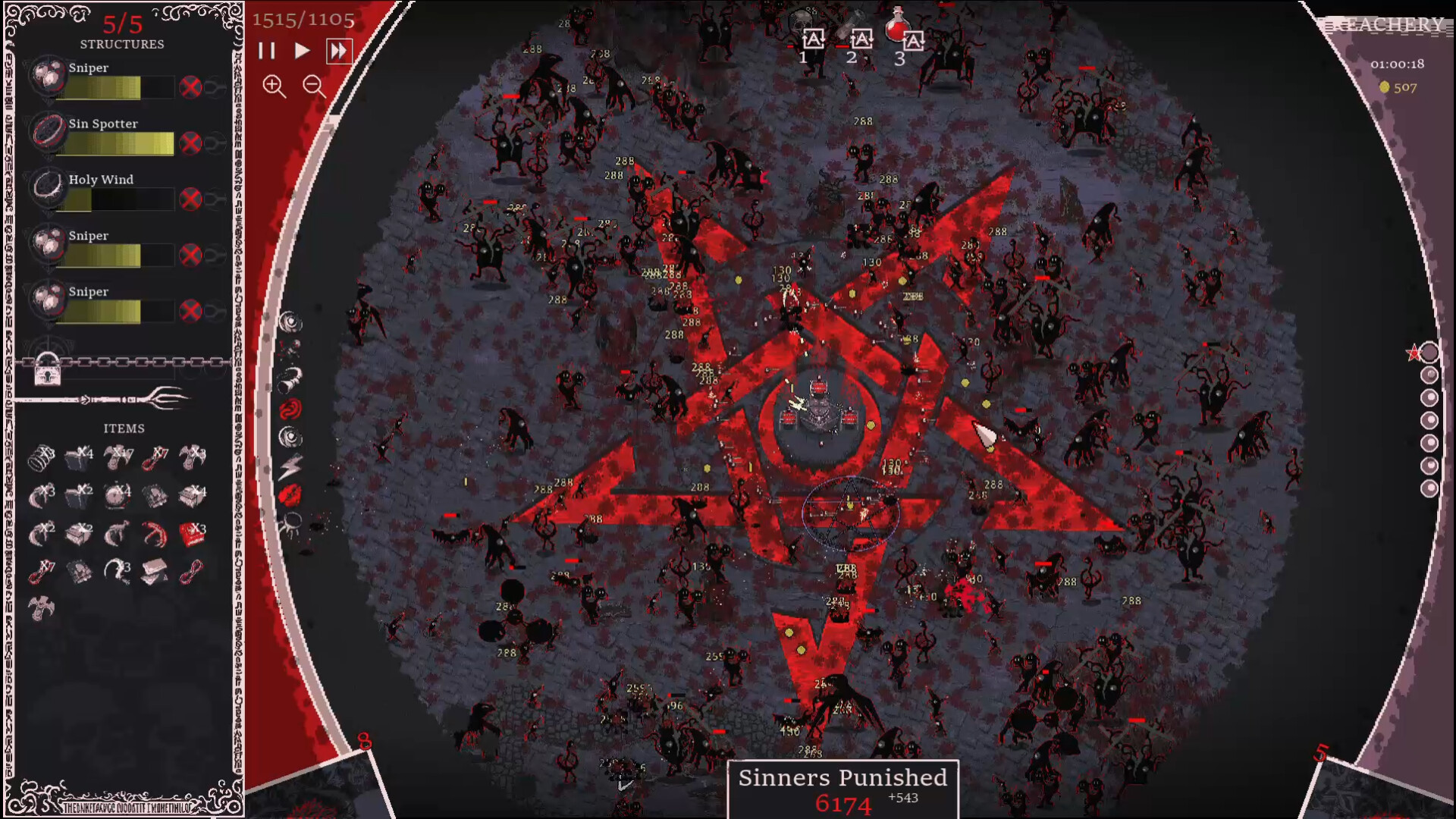
A related but distinct complaint deserves its own consideration: several reviewers describe long stretches of a run with genuinely little to do beyond watching numbers scale, since towers are immobile and combat plays out largely automatically once a build is committed to. One particularly candid review, from a reviewer who otherwise praises the art and concept without reservation, describes the actual moment-to-moment experience as "soul-crushingly boring," specifically citing low tower variety and enemy waves that always arrive in the same order as compounding the problem. This isn't a complaint about difficulty or balance in the way the single-damage-type issue is — it's a pacing and engagement concern that a player's tolerance for lower-interaction, semi-idle games will heavily determine, and reviewers who enjoy that pacing report a very different, more positive experience running the same core loop as a background activity during other tasks.
Torment mode, the game's optional post-campaign difficulty tier added in an October 2023 update, does show a genuinely steep completion curve in the achievement data — dropping from 15.1% of the playerbase clearing its first tier down to 4.4% for the fifth and final tier — confirming that for players who do engage with the endgame specifically, real additional challenge exists beyond the core campaign's more forgiving structure.
Where it lands
Heretic's Fork succeeds first and most consistently on presentation — a genuinely distinctive art style, a memorable soundtrack, and a hybrid concept few other games attempt — and its developer's visible, sustained communication and real attempts to address community feedback by name deserve real credit. The single-damage-type dominance is a legitimate structural weakness that achievement data confirms wasn't fully resolved by the patches aimed at it, and the lack of controller support is a fair, concrete gap for portable-focused buyers. For anyone drawn in by the concept and art first, this remains a worthwhile, if strategically shallower than advertised, pickup.
Pros and cons
Pros
- A genuinely distinctive dark-fantasy, punk-metal art style and darksynth soundtrack that reviewers consistently call the game's standout feature
- An unusual, well-executed hybrid of tower defense, deckbuilding and auto-battler mechanics that reviewers describe as immediately hooking even in just a few hours
- An exceptionally communicative developer, with reviewers repeatedly praising direct responses on the discussion boards and a steady, multi-year stream of content and balance updates
- Five distinct playable characters with genuinely different passives and playstyles, backed by a large card pool exceeding 250 entries
- Two dedicated 2023 patches, the Synergy Update and the Collection Bloat Update, that directly and by name acknowledged the build-variety and progression complaints reviewers raised
Cons
- A significant number of reviewers report discovering that stacking one damage type on one tower dominates every other strategy, and achievement data confirms single-damage-type wins remain extremely common even after balance patches aimed at fixing exactly this
- Multiple reviewers describe the core gameplay loop as shallow with real downtime, with at least one detailed account calling long stretches of a run "soul-crushingly boring" despite loving the game's presentation and concept
- No controller support on PC is confirmed by multiple reviewers, ruling out comfortable Steam Deck play despite the game's handheld-friendly pacing
- Several reviewers describe unlocking new cards as actively working against the player by diluting the pool with situational or weak options, a complaint the developer's own patch notes acknowledge by name as "Collection Bloat"
- Limited UI transparency is cited by at least one detailed reviewer, including no clear display of accumulated luck stats or a way to review which cards have been permanently banished
Screenshots
-
Heretic's ForkImage: Ravenage Games via Steam -
Heretic's ForkImage: Ravenage Games via Steam -
Heretic's ForkImage: Ravenage Games via Steam -
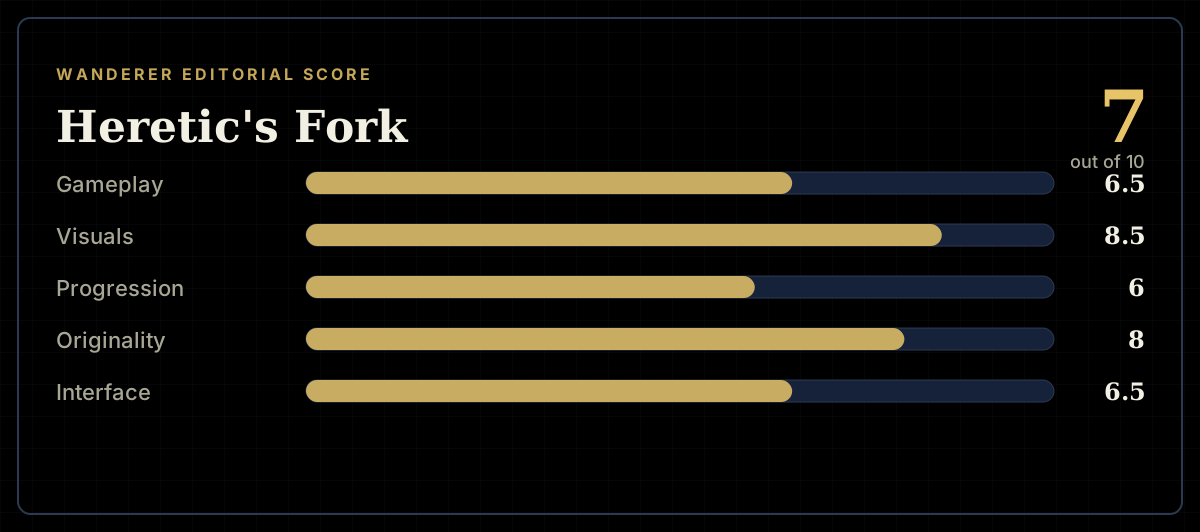
How the review scores each part of the gameWanderer Editorial -
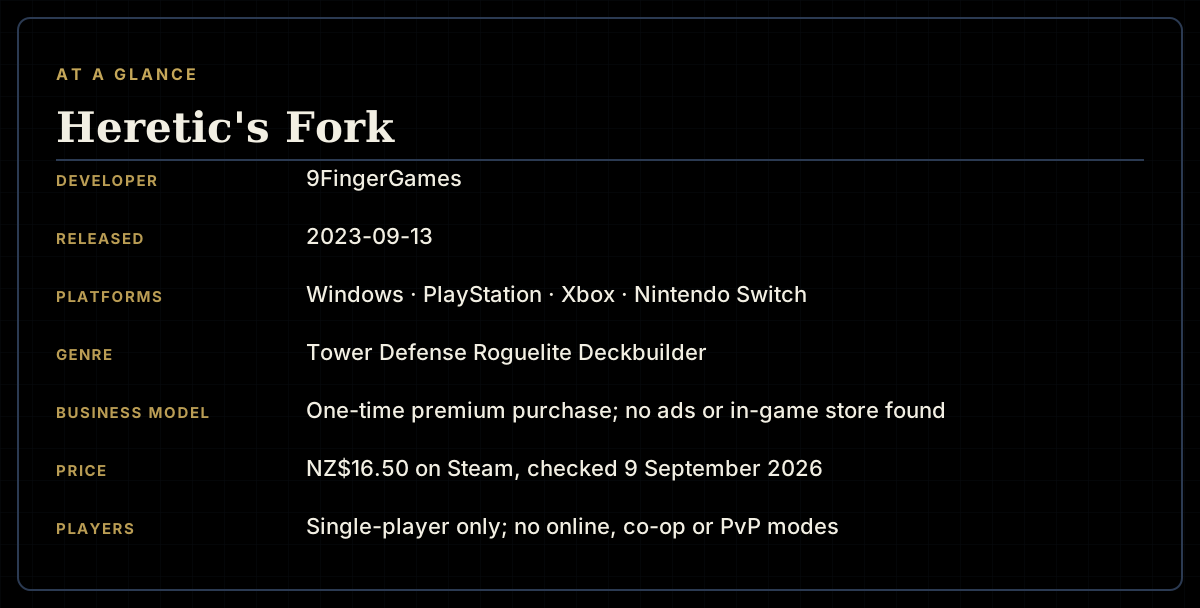
The specsWanderer Editorial -
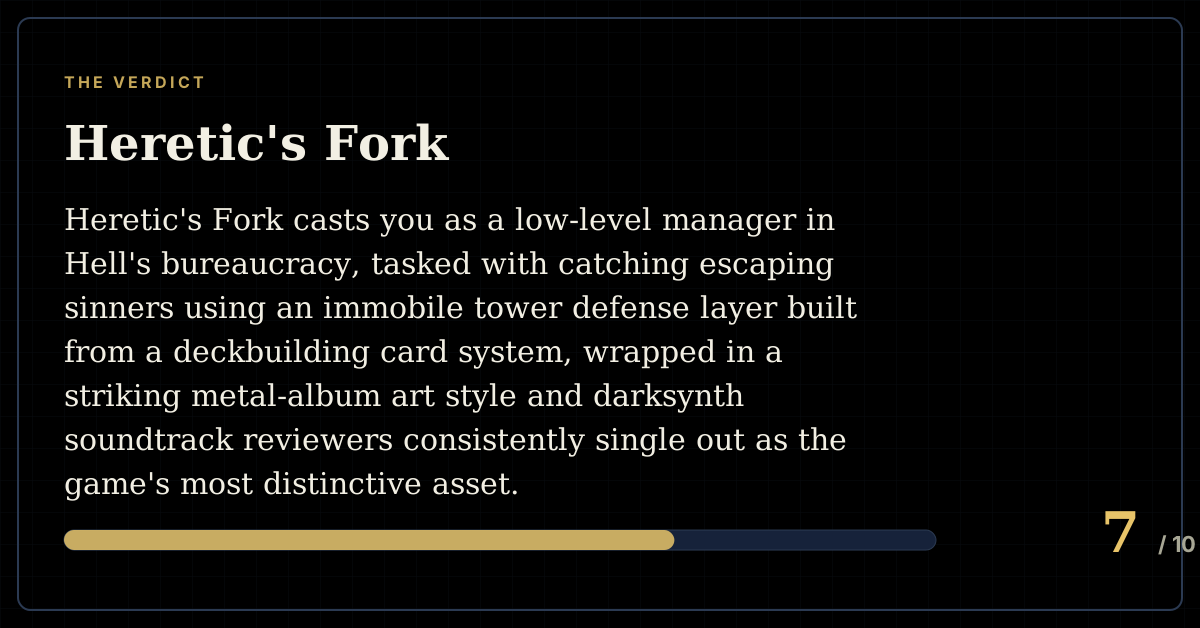
The short versionWanderer Editorial