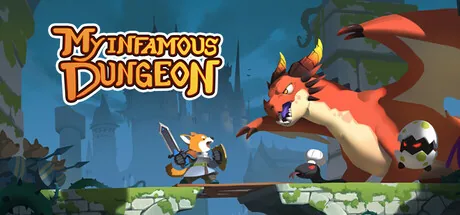
Game review
My Infamous Dungeon
6.5 / 10
- Developer
- BoxFox Studios
- Publisher
- BoxFox Studios
- Released
- 28 July 2026
- Platforms
- Windows
- Genre
- Roguelite Dungeon Builder
- Monetisation
- One-time purchase, no in-game store, no DLC
- Players
- Single-player only
The short version
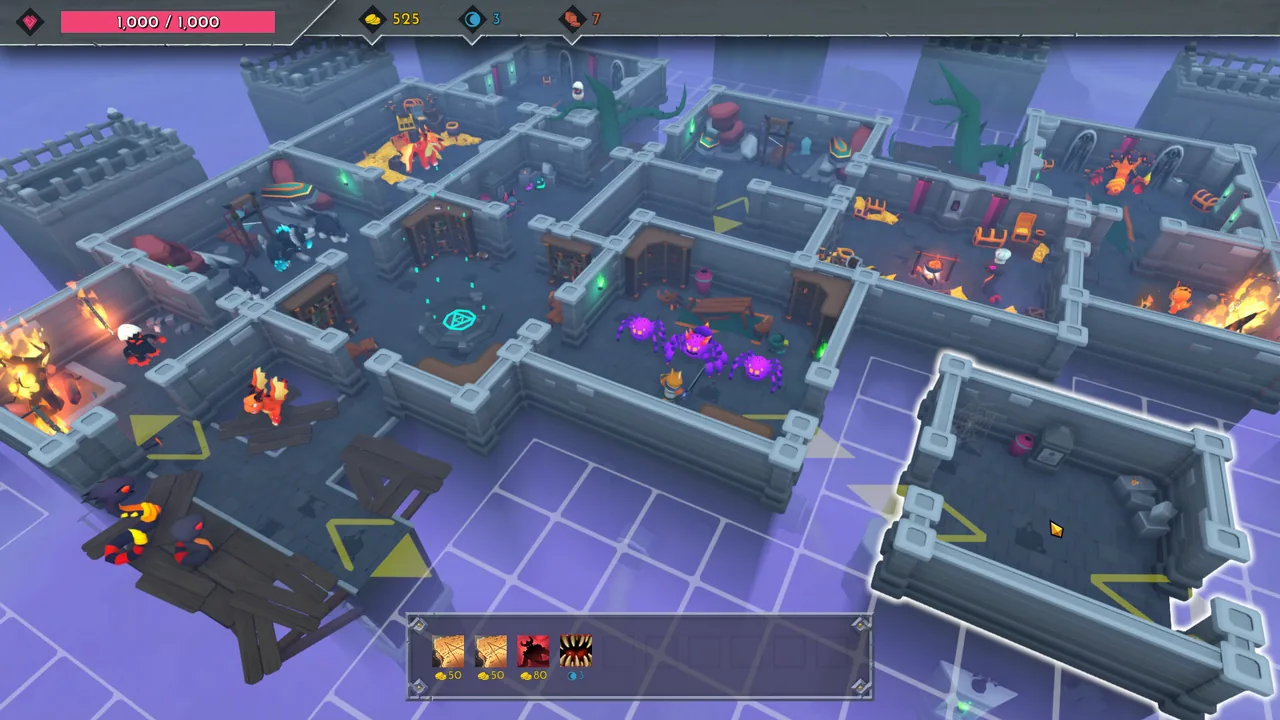
My Infamous Dungeon puts the player in the villain's chair: build a dungeon room by room, breed and arrange six clans of monsters across fifteen professions, and defend a crystal "dungeon heart" against waves of heroes marching in to slay it. It released 28 July 2026 after a well- received public demo, and two weeks later sits at a healthy 83.3% positive among its English reviews.
The recurring shape of the criticism, though, is consistent and worth taking seriously: a fun, well-built core loop that a meaningful share of reviewers say runs out of things to discover once its strongest combinations are found. Several point to specific balance outliers — one profession in particular repeatedly singled out as dramatically stronger than its peers — and multiple reviewers ask for an endless mode to give the systems somewhere to keep going once the campaign's been cleared.
Biggest strengths
- The core loop of designing a dungeon layout, breeding and arranging monster synergies, then watching a run play out against escalating hero waves draws consistent, specific praise — several reviewers compare the engine-building satisfaction favourably to Monster Train
- Genuine build variety at the outset: six monster clans and fifteen professions combine into synergies reviewers describe discovering with real excitement, including well into 20-to-40-hour playtimes
- The villain's-eye framing is executed with real personality and humour rather than as a thin reskin of a hero-perspective game, and the art direction draws specific, repeated praise as charming without reading as a children's game
Biggest weaknesses
- The most consistent, detailed criticism in this review's sample argues that once a player identifies the game's strongest combinations, the challenge and discovery collapse — several reviewers specifically name one profession, the Librarian, as dramatically overpowered relative to its peers
- No endless or infinite mode currently exists, and it's the single most-requested addition across this review's positive sample, with reviewers wanting somewhere for a maxed-out build to keep testing itself
- Content volume runs thin for players who push past the initial difficulty tiers quickly, with one reviewer noting most monsters and higher difficulties unlock within a few hours, leaving achievement-hunting as the main remaining goal
Who it's for: Fans of villain-perspective strategy games (Dungeon Keeper, War for the Overworld) and engine-building roguelites (Monster Train, Slay the Spire) who want a lighter, faster hybrid of both. Best enjoyed in short, focused sessions rather than expecting dozens of hours of build variety.
Our recommendation: A confident recommendation at its price for the core loop alone — reviewers with 30-plus hours still describe finding new monster synergies. Go in expecting the meta to solve itself faster than the genre's deepest entries, and don't expect an endless mode yet, even though it's clearly what a lot of the audience wants next.
6.5 / 10
Introduction
Most dungeon-building games ask you to imagine being the hero who breaks into one. My Infamous Dungeon flips the camera: you're the villain, arranging rooms and monster placements to protect a crystal "dungeon heart" from waves of adventurers who show up specifically to kill you and take your stuff. Developed by BoxFox Studios and released 28 July 2026 after a well-attended public demo, it's part Dungeon Keeper in premise and part Monster Train in structure — plan a layout, breed and combine monster clans into synergies, then watch a run play out against escalating difficulty. Two weeks in, its English review sample sits at 90% positive, and reading all forty of those reviews turns up a genre-familiar shape: real, specific enthusiasm for the core loop, paired with a clear, repeated argument about where that loop runs out of room.
Building evil, one room at a time
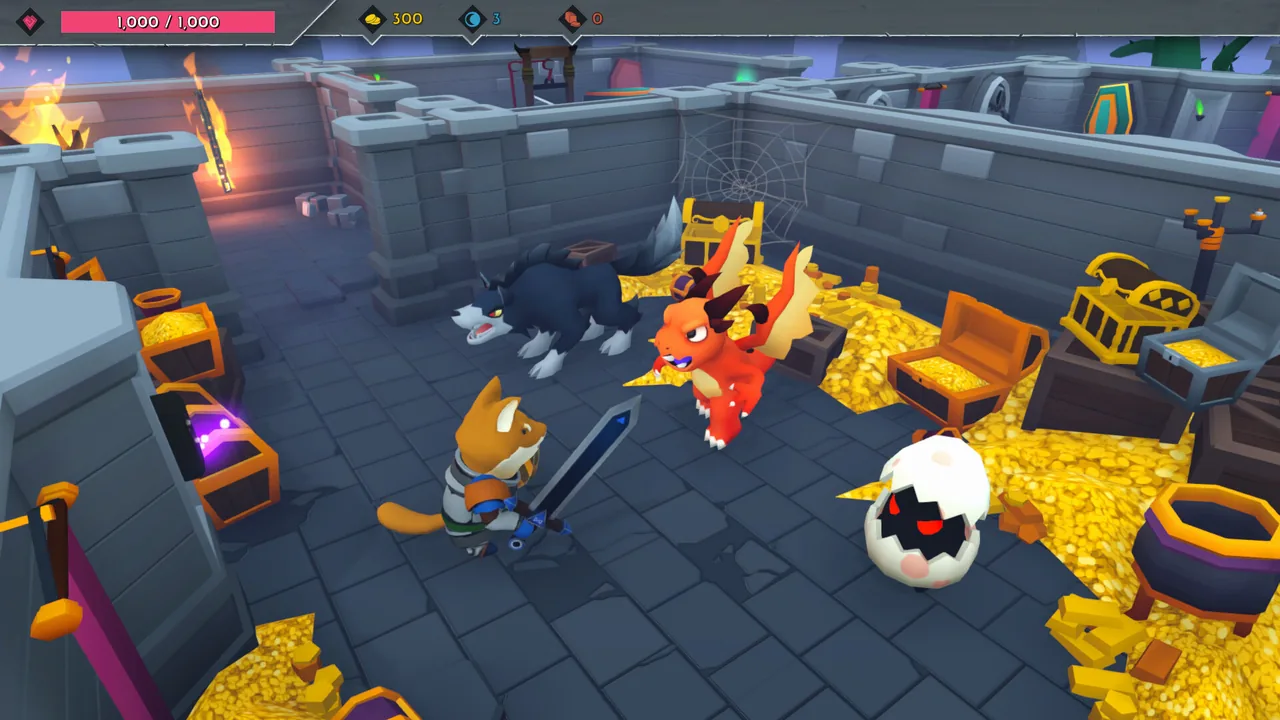
The praise in this sample is detailed rather than generic, which is usually the best sign a game's central idea actually works. "If you ever wanted to level up and evolve your pokemons to defend your evil dungeon, then this is the game," wrote one reviewer, capturing the collection-and-breeding appeal directly. Another drew the more structural comparison: "I don't want to make any comparisons, but it reminds me a little of Monster Train... I have already put 10 hours in it since yesterday." Six monster clans combine with fifteen professions to produce what several reviewers describe as genuinely surprising synergies — one specifically praised the "merging mechanics" and deckbuilding layer for making "interesting choices" feel real rather than illusory, and another with over 40 hours logged still described finding new combinations worth trying. The villain framing itself draws credit too: reviewers repeatedly note the tone is charming and funny without tipping into a children's game, and the art style is singled out as a genuine strength independent of the mechanics underneath it.
Where the meta solves itself
Set against that, this sample's most detailed and most-upvoted review — 63 votes, structured with headers like a mini design document — lays out the central complaint precisely: "Great foundation, but desperately needs much more content and a balance pass... I genuinely had a lot of fun with the demo, but once you figure out the meta, the game completely falls apart." That review and several others independently name the same specific outlier: the Librarian profession, whose ability to add bonus experience to every source is described as dramatically outclassing its peers, alongside other professions reviewers call "useless" or "underpowered" by comparison. This is a familiar shape of complaint in randomised-build games — when a handful of options dominate, the game gets less interesting to explore rather than more, even as the total item count grows. Several reviewers frame it in almost identical terms to each other independently, which is a stronger signal than any one review alone.
The related, equally common request in this sample is for an endless or infinite mode. "Once everything is unlocked there's not much to do other than achievements," wrote one reviewer who'd logged over 40 hours, and multiple others ask, half-jokingly, for exactly that feature by name. It's worth noting precisely what this complaint is and isn't: reviewers aren't describing a broken or unenjoyable game — most of the same people raising the balance and content concerns still recommend the purchase — they're describing a well-built toy they've run out of new things to do with faster than they wanted to.
Active patching, aimed in the right direction
To the developer's credit, this isn't a static launch. Four patches have shipped in the roughly two weeks since release, and the most recent balance-focused one, on 4 August, buffed several of the weaker professions reviewers had named — the Vine Guard's Bud monsters gained a new scaling ability, the Chef's key item became easier to access earlier in the tree, and the Architect gained a new skill node. That's a reasonable philosophy for addressing a dominant-outlier problem: raising the floor of underused options rather than simply cutting the strongest one, though as of this review's research the specific Librarian complaint doesn't appear to have been directly addressed yet. A separate patch the same week fixed several save-related bugs, including monsters losing buffs after merging or reloading — evidence the team is actively working through both balance and stability issues in parallel rather than treating the July launch as a finished state.
Final Verdict
My Infamous Dungeon gets the hard part right: a villain-perspective dungeon builder with real personality, a monster-breeding loop reviewers describe with genuine affection, and engine-building moments specific enough to draw comparisons to genre favourites like Monster Train. What holds it back from a stronger score is exactly what its own most detailed reviewer named — a balance pass that hasn't fully caught up to its own strongest outlier, and a content ceiling that a committed player can reach faster than the price tag might suggest, with no endless mode yet to give a maxed-out build somewhere to keep testing itself. None of that makes the current version a bad buy; it makes it a genuinely fun foundation with a clearly demonstrated, actively-patched trajectory. Buy it for the core loop, which is real and well-liked, and treat the requests for more content and a deeper balance pass as the fair, specific feedback a young full-release launch should expect to keep acting on.
Pros and cons
Pros
- The core loop of designing a dungeon layout, breeding and arranging monster synergies, then watching a run play out against escalating hero waves draws consistent, specific praise — several reviewers compare the engine-building satisfaction favourably to Monster Train
- Genuine build variety at the outset: six monster clans and fifteen professions combine into synergies reviewers describe discovering with real excitement, including well into 20-to-40-hour playtimes
- The villain's-eye framing is executed with real personality and humour rather than as a thin reskin of a hero-perspective game, and the art direction draws specific, repeated praise as charming without reading as a children's game
- The developer has shipped four patches in the roughly two weeks since launch, including a quick balance patch buffing underused professions rather than only nerfing outliers
- A run typically completes in around 30 minutes, making the game easy to pick up for a short session without a large time commitment
Cons
- The most consistent, detailed criticism in this review's sample argues that once a player identifies the game's strongest combinations, the challenge and discovery collapse — several reviewers specifically name one profession, the Librarian, as dramatically overpowered relative to its peers
- No endless or infinite mode currently exists, and it's the single most-requested addition across this review's positive sample, with reviewers wanting somewhere for a maxed-out build to keep testing itself
- Content volume runs thin for players who push past the initial difficulty tiers quickly, with one reviewer noting most monsters and higher difficulties unlock within a few hours, leaving achievement-hunting as the main remaining goal
- A handful of reviewers describe the early game as confusing to parse — remembering what each of fifteen professions and dozens of monster types actually does isn't easy to hold in your head without better in-game reference tools
- At least one reviewer described the game, in its harshest framing, as feeling "more like a failed iphone game" or an early alpha — an outlier view in this sample, but one specific enough to note rather than dismiss outright
Screenshots
-
My Infamous DungeonImage: BoxFox Studios via Steam -
My Infamous DungeonImage: BoxFox Studios via Steam -
My Infamous DungeonImage: BoxFox Studios via Steam -
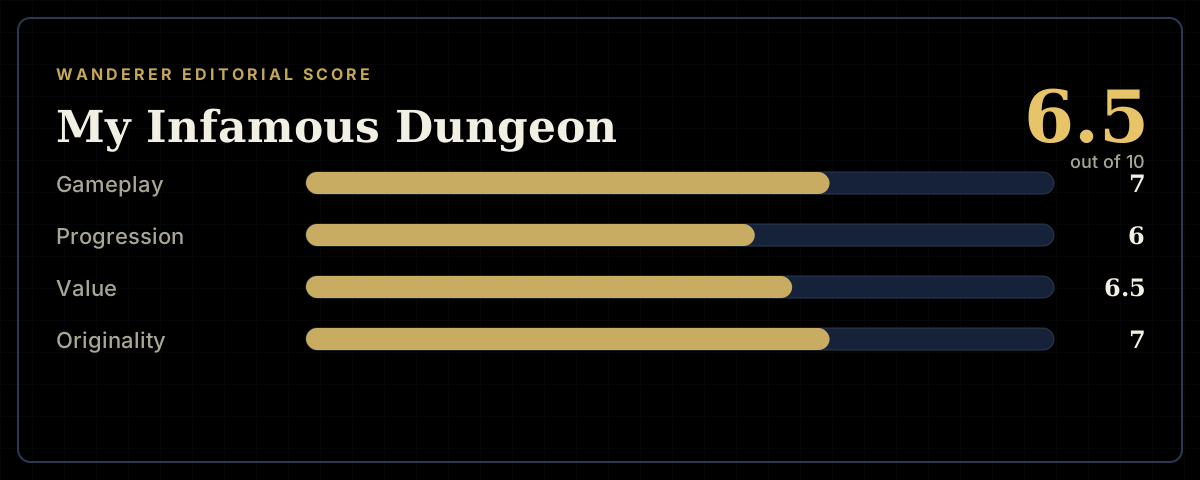
How the review scores each part of the gameWanderer Editorial -
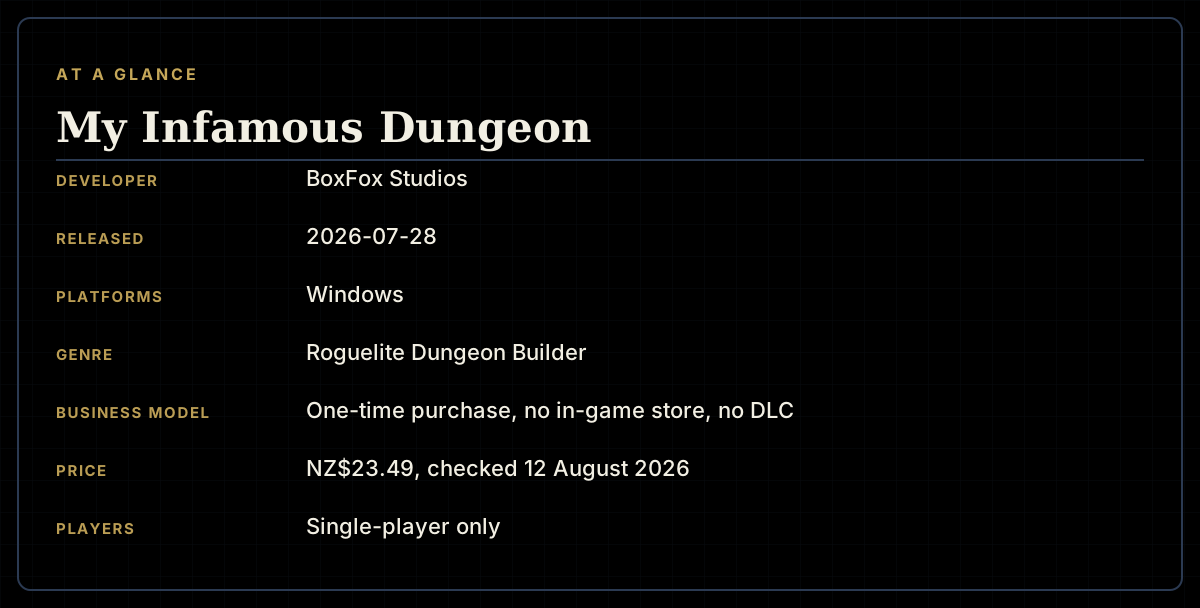
The essentials at a glanceWanderer Editorial -
The short versionWanderer Editorial