Game review
Emberward
7.5 / 10
- Developer
- Refic Games
- Publisher
- Refic Games
- Released
- 25 June 2024
- Platforms
- Windows
- Genre
- Tower Defense, Roguelite, Deckbuilder, Fantasy, Early Access
- Monetisation
- One-time purchase, no DLC, no in-game currency; a free demo remains available alongside the paid Early Access build
- Players
- Single-player only
The short version
Emberward drops a maze-building mechanic — physically placing Tetris-style blocks to redirect where enemies walk — into a Slay the Spire-shaped roguelite run structure, and the combination is distinctive enough that this review's full read of its 72 English-language negative reviews keeps finding the same sentence: "concept 10/10, execution 5/10." Made by Refic Games and in Early Access since 25 June 2024, it sits at Overwhelmingly Positive across 2,486 reviews (97%), and the praise is specific and earned — sharp presentation, a genuinely inventive core hook, and over two years of near-monthly patches. The recurring complaint is just as specific: limited map and character variety, upgrade paths that cap out fast, and a swing between "too easy" and "unfairly hard" that different reviewers experience in the same build.
Biggest strengths
- The block-based maze-building mechanic is a genuinely novel spin on tower defense, and multiple detailed reviewers independently compare it to the joy of custom Warcraft 3 tower defense maps
- Sharp, colourful presentation with sound design several reviewers specifically credit for giving towers real impact and weight
- A visibly sustained development pace — near-monthly numbered updates from the June 2024 Early Access launch through mid-2026, including a June 2026 "what's coming in 1.0" post signaling the developer is working toward a full release rather than having stalled
Biggest weaknesses
- The single most repeated criticism across the full negative sample is a lack of long-term content: a limited number of maps and characters means several detailed reviewers report seeing most of what the game offers within their first one to two runs
- At least one detailed review reports a specific mechanical regression from the pre-launch demo to the Early Access release — deck-manipulation controls that let players hold cards were removed in favor of an unlimited draw, reducing a layer of player agency
- Reviewers split sharply on difficulty: a meaningful share across 2025 and 2026 call the game "too easy" and describe monsters that barely leave their spawn point, while other detailed reviews report specific late-game encounters and elite enemies they call unbeatable or unfairly RNG-driven — this review cannot adjudicate which build state produced which experience, only that both complaints recur independently
Who it's for: Tower defense and roguelite fans who want a genuinely novel spatial-puzzle hook and can treat the current Early Access build as a strong afternoon rather than a long-term time sink; a weaker fit for players who want deep run-to-run build variety or a game already at its full content scope.
Our recommendation: One of the more inventive tower defense ideas released in years, executed well enough to earn its reputation, but not yet stocked with enough maps, characters, and build variety to reward the dozens of runs its roguelite structure implies.
7.5 / 10
Introduction
Emberward's pitch is a single sentence that turns out to be a genuinely good idea: what if you built the maze itself, one Tetris-shaped block at a time, instead of just placing towers along a fixed path? Developer Refic Games ran a public demo starting in November 2023 before launching into paid Early Access on 25 June 2024, and two years on, the reception has been extraordinary — Overwhelmingly Positive across 2,486 English-language reviews, a 97% rate that few Early Access games sustain this long. Reading every one of the 72 negative reviews in that sample tells a consistent, narrower story than the headline score suggests: almost nobody argues with the idea. The complaint, repeated in different words by dozens of reviewers, is that the game hasn't yet built enough around it.
The hook, and why it works
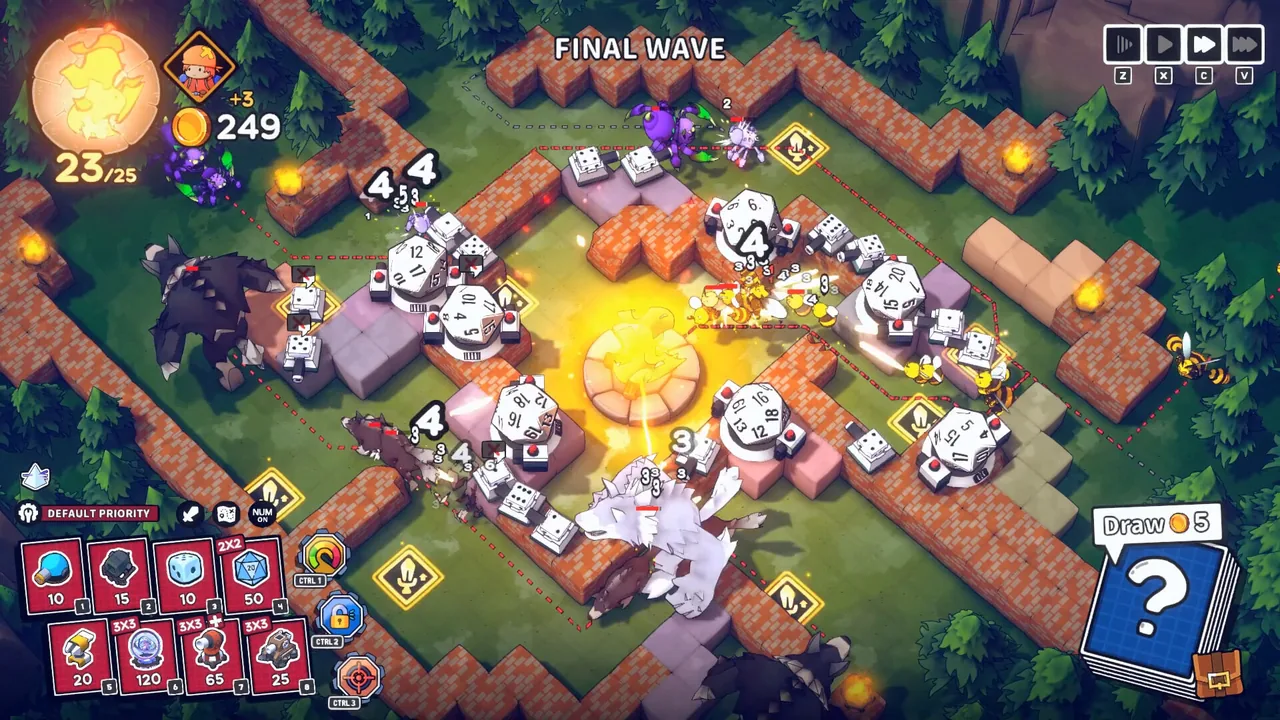
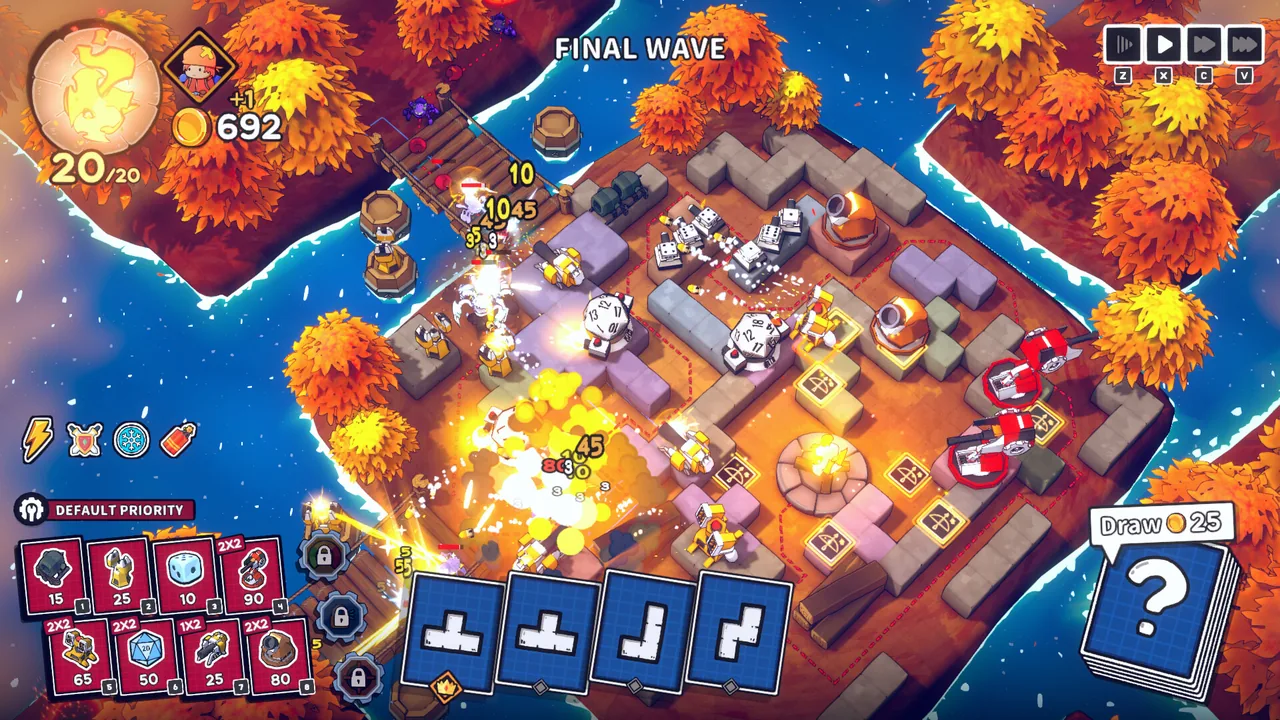
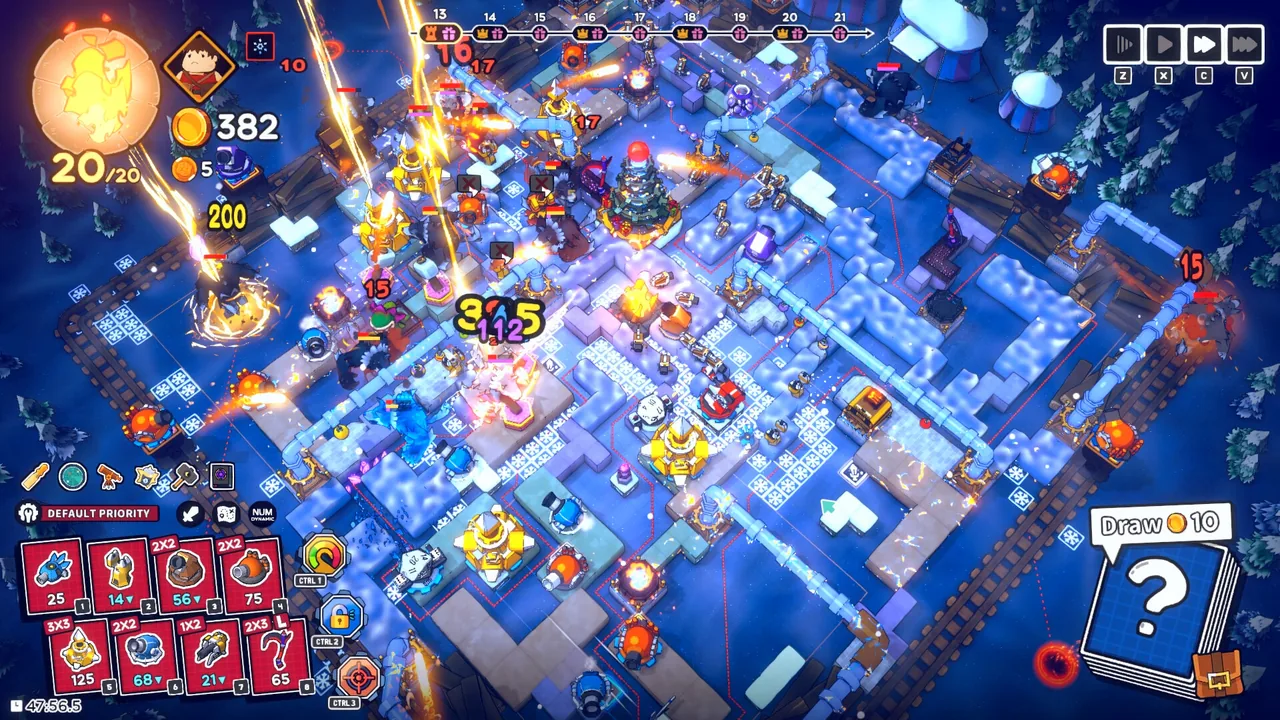
The core loop borrows its run structure from Slay the Spire — pick a character, build a deck of towers and modifier blocks, fight through a branching map, get stronger between fights — and grafts it onto tower defense's oldest trick: forcing enemies down a path you control. Emberward's twist is that the path isn't fixed. Players place physical, Tetris-shaped blocks to build a maze in real time, forcing enemies into longer routes past more towers. Several of the most detailed positive reviews single this out specifically, with more than one comparing it directly to the joy of building elaborate custom maps in Warcraft 3's tower defense mode, and another calling it the best encapsulation of that feeling they've found since Desktop Tower Defense. The presentation backs the mechanic up: reviewers consistently praise the sound design for giving towers real weight and the colourful, readable art style for keeping fast, chaotic fights legible.
A concept that keeps outrunning its content
The single most common sentence structure across Emberward's negative reviews, in one form or another, is "great concept, not enough behind it." One detailed review scores it directly: "Concept: 10/10. Execution: 5/10." That gap shows up as a specific, recurring complaint about scope — a limited number of maps, a small roster of characters, and towers that cap out after one or two upgrade tiers. Several reviewers report seeing most of what a fresh run has to offer within their first hour or two, and multiple 2024-era reviews specifically note beating the entire available game in under two hours at launch. That's a normal complaint to level at an Early Access game in its first weeks. What's notable is how often it recurs much later — reviews as recent as March and April 2026 still describe the run-to-run variety as too thin for a genre that lives on repeat plays, even after nearly two years of updates.
One specific version of this complaint deserves its own mention. A detailed 2025 review describes a change between the pre-launch demo and the Early Access release: the demo let players hold and selectively play cards from their deck, while the shipped Early Access build gives players an effectively unlimited draw instead. That's a meaningful loss of player agency dressed up as a convenience change, and a separate, later review makes the same underlying point in different language — describing a build where more towers, relics, and cards have been added over time without adding real tools to steer toward a specific build, so a bigger card pool has made consistently good runs harder to assemble rather than easier. That's the classic pool-dilution trap: more content isn't automatically more depth if nothing helps the player find what the added options are actually good for.
A difficulty curve two different players describe two different ways
Reading the full negative sample surfaces a genuine split rather than a single consistent complaint about difficulty. A meaningful share of reviews, concentrated more heavily in 2025 and 2026, call the game too easy — describing monsters that barely leave their spawn portal, runs that end in a predictable win, and a lack of any real difficulty curve. Set against that is a smaller but consistent thread of reviews describing specific late-game encounters — elite monsters with near-unkillable regeneration, stun-locking enemy types, RNG-driven starting-card assignments — as unfair rather than challenging. This review can't reconcile which of these experiences reflects the current build more accurately, since both continue to appear well into 2026, but the contradiction itself is worth knowing about going in: expect a run that might feel undertuned in one direction or the other, not a consistently calibrated challenge.
Where the achievement data lines up with the reviews
Emberward ships with 85 Steam achievements, and the completion curve is a steep one. Even the very first achievement in the progression — simply starting the adventure — sits at only 40.1% of all owners. From there it falls in a fairly smooth line: character unlocks in the 24-33% range, clearing the first world's normal difficulty at 31.8%, and the game's hardest challenge-mode achievements below 1%. That opening-achievement number in particular is worth sitting with: a majority of everyone who has ever launched Emberward never triggers its first tracked milestone. That's consistent with reviews describing an experience that's easy to bounce off within the first runs, whatever the reason for any individual player.
Signs of a project that hasn't stalled
Whatever else is true about content pacing, Emberward's patch history argues against the game being neglected. From its June 2024 Early Access launch through mid-2026, Refic Games has shipped numbered updates at a near-monthly cadence, including a March 2025 "Sealed Citadel" content update and a June 2026 developer post specifically discussing plans for a 1.0 release. That sustained cadence is a meaningful counterweight to the content complaints above — this reads as a game still being actively built out, not one coasting on an initial wave of praise.
Final Verdict
Emberward earns its Overwhelmingly Positive score honestly: the maze-building hook is a genuinely original idea executed with real polish, and two years of steady updates show a developer still working the problem. But this review's full read of the negative sample finds a specific, persistent gap between how good the core idea is and how much game currently surrounds it — limited map and character variety, a difficulty curve reviewers describe in contradictory terms, and at least one credible report that added content has made builds more random rather than more expressive. Tower defense and roguelite fans should absolutely try this, especially given the free demo sitting right next to the paid build. Just go in expecting a genuinely great few runs rather than the dozens the genre usually promises, and watch the 1.0 patch notes before assuming that's changed.
Pros and cons
Pros
- The block-based maze-building mechanic is a genuinely novel spin on tower defense, and multiple detailed reviewers independently compare it to the joy of custom Warcraft 3 tower defense maps
- Sharp, colourful presentation with sound design several reviewers specifically credit for giving towers real impact and weight
- A visibly sustained development pace — near-monthly numbered updates from the June 2024 Early Access launch through mid-2026, including a June 2026 "what's coming in 1.0" post signaling the developer is working toward a full release rather than having stalled
- Full controller support was added during Early Access and is specifically praised by at least one reviewer for handheld PC use
Cons
- The single most repeated criticism across the full negative sample is a lack of long-term content: a limited number of maps and characters means several detailed reviewers report seeing most of what the game offers within their first one to two runs
- At least one detailed review reports a specific mechanical regression from the pre-launch demo to the Early Access release — deck-manipulation controls that let players hold cards were removed in favor of an unlimited draw, reducing a layer of player agency
- Reviewers split sharply on difficulty: a meaningful share across 2025 and 2026 call the game "too easy" and describe monsters that barely leave their spawn point, while other detailed reviews report specific late-game encounters and elite enemies they call unbeatable or unfairly RNG-driven — this review cannot adjudicate which build state produced which experience, only that both complaints recur independently
- At least one detailed 2025 review specifically describes a pool-dilution problem: as the developer has added more towers, relics, and cards over time, getting a genuinely strong build has become less consistent rather than more, because the added content increased randomness without adding tools to hunt for a specific build
- Steam's own achievement data shows only 40.1% of players ever clear the very first achievement, a completion floor that lines up with reviews describing the opening hours as thin enough to lose interest quickly
Screenshots
-
EmberwardImage: Refic Games via Steam -
EmberwardImage: Refic Games via Steam -
EmberwardImage: Refic Games via Steam -
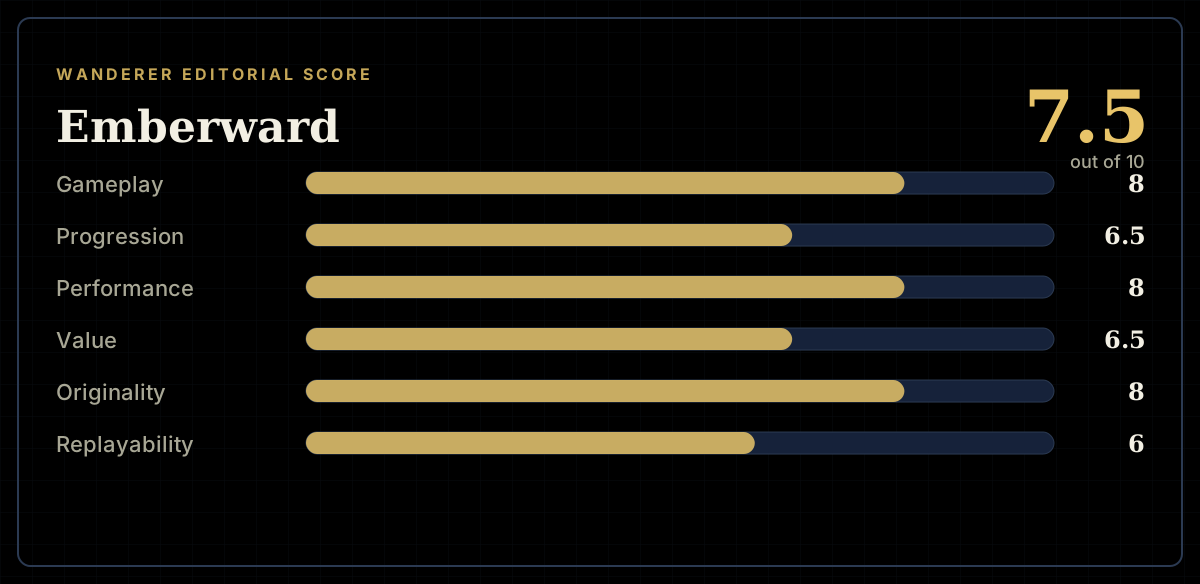
How the review scores each part of the gameWanderer Editorial -
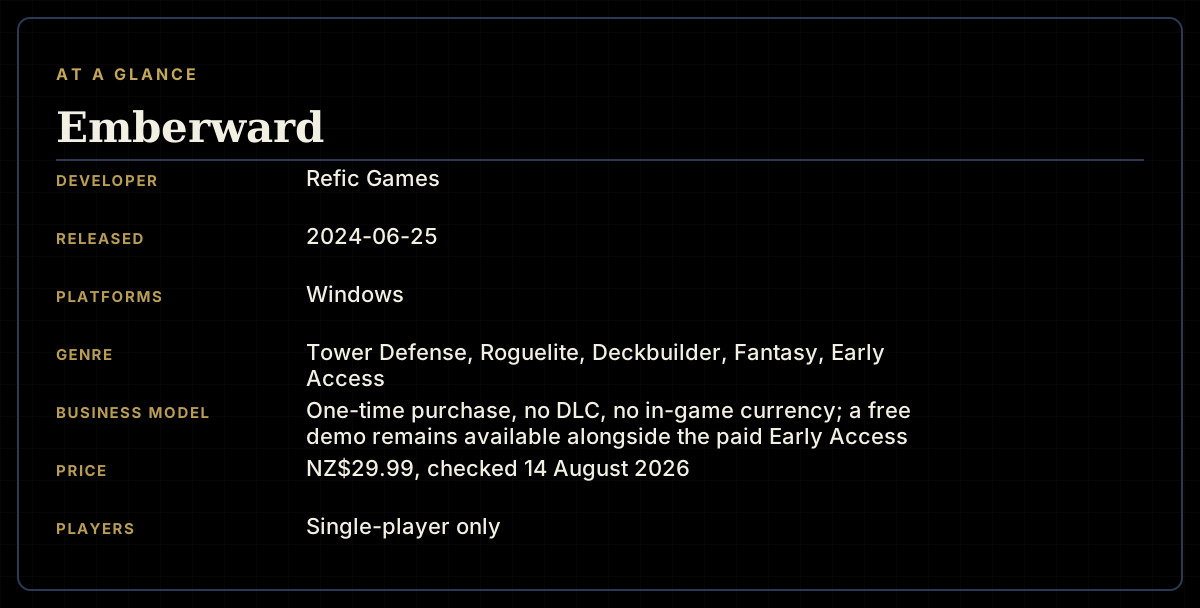
The essentials at a glanceWanderer Editorial -
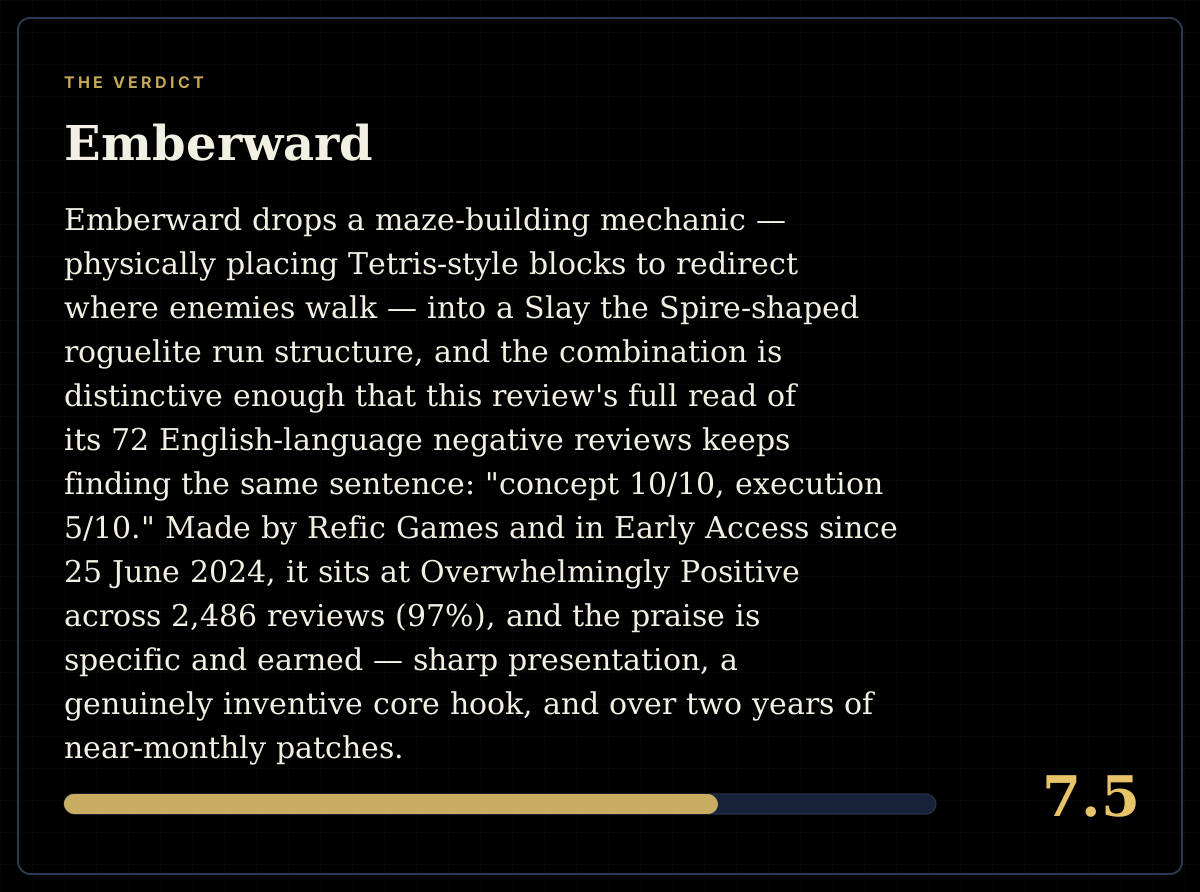
The short versionWanderer Editorial