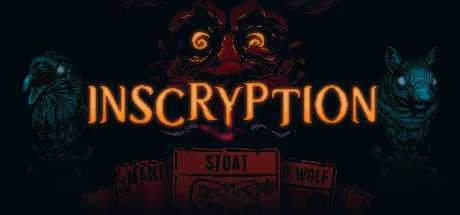
Game review
Inscryption
9 / 10
- Developer
- Daniel Mullins Games
- Publisher
- Devolver Digital
- Released
- 19 October 2021
- Platforms
- Windows, macOS, Linux
- Genre
- Deckbuilding Roguelike, Puzzle, Horror
- Monetisation
- One-time purchase, no in-app purchases, no ads, no subscription; an optional soundtrack DLC exists but adds no gameplay content
- Players
- Single-player only
The short version
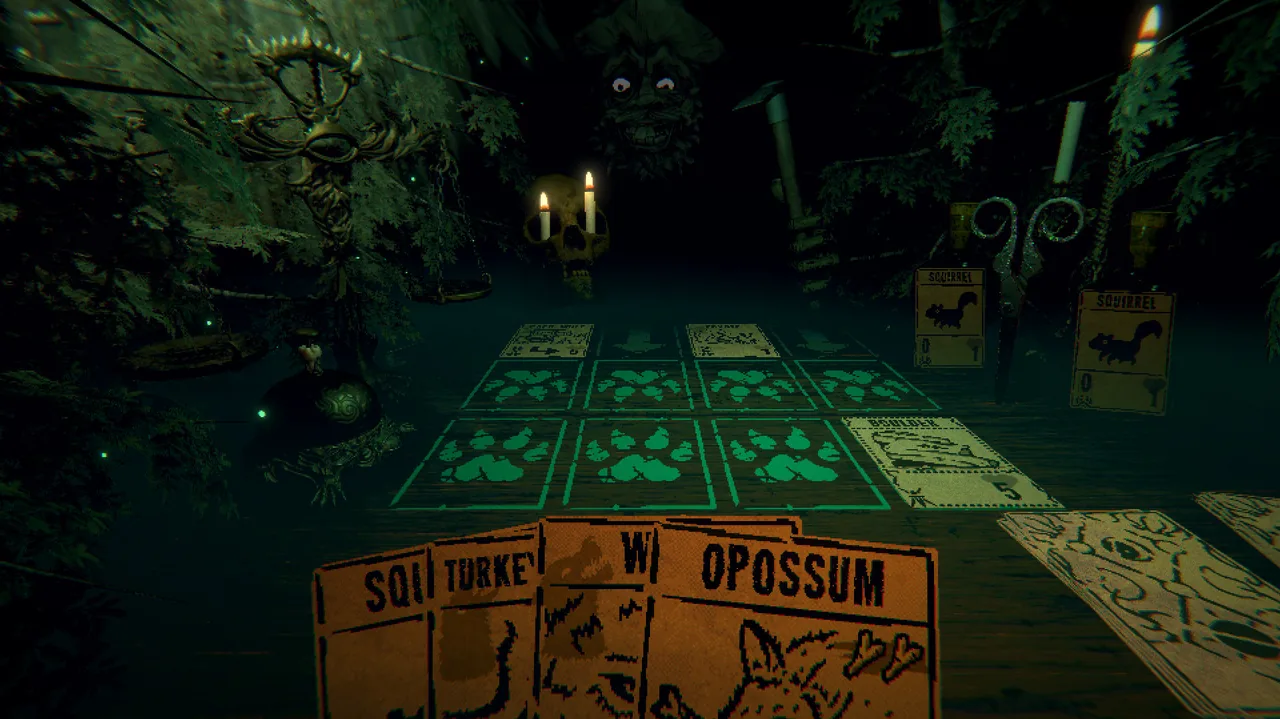
Inscryption opens as a first-person card game inside a locked wooden cabin, run by a taxidermied wolf who deals like he's done this a thousand times before. That framing is a promise the game breaks on purpose, repeatedly, in ways that reshape what kind of game you're playing roughly every few hours. It's one of the most genuinely inventive things released in the deckbuilding-roguelike boom, and the strongest evidence for that isn't a review score — it's a 96.8% positive rating held across 134,000 Steam reviews for nearly five years, an extraordinarily rare number at that sample size.
The same reviews also contain a real, repeated complaint: everything shown on the store page and in the trailers is the game's first act, and a meaningful slice of buyers who fell in love with that act feel ambushed by what comes after. Both things are true. The ambush is the point, and whether that lands as brilliant or as a bait-and-switch depends entirely on what you came in expecting.
Biggest strengths
- Act 1's cabin is a genuinely tense, atmospheric deckbuilder in its own right, with a sacrifice-and-blood resource system that forces real trade-offs on every card played
- The shift into later acts recontextualises everything that came before, including cards, rules and the framing device itself, in ways few games attempt and fewer pull off
- Kaycee's Mod, a free post-launch update, turns Act 1's ruleset into a full endless roguelike run with escalating challenge tiers, giving the game a genuine long-term mode beyond its story
Biggest weaknesses
- A consistent, sizeable share of negative reviews describe the game as misrepresented by its own marketing, since the screenshots and trailers show only the first several hours
- Steam's own achievement data shows a steady drop-off across the story's later stages, and the negative-review sample corroborates it directly — most complaints about the later acts cite losing interest, not difficulty
- The card game itself gets simpler, not more complex, once the roguelike framing falls away in the later acts, which some players read as a loss rather than a twist
Who it's for: Players who enjoy being surprised more than they enjoy knowing exactly what they bought, fans of escape-room puzzle logic and unreliable narrators, and anyone who liked Slay the Spire's card-battling but wanted a story wrapped around it instead of a leaderboard.
Our recommendation: Buy it and avoid trailers, streamers and wikis beyond the first hour. The entire design depends on not knowing where it's going next, and that's a harder thing to protect in 2026 than it was on release day — go in as blind as you can manage.
9 / 10
The wolf dealing the cards in Inscryption's opening hour never blinks, because he can't — he's stuffed, mounted behind the table, and somehow still running the game. That's the first sign this isn't going to behave like the deckbuilding roguelikes it initially resembles. It's also, in its own small way, the entire pitch: Inscryption spends its runtime pulling the table out from under you, again and again, and asking whether you're still willing to sit down and keep playing.
A cabin, a deck, and a system that punishes greed
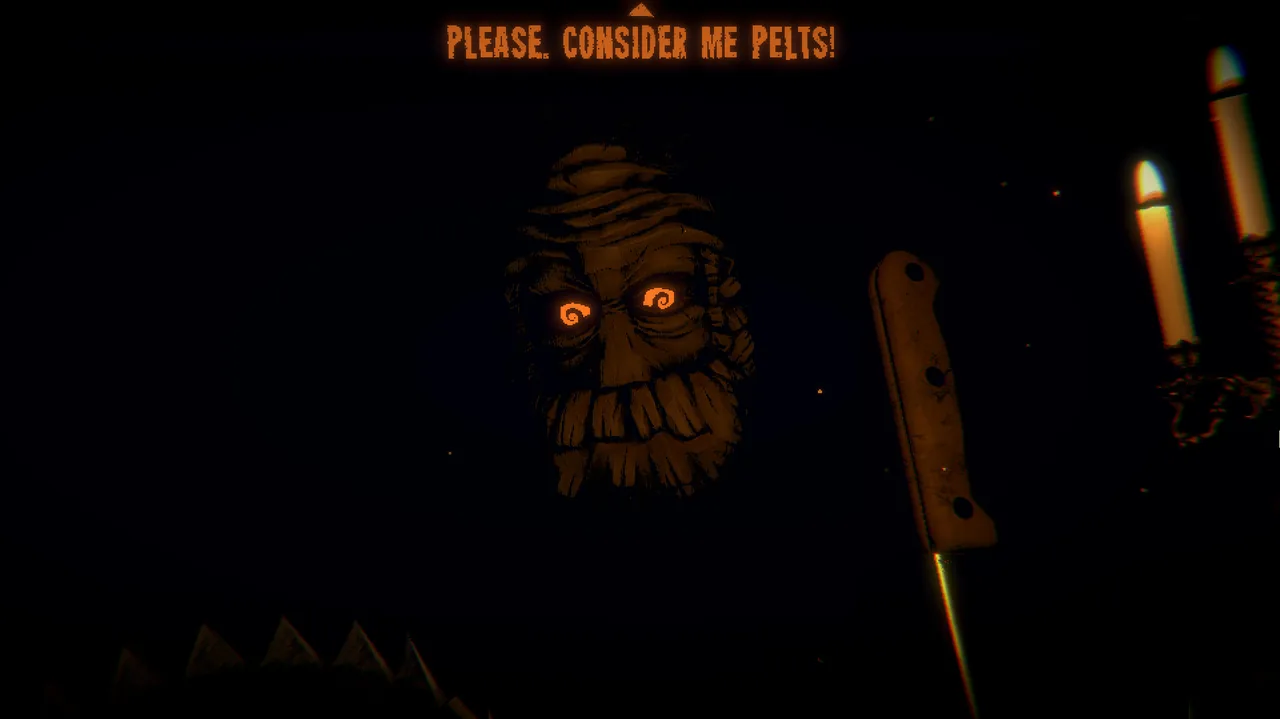
The opening act puts you in a locked wooden cabin playing cards against Leshy, a masked, unsettling dealer who narrates the rules as you learn them. The card game underneath is a lane-based battler — place creatures, attack, defend, wear down an opponent's health — but the resource system is what gives it teeth. Most cards cost blood or bones rather than mana, and you generate both by sacrificing creatures already on your board. Every strong card you want to play means weakening your board to afford it, and every sacrifice is a small, real decision rather than a currency tick. It's a tighter, meaner rhythm than most deckbuilders bother with, and it holds up entirely on its own merits before anything strange happens to the format around it.
Strange things happen to the format around it almost immediately. Cards bleed when killed. The camera occasionally catches something in the corner of the cabin that shouldn't move. A message appears that implies someone else, somewhere, is also watching this game happen. None of it interrupts the card game; all of it makes clear the card game was never the only thing being played.
The genre change nobody puts on the store page
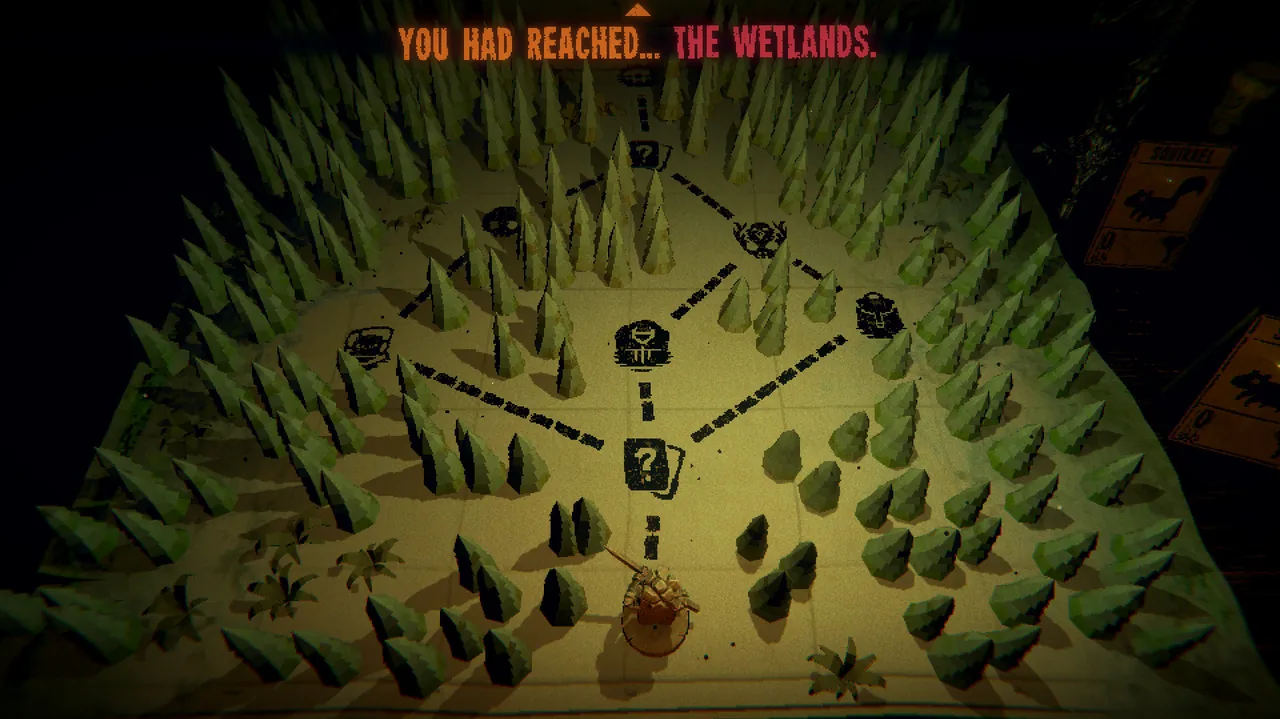
Roughly a third of the way through, Inscryption stops being the game its own screenshots show. What replaces it — deliberately undersold here, because the surprise is most of what the game is selling — reframes the cabin, the cards and the wolf dealer as something else entirely, and does it more than once before the credits roll. Each transition comes with its own visual language: the cabin's flat, firelit dread gives way to blocky low-poly menace, then to a scanline-heavy, deliberately dated computer aesthetic, each one a real style shift rather than a palette swap layered over the same engine. Three distinct art directions in one indie card game is an unusual amount of ambition, and each one earns its place by doing something the previous style couldn't.
This is also exactly where a meaningful share of the audience gets off the ride. Steam's negative reviews for Inscryption are strikingly consistent on one point: dozens describe loving the first act and feeling actively misled once it ends, because the store page's screenshots and the trailers are built almost entirely from Act 1. "Bait and switch" and "not what was advertised" are close to verbatim phrases across reviews spanning launch week in October 2021 through mid-2026, from players with anywhere from five to forty hours logged — this isn't a complaint from people who bounced off in the first ten minutes. Some feel the later acts trade the tense, tactical card game for something looser and less mechanically interesting; others simply wanted more of exactly what they were shown. Both are fair reactions to a game that treats its own advertising as part of the misdirection.
The achievement data backs the pattern up without needing to take a side on it. Steam's global stats show a steady decline through the story's checkpoints — the earliest story milestone sits at 93.4% of owners, the middle of the game's second act around 51%, and the closing milestones near 41%. That's not a cliff so much as a long, even slope, which matches what the reviews describe: not a wall players hit and quit at, but a steady bleed of interest as the game keeps insisting on becoming something new. Read generously, over four in ten owners see the game through to its final stretch, which is a solid completion rate for a narrative-heavy singleplayer game. Read less generously, most buyers never see the ending the marketing implied they were working toward.
A puzzle box built by a developer who has done this before
Daniel Mullins built Inscryption as the third game in an informal series, following Pony Island (2016) and The Hex (2018) — both smaller, stranger card- and puzzle-driven games that established the same trick of a game turning against, or being watched by, whatever's supposedly running it. Inscryption inherits that DNA and scales it up considerably, layering real-world puzzle-solving on top of the in-game one: players who want the full picture end up decoding messages, cross-referencing files and occasionally leaving the game entirely to make progress on riddles the game itself only half-explains. That alternate-reality-game layer is the most divisive single element in the whole package. For a portion of the audience it's the best thing Inscryption does — proof the game respects players enough to withhold answers. For another portion it's homework bolted onto a card game they just wanted to keep playing.
Kaycee's Mod and the long tail
The single biggest addition to the game's lifespan arrived five months after launch, in March 2022, as a free update called Kaycee's Mod. It rebuilds Act 1's ruleset into a proper endless roguelike run — climb through escalating "challenge levels," each one unlocking new cards, new hazards and pieces of a separate, quieter story about the woman the mod is named after. It's a smart answer to the most obvious criticism a card-game-first player could level at the base game: that the deckbuilding you came for effectively ends once the story moves on. Kaycee's Mod gives that specific audience something to keep returning to, for free, almost half a year after most reviews had already been written, and it remains the mode long-time players cite when they explain why they're still logging hours in 2026.
Presentation, sound and the price of admission
Every act's audio design is doing quiet, specific work — creaking wood and distant static in the cabin, colder digital tones once the game shifts registers. Interface and subtitles are localised across ten languages, though Steam's own language chart doesn't mark any of them, English included, as fully dubbed dialogue; the storytelling leans on sound design and text rather than voice performance. An optional soundtrack is sold separately on Steam, but nothing about the base game depends on it, and Inscryption otherwise carries no DLC, no in-app purchases and no premium currency of any kind. At NZ$28.99 for a game this replayable — a five-to-eight-hour main story plus an open-ended roguelike mode built on top of it, all included — the value case is straightforward. It's also backed by unusually strong critical consensus: Metacritic sits at 85, and the game took home the Game Design award at the 2022 BAFTA Games Awards, the Seumas McNally Grand Prize at the Independent Games Festival Awards, and Game of the Year at the 2021–22 Game Developers Choice Awards, alongside a Best Game nomination at BAFTA. Very few indie card games have collected that specific trophy case.
Final verdict
Inscryption earns its Overwhelmingly Positive rating the hard way: not by being a safe, predictable deckbuilder, but by repeatedly refusing to be one, and mostly getting away with it. The card game underneath Act 1 is tight and tense enough to stand on its own, the shifts that follow are some of the most inventive structural swings in the genre this decade, and Kaycee's Mod gives the systems-minded half of the audience a real reason to keep coming back long after the story's finished. What keeps it from a perfect score is that the marketing built around it — the screenshots, the trailers, the whole public image of the game — represents maybe a third of what you're actually buying, and a real, recurring slice of players feel cheated by that gap rather than delighted by it. That's a fair objection even from someone who loved every act, and it's baked into the 9.0 rather than argued away by it: a genuinely exceptional game, undercut slightly by how it chooses to sell itself.
Anyone drawn in by the card-battling half of the pitch and wanting more of exactly that, without the genre left-turns, should look at Slay the Spire, the game most often name-checked in Inscryption's own negative reviews as "what I thought I was buying." Players who want a card game built more around escalating chaos than creeping dread might prefer Balatro instead.
Pros and cons
Pros
- Act 1's cabin is a genuinely tense, atmospheric deckbuilder in its own right, with a sacrifice-and-blood resource system that forces real trade-offs on every card played
- The shift into later acts recontextualises everything that came before, including cards, rules and the framing device itself, in ways few games attempt and fewer pull off
- Kaycee's Mod, a free post-launch update, turns Act 1's ruleset into a full endless roguelike run with escalating challenge tiers, giving the game a genuine long-term mode beyond its story
- Three visually distinct art styles across the game's acts are each doing real narrative work, not just providing variety for its own sake
- A single NZ$28.99 purchase with no IAP, no ads and no DLC beyond an optional soundtrack, backed by a Steam review base that has stayed above 96% positive since launch week
Cons
- A consistent, sizeable share of negative reviews describe the game as misrepresented by its own marketing, since the screenshots and trailers show only the first several hours
- Steam's own achievement data shows a steady drop-off across the story's later stages, and the negative-review sample corroborates it directly — most complaints about the later acts cite losing interest, not difficulty
- The card game itself gets simpler, not more complex, once the roguelike framing falls away in the later acts, which some players read as a loss rather than a twist
- The meta-puzzle layer, which asks players to leave the game itself to solve some of its riddles, is exactly the kind of thing that delights part of the audience and alienates the rest
- Steam's own language chart lists interface and subtitle support across ten languages but marks no language, including English, as fully dubbed — dialogue leans on text and sound design more than voice performance
Screenshots
-
InscryptionImage: Devolver Digital via Steam -
InscryptionImage: Devolver Digital via Steam -
InscryptionImage: Devolver Digital via Steam -
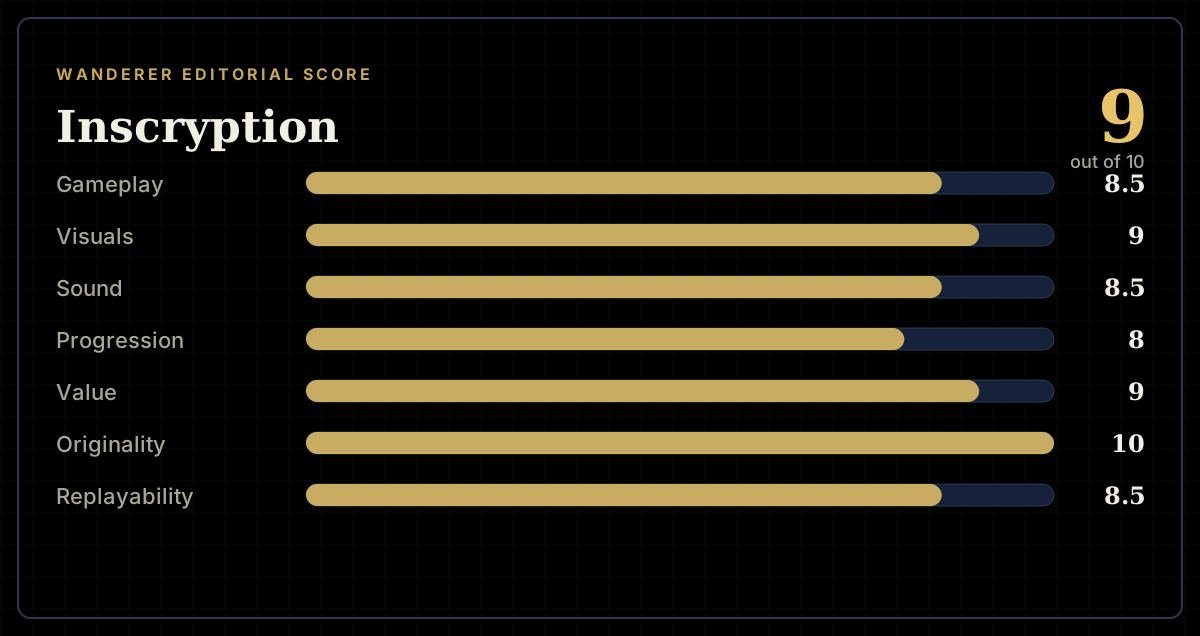
How the review scores each part of the gameWanderer Editorial -
The short versionWanderer Editorial