Game review
Bonereader
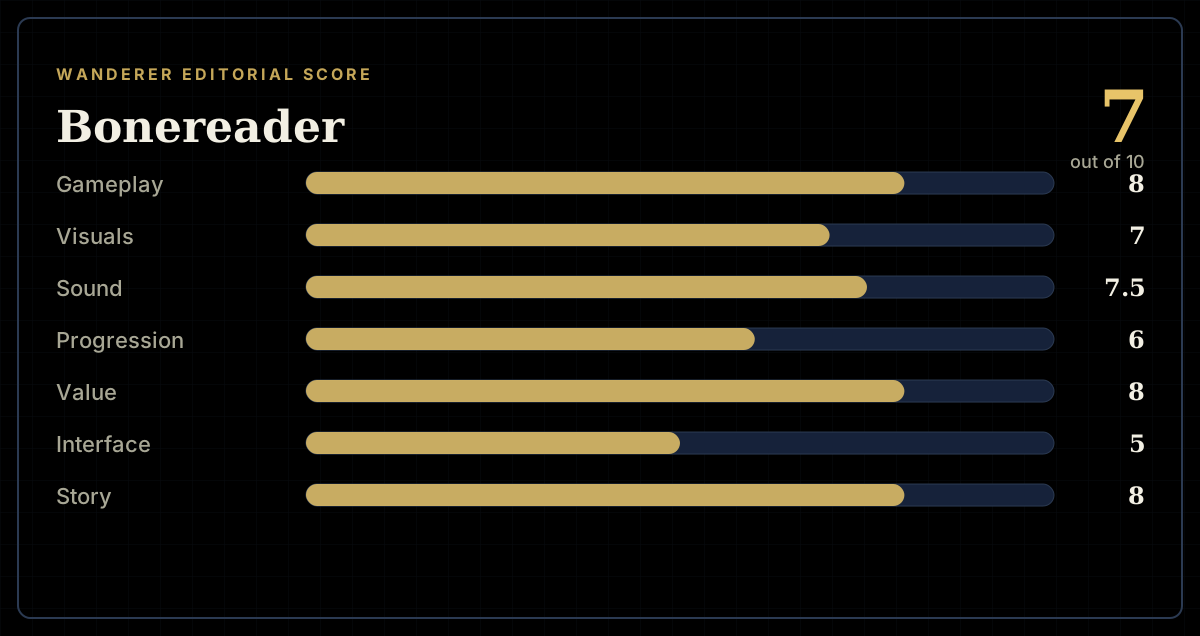
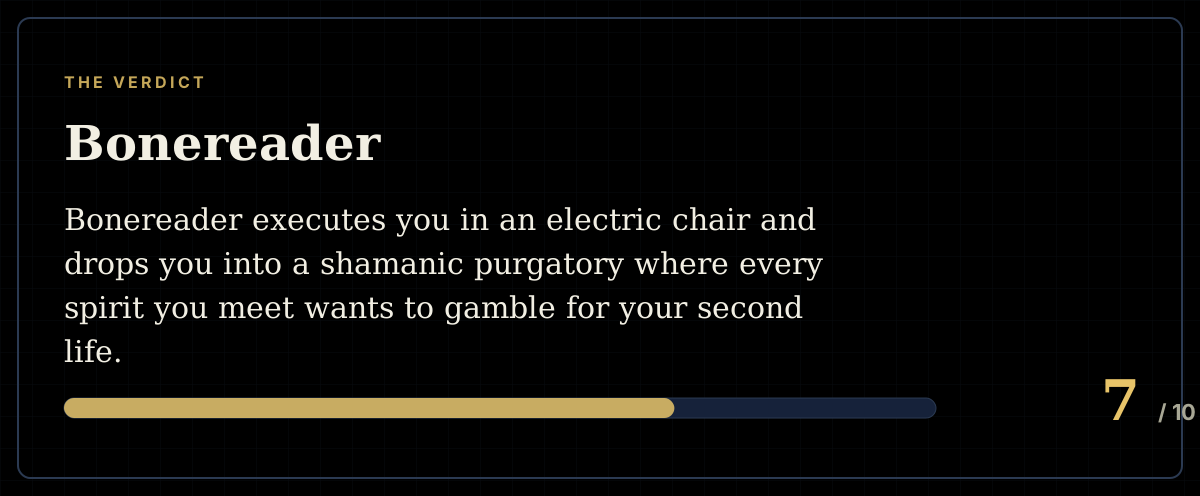
7 / 10
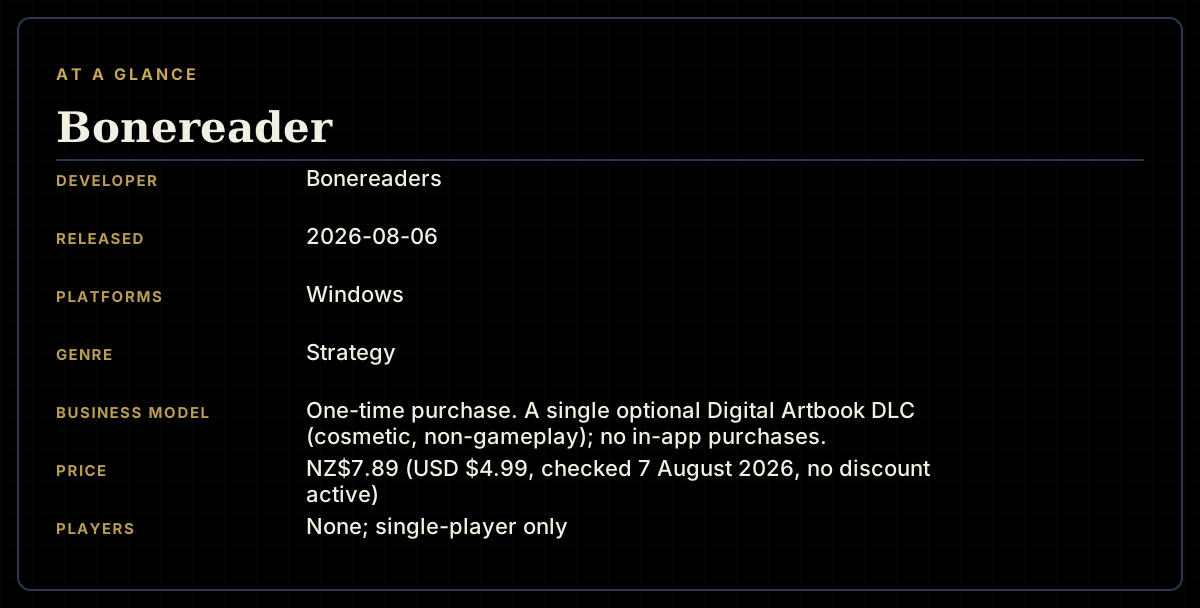
- Developer
- Bonereaders
- Publisher
- DANGEN Entertainment
- Released
- 6 August 2026
- Platforms
- Windows
- Genre
- Strategy
- Monetisation
- One-time purchase. A single optional Digital Artbook DLC (cosmetic, non-gameplay); no in-app purchases.
- Players
- None; single-player only
The short version
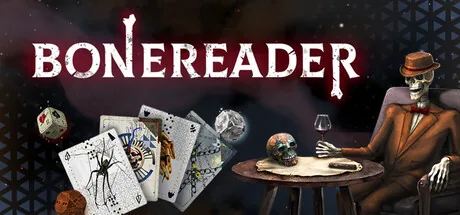
Bonereader executes you in an electric chair and drops you into a shamanic purgatory where every spirit you meet wants to gamble for your second life. The game underneath is dice poker — roll five dice up to three times, hold what you want, match the result against sequence-based cards — wired into a deckbuilder, with each opponent bending the rules of the game itself around you.
This review was written one day after the 6 August 2026 launch, when Steam's own review count for the full game stood at a single review. What it draws on instead: Steam's verified store data, a scored professional review from TheXboxHub, a detailed first-impressions piece, the twelve-review corpus left over from the public demo, and Steam's early global achievement percentages. All of it points the same direction — a genuinely novel hook and well-liked writing, sitting on top of real, named usability problems.
Biggest strengths
- The core hook — roll and hold dice like Yahtzee, then match the result against sequence-based cards for score — is a genuinely different spin on the Balatro-style score-chase rather than a reskin of it
- TheXboxHub's review singles out the writing as "great... oddly, for a card game," and a separate first-impressions piece independently praises the same purgatory setting and its cast of spirits
- Losing a round drops you back to the shop phase to rebuild rather than restarting the whole run, which several demo reviewers specifically call out as respecting the time you've already put in
Biggest weaknesses
- TheXboxHub's review documents specific interface problems: dice rolling behind other UI elements, cards that are hard to read, and symbols the game never explains
- The same review reports no persistent meta-progression across playthroughs and only a single relic slot with generally weak effects, which undercuts the roguelike-deckbuilder comparison the game invites
- The full release has a grand total of one Steam user review at the time of writing, so almost everything about how it holds up over many hours is still undocumented
Who it's for: Players who like Balatro-style score-chasing and want a darker, more narrative-heavy wrapper around it, and anyone who enjoys dice games like Yahtzee enough to want one with a plot and a deckbuilder bolted on. A weaker fit for anyone who specifically wants roguelike meta-progression that carries between runs, since the campaign doesn't appear to offer much of that.
Our recommendation: At five dollars for roughly eight hours of campaign plus a separate Casino mode, the price makes it an easy bet even with the interface problems one professional review documents in detail — just go in expecting to fight the UI a little before the game itself opens up.
7 / 10
Bonereader opens with an execution. You're fried in an electric chair, certain you were betrayed, and your soul wakes up in a purgatory built out of card tables and dice cups, where every spirit you meet is willing to gamble with you for a shot at a second life. That's a genuinely striking pitch, and one day after its 6 August 2026 launch, this review is written into an unusual gap: Steam's own review count for the full game reads exactly one, in Russian, from a player 73 minutes in. There just hasn't been time yet for a normal review corpus to form. What follows draws instead on Steam's own verified data, a scored review from TheXboxHub, a detailed first-impressions piece, and the twelve reviews left behind by the pre-launch demo — enough to say something real, without pretending there's more evidence on the table than there is.
The dice-poker hook
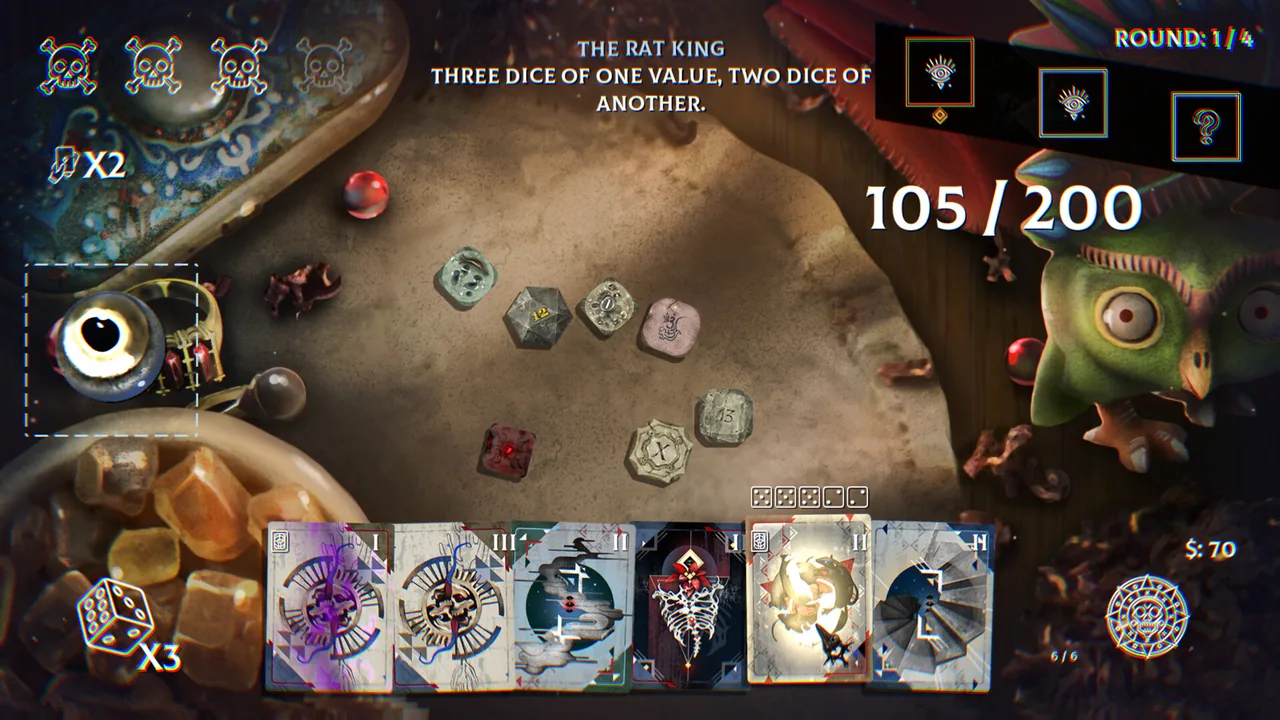
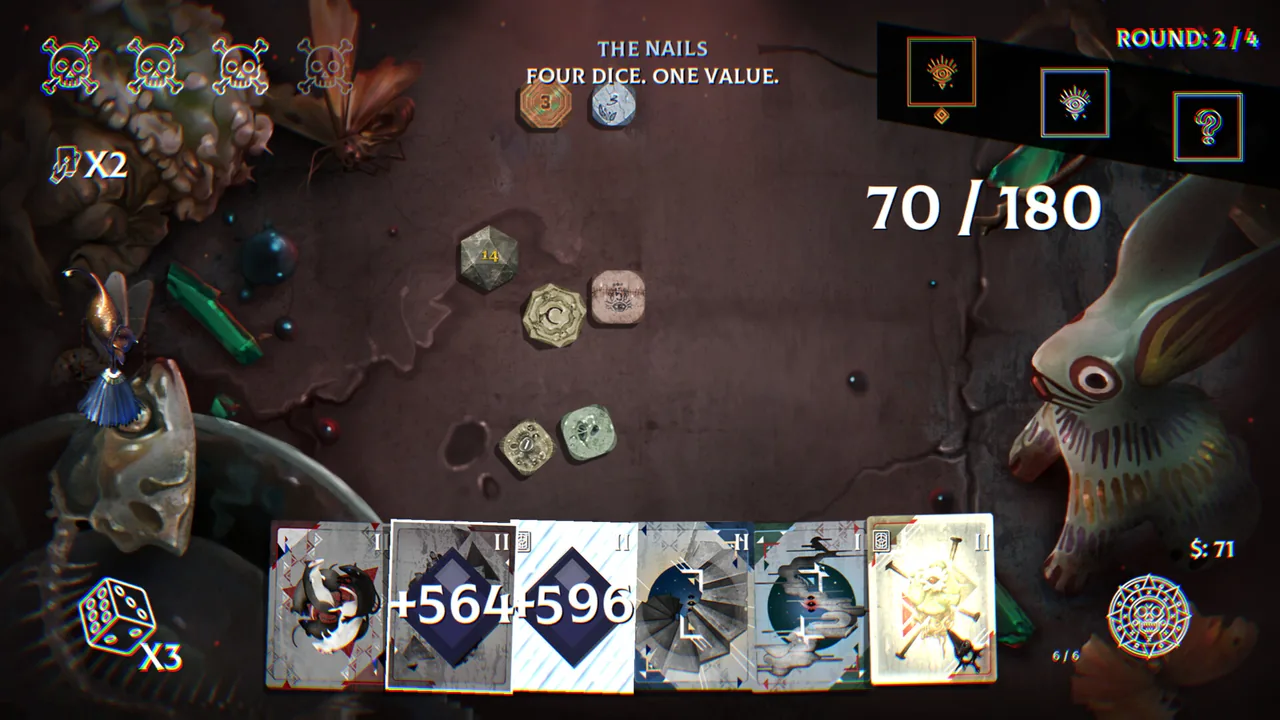
Strip away the setting and Bonereader's core loop is dice poker — the same shape as Yahtzee. Roll five dice up to three times, holding whichever results you want to keep between rolls, then match what you land on against cards that display specific patterns: runs, of-a-kind sets, and other sequences. Cards score when the dice satisfy them, and building a deck means stacking synergies between which cards you're carrying, which dice you own, and a small set of collectible items. It's the same "chase an escalating score" instinct that made Balatro a phenomenon, but built on a completely different randomizer — several reviewers, independently, describe it as "Balatro, but it's dice poker," which is a fair one-line summary of what makes the pitch land. According to a first-impressions account, seven starting decks lean into different approaches — one deck simply carries more cards, another unlocks a sixth die — which is a reasonable amount of build variety for a $4.99 release to open with.
Every opponent in the demo and campaign layers on a personal "house rule" that bends the base game: a restriction, a twist on scoring, a condition you have to route around. That's the mechanism doing most of the work to keep fights from blurring together, and it's the piece every source that discusses mechanics singles out as the game's smartest idea — a spirit isn't just a bigger number to beat, it's a different ruleset to solve.
Writing that outperforms the genre's usual bar
The one professional review currently available, from TheXboxHub, scores Bonereader 3 out of 5 and calls it, in the reviewer's own words, an average game overall — but it's unambiguous about the writing specifically, describing it as "great... oddly, for a card game." That's corroborated from a different angle by a first-impressions piece, which praises the purgatory setting's handling of fate, regret and redemption, and by several demo reviews that call out the atmosphere and the "shamanic" flavor — a homeless man, an actress, a cowboy, a shaman and other lost souls with real personalities, each voicing their own case for why they belong in purgatory rather than wherever comes next. For a $4.99 dice game, that's a genuine point of distinction: the writing is doing more work than the price tag would suggest it needs to.
Interface problems a single review already put a name to
Set against that, TheXboxHub's review is specific about what's holding the game back, and it's worth repeating those complaints exactly rather than softening them: dice rolling behind other UI elements, cards that are difficult to read, and symbols the game never bothers to explain. Those are concrete, fixable bugs and design gaps rather than vague dissatisfaction, which makes them worth taking seriously even from a sample of one professional review — a reviewer doesn't invent "the dice roll behind the UI" as a complaint unless it actually happened during play. The same review reports that the campaign offers no persistent meta-progression between playthroughs, and that the one relic slot the game gives you generally carries weak effects — both real dents in the roguelike-deckbuilder comparison the marketing and the genre tags invite.
It's worth noting a partial counterweight here that this review can't fully resolve: a first-impressions piece describes a separate Casino mode alongside the story campaign, framed as the more roguelike-adjacent side of the game, where losing a round drops you back to the shop to rebuild your build rather than ending the run outright. Steam's own early achievement data is consistent with that split — achievements for defeating individual story-mode spirits currently sit between roughly 15% and 68%, a normal completion curve for a linear campaign, while the deepest Casino-mode achievements sit at just 1.8% to 3.7%. That's a tiny, Day 1 sample and shouldn't be read as a firm verdict on difficulty, but it does support the idea that Bonereader has a genuinely harder secondary mode sitting behind its story campaign, even if that campaign itself doesn't carry progress forward between attempts.
What the numbers say, for what a Day 1 sample is worth
The full game's single Steam review is too small a sample to draw anything from beyond "reads as positive." The demo's leftover corpus is more useful, if still small: 12 reviews, 10 positive, rated "Positive" by Steam. Reading them individually, the praise clusters tightly around atmosphere, music and the dice concept specifically — one reviewer's whole review is just "Balatro, but it's dice poker on bones. Interesting idea and art." The two negative reviews are worth naming rather than waving away: one, in English, says the art style makes the game "feel cheap" and found the round-to-round loop repetitive; another, in Japanese, says the tutorial "doesn't function as a tutorial." Both predate the full launch, so it's possible either has since been addressed, but neither shows up as resolved in anything this review can verify.
One more thing worth flagging plainly: eight of the demo's twelve reviews are in Russian, which tracks with a developer duo — Yakov Butuzov and Daria Vodyanaya — whose names suggest the same region, and likely reflects where the demo found its earliest audience rather than anything about the game itself. It's a small sample skewed toward one community, not a red flag, but worth knowing if you're weighing "Positive" against a wider audience's tastes.
Value
At $4.99 with a professional review citing roughly eight hours for the campaign, plus whatever additional time the harder Casino mode adds, Bonereader is priced honestly for what it delivers even before you factor in the strength of its writing. The only DLC on offer is a cosmetic digital artbook — no in-game currency, no store, nothing resembling a live-service layer bolted onto a single-player card game. Whatever else is unresolved about the interface, the commercial side of this release has nothing to complain about.
Final verdict
Bonereader's hook is real: dice-poker-as-deckbuilder is a fresher idea than the Balatro-adjacent label suggests, its per-opponent house rules give the campaign actual variety, and its writing has already earned a specific compliment from a professional reviewer who otherwise scored the game as merely average. What keeps it at a 7 rather than higher is that the same professional review documents real, nameable usability problems — UI elements the dice roll behind, cards that are hard to read, an unexplained symbol set — plus a campaign that doesn't carry progress between runs the way the genre's benchmarks do. None of that is dressed up as fatal by the sources reporting it, and a harder Casino mode sitting behind the story campaign is a genuine mitigating factor this review can't fully evaluate yet.
Recommended for genre fans willing to accept some early rough edges for a low price and a setting that's already earning real praise for its writing — and worth checking back on in a few weeks, once a proper review corpus exists to confirm whether the interface issues get patched and whether the Casino mode holds up to the roguelike comparison it invites.
Pros and cons
Pros
- The core hook — roll and hold dice like Yahtzee, then match the result against sequence-based cards for score — is a genuinely different spin on the Balatro-style score-chase rather than a reskin of it
- TheXboxHub's review singles out the writing as "great... oddly, for a card game," and a separate first-impressions piece independently praises the same purgatory setting and its cast of spirits
- Losing a round drops you back to the shop phase to rebuild rather than restarting the whole run, which several demo reviewers specifically call out as respecting the time you've already put in
- Seven starting decks and per-opponent "house rules" that force real strategy changes, according to the first-impressions account, rather than just re-skinning the same fight
- Clean, unambiguous monetisation — one purchase, one optional cosmetic artbook DLC, nothing that looks like an in-game store
Cons
- TheXboxHub's review documents specific interface problems: dice rolling behind other UI elements, cards that are hard to read, and symbols the game never explains
- The same review reports no persistent meta-progression across playthroughs and only a single relic slot with generally weak effects, which undercuts the roguelike-deckbuilder comparison the game invites
- The full release has a grand total of one Steam user review at the time of writing, so almost everything about how it holds up over many hours is still undocumented
- One demo reviewer specifically found the art style made the game "feel cheap" and the round-to- round loop repetitive, a dissenting note worth weighing against the far more common praise for the same art
- A Japanese-language demo reviewer reported the tutorial "doesn't function as a tutorial," a complaint that predates launch but is worth checking against if you're relying on the in-game teaching to learn the dice-poker rules
Screenshots
-
BONEREADERImage: DANGEN Entertainment via Steam -

BONEREADERImage: DANGEN Entertainment via Steam -
BONEREADERImage: DANGEN Entertainment via Steam -
How the review scores each part of the gameWanderer Editorial -
The game at a glanceWanderer Editorial -
The short versionWanderer Editorial