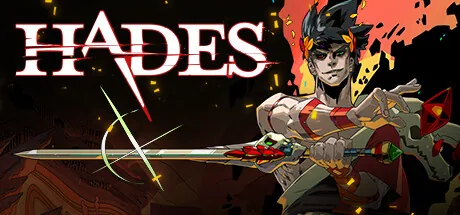
Game review
Hades
9 / 10
- Developer
- Supergiant Games
- Publisher
- Supergiant Games
- Released
- 17 September 2020
- Platforms
- Windows, macOS, Nintendo Switch, PlayStation 4, PlayStation 5, Xbox One, Xbox Series X|S
- Genre
- Action Roguelite
- Monetisation
- Premium, one-off purchase — no in-game purchases (an optional soundtrack is sold separately)
- Players
- Single-player
The short version
Hades solved a problem roguelites had been dancing around for years: how do you tell a real, developing story in a genre built on repeated failure? Supergiant's answer was to stop treating death as a punishment and start treating it as a plot beat, and everything else in the game — the Boons, the weapons, the permanent upgrades, the escalating Heat system — is built to keep that beat interesting for hundreds of attempts in a row.
It mostly still works. Ten Olympians' worth of Boons and six weapons with four Aspects apiece give runs a real identity rather than a numeric grind, and the Pact of Punishment turns difficulty into something you tune rather than something you're handed. What keeps it from a perfect score is the same thing every long-running roguelite eventually runs into: the content pool is finite, the Mirror of Night's permanent buffs eventually make a clean run feel close to a formality, and no amount of writing fully disguises the fortieth trip through the same four biomes.
Biggest strengths
- Weapon Aspects give each of the six Infernal Arms multiple genuinely distinct playstyles instead of one fixed moveset
- Boon combinations across ten Olympians create real build identity from run to run, not just bigger numbers
- Death advances the story instead of pausing it, so a failed escape attempt never feels like wasted time
Biggest weaknesses
- The Mirror of Night's permanent upgrades eventually make a clean escape attempt feel close to inevitable, softening tension a harsher roguelite would keep sharp
- Four biomes and a fixed boss rotation mean the same handful of encounters repeat across dozens of hours with little visual variation
- A bad Boon offer early in a run can leave you with no real build and no way to reroll it, just a long walk to the next attempt
Who it's for: Roguelite players who want a genre benchmark rather than a genre experiment; anyone who wants a game that respects fifteen-minute sessions as much as marathon ones; players who finished Hades II and want to see where all of it started.
Our recommendation: Buy it without hesitation, on whichever platform is already in front of you. Five years on and one full sequel later, this is still one of the two or three best roguelites ever made, priced fairly, with no microtransactions anywhere near it.
9 / 10
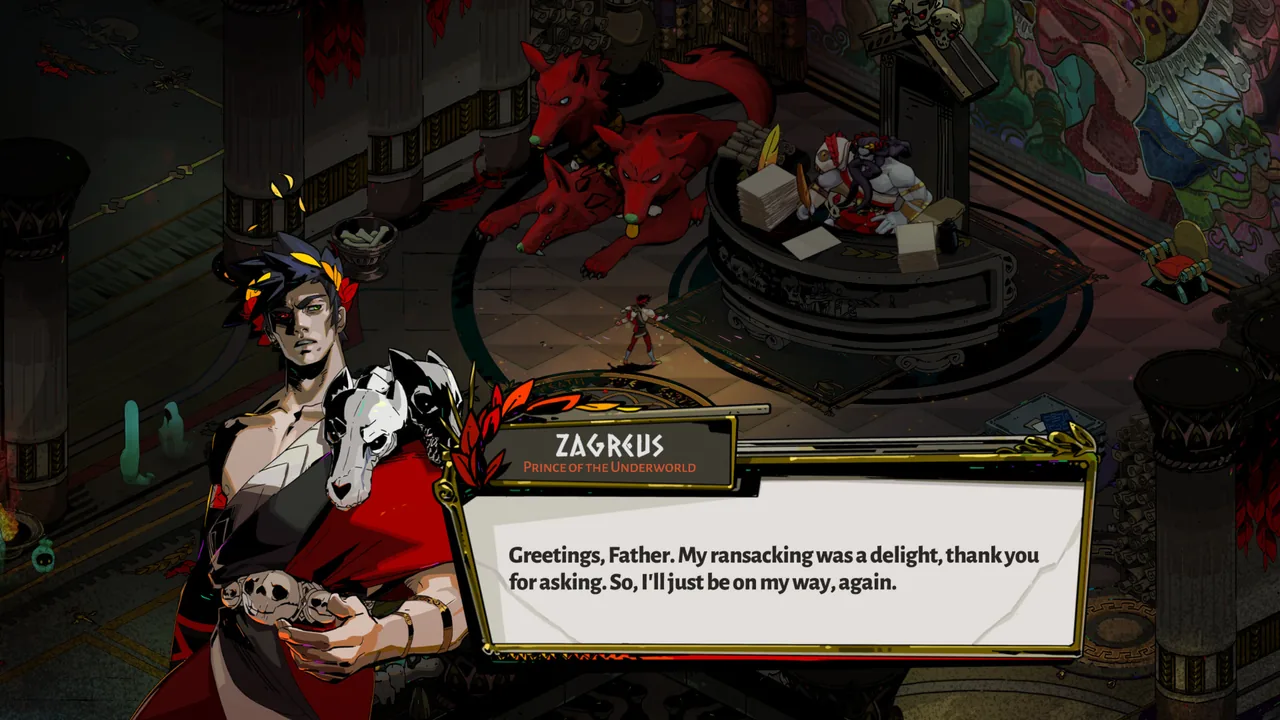
Most roguelites treat death as an interruption — a run ends, a counter ticks up, and you start again with whatever permanent upgrades you've bought yourself in the meantime. Hades treats death as the plot. Every failed escape attempt drags Zagreus back to the House of Hades, where his father mocks him, his aunt commiserates, and a cast of gods, ghosts and monsters react specifically to how that particular run went. Supergiant didn't just bolt a story onto a roguelite; it built the entire narrative delivery system around the genre's core failure state, and that single idea is still the reason Hades reads less like an experiment and more like a finished answer to a design question the genre had been avoiding for years.
A father's basement you're always trying to leave
The mechanical loop is simple to describe: pick a weapon, run through the House of Hades' procedurally shuffled floors, kill or evade what's in your way, choose Boons at will, and eventually confront a boss guarding the way to the next region. Die, and you wake up back home, Titan's blood spent building permanent stat boosts and the story clock nudged forward whether you succeeded or not. What makes that loop worth doing forty times over is that "worth doing" is doing a lot of work in a genre where plenty of competitors ask you to enjoy repetition for its own sake. Hades doesn't. It gives every attempt somewhere new to arrive — a companion who's finally ready to talk about something, a new wrinkle in Zagreus's relationship with the father he's trying to escape, a fresh gag from Achilles or a barbed one-liner from Meg — and stacks those beats densely enough that a run rarely feels like pure repetition even when the floor layout genuinely is.
That density is the game's real achievement, more than its combat or its art, because it solves a problem that's much harder than it sounds. A roguelite needs failure to matter mechanically — otherwise there's no tension — while also needing failure to not feel like punishment, or players stop coming back. Hades' answer is to make the between-runs hub as compelling as the runs themselves: upgrading the Mirror of Night, gifting nectar to companions, unlocking new weapon Aspects, hearing the next scrap of dialogue. None of it would land without the fully voiced cast selling every line like it's the first time they've said it, even on your hundredth visit. It's the single biggest reason Hades became the genre's reference point rather than one strong entry among many, and it's the reason Supergiant's own sequel, reviewed separately on Wanderer, had such a specific bar to clear.
Boons, Aspects, and a build that's actually yours
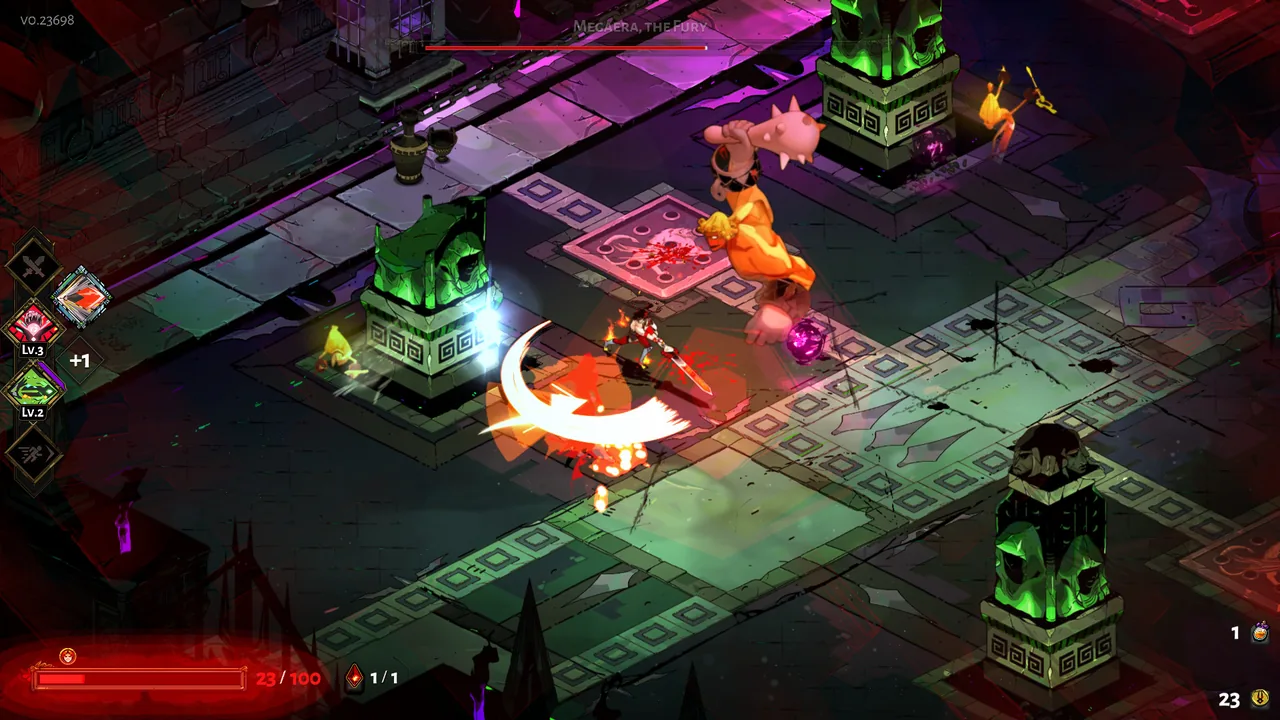
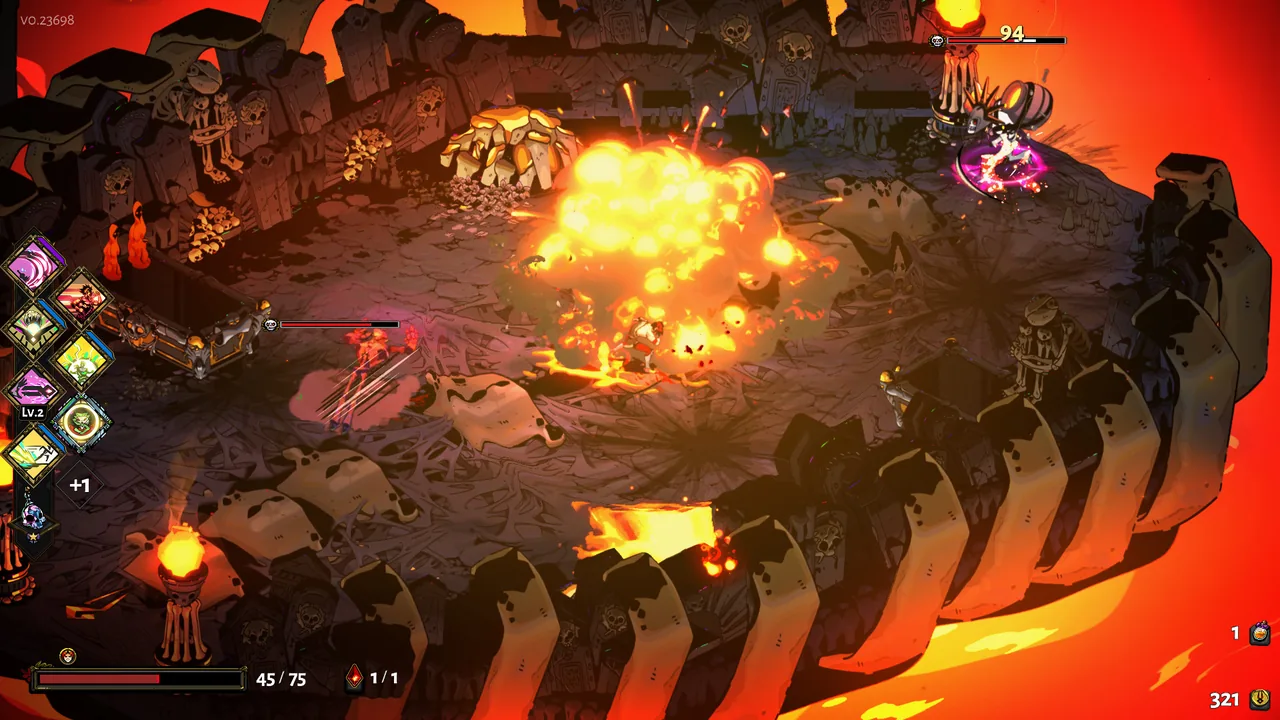
Combat itself is fast, readable and generous with feedback — dash-strikes read clearly against even crowded rooms, and the four-directional cast attack gives every weapon a second axis beyond its melee moveset. What actually varies a run, though, is the Boon system. Eight Olympians (later joined by others as the story unlocks them) offer a rotating menu of attack, special, dash, cast and call modifiers, and the game is generous enough with synergy tags — Duo Boons that only appear once you've taken specific pairings, Legendary Boons that transform a build outright — that two runs with the same starting weapon rarely play the same way twice. Layered on top, each of the six Infernal Arms carries four Aspects, unlocked with Titan Blood, that change the weapon's base kit rather than just its numbers: the Twin Fists' Aspect of Zagreus rewards aggressive dashing in and out of range, while the Aspect of Gilgamesh trades that mobility for raw special-attack power. It's a real second layer of build identity sitting underneath the Boon layer, and it's the system Hades II would later build its own Omega-attack redesign on top of — worth knowing if you've played the sequel first and are wondering how much of its combat DNA traces back here. It's essentially all of it.
The honest complaint sits with the randomness underneath all that choice. Boon offers are drawn from a pool, and a genuinely unlucky run — no offense Boons in the first two chambers, a Duo combo that never completes, a cast build with no cast-boosting support anywhere in sight — can leave you playing a weaker, less interesting version of the game for twenty minutes with no way to correct course beyond restarting. It's not common, and the game's own systems (the Well of Charon, God Mode, the option to simply push forward and bank Darkness for later) soften the blow, but "sometimes the run you're offered just isn't very good" is a real, structural limitation of Boon-based builders, not a myth invented by players who got unlucky once.
The Mirror, and the cushion under failure
Between runs, Darkness collected from failed attempts buys permanent upgrades on the Mirror of Night — extra dashes, bonus health, damage bonuses that apply to every future run regardless of build. It's a well-tuned meta-progression system in the sense that it never feels optional; every attempt, successful or not, visibly makes the next one easier. That's also its real limitation as a piece of design, and it's worth being specific about rather than treating "generous meta-progression" as an unqualified compliment. Compare Hades to a genre peer with a harsher floor — something like Dead Cells' more punishing early hours, or Rogue Legacy's slower unlock curve — and Hades sits closer to the forgiving end. By the time the Mirror is mostly filled in, a competent player with a middling build can clear a standard-difficulty run close to reliably, and the game's own difficulty answer to that isn't to hold back Mirror power, it's to hand you an entirely separate difficulty system to opt into instead. That's a legitimate design choice — Hades wants its story to be reachable rather than gated behind mastery — but it does mean the base game's tension quietly deflates over enough hours, and anyone who wants Hades to stay hard has to go looking for that difficulty themselves.
Heat, and a ladder instead of a wall
That's where the Pact of Punishment earns its keep. Once you've beaten the game once, Heat lets you stack a menu of specific conditions — tougher enemies, extra hazards, a resource-draining curse, harsher boss patterns — in exchange for both a numeric badge of difficulty and genuinely better rewards at run's end. It's the difference between a single hard-mode toggle and an actual ladder: you choose exactly which conditions make a run harder and by how much, which means the climb from "comfortable" to "brutal" happens gradually and legibly rather than in one blunt jump. Clearing a run at Heat 32 and above becomes its own long-term goal completely divorced from finishing the story, and it's the system most responsible for Hades still having a dedicated speedrunning and challenge-run community five years after release. Whether that ladder reads as a satisfying climb or as homework depends entirely on what you want from the genre. Players chasing mechanical mastery will find Heat is exactly the kind of self-directed challenge scaling that keeps a roguelite alive long after its story is finished. Players who came for the writing and the Boons, and who've already seen the ending, may find the Pact of Punishment's condition menu feels more like optimizing a spreadsheet than playing a game — stacking specific curses to hit specific milestone rewards rather than reacting to whatever a run throws at you.
Four biomes, and the ceiling that comes with repetition
Be honest about the other side of that longevity: Hades has four regions and a fixed rotation of mid-bosses and bosses guarding each one, and no amount of dialogue variety changes the fact that you are fighting Megaera, then the Bone Hydra, then Theseus and Asterius, then Hades himself, in that order, on a very large share of your attempts. The game does real work to keep those fights interesting — boss health and attack patterns scale with Heat, and later story content adds new wrinkles to old encounters — but the raw geometry of "four biomes, one canonical order" means Hades' content pool is genuinely smaller than its hundreds-of-hours playtime figures suggest. Compare it to Hades II's split into an Underworld route and a separate Surface campaign, effectively doubling the map without doubling the price, and the original's tighter, more singular structure starts to look like the thing the sequel was specifically built to address. That's not a knock on the original so much as a reason the sequel exists at all — but it's worth knowing that "escape forty times" in Hades means forty variations on one path, not forty genuinely different paths.
A voice cast that never sounds tired
None of the above would land as well as it does without the presentation carrying it, and this is still the category where Hades has almost no real competition in its genre. Hand-painted character portraits and environments give every region — the Tartarus depths, Asphodel's ash fields, the marble corridors of Elysium, the Temple of Styx — a distinct visual identity rather than a palette swap of the same tileset, and Darren Korb's score moves from moody underworld ambience to genre-defying combat metal at exactly the moments that call for it. The fully voiced cast is the real backbone, though: this is a game built almost entirely out of one-line reactions to the specific run you just had, and actors who could easily be phoning in their thousandth recorded variation instead sell every scrap of dialogue like it matters. Hades won a Hugo Award in 2021 — the first video game ever to receive one — largely on the strength of that writing, and it's not hard to see why once you've sat through even a fraction of the game's reactive dialogue tree.
God Mode, performance and the platform history
Hades introduced the difficulty-as-accessibility idea Hades II would later inherit almost unchanged: turning on God Mode reduces incoming damage by 20%, climbing by 2% with every subsequent death up to an 80% cap, adjustable at any time from the pause menu without locking out achievements or story content. It's still one of the more thoughtful accessibility choices in the genre — framed as a way to reach the story rather than as a shameful easy mode — even if, five years on, the settings menu around it hasn't grown much. There's no dedicated colorblind mode and no adjustable text scaling, and players who need more than damage mitigation are left with less than a modern release ideally offers.
Performance has been a consistent strength across a genuinely unusual platform history. Hades launched into Early Access on the Epic Games Store in December 2018 as one of that storefront's first exclusives, arrived on Steam Early Access a year later in December 2019, then hit its 1.0 release simultaneously on Steam, Epic and Nintendo Switch on 17 September 2020. PlayStation 4, PlayStation 5, Xbox One and Xbox Series X|S followed nearly a year after that, in August 2021, and an iOS version arrived through Netflix Games in March 2024 — before being pulled from the service entirely in July 2025 as part of a wider Netflix Games cutback, leaving mobile players with no legitimate way to buy the game outright. On every platform that's still available, though, the game runs cleanly: the Switch version holds a stable frame rate even in busy rooms, and the PC version scales down comfortably to genuinely modest hardware, which matters for a combat system that leans on crisp, readable animation more than raw visual fidelity.
Value
At NZ$35.99 with no in-game purchases beyond an optional soundtrack, Hades remains one of the easiest value arguments on Steam. There's a real story campaign, an entirely separate challenge-run game hiding inside the Pact of Punishment for players who finish it, and — unlike almost everything else at this price point — not a single monetisation prompt anywhere in the experience. Measured purely against cost per hour of engaged play, few premium releases in any genre clear the bar this comfortably.
Verdict
Nine out of ten. Hades still reads as close to a solved design problem: marry permadeath structure to a story that only works because of the deaths, not despite them, and back that idea with combat, art and voice work good enough to make hundreds of attempts feel purposeful rather than grindy. The Boon and Aspect systems give genuine build identity to a genre that often settles for numeric escalation, and the Pact of Punishment turns "beat the game once" into a difficulty ladder players are still climbing five years later.
What keeps it from the very top is the same tension every long-lived roguelite eventually has to answer for: the Mirror of Night's permanent buffs make a clean run start to feel like a formality well before the challenge content kicks in, four biomes and one canonical boss order can't disguise themselves as forty different games no matter how good the writing is, and a truly bad Boon draw is still a bad Boon draw. None of that undoes what Hades got right first, and mostly still gets right better than its own sequel does in places. Anyone who hasn't played it yet, on any of its still-available platforms, is missing one of the two or three best roguelites ever made.
Wanderer readers who came here from our review of Hades II now have the full picture: the sequel adds scope and a second layer of combat complexity, but the original's tighter, more singular structure is still the cleaner first experience, and there's no wrong order to play them in. Anyone drawn to permanent progress that keeps building quietly in the background between sessions, rather than only during them, might also find something to like in Wanderer — a different genre entirely, but the same instinct that a death, or a login, shouldn't feel like starting over from nothing.
Pricing and platform history checked 30 July 2026.
Pros and cons
Pros
- Weapon Aspects give each of the six Infernal Arms multiple genuinely distinct playstyles instead of one fixed moveset
- Boon combinations across ten Olympians create real build identity from run to run, not just bigger numbers
- Death advances the story instead of pausing it, so a failed escape attempt never feels like wasted time
- The Pact of Punishment's Heat system offers a granular, stackable difficulty ladder rather than one blunt hard-mode switch
- Darren Korb's score and a fully voiced cast make stopping to talk worthwhile on the two-hundredth run, not just the first
- Adjustable God Mode tunes assistance incrementally instead of forcing a binary choice between full challenge and easy mode
Cons
- The Mirror of Night's permanent upgrades eventually make a clean escape attempt feel close to inevitable, softening tension a harsher roguelite would keep sharp
- Four biomes and a fixed boss rotation mean the same handful of encounters repeat across dozens of hours with little visual variation
- A bad Boon offer early in a run can leave you with no real build and no way to reroll it, just a long walk to the next attempt
- Chasing a specific high-tier Boon-and-Aspect combination means grinding content you've already mastered, purely for a better draw
- The Netflix Games iOS version was pulled in July 2025, so mobile players who want Hades legitimately currently have no option at all
Screenshots
-
HadesImage: Supergiant Games via Steam -
HadesImage: Supergiant Games via Steam -
HadesImage: Supergiant Games via Steam -
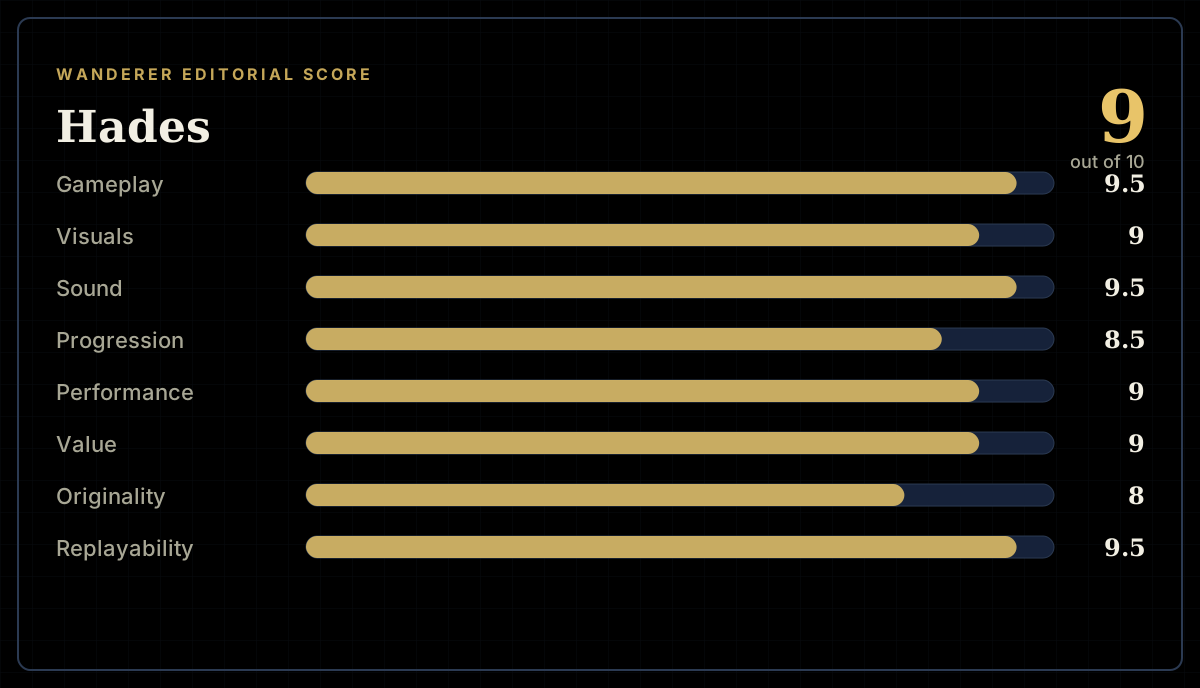
How the review scores each part of the gameWanderer Editorial -
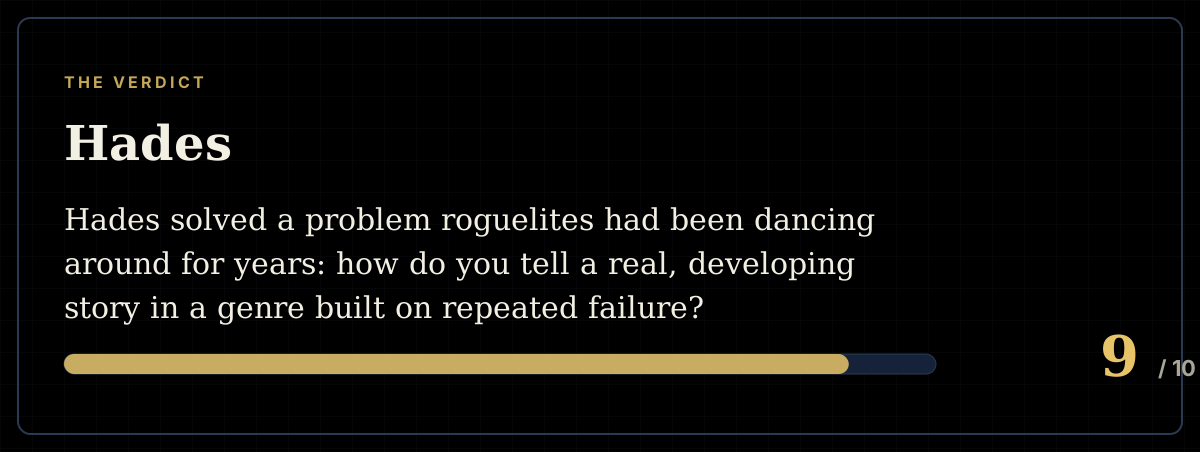
The short versionWanderer Editorial