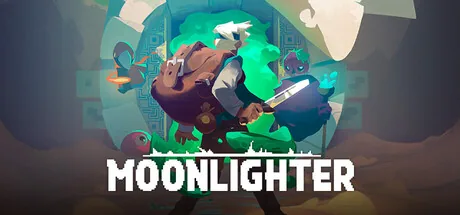
Game review
Moonlighter
7.5 / 10
- Developer
- Digital Sun
- Publisher
- 11 bit studios
- Released
- 29 May 2018
- Platforms
- Windows, macOS, Linux, PlayStation 4, Xbox One, Nintendo Switch
- Genre
- Action RPG / shopkeeping roguelite
- Monetisation
- One-off purchase, no in-game currency, ads or gameplay-affecting purchases in the base game. A single paid gameplay expansion (Between Dimensions) adds a new dungeon and endgame content; two soundtrack DLCs exist for collectors and change nothing about play.
- Players
- None; single-player only
The short version
Moonlighter's best idea is that you set your own prices with no list to consult, reading customer reactions to feel out what Rynoka will actually pay. That system is smart for as long as it stays a mystery, and it stops being one faster than the shop half of the game seems to expect. The dungeon half never quite catches up either — four biomes, a handful of attacks per weapon, and a combat system that stays serviceable rather than becoming interesting. What holds the whole thing together is the trip back: limited bag space and the constant temptation to push one room deeper than is sensible make every return to the surface a real decision, not a formality.
Biggest strengths
- Setting your own price and watching a customer's face for hesitation is a genuinely different way to price loot than any menu-driven shop screen
- The trip home imposes a real decision every single run — push for one more room's loot or bank what's already in the bag before you lose it
- Free post-launch updates added mini-bosses, over 100 new room layouts, recruitable companions and a New Game+ mode, so the current build is materially bigger than the 2018 release
Biggest weaknesses
- Once you or a community spreadsheet have worked out what an item is worth, setting prices stops being a read on the market and becomes data entry
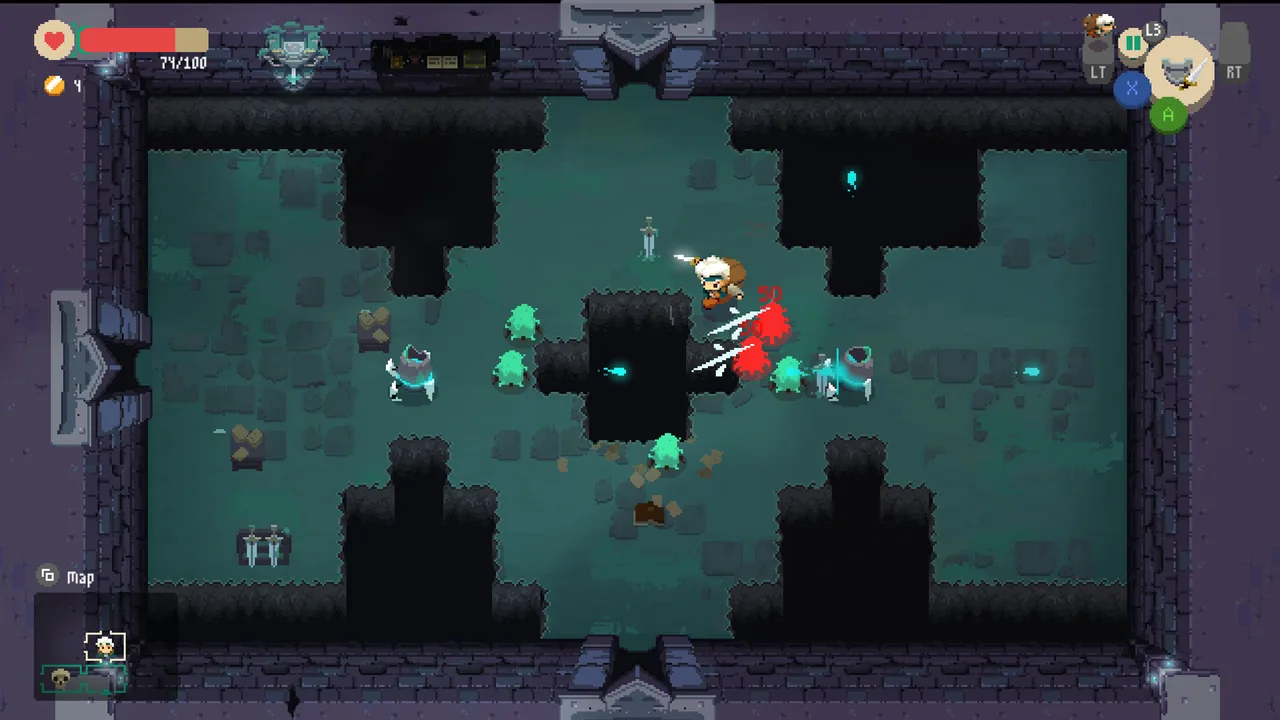
- Weapon types offer only one or two distinct attacks each, so combat rarely feels different across the four dungeon biomes even late into a run
- Keyboard-and-mouse handling and controller remapping have drawn complaints since 2018 and still surface in recent reviews, which is a long time for a control scheme to stay unresolved
Who it's for: Players who want a short, good-looking roguelite with a genuinely different economic hook, and anyone curious about the shopkeeper-hybrid genre before trying one of its bigger disciples. Less suited to players who want deep, evolving combat across a long campaign, or who will bounce off a pricing system once they've worked out the answer.
Our recommendation: Buy it, ideally on a discount — at its current price it's one of the cheapest ways to see where the "gather by night, sell by day" hybrid started, and the eight years of free post-launch content mean the version on sale now is considerably fuller than the one that shipped in 2018.
7.5 / 10
Most dungeon crawlers hand you a shop as a place to dump loot for currency and get on with the part of the game that actually matters. Moonlighter's whole premise is refusing that framing. Will, its player character, spends his nights fighting through procedurally arranged dungeons and his days standing behind a counter setting his own prices, and the game genuinely expects both halves to matter. The interesting question, eight years and a sequel's worth of hindsight later, isn't whether that split is a clever pitch — it obviously is — but whether the shop half stays a game once you've learned to play it, and whether the dungeon half is deep enough to be worth returning to on its own merits.
Setting the price is the whole trick
Rynoka's shop has no price list anywhere, official or otherwise. You put an item on a shelf, drag a slider, and watch what happens: customers browsing the stall visibly react to what you're charging, hesitating or wincing before they commit, and once a price is set it stays there until you change it. There's no haggling and no negotiation — a customer either buys at the number you picked or they don't, and their reaction before the sale is the only signal you get about whether you left money on the table or scared them off. It's a smart piece of design because it turns something every loot game treats as bookkeeping into a genuine read: watch body language, adjust, watch again.
The problem is that the mystery has a shelf life. Every item eventually settles at a price the market will bear, and once you've discovered that number — or once a wiki page or a community spreadsheet has done it for you — the system stops being a minigame and becomes a lookup exercise. Digital Sun clearly understood this was a risk, because prices do shift over time and repeat overselling of one item depresses what it's worth, which keeps you paying attention rather than setting every shelf once and forgetting it. That's a meaningful mitigation, but it's a patch on the core issue rather than a fix. The first few hours of guessing your way to Rynoka's tolerance are the best the shop ever is; after that, running it is closer to inventory management with extra steps than the standalone economic puzzle its opening hours promise.
The trip home is the real game
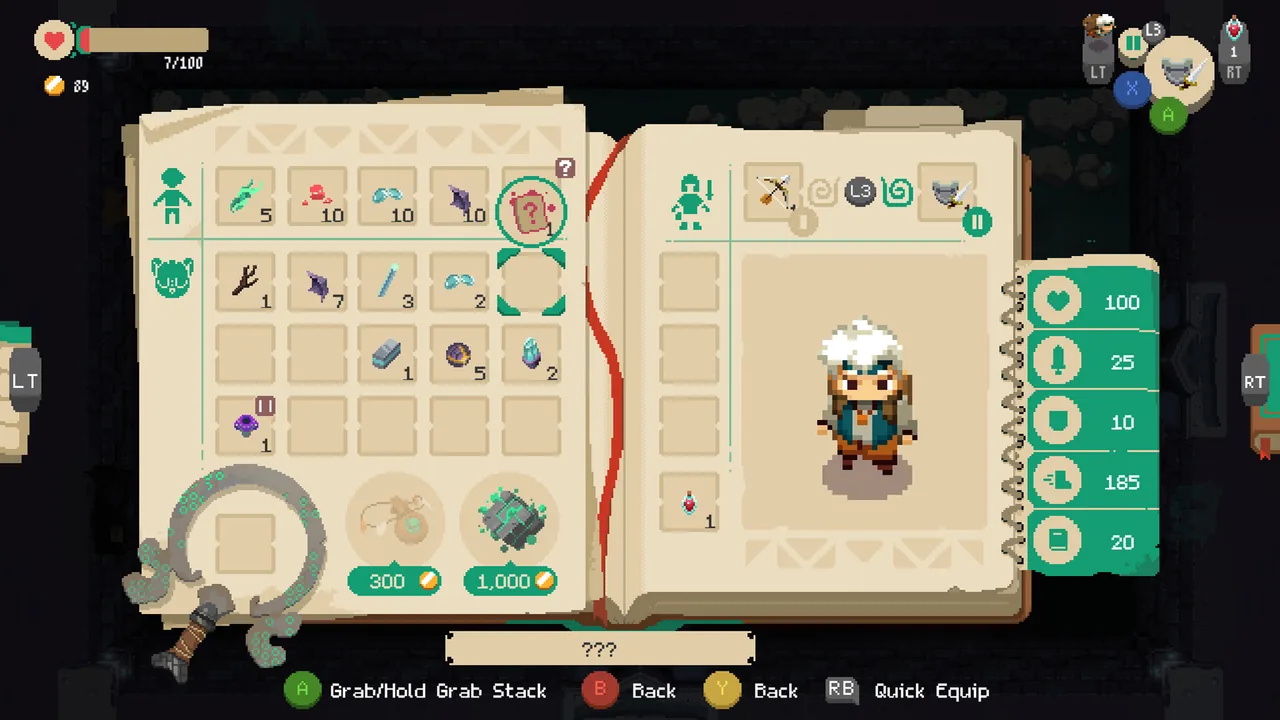
Where Moonlighter earns its keep is the tension of the return trip. Dungeon inventory space is tight, loot doesn't stack generously, and every room you clear adds to a pile you can't fully carry back to the surface. The game's own pitch for this — using the inventory "wisely" because hoarding everything isn't an option — undersells how well it actually plays out. You end most runs with a bag that's functionally full, one valuable pickup away from a genuinely hard call: press one room deeper for a better item, or turn back now while what you're carrying is still safe. Get greedy against the wrong enemy and the run can cost you everything you were bringing home, which is exactly the kind of stakes a gathering loop needs and too many loot games are afraid to enforce. It's the strongest single system in the game, and it's doing more work than the price-setting mechanic to keep runs feeling meaningful past the first dozen hours.
Combat that doesn't grow with you
The dungeons themselves are handsome and clearly, deliberately old-school — four themed biomes (a golem ruin, a forest, a desert, and a tech facility) built from a room-based structure that Zelda veterans will recognise instantly, with room layouts that have grown considerably since launch thanks to free content updates. What hasn't grown as much is what you do inside them. Weapons boil down to one or two distinct attacks apiece, with stat increases doing most of the heavy lifting as you progress rather than new tools changing how a fight plays out, and dodge rolls and hit detection have a stiffness that shows up repeatedly in player feedback as the game's biggest single frustration. None of that makes combat bad — it's functional, readable, and occasionally tense against the game's bosses — but it doesn't deepen the way the shop's economy occasionally threatens to, and a four-biome game asks you to fight the same handful of enemy types enough times that the seams start to show well before the credits.
The village, and whether the climb pays off
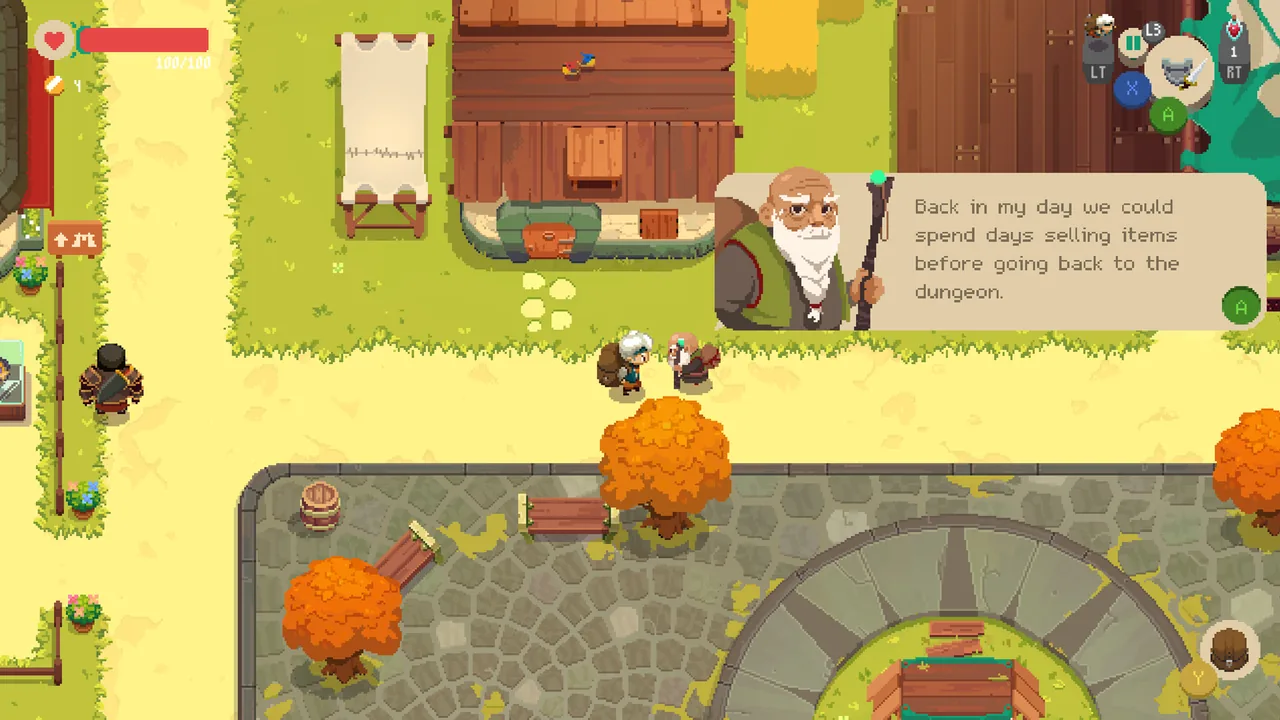
Profit from the shop funds Rynoka's reconstruction — a blacksmith, an enchanter, a bank you can invest gold into — and watching a handful of empty plots become a functioning village is a satisfying, if familiar, progression ladder. The trouble is that funding it means repeating trips into the same four dungeons rather than unlocking new ones, so the late game asks you to run familiar rooms for the raw materials a shop upgrade needs, which is exactly the kind of grind the brief-but-sharp opening hours don't prepare you for. New Game+ gives committed players a real reason to start over with fresh challenges layered on, and it's a better answer to "what's the endgame" than most roguelites this size manage — but it's an answer aimed at players who already love the loop, not one that fixes the mid-game plateau for everyone else.
Presentation and support
Digital Sun's pixel art has aged well: clean silhouettes, expressive customer animations in the shop, and dungeon biomes that read clearly even during busy fights. Chris Larkin's soundtrack does a lot of the game's emotional work, shifting convincingly between the calm of running a business and the urgency of a dungeon room filling with enemies. What's more unusual is how much support the game received after launch — new mini-bosses, well over a hundred additional room layouts, recruitable companions, deeper lore and a New Game+ mode all arrived as free updates over the years that followed, which means the version available now is a substantially larger game than the one that shipped in May 2018. That's worth crediting on its own, especially from a studio whose next project turned out to depend on this one's goodwill.
Value, and the sequel waiting in the wings
At full price, NZ$24.79 for a roughly fifteen-to-twenty-hour campaign with a New Game+ tail is a fair, unremarkable ask. At the deep discount currently live on Steam — NZ$3.71 for the base game, with the Between Dimensions expansion (which adds a new dungeon and endgame content) sitting at NZ$1.33 — it's close to disposable. The two music-only DLC packs are irrelevant unless you specifically want the soundtrack files. The elephant in the room is Moonlighter 2: The Endless Vault, currently in Early Access with a full release planned for later in 2026, rebuilding the same loop in 3D with reportedly deeper combat. That's good context for anyone deciding whether to spend real money on the original today rather than waiting: this is the smaller, rougher first draft of an idea the same studio is already expanding on, and at its current price that's a feature, not a knock against it.
Verdict
Moonlighter is a good roguelite wearing a genuinely original economic hook, and the honest verdict depends on which half you came for. The pricing system is the smartest thing here, but it's a trick you can only be fooled by once; the trip home, with its tight bag space and real risk of losing everything to one bad fight, is what actually sustains the loop across a full campaign. Combat stays serviceable rather than becoming a reason to keep playing on its own, and the endgame asks more grinding of familiar dungeons than the sharp opening hours would suggest. None of that erases a well-made, generously supported game that's currently one of the cheapest ways into its own subgenre — it just means the shop and the dungeon support each other less evenly than the pitch implies, with the loot-carrying tension doing more of the load-bearing work than the price slider.
Readers who want to see this same "gather by night, sell by day" idea taken further, with a tighter economic dependency between the two halves, should read our review of Dave the Diver, which solves the sell-what-you-gather problem with a restaurant instead of a shop and runs into its own late-game bloat in the process. CrossCode is worth a look for players who came away from Moonlighter wanting an action RPG that takes its combat mechanics further, and Stardew Valley remains the reference point for turning a small economy into a game you can return to for years rather than one long weekend.
Players who like the idea of what they gather determining what they can build, without a credits sequence closing the loop, may also want to look at Wanderer — a persistent world where mining and foraging feed directly into crafting and equipment, running whether you're logged in or not.
Pros and cons
Pros
- Setting your own price and watching a customer's face for hesitation is a genuinely different way to price loot than any menu-driven shop screen
- The trip home imposes a real decision every single run — push for one more room's loot or bank what's already in the bag before you lose it
- Free post-launch updates added mini-bosses, over 100 new room layouts, recruitable companions and a New Game+ mode, so the current build is materially bigger than the 2018 release
- Digital Sun's pixel art and Chris Larkin's soundtrack carry the presentation well past what the low system requirements suggest
- At its current discounted price, the base game and its one gameplay DLC together cost less than a single coffee
Cons
- Once you or a community spreadsheet have worked out what an item is worth, setting prices stops being a read on the market and becomes data entry
- Weapon types offer only one or two distinct attacks each, so combat rarely feels different across the four dungeon biomes even late into a run
- Keyboard-and-mouse handling and controller remapping have drawn complaints since 2018 and still surface in recent reviews, which is a long time for a control scheme to stay unresolved
- The village-upgrade endgame leans on repeating the same four dungeons rather than introducing new ones, so the climb's payoff is more gold than novelty
- Selling materials to fund the next upgrade becomes a repetitive chore in the mid-game, well before the New Game+ mode gives players a reason to return
Screenshots
-
MoonlighterImage: 11 bit studios via Steam -
MoonlighterImage: 11 bit studios via Steam -
MoonlighterImage: 11 bit studios via Steam -
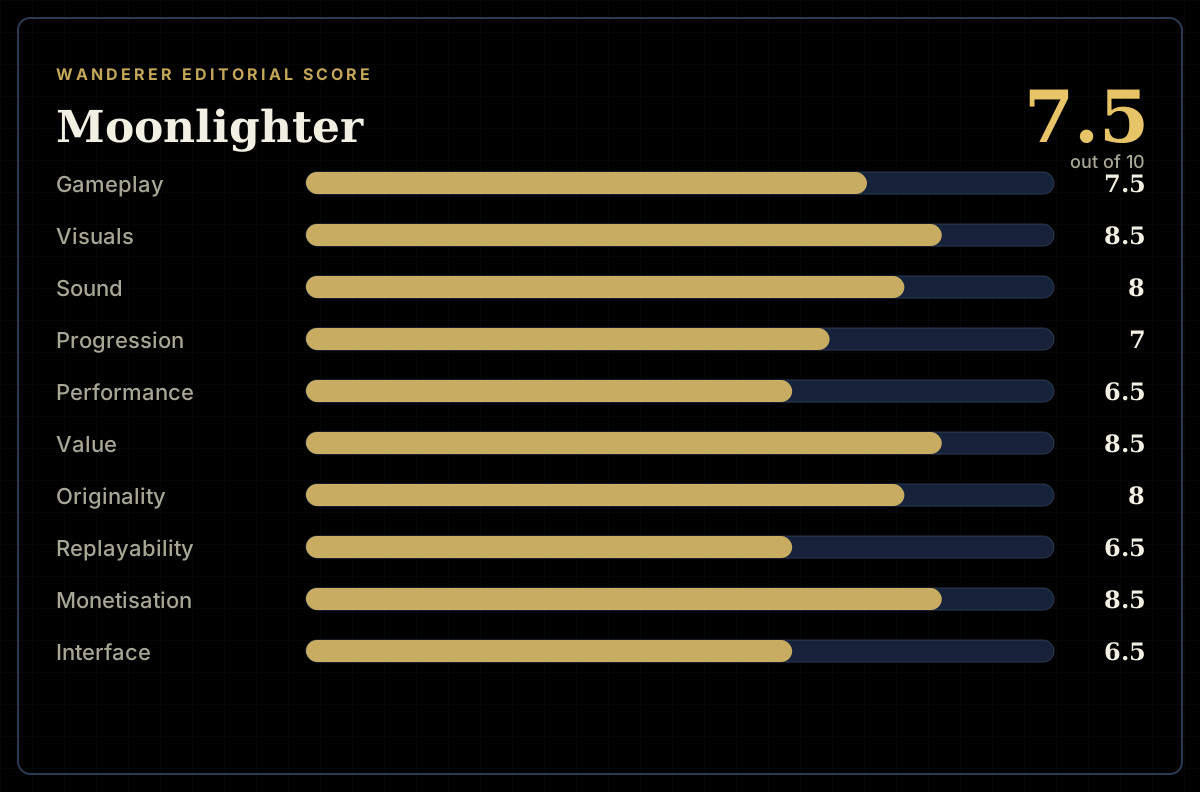
How the review scores each part of the gameWanderer Editorial -
The short versionWanderer Editorial