Game review
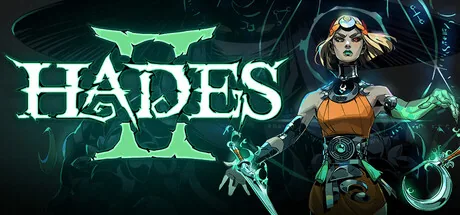
Hades II
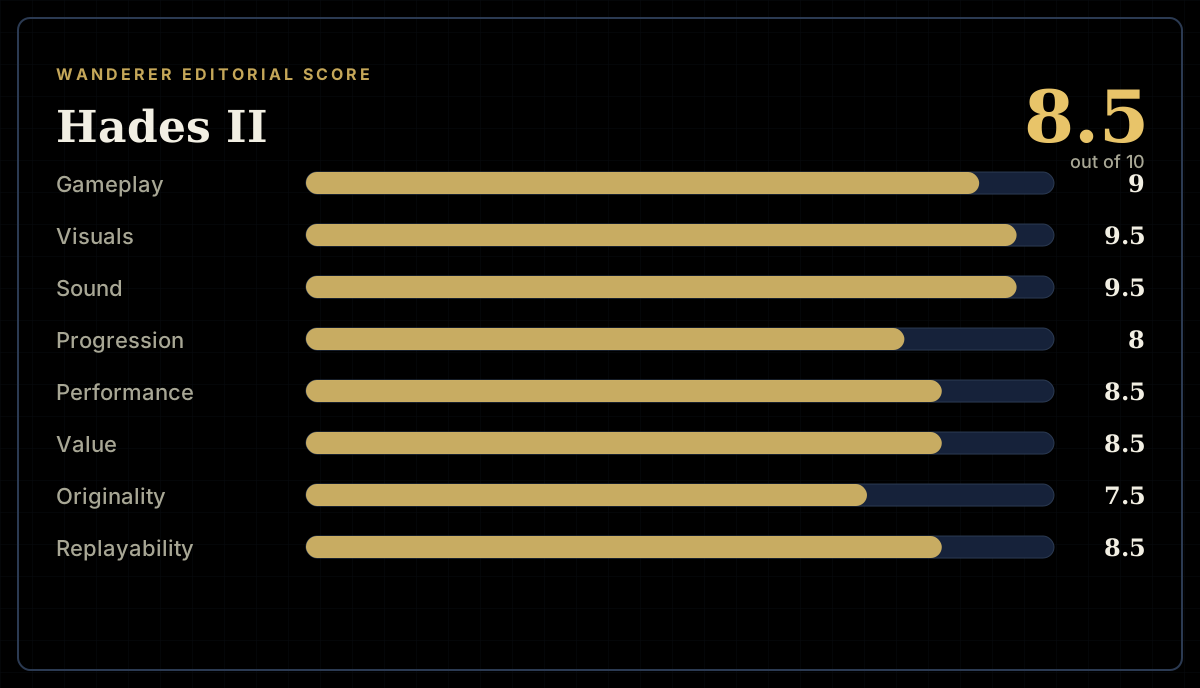
8.5 / 10
- Developer
- Supergiant Games
- Publisher
- Supergiant Games
- Released
- 25 September 2025
- Platforms
- Windows, macOS, Nintendo Switch, Nintendo Switch 2, PlayStation 5, Xbox Series X|S
- Genre
- Action Roguelite
- Monetisation
- Premium, one-off purchase — no in-game purchases (an optional soundtrack is sold separately)
- Players
- Single-player
The short version
Hades II keeps the run-based structure that made the original one of the best roguelites ever made, then complicates almost everything sitting underneath it: Melinoë fights with a Magick bar and Omega-charged attacks instead of a simple dash-strike rhythm, the map splits into an Underworld route and a Surface route rather than one long climb, and permanent progression is spread across Arcana cards, weapon Aspects, incantations and a home base that all draw from overlapping pools of gathered resources. Most of that redesign works, and combat in particular is deeper for it.
What keeps this from a clean top-tier score is two things, one structural and one that arrived at launch. The two-path campaign has a real pacing seam where the Underworld route runs dry before the Surface unlocks. And the 1.0 ending triggered a genuine, heavily-upvoted backlash from players with hundreds of hours invested — a reaction serious enough that Supergiant added new story resolution content in an April 2026 patch specifically responding to it, and is still issuing hotfixes to that patch as of late July.
Biggest strengths
- The weapon-Aspect system and Omega-charged attacks give every one of the six weapons a genuinely different combat identity rather than a reskinned moveset
- Hand-painted environments and character art hold Supergiant's usual standard across both the Underworld and the newer Surface regions
- Darren Korb's score shifts fluidly between witchy folk instrumentation and combat percussion without ever feeling like two separate soundtracks stitched together
Biggest weaknesses
- A real, well-documented backlash to the story's original 1.0 ending — a concentrated cluster of detailed negative reviews from players with 60 to 270+ hours invested, posted in the days immediately after launch
- The Underworld route is short enough to clear in a handful of runs, well before the Surface route unlocks, leaving an early stretch that feels thinner than the rest of the game
- Juggling Arcana points, weapon Aspect unlocks, incantation ingredients and Nightmare currency at once means checking three or four menus before most runs even start
Who it's for: Roguelite veterans who want a genre-leading combat system with real long-term systems to chase; anyone who finished the first Hades and wants more scope rather than more of exactly the same loop; players comfortable with both a meta-progression grind that occasionally outpaces its own pacing and a story still being actively revised well after launch.
Our recommendation: Buy it. Even with a real pacing seam between its two halves, a resource economy that asks more bookkeeping than the original ever did, and a rocky 1.0 ending, this is still one of the best action games of the past two years — now complete across PC, both Switch generations, PlayStation 5 and Xbox Series X|S, at a fair price with zero microtransactions. If the ending is what's holding you back, know that Supergiant added new prophecy conclusions in an April 2026 patch directly responding to that reaction, so what you'll see today is not necessarily what triggered the backlash.
8.5 / 10
Supergiant Games had never made a sequel before Hades II, and it shows in how little the studio seemed willing to simply repeat itself. The first Hades built one of the tightest roguelite loops in the genre by keeping almost everything simple: one dash, one attack rhythm, one long climb out of the Underworld, boons stacked on top until a run either ended in victory or didn't. Hades II takes that same skeleton and deliberately complicates nearly every system hanging off it. Melinoë fights with a resource bar instead of a free dash-strike combo, the map now branches into two separate campaigns rather than one, and the permanent progression between runs is split across at least four overlapping systems instead of the original's single mirror of upgrades. It's a bolder redesign than "more Hades, but bigger," and for the most part it earns that ambition. It also introduces the first real pacing seam this series has had — and, at 1.0, a genuine ending controversy that's worth understanding in detail before you buy.
A roguelite with two directions instead of one
The original Hades had one job: escape the Underworld, over and over, with the story unfolding across attempts rather than within them. Hades II keeps that basic shape but splits the campaign into an Underworld route, structurally similar to the first game's climb, and a Surface route that opens later and pushes toward Chronos, the Titan of Time, through territory the series hasn't covered before. It's a genuinely smart structural idea: by the time the Underworld's four regions start to feel familiar, the game hands you somewhere completely different to point that familiarity at, and the two routes end up feeling like distinct campaigns sharing one hub rather than one long grind with a costume change halfway through.
The trade-off is pacing. The Underworld route is comparatively short and comparatively forgiving, and experienced players clear it in a handful of attempts — sometimes on the first or second try. The Surface doesn't open until specific story and resource conditions are met, which means there's a stretch early in the campaign where the Underworld has already stopped teaching you anything new but the Surface still isn't available. It's not a fatal problem — the story beats and Arcana unlocks keep runs feeling purposeful even during that stretch — but it's the one structural place where the sequel's design visibly shows its seams.
Witchcraft, Omega attacks and the Magick economy
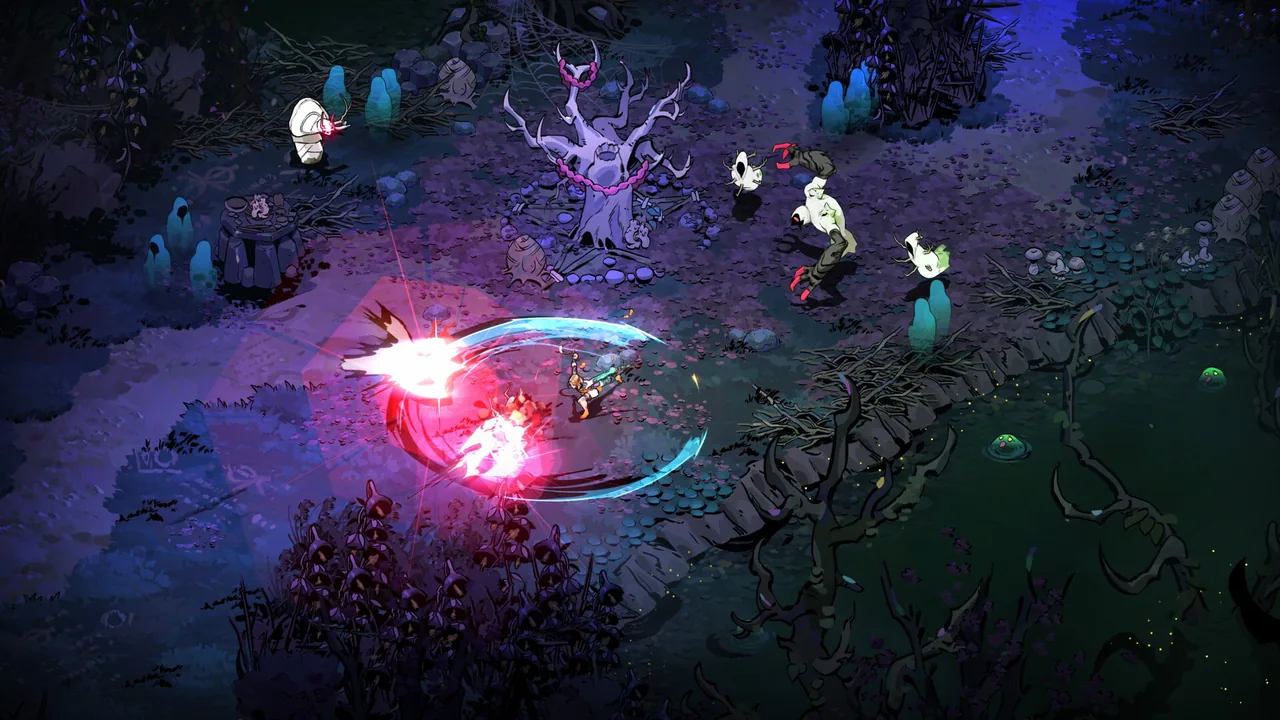
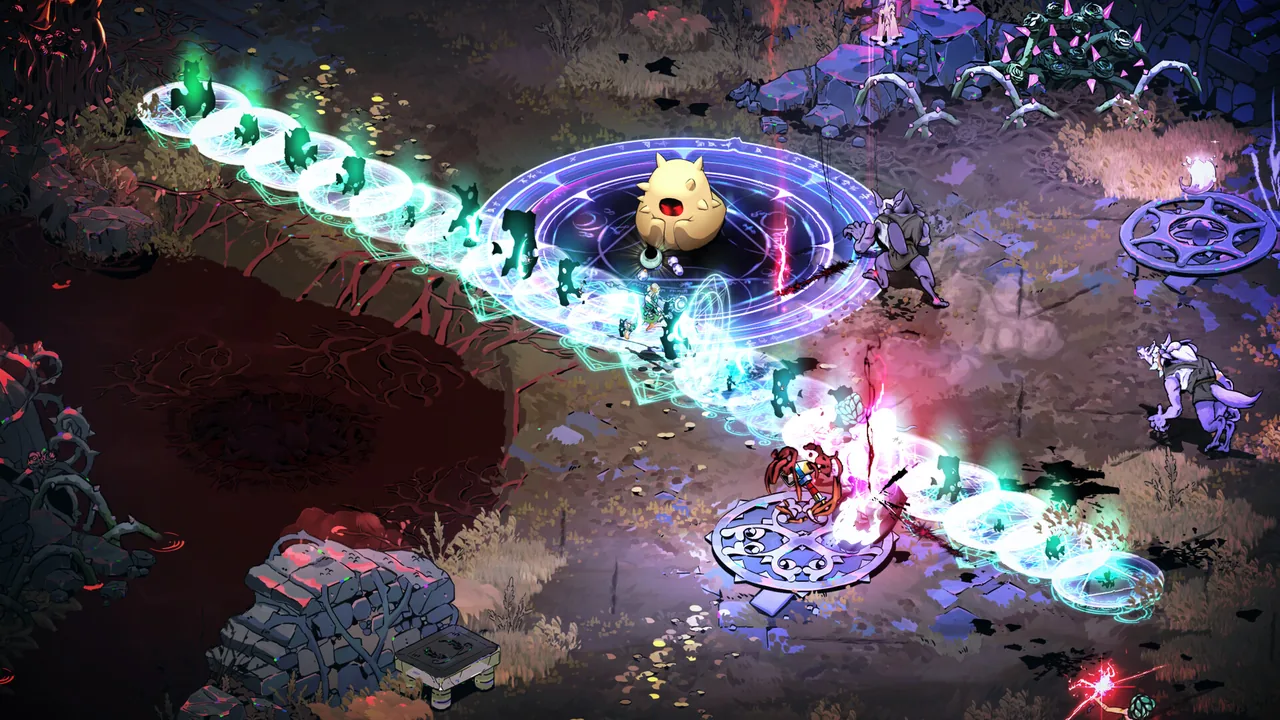
Combat is where the redesign pays off most clearly. Melinoë carries six weapons of Night, each with two Aspects that meaningfully change how it plays, and each capable of a charged Omega attack that draws down a Magick bar built up by landing hits with the base moveset. That's a real second layer of decision-making the original never had: instead of choosing a build once at the start of a run and executing the same attack pattern for forty rooms, Hades II asks you to manage a resource in real time, deciding room to room whether to bank Magick for a boss-killing Omega cast or spend it early to clear trash encounters faster.
It's a deeper system than the original's, and it rewards the kind of build theorycrafting the series has always been good at. It's also, by design, a slower rhythm than Zagreus's dash-strike combat, and while the payoff is usually worth it, players who loved the first game specifically for its speed will feel the difference immediately, and some never fully warm to it. That's a legitimate design trade-off — Hades II is trying to be a more tactical game than its predecessor, not a faster one — but it's worth knowing going in rather than three hours deep.
Arcana, incantations and the homework problem
Permanent progression between runs is where Hades II asks the most of its players, in both good and bad ways. Arcana cards are the closest equivalent to the original's Mirror of Night — a points-based system of permanent passive buffs, some of which require defeating specific bosses before they can even be equipped. On top of that sits weapon Aspect unlocking, home-base incantations that require specific gathered resources, and Nightmare currency earned through the endgame difficulty system. Each of these is a reasonable system in isolation, and together they give Hades II a genuinely larger meta-progression space than the original ever had.
The friction shows up in the gathering. Several of the more useful incantations require resources tied to a single region, and there's no way to simply buy your way past a missing ingredient, so a bad run that skips the one region with the resource you need can mean deliberately replaying content you've already mastered, purely to go fishing for a crafting material. It's not a broken system — but stacking Arcana, Aspects and incantations on top of each other means checking three or four separate progress screens before a run even starts, and that density can tip from "rich meta-progression" into genuine homework on a bad night.
Fear, Testaments and the long game
Once the main campaign is finished, Hades II's endgame difficulty system, Fear, takes over from the story-driven escalation. Activating Vows from the Oath of the Unseen adds Fear to a run in exchange for tougher, more specific challenges, and Testaments — weapon-Aspect-specific trials gated behind a Fear floor — reward Nightmare currency and high-tier incantations for clearing them. It's a granular, well-tuned successor to the original's Pact of Punishment, and one of the clearest signs Supergiant understood what made the original's endgame work.
The ending, and what happened after
This is the part worth understanding clearly, because it's the single most-discussed thing about this game's launch and it deserves more than a passing mention. Nineteen of the 100 most-upvoted negative reviews on Steam are dated within five days of the 25 September 2025 launch, and essentially all of them are about one thing: the story's original ending. The playtimes attached are not casual — 130, 155, 178, even 272 hours logged before the reviewer decided to write a negative review over how the narrative resolved. One beta tester since the start of Early Access writes that "conceptualising the worst ending I had for this game isn't even coming close to what they actually did." Another calls the buildup thrown away on a conclusion with no unique plot twists and static characters. This isn't a handful of cranks — it's a large, detailed, heavily upvoted cluster of reactions from players who were otherwise enthusiastic enough to have logged hundreds of hours by the time they reached the credits.
That reaction was clearly heard. Steam's own news feed documents Supergiant discussing "its controversial ending" directly with press in April 2026, and the same month's Post-Launch Patch 2 notes list "more prophecy conclusions" among its additions — new resolution content added roughly seven months after launch, specifically responsive to the backlash. The studio has continued patching since, with a fifth hotfix to that same patch landing as recently as 28 July 2026. This isn't a studio that shipped 1.0 and moved on; it's one still actively adjusting the story in response to how players received it, which is unusual enough to report as its own fact. Whatever ending you reach today is, in a meaningful sense, not necessarily the one that caused this reaction in the first place.
Presentation, performance and completion
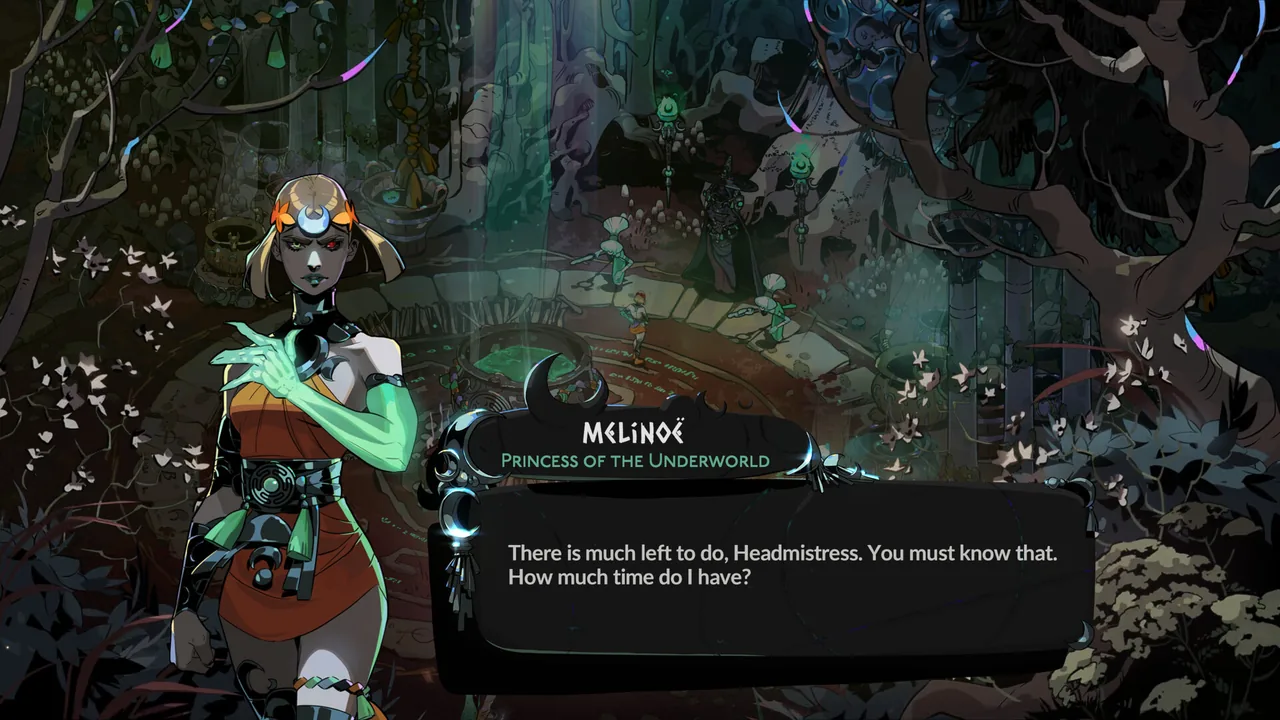
Supergiant's hand-painted art direction remains the clearest visual identity in the roguelite genre, and the newer Surface locations — sunlit, verdant, a deliberate contrast to the Underworld's palette — give the sequel real reason to look different from its predecessor. Darren Korb's score adds witchy folk instrumentation to the established combat percussion without the two ever feeling like separate soundtracks awkwardly sharing a game. Metacritic's aggregate sits at 94 on PC.
Performance is strong across the board, and the PlayStation 5 and Xbox Series X|S versions that arrived on 14 April 2026 target 120 frames per second. The global achievement curve reflects a game built for extended replay: early act-clear milestones sit between 47% and 67% of the player base, while deep-completion achievements tied to clearing with every weapon Aspect or stringing together fully randomized runs fall under 6%. That's a wide, healthy base narrowing into a dedicated minority chasing full mastery — the expected shape for a roguelike this replayable, not a sign of players abandoning it early.
Verdict
Hades II is a worthy, ambitious sequel that mostly justifies the risk of complicating a system that didn't obviously need fixing. The Omega attack and Magick bar redesign gives combat a genuine second layer of decision-making, the Underworld-and-Surface split keeps the campaign from feeling like one long climb repeated, and the Fear and Testament endgame gives finished players a real reason to keep returning. None of that comes free: the two-path structure creates a real pacing dip early on, the resource economy behind Arcana and incantations asks for more bookkeeping than the original ever did, console players spent the better part of a year waiting for a version PC and Switch owners already had, and the 1.0 ending triggered a genuine backlash from deeply invested players that Supergiant is still visibly working through in patches nearly a year later.
Eight and a half out of ten reflects a sequel that expands on one of the best action games of the last decade without simply repeating it, held back from the very top tier by that structural seam between its two halves and by a launch narrative moment serious enough that its own developer is still revising the response to it. Players who want a roguelite with real long-term systems to master, excellent combat, and a story the studio is clearly still willing to fight for will find plenty here. Anyone burned by the original ending should know the game they'd play today isn't quite the one that caused the reaction.
Pros and cons
Pros
- The weapon-Aspect system and Omega-charged attacks give every one of the six weapons a genuinely different combat identity rather than a reskinned moveset
- Hand-painted environments and character art hold Supergiant's usual standard across both the Underworld and the newer Surface regions
- Darren Korb's score shifts fluidly between witchy folk instrumentation and combat percussion without ever feeling like two separate soundtracks stitched together
- The Fear and Oath of the Unseen system gives finished players a real, granular difficulty ladder instead of one blunt hard-mode toggle
- Supergiant has kept actively patching the game nearly a year after 1.0, including story-content additions and a hotfix as recently as July 2026
- Fully released across PC, Switch, Switch 2, PlayStation 5 and Xbox Series X|S with no in-game purchases anywhere in the package
Cons
- A real, well-documented backlash to the story's original 1.0 ending — a concentrated cluster of detailed negative reviews from players with 60 to 270+ hours invested, posted in the days immediately after launch
- The Underworld route is short enough to clear in a handful of runs, well before the Surface route unlocks, leaving an early stretch that feels thinner than the rest of the game
- Juggling Arcana points, weapon Aspect unlocks, incantation ingredients and Nightmare currency at once means checking three or four menus before most runs even start
- Several late-game incantations gate on resources found in only one region, so a bad run can mean backtracking through content you've already mastered just to find one ingredient
- Omega-charged attacks reward a slower, more deliberate rhythm than Zagreus's dash-strike combat, and players who loved the original's speed may need real time to adjust
- PlayStation 5 and Xbox Series X|S versions arrived seven months after the PC, Switch and Switch 2 launch, so console players spent most of the game's first year waiting
Screenshots
-
Hades IIImage: Supergiant Games via Steam -
Hades IIImage: Supergiant Games via Steam -
Hades IIImage: Supergiant Games via Steam -
How the review scores each part of the gameWanderer Editorial -
The short versionWanderer Editorial