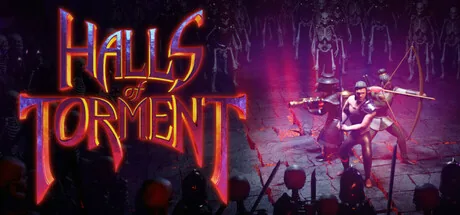
Game review
Halls of Torment
8 / 10
- Developer
- Chasing Carrots
- Publisher
- Chasing Carrots
- Released
- 24 September 2024
- Platforms
- Windows, Linux, PlayStation 5, Xbox Series X|S, iOS, Android
- Genre
- Action RPG / Survivor-like
- Monetisation
- Premium one-off purchase on PC and console; on mobile a free ad-supported version with hero and currency IAP sits alongside a separate paid ad-free Premium app; one paid content DLC plus a cosmetic supporter pack and a soundtrack
- Players
- Single-player only
The short version
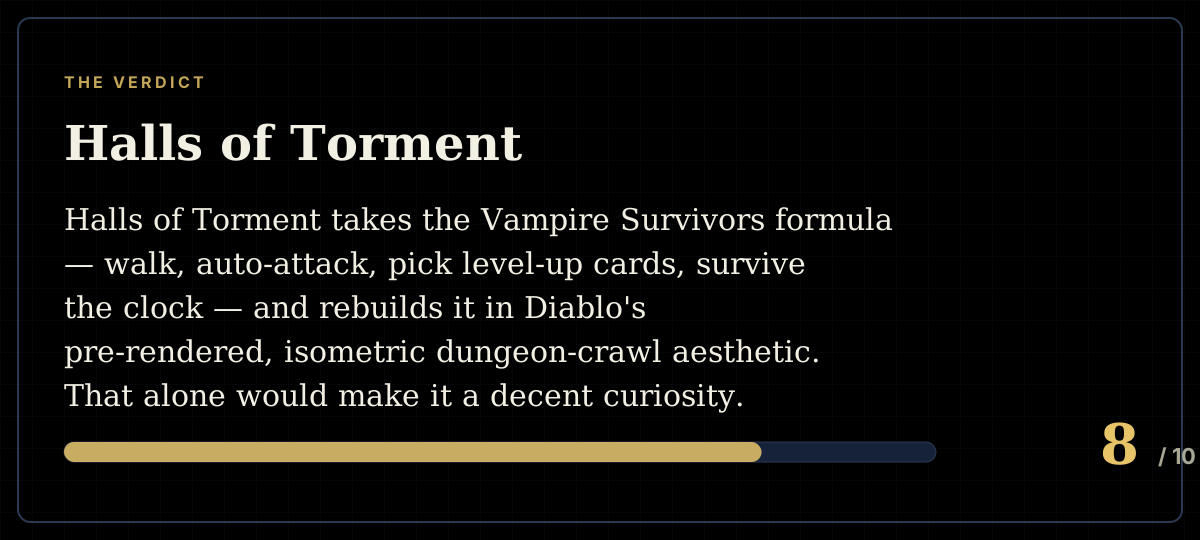
Halls of Torment takes the Vampire Survivors formula — walk, auto-attack, pick level-up cards, survive the clock — and rebuilds it in Diablo's pre-rendered, isometric dungeon-crawl aesthetic. That alone would make it a decent curiosity. What makes it a genuinely deep game is the amount of permanent structure sitting underneath each run: eleven characters, seven classes, Marks that let one hero borrow another's traits, twenty-odd Blessings, hundreds of quests, and a Shrine of Torment that unlocks a genuinely harder difficulty tier once you've earned it.
The trade-off is real. A meaningful slice of that depth is locked behind a long unlock grind before it opens up, the presentation leans harder on "Diablo, but a survivor game" than it always earns, and once a run is going well at high difficulty the screen turns into a strobing wall of effects that both older and newer hardware can genuinely choke on.
Biggest strengths
- Marks let a fully traited hero lend specific class traits to a fresh character, so unlocking someone new never means starting completely from zero
- The pre-rendered, digitized-sprite art style reads as a genuine Diablo homage rather than a generic dark-fantasy reskin
- Over 500 quests keep steering you toward characters, classes and item combinations you'd otherwise never try
Biggest weaknesses
- Several of the eleven characters and most of the deeper trait combinations stay locked behind a long quest and achievement grind before the meta-progression actually opens up
- High-difficulty Agony runs have been reported to drop well below 30fps on capable desktop hardware, not just handhelds, once the screen fills with enemies and effects
- Some classes noticeably outperform others at survival once builds mature, flattening the "eleven distinct playstyles" pitch in practice
Who it's for: Survivor-like fans who've exhausted Vampire Survivors and want a darker aesthetic with a much longer unlock ladder, and Diablo-era players who want that game's atmosphere without its time commitment.
Our recommendation: Buy it at the current discount without much hesitation — the base game alone is dozens of hours deep. Add The Boglands if you want more stages and heroes; skip the Supporter Pack and Soundtrack unless you specifically want to fund the studio or own the music.
8 / 10
Vampire Survivors proved that a survivor-like doesn't need much of an identity beyond its loop — walk, auto-attack, pick the next level-up card, watch the clock. Halls of Torment takes that premise and asks a different question: what if it looked like it belonged on a shelf next to Diablo II? Chasing Carrots' creative director has described the pitch more bluntly than most developers would dare — if Diablo was a three-course meal, this is the candy bar. That's an honest way to describe a game built on digitized, pre-rendered sprites, moody dungeon lighting and a Lords-of-the-underworld framing, running a combat loop that has almost nothing to do with Diablo's itemisation or pacing. The question worth answering isn't whether the homage looks the part — it does — but whether the game underneath earns the comparison or just borrows its coat.
The loop, and where Diablo's fingerprints actually show
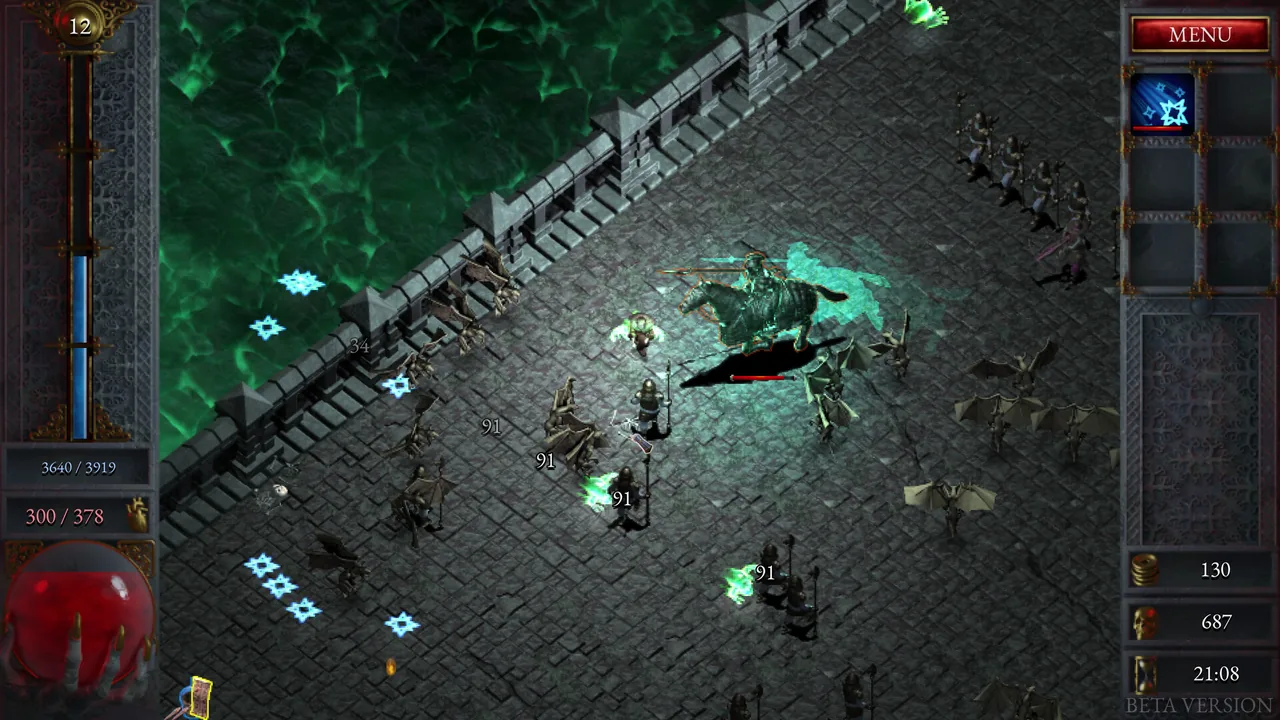
Strip away the aesthetic and the core thirty-minute run plays like every other bullet-heaven: your character moves, attacks fire automatically at the nearest threat, and every few seconds you're offered a menu of ability upgrades, new weapons or passive items to slot in. What Halls of Torment changes is presentation rather than mechanics. Enemies are pre-rendered rather than pixel sprites, environments read as genuine dungeon levels — the Forsaken Woodland, the Ashen Cemetery, the Chambers of Dissonance — rather than an abstract scrolling field, and boss fights against the underworld's "Lords" carry actual attack telegraphs and phase changes instead of just scaling health bars. That's a real presentational upgrade over the genre's usual flat, top-down clutter, and it's the single best argument for choosing this game over its more famous inspiration.
Where the Diablo comparison thins out is everything past the surface. There's no real itemisation depth in the Diablo sense — no affix rolling, no build-defining unique with three competing stats to weigh. Items here function closer to Vampire Survivors' passives: a scroll drop after a boss, a stat boost, an ability upgrade. The dungeons don't branch or generate meaningfully differently run to run in the way an action-RPG's levels imply they might. Calling it "Diablo crossed with Vampire Survivors" is accurate as a vibe description and slightly generous as a mechanical one — this is a survivor-like wearing very good, very deliberate cosplay, not a hybrid of the two genres' actual systems.
Where the depth really lives: classes, Marks and the quest tree
The part of Halls of Torment that goes further than most of its genre is what happens between runs. Eleven characters need earning through quests and achievements rather than being available from the start, and each one belongs to one of seven underlying classes with its own trait pool. The cleverest single mechanic here is Marks: once a class's traits have been sufficiently levelled on one hero, that class's traits can be shared onto a different character through a Mark, so unlocking someone new doesn't mean grinding their trait pool completely from zero. It's a small piece of design, but it's the difference between "new character" meaning "start over" and meaning "recombine what you already earned in a new body" — and it's why veteran players keep describing the meta-progression as additive rather than repetitive.
Layered on top of that: over twenty Blessings that grant permanent per-run bonuses once unlocked through the game's Scriptor system, roughly thirty artifacts that let you customise the terms of a run (harder enemies for better rewards, essentially), and a genuinely large quest list — 500 by the 1.0 release, up from 300 in Early Access — that constantly nudges you toward trying an unfamiliar character, an unused ability, or a build you'd otherwise never touch. This is the system doing the most work against the genre's usual staleness problem, and it's legitimately better tuned here than in most of Halls of Torment's competitors.
The honest cost of all that depth is the front end. A meaningful number of characters, classes and trait combinations simply aren't available on your first several hours of play, and the game is upfront that unlocking them is the point of the quest system rather than a formality to clear quickly. For players who like unlock-chasing as its own reward, that's a feature. For anyone who wants to sample the build variety the marketing promises inside their first evening, the actual toybox stays mostly closed until the achievement list starts filling in — and that's a fair criticism of a game whose biggest selling point is variety that isn't fully visible for a while.
Difficulty tiers and the Shrine of Torment
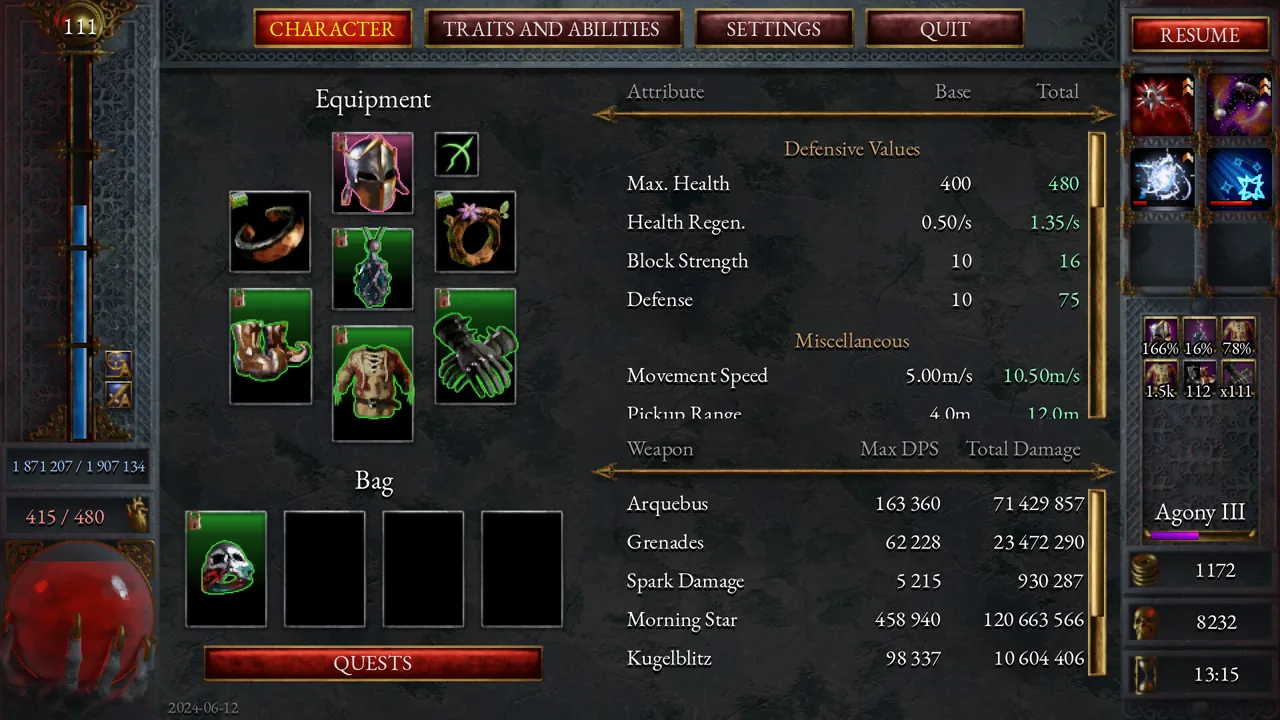
Runs escalate on the usual fixed clock, but the structure that actually rewards mastery sits past the main story stages: defeating a Hall's Lord unlocks Agony mode for that stage specifically, and clearing an early boss in the Chambers of Dissonance opens the Shrine of Torment globally — a proper hard-mode gateway rather than a difficulty slider. Agony runs add real pressure through an Agony Meter and rank system rather than just bigger enemy health pools, and it's here that the game asks the most of a well-built character. This is a stronger endgame structure than most survivor-likes bother with, and it gives committed players an actual target to chase once the story stages stop being a threat.
It's also where two of the game's real weaknesses show up hardest. Character balance holds up reasonably well through the main stages, but at Agony intensity some classes clearly pull ahead of others in raw survivability — reports of one particular tanky, area-denial-heavy class dominating late runs while several others struggle to keep pace are consistent enough to be a pattern rather than an isolated complaint. And this is exactly where the game's performance ceiling gets tested hardest, which is its own separate problem.
The screen fills up, and so does the frame-time budget
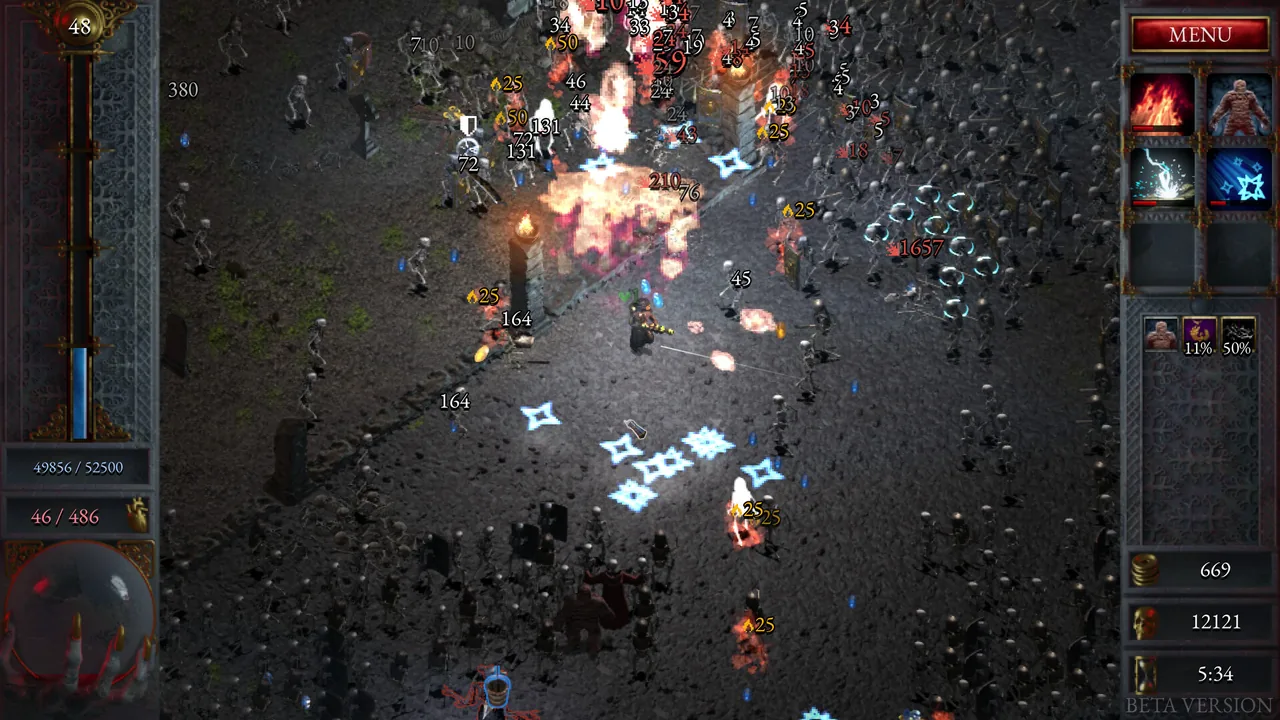
Every survivor-like eventually asks its screen to hold more information than a player can parse, and Halls of Torment's answer — full-screen light, particle and enemy-corpse density during a strong late run — is not meaningfully more readable than genre standard. That's a familiar trade-off and, on its own, a forgivable one; the spectacle is part of the appeal.
What's less forgivable is that the density comes with a real performance cost that isn't confined to weak hardware. Steam Deck players report runs becoming close to unplayable during peak waves, which is expected on a handheld — but the same complaint surfaces from players on high-end desktop rigs pushed into maximum Agony intensity, with frame rates reportedly dropping into the single digits during the final stretch of a dominant run. That's not a readability quibble, it's a technical one: the moment a build is strong enough to reach the game's actual skill ceiling is the same moment the engine visibly struggles to render it. A survivor-like living or dying on how satisfying its power fantasy feels shouldn't have its most powerful moments be the ones that stutter.
Interface and controls
Outside of the late-run crush, the interface does its job without much friction. Level-up choices are legible, the hub between runs is easy to navigate once you know where each system (quests, Marks, the Scriptor, artifacts) lives, and full controller support means the game plays as comfortably from a couch as at a desk. The learning curve for where all these separate systems sit — quests unlock classes, classes unlock traits, Marks move traits between heroes, blessings sit in yet another menu — is steeper than the genre's usual "spend gold, buy upgrade" simplicity, and new players should expect a slower on-ramp to understanding what's actually being offered to them at any given menu.
Value, DLC and where the money actually goes
At NZ$7.49 during its current 25% discount off a NZ$9.99 base price, Halls of Torment undercuts most of its genre on price while offering one of its deepest unlock trees — that's a strong value case before any DLC enters the conversation. Three add-ons exist as of this writing, and they're worth separating cleanly by what they actually sell. The Boglands, released alongside the console launch in October 2025, is real content: a new stage, two additional heroes, new quests, items, abilities and artifacts, plus new elemental mechanics — currently NZ$4.79 at a 20% discount off NZ$5.99. The Supporter Pack, released in February 2025 at a flat NZ$5.99, is explicitly a cosmetic-and-goodwill purchase — visual extras and a training area for testing loadouts, nothing that changes what you can achieve in a real run. The Soundtrack, also from February 2025 and currently NZ$4.04 at a 10% discount off NZ$4.49, is exactly what it says. None of the three disguise a progression shortcut as a cosmetic purchase, and none of them are required to see everything the base game has to offer — a genuinely honest DLC lineup by the standards of this genre.
Mobile complicates the pricing story the way it usually does. Chasing Carrots and mobile developer Erabit Studios shipped two separate apps rather than one: a free download carrying ads and in-app purchases for heroes and currency, and a separate paid Premium app that removes both. Anyone buying on a phone should be clear about which version they're installing — the free app is not the same value proposition as the flat-price PC and console releases, and the Premium app is the one that actually matches them.
Verdict
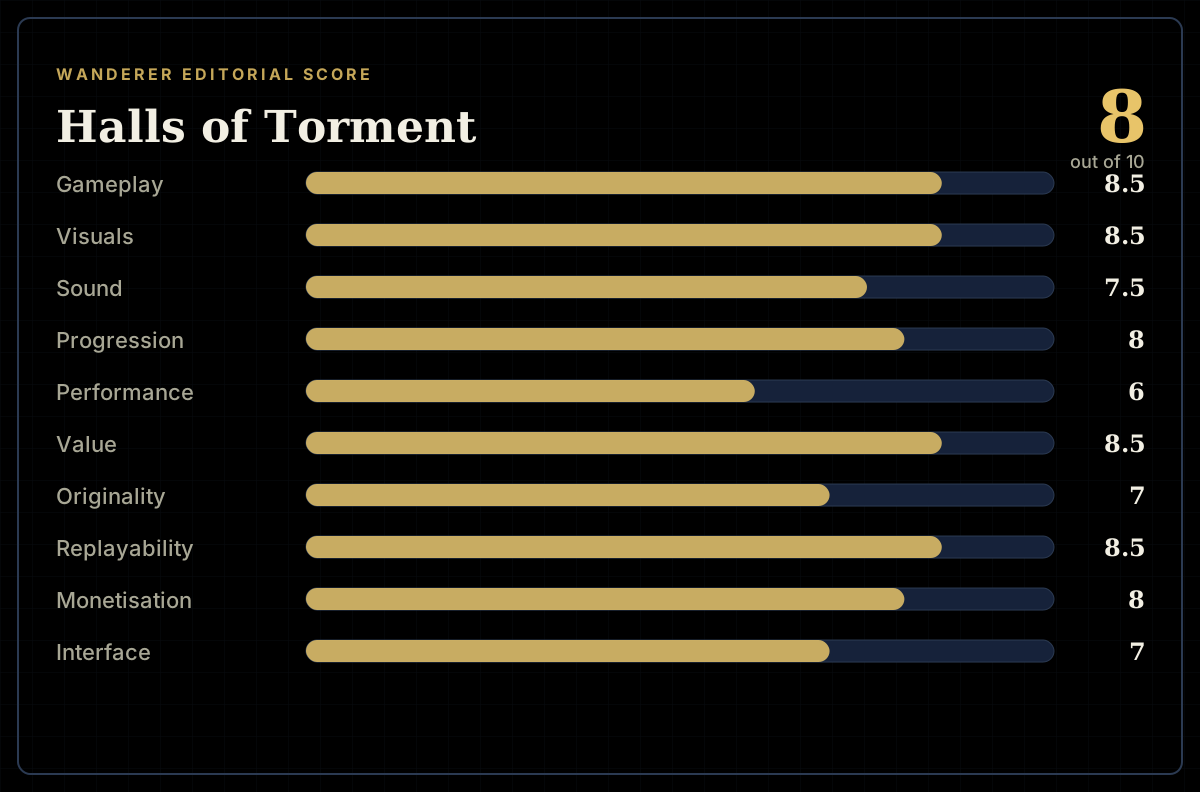
Eight out of ten. Halls of Torment earns its place a level above the genre's flood of Vampire Survivors clones because its meta-progression is genuinely built rather than bolted on — Marks, class unlocks and a five-hundred-quest tree give returning players real reasons to keep opening new doors, and the Shrine of Torment gives the systems something to be tested against once the main stages stop being a threat. The Diablo presentation is the best version of itself it can be without ever pretending to carry Diablo's actual design DNA, and the price-to-content ratio, DLC honesty included, is hard to argue with.
What holds it back from higher is concrete rather than a matter of taste: a real unlock grind gates a chunk of the advertised build variety before new players see it, some classes clearly outclass others once a run gets serious, and the moment a build becomes powerful enough to matter is the same moment frame rates have been reported to fall apart on hardware that has no business struggling. None of that undoes what works, but a game whose main pitch is depth and spectacle needs both to hold up once a player actually reaches them, and right now only one reliably does.
Players who like Wanderer's approach to permanent progression that survives between sessions will recognise the appeal of Halls of Torment's between-run systems immediately, even if the two games occupy very different genres.
Price and DLC details checked 30 July 2026.
Pros and cons
Pros
- Marks let a fully traited hero lend specific class traits to a fresh character, so unlocking someone new never means starting completely from zero
- The pre-rendered, digitized-sprite art style reads as a genuine Diablo homage rather than a generic dark-fantasy reskin
- Over 500 quests keep steering you toward characters, classes and item combinations you'd otherwise never try
- The Shrine of Torment and its Agony difficulty give committed players an actual skill ceiling instead of just bigger numbers
- Three DLC entries are honestly categorised — one real content expansion, one cosmetic supporter pack, one soundtrack — with no disguised pay-to-progress option
- Runs comfortably on modest PC hardware for the majority of a run, with problems concentrated specifically at the high end
Cons
- Several of the eleven characters and most of the deeper trait combinations stay locked behind a long quest and achievement grind before the meta-progression actually opens up
- High-difficulty Agony runs have been reported to drop well below 30fps on capable desktop hardware, not just handhelds, once the screen fills with enemies and effects
- Some classes noticeably outperform others at survival once builds mature, flattening the "eleven distinct playstyles" pitch in practice
- The Diablo comparison is mostly skin-deep — atmosphere and sprite style rather than any of Diablo's itemisation or dungeon design actually carrying over
- The free mobile version's ad and IAP model sits at a worse value point than the flat-price PC, console and paid mobile releases
Screenshots
-
Halls of TormentImage: Chasing Carrots via Steam -
Halls of TormentImage: Chasing Carrots via Steam -
Halls of TormentImage: Chasing Carrots via Steam -
How the review scores each part of the gameWanderer Editorial -
The short versionWanderer Editorial