Game review
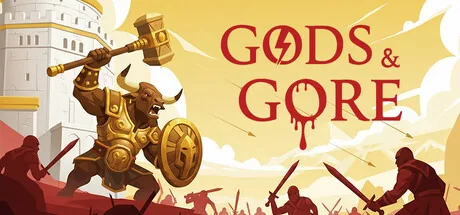
Gods & Gore
7 / 10
- Developer
- Berm Games
- Publisher
- The Bueno Interactive
- Released
- 5 August 2026
- Platforms
- Windows
- Genre
- Roguelite Tower Defense
- Monetisation
- One-time purchase, no in-game store, no DLC
- Players
- Single-player only
The short version
Gods & Gore is a card-based tower defense roguelite set in Greek mythology: pick a god, collect and level up mythological creatures, and draft building cards each wave to construct both your defenses and the maze your enemies are forced to walk through. It entered Early Access on 5 August 2026, and its first week of reviews settled on a clear, specific complaint — a fun core loop with nothing meaningful carrying between runs — that the developer answered directly within 48 hours.
A patch titled "New Meta Progression System," posted 7 August, added a persistent currency players keep between attempts and unlocked all of the game's gods from the start rather than gating them behind progress. One reviewer's own review history captures the effect precisely: an edited entry, originally negative, updated days later to positive with the note that "the first patch a week in... fixed basically all my negative points."
Biggest strengths
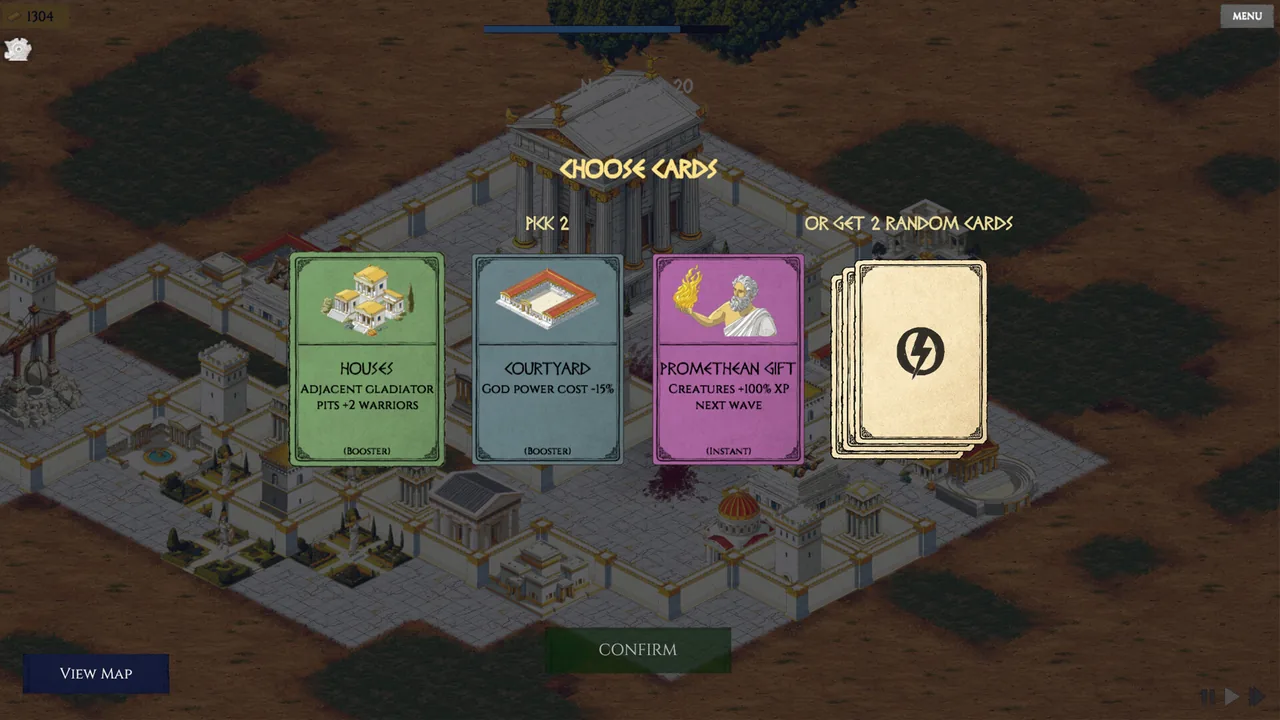
- The card-drafting build system is repeatedly praised as genuinely varied — reviewers describe different viable strategies emerging from how towers, barracks, walls and boosters are drafted and positioned each run
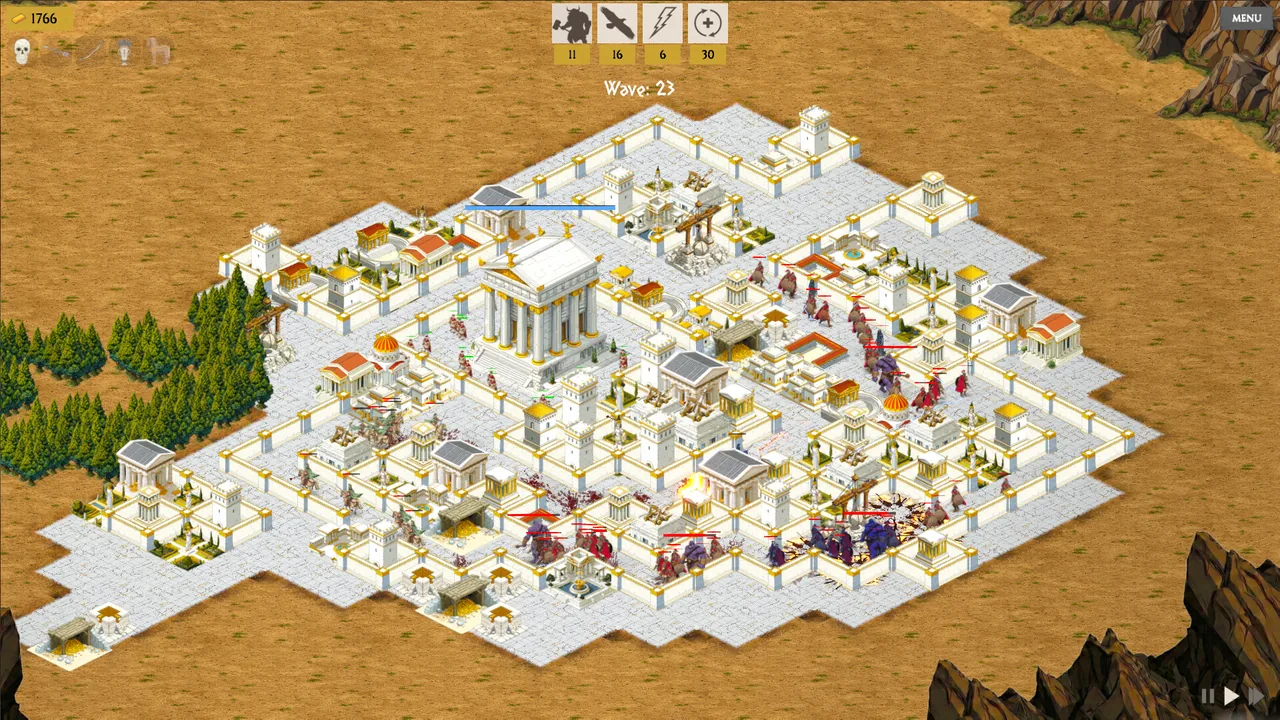
- Letting the player construct the enemy path themselves, rather than following a fixed lane, is singled out as the game's most distinctive mechanical idea, opening real chokepoint and positioning decisions most tower defense games don't offer
- Artifacts meaningfully change the shape of a run rather than acting as flat stat boosts, with reviewers citing specific examples of builds an artifact enabled that wouldn't otherwise work
Biggest weaknesses
- At Early Access launch, the current build offers a compact roughly-30-wave experience, and more than one reviewer explicitly wants more meta-progression and content depth even after the August 7 patch
- Switching between the game's multiple gods doesn't yet feel meaningfully different according to at least one detailed reviewer, since unlocking a god doesn't currently translate into a distinct enough playstyle to justify replaying with a different one
- No Steam achievements are implemented at time of writing, which one negative reviewer cites directly as a signal of how early the current build is
Who it's for: Tower defense fans who want a genre entry built around card drafting and maze construction rather than fixed lane layouts, and who are comfortable buying into a week-old Early Access build with an actively responsive developer. Less suited to anyone who wants a large, varied campaign right now — the current build is compact.
Our recommendation: A strong buy for tower defense fans specifically, helped considerably by a developer who fixed the sample's central complaint within days of launch rather than months. Go in expecting roughly 30 waves of current content and a still-developing sense of how differently each god actually plays.
7 / 10
Introduction
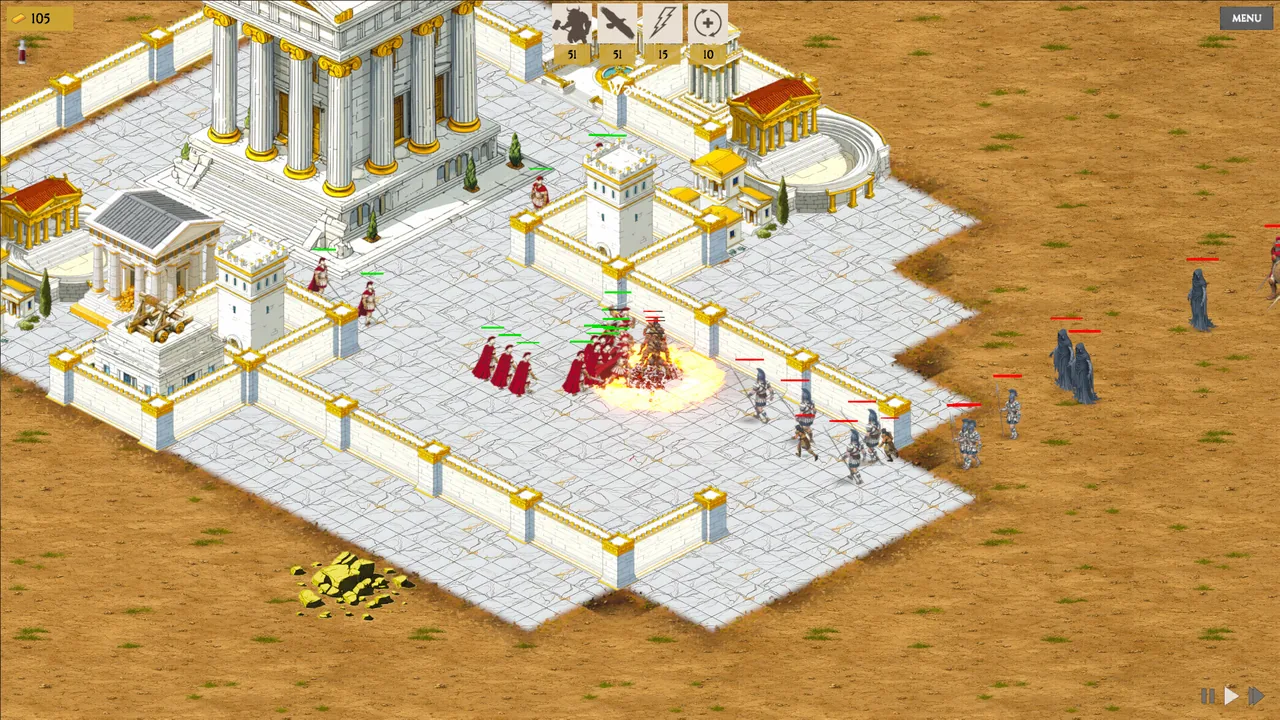
Most tower defense games hand you a fixed lane and ask you to defend it. Gods & Gore hands you the lane itself. Building cards drafted each wave — towers, barracks, walls, boosters — double as the maze your enemies are forced to navigate, so where you place a wall is as much a strategic decision as what you place. Set in Greek mythology, with players choosing a god and collecting creatures like Zeus's golden eagle or a minotaur to level up across attempts, it entered Early Access on 5 August 2026 following a demo period stretching back to March. This review reads the complete week-one sample — 14 reviews across five languages — and the story it tells is less about a flawed launch than about how quickly a specific, well-articulated complaint got addressed.
Building the maze, not just defending it
The praise in this sample centers overwhelmingly on the card-drafting build system and the freedom to construct the enemy's path rather than defend a pre-set one. "There are many different possible strategies with the cards, the buildings, and where you place things," wrote the most-upvoted review in the sample. "It's nice its not a set path the enemies follow and instead you decide how to best build the path for them." That same reviewer highlighted artifacts as a particular strength, citing one that rewards keeping towers spaced apart from each other as an example of a modifier that genuinely reshapes optimal play rather than simply inflating numbers. Multiple reviewers independently call it one of the more inventive tower defense entries they've played recently, with one going as far as "best TD game I've played in a long time and quite addicted."
The gap between runs, and how fast it closed
Set against that praise, the most detailed critical review in the sample zeroed in on a single, specific gap: nothing meaningful carried between attempts. "Actually quite enjoyable from a tower defense fan's perspective, I dare say it could be quite fun with some actual meta progression that keeps between runs," wrote one reviewer just a day after launch, adding fairly that "if that isn't something the dev wants then I get it." A harsher negative review made the same point with less patience, listing "no meta-progression" alongside balance and variety complaints as reasons the price wasn't yet justified.
What happened next is the most useful thing this review can report. On 7 August — two days after Early Access launched — the developer shipped a patch titled "New Meta Progression System." It added Drachma, a currency earned each wave and kept between runs, spendable on artifacts at the start of a new attempt, and it unlocked all of the game's gods from the very beginning rather than gating them behind prior progress. The same patch fixed a specific pathing bug — Gladiators and the Minotaur failing to engage nearby enemies — that had shown up independently in more than one negative review, including a Chinese-language complaint about units getting stuck. One reviewer's own review history tells the story most directly: an entry originally posted as a hesitant negative was edited days later with a new note on top: "First patch a week in, make me change it to a thumbs up, and fixed basically all my negative points. Looking forward to more now! Great job with the fast fixes!"
That's about as clean a version of the brief's "check whether the developer has already answered the complaint" test as a week-old Early Access game can produce — not a promise on a roadmap, but a shipped patch addressing the exact, specifically-named gap reviewers raised, inside 48 hours.
What's still missing
The patch doesn't resolve everything in this sample, and it's worth being precise about what persists. At least one reviewer who otherwise likes the game notes that the different gods still don't feel meaningfully distinct to play: "once i own with zeus I dont see any reason to play again with diff god. It wont make much difference." Unlocking access to a god from the start, as the August 7 patch did, isn't the same as making that god's playstyle diverge enough to justify choosing it, and this review's sample doesn't yet have evidence that gap has closed. Content volume is the other open question — the current build runs to roughly 30 waves, compact by the standards of a genre that often measures itself in dozens of hours, and more than one reviewer explicitly wants to see that expanded as Early Access continues. Neither of these is a broken promise; they're the honest, expected state of a week-old Early Access build with a clearly communicated direction rather than a finished game pretending otherwise.
A demo-tested launch, not a blind one
Gods & Gore's path to Early Access followed a pattern this library has seen work well elsewhere: a public demo shown as far back as March 2026's Tower Defense Fest, followed by a further demo update in April adding a reworked card system and fast-forward option, before the paid Early Access build went live in August. One reviewer specifically credited the developer for carrying progress across that transition: "Kudos to the devs for transferring progress made on the demo to the purchased game, tip o' the hat to ya." That's a small courtesy, but it's the kind of detail that signals a team thinking about its existing testers rather than treating the paid launch as a hard reset — consistent with the fast, targeted patch response documented above rather than a coincidence sitting next to it.
Final Verdict
Gods & Gore's foundation is a genuinely clever spin on tower defense — letting players build the maze rather than just defend one, backed by a card-drafting system reviewers describe as varied and strategically rich rather than repetitive. Its Early Access launch drew one clear, fair complaint about missing between-run progression, and the developer's response — a targeted patch inside 48 hours that added exactly the system reviewers asked for, plus a bug fix for problems reviewers had independently reported — is a genuinely good sign for how this project gets built out from here. What remains is content volume and god-to-god variety, both reasonable asks of a week-old build rather than failures of the current one. At NZ$11.81, with a developer already demonstrating this kind of responsiveness, this is a confident recommendation for tower defense fans willing to grow with an Early Access game rather than wait for it to finish.
Pros and cons
Pros
- The card-drafting build system is repeatedly praised as genuinely varied — reviewers describe different viable strategies emerging from how towers, barracks, walls and boosters are drafted and positioned each run
- Letting the player construct the enemy path themselves, rather than following a fixed lane, is singled out as the game's most distinctive mechanical idea, opening real chokepoint and positioning decisions most tower defense games don't offer
- Artifacts meaningfully change the shape of a run rather than acting as flat stat boosts, with reviewers citing specific examples of builds an artifact enabled that wouldn't otherwise work
- The developer shipped a direct, specific fix for the sample's loudest complaint — no between-run progression — within 48 hours of launch, adding a persistent currency and unlocking all gods from the start
- Strong value at NZ$11.81, with multiple reviewers independently calling out the price relative to the amount of already-playable content
Cons
- At Early Access launch, the current build offers a compact roughly-30-wave experience, and more than one reviewer explicitly wants more meta-progression and content depth even after the August 7 patch
- Switching between the game's multiple gods doesn't yet feel meaningfully different according to at least one detailed reviewer, since unlocking a god doesn't currently translate into a distinct enough playstyle to justify replaying with a different one
- No Steam achievements are implemented at time of writing, which one negative reviewer cites directly as a signal of how early the current build is
- A specific pathing bug — certain units failing to engage nearby enemies — was reported by multiple reviewers before being addressed in the August 7 patch, an example of real early rough edges alongside the design complaints
- This review's sample is small (14 reviews at time of writing), so any read on lasting reception should be treated as an early signal rather than a settled verdict
Screenshots
-
Gods & GoreImage: The Bueno Interactive via Steam -
Gods & GoreImage: The Bueno Interactive via Steam -
Gods & GoreImage: The Bueno Interactive via Steam -
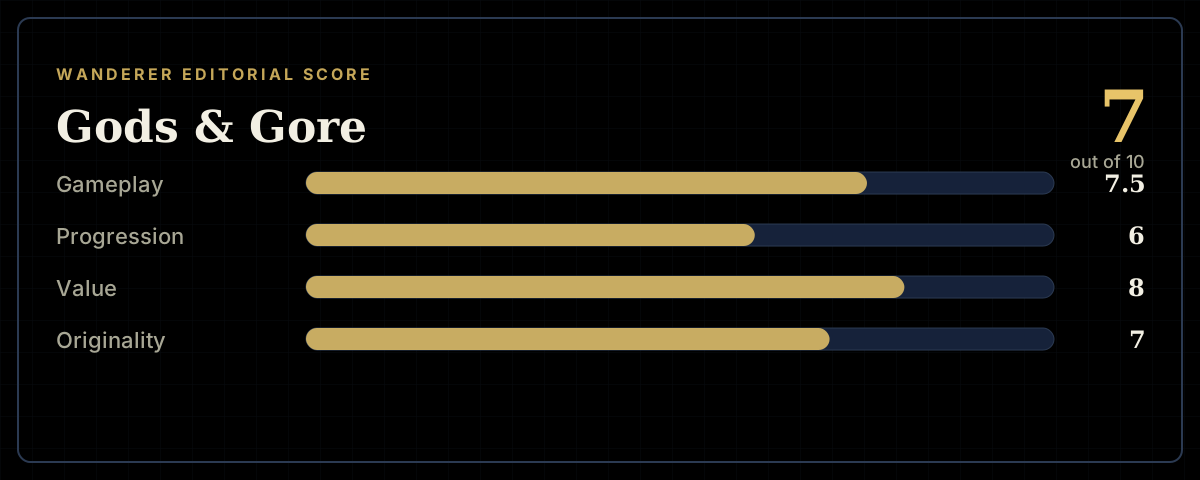
How the review scores each part of the gameWanderer Editorial -
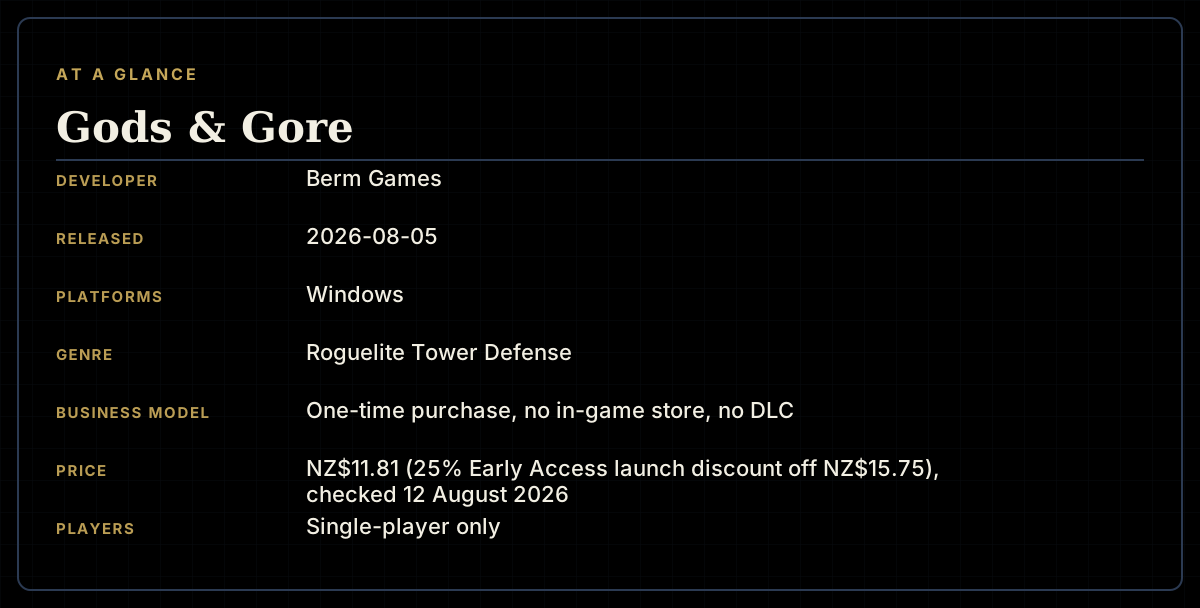
The essentials at a glanceWanderer Editorial -
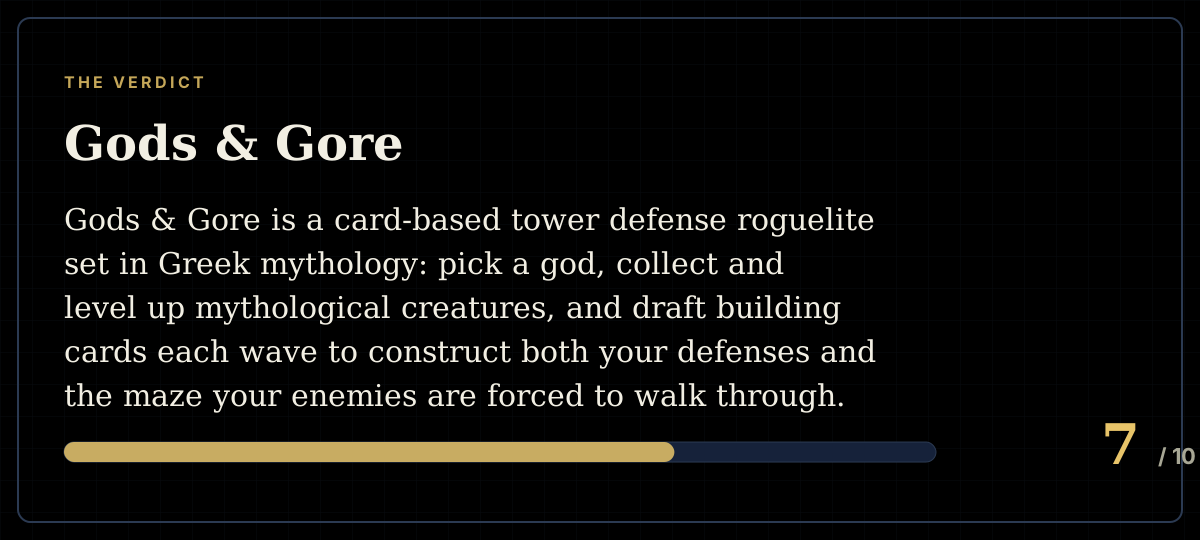
The short versionWanderer Editorial