Game review
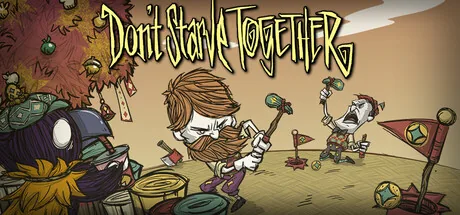
Don't Starve Together
8.5 / 10
- Developer
- Klei Entertainment
- Publisher
- Klei Entertainment
- Released
- 21 April 2016
- Platforms
- Windows, macOS, Linux, PlayStation, Xbox, Nintendo Switch
- Genre
- Survival crafting
- Monetisation
- Premium, one-off purchase. No ads, no energy systems, no subscription and no battle pass. 49 paid DLC entries exist, almost all cosmetic skin "chests," a handful of which bundle a playable character with matching skins as a shortcut — every character those chests sell can also be unlocked for free by playing. Cosmetic skins can be earned, crafted with an in-game currency, or traded on the Steam Community Market
- Players
- Co-op or PvP for up to 6 players by default (server-configurable higher); dedicated and self-hosted servers fully supported, plus Steam Workshop mod support
The short version
Don't Starve Together takes a game that was already unusually willing to kill you and adds the one twist that makes it sing: other people, whose mistakes are now your problem too. The seasonal survival ladder, the character roster's genuine mechanical variety and a decade of free biome and mechanic updates make this one of the strongest arguments in the genre for sticking with a live game for years rather than months.
The cost is a wiki-shaped learning curve the in-game tutorial does almost nothing to soften, a shared-world stake that turns one careless player into everyone's problem, and a cosmetic skin economy — crates, a craftable currency, real-money resale on the Steam Market — that sits a little closer to a loot-box model than Klei's reputation suggests, even if nothing in it touches survival itself.
Biggest strengths
- Six playable characters with genuinely different starting kits and passive abilities create real build variety rather than reskinned stat blocks
- Winter, summer and their named bosses turn the calendar itself into a difficulty curve that punishes anyone who didn't prepare in advance
- Caves, the Ancient Archive ruins and the Lunar Islands layer a second and third progression tier on top of the surface game rather than just extending it sideways
Biggest weaknesses
- The in-game tutorial covers crafting menus but never explains why a player froze to death in a season the game never warned them was coming
- New-player survival past the first month effectively requires outside knowledge of seasonal bosses, character-specific tricks and recipe unlocks the game keeps to itself
- A full party wipe with no revival items on hand can trigger a server's default world regeneration, turning one bad fight into the end of a save the group has spent real hours on
Who it's for: Co-op groups who want a shared project with real stakes rather than a weekend diversion, and survival veterans who've found other genre entries too forgiving. A poor fit for players who want the game to explain itself, or for solo players allergic to memorising a calendar of seasonal threats before engaging with them properly.
Our recommendation: Worth the price on its own, and one of the better DLC situations in the survival genre if you stick to the base game — every character and every biome update is free, and the paid chests are entirely skippable unless a specific skin set appeals.
8.5 / 10
Wilson doesn't remember how he ended up in The Constant, and the game never quite explains it either — a shadow figure named Maxwell tricked him into a deal, dropped him in a procedurally generated wilderness with nothing but a torch and a journal, and left him to figure out the rest. That's still the premise of the original Don't Starve. Don't Starve Together takes that premise and adds the detail that actually changes everything: you're probably not going to be the only person freezing to death out there, and whether that makes things better or worse depends entirely on who else is holding a torch.
Ten years after Klei Entertainment folded that idea into a standalone multiplayer expansion — Early Access from December 2014, full release in April 2016 — Don't Starve Together has quietly become one of the more instructive survival games on Steam, not just because it's still good, but because of how it's been kept good. Nearly every biome, mechanic and playable character added since launch has been free. The storefront, meanwhile, lists 49 separate paid DLC entries. Reconciling those two facts is most of what this review is about.
The knowledge curve is the actual game
Strip away the aesthetic and Don't Starve Together's core loop is familiar survival-genre plumbing: gather resources, craft tools, build a base, manage hunger and sanity, don't die. What makes it distinctive is how little of your eventual competence comes from a stat sheet and how much of it comes from information you either have or don't. There's no meaningful skill tree gating your effectiveness. There's just a calendar, and whether you know what's coming.
Winter arrives on a fixed schedule and brings cold as a survival stat alongside hunger and sanity, with Deerclops as a wandering, base-wrecking threat that a prepared player can beat comfortably and an unprepared one can lose an entire camp to. Summer flips the problem to overheating and wildfires, with its own named menace waiting in the wings. None of this is randomised chaos — it's a fixed, learnable cycle, which is exactly the point and exactly the source of the game's steepest criticism. A veteran treats the changing seasons as a checklist: stockpile this, build that, be somewhere specific by a specific day. A newcomer experiences the same cycle as an ambush, because the game's own tutorial teaches crafting menus and almost nothing about the calendar bearing down on them. "Consult the wiki before winter" isn't a joke among the playerbase so much as received wisdom, and it's a fair criticism of a game that could stand to telegraph its own rules more honestly in the moment they start to matter.
Six characters, six actual builds
Where a lot of survival games treat their character roster as a coat of paint, Don't Starve Together treats it as the game's real build variety. Wilson grows a beard that insulates against cold the longer he goes unshaven — a passive that rewards patience over gear. Wigfrid can only eat meat and takes reduced combat damage, turning her into a natural front-liner who has to solve food logistics differently from everyone else. Wickerbottom skips the early tech tree entirely by starting with books that summon effects other characters need structures to produce. WX-78 is a robot who eats gears for stat boosts and takes bonus damage from rain, trading a whole category of vulnerability for a whole category of power. None of these are cosmetic differences dressed up as mechanics — they change what a resource run looks like, what a boss fight plan looks like, and critically, what role that player fills once a group forms around them.
That last point is where the character system stops being a single-player curiosity and becomes genuinely load-bearing in co-op. A four-player camp with a Wigfrid tank, a Wickerbottom support, a Wurt handling the swamp economy and a generalist Wilson filling gaps behaves nothing like four Wilsons would. Specialisation isn't just efficient here, it's the difference between a season survived comfortably and one survived by the skin of everyone's teeth.
Base-building as the long game, not the side game
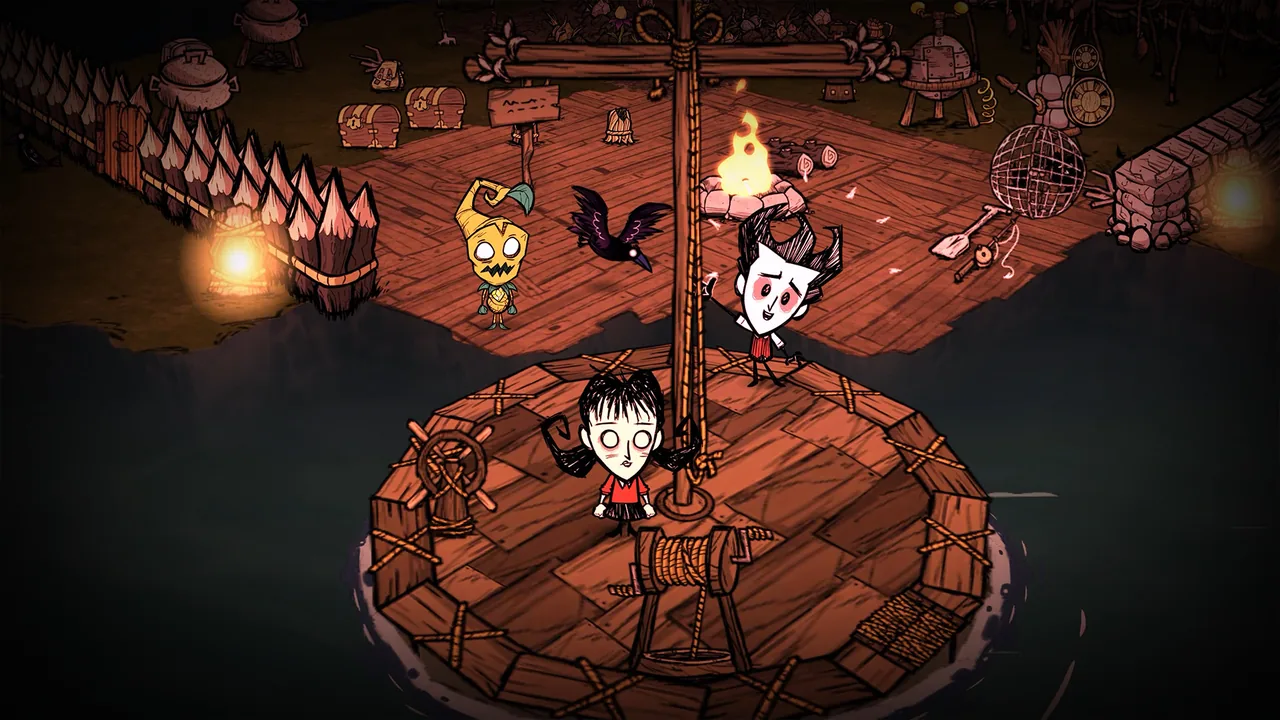
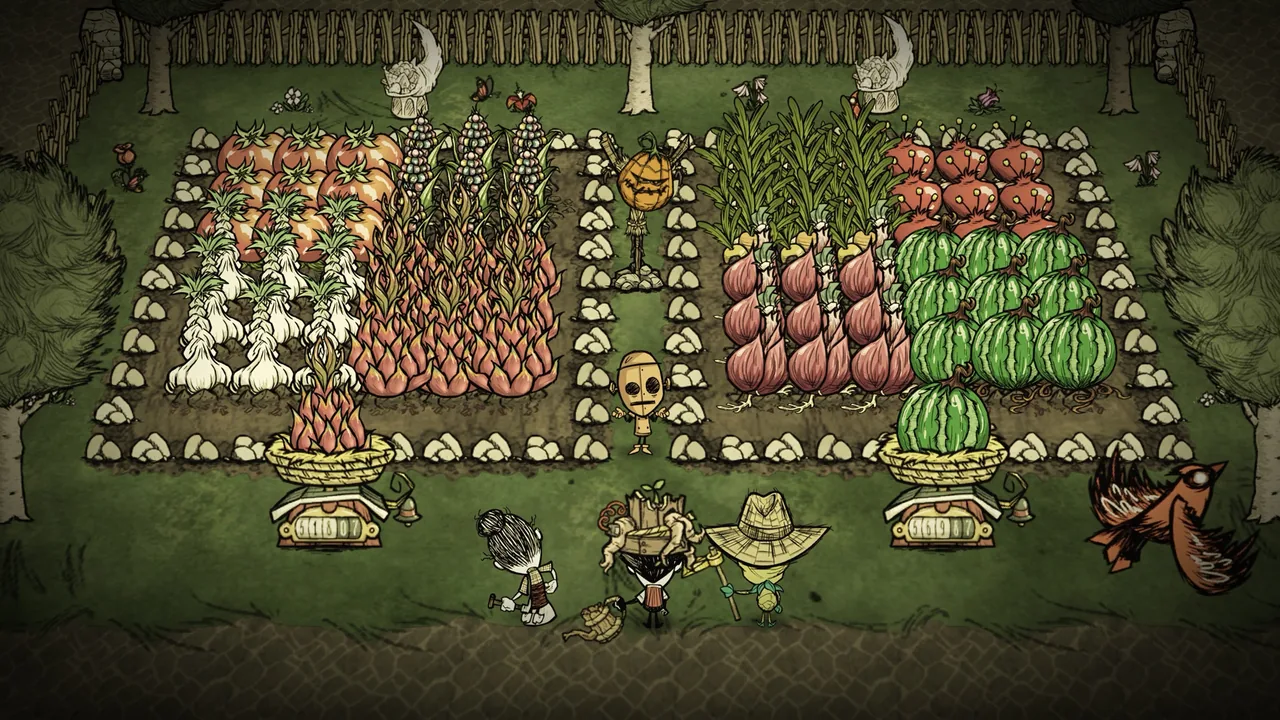
A Don't Starve Together base isn't decorative in the way it can be in games that treat building as a reward screen bolted onto survival — it's the infrastructure a group's entire season plan depends on. Farms, ice boxes, crock pots, science and magic stations, all clustered around whatever choke points the local terrain offers, because the game's wandering threats and seasonal bosses genuinely will walk through and test what you've built. Farming, reworked and expanded in a free update years after launch, turned crop management from a side errand into a real planning problem — different crops on different growth timers competing for the same limited farm plots, with fertiliser and crop-rotation choices that reward the kind of player who thinks two seasons ahead.
The payoff for that investment is one of the game's better-kept secrets: a well-established base doesn't just keep you alive, it changes the entire tempo of play, freeing a veteran group to spend their time on caves, ruins and open-world objectives instead of subsistence. New players rarely see this side of the game, because getting there requires surviving long enough to build it, which loops right back to the wiki-dependency problem.
Caves, ruins and the Lunar Islands: a second and third floor
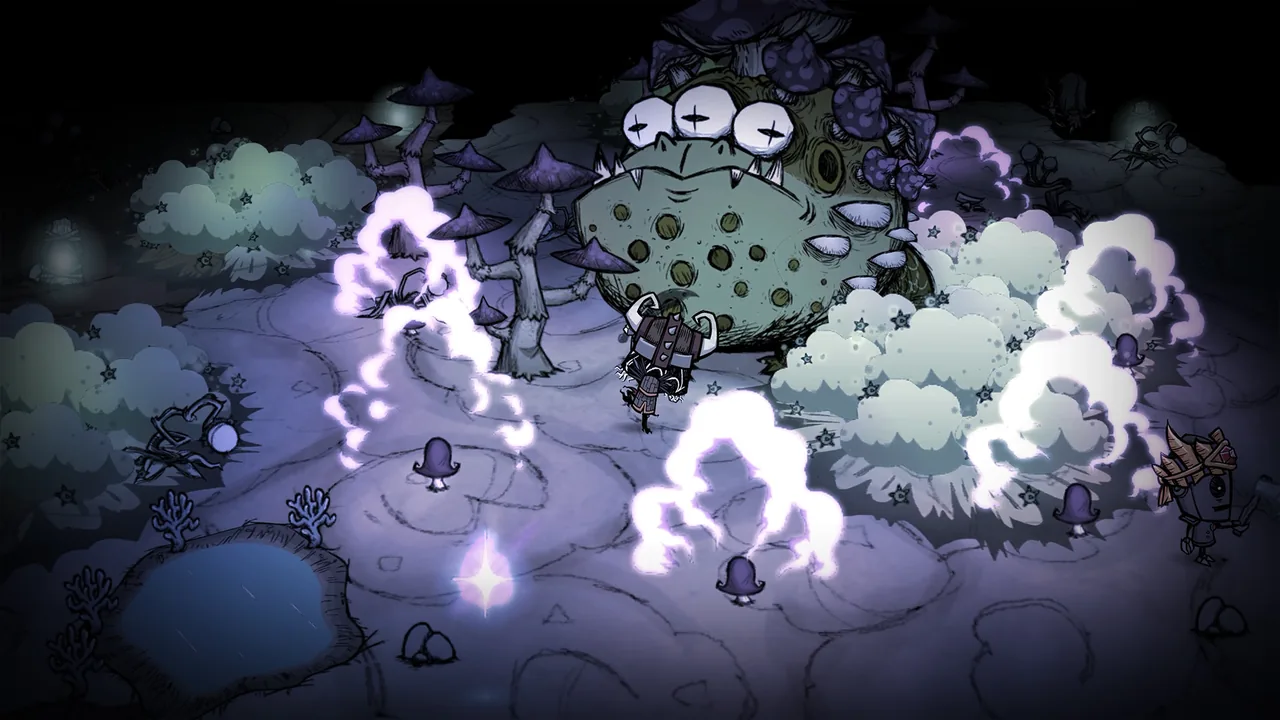
The surface world is only the beginning of what Don't Starve Together actually contains, and this is where the game's decade of free content becomes hard to argue with. Below ground, the caves swap the calendar's seasonal pressure for claustrophobia and a different monster roster, before opening into the Ancient Archive ruins — a magic-tech dungeon layer with its own crafting tree, its own currency in the form of thulecite, and genuinely dangerous set-piece threats that most surface builds aren't equipped to survive on a first attempt. Above the waterline, sailing and the ocean — added wholesale in a later free update — turned exploration into a boat-logistics problem, leading eventually to the Lunar Islands, a late-game biome with its own boss roster and its own reasons to have kept every earlier system sharp.
The structural trick here is the same one the best survival games use and the worst ones fake: each new layer doesn't just add a bigger number to chase, it asks you to relearn a category of threat using tools you already have. That's a genuinely well-built long game, and it's one almost entirely funded by Klei choosing, repeatedly, not to charge for it.
Presentation and the price it pays
Klei's hand-drawn, gothic-Victorian art style is one of the more distinctive looks in the genre — spindly character silhouettes, a desaturated palette that turns genuinely vivid the moment something's about to kill you, and a tone that sits somewhere between whimsical and unsettling in a way that's aged better than most 2014-era survival games. The trade-off is legibility. Dangerous terrain, enemy wind-ups and hazard tiles are all rendered in the same painterly style as everything else, and where a cleaner UI would flag a threat clearly, Don't Starve Together often expects you to already know what you're looking at. That's consistent with the wiki-dependency problem running through the whole review: the art direction is gorgeous and it is also, quietly, part of why the game is hard to learn from first principles.
Performance holds up well for a decade-old engine, with the caveat that a heavily built-up, long-running server with a lot of structures and creatures on screen can produce genuine slowdown, particularly self-hosted. It's not a modern-hardware problem so much as a "this world has been alive for four hundred days and it shows" problem, and dedicated server hosting mitigates most of it for groups who plan to play long-term.
Co-op raises the stakes, not just the headcount
The multiplayer structure here isn't cosmetic either. Dedicated servers, self-hosting and Steam Workshop mod support all exist and work well, and default sessions support up to six players with room to configure higher on a private server. What actually distinguishes the co-op experience is how directly one player's mistake becomes everyone's problem. Death in Don't Starve Together produces a ghost rather than an instant game-over, and there are legitimate ways back — touchstones, effigies, life-giving amulets — but a full party wipe with no revival items prepared triggers most servers' default behaviour of regenerating the world entirely. That's not a bug, it's a stated design choice, and it's a real one: a boss pull that goes wrong at the wrong moment can end a shared save a group has invested real, uncompensated hours into. Players considering a long-term server with friends should treat "someone keeps a revival plan stocked at all times" as mandatory infrastructure, not an optional nicety, because the game genuinely will not soften that particular failure state for you.
Monetisation: the part Klei's reputation has to actually earn
Klei has a strong general reputation for treating monetisation honestly, and this review's job is to test that rather than assume it. The headline fact holds up well: every biome, mechanic and playable character added to Don't Starve Together since 2016 — caves, sailing, farming, the Lunar Islands, magic reworks, new characters like Wortox, Wormwood, Wurt and Walter — has shipped as a free update to owners of the base game. Nothing on the current content roster is locked behind a purchase beyond the NZ$17.99 entry price, and there is no battle pass, no energy system, and no advertising anywhere in the loop.
The 49 DLC entries need unpacking rather than taking at face value, because the number alone looks alarming. The overwhelming majority are "Chest" bundles of purely cosmetic character skins tied to real-world seasonal events — a Valentine's Beating Heart Chest, a Halloween Hallowed Nights Chest, a Snowfallen winter set, a Victorian-themed set, a Roseate set — priced individually from roughly NZ$6 to NZ$20, none of them affecting anything but appearance. A smaller handful are "Deluxe Chest" bundles that pair a specific character with their matching skins, and these are the ones worth being precise about: every character sold this way can also be unlocked for free through ordinary play, so the chest is a convenience shortcut plus a skin set, never a paywall on content. A newer "Starter Pack" style bundle repackages an older character and a mix of skins as a newcomer-friendly grab bag, which is closer to a sampler than a new-content release.
Where the reputation earns a genuine asterisk is the skin economy sitting underneath all of this. Skins can be earned through play, purchased directly in some cases, or obtained through randomised crates that use an in-game currency; a craftable currency exists to buy specific pieces outside the randomisation for players who don't want to gamble on a crate; and finished skins can be resold on the Steam Community Market for real money, the same structural pattern that made loot-box economies controversial in other genres. None of it touches survival, combat or progression in any way — it's cosmetic top to bottom — but a crate-and-resale system built on chance is a meaningfully different thing from a straightforward storefront, and it's fair to flag that Klei's fair-monetisation reputation rests on "nothing here affects gameplay" rather than "nothing here uses persuasive design," because the second claim doesn't hold up as cleanly.
Weighed as a whole, this is still one of the more honest monetisation stories a decade-old live-service survival game can tell. The core promise — buy once, get a decade of real content for free — has held. The cosmetic layer is genuinely optional and genuinely skippable. It just isn't quite as simple as "purely cosmetic, nothing to see here" once the crate mechanics are accounted for.
Players who like the idea of a persistent world that keeps demanding preparation rather than reflexes, and who'd rather earn their gear through knowledge than a loot table, may find some of the same instinct in Wanderer's own slower-burn progression.
Verdict
Eight and a half. Don't Starve Together earns its decade of relevance the hard way — a genuinely varied character roster, a seasonal structure that turns the calendar itself into the antagonist, and biome layers in the caves and Lunar Islands that keep the late game from going stale, all backed by a business model that has kept every meaningful content addition free since 2016. That's a rare combination, and it's why the game still pulls hundreds of thousands of positive Steam reviews a decade after release rather than fading the way most Early Access survival titles do.
The costs are real and worth naming plainly rather than waving off. The learning curve genuinely requires outside knowledge the game refuses to teach itself, the shared-world stakes mean one unprepared player can end a save the whole group cares about, and the cosmetic skin economy leans harder into crate mechanics than its reputation suggests. None of that is enough to displace a well-earned recommendation — but it's the honest reason this sits at 8.5 rather than higher, and it's worth knowing before a group commits sixty hours to a world together.
Price and platform details checked 30 July 2026.
Pros and cons
Pros
- Six playable characters with genuinely different starting kits and passive abilities create real build variety rather than reskinned stat blocks
- Winter, summer and their named bosses turn the calendar itself into a difficulty curve that punishes anyone who didn't prepare in advance
- Caves, the Ancient Archive ruins and the Lunar Islands layer a second and third progression tier on top of the surface game rather than just extending it sideways
- Co-op meaningfully changes risk and specialisation — a dedicated farmer, fighter and base-builder produce a stronger camp than three generalists ever could
- A decade of free updates (new biomes, farming, sailing, magic, playable characters) has been added to the base purchase without a single one becoming paid content
- Dedicated servers and Steam Workshop mod support give co-op groups real control over how punishing or forgiving their world is
Cons
- The in-game tutorial covers crafting menus but never explains why a player froze to death in a season the game never warned them was coming
- New-player survival past the first month effectively requires outside knowledge of seasonal bosses, character-specific tricks and recipe unlocks the game keeps to itself
- A full party wipe with no revival items on hand can trigger a server's default world regeneration, turning one bad fight into the end of a save the group has spent real hours on
- The hand-drawn art direction is atmospheric but makes reading dangerous terrain and enemy tells harder for new players than a clearer UI would allow
- 49 separate DLC listings is a genuinely confusing storefront to land on even though almost none of it is necessary
- Skin crates, a craftable currency and Steam Market resale sit closer to a loot-box economy than the rest of the game's fair reputation would suggest
Screenshots
-
Don't Starve TogetherImage: Klei Entertainment via Steam -
Don't Starve TogetherImage: Klei Entertainment via Steam -
Don't Starve TogetherImage: Klei Entertainment via Steam -
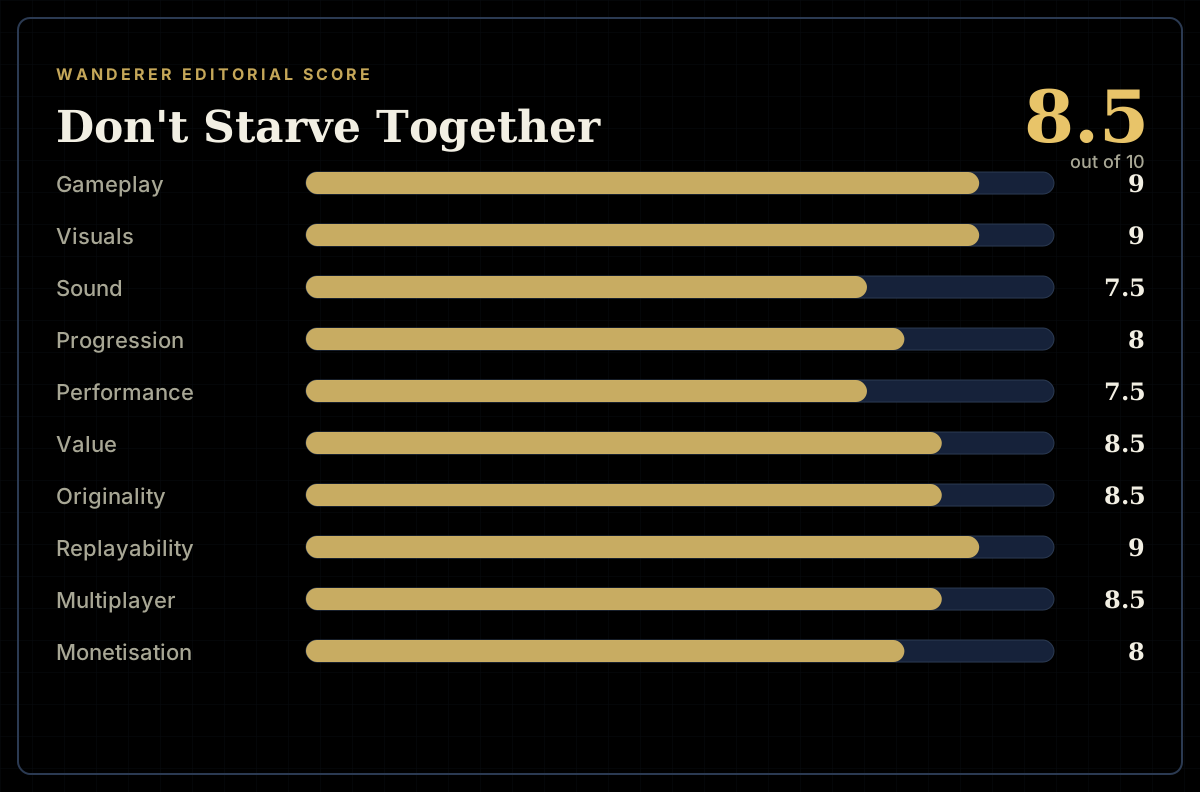
How the review scores each part of the gameWanderer Editorial -
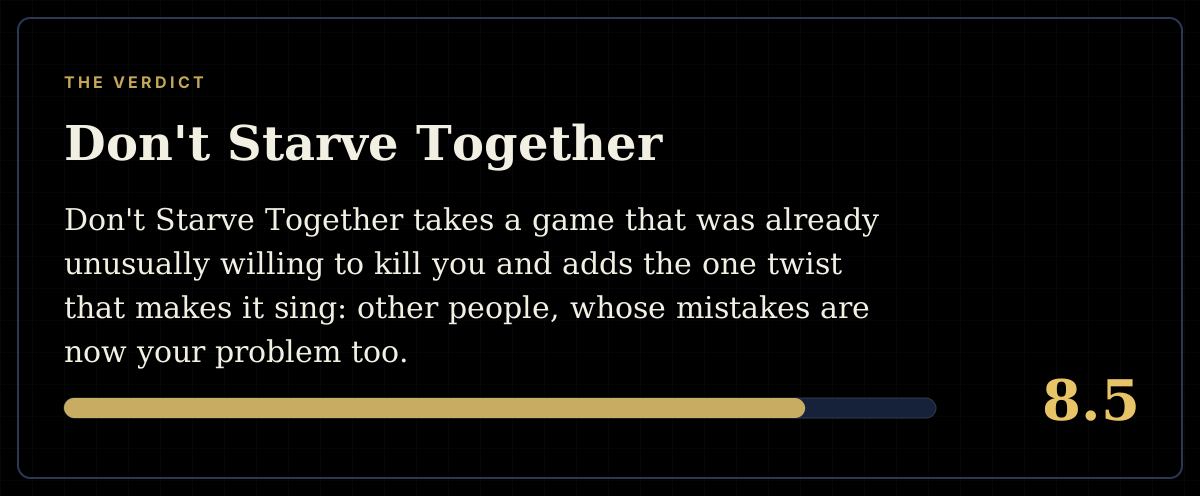
The short versionWanderer Editorial