Game review
Green Hell
7 / 10
- Developer
- Creepy Jar
- Publisher
- Creepy Jar
- Released
- 5 September 2019
- Platforms
- Windows, PlayStation 4, PlayStation 5, Xbox One, Xbox Series X|S, Nintendo Switch
- Genre
- Survival Crafting
- Monetisation
- One-time purchase, plus a single optional Green Hell Official Soundtrack DLC (NZ$2.99, music only) — no ads, no premium currency, no battle pass, no gameplay-affecting DLC of any kind seven years after Early Access began.
- Players
- Survival Mode supports co-op for up to four players sharing one persistent world, added during Early Access rather than at 1.0. Story Mode later gained a co-op option of its own, though several player reviews note it sits awkwardly against a narrative built around one protagonist's arc. Save-desync and spawn-location bugs in co-op sessions are a recurring, dated complaint stretching from 2020 reports through ones posted in the last two years.
The short version
Green Hell's best idea is that almost nothing happens in a menu. Checking for a leech means looking down at your own character's skin. Building a fire means physically opening your backpack's pouches and laying kindling by hand. Treating an infected wound means holding a machete to your own arm. That diegetic commitment, paired with a sanity system that punishes bad decisions with hallucinations dangerous enough to get you killed, makes the opening dozen hours of survival genuinely tense in a way most crafting sandboxes don't manage. What keeps the game from being an easy recommendation is everything built on top of that foundation: tribal AI that's been reported walking through walls since 2019 and still is in 2025 reviews, a bow that trivialises combat once you've unlocked it, co-op sessions that still desync years after launch, and a separate Story Mode whose handling of an uncontacted Amazonian tribe has drawn specific, substantiated criticism for leaning on exactly the tropes a "psychological survival simulator" should know to avoid.
Biggest strengths
- Nearly every system — wound inspection, backpack access, fire-building, tool repair — happens through direct interaction with your character's body and inventory rather than a menu screen, and it's the single thing every reviewer from 2019 to 2025 agrees the game gets right
- The sanity mechanic gives psychological deterioration real stakes: whispers and hallucinated threats aren't cosmetic flavour, they can trigger real damage and real deaths if ignored
- A single NZ$30.99 purchase with exactly one optional music-only DLC, seven years after Early Access began — about as uncomplicated as survival-game monetisation gets
Biggest weaknesses
- Tribal enemy AI has been a persistent, recurring complaint across the entire review history — natives clipping through walls, spawning inert inside player bases, and getting stuck on terrain show up in reviews from 2019 and reviews from 2025 alike, not just at launch
- Story Mode's depiction of the fictional Yabahuaca tribe has drawn specific, credited criticism for reducing the only indigenous characters in the game to killable, cannibalisable obstacles or a voiceless backdrop to a scientist protagonist's arc
- Combat balance skews hard once a bow is unlocked, and several long-playtime reviews describe metal tools performing no better, or worse, than the stone tools they're meant to replace
Who it's for: Players who want a survival-crafting game to feel like a genuine ordeal rather than a checklist of icons, and who are willing to treat Survival Mode as the main course and Story Mode as an optional, flawed side dish. Less suited to players who want a polished narrative campaign or who are sensitive to a game handling an indigenous culture badly.
Our recommendation: At the sale price checked here, Green Hell is an easy buy for anyone who likes The Forest-style survival tension and can live with rough tribal AI. At the full NZ$30.99 it's still fair value given how little else it asks for financially, but go in expecting Survival Mode to be the reason you stay and Story Mode to be worth trying once and setting aside.
7 / 10
Most survival games ask you to open a menu to check if you're hurt. Green Hell asks you to look down. Wounds show up on your character's actual skin, leeches have to be spotted and pulled off by hand, and treating an infection means physically pressing a machete blade to your own arm rather than clicking a bandage icon. It's a small design choice that Creepy Jar — a Warsaw studio founded by former Techland developers — commits to almost completely, and it's the single reason Green Hell still gets recommended in survival-genre discussions seven years after it first appeared on Steam, well past the point most games in this space get remembered for their launch trailer and little else.
A survival game you manage with your own hands
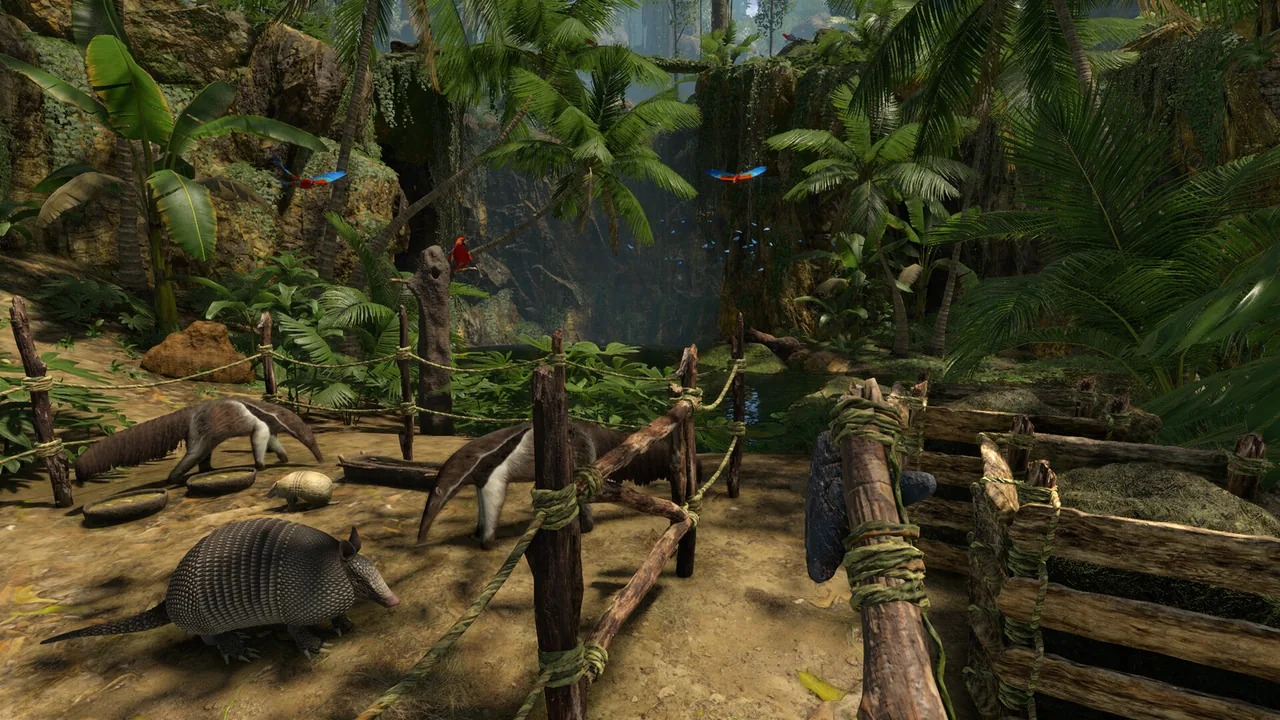
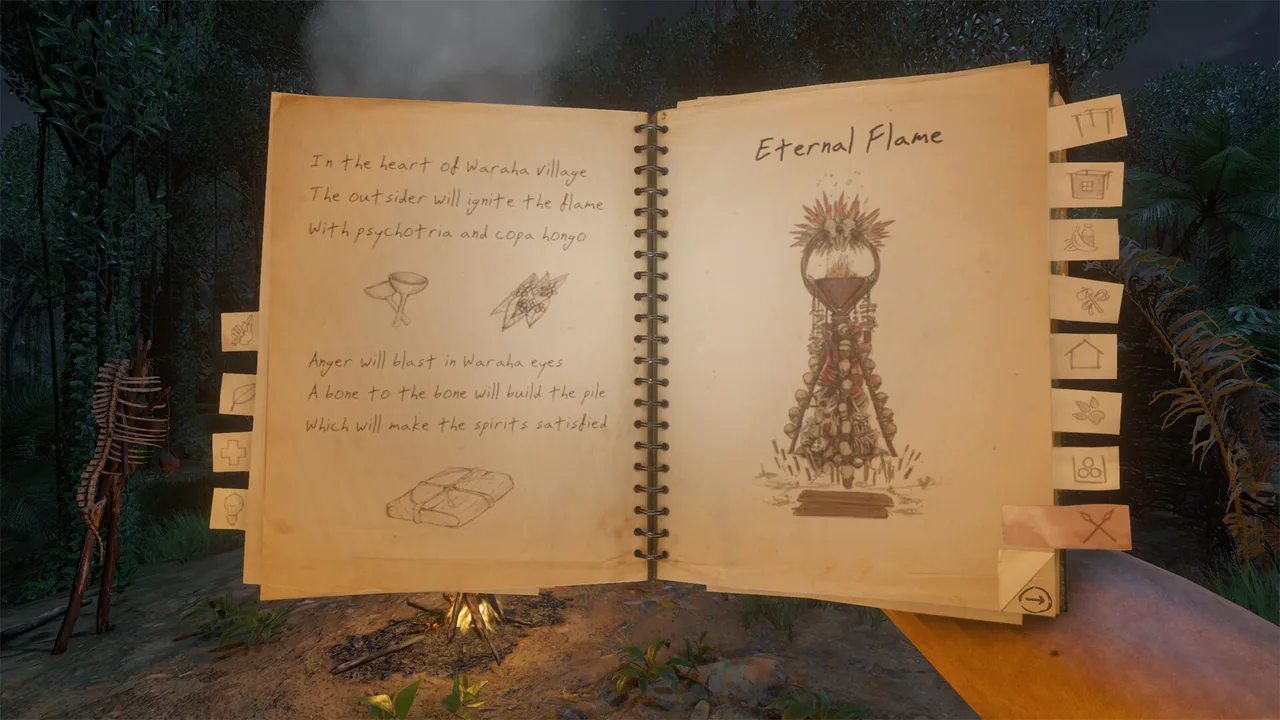
The pitch is straightforward on paper: you're dropped into the Amazon rainforest with nothing, and everything from clean water to a stone axe has to be found, built or earned through a crafting tree that never stops demanding upkeep. What separates it from the dozens of other open-world survival games chasing the same premise is how little of that loop happens through an abstracted interface. Building a fire means opening your backpack, physically laying tinder and kindling by hand, and striking a spark rather than selecting "Campfire" from a build wheel. Sewing a wound shut requires holding a needle to the injury directly. Even navigation leans diegetic — there's a hand-drawn map and compass you actually carry and consult, rather than a minimap glued to the corner of the screen. Reviewers across the game's entire run, from Early Access notes in 2018 through reviews posted this year, converge on the same praise almost word for word: the crafting and interaction design is "excellent and cohesive," in the words of one recent review, precisely because so little of it feels like UI at all.
That commitment pays off hardest in the opening hours, and Steam's own achievement data backs that up plainly. Building a first tool sits at 82.2% of all owners, starting a fire at 69.8%, securing safe drinking water at 68.8% — genuinely high completion rates for a survival game's early milestones, and a sign that the opening loop hooks players reliably before anything else about the game gets a chance to go wrong.
Sanity as a second health bar
Where Green Hell earns its "psychological survival simulator" tagline is the sanity system running underneath the physical one. Nearly every decision touches it: eating something genuinely unpleasant like raw larvae or spiders keeps you fed while draining sanity, isolation and darkness erode it passively, and letting it fall too far brings on whispers, screams and hallucinated threats that aren't just atmosphere — a hallucinated attacker can deal real damage, and a player who mistakes a phantom for a genuine threat, or fails to recognise a genuine threat as one, can die from either mistake. It's a legitimately clever way to make a mental-health mechanic mechanically load-bearing rather than decorative, on par with the sanity meter Don't Starve Together built its own tone around, and it's arguably the most distinctive single system in the game. Ayahuasca sequences and ritual-adjacent content built around sanity recovery sit further down the achievement curve — only 30.1% of owners have triggered one — which suggests a meaningful share of players never push deep enough into the sanity system to see what it's really capable of.
The story mode's Yabahuaca problem
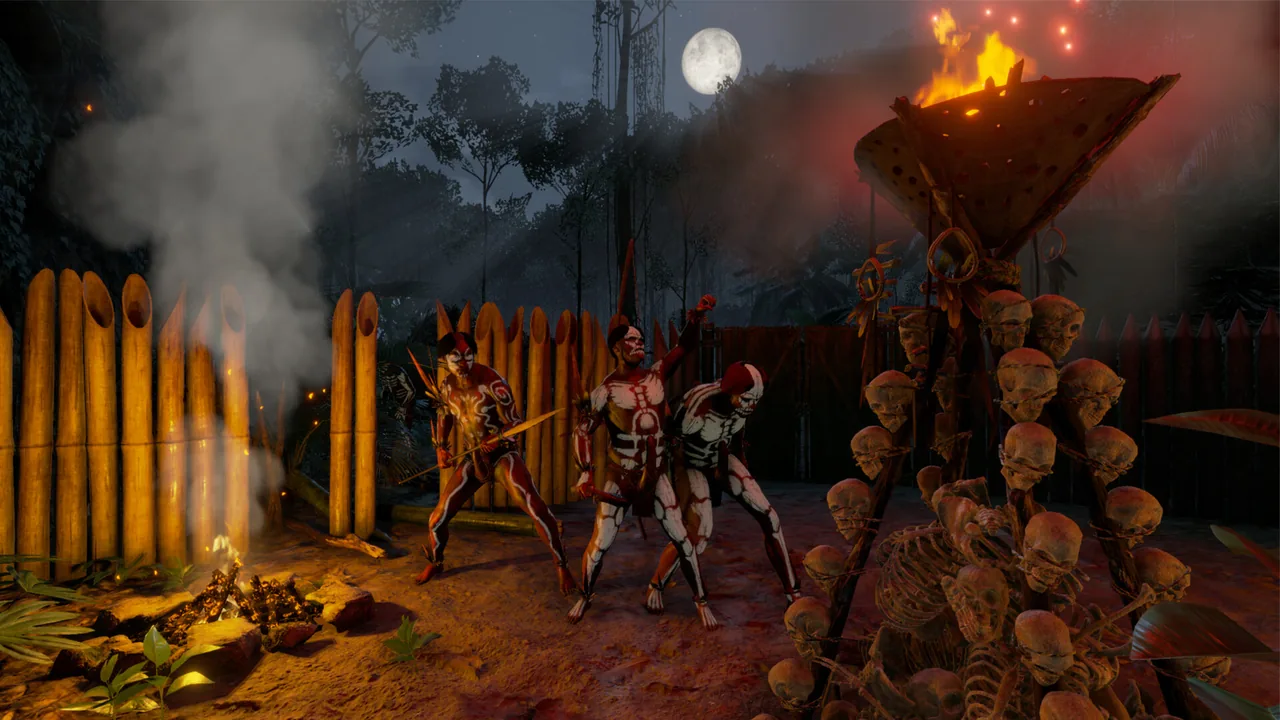
Survival Mode is the sandbox described above, played with no scripted objectives. Story Mode wraps the same systems around a plot: Jake Higgins, a scientist searching for his missing father-in-law, makes contact with a fictional indigenous tribe called the Yabahuaca. It's here that the review consensus splits sharply from the near-universal praise for the crafting systems. Gamecritics' review scored the game 6 out of 10 specifically because of how the narrative handles that contact — the scientist protagonists dismissing tribal practices as "barbaric" and the tribe itself as "simple," despite their supposed expertise, and the tribe's only real function in the plot being either a killable, cannibalisable threat in the open world or a mute, accusatory backdrop in the game's "bad" ending. The review's phrase for it is blunt: the Yabahuaca are treated as props in a white-savior narrative, not people. That's a specific, substantiated criticism rather than a vague complaint, and it's not the only outlet to note the story leaning on tropes familiar from films like Cannibal Holocaust and The Green Inferno. A separate review called the same content merely "predictable" and "heavy-handed" rather than actively harmful, which suggests reactions genuinely vary — but the specific criticism is detailed and credible enough that it belongs in any honest account of what buying this game gets you, not just a footnote.
Practically, this doesn't affect Survival Mode at all, where the same tribe exists as a combat and stealth threat with no narrative framing attached. Anyone put off by the Story Mode content above can play the entire game without touching it.
One year of Early Access hiding behind a single date
The Steam page lists 5 September 2019 as Green Hell's release date, and it's accurate for the 1.0 launch, but Creepy Jar put the game into Early Access a full year earlier, on 29 August 2018, with roughly half the finished map, five of the eventual creature roster and a playable Story Mode preview already in. A year is a modest hidden gap by survival-genre standards — nothing like the five-plus years some Early Access sandboxes carry — but it still means the "release date" most storefronts show undersells how long the core systems had already been shaped by public feedback before 1.0 shipped.
Where the bugs live
The single most consistent negative-review complaint, checked across a sample spanning 2019 through early 2025, isn't about difficulty — it's about tribal enemies failing to behave like enemies. Natives clipping through walls into fortified bases, spawning inert and simply standing in place, and getting stuck on terrain during chases show up in reviews from the game's first month on the market and in reviews posted six years later. That's not a launch problem that got patched out; it's a structural one that's persisted across the game's entire public life. Combat balance sits alongside it — several long-playtime negative reviews describe a bow trivialising every threat in the game once unlocked, and more than one notes that upgrading from stone to metal tools produces no meaningful durability or damage improvement, undercutting the crafting progression that's supposed to be the game's other main hook. None of this shows up as a wall of one-star reviews; Green Hell still sits at 84.7% positive across more than 100,000 reviews. But it is a specific, recurring, unresolved cost that a review focused only on the excellent early hours would miss.
Four platforms, two very different games
Green Hell's platform history is worth knowing before buying on console specifically. PlayStation 4 and Xbox One got the game on 9 June 2021, nearly two years after PC's 1.0, and Creepy Jar eventually stopped shipping major content updates to those versions — PC continued receiving substantial free updates (storage and transportation systems, base fortifications, a flamekeeper mechanic) that last-gen console owners simply didn't get. PlayStation 5 and Xbox Series X|S didn't arrive until 14 August 2024, five years after the PC release, specifically to catch console players up on that missing content; there's no cross-generation compatibility and no save transfer from the older console versions. A console review checked for this piece called the gamepad controls "awful" and "janky" by comparison to the PC version, singling out the body-inspection wheel as noticeably less precise with a controller. If the platform matters to you, PC is where this game has consistently been built and maintained first.
What the achievement curve says about how far people get
Steam's global achievement data draws a clean line through the middle of Green Hell's audience. The first tier — building a tool, starting a fire, finding safe water — sits between roughly 68% and 82% of all owners, confirming the opening survival loop reliably hooks people. A second tier, covering the full tutorial and early tribal encounters, drops to the 40s. Past that, completion falls sharply: achievements tied to deeper systems and later story beats mostly sit in single digits, and the two most demanding entries — completing the full Story Mode campaign and exploring the entire map — are each held by just 0.9% of owners. That's a steep curve even by survival-game standards, and it lines up precisely with the recurring player complaint that Story Mode's content runs out, or gets abandoned, well before the sandbox around it does.
Price and what you're actually buying
At the discounted NZ$4.64 checked for this review — an 85% markdown off the NZ$30.99 list price, active as of 3 August 2026 — Green Hell is close to disposable-income territory for what it delivers. Even at full price, the only thing on the storefront beyond the base game is a NZ$2.99 music-only soundtrack DLC, seven years after Early Access began. There's no premium currency, no battle pass, no season content gating anything behind a subscription. Whatever reservations apply to this game, none of them are about how it's monetised.
Final verdict
Green Hell earns its reputation in the same place it earns its criticism: commitment. The commitment to a diegetic, hands-on survival loop and a sanity system with genuine teeth makes the Survival Mode sandbox one of the tenser, more distinctive entries in a crowded genre, and Steam's own achievement data backs up that the opening hours land as intended for the large majority of buyers. The same studio's commitment to a scripted narrative about first contact with an uncontacted tribe produced a Story Mode that at least one detailed, credible review calls out for leaning on genuinely harmful tropes rather than avoiding them, and years of unresolved tribal-AI bugs and combat balance issues sit on top of that. A 7.0 reflects a game whose core systems are close to genre-best, held down by problems that are specific, documented and — going by review timestamps spanning six years — not going away on their own. Play it for the survival, go into the story with tempered expectations, and buy it on PC if the platform choice is yours to make.
Anyone who wants the same hands-on survival tension without the narrative baggage might prefer letting a co-op run against nature stay purely systemic, the way Valheim does with its own crafting-and-combat loop — and players who'd rather their progression kept ticking along quietly between sessions instead of demanding constant hands-on attention might find Wanderer a useful change of pace.
Pricing, review figures and achievement data checked 3 August 2026.
Pros and cons
Pros
- Nearly every system — wound inspection, backpack access, fire-building, tool repair — happens through direct interaction with your character's body and inventory rather than a menu screen, and it's the single thing every reviewer from 2019 to 2025 agrees the game gets right
- The sanity mechanic gives psychological deterioration real stakes: whispers and hallucinated threats aren't cosmetic flavour, they can trigger real damage and real deaths if ignored
- A single NZ$30.99 purchase with exactly one optional music-only DLC, seven years after Early Access began — about as uncomplicated as survival-game monetisation gets
- Steam's achievement data shows the early survival loop clearly lands: building a first tool, starting a fire and securing safe water are each held by roughly two-thirds to over 80% of owners, well above where most survival games' early milestones sit
- Co-op lets up to four players share one world, and the base map and crafting tree are dense enough to support that group for dozens of hours before repetition sets in
Cons
- Tribal enemy AI has been a persistent, recurring complaint across the entire review history — natives clipping through walls, spawning inert inside player bases, and getting stuck on terrain show up in reviews from 2019 and reviews from 2025 alike, not just at launch
- Story Mode's depiction of the fictional Yabahuaca tribe has drawn specific, credited criticism for reducing the only indigenous characters in the game to killable, cannibalisable obstacles or a voiceless backdrop to a scientist protagonist's arc
- Combat balance skews hard once a bow is unlocked, and several long-playtime reviews describe metal tools performing no better, or worse, than the stone tools they're meant to replace
- Co-op save corruption and spawn-location bugs are still being reported years apart, which is a serious problem for a mode built around several people investing hours into one shared base
- Full story completion and full-map exploration sit at 0.9% of owners each on Steam's own achievement data, backing up a recurring complaint that Story Mode's content runs out well before the sandbox around it does
Screenshots
-
Green HellImage: Creepy Jar via Steam -
Green HellImage: Creepy Jar via Steam -
Green HellImage: Creepy Jar via Steam -
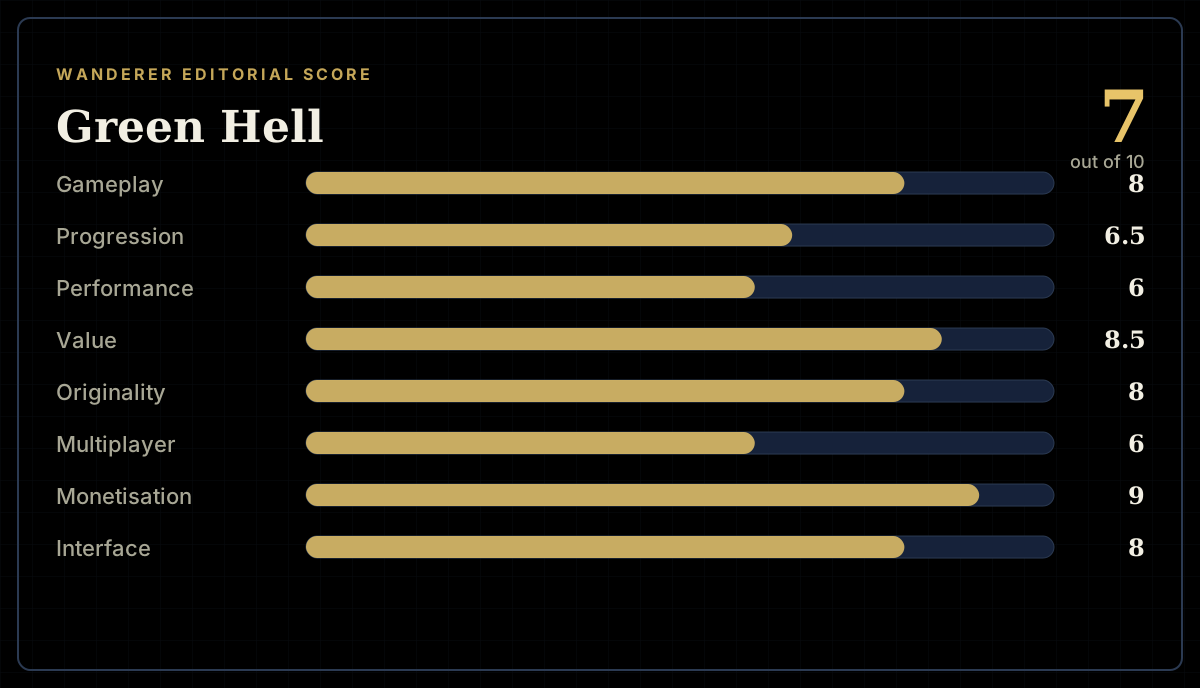
How the review scores each part of the gameWanderer Editorial -
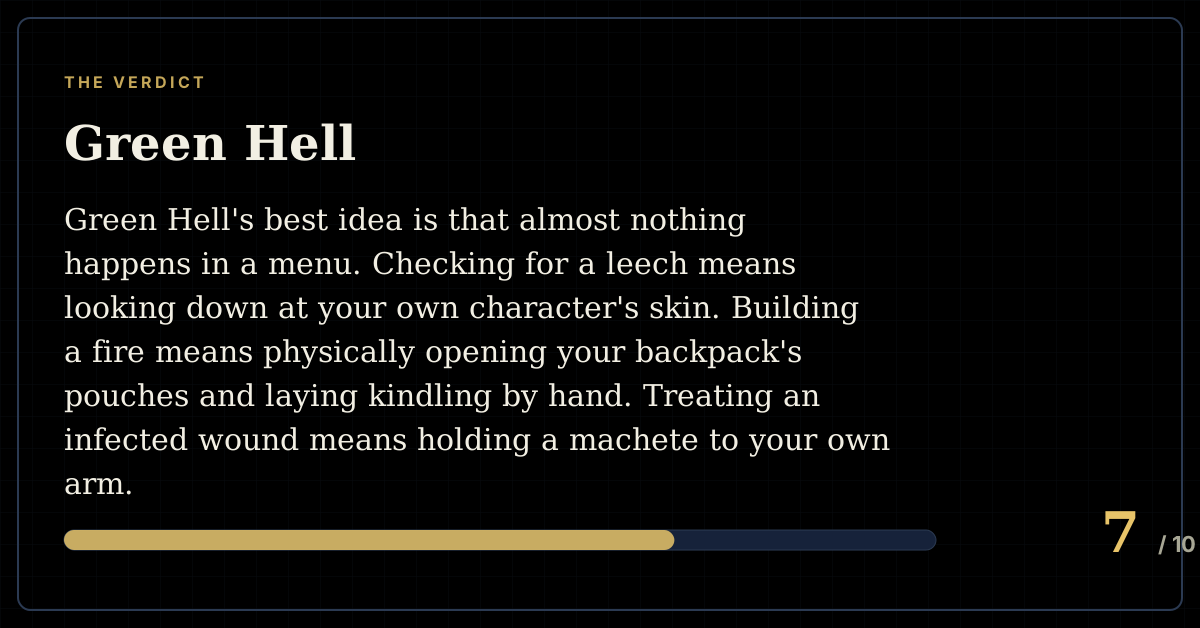
The short versionWanderer Editorial