Game review
7 Days to Die
7.5 / 10
- Developer
- The Fun Pimps
- Publisher
- The Fun Pimps Entertainment LLC
- Released
- 13 December 2013
- Platforms
- Windows, macOS, Linux, PlayStation 4, PlayStation 5, Xbox One, Xbox Series X|S
- Genre
- Survival horror crafting
- Monetisation
- One-time purchase, no premium currency, no battle pass. Add-ons are limited to cosmetic armor-skin sets and an optional soundtrack — none affect stats or progression
- Players
- Online and LAN co-op and PvP, dedicated server support, cross-platform multiplayer
The short version
7 Days to Die's horde-night structure — a scheduled, escalating siege that turns every other system in the game into preparation for it — is still one of the smartest pacing ideas in survival games, and the voxel destruction underneath it means the bases you build to survive that siege are genuine engineering problems, not just prop placement. What holds it back from ranking with the best of them is everything The Fun Pimps didn't fix during eleven years of Early Access: dated animation, inconsistent performance, and a loot-gated progression system a large and vocal part of its own community still argues was a downgrade from what came before.
Biggest strengths
- The seven-day horde cycle gives every other system — mining, farming, gun crafting, base repair — a hard, escalating deadline to build toward, turning open-ended survival into a genuine build-and-defend rhythm.
- Structural integrity makes base design an actual engineering problem: overhang a wall too far, dig out a support pillar, or let zombies chew through the wrong block, and the game will collapse it on you rather than just deal damage.
- Random world generation and deep sandbox settings for loot abundance, zombie speed, block damage and horde size mean two playthroughs can genuinely feel like different games.
Biggest weaknesses
- Animation quality, hit reactions and lighting still look and move like an alpha build from several years ago, and it shows most during the exact multiplayer horde fights the game is built around.
- The magazine-and-schematic system locks specific workstations and recipes behind repeated RNG drops of a named item, and a large share of the community experienced that as a grind wall replacing a skill curve, not a refinement of one.
- Quest variety flattens out fast — fetch, clear, fetch-and-clear and infested-clear cover almost everything the trader offers well before the midgame ends.
Who it's for: Players who want base building with actual structural stakes and a survival game that gives them a hard deadline instead of an open-ended checklist. Less suited to anyone who wants a game that looks and moves like it was built this decade, or who wants their skill progression to feel earned rather than found.
Our recommendation: Worth buying for the horde-night loop and the destruction system alone, especially with a group of three or four. Go in expecting jank, and read up on the current magazine-and-schematic progression system before committing to a long-term world, since it's the single most divisive thing about the game right now.
7.5 / 10
7 Days to Die does not hide its structure. Mining, farming, cooking, gun crafting and base repair all exist to answer one recurring question: what happens when the horde arrives on day seven, and again on day fourteen, and again — worse — on day twenty-one. The Fun Pimps has been refining that single idea since it entered Steam Early Access in December 2013, and after nearly eleven years the game finally reached version 1.0 in July 2024, launching on Windows alongside a new PlayStation 5 and Xbox Series X|S release on the same day. What ships now is a genuinely inventive survival game built around a countdown clock, running underneath presentation that still looks and moves like the alpha it spent most of a decade being.
The clock is the game
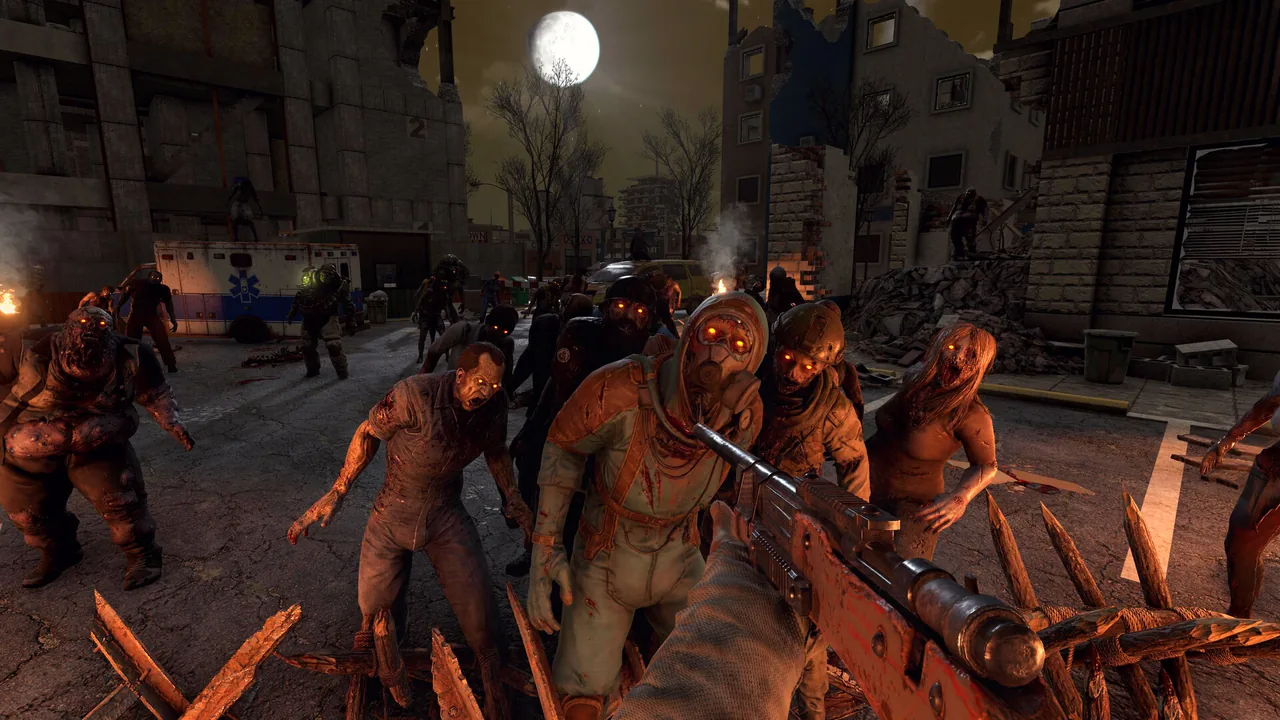
Most survival games let you set your own pace. 7 Days to Die refuses. Every seventh in-game day — the number is configurable but the default is the game's whole identity — a horde of zombies converges on wherever you're sleeping, and it doesn't stop until dawn. The horde scales with how far you've progressed, so the fight on day 7 is a trickle you can kite around a fire, and the fight on day 28 is a wall of speed-buffed specials that will find the one gap in your wall you forgot about.
That clock is the smartest thing about the design, because it converts an otherwise open-ended survival sandbox into a build-and-defend rhythm with real stakes attached to a schedule. You don't mine iron because a checklist told you to; you mine it because the base needs reinforced spikes by Tuesday. Loot runs, trader relationships and skill choices all get pulled into orbit around that one recurring appointment. It's a structure a lot of open-world survival games would benefit from stealing outright, and it's the reason 7 Days to Die still reads as distinctive against a genre that has gotten crowded since 2013.
Digging is a tactical decision
The horde loop only works because the world underneath it is fully destructible voxel terrain, and that's the game's second big idea: bases aren't decoration, they're structural engineering. Every block carries weight and support, calculated outward from the ground and from anything anchored to it. Cantilever a wall too far, tunnel out the wrong support pillar, or let a horde chew through a load-bearing corner for long enough, and the game will physically collapse the structure on top of whoever's standing in it — you included.
That system rewards the kind of paranoid, iterative base design that horde-night specifically demands: kill funnels with reinforced doorways, elevated platforms zombies have to path around, retractable bridges, moats dug straight into the terrain. It also means the "best" base in 7 Days to Die isn't a fixed template you copy from a wiki, it's whatever survives contact with this particular horde, on this particular night, with this particular set of upgrades unlocked. Few survival games make building feel like it has actual consequences attached rather than just aesthetics; this is one of the ones that does it well.
A decade in Early Access, and the fight over what it replaced
Eleven years is a long time for anything to stay in a "testing" label, and 7 Days to Die spent almost all of that time rewriting its own systems rather than simply adding to them. Version 1.0, which shipped in July 2024, brought an overhauled tiered armor system, new character customisation, more zombie variants, redesigned vehicles and animals, an improved random world generator and a general performance and graphics pass — a genuine full-release feature list, not a relabelling of whatever alpha happened to be current.
The most contested change didn't arrive with 1.0, though — it's the progression system that replaced the game's older "learn by doing" skills with one built around finding and reading magazines and schematics, gating specific recipes, workstations and perks behind repeatedly finding the right named item. It's a system some players genuinely enjoy, because it ties character growth directly to the game's core activity of exploring points of interest. But a meaningful and durable slice of the community treats it as the moment the game traded a skill curve for a loot gate: recent user reviews describe having to "find multiple of the same magazine just to get a workstation" and being "hard locked into" exploring instead of choosing to, with some reviewers recommending older alpha builds specifically because the loot-based unlock structure hadn't replaced the earlier system yet. That's not a fringe complaint pattern — it shows up consistently enough in current negative reviews to be the single most common structural criticism of the game as it exists today, separate from bugs or performance. Whether it lands for you personally depends on whether you'd rather earn a recipe through play or find it through exploration; the game has picked exploration, decisively, and isn't likely to walk it back this late.
Where the trail runs out
Set the horde loop and the destruction system aside, and 7 Days to Die's weaker seams show. Combat animations, hit reactions and lighting still carry the rough edges of a much older alpha build — functional, occasionally satisfying in a blunt way, but visibly behind newer survival releases in how characters and zombies actually move. Performance is inconsistent, particularly in multiplayer, where lag and frame drops show up disproportionately often in recent player feedback for a game this far removed from its original release.
The content built around exploration has the same fatigue problem the progression system creates pressure toward. Trader quests settle quickly into four repeating shapes — fetch, clear, fetch-and- clear, and infested-clear — and by the time quest tiers get difficult, infested-clear is often the only option left on the board. Points of interest reuse a limited pool of building templates often enough that, a dozen or so towns in, walking into a new one stops feeling like discovery and starts feeling like recognising the layout. None of this breaks the game, but it means the parts of 7 Days to Die that aren't the horde loop or the destruction system are doing noticeably less to earn your time.
Two console launches, a decade apart
The console story here is genuinely complicated, and worth being precise about. 7 Days to Die first reached PlayStation 4 and Xbox One in 2016 through Telltale Publishing, a version built and supported separately from the PC build. That release stalled — its last patch landed in December 2017 — and it was effectively abandoned years before 1.0 existed, leaving early console buyers on a frozen, outdated build. A new PS5 and Xbox Series X|S version, built by an external porting studio The Fun Pimps brought on, launched alongside 1.0 in July 2024, running the current codebase rather than a legacy fork. It's a clean break from the earlier release rather than a continuation of it, so anyone weighing a console purchase should treat "the current console version" and "the 2016 console version" as two different products with no shared history, not one game that's been steadily maintained across a decade.
Built for a squad
Multiplayer is arguably the format the horde-night structure was designed for. Co-op supports both online and LAN play with dedicated server hosting, and splitting responsibilities across a group — one player running loot routes, another holding down base construction, everyone converging for the siege — is where the design clicks hardest. A solo horde night is a tense, winnable puzzle; a squad horde night is closer to the tower-defense pitch the store page leads with, with actual roles and actual coordination required. The trade-off is that multiplayer also inherits the performance issues most sharply, and base design decisions that work fine solo can fall apart once four players and their combined structural load are all standing on the same platform at once.
What 1.0 actually costs
The base game sits at NZ$64.49, a one-time purchase with no subscription and no premium currency anywhere in it — a genuinely clean monetisation model for a game this size. The add-on catalogue is built entirely around cosmetics: a run of purely visual armor-skin sets, individually priced in the NZ$13–19 range, plus an optional soundtrack. None of it touches stats, progression or the loot tables that drive the magazine system, so there's no pay-to-progress angle to weigh against the base experience — what you buy on day one is the whole game.
Verdict
7 Days to Die earns its reputation on the strength of two ideas: a horde-night clock that gives structure to everything else, and a destruction system that makes the bases you build to survive that clock into real engineering problems. Both are still genuinely excellent, and neither has a clean equivalent anywhere else in the genre. But eleven years in Early Access left visible scars — dated animation and lighting, inconsistent multiplayer performance, repetitive quest and point-of- interest design, and a progression rework that swapped a skill curve for a loot gate in a way a large part of the existing community still hasn't made peace with. None of that erases what the core loop does right; it just means 1.0 arrived as a genuinely good, occasionally janky game rather than the polished landmark a decade of development might have promised. Players who want base building with real stakes and a survival game that hands them a deadline instead of an open checklist should buy it, ideally with three friends. Readers who compare it against Project Zomboid will find almost the opposite design philosophy — Zomboid earns progression through slow, deliberate skill practice and punishes autopilot with permadeath, where 7 Days to Die earns it through exploration and punishes complacency with a scheduled siege. Both are long-running Early Access survival games that reward patience; they just reward completely different kinds of it. Players who'd rather build and defend against nature than zombies, on a gentler difficulty curve, may prefer Valheim instead.
Pros and cons
Pros
- The seven-day horde cycle gives every other system — mining, farming, gun crafting, base repair — a hard, escalating deadline to build toward, turning open-ended survival into a genuine build-and-defend rhythm.
- Structural integrity makes base design an actual engineering problem: overhang a wall too far, dig out a support pillar, or let zombies chew through the wrong block, and the game will collapse it on you rather than just deal damage.
- Random world generation and deep sandbox settings for loot abundance, zombie speed, block damage and horde size mean two playthroughs can genuinely feel like different games.
- Co-op is where the design is strongest — splitting scavenging runs, construction and horde-night lanes across a squad is the intended way to play, not an afterthought bolted on later.
- A single upfront purchase with cosmetic-only DLC and no premium currency, in a genre where plenty of competitors nickel-and-dime survival mechanics directly.
Cons
- Animation quality, hit reactions and lighting still look and move like an alpha build from several years ago, and it shows most during the exact multiplayer horde fights the game is built around.
- The magazine-and-schematic system locks specific workstations and recipes behind repeated RNG drops of a named item, and a large share of the community experienced that as a grind wall replacing a skill curve, not a refinement of one.
- Quest variety flattens out fast — fetch, clear, fetch-and-clear and infested-clear cover almost everything the trader offers well before the midgame ends.
- Points of interest reuse the same handful of building templates often enough that exploring new towns stops feeling like discovery long before the map is exhausted.
- The original PS4/Xbox One console release was abandoned in 2017 after its last patch, and the new PS5/Xbox Series version launched alongside 1.0 in 2024 shares none of that earlier release's saves, progress or player base.
Screenshots
-
7 Days to DieImage: The Fun Pimps Entertainment LLC via Steam -
7 Days to DieImage: The Fun Pimps Entertainment LLC via Steam -
7 Days to DieImage: The Fun Pimps Entertainment LLC via Steam -
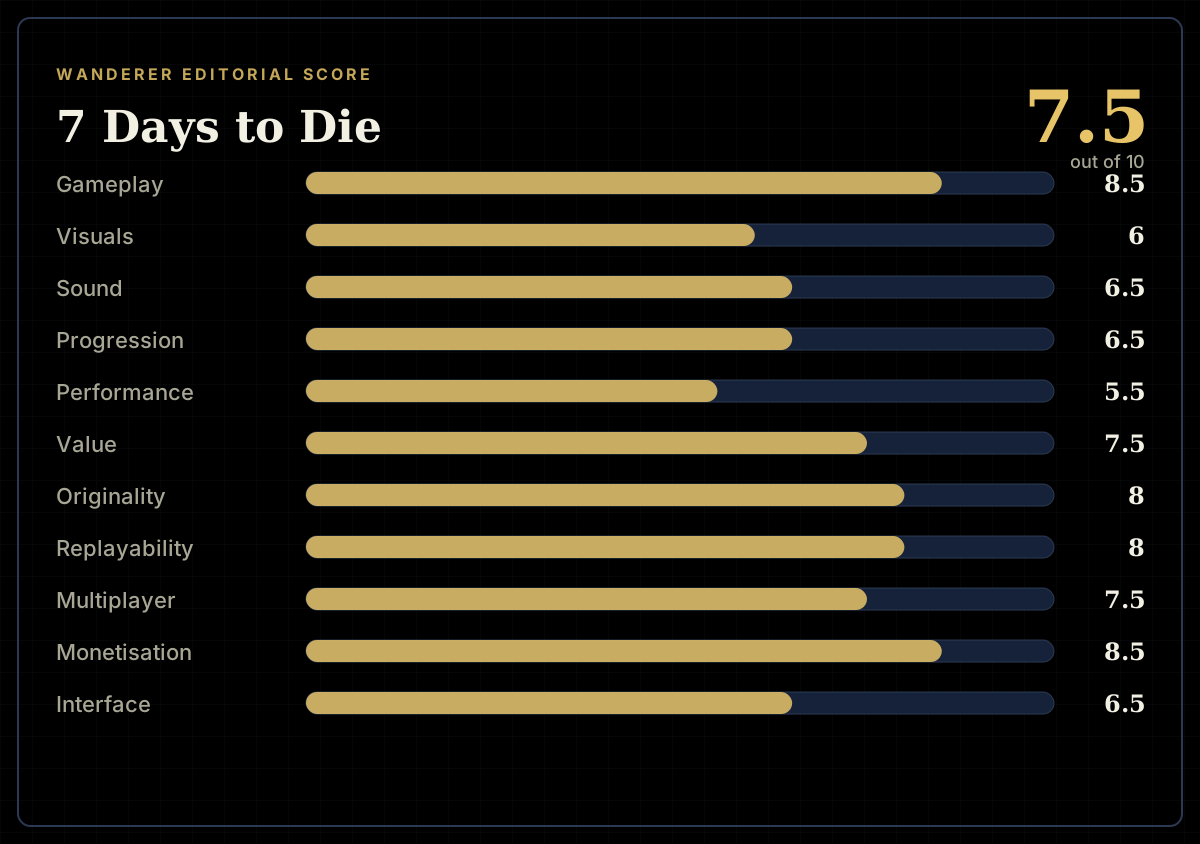
How the review scores each part of the gameWanderer Editorial -
The short versionWanderer Editorial