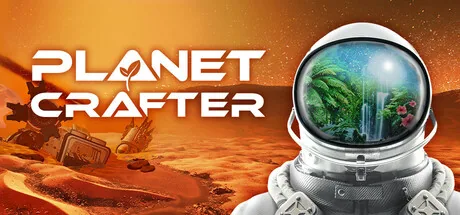
Game review
The Planet Crafter
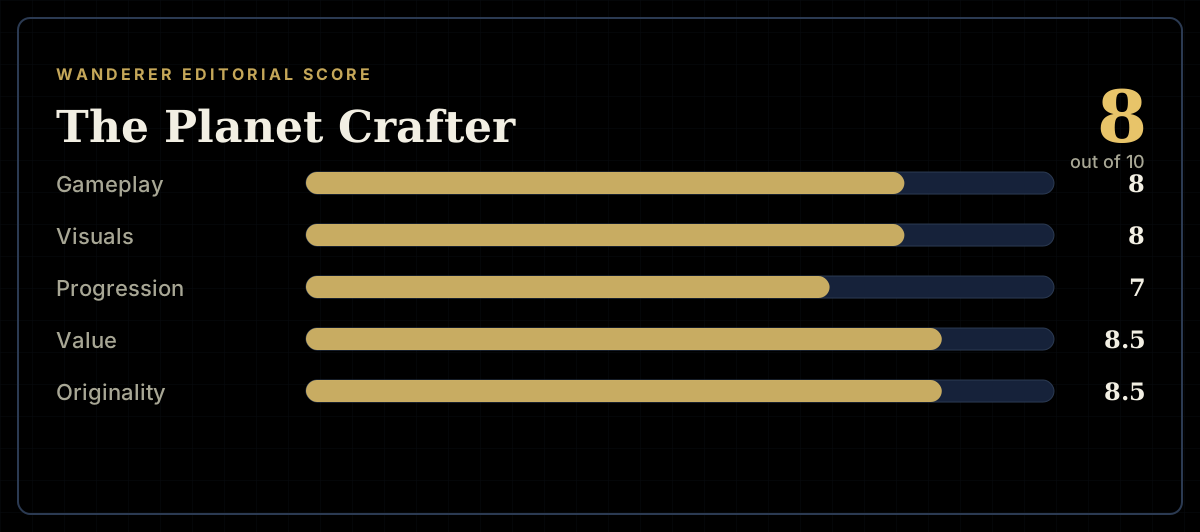
8 / 10
- Developer
- Miju Games
- Publisher
- Miju Games
- Released
- 10 April 2024
- Platforms
- Windows
- Genre
- Survival Crafting
- Monetisation
- One-time purchase at NZ$35.99. No microtransactions, no DLC.
- Players
- Online co-op supported
The short version
The Planet Crafter drops you on a dead, toxic world and asks you to terraform it into a breathable, thriving planet through visible, measurable progress — rising oxygen levels, growing vegetation, a literal ocean forming over time. Overwhelmingly Positive at 96% across 72,568 reviews, it's one of the more beloved recent entries in the survival-crafting genre, and its reception has held remarkably steady since Early Access.
The honest, considered dissent is consistent rather than scattered: a real minority of reviewers describe the game as addictive without being especially fun, arguing the resource-gathering loop lacks meaningful danger or friction compared to genre touchstones like Subnautica. "Just because a game is addictive doesn't mean you're having fun," reads one widely-upvoted review — a specific, fair criticism from players who still put real hours in before writing it.
Biggest strengths
- A genuinely satisfying, visible terraforming loop where your progress physically reshapes the world around you
- Strong co-op support that multiple reviewers credit for keeping long sessions engaging
- Praised for being approachable across a wide range of players, including reviewers explicitly noting the game's appeal to older or less traditionally "gamer" audiences
Biggest weaknesses
- A consistent, considered criticism across every year of reviews: the core loop is described as addictive rather than genuinely fun, built on repetitive resource-gathering with limited real danger or friction
- Reviewers who came in expecting Subnautica-level tension describe the lack of threats or predators as a missing layer that would otherwise justify the survival framing
- Progression is described by several reviewers as repetitive and drawn out by the late game, with the core tasks not evolving much as you advance
Who it's for: Survival-crafting fans who want a visible, satisfying long-term project — watching a planet transform is the entire appeal — rather than tense, danger-driven survival mechanics. Well suited to co-op play and to players of any age looking for a relaxed, absorbing building project; less suited to anyone who wants Subnautica-level stakes and real threat.
Our recommendation: Buy it if the terraforming premise itself appeals to you — watching numbers rise and a barren map slowly turn green is a genuinely different kind of satisfaction from most survival games, and it's well executed here. Build your first base on elevated ground rather than low terrain; this is the single most-repeated piece of practical advice across the entire review corpus, warning that rising water levels from your own terraforming progress can flood a poorly-placed base.
8 / 10
Most survival games measure your progress in inventory slots and skill trees. The Planet Crafter measures it in a planet's actual atmosphere — rising oxygen percentages, a growing biomass count, water pooling into lakes where there was only toxic dust before. That premise alone explains most of why 72,568 reviewers have rated it Overwhelmingly Positive, and reading a wide, honest sample of what they wrote makes clear why the reception has held so steady since Early Access.
Watching a world change
The core loop — gather resources, craft machines that pump oxygen and heat and pressure into the atmosphere, watch the numbers climb toward habitability — draws consistently warm praise. One of the most-upvoted reviews in the game's history comes from an 81-year-old player who describes the game helping them remember routes to mines and wrecks, calling it fun to build "a barren land into a beautiful landscape." Another, with over 800 hours logged, compares the feeling to experiencing Minecraft for the first time — "a world to get lost in." That's a genuinely wide range of players finding real satisfaction in the same core mechanic, which speaks to how well Miju Games executed the central idea.
The honest complaint: addictive isn't the same as fun
Here's the criticism that recurs with real consistency across every year since Early Access, and it's worth taking seriously because it comes from players who clearly invested real time before writing it. "Just because a game is addictive doesn't mean you're having fun," reads one widely upvoted review, arguing the resource-gathering loop becomes mindless once the initial novelty wears off, without much real tension underneath it. A more detailed comparison to Subnautica — a game this one is constantly compared to — makes the specific gap clear: "there's no friction here." Where Subnautica forces you further from safety into real danger to find what you need, The Planet Crafter's reviewers describe a comparatively low-stakes gathering loop without predators or meaningful threats to create tension. A more pointed review from January 2026 calls it "a game designed to keep you busy with meaningless tasks," while conceding it can still be fun for a while.
This isn't a rejection of the core premise — several of these same reviewers explicitly credit the terraforming concept as clever — it's a specific complaint that the moment-to-moment gameplay underneath that premise doesn't carry enough weight or danger to sustain the whole experience for some players.
Reading the completion data
The achievement curve tells a story of broad, easy entry narrowing sharply toward the true endings. Early milestones — crafting your first pod, finding iridium — sit above 90%, showing nearly every buyer engages with the core systems successfully. The game's distinct endings, however, sit much lower: 12.9%, 8.9%, and 5.5% for its three named conclusions, reflecting how much longer full terraforming actually takes compared to the early, quick wins that hook most players.
8 out of 10. The Planet Crafter succeeds at a genuinely appealing, well-executed central idea — watching your own progress physically reshape a dead world — and its broad, warm reception across very different kinds of players reflects real design achievement. It's held below the top tier by an honest, consistent criticism from a real minority: the loop underneath the terraforming premise can feel more compulsive than compelling once the novelty settles, missing the friction and danger that similar survival games use to keep tension alive across a long playthrough. Build on high ground, and go in enjoying the premise for what it is rather than expecting Subnautica's stakes.
Pros and cons
Pros
- A genuinely satisfying, visible terraforming loop where your progress physically reshapes the world around you
- Strong co-op support that multiple reviewers credit for keeping long sessions engaging
- Praised for being approachable across a wide range of players, including reviewers explicitly noting the game's appeal to older or less traditionally "gamer" audiences
- A relatively gentle, low-stress survival experience compared to genre peers, which reviewers frame as a deliberate and successful design choice
- Strong value and continued free content support since its 1.0 release
Cons
- A consistent, considered criticism across every year of reviews: the core loop is described as addictive rather than genuinely fun, built on repetitive resource-gathering with limited real danger or friction
- Reviewers who came in expecting Subnautica-level tension describe the lack of threats or predators as a missing layer that would otherwise justify the survival framing
- Progression is described by several reviewers as repetitive and drawn out by the late game, with the core tasks not evolving much as you advance
- New bases built on low-lying terrain can be flooded by the player's own rising water levels — a frequently-cited early mistake that costs new players real progress
Screenshots
-
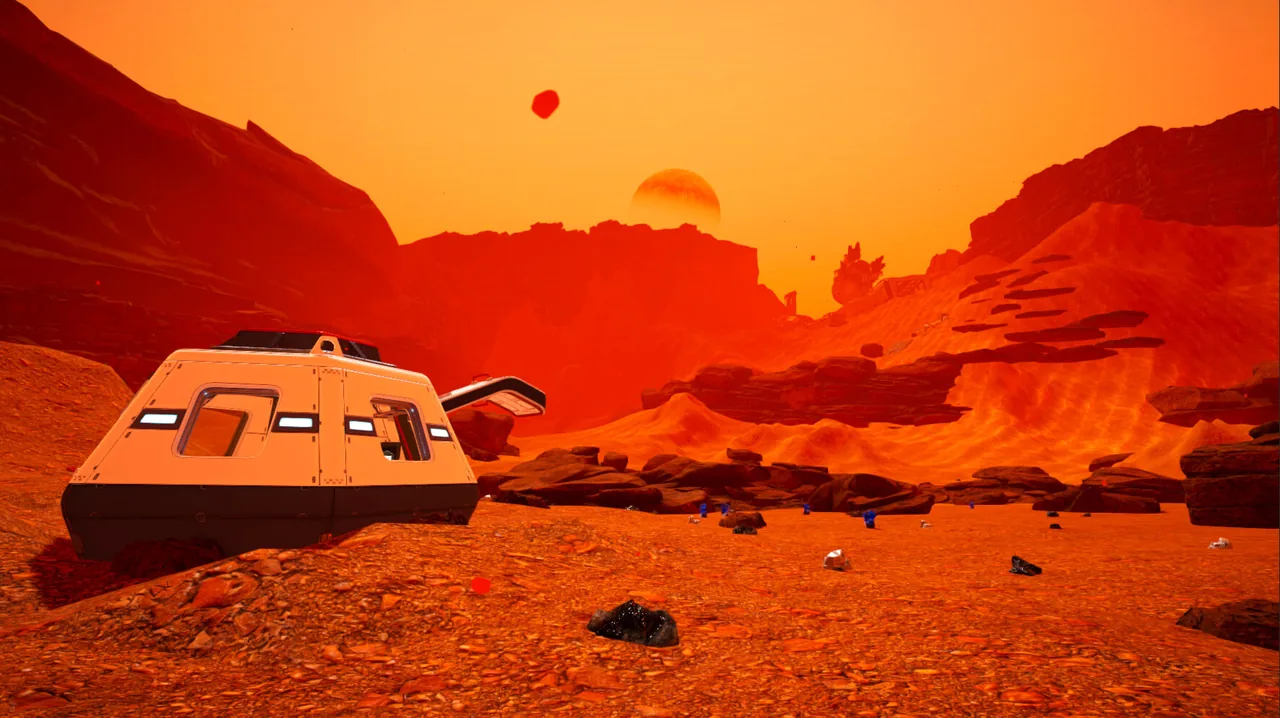
The Planet CrafterImage: Miju Games via Steam -
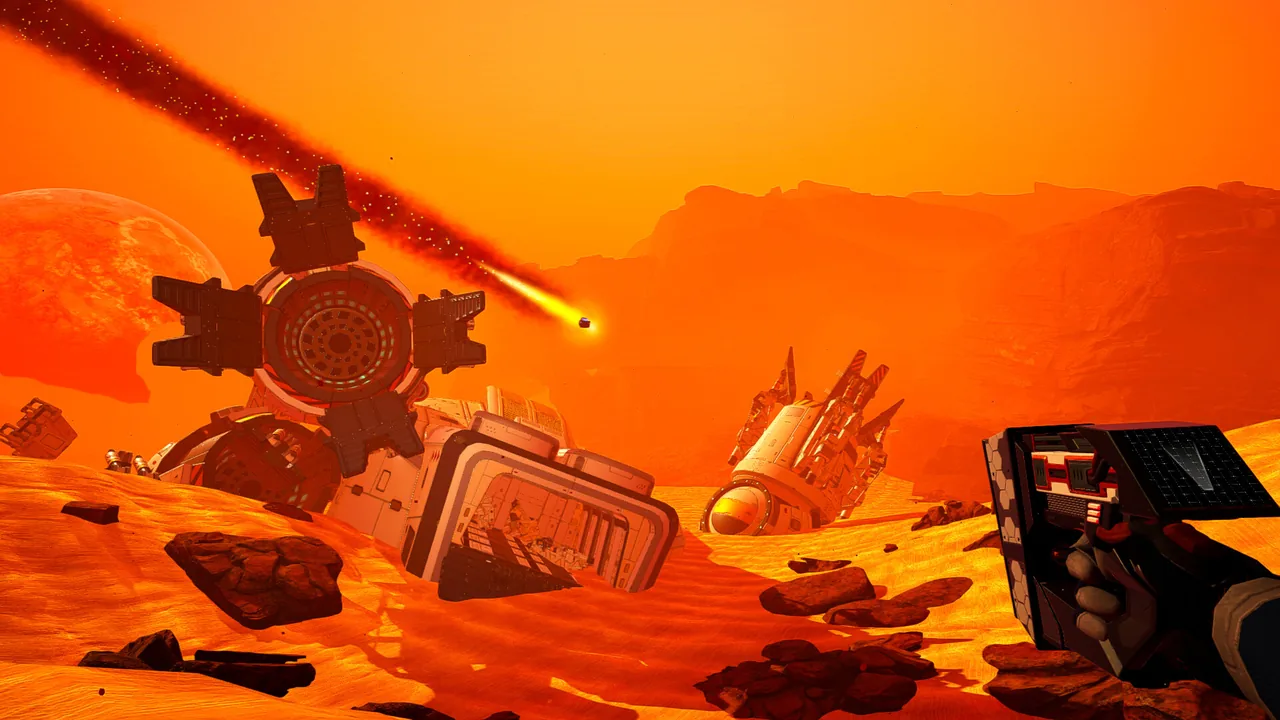
The Planet CrafterImage: Miju Games via Steam -
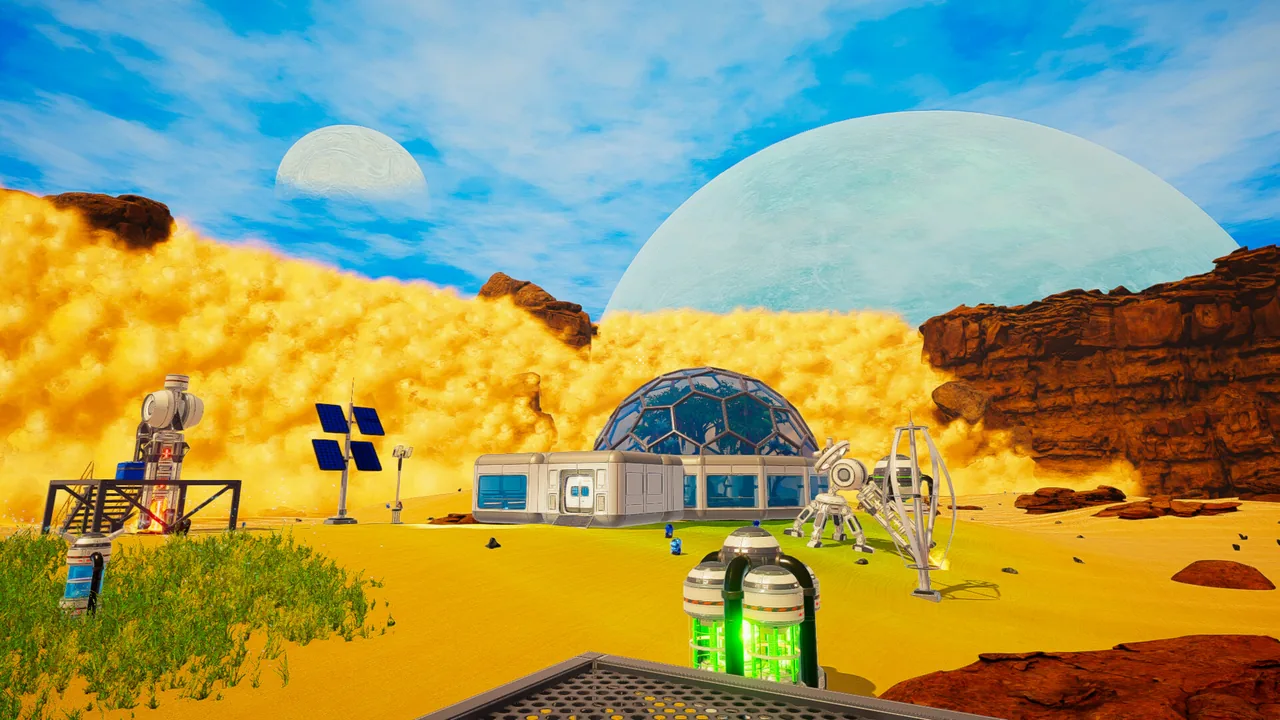
The Planet CrafterImage: Miju Games via Steam -
How the review scores each part of the gameWanderer Editorial -
The short versionWanderer Editorial