Game review
ASTRONEER
7.5 / 10
- Developer
- System Era Softworks
- Publisher
- System Era Softworks
- Released
- 6 February 2019
- Platforms
- Windows
- Genre
- Space Survival Sandbox
- Monetisation
- One-time purchase at NZ$44.99. Optional cosmetic DLC and a premium in-game currency have been added since the 2023 acquisition by Devolver Digital — reviewers flag this as a change from the game's original all-inclusive pricing.
- Players
- Online co-op, up to 8 players
The short version
ASTRONEER's core loop — molding terrain like clay, building sprawling bases across procedurally generated planets, automating resource lines with friends — is exactly as good as its Very Positive, 92%-of-138,853-reviews score suggests, and years of very high playtime reviewers confirm it holds up. This is a genuinely excellent, distinctive co-op sandbox.
It's also a game whose review corpus tells an unusually specific three-act story. Its 1.0 launch in 2019 was hit by a heavily-upvoted backlash over EULA and telemetry language that had nothing to do with the gameplay. And since a 2023 acquisition by Devolver Digital, a steady, ongoing wave of long-term fans — several with 300 to 1,000+ hours logged — have been warning newcomers specifically not to buy the cosmetic DLC or premium currency the game now sells, citing bugs and what they see as a values shift. Recent sentiment (86%) sits meaningfully below the lifetime score (92%) as a direct result.
Biggest strengths
- Terrain deformation and base building remain distinctive years after launch — nothing else in the genre handles world-shaping quite the same way
- Deep, genuine co-op appeal; reviewers routinely describe hundreds of hours built entirely around playing with friends or family
- A relaxed, creative tone that stands out in a genre often built around survival pressure
Biggest weaknesses
- A well-documented, still-recurring wave of reviews since 2023 warns specifically against buying the game's optional DLC and premium currency, citing a "strategic acquisition" by Devolver Digital as the turning point
- Persistent multiplayer bugs, including a specific rail-line desync issue reviewers say has gone unfixed for years, recur across the negative-review sample
- At least one reviewer describes an in-world DLC advertisement (a visible portal object) placed near player bases that cannot be removed without purchasing the content it promotes
Who it's for: Co-op sandbox and space-exploration fans, especially groups of friends or families looking for a relaxed, creative building game rather than a punishing survival sim. Less suited to solo players seeking deep systemic depth, or anyone who wants to buy a game once and be done with its store page.
Our recommendation: The base game is still an easy recommendation — buy it for the exploration, terrain manipulation and co-op base building, which remain genuinely special. Follow the specific, repeated advice inside the review corpus itself and skip the optional DLC and premium currency; long-term fans are explicit that the base purchase is where the value is, and that the monetisation layered on top since 2023 doesn't match the spirit of the original game.
7.5 / 10
ASTRONEER's review history reads less like one continuous verdict and more like three separate chapters, each triggered by something happening around the game rather than in it. Read in order, they tell a more useful story than the 92% headline score alone.
Chapter one: a beloved Early Access
Long before its 1.0 release, ASTRONEER built a genuinely devoted following. Reviewers from its December 2016 Early Access launch describe exactly the appeal that's kept people playing for years since — molding terrain like clay, building improbable structures up into orbit with friends, the specific joy of a co-op session that spirals from "let's check out that mountain" into hours of increasingly ambitious construction. One of the most-upvoted positive reviews in the game's history, from a player with over 1,000 hours logged, was written the day 1.0 launched specifically to recommend the game to newcomers before the bigger release. That affection is real and it's held up.
Chapter two: a launch controversy about nothing in the game itself
Then 1.0 arrived on 6 February 2019, and the two most-upvoted negative reviews in ASTRONEER's entire history — 2,973 and 841 votes, both posted within a week of launch — aren't about gameplay at all. They're about the End User License Agreement: specifically, language about monitoring software use and third-party data sharing that a large number of players found alarming enough to refuse the terms and uninstall on principle. This is a useful case study in reading a review score correctly — a genuine, widely-shared privacy objection can dominate a launch-week score without reflecting anything about whether the game itself is good, and years of subsequent reviews confirm the game underneath was never the problem.
Chapter three: an acquisition, and what came after it
The most useful chapter for anyone buying today started in 2023, when Devolver Digital acquired System Era Softworks. Reviews since then, especially through 2025, describe a specific and consistent set of changes: optional cosmetic DLC, a premium in-game currency used as an intermediary purchase layer, and — in one detailed account — an in-world advertisement object placed near player bases promoting the DLC, which the reviewer says can't be removed without buying it. These aren't complaints from players who bounced off the game early. The reviewer who names the acquisition directly has 124 hours logged and describes owning the game since 2016; another warning newcomers away from the DLC specifically has 408 hours. This is long-term community sentiment about a business-model shift, not disappointed newcomers.
The same period surfaces a genuinely separate technical complaint worth taking seriously on its own merits: a multiplayer bug involving rail-line networks disappearing for non-host players, which multiple reviewers across 2025 describe as long-standing and unresolved, in one case severe enough that a family stopped playing together over it.
Put together, this explains the gap between ASTRONEER's lifetime score (92%) and its recent English sentiment (86%) more precisely than a vague "the game got worse" would. The core game hasn't changed; what's been added around it, and a persistent bug inside it, have given a meaningful slice of its longest-tenured fans a specific, repeated reason to warn people off — not from the base purchase, but from everything System Era has added to the store page since 2023.
Where the completion data lands
The achievement curve shows a healthy, well-engaged player base. Early milestones — completing the tutorial, building a research chamber — sit between 58% and 75%, meaning most buyers genuinely get into the game rather than bouncing immediately. The rarest achievements, tied to full exploration across every world seed and 100% completion, fall to around 2.5-4.3%, a normal long tail for a sandbox this open-ended rather than a sign of mass abandonment.
7.5 out of 10. ASTRONEER's foundation — terrain manipulation, co-op base building, a genuinely relaxed and creative take on space survival — remains as good as its huge, mostly-positive review history suggests, and years of extremely high playtime confirm it. The score is held below the top tier by something specific and current rather than vague decline: a well-documented, ongoing wave of long-term fans actively warning newcomers about the DLC, premium currency and unresolved multiplayer bugs that have arrived since its 2023 acquisition. Buy the base game without hesitation. Read the room the reviews are describing before you buy anything else on its store page.
Pros and cons
Pros
- Terrain deformation and base building remain distinctive years after launch — nothing else in the genre handles world-shaping quite the same way
- Deep, genuine co-op appeal; reviewers routinely describe hundreds of hours built entirely around playing with friends or family
- A relaxed, creative tone that stands out in a genre often built around survival pressure
- Long development history shows real commitment — free content updates (including a Megatech update in 2025) have continued for years after 1.0
- Achievement data shows a healthy, wide base of engaged players well past the tutorial stage
Cons
- A well-documented, still-recurring wave of reviews since 2023 warns specifically against buying the game's optional DLC and premium currency, citing a "strategic acquisition" by Devolver Digital as the turning point
- Persistent multiplayer bugs, including a specific rail-line desync issue reviewers say has gone unfixed for years, recur across the negative-review sample
- At least one reviewer describes an in-world DLC advertisement (a visible portal object) placed near player bases that cannot be removed without purchasing the content it promotes
- The 1.0 launch in 2019 drew a large, highly-upvoted backlash over End User License Agreement and telemetry language, unrelated to the game's actual quality — worth knowing as history but not a reason to avoid the game today
- Recent English sentiment (86%) sits noticeably below the lifetime score (92%), consistent with the ongoing 2025-26 monetisation complaints rather than a blip
Screenshots
-
ASTRONEERImage: System Era Softworks via Steam -
ASTRONEERImage: System Era Softworks via Steam -
ASTRONEERImage: System Era Softworks via Steam -
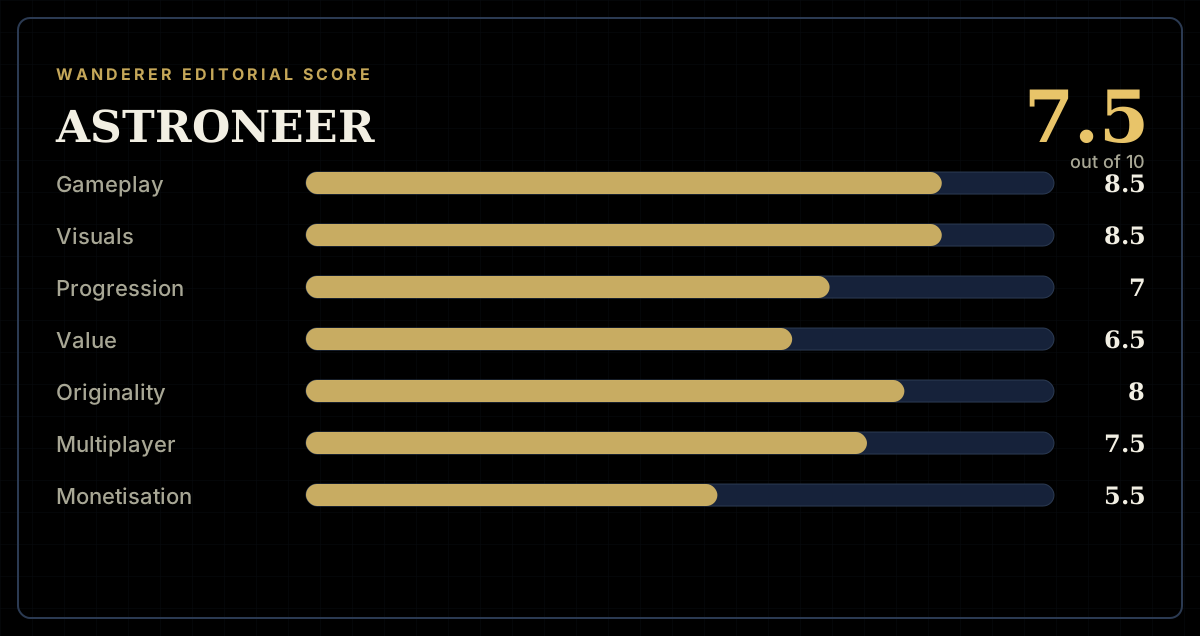
How the review scores each part of the gameWanderer Editorial -
The short versionWanderer Editorial