Game review
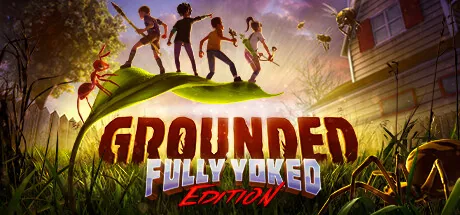
Grounded
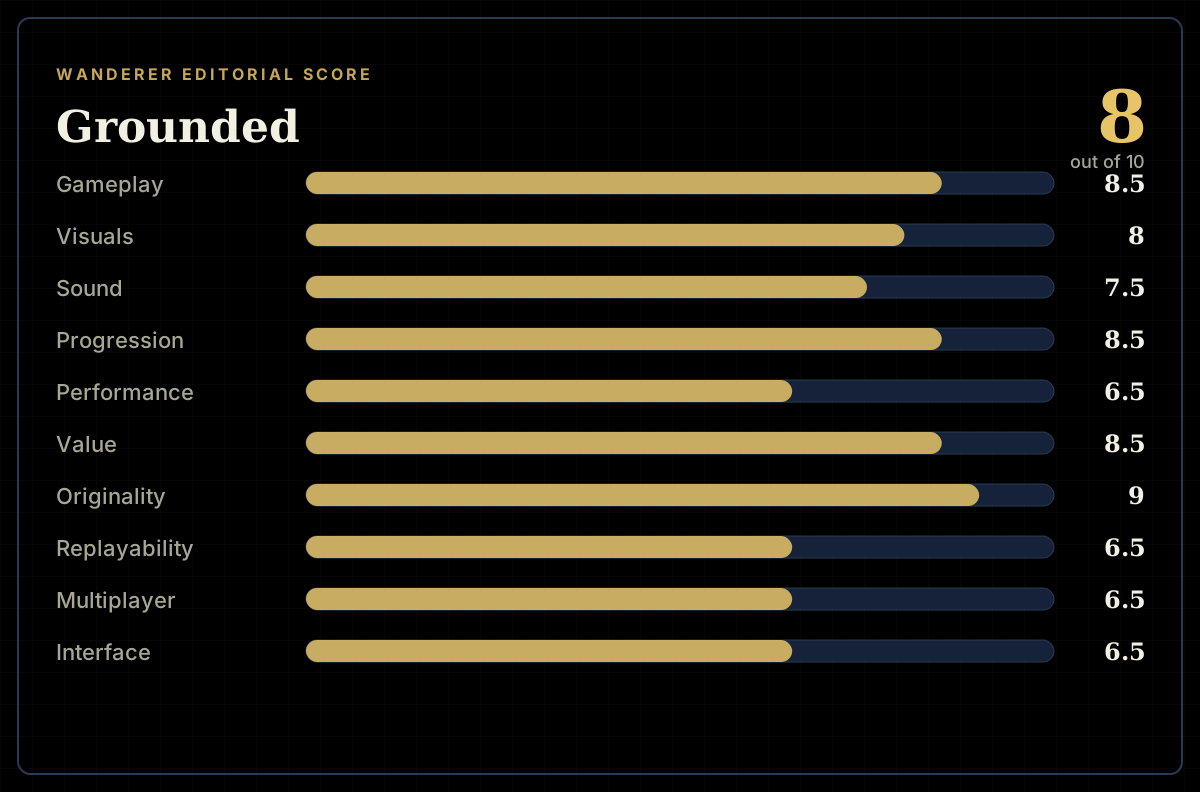
8 / 10
- Developer
- Obsidian Entertainment
- Publisher
- Xbox Game Studios
- Released
- 27 September 2022
- Platforms
- Windows, Xbox One, Xbox Series X|S, PlayStation 4, PlayStation 5, Nintendo Switch
- Genre
- Survival action
- Monetisation
- Premium, one-off purchase. No in-game currency, no microtransactions, no battle pass. The only add-on is an optional soundtrack DLC
- Players
- Online co-op for up to 4 players (you plus three friends); Shared Worlds lets a session keep running, with progress saved, even when the original host is offline
The short version
Grounded's shrink-to-ant-size premise sounds like a one-joke hook, but Obsidian actually builds the whole game out of it. A dew drop is a water source, a fallen juice box is a dungeon, an aphid is livestock and a wolf spider is a boss fight — and because every one of those objects is something you already recognise at full size, the backyard reads as a map in a way most procedural survival worlds never manage. The gathering-to-crafting ladder is unusually legible as a result, the story actually has an ending instead of trailing off into an idle sandbox, and the arachnophobia mode is a genuinely useful accessibility feature rather than a marketing line.
It isn't the smoothest ride. Co-op is the way this game is meant to be played and also where it most reliably breaks, the block-and-parry combat asks a lot of patience before it clicks, and Obsidian's support has visibly thinned since Grounded 2 entered Early Access last year. What's here, though, is still one of the most inventive survival games on the market, and the backyard hasn't stopped being worth exploring just because the sequel exists.
Biggest strengths
- Ordinary backyard objects become genuinely legible landmarks, so exploration works by memory and observation instead of a minimap
- The gathering-to-crafting ladder is unusually visible — you can see the plant, bug part or mineral a recipe needs before you go looking for it
- Arachnophobia mode meaningfully changes spider models, sounds and even their presence rather than just tinting them, and it holds up as a real accessibility option
Biggest weaknesses
- Online co-op still generates frequent host-disconnect and desync complaints years after launch, undercutting the mode the game is built around
- Block-and-parry combat is the only real defensive option against some enemies, and its tight, sometimes unclear timing windows frustrate as often as they satisfy
- Storage and inventory space stay tight well past the point where hauling resources should have stopped being a chore
Who it's for: Survival fans who want a map that rewards actually looking at it rather than reading a minimap; co-op groups of two to four who don't mind occasional connection trouble; anyone who wants a survival game with a real ending rather than an open-ended grind.
Our recommendation: Worth buying at full price, and worth checking Xbox Game Pass or PC Game Pass first if you already subscribe — this is a day-one first-party title that has stayed in the catalogue. Go in expecting the original Grounded, not Grounded 2, and expect the netcode to be the thing that occasionally lets the rest of the game down.
8 / 10
Small enough that a juice box is a landmark
Most survival games solve the "how do players navigate an open world" problem with a minimap, a compass and a scattering of procedurally placed points of interest. Grounded solves it by making you three millimetres tall and putting you in a suburban backyard you'd otherwise walk past in four seconds. That single decision does more design work than it has any right to. A fallen soda can becomes a multi-room dungeon with its own verticality. A cracked flowerpot is a landmark you can describe to a friend without either of you opening a map. The garden hose is a highway. The sandbox is a desert biome, complete with its own hostile fauna, and the pond is deep enough to need its own gear tier before it stops being a death sentence.
This matters because it solves a problem that almost every open-world survival game has: making a large map feel like a place rather than a grid of spawn tables. Because everything in Grounded's world is an object you already know at full size — a juice box, a picnic table, a garden hose — your spatial memory does the work a minimap usually has to do. You don't remember coordinates, you remember "past the fallen leaf, near the puddle under the tomato plant." That's a genuinely different kind of exploration than most of this genre offers, and it's the single best reason to play this over a more conventional procedurally generated survival map. Subnautica made a similar bet in a different direction — stripping combat out and making the environment itself the threat — and Grounded's scale trick works for the same underlying reason: when the world itself is the puzzle, exploring it stops being a chore between crafting sessions and becomes the point.
The clearest gathering ladder in the genre
Wanderer's own readers know gathering ladders intimately, and Grounded's is one of the more honestly designed examples of the form. Recipes tell you exactly what they need — clover, plant fibre, aphid parts, specific insect chitin — and because the world is built from recognisable objects, you generally know where to find the thing before you go looking for it. Need silk? There's a web nearby, and you already know that because you can see it. Need to build past tier-one tools? The recipe names the mineral shard and the bug you need it from, and both are visible landmarks rather than abstract loot-table entries.
That legibility carries into the wider progression, too. Mutations and Milk Molars — both unlocked through play rather than bought — let you specialise a build around particular resistances or combat styles without forcing a full class system on top of a survival game, and armour and weapon tiers scale cleanly with the biomes they're meant for. It's not a deep crafting web by the standards of something like Core Keeper, but what it lacks in breadth it makes up for in clarity — very few survival games make the connection between "what I need" and "where I get it" this easy to hold in your head.
Arachnophobia mode, taken seriously
It would have been easy for Obsidian to ship a single "spider colour toggle" and call it an accessibility feature. What's actually here goes further: the option adjusts spider models, their movement, and sound cues rather than just recolouring a threat that still looks and behaves like a spider. It was distinctive enough at launch to earn a nomination for Innovation in Accessibility at The Game Awards, and it remains one of the more thoughtful examples of genre-specific accessibility design — built for the specific phobia this specific game is going to trigger in a meaningful slice of its own audience, rather than a generic colourblind filter bolted on afterward. Given how central spiders are to a backyard survival game, treating this as a real design problem rather than an afterthought was the right call, and it's worth crediting on its own terms rather than as a footnote.
Combat: commitment over spam
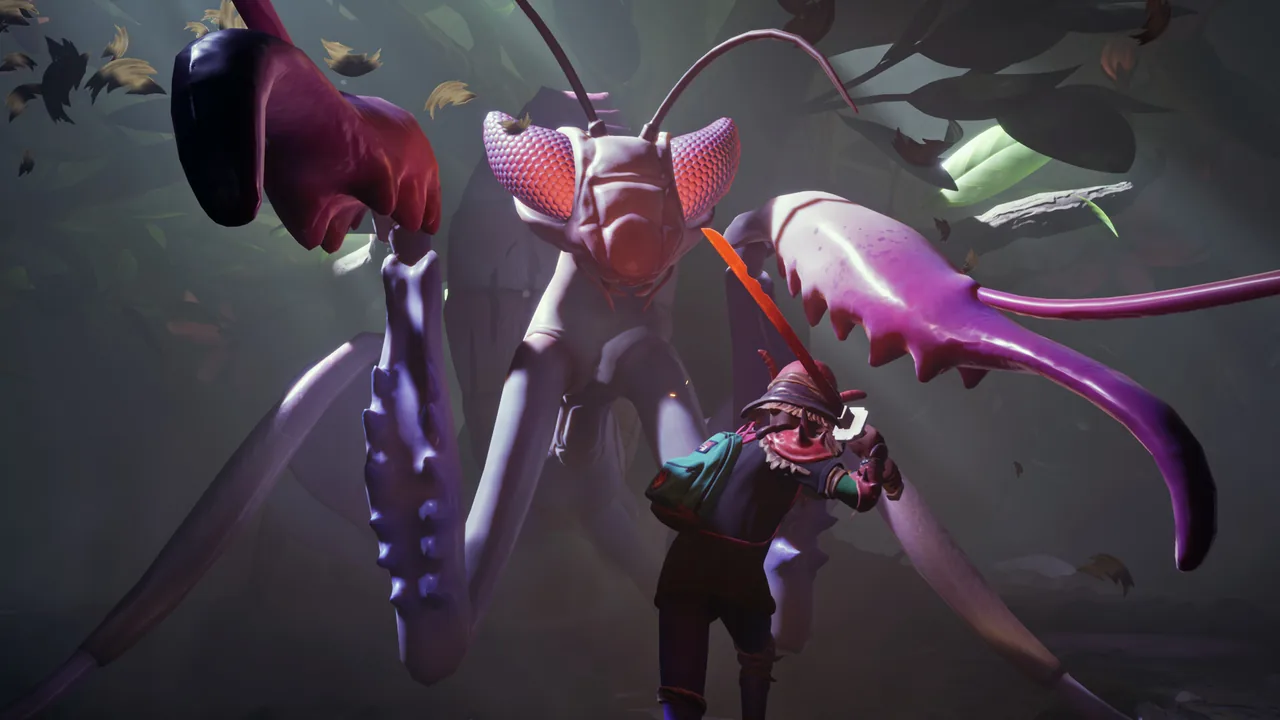
Grounded's combat asks something genuinely unusual of a survival game: stop swinging and start watching. Your main defensive option against most mid-and-late-game insects is your shield, and timing that block into a parry is often the difference between an even fight and a one-sided one. There's no dodge roll, no i-frame escape hatch — you either commit to an attack, hold your guard, or eat the hit, and several of the game's tougher enemies are built almost entirely around testing whether you've learned their specific wind-up.
That's a real design swing for the genre, and it doesn't land evenly. When it works, it gives Grounded's boss fights — the wolf spider, the broodmother, the black widow — a weight that swing-spam combat in most survival games never earns; blocking and parrying an insect three times your size feels genuinely tense in a way that stat-check combat rarely does. When it doesn't work, it's because several enemies pair unclear tells with fast, irregular attack patterns, so the line between "you misjudged the timing" and "the animation didn't telegraph what it was about to do" gets blurry, and a meaningful slice of the game's own player base has been vocal about exactly that for years. It's a combat system built on real conviction rather than a compromise, which makes it more interesting than most survival-game combat and, at its worst, more frustrating too.
Solo versus co-op — and what breaks
Grounded scales cleanly for a solo playthrough — nothing about the story or the crafting ladder assumes a group, and the pacing holds up fine alone. But it's clearly the co-op game first. Up to three friends can join a host, Shared Worlds lets everyone keep playing and saving progress even when the original host is offline, and systems like base defence and the MIX.R lures that call creatures toward (or away from) your camp are considerably more fun with someone else around to panic with.
The trouble is the network layer underneath all of it. Grounded uses a peer-to-peer connection model, and years after 1.0, disconnects, desyncs and "connection lost to host" errors remain one of the most consistently repeated complaints in current player feedback — including from groups reporting the problem on the same local network with no obvious external cause. It doesn't make co-op unplayable, and plenty of groups clear the entire story without major incident, but it's frequent enough, and long-standing enough, that it has to be weighed against the game's biggest selling point rather than dismissed as bad luck. A survival game built this deliberately around shared bases and shared risk deserves sturdier plumbing underneath it.
A story that actually ends
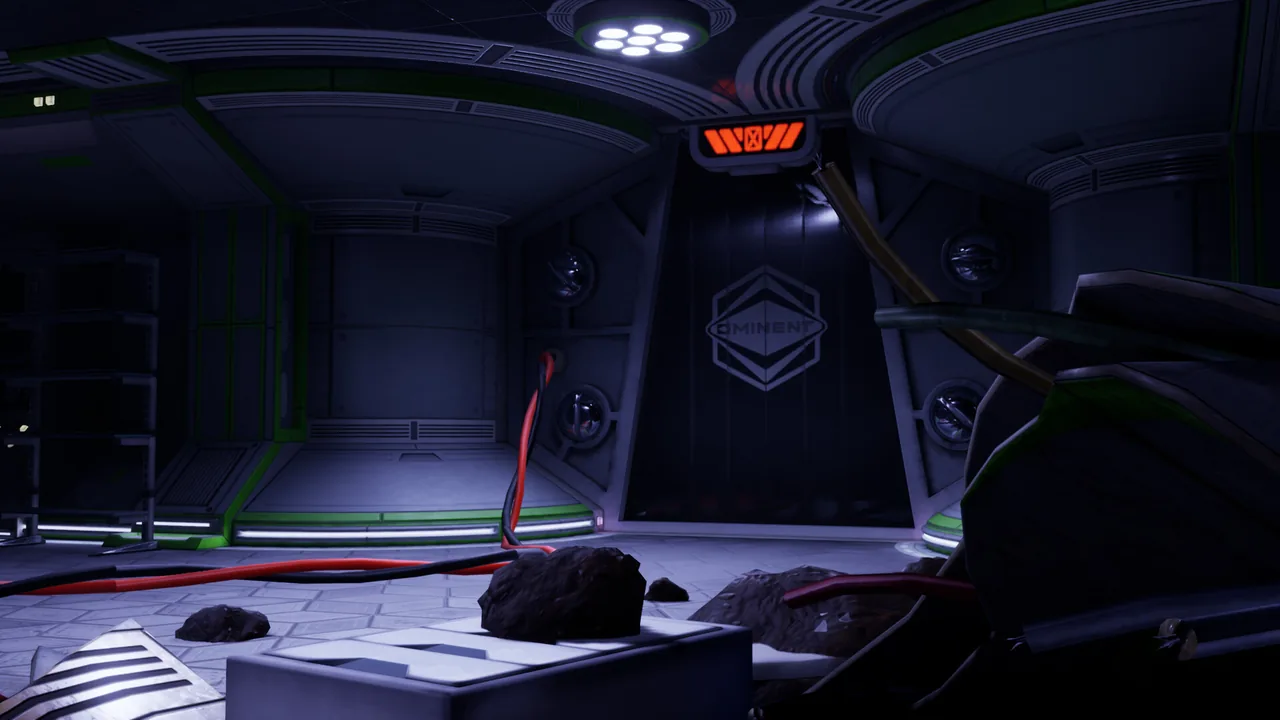
Most survival games either skip narrative entirely or bolt on a thin frame story that never really resolves — you keep playing because the crafting loop keeps going, not because the plot is heading anywhere. Grounded is a real exception. BURG.L, the semi-helpful lab AI, and the mystery of who shrank you and why carry an actual authored arc, and the game supports two distinct endings depending on choices made along the way — one where the story's antagonist gets away with taking credit for the shrinking device, and one where the player exposes what actually happened.
That's a genuine strength, and it sits more comfortably on the sandbox than you'd expect. Because the plot beats are delivered through BURG.L's lab, environmental clues and voiced characters rather than constant quest-marker hand-holding, they don't fight the exploration-driven pacing the rest of the game is built around. Where it's a little awkward is afterward: like a lot of survival games with a defined ending, Grounded doesn't have a strong answer for what to do once the credits roll beyond a post-launch New Game Plus mode that resets recipes and difficulty — a good idea, but not one that replaces the pull of genuine discovery the first playthrough offers.
The current state, honestly
Grounded reached 1.0 in September 2022 and kept receiving numbered content patches for a couple of years afterward — the most recent substantial one, Patch 1.4.7, landed in April 2025, followed by a hotfix the following month. Since then, Obsidian's public attention has visibly shifted: Grounded 2 entered Early Access in July 2025, a combined Grounded Series Bundle covering both games followed that December, and updates for the sequel have occasionally posted to the original game's own Steam news feed — enough to draw complaints from players who don't own Grounded 2 and don't appreciate seeing its patch notes on the wrong page. Reports in July 2026 of a workforce reduction at Obsidian Entertainment add a further note of caution about how much active support the original game can expect going forward, on top of what was already a slowdown.
None of that makes Grounded abandoned — it's still sold, still patched for critical issues, still listed on Xbox Game Pass, and the Steam user-review score has stayed at "Very Positive" (roughly 90% positive across some 95,000 reviews) through all of it. But anyone buying today should understand they're buying a game whose creative attention has moved to its sequel, not a title still receiving the kind of regular content drops it got in its first two years.
Value
At NZ$59.95 with no DLC beyond an optional soundtrack, Grounded is priced like the substantial, story-complete survival game it is rather than a live-service platform with a content roadmap attached — there's no premium currency, no battle pass and nothing gated behind a second purchase. It's also a day-one, first-party Xbox Game Studios release that has remained in the Xbox Game Pass and PC Game Pass catalogues since launch, which makes it one of the easier survival games on this site to try before committing money to it. Set against Enshrouded or Palworld, both of which lean harder into open-ended systems and ongoing content cadence, Grounded is the more finite, more narratively complete purchase — you're buying a story with an ending, not a platform that keeps growing under you.
Where it comes apart
Base building looks great in the first ten hours and gets genuinely uncomfortable in the last ten. Storage capacity doesn't scale well with how much the game asks you to haul back from increasingly distant biomes, and a base that's grown large enough to house a full crafting suite for a group of four starts to show its seams — more to manage, more to lose track of, and by several player accounts, a rougher performance profile once a base gets large and busy in multiplayer. Combine that with a combat system that leans hard on memorising specific enemy patterns, and the back half of a playthrough increasingly feels like execution of things you already learned rather than discovery of new ones. That's a common problem for open-world survival games generally, but Grounded's small, tightly authored map makes it land sooner than it does in bigger, more sprawling alternatives — there's simply less new backyard left once you've explored the parts that matter.
Verdict
Grounded earns its premise. Shrinking the player down doesn't just reskin a familiar survival loop with insect textures — it restructures exploration, resource gathering and even boss design around genuine scale, and the arachnophobia mode and authored two-ending story both show a level of craft this genre doesn't always bother with. What keeps it from ranking alongside the best of this site's survival library is more mundane: co-op's network layer remains unreliable years after launch, the block-and-parry combat is more demanding than rewarding for a meaningful chunk of players, and Obsidian's attention has clearly moved toward Grounded 2. None of that erases what's here. It's a genuinely inventive, mostly complete survival game with a real ending, and at its current price — or for free if you already subscribe to Game Pass — it's still one of the more distinctive entries in the genre. Just go in knowing it's the original, not the sequel, and that the backyard you're exploring is the one Obsidian isn't actively adding to any more.
Players who like the idea of a world that rewards paying attention to its geography, without the netcode risk, might also enjoy how Wanderer paces its own exploration and progression.
Pros and cons
Pros
- Ordinary backyard objects become genuinely legible landmarks, so exploration works by memory and observation instead of a minimap
- The gathering-to-crafting ladder is unusually visible — you can see the plant, bug part or mineral a recipe needs before you go looking for it
- Arachnophobia mode meaningfully changes spider models, sounds and even their presence rather than just tinting them, and it holds up as a real accessibility option
- The story has an authored ending with two distinct outcomes, a rarity in a genre that usually just stops
- MIX.R devices and base-raid mechanics turn creature aggression into something you can provoke and manage rather than a random ambient threat
Cons
- Online co-op still generates frequent host-disconnect and desync complaints years after launch, undercutting the mode the game is built around
- Block-and-parry combat is the only real defensive option against some enemies, and its tight, sometimes unclear timing windows frustrate as often as they satisfy
- Storage and inventory space stay tight well past the point where hauling resources should have stopped being a chore
- Once the map's biomes and creature routines are learned, resource runs repeat with little new to discover
- Substantive content patches for the original game slowed sharply after Grounded 2 entered Early Access in mid-2025
Screenshots
-
GroundedImage: Xbox Game Studios via Steam -
GroundedImage: Xbox Game Studios via Steam -
GroundedImage: Xbox Game Studios via Steam -
How the review scores each part of the gameWanderer Editorial -
The short versionWanderer Editorial