
Game review
Palworld
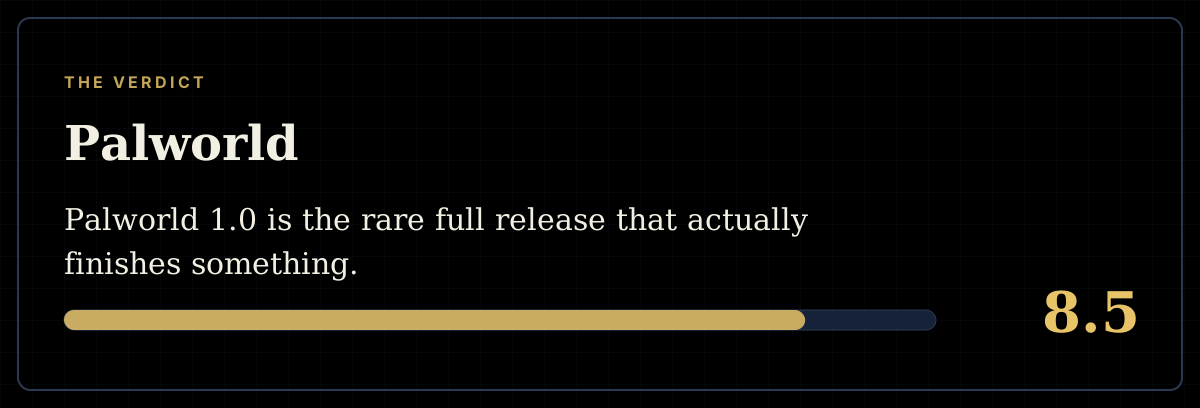
8.5 / 10
- Developer
- Pocketpair
- Publisher
- Pocketpair
- Released
- 19 January 2024
- Platforms
- Windows, macOS, PlayStation 5, Xbox Series X|S, Xbox One
- Genre
- Survival crafting
- Monetisation
- Premium, one-off purchase — no in-game purchases and no premium currency; an optional paid soundtrack is the only add-on. 1.0 was a free update for existing owners
- Players
- Co-op for up to 4 in invite worlds, dedicated servers up to 32, crossplay across PC, Mac, Xbox and PS5; PvP arena and trading
The short version
Palworld 1.0 is the rare full release that actually finishes something. The World Tree that taunted players from the skyline since Early Access is now a place you can walk into, the level ceiling moved from 65 to 80, and breeding — always the deepest thing in here — got a mutation layer and an endgame awakening system to chase.
It's still held back by the same two things it has always been held back by: Pals that do stupid things inside your base, and an interface that groans once you own several hundred of them. But at thirty US dollars with no shop attached, this is one of the most generous survival sandboxes on the market.
Biggest strengths
- Pals are labour, weapons and transport at once, so every capture is a resourcing decision rather than a collection tick
- The work-suitability system turns base building into a genuine scheduling puzzle with visible bottlenecks
- Breeding now has somewhere to go — mutations, inherited passives and World Tree awakenings give min-maxers months of work
Biggest weaknesses
- Base Pals still jam, clip and wander off mid-task, which is the one bug class the game can't seem to shake
- The Pal Box interface buckles under a large roster despite the new filters and search
- Late progression leans on material grind — Soralite and gem farming ask for patience more than skill
Who it's for: Survival and base-automation players who want a creature roster doing the work, and co-op groups looking for a hundred-hour project to share.
Our recommendation: If you bounced off it in 2024, the 1.0 combat and progression passes are worth a second run. If you already own it, the update is free and it's the best the game has been.
8.5 / 10
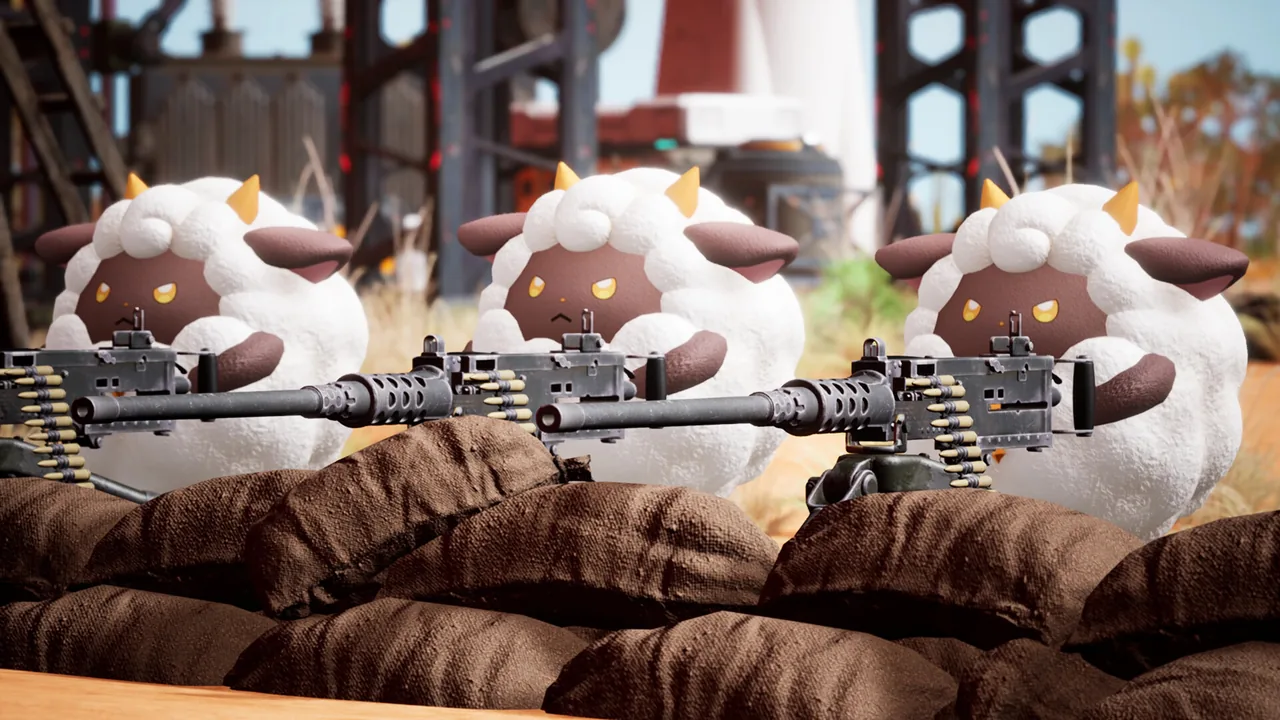
Strip away the guns, the shoulder-mounted rocket launchers and the joke everyone made in January 2024, and Palworld is a game about staffing. You catch a creature not because it completes a collection but because it has Kindling 3 and your furnace queue is backed up. You breed for passive skills the way a factory manager hires for certifications. The genius of the thing — and it took a long time for people to say this without sniggering — is that it fused creature collecting to production-line management, and the two halves genuinely need each other.
Version 1.0, out on 10 July 2026 after two and a half years in Early Access, is Pocketpair finishing the argument. It's a big update by any measure: two new regions, 72 more Pals, a level cap lifted from 65 to 80, thirteen weapons, a combat rework, a breeding system with real depth added on top, and a story that finally has an ending. It arrived free for everyone who already owned the game, on Game Pass day one, and at the same US$29.99 the Early Access build carried. That last detail matters more than it sounds — plenty of studios treat 1.0 as a price event.
What was actually missing until now
Early Access Palworld was never short of content. Feybreak and the updates around it kept adding islands, bosses and systems for two years. What it lacked was a top and a finish. The World Tree had been visible on the horizon since the first week, unreachable, and the game simply stopped somewhere in the low sixties with a technology list you'd exhausted and raid bosses you farmed on loop.
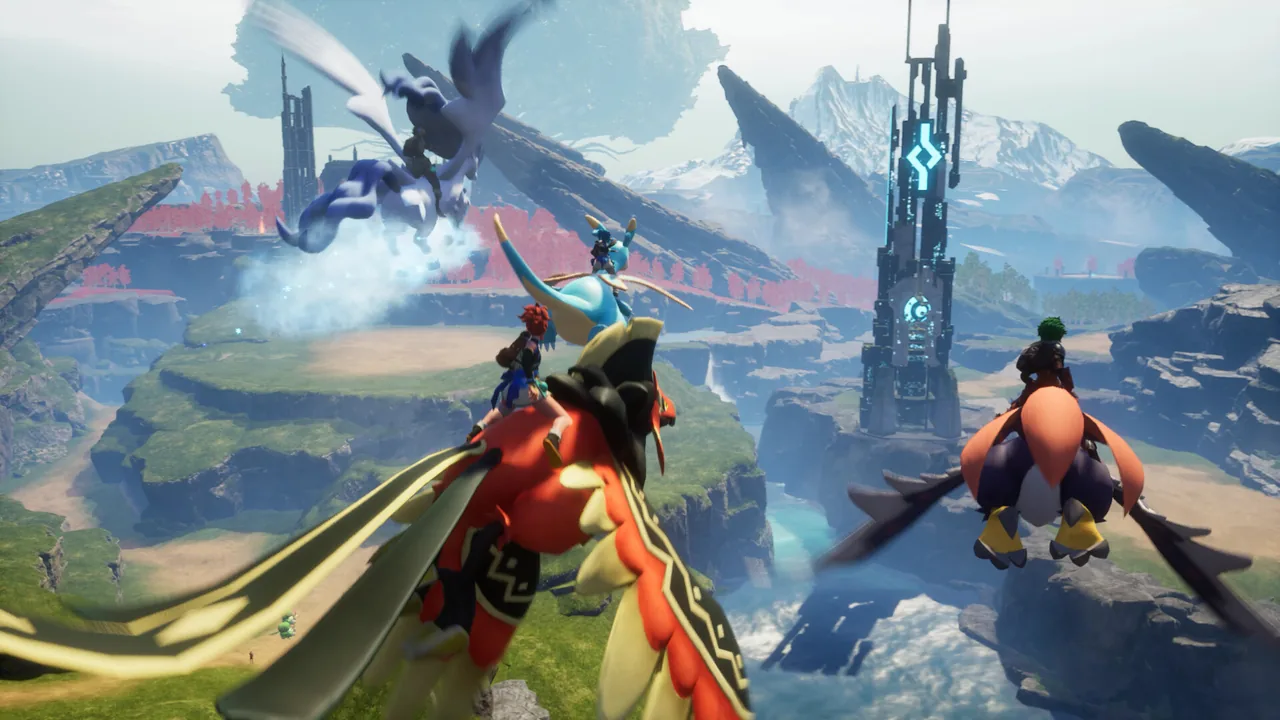
1.0 supplies both. Sunreach is a set of floating islands held above Palpagos by Paldium, with its own Pals, its own tower bosses and Soralite — an ore you can't touch without purpose-built equipment, which is the cleanest way a survival game has of saying "you are not ready for this yet." The World Tree is the actual terminus: the story concludes there, the hardest content lives there, and Radiant Gems mined from it feed the new Awakening system. Ancient ruins and watchtowers fill in the gaps between.
The level jump to 80 is the load-bearing change nobody puts on a trailer. It reopens the technology tree, which had been a dead screen for anyone deep in the endgame, and it forced a rebalance of everything above it — raid bosses, oil rigs, hard-mode towers. A cap raise that doesn't come with that work is just more numbers; this one came with the pass.
The loop is a labour problem
Palworld's survival layer is competent rather than remarkable. You chop, mine, eat, avoid freezing, and build a base out of parts that snap together in the usual way. If that were the whole game, it would be one of a hundred.
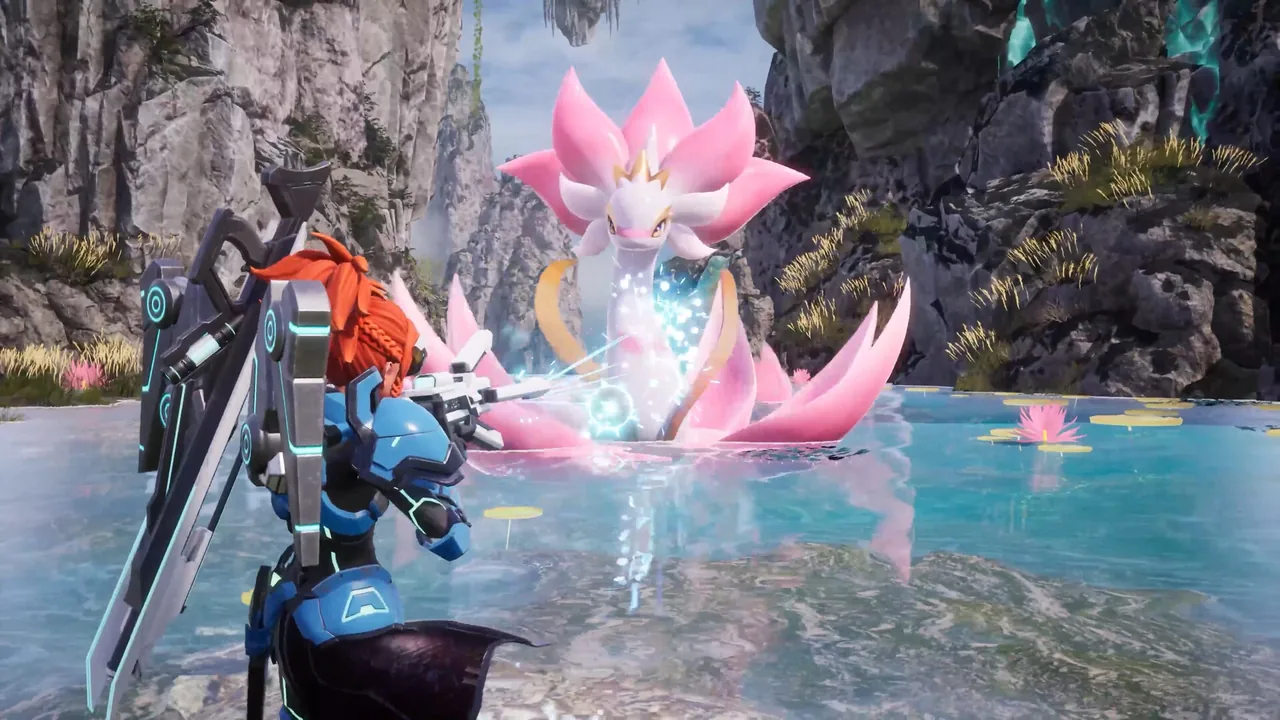
What separates it is the work-suitability system. Every Pal carries a set of job ratings — kindling, watering, transporting, mining, handiwork, medicine — and once assigned to a base they work those jobs autonomously while you're off doing something else. The result is a base that is legibly a machine with inputs and outputs and, inevitably, a bottleneck. Ore piles up because your transport tier is too low. Production stalls because everyone with Kindling is asleep and nobody thought about shift coverage. You fix it by catching or breeding a better worker, and that's the loop: exploration feeding a workforce, workforce feeding progression, progression opening more world.
1.0 sharpened this in a few small, welcome ways. Transport Pals now sweep up dropped items of the same type from a wider radius as their rating climbs, and base Pals prioritise finishing tasks they've already started rather than abandoning half-built work for whatever caught their eye. Both are exactly the kind of fix that reads as boring in patch notes and feels enormous fifty hours in.
The base-building expansion is more cosmetic — coastal and over-water construction, ancient-themed sets, a pile of new furniture. Useful, though the old complaint survives: too much of the decorative catalogue unlocks late, so bases tend to spend their formative hours looking like storage sheds.
Breeding is where the hours go
This has always been Palworld's deepest system and 1.0 gives it a proper endgame. Two additions matter.
Mutation is a low-probability outcome on any breeding attempt that produces a Pal with higher stats and a unique passive it couldn't otherwise roll. Awakening is a separate track entirely: Radiant Gems from the World Tree unlock latent abilities on a Pal you've already invested in. New cakes bias the outcomes — the Deluxe Vegetable Cake nudges both mutation odds and stat growth — which gives the farming layer an actual purpose beyond feeding the incubator.
Put those on top of the existing passive-inheritance and condensing systems and you get something closer to a breeding sim than a monster collector. The player who wants a four-passive, awakened, fully condensed mount is looking at a project measured in weeks, and — importantly — one where the work is decisions rather than just repetition. What to breed into what, which passives to keep, when to stop chasing a mutation and settle: those are real choices with real opportunity costs.
The honest caveat is that this is optional depth stacked on a mandatory grind. Getting to the point where mutation chasing is worthwhile means a lot of cake, a lot of eggs and a lot of waiting. If your idea of an endgame is more content rather than better numbers, the World Tree will run out before the breeding bench does.
Combat moves better, and still ends up as gunplay
The 1.0 combat pass is real. You can attack while dashing and reload out of a dodge, rolling is more responsive, and the split between rolling and dashing depends sensibly on whether you're aiming. Wild Pals behave with more character — canine types close and bite, mounts charge repeatedly, fast types reposition instead of standing in your crosshair. Fights read better than they did.
Tower bosses got the most attention. New arenas, rebalanced stats, fresh skills, and the time limit cut from ten minutes to five, which forces an actual damage plan rather than a war of attrition. The raid system was rebuilt around waves with rewards on completion instead of a single assault, and there's now an NPC who will call one off for gold — a small mercy that says something honest about how raids used to interrupt a build session.
The structural weakness stays put. As enemy levels climb, melee weapons stop being a serious option and Palworld becomes a third-person shooter with a pet. That's not a disaster — the shooting is fine, the Pal partner skills give you tools around it — but it narrows what should be the game's most expressive system. A survival sandbox with thirteen new weapons should not funnel this hard into "bring the best rifle."
Story is the other soft spot. There's a proper ending now, plus sub-missions, NPCs and world journals that do more environmental storytelling than the game has ever attempted. It's still serviceable rather than good, and the regional rhythm — arrive, explore, fight the tower — repeats with enough regularity that you can see the template through the paint.
Groups, servers and the parts that hold up
Multiplayer is one of the reasons Palworld has kept a population when comparable survival games have not. Four-player invite worlds cover friends; dedicated servers run up to 32 and are where the long-lived communities actually live; crossplay ties PC, Mac, Xbox and PS5 together.
1.0 treated the server side seriously. Guilds gained multiple roles with configurable permissions and login notifications, dedicated servers got optional voice chat, chat picked up anti-impersonation measures and a 200-line history, and Pocketpair called out optimisation work on server processing under high player counts along with reduced save-corruption risk. Those are administrator features, and their presence signals a studio that understands where its retention comes from.
Retention is not in doubt, incidentally. The 1.0 weekend peaked north of 855,000 concurrent players on Steam alone — short of the absurd 2.1 million from the Early Access launch, but comfortably the biggest thing on the platform this year.
Where it still frustrates
Two problems have followed this game from day one and both survived into 1.0.
The first is Pal AI. Base workers still get stuck on geometry, still occasionally decide the direct route through a wall is the correct one, and still stop working for reasons that are opaque from the outside. The 1.0 improvements are genuine and the situation is better than it was, but you will still walk into your own base and find a Pal standing in a corner having a philosophical crisis while the ore backlog grows. In a game whose central pleasure is a functioning machine, a worker that silently stops is the most damaging bug class there is.
The second is interface load. Palworld hands you hundreds of Pals and then asks you to manage them in a box. 1.0 added name filters to the Pal Box, category sorting to crafting and element filters to the Paldeck, and it's still not enough once your roster is deep and you're hunting for the one Anubis with the right passive spread. Every serious player ends up with a personal naming convention, which is a workaround, not a feature.
Then there's the launch itself. The 1.0 build went out with crashes on some configurations, config files corrupted by leftover Early Access mods, and a save-data bug serious enough that Pocketpair patched it in 1.0.1 within days along with a fix for a crash tied to guilds passing roughly 7,000 captured Pals. Fast response, and the sort of problem an ambitious update to a two-year-old save format tends to produce — but a 1.0 that eats saves is still a 1.0 that eats saves, and it costs the score half a point.
Performance is broadly acceptable and better than it was, with optimisation passes on foliage, gatherables, equipment processing and memory. AMD users have been the loudest complainants, and there's still no FSR support, which is an odd omission in 2026 for a game this widely played on mid-range hardware.
The uncomfortable context
Palworld can't be reviewed without acknowledging the two arguments that have followed it. The first is aesthetic: a chunk of its roster reads as close to Pokémon designs, and that resemblance is why the game got the attention it did in the first place. Judged on function rather than silhouette the Pals are doing something Pokémon never has — they work, they haul, they're power sources — but the visual debt is real and no amount of system depth makes it not real.
The second is legal. Nintendo and The Pokémon Company filed a patent infringement claim against Pocketpair in the Tokyo District Court in September 2024, over mechanics relating to creature capture and riding. Pocketpair has adjusted some in-game systems by patch since, and the case has not produced a verdict as of late July 2026. Nothing about it has removed the game from sale or altered what you can buy today.
Value, and what your thirty dollars buys
No in-game purchases. No premium currency, no battle pass, no energy timer, no cosmetic shop. The only thing you can spend money on beyond the base game is the soundtrack. For a live-service-shaped sandbox with a two-year update history and a 1.0 that arrived free to existing owners, that is close to best in class, and it deserves to be said plainly in a year when far smaller games ship with three currencies.
At US$29.99 — and free to try through Game Pass, which is the sensible way to find out whether the base-management itch is yours — the value case barely needs arguing. A first run to the World Tree is comfortably a hundred hours if you engage with breeding at all, and a dedicated server with friends turns that into an ongoing project.
Players who like the idea of a workforce that keeps producing while their attention is elsewhere, but want it without the survival overhead, may also find Wanderer's offline progression a comfortable fit.
Verdict
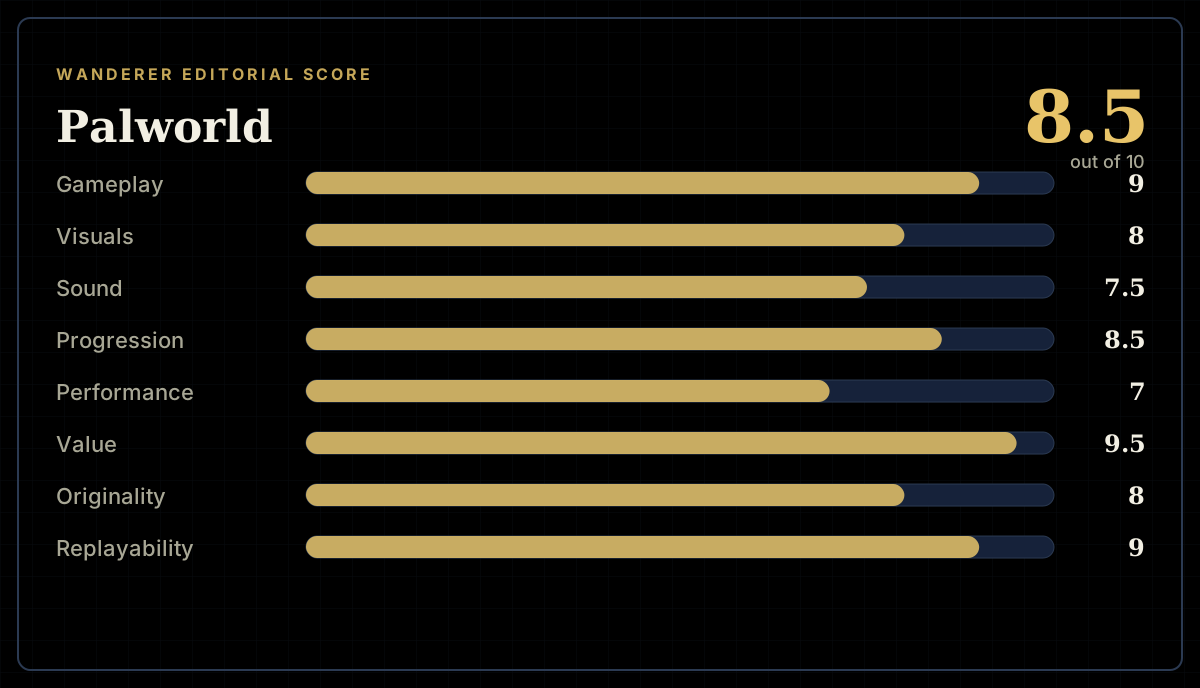
Eight and a half. Palworld 1.0 is a genuinely finished version of a game a lot of people assumed would never get one, and the systems underneath the joke have turned out to be the most interesting thing about it. Base automation with real bottlenecks, a breeding layer with weeks of decisions in it, an endgame that now goes somewhere, and a price that hasn't moved in two and a half years.
What stops it going higher is unglamorous and persistent: workers that get stuck, an interface that can't keep up with the roster it hands you, a combat curve that collapses into rifles, and a story that shows its scaffolding. None of that is fatal. All of it is exactly what you'd fix in the version after this one.
If you want a survival sandbox where the creatures are staff rather than trophies, this is the best implementation of that idea anyone has shipped. If you want a monster collector with tight combat design, you already know where to look, and Palworld isn't trying to be that.
Price, platform and store details checked 29 July 2026.
Pros and cons
Pros
- Pals are labour, weapons and transport at once, so every capture is a resourcing decision rather than a collection tick
- The work-suitability system turns base building into a genuine scheduling puzzle with visible bottlenecks
- Breeding now has somewhere to go — mutations, inherited passives and World Tree awakenings give min-maxers months of work
- Movement finally reads properly: attacking while dashing and reloading out of a dodge make firefights feel deliberate
- 1.0 was free for everyone who already owned it, and the price didn't move
- Dedicated servers, crossplay and guild permissions make it a real long-term group game
Cons
- Base Pals still jam, clip and wander off mid-task, which is the one bug class the game can't seem to shake
- The Pal Box interface buckles under a large roster despite the new filters and search
- Late progression leans on material grind — Soralite and gem farming ask for patience more than skill
- Melee weapons fall away badly once firearms scale, so combat narrows as difficulty rises
- Story content is functional at best; the tower bosses have more personality in cutscenes than in fights
- The 1.0 launch shipped with crash and save-corruption problems that needed a hotfix
Screenshots
-
PalworldImage: Pocketpair via Steam -
PalworldImage: Pocketpair via Steam -
PalworldImage: Pocketpair via Steam -
How the review scores each part of the gameWanderer Editorial -
The short versionWanderer Editorial