Game review
Project Zomboid
8.3 / 10
- Developer
- The Indie Stone
- Publisher
- The Indie Stone
- Released
- 8 November 2013
- Platforms
- Windows, macOS, Linux
- Genre
- Isometric Zombie Survival Simulation
- Monetisation
- One-time purchase, no DLC, no microtransactions, no season pass or battle pass
- Players
- Dedicated and self-hosted servers with co-op and open PvP; Build 42's rewritten multiplayer returned to the stable branch on 29 July 2026 after roughly a year confined to the unstable beta and, before that, over a year with Build 42 in singleplayer-only testing
The short version
Project Zomboid remains the sharpest, most unforgiving skill-based survival sandbox on the market, and Build 42 is the biggest jump in its quality it has ever taken in one go. The trade-off hasn't changed in twelve years: what you get is a game that respects your time investment more than almost anything else in the genre, wrapped in an interface that still makes that investment harder than it needs to be.
Biggest strengths
- Skill and XP systems reward exactly the play style you choose, with occupations, traits and skill books all feeding the same long curve rather than gating content behind grind alone.
- Boredom, unhappiness and panic moodles quietly punish autopilot play, so looting the same house twice or skipping sleep has a mechanical cost, not just a roleplay one.
- Build 42 nearly doubles the map, rebuilds seven major towns with unique buildings instead of copy-pasted ones, and adds animals, farming depth, basements and tall buildings without making the new content feel bolted onto the old systems.
Biggest weaknesses
- The interface is still built from stacked, differently sized windows and tooltip-dependent right-click menus that new players have to actively learn before the game opens up.
- Multiplayer only just left a year in the unstable beta; server owners and players should expect rough edges and mod incompatibility for the next few months, not a finished experience.
- Build 41 saves do not carry over, and anyone deep into a long-running world faces a real choice between staying on the legacy branch or starting over.
Who it's for: Players who want a survival game with a real skill tree behind the crafting, who don't mind losing a forty-hour character to a single unnoticed scratch, and who are willing to fight the menus for the first few hours until muscle memory takes over.
Our recommendation: Buy it. Read a beginner's guide before you start, keep expectations for polish realistic given the Early Access tag, and don't get attached to your first three characters.
8.3 / 10
The last twelve hours of a character's life always look the same
They start with a run to a gas station for one more jerry can, because the base is fine on food but short on fuel. They end with a sprained ankle from a fall nobody remembers taking, a bite that looked like a scratch in bad light, and a fever that sets in three days later while a save file that represents forty hours of accumulated carpentry, farming and marksmanship skill quietly becomes unrecoverable. Project Zomboid has been telling this story to players for almost thirteen years, and the fact that it still lands is the best argument for why the game remains worth playing despite never officially finishing.
The Indie Stone's zombie sandbox entered Early Access on 8 November 2013 and has stayed there ever since, which by itself would normally be a red flag. What keeps it from feeling like an abandoned promise is the sheer rate of substantive work still landing on it: on 29 July 2026 the studio pushed Build 42.20 to the stable branch, the largest single content update the game has ever received, and brought its long-absent multiplayer back with it. That update is recent enough that judging the game today means judging a genuinely different build from the one most existing write-ups describe.
A survival sim that never lets you go on autopilot
Most survival games eventually become routine: you learn the safe loop, you repeat it, the tension drains out. Zomboid is built to resist that. Every zombie in Knox County can hear a gunshot from streets away and every one it recruits joins a horde that remembers where the noise came from. Every scratch has to be checked for infection, every bite is fatal, and every night without a locked door is a gamble on whether something wandered close enough to see a light through a window. The tutorial's own tagline — this is how you died — isn't marketing, it's a description of the game's actual feedback loop: characters don't fail a difficulty check, they make one complacent decision and then the situation ends them.
That design philosophy runs all the way down to the moodle system, the stack of status icons tracking hunger, fatigue, pain, panic, boredom and unhappiness. Boredom climbs steadily while a character stays indoors or repeats the same task too long, feeds into unhappiness, and unhappiness quietly slows down almost every action in the game. It's a small mechanical nudge, but it's a pointed one: farming the same field or reading in the same room for hours on end has a cost, and the game would rather you go outside, take a risk, and get your character killed doing something interesting than let you disappear into a completely safe, completely repetitive loop. Sleep debt, fitness decay from inactivity and the ever-present threat of a supply run gone wrong do the same job from different angles. None of it is punishing in a way that feels arbitrary — it's punishing in a way that feels like the world noticing you stopped paying attention to it.
Twelve years of skills, and still no shortcuts
The progression system is where Zomboid separates itself from most of the genre it helped define. Every character has ten-plus skills spanning combat, crafting, survival and physical fitness, each levelling independently through use, with occupations and traits shaping the starting point rather than the ceiling. A carpenter starts ahead on woodworking; a burnt-out office worker starts behind on almost everything and has to earn every level the hard way. Skill books multiply XP gain tier by tier — beginner, intermediate, advanced, expert, master — turning literacy and a stocked bookshelf into a genuine strategic resource worth risking a supply run for, not busywork bolted onto the level curve.
Build 42 goes further than any previous update at giving that system somewhere to grow. New occupations like Rancher and new traits including Artisan, Target Shooter and Tinkerer sit alongside a full rebalance of the existing roster, and entirely new skill branches — masonry, carving, knapping, blacksmithing — extend the crafting tree into territory the game never touched in its first decade. Melee weapons now track handle and head condition separately, with blade sharpness as its own maintainable stat; firearms get a genuine aiming system that rewards steady hands over spray-and-pray. Animal husbandry and an overhauled farming system, complete with seasonal planting windows and crops that will fail outright if sown in the wrong month, add a slower, longer-horizon progression track on top of the moment-to-moment combat skills. None of this replaces the existing grind; it deepens it, which is exactly what a thirteen-year skill system needs at this point instead of a reset.
Multiplayer is back, and it needed the year it took
The headline change in Build 42.20 is multiplayer's return to the stable branch, and the timeline matters here. Build 42 first went live on the unstable beta on 17 December 2024 as a singleplayer- only build, which meant anyone who wanted the new map, crafting and skill content had to either play alone or stay on Build 41. Multiplayer support for Build 42 didn't reach even the unstable branch until 11 December 2025, roughly a year later, and it took another seven months of public testing before 42.20 folded it into stable on 29 July 2026 — two days before this review. For most of the last two years, Zomboid's famous player-run servers were effectively frozen on old content or running patched-together workarounds.
The wait shows in what actually changed under the hood. Inventory management, item transfers, container interactions and all timed actions now execute server-side instead of on the client, with clients rendering the result rather than calculating it themselves — the single biggest structural fix multiplayer has had, since it closes the exploit surface that made public PvP servers genuinely unreliable to trust. A proper anti-cheat suite covering speed, hit detection, no-clip and inventory manipulation rides on top of that rework, and the server browser finally lets you filter by mod status, player count and ping instead of scrolling blind. It's a serious upgrade on paper. It's also brand new: this is a rewrite that spent barely seven months in public beta before going stable, and anyone setting up a dedicated server or joining one this week should expect the kind of desync bugs and mod breakage that come standard with any multiplayer system this young, not the rock-solid experience Build 41's multiplayer eventually settled into after years of patches.
The interface is still the first zombie you have to fight
Here's the honest problem, and it's the same one Zomboid has had since long before Build 42: getting into this game is harder than it should be, and the interface is most of the reason why. Inventory windows are differently sized panels that reposition themselves depending on what's open, tooltips carry information the UI doesn't surface anywhere else, and a meaningful chunk of core interactions still route through right-click context menus stacked two or three submenus deep. New players regularly bounce off the first twenty minutes not because the survival mechanics are unfair, but because finding the right menu to eat a can of beans or transfer ammunition between containers takes longer than it should for something this fundamental.
Build 42 clearly has this in its sights — there's a new official mod manager with dependency and load-order information, a refreshed map-selection screen, UI scaling improvements aimed at large monitors, and gamepad presets that finally let every control be freely rebound to any button or analogue axis. These are real, welcome fixes, and the mod manager alone removes a genuine barrier for anyone who wanted the workshop's best quality-of-life mods without hand-editing load orders. None of it touches the core interaction model, though. The windows are still small, the icons are still dense, and the game still assumes you're willing to spend real time learning where things live before it starts feeling natural. Veteran players stop noticing this within a few hours. Everyone else is the reason Zomboid's "steep learning curve" reputation persists even as the systems underneath it keep getting better.
How much longer can Early Access cover this
Twelve years is a long time to carry a tag that originally meant "not finished yet," and it's fair to ask whether The Indie Stone still gets the benefit of the doubt. The honest answer is: mostly, yes, but the runway isn't infinite. What separates Zomboid from Early Access projects that use the label as cover for stalled development is the size and seriousness of what keeps shipping — Build 42 alone adds 1,400 unique buildings and 20,000 new tiles on top of Build 41's 15,000, doubles the map's usable surface area, rebuilds seven towns from scratch rather than patching them, and delivers a genuine multiplayer rewrite rather than a compatibility patch. That's not the output of a studio coasting on goodwill. The studio's own roadmap talk after 42.20 is about a support update focused on optimisation and modding tools through the rest of 2026, not a firm date for a 1.0 release, which means the Early Access clock keeps running with no announced end. Players who've been burned by other games using that same tag as a permanent excuse are right to be a little wary. Players who've watched this specific studio's decade-plus track record of shipping exactly what it says it will, eventually, have more reason than most to stay patient.
Final Verdict
Project Zomboid earns its reputation the hard way: a genuinely deep, use-based skill system that rewards the exact way you choose to play, a world that treats routine and carelessness as the real enemy rather than raw zombie numbers, and a Build 42 update substantial enough to justify the years it took to arrive. The interface hasn't caught up to the systems it's gating, and multiplayer's fresh return to stable means the next few months are the wrong time to expect a flawless online experience. Neither of those problems is new, and neither is close to fatal. What you're paying twenty-five dollars for is a survival game that still, after twelve years, hasn't found a way to make death feel routine — which, for a genre this saturated with games that eventually do, is worth more than a finished 1.0 stamp would be.
Pros and cons
Pros
- Skill and XP systems reward exactly the play style you choose, with occupations, traits and skill books all feeding the same long curve rather than gating content behind grind alone.
- Boredom, unhappiness and panic moodles quietly punish autopilot play, so looting the same house twice or skipping sleep has a mechanical cost, not just a roleplay one.
- Build 42 nearly doubles the map, rebuilds seven major towns with unique buildings instead of copy-pasted ones, and adds animals, farming depth, basements and tall buildings without making the new content feel bolted onto the old systems.
- Multiplayer's inventory, item transfers and timed actions now run server-side with an actual anti-cheat suite, closing years of exploits that made public servers a gamble.
- No DLC, no battle pass, no premium currency after twelve years and one of the most content-dense updates any Early Access game has shipped.
Cons
- The interface is still built from stacked, differently sized windows and tooltip-dependent right-click menus that new players have to actively learn before the game opens up.
- Multiplayer only just left a year in the unstable beta; server owners and players should expect rough edges and mod incompatibility for the next few months, not a finished experience.
- Build 41 saves do not carry over, and anyone deep into a long-running world faces a real choice between staying on the legacy branch or starting over.
- Twelve years and counting in Early Access is a genuinely long time to ask for patience, even from a developer with this level of trust built up.
Screenshots
-
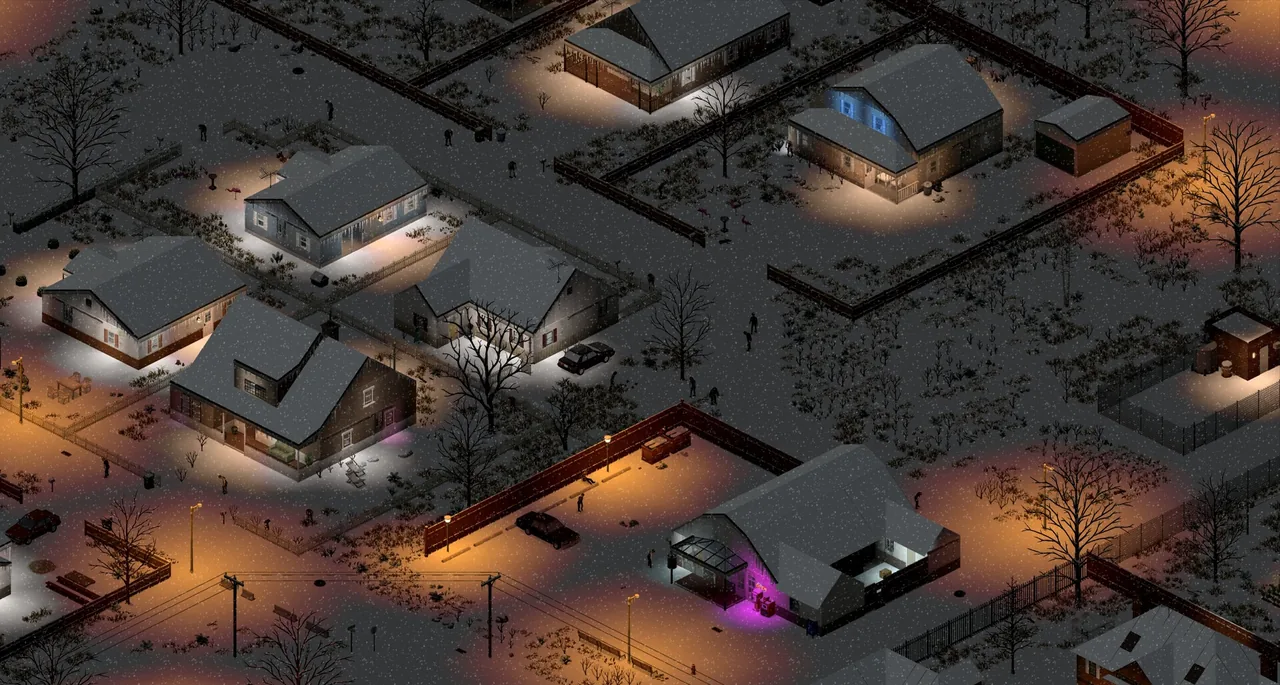
Project ZomboidImage: The Indie Stone via Steam -
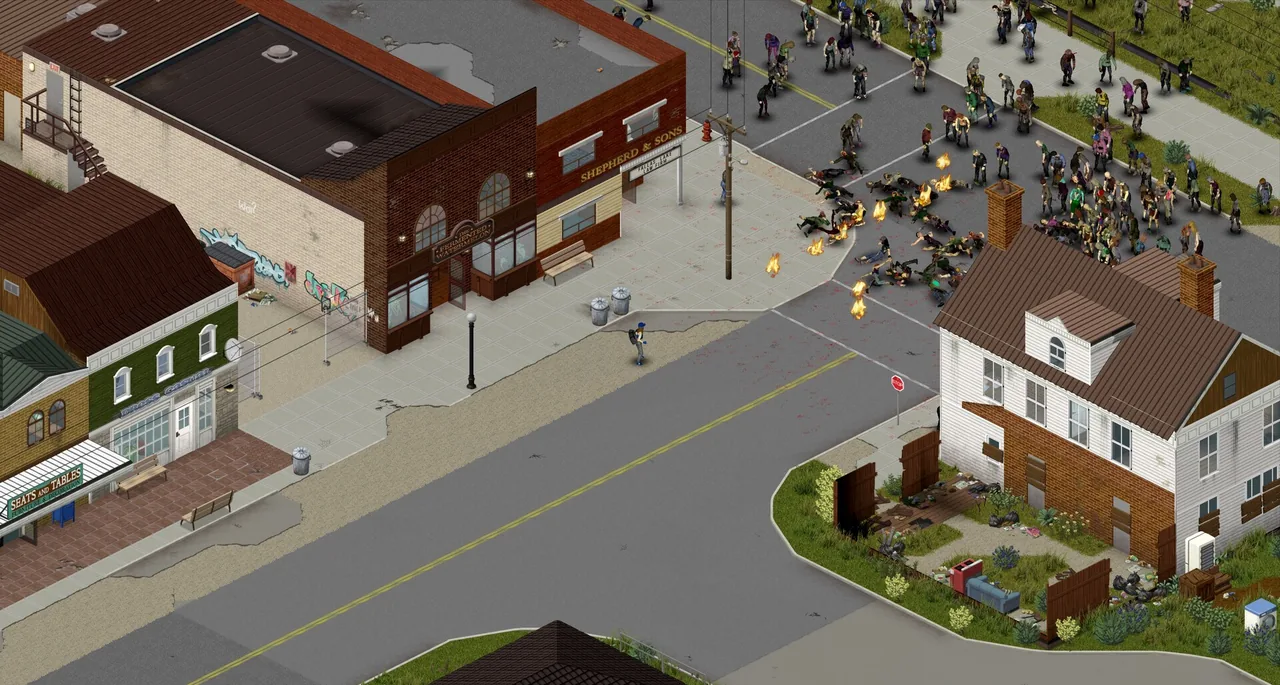
Project ZomboidImage: The Indie Stone via Steam -
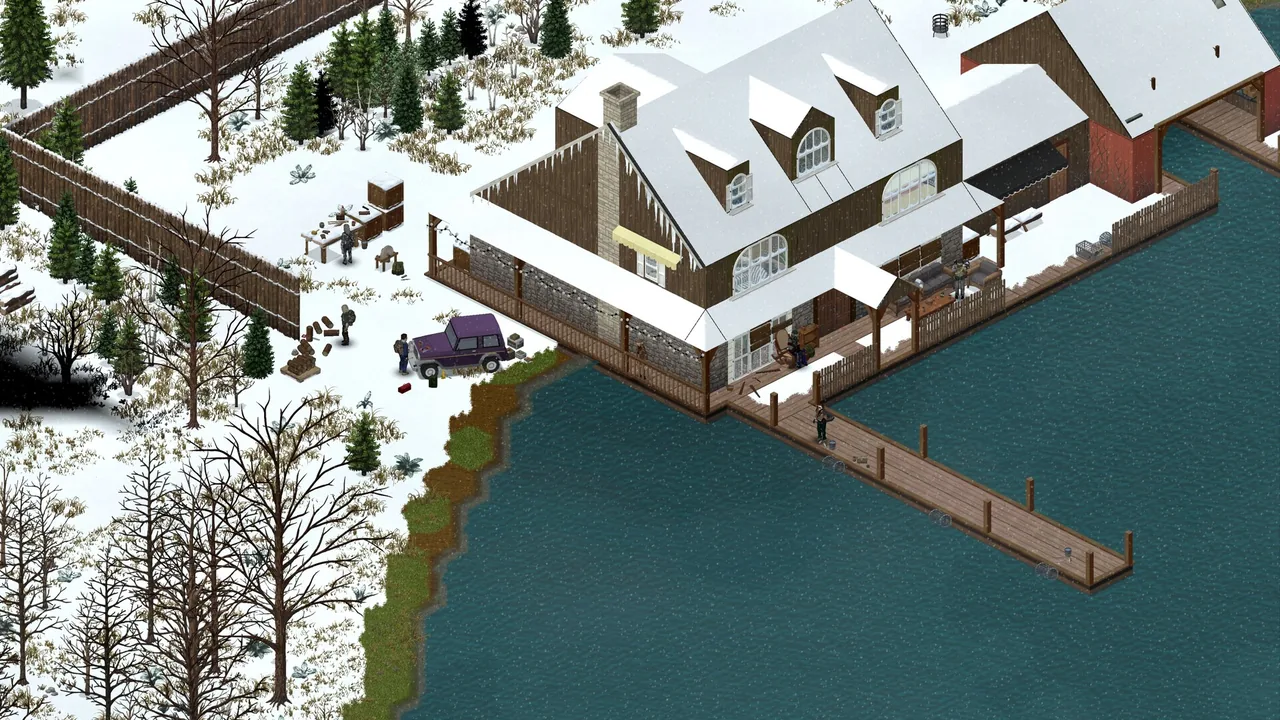
Project ZomboidImage: The Indie Stone via Steam -
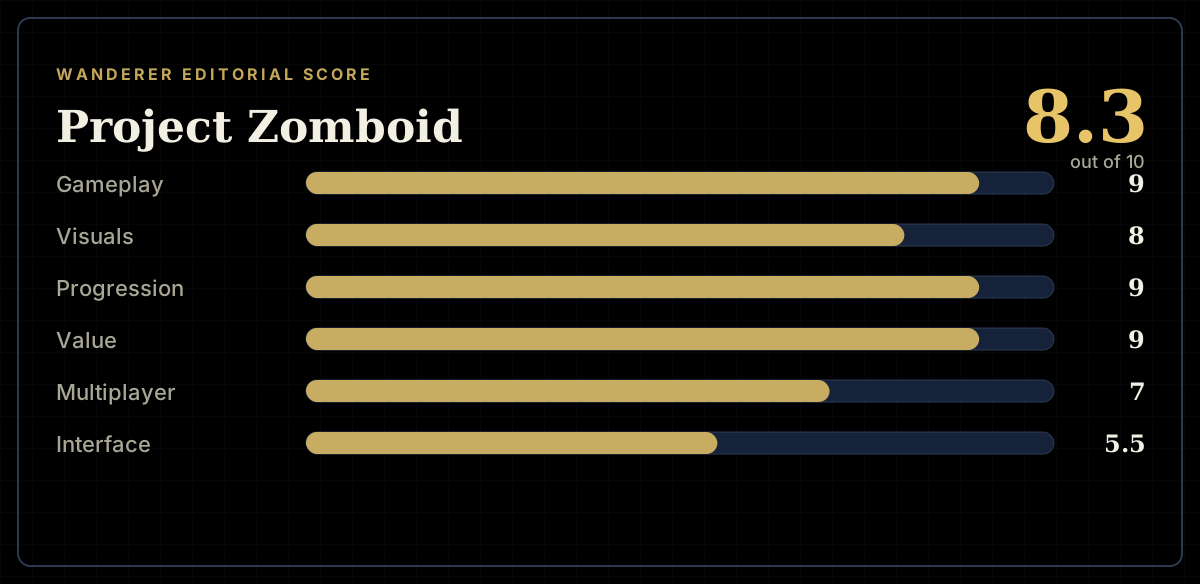
How the review scores each part of the gameWanderer Editorial -
The short versionWanderer Editorial