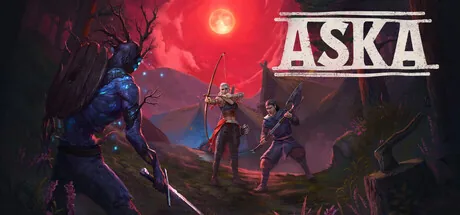
Game review
ASKA
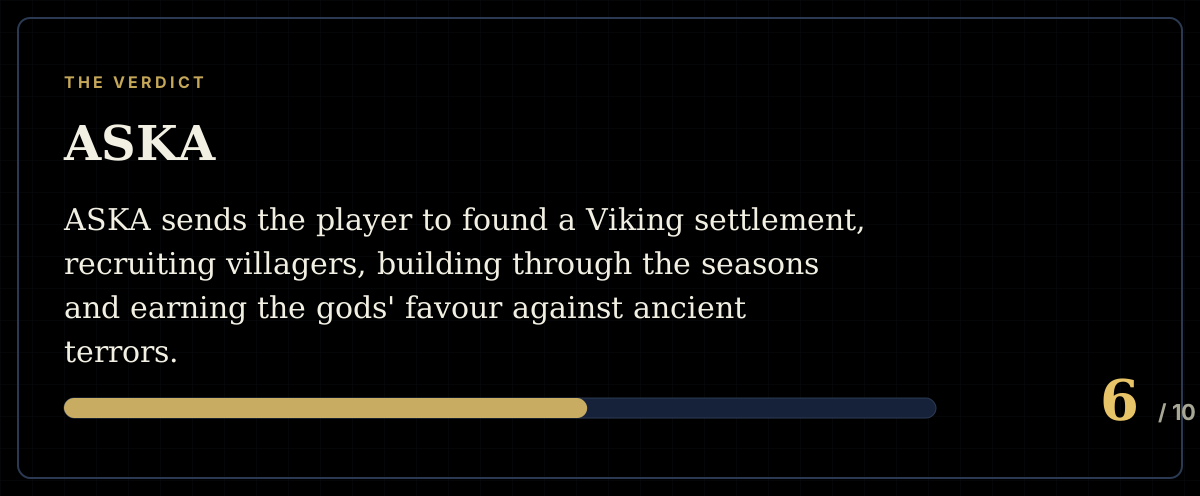
6 / 10
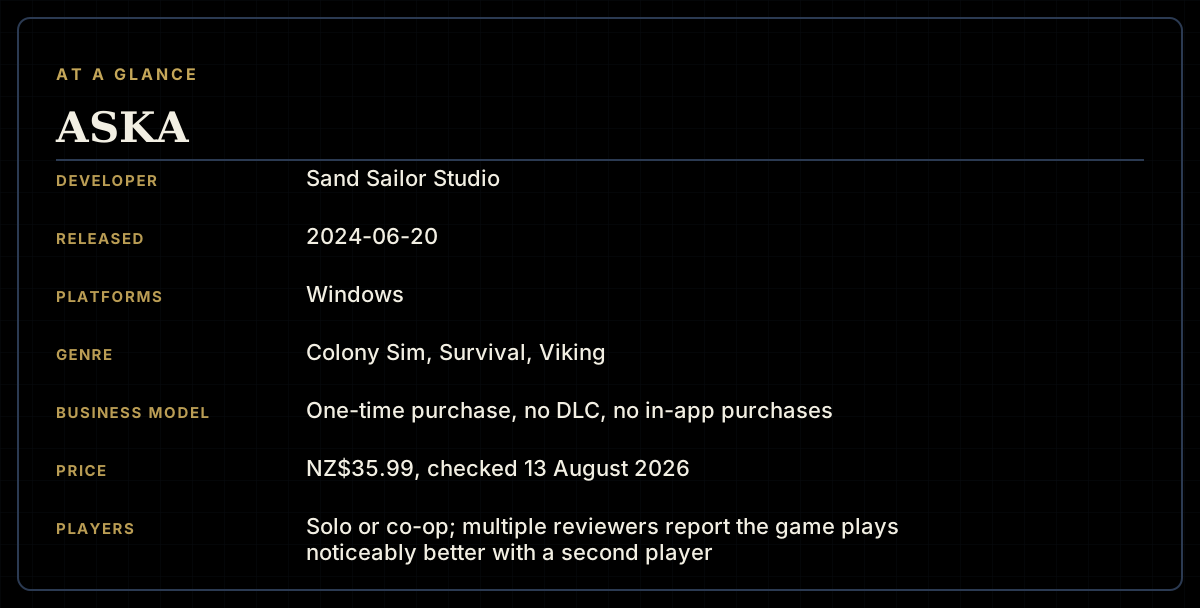
- Developer
- Sand Sailor Studio
- Publisher
- Thunderful Publishing
- Released
- 20 June 2024
- Platforms
- Windows
- Genre
- Colony Sim, Survival, Viking
- Monetisation
- One-time purchase, no DLC, no in-app purchases
- Players
- Solo or co-op; multiple reviewers report the game plays noticeably better with a second player
The short version
ASKA sends the player to found a Viking settlement, recruiting villagers, building through the seasons and earning the gods' favour against ancient terrors. Made by Sand Sailor Studio and published by Thunderful Publishing, it entered Early Access on 20 June 2024 and remains there, sitting at Very Positive across a substantial 6,376 English-language reviews. What makes this game's reception unusually legible is how consistently both sides describe the exact same problem: villager AI. A top-voted positive review puts it as plainly as any critic could — "the foundation of this game is brilliant, but you are exactly one good 'Senior AI Programmer' hire away from making this game legendary" — and that sentence could sit comfortably atop either the positive or negative sample.
Biggest strengths
- A distinctive genre blend that draws specific, repeated praise: Rimworld's time-scheduling systems, Medieval Dynasty's third-person village construction, and Valheim's Nordic survival atmosphere combined into what several reviewers call a genuinely fresh whole
- Gorgeous, atmospheric presentation with dynamic weather and seasons that multiple reviewers, including critical ones, single out as a genuine strength
- Sustained, substantial ongoing development from a well-resourced publisher, with major named content updates — Seaborne Raiders, a December Major Update, the Tavern Update, Hearth & Honey — shipping as recently as April 2026, nearly two years after Early Access launch
Biggest weaknesses
- Villager AI is the single most consistently named weakness across this game's review base on both sides of the recommendation line, with tasks frequently requiring the player to gather and place materials by hand even when dedicated workstations and assigned villagers exist
- Structures reportedly decay and can collapse within days of construction according to multiple detailed reviews, with little advance warning, alongside spoilage timers some reviewers call illogical — one specifically questions why bone fragments spoil at all
- Combat is described by several reviewers as sluggish and unresponsive, with a dodge delay that undercuts what they otherwise call an enjoyable crafting-and-management core loop
Who it's for: Colony-sim and survival fans who love Rimworld-style scheduling and Medieval Dynasty-style village-building, ideally with a co-op partner; solo players who want a tightly balanced single-player challenge should wait and watch the game's continuing Early Access development.
Our recommendation: A genuinely distinctive, well-loved foundation for a Viking colony sim, held back specifically and consistently by the villager AI its own fans say it most needs to fix — worth following closely given a large publisher's sustained, ongoing support, but not yet the finished experience its concept deserves.
6 / 10
Introduction
ASKA drops the player into a Norse frontier with instructions to found a village, recruit villagers, and build a settlement that can survive the seasons and the ancient terrors that come with them. Made by Sand Sailor Studio and published by Thunderful Publishing, it entered Early Access on 20 June 2024 and remains there today, sitting at Very Positive across 6,376 English-language reviews. What sets this game's reception apart from most Early Access survival titles is how precisely legible the disagreement is — reading across both the negative sample and the top of the positive one, nearly every reviewer, regardless of recommendation, converges on the exact same specific system as the deciding factor.
A genre blend that genuinely lands
The foundation draws real, specific praise from players who know the genre well. "Aska has the time scheduler of Rimworld, the 3rd person village building of Medieval Dynasty, the combat approach of..." one long-time genre veteran writes, describing a deliberate synthesis rather than a derivative copy. Another distinguishes it clearly from its most obvious comparison point: "Don't mistake Aska for a survival game like Valheim... this is primarily a colony sim. You don't build your custom residence here, you build a village." The presentation earns its own credit too — dynamic seasons and weather effects draw praise even from reviewers who ultimately can't recommend the game, with one calling the landscape "gorgeous" despite a litany of other complaints.
The delegation trap, named by name
Where ASKA's reception gets genuinely interesting is how the same specific complaint recurs almost word-for-word across reviews that reach opposite conclusions. One of the highest-voted positive reviews in the entire sample puts it as a direct message to the developers: "The foundation of this game is brilliant, but you are exactly one good 'Senior AI Programmer' hire away from making this game legendary. The community loves the world you've built, but the Vikings need brains to match their brawn." That's not a complaint buried in a negative review — it's the headline argument of a thumbs-up. On the negative side, the same problem is described in blunter operational terms: "If I want something crafted I have to do it myself... even though I have work stations for this exact" purpose, one reviewer writes, describing having to gather and place materials by hand for villagers who won't reliably do it themselves.
This is a colony sim, which means delegation isn't a late-game convenience — it's the entire premise from the first hour. When the AI managing that delegation is unreliable, there's no way for the player to route around it the way a strategy game might let them play manually instead; the villagers are the whole point. That's the shape of the problem across dozens of independently written reviews, and it explains why a game this well-regarded in concept still sits with a noticeably softer recent-sentiment figure — 74% among the last 100 English reviews, against 80.1% lifetime.
Decay, spoilage and a harsher solo experience
Two more specific, dated complaints round out the picture. Multiple detailed reviews describe structures decaying and collapsing within days of being built, often with little warning — "your buildings can break within a couple of days of building them," one writes, "it doesn't last weeks or months." A separate, more pointed complaint concerns spoilage rules applied broadly enough to feel illogical: one reviewer specifically questions why bone fragments spoil in-game at all, given how long actual bone takes to decompose. Several reviewers frame both systems as part of a wider pacing problem — "too fast paced and constantly rushes you," with decay and invasion timers that feel adversarial rather than challenging.
A separate, more structural imbalance concerns solo play specifically. The single most-upvoted negative review in the whole sample suspects the game is meaningfully easier in co-op "simply because with two players, you have double the intelligent people in your village than in single player mode" — a pointed way of saying the villager AI problem above compounds worse when there's no human partner to compensate for it. As of this review, there's no in-game difficulty setting to adjust for that gap.
Final Verdict
ASKA has a foundation genuinely loved by a large, engaged audience, and the review record makes an unusually clear case for exactly what stands between it and a much higher score: villager AI reliable enough to match the ambition of everything built around it. That's not a vague "needs polish" complaint — it's a specific, repeatedly named system that both fans and critics point to independently. Sand Sailor Studio's continued, substantial content development — running through major named updates as recently as this April — is a real reason for optimism, even though this review's research didn't find evidence of a dedicated AI overhaul among them yet. For colony-sim fans, especially with a co-op partner, it's worth trying now; solo players hoping for a tightly tuned single-player experience may want to wait and watch.
Pros and cons
Pros
- A distinctive genre blend that draws specific, repeated praise: Rimworld's time-scheduling systems, Medieval Dynasty's third-person village construction, and Valheim's Nordic survival atmosphere combined into what several reviewers call a genuinely fresh whole
- Gorgeous, atmospheric presentation with dynamic weather and seasons that multiple reviewers, including critical ones, single out as a genuine strength
- Sustained, substantial ongoing development from a well-resourced publisher, with major named content updates — Seaborne Raiders, a December Major Update, the Tavern Update, Hearth & Honey — shipping as recently as April 2026, nearly two years after Early Access launch
- Multiple detailed reviewers report the game plays meaningfully better in co-op, where two players effectively double the pool of "intelligent" labour available to a settlement
Cons
- Villager AI is the single most consistently named weakness across this game's review base on both sides of the recommendation line, with tasks frequently requiring the player to gather and place materials by hand even when dedicated workstations and assigned villagers exist
- Structures reportedly decay and can collapse within days of construction according to multiple detailed reviews, with little advance warning, alongside spoilage timers some reviewers call illogical — one specifically questions why bone fragments spoil at all
- Combat is described by several reviewers as sluggish and unresponsive, with a dodge delay that undercuts what they otherwise call an enjoyable crafting-and-management core loop
- Multiple reviewers report the single-player balance is notably harsher than the shared workload of co-op, with no in-game difficulty settings to compensate as of this review
Screenshots
-
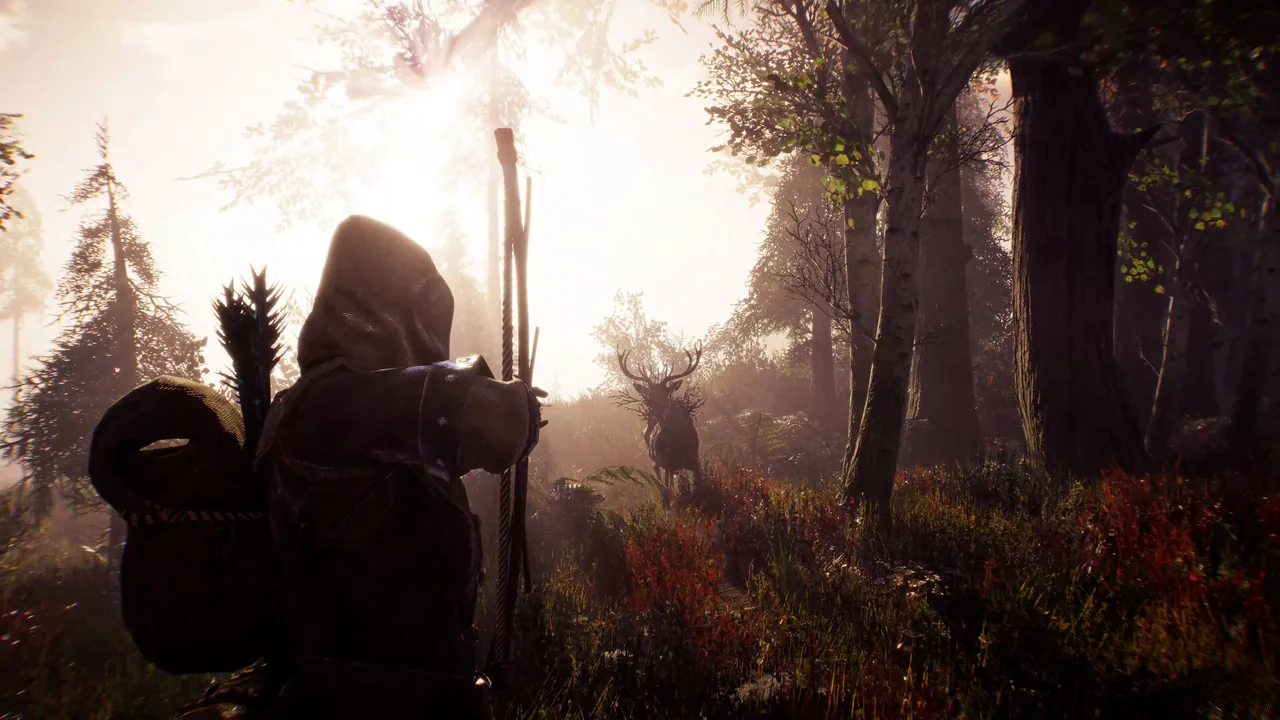
ASKAImage: Thunderful Publishing via Steam -
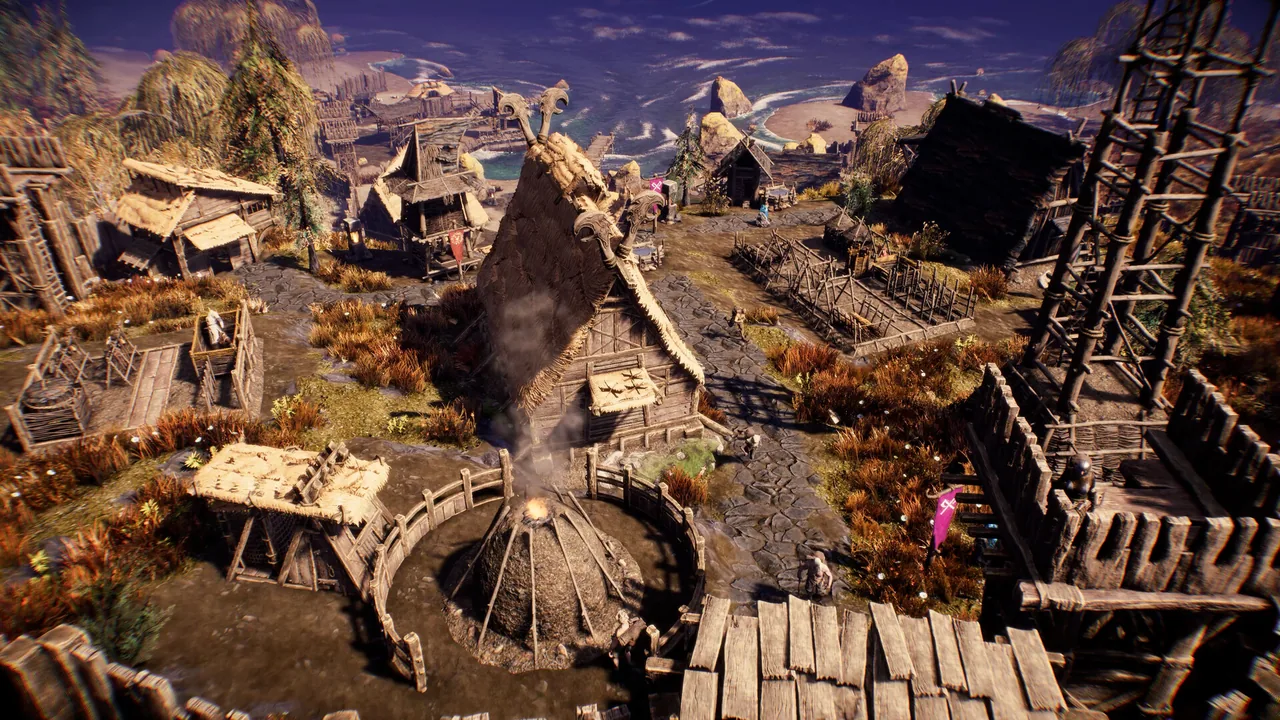
ASKAImage: Thunderful Publishing via Steam -

ASKAImage: Thunderful Publishing via Steam -
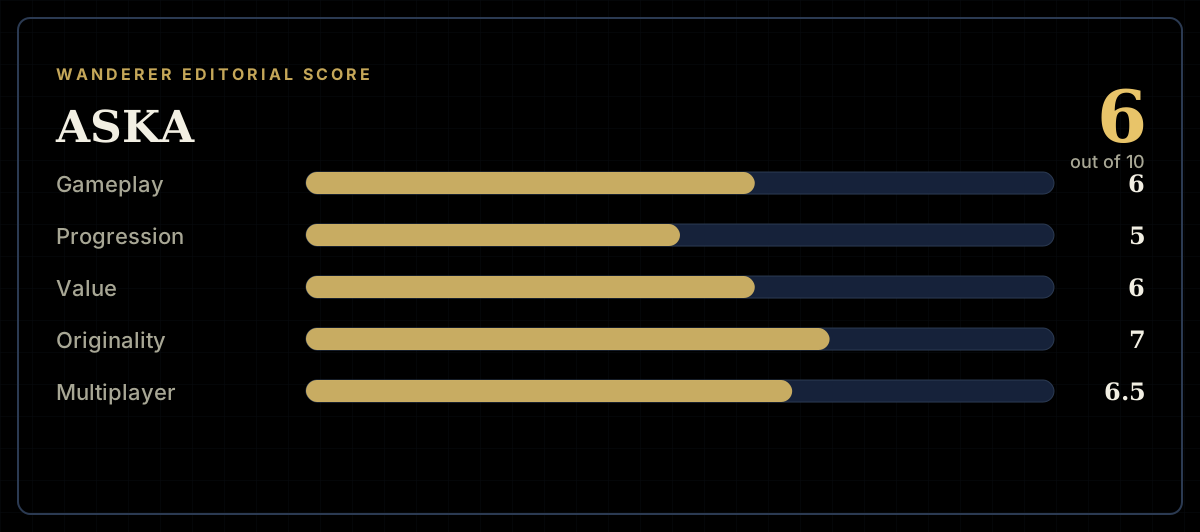
How the review scores each part of the gameWanderer Editorial -
The essentials at a glanceWanderer Editorial -
The short versionWanderer Editorial