Game review
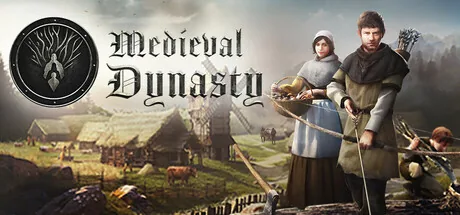
Medieval Dynasty
7 / 10
- Developer
- Render Cube
- Publisher
- Toplitz Productions
- Released
- 23 September 2021
- Platforms
- Windows, PlayStation 5, Xbox Series X|S
- Genre
- Survival Village-Building RPG
- Monetisation
- One-time purchase for the base game, no ads, no subscription, no premium currency. Eight paid DLC packs have shipped since 1.0 — cosmetic outfit sets, a soundtrack, a strategy guide and cookbook, and one full paid map expansion (Echoes of Nature) — alongside occasional free content updates
- Players
- Online co-op for shared village management and building, added in the December 2023/June 2024 map update; the base campaign is built around a single player
The short version
Medieval Dynasty's pitch is right there in the name: survive, build a village, raise a family, and hand a growing legacy down through generations. The first forty or fifty hours deliver on that pitch better than almost anything else in the survival-crafting genre — hunting and farming feed a village of assigned workers, seasons force real planning, and watching a scatter of huts become a functioning settlement is genuinely satisfying. The trouble starts once the settlement is functioning. There's no late threat, no deepening system, no reason to keep playing beyond decorating a village that will never grow past what you've already built, and the game's own achievement data backs that up in stark terms.
Four years after 1.0, Render Cube has kept shipping — but increasingly in the form of paid cosmetic and outfit DLC sitting next to free updates that add polish rather than the structural content the loudest, longest-invested reviews keep asking for. Medieval Dynasty is still a very good few dozen hours. It has just never solved what happens after that, and it's chosen to sell players trinkets instead.
Biggest strengths
- Hunting, farming and worker assignment interlock into a genuinely satisfying loop for the first several in-game years, with seasons that force real planning rather than cosmetic weather
- The world is consistently praised even by players giving the game a thumbs-down, and exploring it on foot or horseback remains enjoyable long after the settlement stops changing
- A generous base amount of content for a one-time NZ$43.49, with co-op letting a group build and manage the same village together
Biggest weaknesses
- Only 0.7% of owners have ever earned the achievement for continuing the dynasty into a second generation — the game's own namesake mechanic — and only 6.7% ever build a settlement up to city tier, hard numbers behind years of reviews saying there's nothing left to do once the village is self-sufficient
- The tutorial famously fails to explain basic actions clearly; multiple recent reviews describe reaching five or more hours in without understanding how to craft a starting tool, and menu navigation remains a recurring complaint through 2025 and 2026
- The single map is static in a way that undercuts the game's own realism: trees don't regrow once felled, saplings never mature, and nothing changes generation to generation beyond what the player physically builds
Who it's for: Survival-crafting and colony-sim fans who want a slower, first-person, family-driven take on the genre, and players happy to treat the mid-game as the destination rather than chasing a late-game that isn't really there.
Our recommendation: Worth the asking price for the opening seasons alone, which are some of the best village-building on offer in the genre — go in expecting the game to run out of new ideas well before your dynasty does, and treat the paid DLC as genuinely optional rather than content you're missing out on.
7 / 10
Medieval Dynasty's own achievement list has a category most players will never see the name of, and it's the one the entire game is named after. ACH_MD_DYNASTYCONT — continuing your dynasty into a second generation — sits at 0.7% of owners. Not 0.7% of players who finished the story; 0.7% of everyone who has ever launched the game. Building up to the top-tier settlement, city status, sits at 6.7%. Finishing the main quest sits at 12.5%. Those numbers, sourced directly from Steam's public achievement statistics rather than any single reviewer's opinion, are the cleanest evidence available that a game built entirely around the idea of a growing generational legacy is one that almost nobody ever gets to actually watch grow.
That's not a reason to dismiss Medieval Dynasty — it's held a Very Positive rating across more than 42,600 Steam reviews for four years, and the 30-day recent score is still Very Positive at 84% positive out of 379 reviews. Both things are true: an enormous number of people genuinely enjoy this game, and the thing it's supposed to be about is, for almost everyone, a destination the game never actually delivers them to.
The loop that earns the good reviews
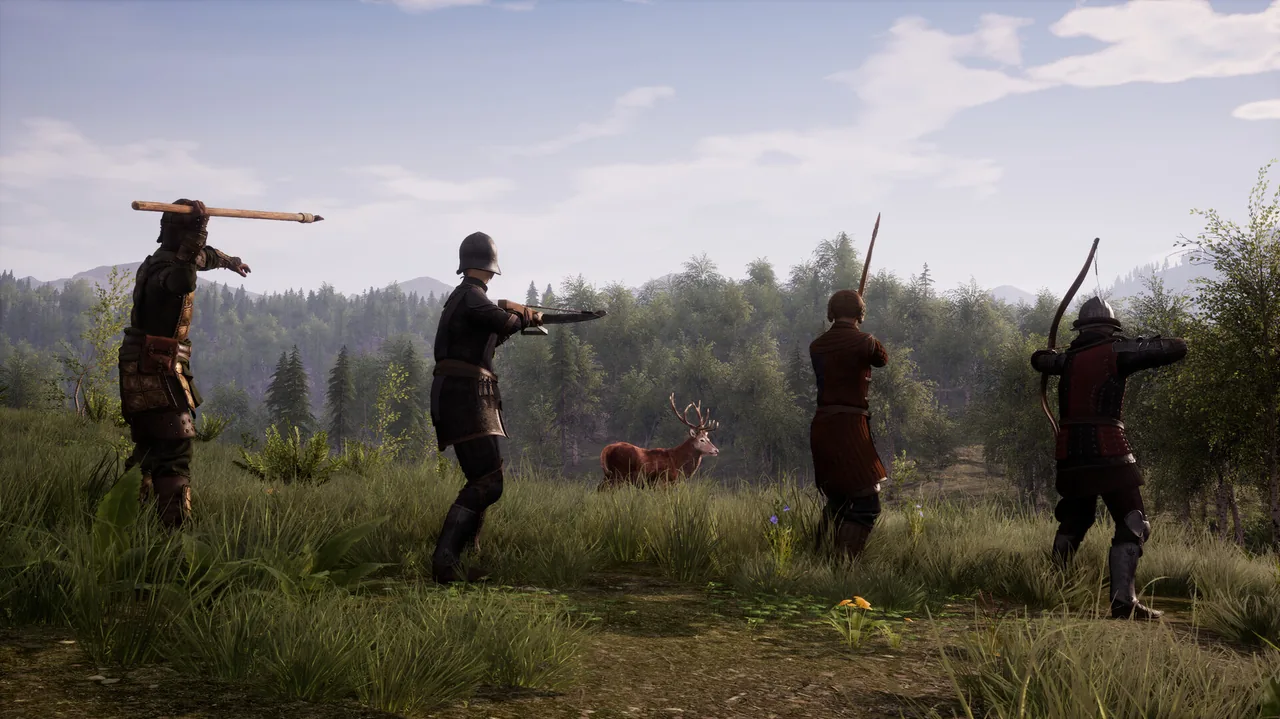
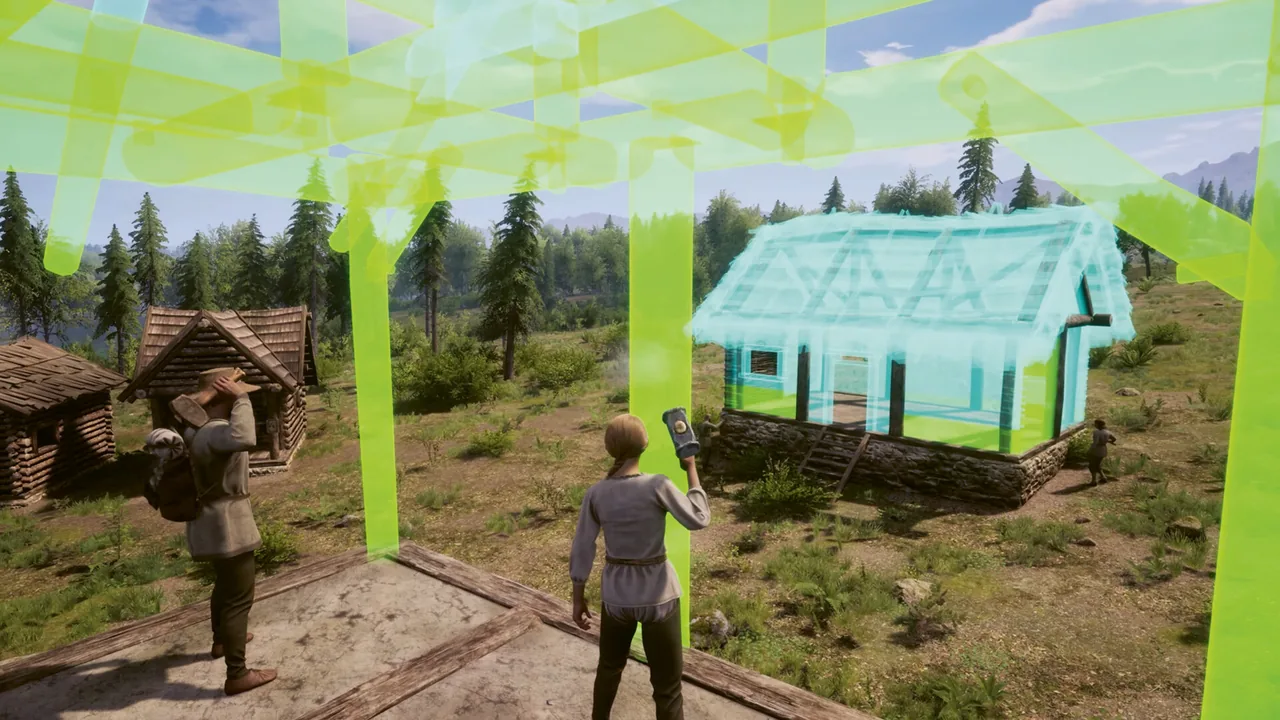
The opening stretch of Medieval Dynasty is where the design earns every bit of its reputation. You arrive with nothing, hunt and forage to survive the first few days, and gradually put down the buildings that turn survival into infrastructure: a house, a woodshed, a field, a well. Seasons matter in a way a lot of survival games only gesture at — winter genuinely threatens a village that hasn't stockpiled enough food and firewood, and the pressure of getting a farm planted and harvested before the weather turns forces the kind of planning that makes a management sim satisfying rather than just busy. Recruiting villagers and assigning them to specific jobs — woodcutter, farmer, miner — turns the settlement into something that keeps working while you're off exploring or hunting, and watching a scatter of huts around a well become a functioning, populated village is a genuinely good feeling that a large number of reviewers, including many giving the game a thumbs-down overall, single out as the game's strongest achievement.
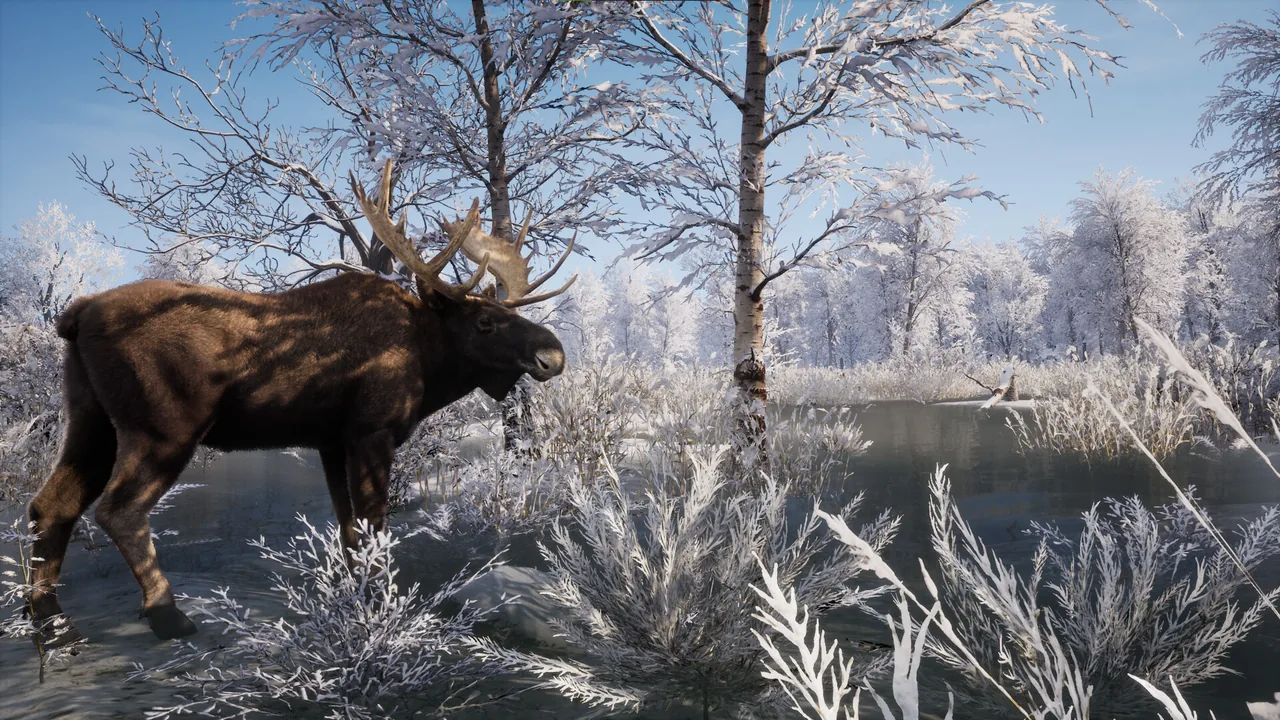
The world carrying that loop is doing real work too. Even reviewers recommending against the purchase consistently praise the environments as beautiful, and exploring on foot or horseback stays enjoyable long after the settlement itself stops presenting anything new. That's a meaningful split worth noting on its own: a lot of the affection this game has earned is really affection for its opening act and its scenery, kept alive by momentum rather than by anything new the mid-and-late game is doing to earn it.
Building a dynasty that never quite arrives
Here's where the reviews turn, consistently, across every year since launch. Once a village is self-sufficient — production balanced, storage full, workers assigned — Medieval Dynasty doesn't introduce a new threat, a deeper system, or a reason to keep engaging beyond decoration. A review from May 2026, at over a thousand hours logged, put it plainly: every obstacle clears within a few years, and everything after that is waiting for a child to age up while playing what amounts to a sandbox with the challenge switched off. That's not an outlier complaint. Reviews from 2021 describe the exact same flatline, and reviews from 2025 and 2026 describe it in almost identical language — "you reach a point where you have everything you need," "no new threats, no advanced tech, no social or political complexity," "nothing left to do while you wait for your children to grow."
The achievement numbers back this specific complaint up better than any quote can. The most commonly earned achievements are the early, unavoidable ones — building your first house (72.2%), your first worker (60.1%) — and the numbers fall off a cliff from there. Reaching the top settlement tier: 6.7%. Finishing the main story: 12.5%. Actually continuing the dynasty into a second generation, the mechanic the entire game is built around and named for: 0.7%. Whatever the reason — players stopping once the interesting part is done, or the interesting part simply taking longer than most people's patience — the game's own numbers confirm that its central hook is, for the overwhelming majority of owners, a promise it never gets to keep.
Adding to the flatness: the world itself doesn't change with the dynasty. One long, detailed negative review from 2022 (270 hours logged) points out that the map is oddly static for a game about the passage of generations — trees felled don't regrow, saplings spawn but never mature, and removing one just causes it to respawn in the exact same spot. For a game selling realism and legacy as its core appeal, a world that looks identical in year one and year twenty is a strange gap to leave sitting in plain sight.
Where the interface still gets in the way
Medieval Dynasty's tutorial has been a specific, named complaint since launch week, and it hasn't meaningfully improved. A June 2026 review, eleven hours in, describes reaching that point without understanding basic crafting because the game simply doesn't explain it; a February 2026 review describes the same confusion at six hours. These aren't isolated first impressions — negative reviews from launch week in September 2021 describe an "incredibly unintuitive" first hour where even crafting the first tool isn't clearly explained, and the same complaint, with different numbers attached, keeps showing up nearly five years later. Menu navigation and general UI friction come up often enough across the sample — 2021 through 2026 — to read as a real, unaddressed weak point rather than a launch-week rough edge that got smoothed out.
From Early Access promises to paid cosmetics
Medieval Dynasty spent a year in Early Access, from September 2020 to September 2021, and the transition to paid downloadable content afterward is a specific, recurring sore point rather than a generic "more DLC" gripe. Multiple reviewers describe having backed the game through Early Access expecting the missing structural pieces to arrive as free updates, and instead watching Render Cube's roadmap increasingly fill with paid packs: an Exquisite Pack of cosmetic outfits, an Echoes of Nature map expansion, a paid strategy guide and cookbook. The most pointed version of this complaint, from a December 2025 review, singles out one specific free update — "Labour of Love," which added visible pregnancy animations and matching maternity outfits — and argues the studio should have been building the structural content the community has been asking for (new buildings, deeper faction systems, actual late-game threats) instead of polish. Whether or not any individual feature deserved that update slot, the pattern across the sample is consistent: years of reviewers naming the same missing systems, and years of patch notes answering with things other than those systems.
None of this makes the DLC predatory in the way that term usually implies — nothing sold is required to finish the base game, there's no premium currency, and no purchase buys a competitive or progression advantage. It's better described as a studio that promised, implicitly, to keep building out the game's substance and has instead spent recent development cycles on the parts that are easiest to sell separately. That's a real and fair thing to mark down, even without calling it exploitative.
Co-op, consoles and what's still missing
The console versions (PlayStation 5, Xbox Series X|S) arrived a year after PC, in October 2022, and online co-op followed as part of a second-map update in December 2023 on PC and June 2024 on consoles — letting a group manage the same village together rather than racing separate ones. It's a genuine expansion of what the game offers, in a genre where multiplayer colony management is still relatively rare, and reviews that mention it are consistently positive about the experience itself. What's still absent is Steam Workshop or any official mod support, which several long-time, high-hour reviewers call out specifically — pointing out that a community willing to build the faith systems, romance mechanics or deeper diplomacy the base game lacks has no sanctioned way to do it.
Final verdict
Medieval Dynasty earns its Very Positive reputation for real reasons: the hunting-farming-building loop is genuinely well made, the world is worth spending time in even once the mystery has worn off, and four years of reviewers keep coming back to it, DLC gripes and all. What keeps this from scoring higher is that the game's own numbers confirm what its critics have been saying since launch week — the dynasty at the centre of its pitch is something almost nobody who buys the game ever actually gets to build, and the years since 1.0 have gone toward selling cosmetics rather than closing that gap. A 7.0 fits a game that's genuinely worth the opening fifty hours, and genuinely stalls out after that, in a way its own achievement stats prove better than any single review could.
Players who want the multi-generational hook Medieval Dynasty doesn't quite deliver on might also enjoy Wanderer, where progression keeps compounding automatically rather than flattening out once the early systems are mastered.
Pros and cons
Pros
- Hunting, farming and worker assignment interlock into a genuinely satisfying loop for the first several in-game years, with seasons that force real planning rather than cosmetic weather
- The world is consistently praised even by players giving the game a thumbs-down, and exploring it on foot or horseback remains enjoyable long after the settlement stops changing
- A generous base amount of content for a one-time NZ$43.49, with co-op letting a group build and manage the same village together
- Achievement data confirms real breadth of what players attempt — everything from taming a hedgehog to founding a full city has a following, even if few finish any of it
- Four-plus years of continued support, including a genuinely substantial co-op and second-map update, rather than the game being abandoned after its 1.0 sales spike
Cons
- Only 0.7% of owners have ever earned the achievement for continuing the dynasty into a second generation — the game's own namesake mechanic — and only 6.7% ever build a settlement up to city tier, hard numbers behind years of reviews saying there's nothing left to do once the village is self-sufficient
- The tutorial famously fails to explain basic actions clearly; multiple recent reviews describe reaching five or more hours in without understanding how to craft a starting tool, and menu navigation remains a recurring complaint through 2025 and 2026
- The single map is static in a way that undercuts the game's own realism: trees don't regrow once felled, saplings never mature, and nothing changes generation to generation beyond what the player physically builds
- Recent post-launch content has skewed toward paid cosmetic packs and small free polish updates (visible pregnancy animations, new outfits) rather than the systemic depth — faction conflict, real threats, meaningful late-game buildings — long-time players keep asking for
- No Steam Workshop or mod support, which several high-hour reviewers specifically cite as the one thing that could have let the community patch the game's own content gap itself
Screenshots
-
Medieval DynastyImage: Toplitz Productions via Steam -
Medieval DynastyImage: Toplitz Productions via Steam -
Medieval DynastyImage: Toplitz Productions via Steam -
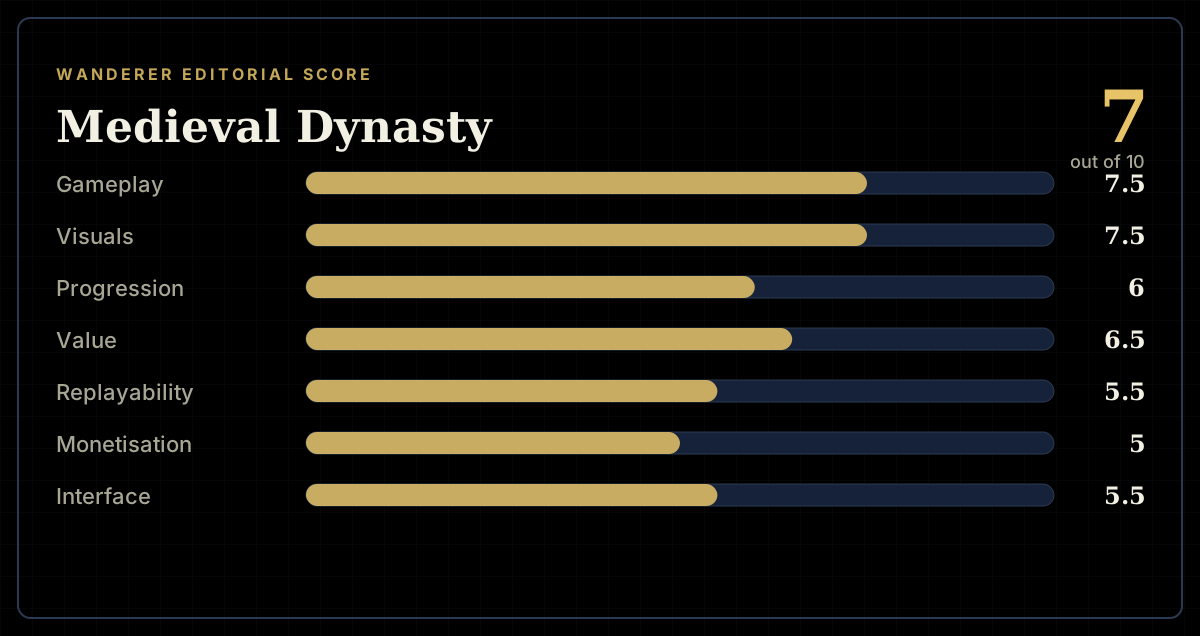
How the review scores each part of the gameWanderer Editorial -
The short versionWanderer Editorial